2020 Honda Civic vs 2019 Kia Forte
Overview | |
MSRP$17,790 | MSRP$20,000 |
Listings540 | Listings1595 |
Ratings & Reviews | |
User Reviews | User Reviews |
Expert reviews8.7 out of 10 | Expert reviews8.2 out of 10 |
Pros
Cons
| |
2019 Kia Forte Reviews SummaryHighways are increasingly full of crossovers and small SUVs, but not too long ago sedans ruled the road. The simple three-box design made for a vehicle that was, and still is, an effective daily driver. It has enough trunk space for several bags and room for 4 (or even 5) passengers. They are often more fuel-efficient than their heavier SUV counterparts and almost always less expensive. Maybe this explains why Kia’s best-selling vehicle last year wasn’t any of its SUVs or crossovers. It was the Forte, which has been completely redesigned for 2019. Even when limited to small cars, the Forte's competition is quite stiff. But the Honda Civic has been generally heralded as the gold standard. The Civic is just a bit larger and a bit more upscale than other cars in its segment, but its higher price tag reflects that status. The Forte previously operated only in the “value” end of this spectrum, with a dash of sporty styling thrown in (but generally lacking the performance to back it up). The new Forte is certainly sportier and more upscale, yet it still keeps value as one of its core principles. After a week driving it, we can say it is absolutely one of the standout small cars of this year, but does it have the goods to outgun the Civic? | |
2020 Honda Civic Reviews SummaryMinor design tweaks, more standard safety and convenience features, and more manual transmissions arrive as the standout changes for the Civic's 2020 model year. Last redesigned for the 2016 model year, the Civic keeps outperforming its small-car peers by offering the performance and quality of more expensive cars, while retaining the value and longevity expected of a Honda. Plus, I had a really fun week with the turbocharged Civic Si. | |
No video found | |
Popular Features & Specs | |
Engine2.0L 147 hp I4 | Engine2.0L 158 hp I4 |
Drive TrainFWD | Drive TrainFWD |
Seating Capacity5 | Seating Capacity5 |
Horsepower147 hp @ 6200 rpm | Horsepower158 hp @ 6500 rpm |
MPG City31 | MPG City25 |
MPG Highway41 | MPG Highway36 |
Engine | |
Engine Name2.0L 147 hp I4 | Engine Name2.0L 158 hp I4 |
Torque132 lb-ft @ 4500 rpm | Torque138 lb-ft @ 4200 rpm |
Horsepower147 hp @ 6200 rpm | Horsepower158 hp @ 6500 rpm |
DrivetrainFWD | DrivetrainFWD |
Fuel Economy | |
MPG City31 | MPG City25 |
MPG Highway41 | MPG Highway36 |
Interior | |
Seating Capacity5 | Seating Capacity5 |
Safety | |
Front Crash Overall4 | Front Crash Overall5 |
Side Crash Overall5 | Side Crash Overall5 |
Dimensions & Capacity | |
Cargo Space15.3 cu ft | Cargo Space15.1 cu ft |
Curb Weight2903 lbs | Curb Weight2762 lbs |
Height56.5 in | Height55.7 in |
Length182.7 in | Length182.7 in |
Width70.9 in | Width70.8 in |
Wheelbase106.3 in | Wheelbase106.3 in |
Maximum Payload | Maximum Payload1007 lbs |
Number of doors4 | Number of doors4 |
Overview | ||
MSRP | $17,790 | $20,000 |
Listings | ||
Ratings & Reviews | ||
User reviews | ||
Expert reviews | 8.7 out of 10Read full review | 8.2 out of 10Read full review |
Pros & cons | Pros
Cons
| |
Summary | Highways are increasingly full of crossovers and small SUVs, but not too long ago sedans ruled the road. The simple three-box design made for a vehicle that was, and still is, an effective daily driver. It has enough trunk space for several bags and room for 4 (or even 5) passengers. They are often more fuel-efficient than their heavier SUV counterparts and almost always less expensive. Maybe this explains why Kia’s best-selling vehicle last year wasn’t any of its SUVs or crossovers. It was the Forte, which has been completely redesigned for 2019. Even when limited to small cars, the Forte's competition is quite stiff. But the Honda Civic has been generally heralded as the gold standard. The Civic is just a bit larger and a bit more upscale than other cars in its segment, but its higher price tag reflects that status. The Forte previously operated only in the “value” end of this spectrum, with a dash of sporty styling thrown in (but generally lacking the performance to back it up). The new Forte is certainly sportier and more upscale, yet it still keeps value as one of its core principles. After a week driving it, we can say it is absolutely one of the standout small cars of this year, but does it have the goods to outgun the Civic? | Minor design tweaks, more standard safety and convenience features, and more manual transmissions arrive as the standout changes for the Civic's 2020 model year. Last redesigned for the 2016 model year, the Civic keeps outperforming its small-car peers by offering the performance and quality of more expensive cars, while retaining the value and longevity expected of a Honda. Plus, I had a really fun week with the turbocharged Civic Si. |
Video | No video found | |
Popular Features & Specs | ||
Engine | 2.0L 147 hp I4 | 2.0L 158 hp I4 |
Drive Train | FWD | FWD |
Seating Capacity | 5 | 5 |
Horsepower | 147 hp @ 6200 rpm | 158 hp @ 6500 rpm |
MPG City | 31 | 25 |
MPG Highway | 41 | 36 |
Engine | ||
Engine Name | 2.0L 147 hp I4 | 2.0L 158 hp I4 |
Torque | 132 lb-ft @ 4500 rpm | 138 lb-ft @ 4200 rpm |
Horsepower | 147 hp @ 6200 rpm | 158 hp @ 6500 rpm |
Drivetrain | FWD | FWD |
Fuel Economy | ||
MPG City | 31 | 25 |
MPG Highway | 41 | 36 |
Interior | ||
Seating Capacity | 5 | 5 |
Safety | ||
Front Crash Overall | 4 | 5 |
Side Crash Overall | 5 | 5 |
Dimensions & Capacity | ||
Cargo Space | 15.3 cu ft | 15.1 cu ft |
Curb Weight | 2903 lbs | 2762 lbs |
Height | 56.5 in | 55.7 in |
Length | 182.7 in | 182.7 in |
Width | 70.9 in | 70.8 in |
Wheelbase | 106.3 in | 106.3 in |
Maximum Payload | 1007 lbs | |
Number of doors | 4 | 4 |
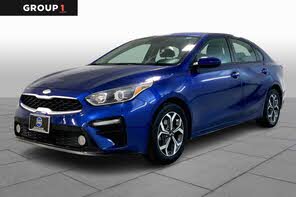
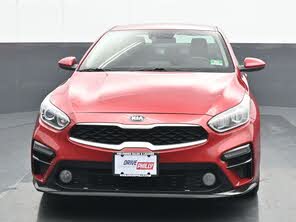
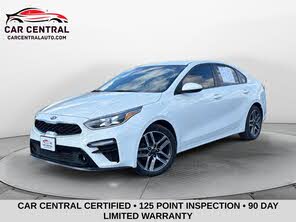
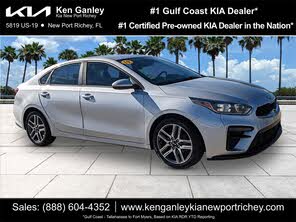
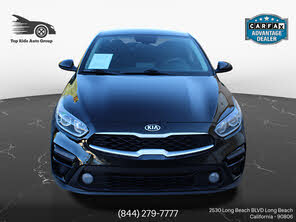
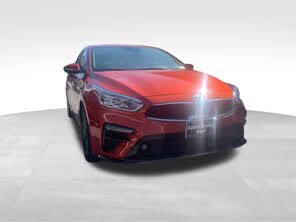
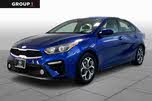
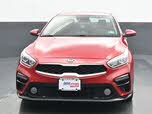
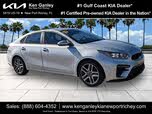
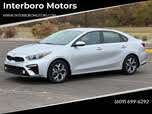
The 2019 Kia Forte might have appeared to be a mere facelift at first glance, but it was actually an all-new generation. It retained its jellybean-like shape and plucky front-end design, with a subtle swoop along the side. The taillight band connecting each side above the license plate was a design element that seemed cheap and tacked-on. However, the overall design was more mature compared to past generations. The new Forte also featured additional small rear quarter windows framing the rear doors and flatter, lower windowsills. Styling cues from the sporty Kia Stinger were evident in the grille's powerful shape, futuristic headlights, and aggressive lower-grille design.
Inside, the Forte’s cabin was contemporary and high-tech, with a simple layout influenced by the Stinger. It featured a sport steering wheel and a floating touchscreen, while the big circular HVAC vents were pushed to the corners. The instrument panel's crisp look and general layout had hints of Audi’s small car, thanks to Peter Schreyer, the head of design at Hyundai and Kia, who previously worked at Audi. The Forte came in trims FE, LXS, S, and EX, with the base FE trim offering plenty of standard features like electric power side mirrors, remote keyless entry, forward-collision avoidance, and lane-keeping assist. Higher trims added more features, with the range-topping EX offering power heated side mirrors, leatherette upholstery, and a 10-way power adjustable driver’s seat.
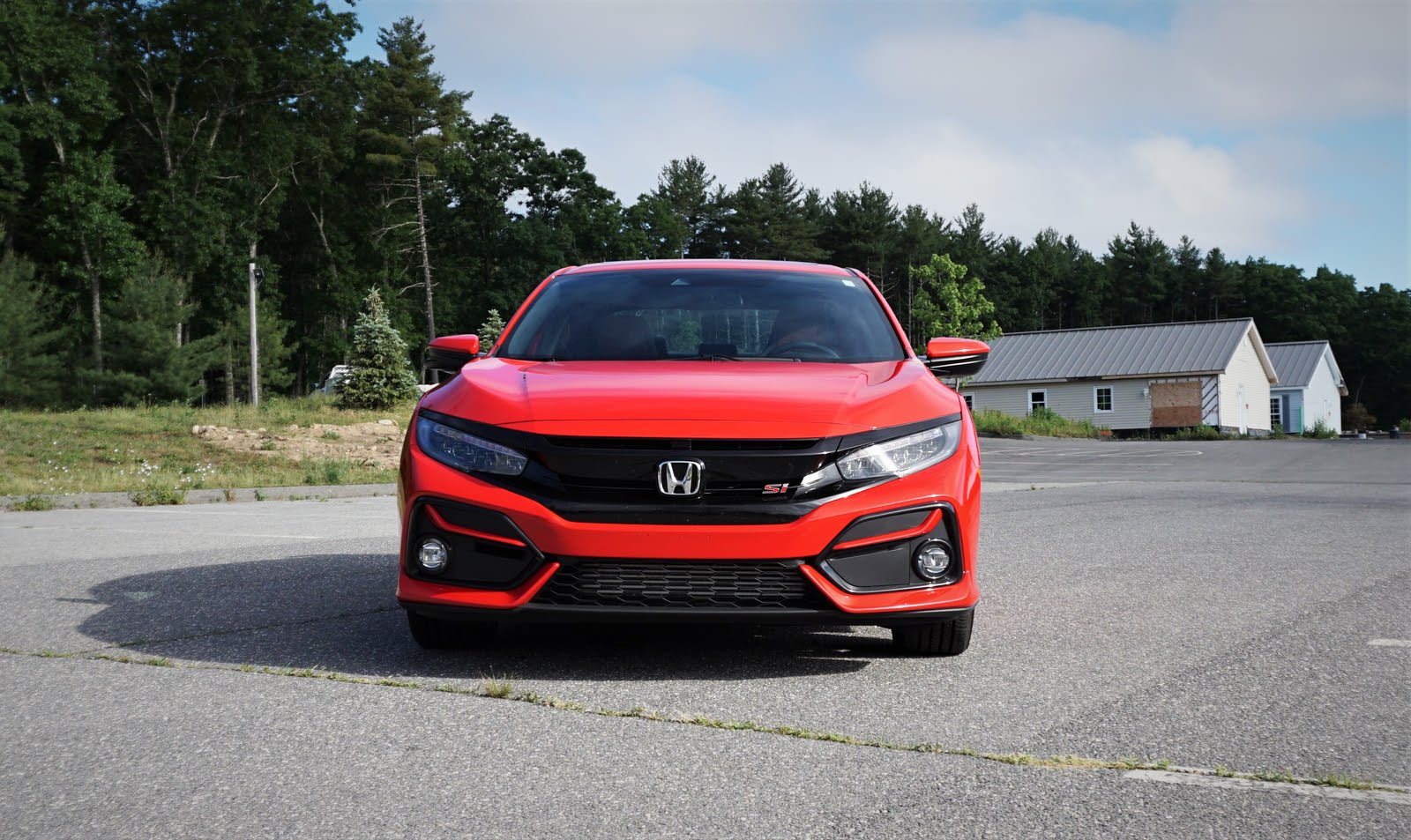
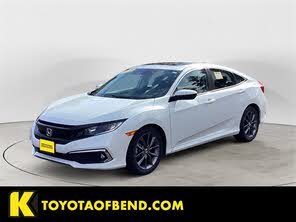
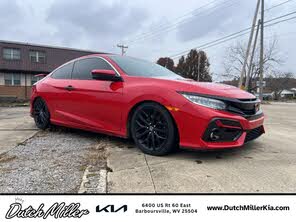
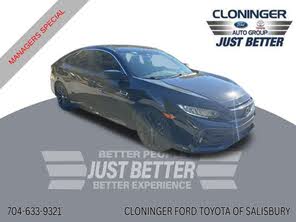
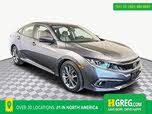
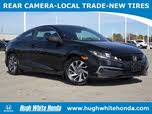
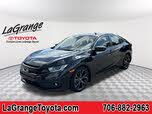
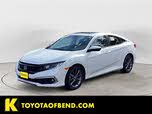
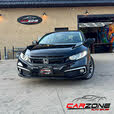
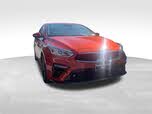
The 2020 Honda Civic was the crown jewel in Honda's lineup, offering a bounty of choices and engineering excellence typically found in more expensive cars. It came in three body styles—sedan, coupe, and 4-door hatchback—each with a sharp design that accentuated its low and wide stance. The sedan had a svelte roofline, while the hatchback's tall rump was a tad quirky. The 2019 model year brought upgrades to the grilles, bumpers, and wheels, which carried over to 2020. The Civic Si sedan featured new matte-black 18-inch wheels, LED fog lights, standard LED headlights, an updated grille, and a new rear bumper. The hatchback also received new bumper and light changes, plus new wheels in gray or black.
Inside, the Civic's simple interior featured a narrow center stack and minimal instrumentation, built with soft-touch rubbers and high-quality switchgear. The 2020 model year brought three new dash accents on the hatchback and a thin red line accenting the instrument panel on the Si. The Si also got revised sport seats with red bands woven into the fabric. The interior was pleasing to the eye, with more gloss-black trim on the steering wheel and dash, a metal shift knob, and a pulsing red glow of the start button. The center console had a deep storage bin with item trays and cupholders that could be configured to the user's preference.


The 2019 Kia Forte came with a 2.0-liter 4-cylinder engine and front-wheel drive (FWD) across all trims. This engine produced 147 horsepower and 132 pound-feet of torque, paired with either a 6-speed manual or a continuously variable transmission (CVT). The FE trim came standard with the manual but was available with the CVT, while all other trims came standard with the CVT. Kia's CVT, called an iVT, managed power well and provided an immediate response when accelerating. The Forte was quick off the line and had ample power for highway passing. Its handling was impressive, with minimal body roll and precise steering.
The Forte also featured a Drive Mode Selector with Normal, Sport, and Smart modes. Normal mode focused on comfort and efficiency, Sport mode kept the revs higher for quicker acceleration, and Smart mode adjusted throttle and CVT responses based on driving behavior. Fuel economy with the CVT was 30 mpg city, 40 highway, and 34 combined, while the 6-speed manual FE trim achieved 27/37/31. The most efficient configuration was the FE with the CVT, returning 31/41/35 combined. In a week of combined city and highway driving, the EX trim observed a fuel economy of 29.7 mpg.
The 2020 Honda Civic offered four engines and two transmissions across its lineup, all FWD. The base LX and Sport trims had a 2.0-liter inline 4-cylinder engine with 158 horsepower and 138 pound-feet of torque. A 6-speed manual transmission was standard on both sedans, while the coupe and hatchback paired the manual with the Sport trim. The CVT was standard on the base LX and an extra-cost option for manual trims. EX and above trims came with a turbocharged 1.5-liter inline-4 making 174 hp and 162 lb-ft, while the hatchbacks in Sport or Sport Touring trims made 180 hp. The manual was standard on the loaded Sport Touring trim.
The 1.5-liter engine was preferred for its greater mid-range acceleration and responsiveness. The Civic Si featured a boosted 1.5-liter engine with 205 hp and 192 lb-ft, while the Type R had 306 hp and 295 lb-ft. Both the Civic Si and Type R came exclusively with a stick-shift. The Si's adaptive dampers removed body roll, though it rode stiffer than the regular Civic. The Si was balanced, direct, and always willing to play, with a great suspension, precise steering, and a torque-rich engine. The EPA rated the Si at 26 mpg city, 36 highway, and 30 combined, while most Civic models with the CVT achieved at least 30 mpg city and up to 42 mpg highway.
The 2019 Kia Forte's exterior length grew by 3.2 inches, and it was just under an inch wider, resulting in a noticeably larger interior. The front seat had plenty of legroom, though headroom was tight for occupants over 6 feet tall. The backseat had adequate headroom, and taller occupants would be comfortable for longer drives as long as the front seats were not all the way back. The Forte had 15.3 cubic feet of trunk space, making it one of the largest in its class. The EX trim featured Kia’s smart trunk system, which automatically deployed the trunk when you stood behind the car for a few seconds.
The 2020 Honda Civic's interior featured a three-spoke steering wheel with controls for the central display and instrument panel. The center console had a deep storage bin with item trays and cupholders that could be configured to the user's preference. The Civic felt roomy for rear passengers in all directions, though it lacked rear air vents. The trunk's cargo space was 15 cubic feet in all sedan trims, while the coupes had 12 cubic feet. The hatchback offered 26 cubic feet behind the rear seats and 46 cubic feet with them folded down.
The 2019 Kia Forte came standard with an 8-inch UVO touchscreen, featuring a vivid and intuitive layout. The combination of colors and fonts made for crisp visuals, and the logical menu layout kept the experience straightforward. Physical buttons lined the bottom of the screen, and conventional tuning and volume dials were retained. The test model also featured Kia’s UVO e-services, providing enhanced roadside assistance, in-depth vehicle diagnostics, and a smartphone app to remind you where you parked.
The 2020 Honda Civic's infotainment system was outdated, running slower and looking graphically dated compared to newer systems in other Honda models. The 7-inch touchscreen, standard on all models except the base LX, came with Apple CarPlay and Android Auto. The navigation on top-end trims was Garmin-based, fast, and had accurate voice recognition. The Civic Si featured Active Sound Control, push-button start, keyless entry, power moonroof, and heated front seats. LaneWatch, a camera mounted on the right-side mirror, provided a live feed of the blind spot when the right-hand turn signal was activated. Automatic climate control was standard on all models, and Honda Sensing was included on Si models, featuring active lane centering, adaptive cruise control, and auto high beams.
The 2019 Kia Forte offered standard forward-collision avoidance, lane-departure warning, lane-keeping assist, and driver-attention warning. It also included a reversing camera, traction control, and front- and side-impact airbags. Optional features included blind-spot monitoring, rear cross-traffic alert, rear parking sensors, and adaptive cruise control. The lane-keeping assist system was highly active, providing minor steering inputs to keep the car centered in the lane.
The 2020 Honda Civic came with Honda Sensing, which included forward collision warning, emergency forward braking, lane-keeping assist, and adaptive cruise control. Improvements to the optional LED headlights helped the Civic earn the Top Safety Pick rating from the IIHS for all body styles except the Type R. The Civic earned the top "Good" rating in all six crash tests. The NHTSA rated the 2020 Civic five stars in all categories, except for four stars in the passenger frontal crash rating on the coupe.
CarGurus highlights

According to CarGurus experts, the overall rating for the 2019 Kia Forte is 8.7 out of 10, while the 2020 Honda Civic scores 8.2 out of 10. Based on these ratings, the 2019 Kia Forte is the recommended choice for its higher overall rating, mature design, high-tech cabin, and larger trunk space.
Choose the 2020 Honda Civic if:
- You seek a car with multiple body styles and a sharp, visually stimulating design.
- You prefer a variety of engine options, including a turbocharged engine for better performance.
- You value advanced safety features and a high safety rating from IIHS and NHTSA.




Choose the 2019 Kia Forte if:
- You want a car with a more mature and contemporary design.
- You prefer a high-tech cabin with features influenced by luxury brands.
- You value a larger trunk space and smart trunk system for convenience.




CarGurus highlights
According to CarGurus experts, the overall rating for the 2019 Kia Forte is 8.7 out of 10, while the 2020 Honda Civic scores 8.2 out of 10. Based on these ratings, the 2019 Kia Forte is the recommended choice for its higher overall rating, mature design, high-tech cabin, and larger trunk space.
Choose the 2020 Honda Civic if:
Shop Now- You seek a car with multiple body styles and a sharp, visually stimulating design.
- You prefer a variety of engine options, including a turbocharged engine for better performance.
- You value advanced safety features and a high safety rating from IIHS and NHTSA.





Choose the 2019 Kia Forte if:
Shop Now- You want a car with a more mature and contemporary design.
- You prefer a high-tech cabin with features influenced by luxury brands.
- You value a larger trunk space and smart trunk system for convenience.





By: CarGurus + AI
At CarGurus, our team of experienced automotive writers remain at the heart of our content operation, conducting hands-on car tests and writing insightful guides that are backed by years of industry experience. To complement this, we are harnessing AI to make our content offering more diverse and more helpful to shoppers than ever. To achieve this, our AI systems are based exclusively on CarGurus content, ratings and data, so that what we produce is both unique to CarGurus, and uniquely helpful to car shoppers.