2019 Hyundai Santa Fe vs 2019 Ford Edge

Overview | |
MSRP$29,995 | MSRP$25,750 |
Listings1010 | Listings879 |
Ratings & Reviews | |
User Reviews | User Reviews |
Expert reviews7.3 out of 10 | Expert reviews8.2 out of 10 |
2019 Ford Edge Reviews SummaryThe Edge was a key vehicle in the evolution of the family SUV market when Ford first introduced it for the 2007 model year. Back then, automakers were experimenting with just what a “crossover” could constitute—look at the Pontiac Aztec and first-generation Chrysler Pacifica if you disagree. But with the Edge, the midsize, two-row SUV template started to take shape. Ford offers the 2019 Edge with an ST trim, grafting performance onto the utilitarian Edge blueprint. But that begs a question—can a vehicle still be good at family hauling and commuting while also delivering speed and performance? | |
2019 Hyundai Santa Fe Reviews SummaryTechnically, the 2019 Hyundai Santa Fe is listed as a midsize SUV, but this is a stretch. Now entering its fourth generation, the Santa Fe fits somewhere between a compact SUV like the Toyota RAV4, Honda CR-V, or Nissan Rogue and a midsize like the Toyota Highlander, Honda Pilot, or Nissan Pathfinder. This vehicle actually replaces the 2-row Santa Fe Sport. The previous Santa Fe was a 3-row version, and it is still available, largely unchanged, but now named the Santa Fe XL. It will most likely be phased out of production, as Hyundai has a true 3-row midsize called the Palisade arriving this summer for the 2020 model year. But back to the car at hand: The 2019 Hyundai Santa Fe is a true quality crossover. While it's technically large enough to compete against midsize SUVs, it shines as a great value when cross-shopped against other compact crossovers. | |
Popular Features & Specs | |
Engine2.0L 250 hp I4 | Engine2.4L 185 hp I4 |
Drive TrainFWD | Drive TrainFWD |
Seating Capacity5 | Seating Capacity5 |
Horsepower250 hp @ 5500 rpm | Horsepower185 hp @ 6000 rpm |
MPG City22 | MPG City22 |
MPG Highway29 | MPG Highway29 |
Engine | |
Engine Name2.0L 250 hp I4 | Engine Name2.4L 185 hp I4 |
Torque280 lb-ft @ 3000 rpm | Torque178 lb-ft @ 4000 rpm |
Horsepower250 hp @ 5500 rpm | Horsepower185 hp @ 6000 rpm |
DrivetrainFWD | DrivetrainFWD |
Fuel Economy | |
MPG City22 | MPG City22 |
MPG Highway29 | MPG Highway29 |
Interior | |
Seating Capacity5 | Seating Capacity5 |
Safety | |
Front Crash Overall5 | Front Crash Overall4 |
Side Crash Overall5 | Side Crash Overall5 |
Dimensions & Capacity | |
Cargo Space39.2 cu ft | Cargo Space35.9 cu ft |
Curb Weight4027 lbs | Curb Weight3803 lbs |
Height68.3 in | Height66.1 in |
Length188.8 in | Length187.8 in |
Width85.8 in | Width74.4 in |
Wheelbase112.2 in | Wheelbase108.9 in |
Maximum Payload1243 lbs | Maximum Payload926 lbs |
Number of doors4 | Number of doors4 |
Maximum Towing Capacity1500 lbs | Maximum Towing Capacity2000 lbs |
Overview | ||
MSRP | $29,995 | $25,750 |
Listings | ||
Ratings & Reviews | ||
User reviews | ||
Expert reviews | 7.3 out of 10Read full review | 8.2 out of 10Read full review |
Pros & cons | ||
Summary | The Edge was a key vehicle in the evolution of the family SUV market when Ford first introduced it for the 2007 model year. Back then, automakers were experimenting with just what a “crossover” could constitute—look at the Pontiac Aztec and first-generation Chrysler Pacifica if you disagree. But with the Edge, the midsize, two-row SUV template started to take shape. Ford offers the 2019 Edge with an ST trim, grafting performance onto the utilitarian Edge blueprint. But that begs a question—can a vehicle still be good at family hauling and commuting while also delivering speed and performance? | Technically, the 2019 Hyundai Santa Fe is listed as a midsize SUV, but this is a stretch. Now entering its fourth generation, the Santa Fe fits somewhere between a compact SUV like the Toyota RAV4, Honda CR-V, or Nissan Rogue and a midsize like the Toyota Highlander, Honda Pilot, or Nissan Pathfinder. This vehicle actually replaces the 2-row Santa Fe Sport. The previous Santa Fe was a 3-row version, and it is still available, largely unchanged, but now named the Santa Fe XL. It will most likely be phased out of production, as Hyundai has a true 3-row midsize called the Palisade arriving this summer for the 2020 model year. But back to the car at hand: The 2019 Hyundai Santa Fe is a true quality crossover. While it's technically large enough to compete against midsize SUVs, it shines as a great value when cross-shopped against other compact crossovers. |
Video | ||
Popular Features & Specs | ||
Engine | 2.0L 250 hp I4 | 2.4L 185 hp I4 |
Drive Train | FWD | FWD |
Seating Capacity | 5 | 5 |
Horsepower | 250 hp @ 5500 rpm | 185 hp @ 6000 rpm |
MPG City | 22 | 22 |
MPG Highway | 29 | 29 |
Engine | ||
Engine Name | 2.0L 250 hp I4 | 2.4L 185 hp I4 |
Torque | 280 lb-ft @ 3000 rpm | 178 lb-ft @ 4000 rpm |
Horsepower | 250 hp @ 5500 rpm | 185 hp @ 6000 rpm |
Drivetrain | FWD | FWD |
Fuel Economy | ||
MPG City | 22 | 22 |
MPG Highway | 29 | 29 |
Interior | ||
Seating Capacity | 5 | 5 |
Safety | ||
Front Crash Overall | 5 | 4 |
Side Crash Overall | 5 | 5 |
Dimensions & Capacity | ||
Cargo Space | 39.2 cu ft | 35.9 cu ft |
Curb Weight | 4027 lbs | 3803 lbs |
Height | 68.3 in | 66.1 in |
Length | 188.8 in | 187.8 in |
Width | 85.8 in | 74.4 in |
Wheelbase | 112.2 in | 108.9 in |
Maximum Payload | 1243 lbs | 926 lbs |
Number of doors | 4 | 4 |
Maximum Towing Capacity | 1500 lbs | 2000 lbs |
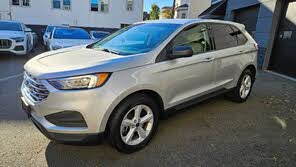
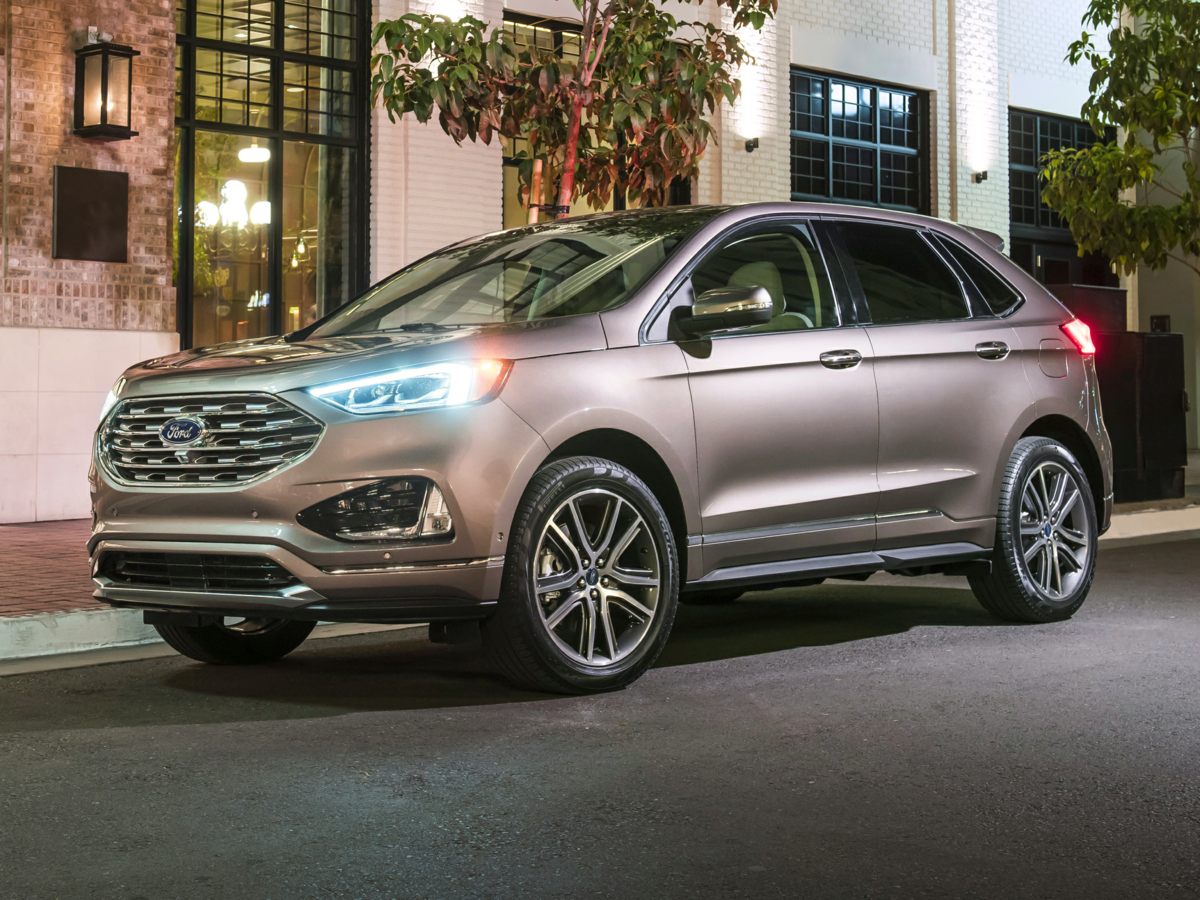
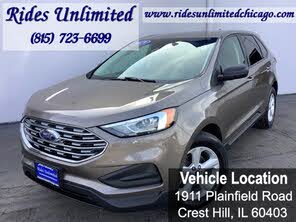
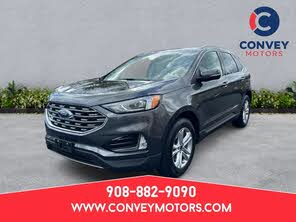
The 2019 Ford Edge received a notable redesign that included a new grille, refreshed headlights, and an updated lower front fascia. The rear of the vehicle also saw some changes, with new taillights and a larger black panel replacing the previous red connector. These updates collectively lent the Edge a sportier demeanor across all trim levels.
Inside, however, the Edge’s cabin remained largely unchanged. It still felt akin to the 2014 models, with a design that many could easily mistake for an even older model combined with a contemporary infotainment system. The notable new feature inside was the rotary shifter replacing the conventional lever. Despite these updates, the Ford Edge’s interior heavily relied on plastic materials, giving it a slightly outdated and inexpensive feel. The cabin was outfitted with numerous features, with the base SE trim offering 18-inch alloy wheels, keyless entry, push-button start, and rain-sensing wipers.
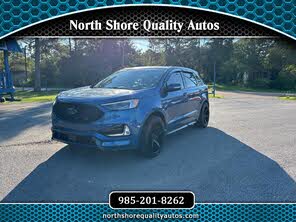
The SEL trim brought additional standard offerings such as black roof rails, dual-zone climate control, power-adjustable front seats, rear parking sensors, and a leather-wrapped steering wheel. Upgrading to the Titanium trim added 19-inch alloy wheels and incorporated leather upholstery, wireless charging, and a premium Bang & Olufsen 12-speaker system as standard features. The performance-oriented ST trim featured unique touches like a blacked-out grille, side skirts, and a set of 20-inch machined aluminum wheels, enhanced with sporty upgrades from Ford Performance.
The 2019 Hyundai Santa Fe stood out with its daring design, marking a departure from Hyundai’s traditionally conservative styling. For 2019, the Santa Fe presented a bold, futuristic exterior, akin to the Jeep Cherokee’s upper LED strip headlights and mid-level main headlight assembly but executed in a more refined manner.
The interior of the Santa Fe combined practicality with a modern aesthetic touch. Hyundai’s focus was on functional spaces, including sizeable compartments in the doors and the center console. This utilitarian approach did not compromise on style—with earthy tones, unique speaker patterns, and a textured headliner giving the cabin an organic feel. Trims ranged from SE to Ultimate, with the base SE offering features like 17-inch alloy wheels, power heated mirrors, LED running lights, and manual seat adjustments. Upgrading added comforts such as an 8-way power driver’s seat, heated front seats, dual automatic climate control, and a 630-watt Infinity sound system. The top-tier Ultimate trim provided luxury with rain-sensing wipers, memory front seats, a panoramic sunroof, and ventilated front seats.


The 2019 Ford Edge offered a standard EcoBoost 2.0-liter turbocharged 4-cylinder engine for all non-ST trims, which produced 250 horsepower and 280 pound-feet of torque. This engine provided dependable performance across different driving conditions, paired with an 8-speed automatic transmission to either front-wheel drive or available all-wheel drive, which added $1,995 to the cost.
The standout performance came from the ST trim, housing a powerful 2.7-liter EcoBoost V6 engine sourced from the Ford F-150. In the Edge, it delivered 335 horsepower and 380 pound-feet of torque, coupled exclusively with all-wheel drive. This produced impressive acceleration and smooth handling, particularly noticeable on curving back roads where the Edge ST maintained level cornering. For everyday driving, the ST’s comfort retained a balance, even on less-than-perfect road conditions. Fuel efficiency for the base model was 22 mpg city, 29 highway, and 25 combined, while the ST managed 19/26/21, averaging around 19.9 mpg in real-world use.
The 2019 Hyundai Santa Fe offered two engine choices, standard across all trims being a 2.4-liter 4-cylinder engine producing 185 horsepower and 178 pound-feet of torque. The Limited and Ultimate trims featured an optional turbocharged 2.0-liter 4-cylinder engine with 235 horsepower and 260 pound-feet of torque, providing robust acceleration and overall better performance, though not available for lower trims.
Both engines sent power through an 8-speed automatic transmission to either the front wheels or optional all-wheel drive. Despite its low ground clearance of 7.2 inches, making it unsuitable for heavy off-roading, the Santa Fe handled well in corners with minimal body roll. The steering offered precise feedback, enhancing the vehicle's driving dynamics and overall road composure. The Santa Fe also featured a drive mode selector to tailor the driving experience, varying throttle response and shift patterns. Fuel efficiency for the FWD 2.4-liter model echoed the Edge at 22 mpg city, 29 highway, and 25 combined, while the AWD turbo achieved 19/24/21, averaging 22 mpg in practical use.
Despite its dated cabin, the 2019 Ford Edge proved highly functional with ample storage options, including a deep center console bin and in-door pockets fitted with large bottle holders. The front seats were generally comfortable, though the ST’s performance-oriented bucket seats with pronounced side bolsters proved too high for taller drivers, compromising headroom. However, the rear seats offered generous space for head- and legroom. Cargo capacity stood out with 39 cubic feet behind the rear seats, expandable to 73.4 cubic feet with the rear seats folded down, surpassing competitors like the Nissan Murano and Chevy Blazer but slightly lagging behind the Honda Passport.
The 2019 Hyundai Santa Fe was somewhat limited in cargo space with 35.9 cubic feet behind the rear seats and 71 cubic feet when folded, comparatively smaller than even the compact Honda CR-V’s 75 cubic feet. However, the Santa Fe offered convenience with its hands-free power liftgate, opening automatically when it detected the key fob nearby. Additionally, the Santa Fe featured multiple storage compartments throughout the cabin, ensuring space for everyday items.
The base infotainment system of the 2019 Ford Edge felt outdated, limited to a 4.2-inch non-touchscreen operated by flanking buttons. The system included essential functionality like a USB port, WiFi hotspot, Bluetooth, and voice recognition, but lacked a full-touch experience seen in competitors. Higher trims, starting from the SEL onward, featured an 8-inch Sync 3 infotainment system standard. This system, despite modest graphics, was user-friendly and included Apple CarPlay, Android Auto, and Amazon Alexa integration.
In contrast, the Hyundai Santa Fe embraced the trend of floating infotainment screens with physical buttons and dials for ease of use. The base SE trim featured Bluetooth, a USB port, and a 7-inch touchscreen infotainment system with Apple CarPlay and Android Auto. Higher trims added satellite radio, HD Radio, and Hyundai’s BlueLink infotainment with Alexa integration. The Ultimate trim upgraded to an 8-inch touchscreen and included features like a head-up display and wireless charging. The Santa Fe’s layout and ease of use made it a standout in terms of technology offerings.
The 2019 Ford Edge came with a reversing camera, traction control, and a full suite of airbags as standard. Additionally, all models featured Ford’s Co-Pilot360 suite of driver-assistance features, including automatic emergency braking, forward-collision warning, lane-departure warning, automatic high-beams, and blind-spot monitoring with rear cross-traffic alert. Higher trims could be further equipped with Co-Pilot360 Assist+, adding adaptive cruise control, evasive steering assist, and lane-centering.
The 2019 Hyundai Santa Fe offered comprehensive safety features under its Smart Sense suite, which included forward-collision avoidance, blind-spot monitoring, lane-departure warning, and adaptive cruise control. The Santa Fe also had rear cross-path detection with visual indicators in the instrument panel and introduced Safe Exit Assist System—a feature preventing rear door openings if a vehicle was detected in the blind spot.
CarGurus highlights
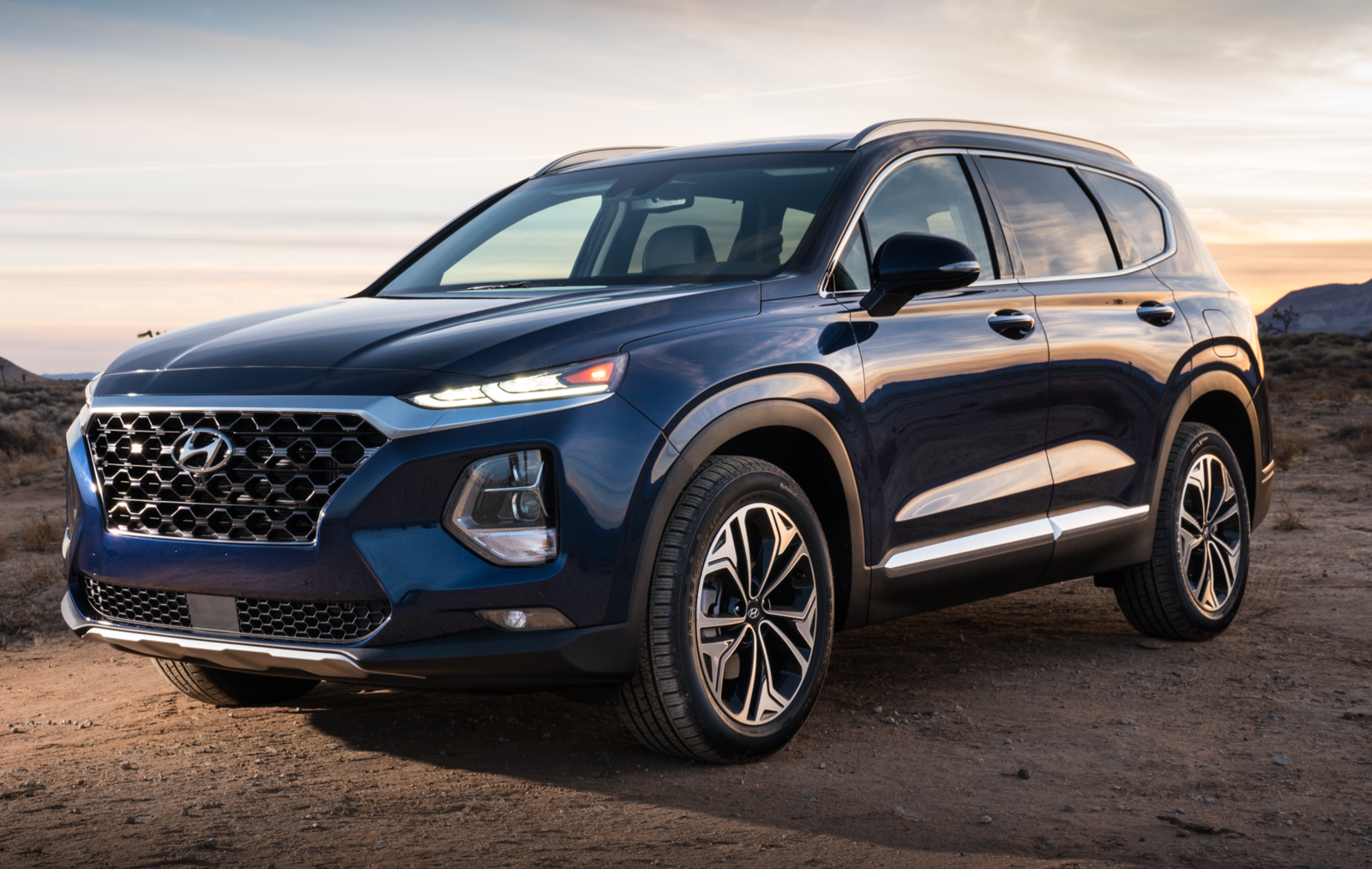
According to CarGurus experts, the overall rating for the 2019 Ford Edge is 7.3 out of 10, while the 2019 Hyundai Santa Fe scores 8.2 out of 10. Based on these ratings, the 2019 Hyundai Santa Fe impresses with its modern styling, practical interior features, advanced technology, and comprehensive safety suite, making it the recommended choice for most buyers. The Ford Edge, while offering robust performance—especially in the ST trim—along with a larger cargo area, falls short in comparison in areas like interior modernization and base model tech offerings. Therefore, for an overall balanced and contemporary vehicle, the 2019 Hyundai Santa Fe comes out on top.
Choose the 2019 Hyundai Santa Fe if:
- You prefer a bold, modern design with functional interior storage solutions.
- Having advanced safety features, like Safe Exit Assist, for enhanced family safety is crucial.
- Accessing a modern and user-friendly technology suite, even in base models, is a priority.




Choose the 2019 Ford Edge if:
- You prioritize sporty aesthetics and performance, particularly available in the ST trim.
- You value a spacious rear seat and larger cargo capacity, beneficial for family use.
- An array of trim-based customizable features and packages is important.




CarGurus highlights
According to CarGurus experts, the overall rating for the 2019 Ford Edge is 7.3 out of 10, while the 2019 Hyundai Santa Fe scores 8.2 out of 10. Based on these ratings, the 2019 Hyundai Santa Fe impresses with its modern styling, practical interior features, advanced technology, and comprehensive safety suite, making it the recommended choice for most buyers. The Ford Edge, while offering robust performance—especially in the ST trim—along with a larger cargo area, falls short in comparison in areas like interior modernization and base model tech offerings. Therefore, for an overall balanced and contemporary vehicle, the 2019 Hyundai Santa Fe comes out on top.
Choose the 2019 Hyundai Santa Fe if:
Shop Now- You prefer a bold, modern design with functional interior storage solutions.
- Having advanced safety features, like Safe Exit Assist, for enhanced family safety is crucial.
- Accessing a modern and user-friendly technology suite, even in base models, is a priority.







Choose the 2019 Ford Edge if:
Shop Now- You prioritize sporty aesthetics and performance, particularly available in the ST trim.
- You value a spacious rear seat and larger cargo capacity, beneficial for family use.
- An array of trim-based customizable features and packages is important.







By: CarGurus + AI
At CarGurus, our team of experienced automotive writers remain at the heart of our content operation, conducting hands-on car tests and writing insightful guides that are backed by years of industry experience. To complement this, we are harnessing AI to make our content offering more diverse and more helpful to shoppers than ever. To achieve this, our AI systems are based exclusively on CarGurus content, ratings and data, so that what we produce is both unique to CarGurus, and uniquely helpful to car shoppers.