2023 Toyota Sienna Reviews, Pricing & Specs
Write a reviewPros
Fuel-efficient
Spacious
Standard advanced safety features
Cons
Second-row seats aren't removable
Irritating transmission
Sluggish acceleration
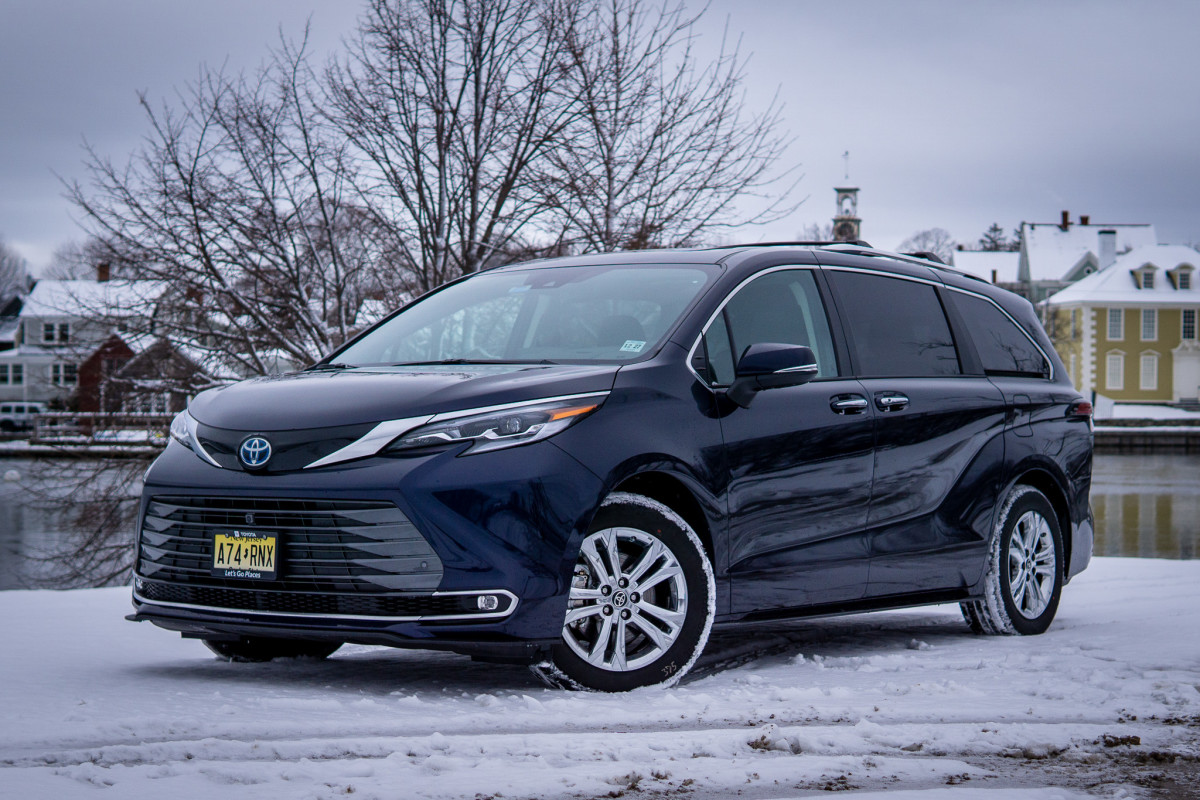
A standard hybrid engine sets the 2023 Toyota Sienna apart in the minivan world.
For plenty of shoppers, the minivan aesthetic is a hard sell. Perhaps the sliding doors and slab-slide designs recall memories from our childhoods, when we were buckled up in the back seat with Cheerio crumbs in the carpet and mom or dad in the front seat, trying to decipher their Rand-McNally road atlas on the family trip to Lake Placid, NY.
For whatever reason, the arrival of the 1990’s body-on-frame SUV spelled eventual doom for the minivan’s social status. However, many of those big, bulky SUVs soon gave way to car-based crossovers which, to improve aerodynamics, dropped the truck-like designs and morphed into what are essentially high-riding minivans (sans the sliding doors). With that context, we’d argue that the minivan is not nearly as unstylish as it might seem. In fact, with its larger cargo capacity, easy access, and creative interior features, the minivan is the smart choice for most families.
Toyota has invested clear effort to rid the Sienna of its minivan style. For one, the front-end styling resembles a Japanese bullet train. And although most trims feature 18-inch wheels, the front-wheel-drive (FWD) iterations of the XSE and Platinum trim levels both feature 20s.
There are plenty of trim levels, too. Shoppers can choose from a base LE Sienna or move up the ladder to the XLE, sporty XSE, upper-class Limited, or top-shelf Platinum trims. For 2023, there’s also the new 25th Anniversary Special Edition trim, which sits just below the Limited trim level, price-wise.
We expect the XLE trim level to be the starting point for most value-conscious shoppers. It adds standard LED fog lights, standard power-sliding doors, and a standard power liftgate—the latter two options become more valuable the more children you’re tasked with shepherding into your Sienna.
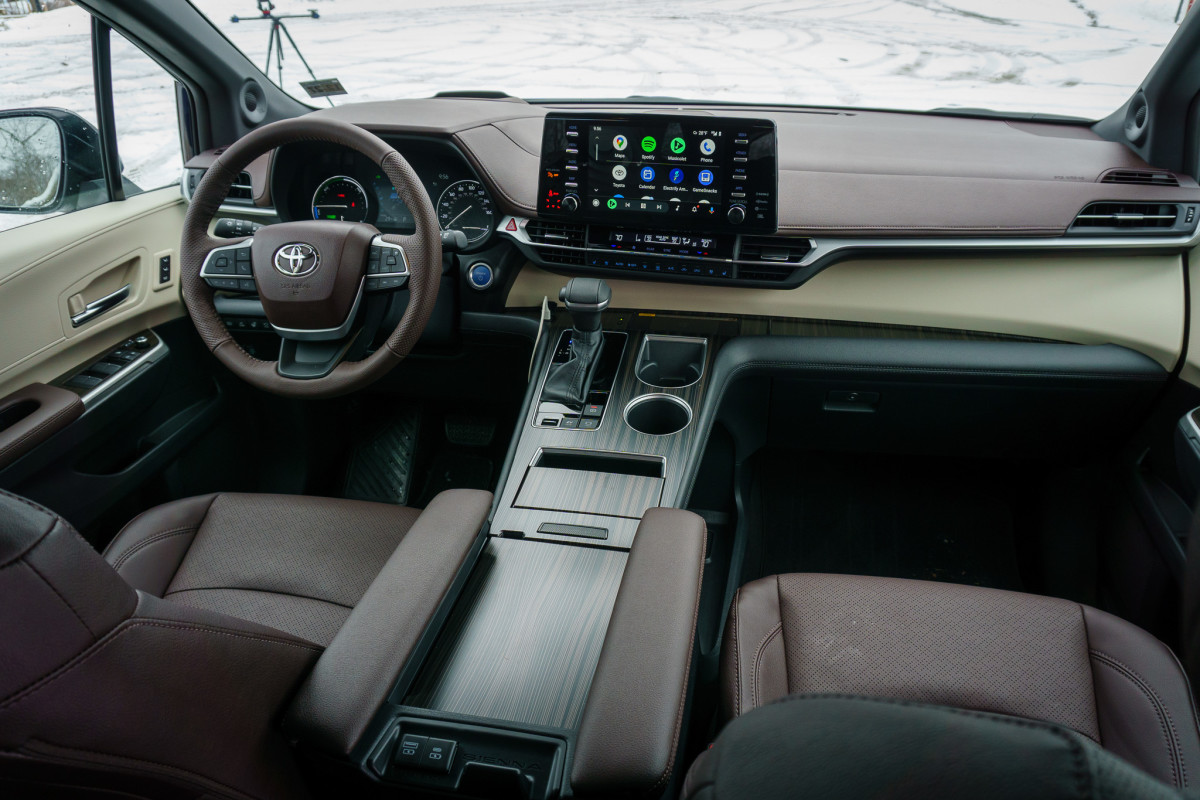
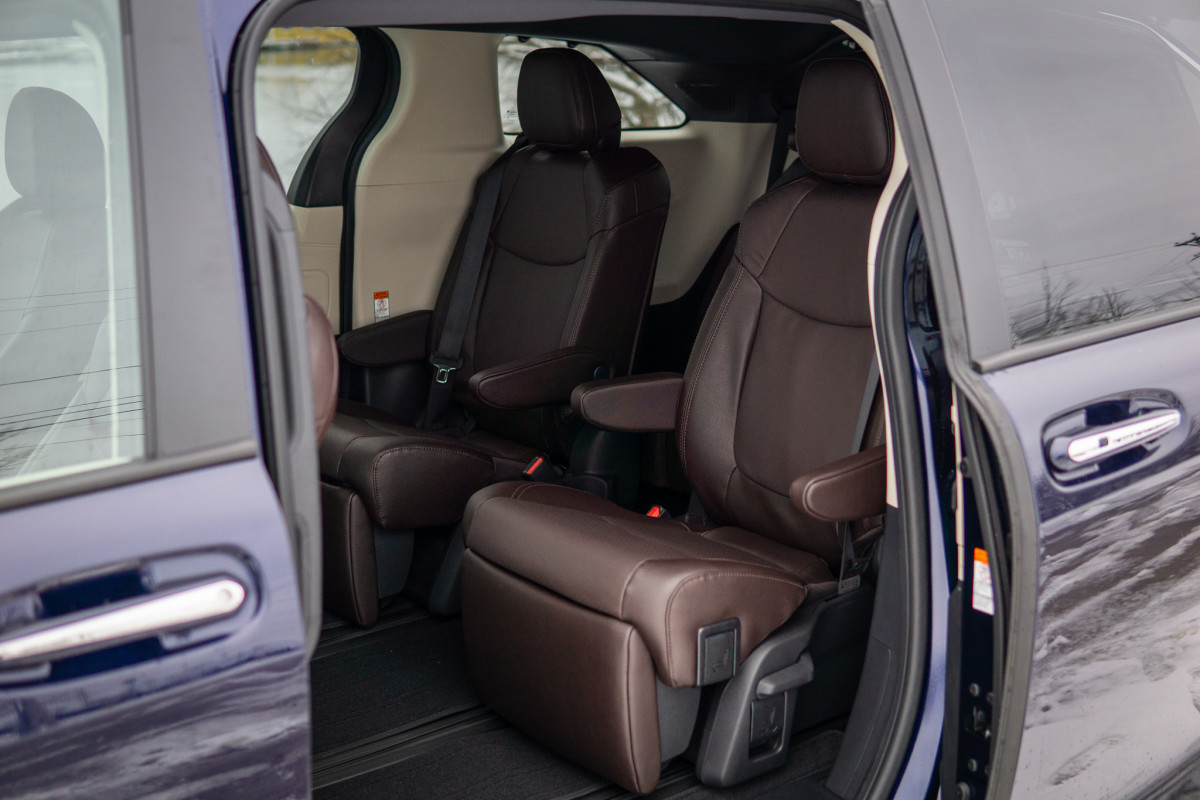
Inside, the Sienna is easy to love. We drove a Platinum trim model for this test car and were quickly smitten by the lovely and high-quality brown leather upholstery. Similarly, our Sienna test car had beautiful wood-grain accents on the center console.
Toyota sells the Sienna with seating for seven or eight passengers, although you’ll need to settle for either an LE or XLE trim if you want the larger human capacity. On the bright side, those eight-seaters with a middle bench seat can support three-across car seats in the middle row, secured with LATCH anchors.
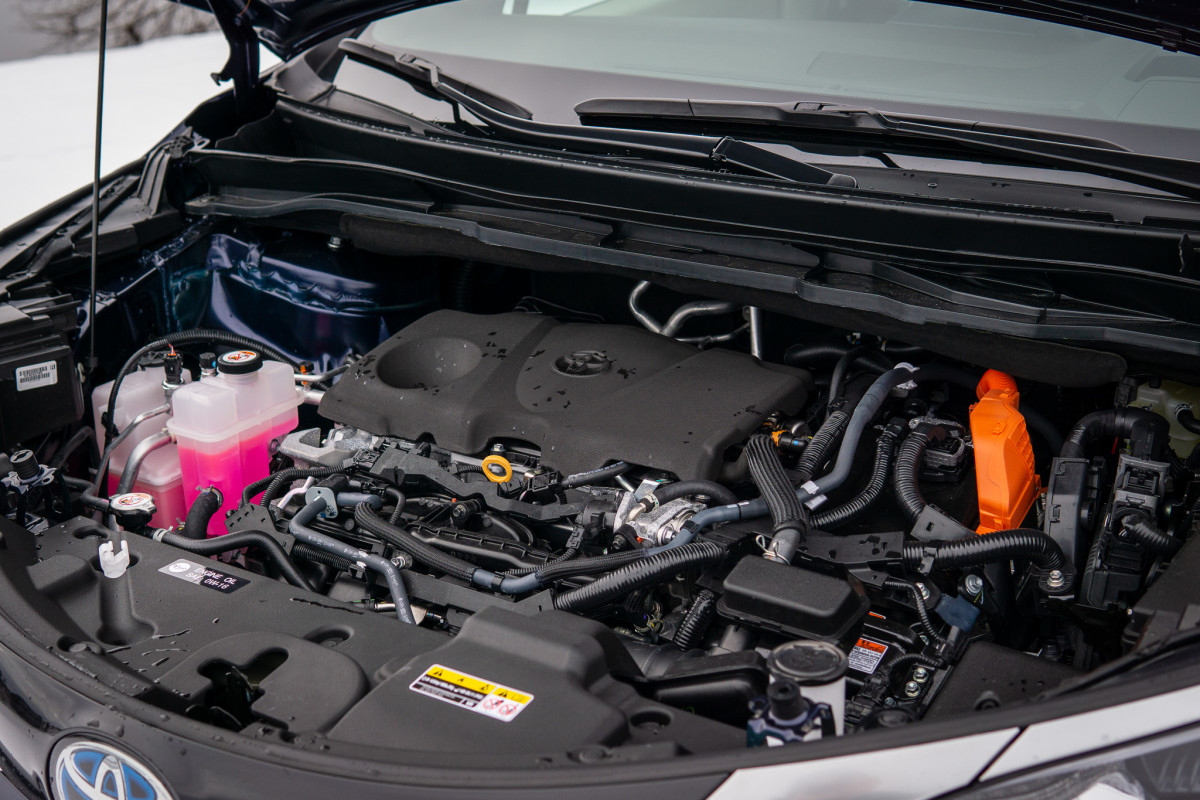
When Toyota revealed the fourth-generation Toyota Sienna in 2020, it dropped the traditional gasoline engine and fitted every model with a hybrid.
Toyota uses a 2.5-liter four-cylinder engine mated with two front-mounted electric motors, plus a third rear-mounted electric motor for all-wheel drive (AWD) trims. The powertrain components combine for 245 net system horsepower, specs that look a fair bit less impressive than the competition’s.
There’s not quite enough power for the Sienna’s ample size and weight, and its continuously variable transmission (CVT) tends to claw its way up the rev band—it’s just not the best-sounding powertrain. Compared with the more powerful Odyssey, we grew a little weary of the Sienna’s lackluster acceleration.
However, we’re thrilled with the Sienna’s chassis and steering. The platform is sound and surprisingly nimble. The Sienna is easy to drive around town, despite its size, and it cruises on the highway with no problem. Considering this is a big minivan, the Sienna is genuinely fun to drive.
In particular, the Sienna’s light steering feel is great for driving in the city. It’s rare to find a minivan with this sort of tidy turning radius. Toyota offers a few drive modes in the Sienna—EV, Normal, Eco, and Sport—but we’d recommend keeping the Sienna in normal mode. Eco mode extends the CVT’s simulated gears a bit too much and dampens the throttle way too much. EV mode is largely useless; it hypothetically lets you drive the Sienna on electric power alone, but we were unable to stop the gas engine from engaging every time we tried it. Finally, Sport mode simply isn’t dramatic enough to convince anyone that they’re not driving a minivan.
Minivans are beautiful bastions of cubbies and nooks and shelves and bins, and the 2023 Toyota Sienna is no exception. The interior storage solutions are brilliant. There’s plenty of space for a large bag or purse in the open cubby below the center console, and a long shelf extends from the middle of the dash all the way in front of the passenger’s seat. That shelf is perfect for a phone, and in higher trims, it comes equipped with a wireless charging pad.
The Sienna also has a big bin in the center console and enough cupholders so everyone on board can have at least two drinks.
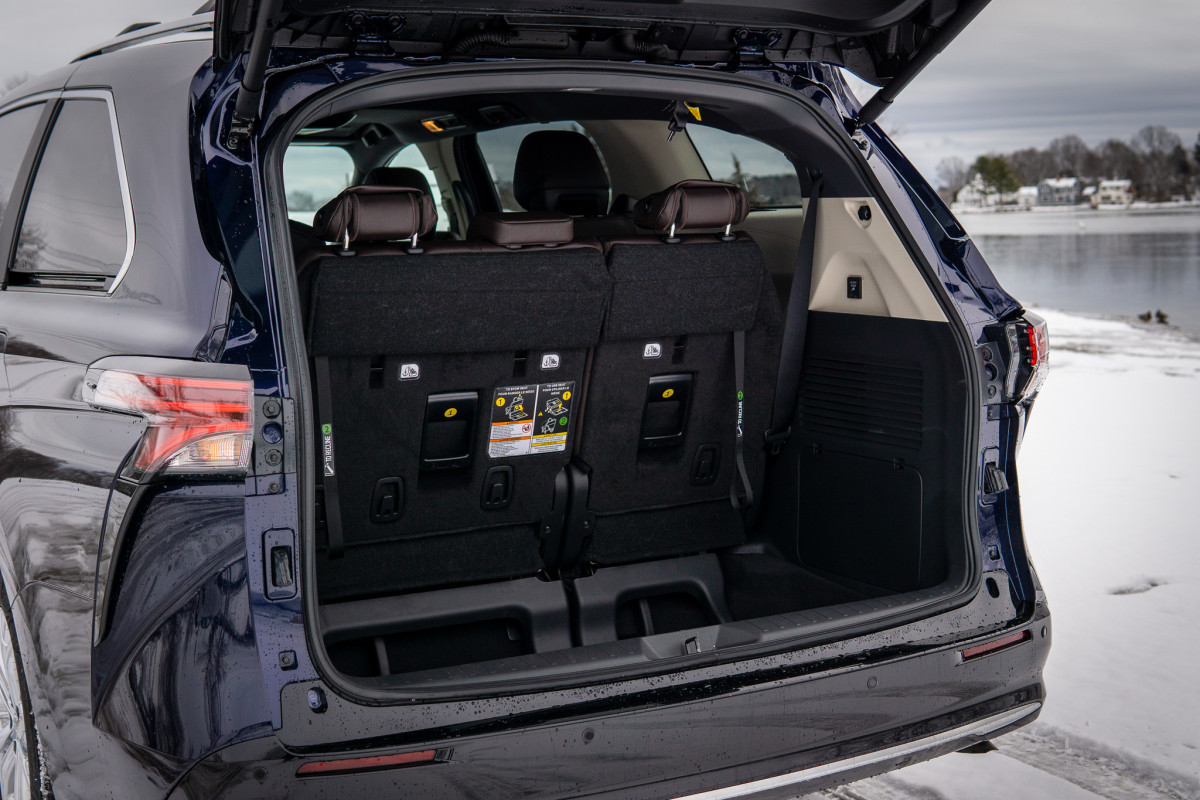
At over 200 inches long and stretched over a 120.5-inch wheelbase, the Toyota Sienna is a big vehicle. Shoppers looking for three rows of seats in a smaller package may be drawn to the marginally smaller Toyota Highlander. That said, the Sienna’s minivan platform makes amazing use of space. Unlike in a three-row crossover, there’s a huge amount of cargo space behind the Sienna’s rearmost seat.
Thanks to a deep floor, the Sienna delivers 33.5 cubic feet of space behind the third row and, with that seat folded into the floor, it offers 75.2 cubic feet. Total cargo space comes in at 101 cubic feet. Although those figures dwarf the Highlander’s (16 cubic feet behind the third row, 84.3 cubic feet, max), the total cargo space number does fall short of other competing minivans. The reason is that, unlike the Honda Odyssey, the middle row of seats cannot be fully removed from the Sienna. Nor can they fold into the floor, like the Chrysler Pacifica’s stow-n-go second row. If you need maximum space, consider one of those competitors. If you expect to have people in the second row regularly, however, you likely won’t mind the Sienna’s permanent middle row.
Additionally, the second row captain’s chairs are incredibly functional regardless of its occupant’s height. Our test car featured extending ottomans for a bit extra thigh support. The middle-row seats also slide forward and backward on a long track. Slide them forward, and the Sienna’s third-row seats can accommodate genuine, life-size adults with genuine legroom—not something you can say about most three-row crossovers.
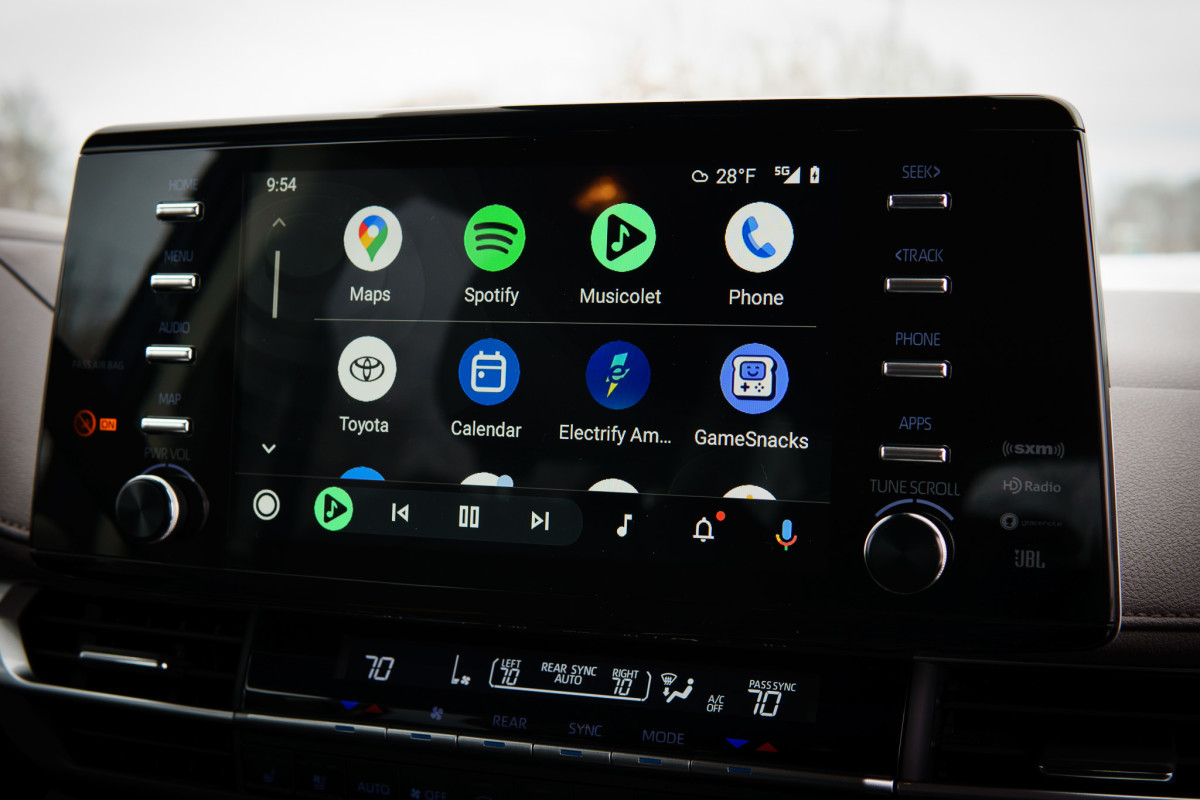
Toyota has some impressive new technology on display in models like the 2022 Tundra and the 2023 Sequoia. Unfortunately, that tech is not on display in the 2023 Sienna.
Instead, the Sienna makes do with Toyota’s older infotainment interface. Pretty much all the core features are still there—SiriusXM satellite radio, Bluetooth connectivity, standard Apple CarPlay and Android Auto, an optional navigation system, and the Sienna boasts seven USB ports. The older infotainment interface also benefits from some physical buttons, a functional feature that’s rapidly disappearing from modern cars. While touchscreen buttons look nice, they often require you to take your eyes off the road for longer than you’d need with a physical button.
However, the interface looks and feels old, and it can be a bit clunky to use. For instance, both Android Auto and Apple CarPlay require a wired connection. Additionally, to access Android Auto, we needed to enter via the menu view every time; there is no dedicated button, tile, or icon. Even selecting the audio tile when playing music via Spotify on Android Auto didn’t take us to the desired software. Instead, it took us to Toyota’s music player, showing our Spotify selection on a decidedly not-Spotify display.
Outside of the old design and a few quirks, however, the Sienna’s technology is reliable. A 9-inch touchscreen didn’t seem impressive to us on paper, but we were pleased that it didn’t look undersized in person. The 12-speaker JBL audio system in our press car also sounded good.
If the 2023 Toyota Sienna’s infotainment tech underwhelms you, rest assured that the minivan’s standard safety technology will impress. The Sienna comes standard with a host of advanced driver assistance systems (ADAS) including automatic emergency braking with pedestrian detection, lane-departure warning with steering assist, blind-spot monitoring with rear cross-traffic alert, automatic high beams, and adaptive cruise control. These valuable safety features are particularly important in a family car that’s likely to be used for driving with kids aboard.
It comes as no surprise that the 2023 Toyota Sienna was awarded 5 stars in crash tests facilitated by the National Highway Traffic Safety Administration (NHTSA). And, while the 2023 model has not yet been rated by the Insurance Institute for Highway Safety (IIHS), the mechanically identical 2022 Sienna received a Top Safety Pick+ designation.
When it comes to safety, Toyota clearly doesn’t mess around. That said, its competitors from Honda and Chrysler are also Top Safety Pick+ winners (the Kia Carnival received a Top Safety Pick award, but not a TSP+). And Toyota doesn’t fill the Sienna with some of the more gimmicky features found in family haulers. For instance, Honda offers CabinTalk, an intercom system that helps the folks in the front seat communicate with kids in the way back. And Chrysler has its FamCam—a rear-seat camera system that lets Mom and Dad keep an eye on their rear-seat progeny.
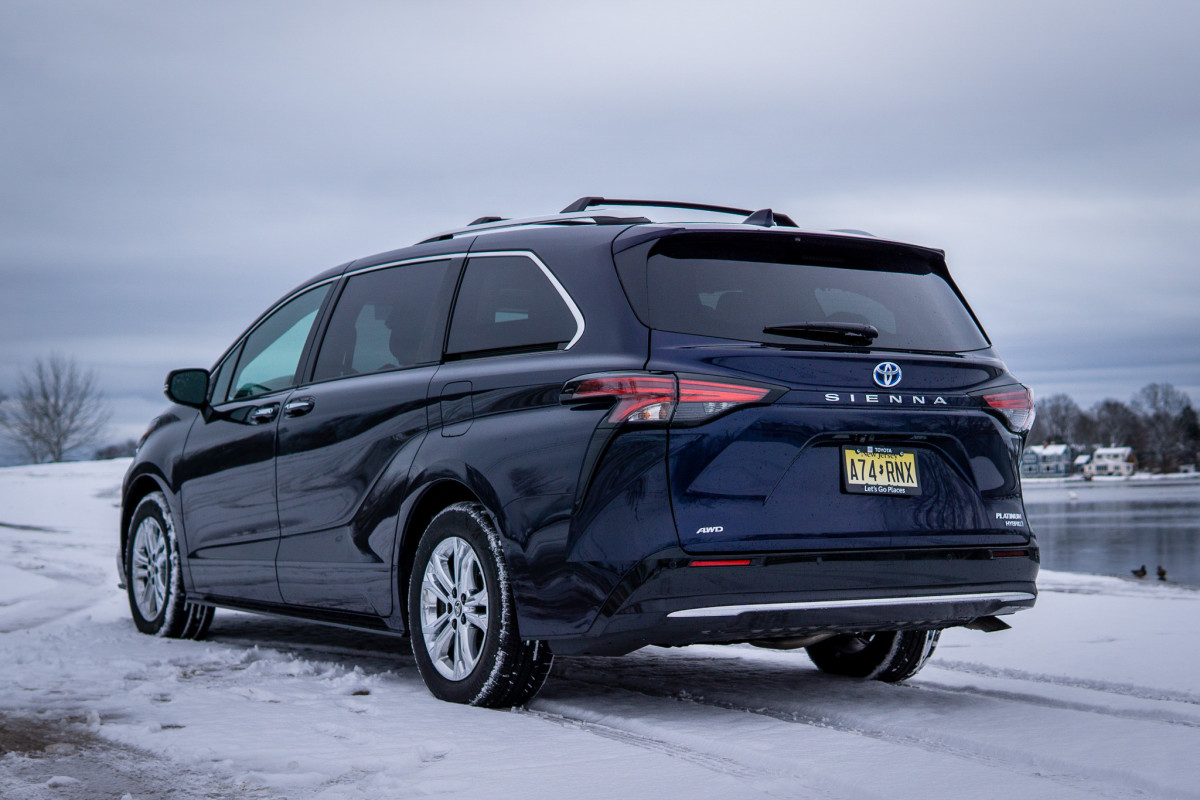
Having kids is expensive, and that extends to your transportation needs. Shuttle one child around regularly, and you probably won’t outgrow a typical compact crossover. Upgrade to two, however, and soon enough you’re driving them around with their friends, and three rows become a necessity. So, how much is that extra row going to cost you?
The Toyota Sienna’s MSRP starts at $37,470, including a $1,335 destination fee. The top-tier Sienna Platinum trim soars at $52,930, and our test car’s as-tested price was $55,325.
However, remember that all Sienna models use a hybrid powertrain. That means you can expect significant fuel savings when compared to gas-powered minivans and crossovers. The EPA rates the Sienna with AWD at 35 mpg in the city, 36 highway, and 35 combined. With FWD, the numbers are 36 across the board. For reference, the EPA estimates the Honda Odyssey at 22 combined, the Kia Carnival at 22 combined, and the Chrysler Pacifica at 20. There is one PHEV on the market—the Chrysler Pacifica hybrid that delivers excellent fuel economy—but that model starts at over $50,000.
The Sienna, like all family haulers these days, is a big investment. But with its excellent fuel economy, it’s a more frugal purchase than its competitors, making it an ideal choice for budget-conscious families.

User reviews for 2023 Toyota Sienna
Write a review2023 Toyota Sienna Pricing
Trims & specs
Air Conditioning
Automatic climate control front air conditioning · Dual front air conditioning zones · Automatic climate control rear air conditioning · Single rear air conditioning zones · Second and third row rear heat vents
Airbags
Passenger seat cushion front airbags · Driver knee airbags · Passenger airbag deactivation: occupant sensing deactivation · Front side airbags · Third row side curtain airbags
Audio System
Antenna Type: diversity · Voice recognition audio system · Bluetooth auxiliary audio input · AM/FM radio · Satellite Radio: SiriusXM · Total Number of Speakers: 6
Brakes
ABS: 4-wheel · Braking assist: hill start assist · Electronic parking brake: auto off · Front brake diameter: 12.9 · Front brakes: ventilated disc · Rear brake diameter: 12.5 · Rear brakes: ventilated disc
Comfort Features
Armrests: dual front · Center console trim: simulated wood · Dash trim: simulated alloy · Door trim: simulated wood · Floor Material: carpet · Steering wheel trim: urethane
Convenience Features
Adaptive stop and go cruise control: semi-automatic · Assist handle: rear · Autonomous lane guidance: lane centering · Center console: front console with storage · Cruise control: adaptive · Cupholders: front · Easy entry: manual rear seat · Multi-function remote: keyless entry with panic alarm · One-touch windows: 4 · Power outlet(s): USB-C third row · Power steering: electric · Power windows: lockout button · Reading lights: rear · Steering wheel: tilt and telescopic · Steering wheel mounted controls: audio · Storage: front seatback · Sunshade: side window · Vanity mirrors: dual illuminating
Driver Seat
Power adjustments: 8
Engine
EV battery capacity: 1.9 kWh · Electric Motor Battery Type: nickel-metal hydride · Electric Motor HP: 180 · Electric Motor Power Output (Kilowatts): 134 · Electric Motor Torque: 199 · Hybrid Gas Engine HP: 189 · Hybrid Gas Engine HP@RPM: 6000 · Hybrid Gas Engine Torque: 176 · Hybrid gas Engine Torque@RPM: 4400 · Oil cooler: auxiliary
Exterior Features
Door handle color: body-color · Front bumper color: body-color · Grille color: black · Mirror color: body-color · Rear bumper color: black · Rear spoiler: roofline spoiler · Rear spoiler color: body-color · Rear trunk/liftgate: liftgate · Rocker panel color: body-color · Side door type: dual power sliding · Window trim: chrome
Headrests
Front headrests: adjustable · Number of front headrests: 2 · Number of rear headrests: 3 · Number of third row headrests: 3
Hybrid
Starter Type: motor/generator
In Car Entertainment
Connected in-car apps: Google POIs · Infotainment: Apply CarPlay ready · Infotainment screen size: 9 in.
Instrumentation
Fuel economy display: range · Instrument cluster screen size: 4.2 in. · Warnings and reminders: low oil pressure
Lights
Daytime running lights: LED · Exterior entry lights: security approach lamps · Headlights: automatic high beam dimmer · Tail and brake lights: LED
Mirrors
Exterior mirrors: power · Inside rearview mirror: manual day/night
Passenger Seat
Manual Adjustments: 4
Rear Seats
Type: 40-20-40 split bench
Roof
OEM roof height: undefined
Safety
Automatic emergency braking: front pedestrian · Camera system: rearview · Child seat anchors: LATCH system · Cross Traffic Alert: rear · Crumple zones: front · Impact sensor: battery disconnect · Pre-Collision Warning System: visual warning · Pre-collision warning system: pedestrian detection · Rearview monitor: in dash
Seatbelts
Emergency locking retractors: front, rear, third, and fourth row · Front seatbelts: 3-point · Seatbelt force limiters: front · Seatbelt pretensioners: front · Seatbelt warning sensor: driver and passenger · Second row seatbelts: 3-point · Third row seatbelts: 3-point
Seats
Driver seat power adjustments: reclining · Front seat type: captains chairs · Passenger seat manual adjustments: reclining · Rear headrests: adjustable · Rear seat folding: split · Rear seat manual adjustments: reclining · Third row headrests: adjustable · Third row seat folding: fold flat into floor · Upholstery: cloth
Security
Power door locks: anti-lockout
Spare Tire
Kit: tire sealant
Stability and Traction
Traction control: with trailer stability control
Steering
Steering ratio: 14.3 · Turns lock-to-lock: 3.1
Suspension
Front Arm Type: lower control arms · Front Shock Type: gas shock absorbers · Front Spring Type: coil springs · Front Stabilizer Bar: diameter 27 mm · Front Suspension Classification: independent · Front Suspension Type: MacPherson struts · Rear Shock Type: gas shock absorbers · Rear Spring Type: coil springs · Rear Stabilizer Bar: diameter 15 mm · Rear Suspension Classification: independent · Rear Suspension Type: multi-link
Telematics
Driver assistance app: roadside assistance · Electronic messaging assistance: with read function · Phone: voice activated · Phone wireless data link: Bluetooth · Smart device app compatibility: Toyota Connected Services · Smart device app function: vehicle location · Wifi: hotspot
Third Row Seat
Type: 40-60 split bench
Tires
Type: all season
Tires and Rims
Wheel type: aluminum alloy
Windows
Front wipers: variable intermittent · Liftgate window: fixed · Power windows: with safety reverse · Rear wiper: intermittent
Air Conditioning
Automatic climate control front air conditioning · Dual front air conditioning zones · Automatic climate control rear air conditioning · Single rear air conditioning zones · Second and third row rear heat vents
Airbags
Dual front airbags · Driver knee airbags · Passenger airbag deactivation: occupant sensing deactivation · Front side airbags · Front side curtain airbags
Audio System
Antenna Type: mast · Voice recognition audio system · Bluetooth auxiliary audio input · Touch screen display radio · Satellite Radio: SiriusXM · Total Number of Speakers: 6
Brakes
ABS: 4-wheel · Braking assist: hill start assist · Electronic parking brake: auto off · Front brake diameter: 12.9 · Front brakes: ventilated disc · Rear brake diameter: 12.5 · Rear brakes: ventilated disc
Comfort Features
Armrests: rear outboard seats · Center console trim: simulated wood · Dash trim: simulated alloy · Door trim: simulated wood · Floor Material: carpet · Steering wheel trim: urethane
Convenience Features
Adaptive stop and go cruise control: semi-automatic · Assist handle: passenger side · Autonomous lane guidance: lane centering · Center console: front console with storage · Cruise control: adaptive · Cupholders: illuminated · Easy entry: manual rear seat · Multi-function remote: keyless entry · One-touch windows: 4 · Power outlet(s): USB-C third row · Power steering: speed-proportional · Power windows: lockout button · Reading lights: front · Steering wheel: tilt and telescopic · Steering wheel mounted controls: phone · Storage: sunglasses holder · Sunshade: side window · Vanity mirrors: dual illuminating
Driver Seat
Power adjustments: 8
Drivetrain
4WD Type: on demand
Engine
EV battery capacity: 1.9 kWh · Electric Motor Battery Type: nickel-metal hydride · Electric Motor HP: 180 · Electric Motor Power Output (Kilowatts): 134 · Electric Motor Torque: 199 · Hybrid Gas Engine HP: 189 · Hybrid Gas Engine HP@RPM: 6000 · Hybrid Gas Engine Torque: 176 · Hybrid gas Engine Torque@RPM: 4400 · Oil cooler: auxiliary
Exterior Features
Door handle color: body-color · Front bumper color: body-color · Grille color: black · Mirror color: body-color · Rear bumper color: black · Rear spoiler: roofline spoiler · Rear spoiler color: body-color · Rear trunk/liftgate: liftgate · Rocker panel color: body-color · Side door type: dual power sliding · Window trim: chrome
Headrests
Front headrests: adjustable · Number of front headrests: 2 · Number of rear headrests: 3 · Number of third row headrests: 3
Hybrid
Starter Type: motor/generator
In Car Entertainment
Connected in-car apps: Google POIs · Infotainment: Apply CarPlay ready · Infotainment screen size: 9 in.
Instrumentation
Fuel economy display: MPG · Instrument cluster screen size: 4.2 in. · Warnings and reminders: lamp failure
Lights
Daytime running lights: LED · Exterior entry lights: security approach lamps · Headlights: Auto on/off · Tail and brake lights: LED
Mirrors
Exterior mirrors: power · Inside rearview mirror: manual day/night
Passenger Seat
Manual Adjustments: 4
Rear Seats
Type: folding removable center seat
Roof
OEM roof height: undefined
Safety
Automatic emergency braking: front pedestrian · Camera system: rearview · Child seat anchors: LATCH system · Cross Traffic Alert: rear · Crumple zones: rear · Impact sensor: door unlock · Pre-Collision Warning System: visual warning · Pre-collision warning system: pedestrian detection · Rearview monitor: in dash
Seatbelts
Emergency locking retractors: front · Front seatbelts: 3-point · Seatbelt force limiters: front and rear · Seatbelt pretensioners: front and rear · Seatbelt warning sensor: driver and passenger · Second row seatbelts: 3-point · Third row seatbelts: 3-point
Seats
Driver seat power adjustments: height · Front seat type: captains chairs · Passenger seat manual adjustments: reclining · Rear headrests: adjustable · Rear seat folding: split · Rear seat manual adjustments: reclining · Third row headrests: adjustable · Third row seat folding: split · Upholstery: cloth
Security
Power door locks: anti-lockout
Spare Tire
Kit: inflator kit
Stability and Traction
Traction control: with trailer stability control
Steering
Steering ratio: 14.3 · Turns lock-to-lock: 3.1
Suspension
Front Arm Type: lower control arms · Front Shock Type: gas shock absorbers · Front Spring Type: coil springs · Front Stabilizer Bar: diameter 27 mm · Front Suspension Classification: independent · Front Suspension Type: MacPherson struts · Rear Shock Type: gas shock absorbers · Rear Spring Type: coil springs · Rear Stabilizer Bar: diameter 15 mm · Rear Suspension Classification: independent · Rear Suspension Type: multi-link
Telematics
Driver assistance app: roadside assistance · Electronic messaging assistance: with voice recognition · Phone: voice activated · Phone wireless data link: Bluetooth · Smart device app compatibility: Toyota Connected Services · Smart device app function: maintenance status · Wifi: hotspot
Third Row Seat
Type: 40-60 split bench
Tires
Type: all season
Tires and Rims
Wheel type: aluminum alloy
Windows
Front wipers: variable intermittent · Liftgate window: fixed · Power windows: with safety reverse · Rear wiper: auto-on in reverse
Air Conditioning
Automatic climate control front air conditioning · Dual front air conditioning zones · Rear air conditioning: with independent controls · Dual rear air conditioning zones · Second and third row rear heat vents
Airbags
Passenger seat cushion front airbags · Driver knee airbags · Passenger airbag deactivation: occupant sensing deactivation · Front side airbags · Third row side curtain airbags
Audio System
Antenna Type: diversity · Voice recognition audio system · Bluetooth auxiliary audio input · Touch screen display radio · Satellite Radio: SiriusXM · Total Number of Speakers: 8
Brakes
ABS: 4-wheel · Braking assist: hill start assist · Electronic parking brake: auto off · Front brake diameter: 12.9 · Front brakes: ventilated disc · Rear brake diameter: 12.5 · Rear brakes: ventilated disc
Comfort Features
Armrests: dual front · Center console trim: simulated wood · Dash trim: simulated alloy · Door trim: simulated wood · Floor Material: carpet · Steering wheel trim: leather
Convenience Features
Adaptive stop and go cruise control: semi-automatic · Assist handle: passenger side · Autonomous lane guidance: lane centering · Center console: front console with storage · Cruise control: adaptive · Cupholders: front · Dimming rearview mirror: auto-dimming · Easy entry: manual rear seat · Multi-function remote: trunk release · One-touch windows: 4 · Power outlet(s): USB-C third row · Power steering: electric · Power windows: lockout button · Reading lights: rear · Steering wheel: tilt and telescopic · Steering wheel mounted controls: audio · Storage: door pockets · Sunshade: side window · Universal garage door opener: Homelink · Vanity mirrors: dual illuminating
Driver Seat
Adjustable lumbar support: power · Power adjustments: 8
Engine
EV battery capacity: 1.9 kWh · Electric Motor Battery Type: nickel-metal hydride · Electric Motor HP: 180 · Electric Motor Power Output (Kilowatts): 134 · Electric Motor Torque: 199 · Hybrid Gas Engine HP: 189 · Hybrid Gas Engine HP@RPM: 6000 · Hybrid Gas Engine Torque: 176 · Hybrid gas Engine Torque@RPM: 4400 · Oil cooler: auxiliary
Exterior Features
Door handle color: body-color with chrome accents · Front bumper color: body-color · Grille color: black · Mirror color: body-color · Rear bumper color: black · Rear spoiler: roofline spoiler · Rear spoiler color: body-color · Rear trunk/liftgate: sensor-activated · Rocker panel color: body-color · Side door type: dual power sliding · Window trim: chrome
Headrests
Front headrests: adjustable · Number of front headrests: 2 · Number of rear headrests: 3 · Number of third row headrests: 3
Hybrid
Starter Type: motor/generator
In Car Entertainment
Connected in-car apps: Amazon Alexa · Infotainment: Apply CarPlay ready · Infotainment screen size: 9 in.
Instrumentation
Fuel economy display: MPG · Instrument cluster screen size: 4.2 in. · Warnings and reminders: low fuel level
Lights
Daytime running lights: LED · Exterior entry lights: security approach lamps · Front fog lights: LED · Headlights: auto delay off · Tail and brake lights: LED
Mirrors
Exterior mirrors: power
Passenger Seat
Power adjustments: 4
Rear Seats
Type: 40-20-40 split bench
Roof
Moonroof: one-touch open/close · OEM roof height: undefined
Safety
Automatic emergency braking: front · Camera system: rearview · Child seat anchors: LATCH system · Cross Traffic Alert: rear · Crumple zones: front · Impact sensor: post-collision safety system · Parking sensors: rear · Pre-Collision Warning System: audible warning · Pre-collision warning system: pedestrian detection · Rear pre-collision warning system: pedestrian detection · Rearview monitor: in dash
Seatbelts
Emergency locking retractors: front, rear, third, and fourth row · Front seatbelts: 3-point · Seatbelt force limiters: front and rear · Seatbelt pretensioners: front · Seatbelt warning sensor: driver and passenger · Second row seatbelts: 3-point · Third row seatbelts: 3-point
Seats
Driver seat power adjustments: reclining · Front seat type: captains chairs · Passenger seat power adjustments: reclining · Rear headrests: adjustable · Rear seat folding: split · Rear seat manual adjustments: reclining · Third row headrests: adjustable · Third row seat folding: fold flat into floor · Upholstery: leatherette
Security
Power door locks: anti-lockout
Spare Tire
Kit: tire sealant
Stability and Traction
Traction control: with trailer stability control
Steering
Steering ratio: 14.3 · Turns lock-to-lock: 3.1
Suspension
Front Arm Type: lower control arms · Front Shock Type: gas shock absorbers · Front Spring Type: coil springs · Front Stabilizer Bar: diameter 27 mm · Front Suspension Classification: independent · Front Suspension Type: MacPherson struts · Rear Shock Type: gas shock absorbers · Rear Spring Type: coil springs · Rear Stabilizer Bar: diameter 15 mm · Rear Suspension Classification: independent · Rear Suspension Type: multi-link
Telematics
Driver assistance app: roadside assistance · Electronic messaging assistance: with voice recognition · Phone: voice activated · Phone wireless data link: Bluetooth · Smart device app compatibility: Toyota Connected Services · Smart device app function: security event/collision alert · Wifi: hotspot
Third Row Seat
Type: 40-60 split bench
Tires
Type: all season
Tires and Rims
Wheel type: aluminum alloy
Windows
Front wipers: variable intermittent · Liftgate window: fixed · Power windows: with safety reverse · Rear wiper: intermittent
Air Conditioning
Automatic climate control front air conditioning · Dual front air conditioning zones · Rear air conditioning: with independent controls · Dual rear air conditioning zones · Second and third row rear heat vents
Airbags
Dual front airbags · Driver knee airbags · Passenger airbag deactivation: occupant sensing deactivation · Front side airbags · Rear side curtain airbags
Audio System
Antenna Type: diversity · Voice recognition audio system · Bluetooth auxiliary audio input · AM/FM radio · Satellite Radio: SiriusXM · Total Number of Speakers: 8
Brakes
ABS: 4-wheel · Braking assist: hill start assist · Electronic parking brake: auto off · Front brake diameter: 12.9 · Front brakes: ventilated disc · Rear brake diameter: 12.5 · Rear brakes: ventilated disc
Comfort Features
Armrests: dual front · Center console trim: simulated wood · Dash trim: simulated alloy · Door trim: simulated wood · Floor Material: carpet · Steering wheel trim: leather
Convenience Features
Adaptive stop and go cruise control: semi-automatic · Assist handle: rear · Autonomous lane guidance: lane centering · Center console: front console with storage · Cruise control: adaptive · Cupholders: rear · Dimming rearview mirror: auto-dimming · Easy entry: manual rear seat · Multi-function remote: proximity entry system · One-touch windows: 4 · Power outlet(s): USB-C front · Power steering: speed-proportional · Power windows: lockout button · Reading lights: third row · Steering wheel: tilt and telescopic · Steering wheel mounted controls: multi-function screen controls · Storage: grocery bag holder · Sunshade: side window · Universal garage door opener: Homelink · Vanity mirrors: dual illuminating
Driver Seat
Adjustable lumbar support: power · Power adjustments: 8
Engine
EV battery capacity: 1.9 kWh · Electric Motor Battery Type: nickel-metal hydride · Electric Motor HP: 180 · Electric Motor Power Output (Kilowatts): 134 · Electric Motor Torque: 199 · Hybrid Gas Engine HP: 189 · Hybrid Gas Engine HP@RPM: 6000 · Hybrid Gas Engine Torque: 176 · Hybrid gas Engine Torque@RPM: 4400 · Oil cooler: auxiliary
Exterior Features
Door handle color: body-color with chrome accents · Front bumper color: chrome accents · Grille color: black · Mirror color: body-color · Rear bumper color: black · Rear spoiler: roofline spoiler · Rear spoiler color: body-color · Rear trunk/liftgate: liftgate · Rocker panel color: body-color · Side door type: dual power sliding · Window trim: chrome
Headrests
Front headrests: adjustable · Number of front headrests: 2 · Number of rear headrests: 2 · Number of third row headrests: 3
Hybrid
Starter Type: motor/generator
In Car Entertainment
Connected in-car apps: Google POIs · Infotainment: Apply CarPlay ready · Infotainment screen size: 9 in.
Instrumentation
Fuel economy display: MPG · Instrument cluster screen size: 4.2 in. · Warnings and reminders: low fuel level
Lights
Daytime running lights: LED · Exterior entry lights: security approach lamps · Front fog lights: LED · Headlights: Auto on/off · Tail and brake lights: LED
Mirrors
Exterior mirrors: heated
Passenger Seat
Power adjustments: 4
Rear Seats
Type: captains chairs
Roof
Moonroof: power glass · OEM roof height: undefined
Safety
Automatic emergency braking: rear · Camera system: rearview · Child seat anchors: LATCH system · Cross Traffic Alert: rear · Crumple zones: front · Impact sensor: alert system · Parking sensors: rear · Pre-Collision Warning System: audible warning · Pre-collision warning system: pedestrian detection · Rear pre-collision warning system: pedestrian detection · Rearview monitor: in dash
Seatbelts
Emergency locking retractors: front and rear · Front seatbelts: 3-point · Seatbelt force limiters: front · Seatbelt pretensioners: front and rear · Seatbelt warning sensor: driver and passenger · Second row seatbelts: 3-point · Third row seatbelts: 3-point
Seats
Driver seat power adjustments: reclining · Front seat type: captains chairs · Passenger seat power adjustments: reclining · Rear headrests: adjustable · Rear seat manual adjustments: reclining · Third row headrests: adjustable · Third row seat folding: fold flat into floor · Upholstery: leatherette
Security
Power door locks: anti-lockout
Spare Tire
Kit: tire sealant
Stability and Traction
Traction control: with trailer stability control
Steering
Steering ratio: 14.3 · Turns lock-to-lock: 3.1
Suspension
Front Arm Type: lower control arms · Front Shock Type: gas shock absorbers · Front Spring Type: coil springs · Front Stabilizer Bar: diameter 27 mm · Front Suspension Classification: independent · Front Suspension Type: MacPherson struts · Rear Shock Type: gas shock absorbers · Rear Spring Type: coil springs · Rear Stabilizer Bar: diameter 15 mm · Rear Suspension Classification: independent · Rear Suspension Type: multi-link
Telematics
Driver assistance app: roadside assistance · Electronic messaging assistance: with read function · Phone: voice activated · Phone wireless data link: Bluetooth · Smart device app compatibility: Toyota Connected Services · Smart device app function: vehicle location · Wifi: hotspot
Third Row Seat
Type: 40-60 split bench
Tires
Type: all season
Tires and Rims
Wheel type: aluminum alloy
Windows
Front wipers: variable intermittent · Liftgate window: fixed · Power windows: with safety reverse · Rear wiper: with washer
Air Conditioning
Automatic climate control front air conditioning · Dual front air conditioning zones · Automatic climate control rear air conditioning · Dual rear air conditioning zones · Second and third row rear heat vents
Airbags
Passenger seat cushion front airbags · Driver knee airbags · Passenger airbag deactivation: occupant sensing deactivation · Rear side airbags · Rear side curtain airbags
Audio System
Antenna Type: mast · Voice recognition audio system · USB auxiliary audio input · AM/FM radio · Satellite Radio: SiriusXM · Total Number of Speakers: 8
Brakes
ABS: 4-wheel · Braking assist: hill start assist · Electronic parking brake: auto off · Front brake diameter: 12.9 · Front brakes: ventilated disc · Rear brake diameter: 12.5 · Rear brakes: ventilated disc
Comfort Features
Armrests: rear outboard seats · Center console trim: simulated wood · Dash trim: simulated alloy · Door trim: simulated wood · Floor Material: carpet · Steering wheel trim: leather
Convenience Features
Adaptive stop and go cruise control: semi-automatic · Assist handle: passenger side · Autonomous lane guidance: lane centering · Center console: front console with storage · Cruise control: adaptive · Cupholders: illuminated · Dimming rearview mirror: auto-dimming · Easy entry: manual rear seat · Multi-function remote: keyless entry with panic alarm · One-touch windows: 4 · Power outlet(s): USB third row · Power steering: electric · Power windows: lockout button · Reading lights: rear · Steering wheel: tilt and telescopic · Steering wheel mounted controls: audio · Storage: sunglasses holder · Sunshade: side window · Universal garage door opener: Homelink · Vanity mirrors: dual illuminating
Driver Seat
Adjustable lumbar support: power · Power adjustments: 8
Drivetrain
4WD Type: on demand
Engine
EV battery capacity: 1.9 kWh · Electric Motor Battery Type: nickel-metal hydride · Electric Motor HP: 180 · Electric Motor Power Output (Kilowatts): 134 · Electric Motor Torque: 199 · Hybrid Gas Engine HP: 189 · Hybrid Gas Engine HP@RPM: 6000 · Hybrid Gas Engine Torque: 176 · Hybrid gas Engine Torque@RPM: 4400 · Oil cooler: auxiliary
Exterior Features
Door handle color: body-color with chrome accents · Front bumper color: body-color · Grille color: black · Mirror color: body-color · Rear bumper color: black · Rear spoiler: roofline spoiler · Rear spoiler color: body-color · Rear trunk/liftgate: sensor-activated · Rocker panel color: body-color · Side door type: dual power sliding · Window trim: chrome
Headrests
Front headrests: adjustable · Number of front headrests: 2 · Number of rear headrests: 2 · Number of third row headrests: 3
Hybrid
Starter Type: motor/generator
In Car Entertainment
Connected in-car apps: Google POIs · Infotainment: Apply CarPlay ready · Infotainment screen size: 9 in.
Instrumentation
Fuel economy display: range · Instrument cluster screen size: 4.2 in. · Warnings and reminders: coolant temperature warning
Lights
Daytime running lights: LED · Exterior entry lights: security approach lamps · Front fog lights: LED · Headlights: LED · Tail and brake lights: LED
Mirrors
Exterior mirrors: power
Passenger Seat
Power adjustments: 4
Rear Seats
Type: captains chairs
Roof
Moonroof: anti-trapping feature · OEM roof height: undefined
Safety
Automatic emergency braking: rear · Camera system: rearview · Child seat anchors: LATCH system · Cross Traffic Alert: rear · Crumple zones: front · Impact sensor: battery disconnect · Parking sensors: rear · Pre-Collision Warning System: visual warning · Pre-collision warning system: pedestrian detection · Rear pre-collision warning system: pedestrian detection · Rearview monitor: in dash
Seatbelts
Emergency locking retractors: front, rear, third, and fourth row · Front seatbelts: 3-point · Seatbelt force limiters: front and rear · Seatbelt pretensioners: front · Seatbelt warning sensor: driver and passenger · Second row seatbelts: 3-point · Third row seatbelts: 3-point
Seats
Driver seat power adjustments: reclining · Front seat type: captains chairs · Passenger seat power adjustments: reclining · Rear headrests: adjustable · Rear seat manual adjustments: reclining · Third row headrests: adjustable · Third row seat folding: split · Upholstery: leatherette
Security
Power door locks: anti-lockout
Spare Tire
Kit: tire sealant
Stability and Traction
Traction control: with trailer stability control
Steering
Steering ratio: 14.3 · Turns lock-to-lock: 3.1
Suspension
Front Arm Type: lower control arms · Front Shock Type: gas shock absorbers · Front Spring Type: coil springs · Front Stabilizer Bar: diameter 27 mm · Front Suspension Classification: independent · Front Suspension Type: MacPherson struts · Rear Shock Type: gas shock absorbers · Rear Spring Type: coil springs · Rear Stabilizer Bar: diameter 15 mm · Rear Suspension Classification: independent · Rear Suspension Type: multi-link
Telematics
Driver assistance app: roadside assistance · Electronic messaging assistance: with read function · Phone: voice activated · Phone wireless data link: Bluetooth · Smart device app compatibility: Toyota Connected Services · Smart device app function: maintenance scheduling · Wifi: hotspot
Third Row Seat
Type: 40-60 split bench
Tires
Type: all season
Tires and Rims
Wheel type: aluminum alloy
Windows
Front wipers: variable intermittent · Liftgate window: fixed · Power windows: with safety reverse · Rear wiper: with washer
Air Conditioning
Automatic climate control front air conditioning · Dual front air conditioning zones · Automatic climate control rear air conditioning · Dual rear air conditioning zones · Second and third row rear heat vents
Airbags
Passenger seat cushion front airbags · Driver knee airbags · Passenger airbag deactivation: occupant sensing deactivation · Front side airbags · Third row side curtain airbags
Audio System
Antenna Type: mast · Voice recognition audio system · Bluetooth auxiliary audio input · Touch screen display radio · Satellite Radio: SiriusXM · Total Number of Speakers: 8
Brakes
ABS: 4-wheel · Braking assist: hill start assist · Electronic parking brake: auto off · Front brake diameter: 12.9 · Front brakes: ventilated disc · Rear brake diameter: 12.5 · Rear brakes: ventilated disc
Comfort Features
Armrests: rear outboard seats · Center console trim: metallic · Dash trim: simulated alloy · Door trim: simulated alloy · Floor Material: carpet · Steering wheel trim: leather
Convenience Features
Adaptive stop and go cruise control: semi-automatic · Assist handle: rear · Autonomous lane guidance: lane centering · Center console: with lighting · Cruise control: adaptive · Cupholders: front, rear and third row · Dimming rearview mirror: auto-dimming · Easy entry: manual rear seat · Multi-function remote: proximity entry system · One-touch windows: 4 · Power outlet(s): 12V front · Power steering: electric · Power windows: lockout button · Reading lights: third row · Steering wheel: tilt and telescopic · Steering wheel mounted controls: multi-function screen controls · Storage: front seatback · Sunshade: side window · Universal garage door opener: Homelink · Vanity mirrors: dual illuminating
Driver Seat
Adjustable lumbar support: power · Power adjustments: 8
Engine
EV battery capacity: 1.9 kWh · Electric Motor Battery Type: nickel-metal hydride · Electric Motor HP: 180 · Electric Motor Power Output (Kilowatts): 134 · Electric Motor Torque: 199 · Hybrid Gas Engine HP: 189 · Hybrid Gas Engine HP@RPM: 6000 · Hybrid Gas Engine Torque: 176 · Hybrid gas Engine Torque@RPM: 4400 · Oil cooler: auxiliary
Exterior Features
Door handle color: body-color with chrome accents · Front bumper color: body-color · Grille color: black · Mirror color: black · Rear bumper color: black · Rear spoiler: roofline spoiler · Rear spoiler color: body-color · Rear trunk/liftgate: liftgate · Rocker panel color: black · Side door type: dual power sliding · Window trim: chrome
Headrests
Front headrests: adjustable · Number of front headrests: 2 · Number of rear headrests: 2 · Number of third row headrests: 3
Hybrid
Starter Type: motor/generator
In Car Entertainment
Connected in-car apps: Google search · Infotainment: Apply CarPlay ready · Infotainment screen size: 9 in.
Instrumentation
Fuel economy display: MPG · Instrument cluster screen size: 4.2 in. · Warnings and reminders: low oil pressure
Lights
Daytime running lights: LED · Exterior entry lights: security approach lamps · Front fog lights: LED · Headlights: LED · Tail and brake lights: LED
Mirrors
Exterior mirrors: manual folding
Passenger Seat
Power adjustments: 4
Rear Seats
Type: captains chairs
Roof
Moonroof: sliding sunshade · OEM roof height: undefined
Safety
Automatic emergency braking: front pedestrian · Camera system: rearview · Child seat anchors: LATCH system · Cross Traffic Alert: rear · Crumple zones: rear · Impact sensor: fuel cut-off · Parking sensors: front · Pre-Collision Warning System: audible warning · Pre-collision warning system: pedestrian detection · Rear pre-collision warning system: pedestrian detection · Rearview monitor: in dash
Seatbelts
Emergency locking retractors: front, rear, third, and fourth row · Front seatbelts: 3-point · Seatbelt force limiters: front and rear · Seatbelt pretensioners: front · Seatbelt warning sensor: driver and passenger · Second row seatbelts: 3-point · Third row seatbelts: 3-point
Seats
Driver seat power adjustments: reclining · Front seat type: captains chairs · Passenger seat power adjustments: reclining · Rear headrests: adjustable · Rear seat manual adjustments: reclining · Third row headrests: adjustable · Third row seat folding: fold flat into floor · Upholstery: leatherette
Security
Power door locks: anti-lockout
Spare Tire
Kit: inflator kit
Stability and Traction
Traction control: with trailer stability control
Steering
Steering ratio: 14.3 · Turns lock-to-lock: 3.1
Suspension
Front Arm Type: lower control arms · Front Shock Type: gas shock absorbers · Front Spring Type: coil springs · Front Stabilizer Bar: diameter 27 mm · Front Suspension Classification: independent · Front Suspension Type: MacPherson struts · Rear Shock Type: gas shock absorbers · Rear Spring Type: coil springs · Rear Stabilizer Bar: diameter 15 mm · Rear Suspension Classification: independent · Rear Suspension Type: multi-link
Telematics
Driver assistance app: roadside assistance · Electronic messaging assistance: with voice recognition · Navigation system: touch screen display · Phone: voice activated · Phone wireless data link: Bluetooth · Smart device app compatibility: Toyota Connected Services · Smart device app function: lock operation · Wifi: hotspot
Third Row Seat
Type: 40-60 split bench
Tires
Type: all season
Tires and Rims
Wheels: painted aluminum
Windows
Front wipers: variable intermittent · Liftgate window: fixed · Power windows: with safety reverse · Rear wiper: with washer
Air Conditioning
Automatic climate control front air conditioning · Dual front air conditioning zones · Automatic climate control rear air conditioning · Dual rear air conditioning zones · Second and third row rear heat vents
Airbags
Passenger seat cushion front airbags · Driver knee airbags · Passenger airbag deactivation: occupant sensing deactivation · Front side airbags · Rear side curtain airbags
Audio System
Antenna Type: diversity · Voice recognition audio system · USB auxiliary audio input · AM/FM radio · Satellite Radio: SiriusXM · Total Number of Speakers: 8
Brakes
ABS: 4-wheel · Braking assist: hill start assist · Electronic parking brake: auto off · Front brake diameter: 12.9 · Front brakes: ventilated disc · Rear brake diameter: 12.5 · Rear brakes: ventilated disc
Comfort Features
Armrests: dual front · Center console trim: metallic · Dash trim: simulated alloy · Door trim: simulated alloy · Floor Material: carpet · Steering wheel trim: leather
Convenience Features
Adaptive stop and go cruise control: semi-automatic · Assist handle: rear · Autonomous lane guidance: lane centering · Center console: front console with storage · Cruise control: adaptive · Cupholders: illuminated · Dimming rearview mirror: auto-dimming · Easy entry: manual rear seat · Multi-function remote: trunk release · One-touch windows: 4 · Power outlet(s): USB-C third row · Power steering: electric · Power windows: lockout button · Reading lights: third row · Steering wheel: tilt and telescopic · Steering wheel mounted controls: cruise controls · Storage: door pockets · Sunshade: side window · Universal garage door opener: Homelink · Vanity mirrors: dual illuminating
Driver Seat
Adjustable lumbar support: power · Power adjustments: 8
Drivetrain
4WD Type: on demand
Engine
EV battery capacity: 1.9 kWh · Electric Motor Battery Type: nickel-metal hydride · Electric Motor HP: 180 · Electric Motor Power Output (Kilowatts): 134 · Electric Motor Torque: 199 · Hybrid Gas Engine HP: 189 · Hybrid Gas Engine HP@RPM: 6000 · Hybrid Gas Engine Torque: 176 · Hybrid gas Engine Torque@RPM: 4400 · Oil cooler: auxiliary
Exterior Features
Door handle color: body-color with chrome accents · Front bumper color: body-color · Grille color: black · Mirror color: black · Rear bumper color: black · Rear spoiler: roofline spoiler · Rear spoiler color: body-color · Rear trunk/liftgate: sensor-activated · Rocker panel color: black · Side door type: dual power sliding · Window trim: chrome
Headrests
Front headrests: adjustable · Number of front headrests: 2 · Number of rear headrests: 2 · Number of third row headrests: 3
Hybrid
Starter Type: motor/generator
In Car Entertainment
Connected in-car apps: Google search · Infotainment: Apply CarPlay ready · Infotainment screen size: 9 in.
Instrumentation
Fuel economy display: MPG · Instrument cluster screen size: 4.2 in. · Warnings and reminders: low oil pressure
Lights
Daytime running lights: LED · Exterior entry lights: security approach lamps · Front fog lights: LED · Headlights: LED · Tail and brake lights: LED
Mirrors
Exterior mirrors: power
Passenger Seat
Power adjustments: 4
Rear Seats
Type: captains chairs
Roof
Moonroof: tilt/slide · OEM roof height: undefined
Safety
Automatic emergency braking: rear · Camera system: rearview · Child seat anchors: LATCH system · Cross Traffic Alert: rear · Crumple zones: front · Impact sensor: fuel cut-off · Parking sensors: rear · Pre-Collision Warning System: audible warning · Pre-collision warning system: pedestrian detection · Rear pre-collision warning system: pedestrian detection · Rearview monitor: in dash
Seatbelts
Emergency locking retractors: front, rear, third, and fourth row · Front seatbelts: 3-point · Seatbelt force limiters: front · Seatbelt pretensioners: front and rear · Seatbelt warning sensor: driver and passenger · Second row seatbelts: 3-point · Third row seatbelts: 3-point
Seats
Driver seat power adjustments: reclining · Front seat type: captains chairs · Passenger seat power adjustments: reclining · Rear headrests: adjustable · Rear seat manual adjustments: reclining · Third row headrests: adjustable · Third row seat folding: split · Upholstery: leatherette
Security
Power door locks: anti-lockout
Spare Tire
Kit: tire sealant
Stability and Traction
Traction control: with trailer stability control
Steering
Steering ratio: 14.3 · Turns lock-to-lock: 3.1
Suspension
Front Arm Type: lower control arms · Front Shock Type: gas shock absorbers · Front Spring Type: coil springs · Front Stabilizer Bar: diameter 27 mm · Front Suspension Classification: independent · Front Suspension Type: MacPherson struts · Rear Shock Type: gas shock absorbers · Rear Spring Type: coil springs · Rear Stabilizer Bar: diameter 15 mm · Rear Suspension Classification: independent · Rear Suspension Type: multi-link
Telematics
Driver assistance app: roadside assistance · Electronic messaging assistance: with voice recognition · Navigation system: hard drive navigation system · Phone: voice activated · Phone wireless data link: Bluetooth · Smart device app compatibility: Toyota Connected Services · Smart device app function: lock operation · Wifi: hotspot
Third Row Seat
Type: 40-60 split bench
Tires
Type: all season
Tires and Rims
Wheel type: aluminum alloy
Windows
Front wipers: variable intermittent · Liftgate window: fixed · Power windows: with safety reverse · Rear wiper: intermittent
Air Conditioning
Automatic climate control front air conditioning · Dual front air conditioning zones · Rear air conditioning: with independent controls · Dual rear air conditioning zones · Second and third row rear heat vents
Airbags
Dual front airbags · Driver knee airbags · Passenger airbag deactivation: occupant sensing deactivation · Rear side airbags · Rear side curtain airbags
Audio System
Antenna Type: diversity · Voice recognition audio system · Bluetooth auxiliary audio input · Premium Brand: JBL · AM/FM radio · Satellite Radio: SiriusXM · 1 subwoofer · Total Number of Speakers: 11 · 1200 watts
Brakes
ABS: 4-wheel · Braking assist: hill start assist · Electronic parking brake: auto off · Front brake diameter: 12.9 · Front brakes: ventilated disc · Rear brake diameter: 12.5 · Rear brakes: ventilated disc
Comfort Features
Armrests: dual front · Center console trim: simulated wood · Dash trim: simulated alloy · Door trim: simulated wood · Floor Mat Material: vinyl/rubber · Floor Material: carpet · Floor Mats: front · Steering wheel trim: leather
Convenience Features
Adaptive stop and go cruise control: semi-automatic · Assist handle: rear · Autonomous lane guidance: lane centering · Cargo area power outlet: 115V · Center console: with lighting · Cruise control: adaptive · Cupholders: front, rear and third row · Dimming rearview mirror: auto-dimming · Easy entry: manual rear seat · Multi-function remote: trunk release · One-touch windows: 4 · Power outlet(s): USB-C front · Power steering: electric · Power windows: lockout button · Reading lights: third row · Rear power outlet: 115V · Steering wheel: tilt and telescopic · Steering wheel mounted controls: phone · Storage: accessory hook · Sunshade: side window · Universal garage door opener: Homelink · Vanity mirrors: dual illuminating
Driver Seat
Adjustable lumbar support: power · Power adjustments: 8
Drivetrain
4WD Type: on demand
Engine
EV battery capacity: 1.9 kWh · Electric Motor Battery Type: nickel-metal hydride · Electric Motor HP: 180 · Electric Motor Power Output (Kilowatts): 134 · Electric Motor Torque: 199 · Hybrid Gas Engine HP: 189 · Hybrid Gas Engine HP@RPM: 6000 · Hybrid Gas Engine Torque: 176 · Hybrid gas Engine Torque@RPM: 4400 · Oil cooler: auxiliary
Exterior Features
Door handle color: body-color with chrome accents · Front bumper color: body-color · Grille color: black · Mirror color: body-color · Rear bumper color: black · Rear spoiler: roofline spoiler · Rear spoiler color: body-color · Rear trunk/liftgate: power operated · Rocker panel color: body-color · Side door type: dual power sliding · Window trim: chrome
Headrests
Front headrests: adjustable · Number of front headrests: 2 · Number of rear headrests: 2 · Number of third row headrests: 3
Hybrid
Starter Type: motor/generator
In Car Entertainment
Connected in-car apps: Google POIs · Infotainment: Apply CarPlay ready · Infotainment screen size: 9 in.
Instrumentation
Fuel economy display: range · Instrument cluster screen size: 4.2 in. · Warnings and reminders: low fuel level
Lights
Daytime running lights: LED · Exterior entry lights: security approach lamps · Front fog lights: LED · Headlights: auto delay off · Tail and brake lights: LED
Mirrors
Exterior mirrors: power
Passenger Seat
Power adjustments: 4
Rear Seats
Type: captains chairs
Roof
Moonroof: tilt/slide · OEM roof height: undefined · Roof rack color: black · Roof rails: black
Safety
Automatic emergency braking: rear · Camera system: rearview · Child seat anchors: LATCH system · Cross Traffic Alert: rear · Crumple zones: rear · Impact sensor: fuel cut-off · Parking sensors: front · Pre-Collision Warning System: visual warning · Pre-collision warning system: pedestrian detection · Rear pre-collision warning system: pedestrian detection · Rearview monitor: in dash
Seatbelts
Emergency locking retractors: front · Front seatbelts: 3-point · Seatbelt force limiters: front · Seatbelt pretensioners: front and rear · Seatbelt warning sensor: driver and passenger · Second row seatbelts: 3-point · Third row seatbelts: 3-point
Seats
Driver seat power adjustments: height · Front seat type: captains chairs · Passenger seat power adjustments: reclining · Rear headrests: adjustable · Rear seat manual adjustments: reclining · Third row headrests: adjustable · Third row seat folding: fold flat into floor · Upholstery: contrast stitching
Security
Power door locks: anti-lockout
Spare Tire
Kit: inflator kit
Stability and Traction
Traction control: with trailer stability control
Steering
Steering ratio: 14.3 · Turns lock-to-lock: 3.1
Suspension
Front Arm Type: lower control arms · Front Shock Type: gas shock absorbers · Front Spring Type: coil springs · Front Stabilizer Bar: diameter 27 mm · Front Suspension Classification: independent · Front Suspension Type: MacPherson struts · Rear Shock Type: gas shock absorbers · Rear Spring Type: coil springs · Rear Stabilizer Bar: diameter 15 mm · Rear Suspension Classification: independent · Rear Suspension Type: multi-link
Telematics
Driver assistance app: roadside assistance · Electronic messaging assistance: with voice recognition · Navigation system: hard drive navigation system · Phone: voice activated · Phone wireless data link: Bluetooth · Smart device app compatibility: Toyota Connected Services · Smart device app function: security event/collision alert · Wifi: hotspot
Third Row Seat
Type: 40-60 split bench
Tires
Type: all season
Tires and Rims
Wheel type: aluminum alloy
Towing and Hauling
Trailer hitch: receiver hitch · Trailer wiring: 4-pin
Windows
Front wipers: variable intermittent · Liftgate window: fixed · Power windows: with safety reverse · Rear wiper: intermittent
Air Conditioning
Automatic climate control front air conditioning · Dual front air conditioning zones · Automatic climate control rear air conditioning · Dual rear air conditioning zones · Second and third row rear heat vents
Airbags
Dual front airbags · Driver knee airbags · Passenger airbag deactivation: occupant sensing deactivation · Front side airbags · Front side curtain airbags
Audio System
Antenna Type: mast · Voice recognition audio system · Bluetooth auxiliary audio input · Touch screen display radio · Satellite Radio: SiriusXM · Total Number of Speakers: 8
Brakes
ABS: 4-wheel · Braking assist: hill start assist · Electronic parking brake: auto off · Front brake diameter: 12.9 · Front brakes: ventilated disc · Rear brake diameter: 12.5 · Rear brakes: ventilated disc
Comfort Features
Armrests: rear outboard seats · Center console trim: metallic · Dash trim: simulated alloy · Door trim: simulated alloy · Floor Mat Material: carpet · Floor Material: carpet · Floor Mats: front · Steering wheel trim: leather
Convenience Features
Adaptive stop and go cruise control: semi-automatic · Assist handle: rear · Autonomous lane guidance: lane centering · Center console: with lighting · Cruise control: adaptive · Cupholders: front, rear and third row · Dimming rearview mirror: auto-dimming · Easy entry: power steering wheel · Memorized settings: side mirrors · Multi-function remote: vehicle and key memory · One-touch windows: 4 · Power outlet(s): USB third row · Power steering: electric · Power windows: lockout button · Reading lights: front · Steering wheel: power tilt and telescopic · Steering wheel mounted controls: multi-function screen controls · Storage: accessory hook · Sunshade: side window · Universal garage door opener: Homelink · Vanity mirrors: dual illuminating
Driver Seat
Adjustable lumbar support: power · Power adjustments: 8
Engine
EV battery capacity: 1.9 kWh · Electric Motor Battery Type: nickel-metal hydride · Electric Motor HP: 180 · Electric Motor Power Output (Kilowatts): 134 · Electric Motor Torque: 199 · Hybrid Gas Engine HP: 189 · Hybrid Gas Engine HP@RPM: 6000 · Hybrid Gas Engine Torque: 176 · Hybrid gas Engine Torque@RPM: 4400 · Oil cooler: auxiliary
Exterior Features
Door handle color: body-color with chrome accents · Front bumper color: body-color · Grille color: black · Mirror color: black · Rear bumper color: black · Rear spoiler: roofline spoiler · Rear spoiler color: body-color · Rear trunk/liftgate: power operated · Rocker panel color: black · Side door type: dual power sliding · Window trim: chrome
Headrests
Front headrests: adjustable · Number of front headrests: 2 · Number of rear headrests: 2 · Number of third row headrests: 3
Hybrid
Starter Type: motor/generator
In Car Entertainment
Connected in-car apps: Amazon Alexa · Infotainment: Android Auto ready · Infotainment screen size: 9 in.
Instrumentation
Fuel economy display: range · Instrument cluster screen size: 4.2 in. · Warnings and reminders: maintenance reminder
Lights
Daytime running lights: LED · Exterior entry lights: security approach lamps · Front fog lights: LED · Headlights: auto delay off · Tail and brake lights: LED
Mirrors
Exterior mirrors: heated
Passenger Seat
Power adjustments: 4
Rear Seats
Type: captains chairs
Roof
Moonroof: sliding sunshade · OEM roof height: undefined · Roof rails: black
Safety
Automatic emergency braking: rear · Camera system: rearview · Child seat anchors: LATCH system · Cross Traffic Alert: rear · Crumple zones: rear · Impact sensor: fuel cut-off · Parking sensors: rear · Pre-Collision Warning System: visual warning · Pre-collision warning system: pedestrian detection · Rear pre-collision warning system: pedestrian detection · Rearview monitor: in dash
Seatbelts
Emergency locking retractors: front · Front seatbelts: 3-point · Seatbelt force limiters: front · Seatbelt pretensioners: front and rear · Seatbelt warning sensor: driver and passenger · Second row seatbelts: 3-point · Third row seatbelts: 3-point
Seats
Driver seat power adjustments: height · Front seat type: captains chairs · Passenger seat power adjustments: reclining · Rear extending leg rest: dual manual · Rear headrests: adjustable · Rear seat manual adjustments: reclining · Third row headrests: adjustable · Third row seat folding: split · Third row seat upholstery: leatherette · Upholstery: perforated
Security
Power door locks: anti-lockout
Spare Tire
Kit: inflator kit
Stability and Traction
Traction control: with trailer stability control
Steering
Steering ratio: 14.3 · Turns lock-to-lock: 3.1
Suspension
Front Arm Type: lower control arms · Front Shock Type: gas shock absorbers · Front Spring Type: coil springs · Front Stabilizer Bar: diameter 27 mm · Front Suspension Classification: independent · Front Suspension Type: MacPherson struts · Rear Shock Type: gas shock absorbers · Rear Spring Type: coil springs · Rear Stabilizer Bar: diameter 15 mm · Rear Suspension Classification: independent · Rear Suspension Type: multi-link
Telematics
Driver assistance app: roadside assistance · Electronic messaging assistance: with voice recognition · Navigation system: with voice recognition · Phone: voice activated · Phone wireless data link: Bluetooth · Smart device app compatibility: Toyota Connected Services · Smart device app function: lock operation · Wifi: hotspot
Third Row Seat
Type: 40-60 split bench
Tires
Type: all season
Tires and Rims
Wheels: painted aluminum
Windows
Front wipers: variable intermittent · Liftgate window: fixed · Power windows: with safety reverse · Rear wiper: auto-on in reverse
Air Conditioning
Automatic climate control front air conditioning · Dual front air conditioning zones · Rear air conditioning: with independent controls · Dual rear air conditioning zones · Second and third row rear heat vents
Airbags
Dual front airbags · Driver knee airbags · Passenger airbag deactivation: occupant sensing deactivation · Front side airbags · Front side curtain airbags
Audio System
Antenna Type: diversity · Voice recognition audio system · Bluetooth auxiliary audio input · Touch screen display radio · Satellite Radio: SiriusXM · Total Number of Speakers: 8
Brakes
ABS: 4-wheel · Braking assist: hill start assist · Electronic parking brake: auto off · Front brake diameter: 12.9 · Front brakes: ventilated disc · Rear brake diameter: 12.5 · Rear brakes: ventilated disc
Comfort Features
Armrests: rear outboard seats · Center console trim: metallic · Dash trim: simulated alloy · Door trim: simulated alloy · Floor Mat Material: carpet · Floor Material: carpet · Floor Mats: front · Steering wheel trim: leather
Convenience Features
Adaptive stop and go cruise control: semi-automatic · Assist handle: rear · Autonomous lane guidance: lane centering · Center console: front console with storage · Cruise control: adaptive · Cupholders: front, rear and third row · Dimming rearview mirror: auto-dimming · Easy entry: manual rear seat · Memorized settings: 2 driver · Multi-function remote: vehicle and key memory · One-touch windows: 4 · Power outlet(s): USB-C third row · Power steering: electric · Power windows: lockout button · Reading lights: third row · Steering wheel: power tilt and telescopic · Steering wheel mounted controls: voice recognition controls · Storage: front seatback · Sunshade: side window · Universal garage door opener: Homelink · Vanity mirrors: dual illuminating
Driver Seat
Adjustable lumbar support: power · Power adjustments: 8
Drivetrain
4WD Type: on demand
Engine
EV battery capacity: 1.9 kWh · Electric Motor Battery Type: nickel-metal hydride · Electric Motor HP: 180 · Electric Motor Power Output (Kilowatts): 134 · Electric Motor Torque: 199 · Hybrid Gas Engine HP: 189 · Hybrid Gas Engine HP@RPM: 6000 · Hybrid Gas Engine Torque: 176 · Hybrid gas Engine Torque@RPM: 4400 · Oil cooler: auxiliary
Exterior Features
Door handle color: body-color with chrome accents · Front bumper color: body-color · Grille color: black · Mirror color: black · Rear bumper color: black · Rear spoiler: roofline spoiler · Rear spoiler color: body-color · Rear trunk/liftgate: sensor-activated · Rocker panel color: black · Side door type: dual power sliding · Window trim: chrome
Headrests
Front headrests: adjustable · Number of front headrests: 2 · Number of rear headrests: 2 · Number of third row headrests: 3
Hybrid
Starter Type: motor/generator
In Car Entertainment
Connected in-car apps: Amazon Alexa · Infotainment: Android Auto ready · Infotainment screen size: 9 in.
Instrumentation
Fuel economy display: range · Instrument cluster screen size: 4.2 in. · Warnings and reminders: lamp failure
Lights
Daytime running lights: LED · Exterior entry lights: security approach lamps · Front fog lights: LED · Headlights: LED · Tail and brake lights: LED
Mirrors
Exterior mirrors: heated
Passenger Seat
Power adjustments: 4
Rear Seats
Type: captains chairs
Roof
Moonroof: anti-trapping feature · OEM roof height: undefined · Roof rails: black
Safety
Automatic emergency braking: front · Camera system: rearview · Child seat anchors: LATCH system · Cross Traffic Alert: rear · Crumple zones: rear · Impact sensor: fuel cut-off · Parking sensors: front · Pre-Collision Warning System: visual warning · Pre-collision warning system: pedestrian detection · Rear pre-collision warning system: pedestrian detection · Rearview monitor: in dash
Seatbelts
Emergency locking retractors: front, rear, third, and fourth row · Front seatbelts: 3-point · Seatbelt force limiters: front and rear · Seatbelt pretensioners: front and rear · Seatbelt warning sensor: driver and passenger · Second row seatbelts: 3-point · Third row seatbelts: 3-point
Seats
Driver seat power adjustments: reclining · Front seat type: captains chairs · Passenger seat power adjustments: reclining · Rear extending leg rest: dual manual · Rear headrests: adjustable · Rear seat manual adjustments: reclining · Third row headrests: adjustable · Third row seat folding: split · Third row seat upholstery: leatherette · Upholstery: premium leather
Security
Power door locks: anti-lockout
Spare Tire
Kit: tire sealant
Stability and Traction
Traction control: with trailer stability control
Steering
Steering ratio: 14.3 · Turns lock-to-lock: 3.1
Suspension
Front Arm Type: lower control arms · Front Shock Type: gas shock absorbers · Front Spring Type: coil springs · Front Stabilizer Bar: diameter 27 mm · Front Suspension Classification: independent · Front Suspension Type: MacPherson struts · Rear Shock Type: gas shock absorbers · Rear Spring Type: coil springs · Rear Stabilizer Bar: diameter 15 mm · Rear Suspension Classification: independent · Rear Suspension Type: multi-link
Telematics
Driver assistance app: roadside assistance · Electronic messaging assistance: with voice recognition · Navigation system: hard drive navigation system · Phone: voice activated · Phone wireless data link: Bluetooth · Smart device app compatibility: Toyota Connected Services · Smart device app function: lock operation · Wifi: hotspot
Third Row Seat
Type: 40-60 split bench
Tires
Type: all season
Tires and Rims
Wheel type: aluminum alloy
Windows
Front wipers: variable intermittent · Liftgate window: fixed · Power windows: with safety reverse · Rear wiper: auto-on in reverse
Air Conditioning
Automatic climate control front air conditioning · Dual front air conditioning zones · Automatic climate control rear air conditioning · Dual rear air conditioning zones · Second and third row rear heat vents
Airbags
Passenger seat cushion front airbags · Driver knee airbags · Passenger airbag deactivation: occupant sensing deactivation · Front side airbags · Front side curtain airbags
Audio System
Antenna Type: mast · Voice recognition audio system · USB auxiliary audio input · Premium Brand: JBL · Touch screen display radio · Satellite Radio: SiriusXM · 1 subwoofer · Total Number of Speakers: 11 · 1200 watts
Brakes
ABS: 4-wheel · Braking assist: hill start assist · Electronic parking brake: auto off · Front brake diameter: 12.9 · Front brakes: ventilated disc · Rear brake diameter: 12.5 · Rear brakes: ventilated disc
Comfort Features
Armrests: dual front · Center console trim: simulated wood · Dash trim: simulated alloy · Door trim: simulated wood · Floor Material: carpet · Steering wheel trim: leather
Convenience Features
Adaptive stop and go cruise control: semi-automatic · Assist handle: passenger side · Autonomous lane guidance: lane centering · Center console: front console with storage · Cruise control: adaptive · Cupholders: front · Dimming rearview mirror: auto-dimming · Easy entry: manual rear seat · Memorized settings: side mirrors · Multi-function remote: trunk release · One-touch windows: 4 · Power outlet(s): USB-C third row · Power steering: electric · Power windows: lockout button · Reading lights: third row · Steering wheel: power tilt and telescopic · Steering wheel mounted controls: phone · Storage: door pockets · Sunshade: side window · Universal garage door opener: Homelink · Vanity mirrors: dual illuminating
Driver Seat
Adjustable lumbar support: power · Power adjustments: 8
Engine
EV battery capacity: 1.9 kWh · Electric Motor Battery Type: nickel-metal hydride · Electric Motor HP: 180 · Electric Motor Power Output (Kilowatts): 134 · Electric Motor Torque: 199 · Hybrid Gas Engine HP: 189 · Hybrid Gas Engine HP@RPM: 6000 · Hybrid Gas Engine Torque: 176 · Hybrid gas Engine Torque@RPM: 4400 · Oil cooler: auxiliary
Exterior Features
Door handle color: body-color with chrome accents · Front bumper color: body-color · Grille color: black · Mirror color: body-color · Rear bumper color: black · Rear spoiler: roofline spoiler · Rear spoiler color: body-color · Rear trunk/liftgate: sensor-activated · Rocker panel color: black · Side door type: dual power sliding · Window trim: chrome
Headrests
Front headrests: adjustable · Number of front headrests: 2 · Number of rear headrests: 2 · Number of third row headrests: 3
Hybrid
Starter Type: motor/generator
In Car Entertainment
Connected in-car apps: Amazon Alexa · Infotainment: Apply CarPlay ready · Infotainment screen size: 9 in.
Instrumentation
Fuel economy display: MPG · Instrument cluster screen size: 7 in. · Warnings and reminders: low fuel level
Lights
Daytime running lights: LED · Exterior entry lights: security approach lamps · Front fog lights: LED · Headlights: LED · Tail and brake lights: LED
Mirrors
Exterior mirrors: power
Passenger Seat
Power adjustments: 4
Rear Seats
Type: captains chairs
Roof
Moonroof: sliding sunshade · OEM roof height: undefined · Roof rails: chrome
Safety
Automatic emergency braking: front pedestrian · Camera system: rearview · Child seat anchors: LATCH system · Cross Traffic Alert: rear · Crumple zones: front · Impact sensor: door unlock · Parking sensors: rear · Pre-Collision Warning System: audible warning · Pre-collision warning system: pedestrian detection · Rear pre-collision warning system: pedestrian detection · Rearview monitor: in dash
Seatbelts
Emergency locking retractors: front, rear, third, and fourth row · Front seatbelts: 3-point · Seatbelt force limiters: front and rear · Seatbelt pretensioners: front · Seatbelt warning sensor: driver and passenger · Second row seatbelts: 3-point · Third row seatbelts: 3-point
Seats
Driver seat power adjustments: reclining · Front seat type: captains chairs · Passenger seat power adjustments: reclining · Rear extending leg rest: dual manual · Rear headrests: adjustable · Rear seat manual adjustments: reclining · Third row headrests: adjustable · Third row seat folding: split · Third row seat upholstery: leatherette · Upholstery: leather-trimmed
Security
Power door locks: anti-lockout
Spare Tire
Kit: tire sealant
Stability and Traction
Traction control: with trailer stability control
Steering
Steering ratio: 14.3 · Turns lock-to-lock: 3.1
Suspension
Front Arm Type: lower control arms · Front Shock Type: gas shock absorbers · Front Spring Type: coil springs · Front Stabilizer Bar: diameter 27 mm · Front Suspension Classification: independent · Front Suspension Type: MacPherson struts · Rear Shock Type: gas shock absorbers · Rear Spring Type: coil springs · Rear Stabilizer Bar: diameter 15 mm · Rear Suspension Classification: independent · Rear Suspension Type: multi-link
Telematics
Driver assistance app: roadside assistance · Electronic messaging assistance: with voice recognition · Navigation system: touch screen display · Phone: voice activated · Phone wireless data link: Bluetooth · Smart device app compatibility: Toyota Connected Services · Smart device app function: send destination to vehicle · Wifi: hotspot
Third Row Seat
Type: 40-60 split bench
Tires
Type: all season
Tires and Rims
Wheel type: aluminum alloy
Windows
Front wipers: variable intermittent · Liftgate window: fixed · Power windows: with safety reverse · Rear wiper: intermittent
Air Conditioning
Automatic climate control front air conditioning · Dual front air conditioning zones · Rear air conditioning: with independent controls · Dual rear air conditioning zones · Second and third row rear heat vents
Airbags
Passenger seat cushion front airbags · Driver knee airbags · Passenger airbag deactivation: occupant sensing deactivation · Front side airbags · Third row side curtain airbags
Audio System
Antenna Type: diversity · Voice recognition audio system · Bluetooth auxiliary audio input · Premium Brand: JBL · AM/FM radio · Satellite Radio: SiriusXM · 1 subwoofer · Total Number of Speakers: 11 · 1200 watts
Brakes
ABS: 4-wheel · Braking assist: hill start assist · Electronic parking brake: auto off · Front brake diameter: 12.9 · Front brakes: ventilated disc · Rear brake diameter: 12.5 · Rear brakes: ventilated disc
Comfort Features
Armrests: dual front · Center console trim: simulated wood · Dash trim: simulated alloy · Door trim: simulated wood · Floor Material: carpet · Steering wheel trim: leather
Convenience Features
Adaptive stop and go cruise control: semi-automatic · Assist handle: rear · Autonomous lane guidance: lane centering · Center console: front console with storage · Cruise control: adaptive · Cupholders: front · Dimming rearview mirror: auto-dimming · Easy entry: power driver seat · Memorized settings: 2 driver · Multi-function remote: trunk release · One-touch windows: 4 · Power outlet(s): USB third row · Power steering: electric · Power windows: lockout button · Reading lights: third row · Steering wheel: power tilt and telescopic · Steering wheel mounted controls: audio · Storage: accessory hook · Sunshade: side window · Universal garage door opener: Homelink · Vanity mirrors: dual illuminating
Driver Seat
Adjustable lumbar support: power · Power adjustments: 8
Drivetrain
4WD Type: on demand
Engine
EV battery capacity: 1.9 kWh · Electric Motor Battery Type: nickel-metal hydride · Electric Motor HP: 180 · Electric Motor Power Output (Kilowatts): 134 · Electric Motor Torque: 199 · Hybrid Gas Engine HP: 189 · Hybrid Gas Engine HP@RPM: 6000 · Hybrid Gas Engine Torque: 176 · Hybrid gas Engine Torque@RPM: 4400 · Oil cooler: auxiliary
Exterior Features
Door handle color: body-color with chrome accents · Front bumper color: chrome accents · Grille color: black · Mirror color: body-color · Rear bumper color: black · Rear spoiler: roofline spoiler · Rear spoiler color: body-color · Rear trunk/liftgate: liftgate · Rocker panel color: black · Side door type: dual power sliding · Window trim: chrome
Headrests
Front headrests: adjustable · Number of front headrests: 2 · Number of rear headrests: 2 · Number of third row headrests: 3
Hybrid
Starter Type: motor/generator
In Car Entertainment
Connected in-car apps: Amazon Alexa · Infotainment: Apply CarPlay ready · Infotainment screen size: 9 in.
Instrumentation
Fuel economy display: MPG · Instrument cluster screen size: 7 in. · Warnings and reminders: maintenance reminder
Lights
Daytime running lights: LED · Exterior entry lights: security approach lamps · Front fog lights: LED · Headlights: LED · Tail and brake lights: LED
Mirrors
Exterior mirrors: auto-dimming
Passenger Seat
Power adjustments: 4
Rear Seats
Type: captains chairs
Roof
Moonroof: tilt/slide · OEM roof height: undefined · Roof rails: chrome
Safety
Automatic emergency braking: front · Camera system: rearview · Child seat anchors: LATCH system · Cross Traffic Alert: rear · Crumple zones: rear · Impact sensor: post-collision safety system · Parking sensors: rear · Pre-Collision Warning System: audible warning · Pre-collision warning system: pedestrian detection · Rear pre-collision warning system: pedestrian detection · Rearview monitor: in dash
Seatbelts
Emergency locking retractors: front, rear, third, and fourth row · Front seatbelts: 3-point · Seatbelt force limiters: front · Seatbelt pretensioners: front · Seatbelt warning sensor: driver and passenger · Second row seatbelts: 3-point · Third row seatbelts: 3-point
Seats
Driver seat power adjustments: reclining · Front seat type: captains chairs · Passenger seat power adjustments: reclining · Rear extending leg rest: dual manual · Rear headrests: adjustable · Rear seat manual adjustments: reclining · Third row headrests: adjustable · Third row seat folding: fold flat into floor · Third row seat upholstery: leatherette · Upholstery: leather-trimmed
Security
Power door locks: anti-lockout
Spare Tire
Kit: tire sealant
Stability and Traction
Traction control: with trailer stability control
Steering
Steering ratio: 14.3 · Turns lock-to-lock: 3.1
Suspension
Front Arm Type: lower control arms · Front Shock Type: gas shock absorbers · Front Spring Type: coil springs · Front Stabilizer Bar: diameter 27 mm · Front Suspension Classification: independent · Front Suspension Type: MacPherson struts · Rear Shock Type: gas shock absorbers · Rear Spring Type: coil springs · Rear Stabilizer Bar: diameter 15 mm · Rear Suspension Classification: independent · Rear Suspension Type: multi-link
Telematics
Driver assistance app: roadside assistance · Electronic messaging assistance: with read function · Navigation system: hard drive navigation system · Phone: voice activated · Phone wireless data link: Bluetooth · Smart device app compatibility: Toyota Connected Services · Smart device app function: vehicle location · Wifi: hotspot
Third Row Seat
Type: 40-60 split bench
Tires
Type: all season
Tires and Rims
Wheel type: aluminum alloy
Windows
Front wipers: variable intermittent · Liftgate window: fixed · Power windows: with safety reverse · Rear wiper: with washer
Air Conditioning
Automatic climate control front air conditioning · Dual front air conditioning zones · Rear air conditioning: with independent controls · Dual rear air conditioning zones · Second and third row rear heat vents
Airbags
Passenger seat cushion front airbags · Driver knee airbags · Passenger airbag deactivation: occupant sensing deactivation · Front side airbags · Front side curtain airbags
Audio System
Antenna Type: diversity · Voice recognition audio system · USB auxiliary audio input · Premium Brand: JBL · AM/FM radio · Satellite Radio: SiriusXM · 1 subwoofer · Total Number of Speakers: 11 · 1200 watts
Brakes
ABS: 4-wheel · Braking assist: hill start assist · Electronic parking brake: auto off · Front brake diameter: 12.9 · Front brakes: ventilated disc · Rear brake diameter: 12.5 · Rear brakes: ventilated disc
Comfort Features
Armrests: rear outboard seats · Center console trim: simulated wood · Dash trim: simulated alloy · Door trim: simulated wood · Floor Material: carpet · Steering wheel trim: leather
Convenience Features
Adaptive stop and go cruise control: semi-automatic · Assist handle: rear · Autonomous lane guidance: lane centering · Center console: front console with storage · Cruise control: adaptive · Cupholders: front · Dimming rearview mirror: auto-dimming · Easy entry: manual rear seat · Memorized settings: 2 driver · Multi-function remote: vehicle and key memory · One-touch windows: 4 · Power outlet(s): 12V front · Power steering: electric · Power windows: lockout button · Reading lights: third row · Steering wheel: power tilt and telescopic · Steering wheel mounted controls: cruise controls · Storage: cargo tie-down anchors and hooks · Sunshade: side window · Universal garage door opener: Homelink · Vanity mirrors: dual illuminating
Driver Seat
Adjustable lumbar support: power · Power adjustments: 8
Engine
EV battery capacity: 1.9 kWh · Electric Motor Battery Type: nickel-metal hydride · Electric Motor HP: 180 · Electric Motor Power Output (Kilowatts): 134 · Electric Motor Torque: 199 · Hybrid Gas Engine HP: 189 · Hybrid Gas Engine HP@RPM: 6000 · Hybrid Gas Engine Torque: 176 · Hybrid gas Engine Torque@RPM: 4400 · Oil cooler: auxiliary
Exterior Features
Door handle color: body-color with chrome accents · Front bumper color: chrome accents · Grille color: black · Mirror color: body-color · Rear bumper color: black · Rear spoiler: roofline spoiler · Rear spoiler color: body-color · Rear trunk/liftgate: liftgate · Rocker panel color: black · Side door type: dual power sliding · Window trim: chrome
Headrests
Front headrests: adjustable · Number of front headrests: 2 · Number of rear headrests: 2 · Number of third row headrests: 3
Hybrid
Starter Type: motor/generator
In Car Entertainment
Connected in-car apps: Amazon Alexa · Infotainment: Android Auto ready · Infotainment screen size: 9 in.
Instrumentation
Fuel economy display: MPG · Instrument cluster screen size: 7 in. · Warnings and reminders: lamp failure
Lights
Daytime running lights: LED · Exterior entry lights: puddle lamps · Front fog lights: LED · Headlights: auto delay off · Tail and brake lights: LED
Mirrors
Exterior mirrors: heated
Passenger Seat
Power adjustments: 4
Rear Seats
Type: captains chairs
Roof
Moonroof: tilt/slide · OEM roof height: undefined · Roof rails: chrome
Safety
Automatic emergency braking: front · Camera system: surround view · Child seat anchors: LATCH system · Cross Traffic Alert: rear · Crumple zones: rear · Impact sensor: alert system · Parking sensors: rear · Pre-Collision Warning System: audible warning · Pre-collision warning system: pedestrian detection · Rear pre-collision warning system: pedestrian detection · Rearview monitor: in dash
Seatbelts
Emergency locking retractors: front, rear, third, and fourth row · Front seatbelts: 3-point · Seatbelt force limiters: front · Seatbelt pretensioners: front and rear · Seatbelt warning sensor: driver and passenger · Second row seatbelts: 3-point · Third row seatbelts: 3-point
Seats
Driver seat power adjustments: height · Front seat type: captains chairs · Passenger seat power adjustments: reclining · Rear extending leg rest: dual manual · Rear headrests: adjustable · Rear seat manual adjustments: reclining · Third row headrests: adjustable · Third row seat folding: split · Third row seat upholstery: leatherette · Upholstery: leather-trimmed
Security
Power door locks: anti-lockout
Spare Tire
Kit: tire sealant
Stability and Traction
Traction control: with trailer stability control
Steering
Steering ratio: 14.3 · Turns lock-to-lock: 3.1
Suspension
Front Arm Type: lower control arms · Front Shock Type: gas shock absorbers · Front Spring Type: coil springs · Front Stabilizer Bar: diameter 27 mm · Front Suspension Classification: independent · Front Suspension Type: MacPherson struts · Rear Shock Type: gas shock absorbers · Rear Spring Type: coil springs · Rear Stabilizer Bar: diameter 15 mm · Rear Suspension Classification: independent · Rear Suspension Type: multi-link
Telematics
Driver assistance app: roadside assistance · Electronic messaging assistance: with voice recognition · Navigation system: with voice recognition · Phone: voice activated · Phone wireless data link: Bluetooth · Smart device app compatibility: Toyota Connected Services · Smart device app function: lock operation · Wifi: hotspot
Third Row Seat
Type: 40-60 split bench
Tires
Type: all season
Tires and Rims
Wheel type: aluminum alloy
Windows
Front wipers: rain sensing · Liftgate window: fixed · Power windows: with safety reverse · Rear wiper: auto-on in reverse
Air Conditioning
Automatic climate control front air conditioning · Dual front air conditioning zones · Rear air conditioning: with independent controls · Dual rear air conditioning zones · Second and third row rear heat vents
Airbags
Dual front airbags · Driver knee airbags · Passenger airbag deactivation: occupant sensing deactivation · Front side airbags · Front side curtain airbags
Audio System
Antenna Type: diversity · Voice recognition audio system · Bluetooth auxiliary audio input · Premium Brand: JBL · AM/FM radio · Satellite Radio: SiriusXM · 1 subwoofer · Total Number of Speakers: 11 · 1200 watts
Brakes
ABS: 4-wheel · Braking assist: hill start assist · Electronic parking brake: auto off · Front brake diameter: 12.9 · Front brakes: ventilated disc · Rear brake diameter: 12.5 · Rear brakes: ventilated disc
Comfort Features
Armrests: rear outboard seats · Center console trim: simulated wood · Dash trim: simulated alloy · Door trim: simulated wood · Floor Material: carpet · Steering wheel trim: leather
Convenience Features
Adaptive stop and go cruise control: semi-automatic · Assist handle: passenger side · Autonomous lane guidance: lane centering · Center console: with lighting · Cruise control: adaptive · Cupholders: rear · Dimming rearview mirror: auto-dimming · Easy entry: manual rear seat · Memorized settings: steering wheel · Multi-function remote: proximity entry system · One-touch windows: 4 · Power outlet(s): USB-C front · Power steering: speed-proportional · Power windows: lockout button · Reading lights: front · Steering wheel: power tilt and telescopic · Steering wheel mounted controls: phone · Storage: grocery bag holder · Sunshade: side window · Universal garage door opener: Homelink · Vanity mirrors: dual illuminating
Driver Seat
Adjustable lumbar support: power · Power adjustments: 8
Drivetrain
4WD Type: on demand
Engine
EV battery capacity: 1.9 kWh · Electric Motor Battery Type: nickel-metal hydride · Electric Motor HP: 180 · Electric Motor Power Output (Kilowatts): 134 · Electric Motor Torque: 199 · Hybrid Gas Engine HP: 189 · Hybrid Gas Engine HP@RPM: 6000 · Hybrid Gas Engine Torque: 176 · Hybrid gas Engine Torque@RPM: 4400 · Oil cooler: auxiliary
Exterior Features
Door handle color: body-color with chrome accents · Front bumper color: chrome accents · Grille color: black · Mirror color: body-color · Rear bumper color: chrome accents · Rear spoiler: roofline spoiler · Rear spoiler color: body-color · Rear trunk/liftgate: liftgate · Rocker panel color: black · Side door type: dual power sliding · Window trim: chrome
Headrests
Front headrests: adjustable · Number of front headrests: 2 · Number of rear headrests: 2 · Number of third row headrests: 3
Hybrid
Starter Type: motor/generator
In Car Entertainment
Connected in-car apps: Google POIs · Infotainment: Android Auto ready · Infotainment screen size: 9 in.
Instrumentation
Fuel economy display: MPG · Instrument cluster screen size: 7 in. · Warnings and reminders: lamp failure
Lights
Daytime running lights: LED · Exterior entry lights: security approach lamps · Front fog lights: LED · Headlights: wiper activated · Tail and brake lights: LED
Mirrors
Exterior mirrors: integrated turn signals
Passenger Seat
Power adjustments: 4
Rear Seats
Type: captains chairs
Roof
Moonroof: power glass · OEM roof height: undefined · Roof rails: chrome
Safety
Automatic emergency braking: front pedestrian · Camera system: surround view · Child seat anchors: LATCH system · Cross Traffic Alert: rear · Crumple zones: rear · Impact sensor: door unlock · Parking sensors: front · Pre-Collision Warning System: audible warning · Pre-collision warning system: pedestrian detection · Rear pre-collision warning system: pedestrian detection · Rearview monitor: in dash
Seatbelts
Emergency locking retractors: front · Front seatbelts: 3-point · Seatbelt force limiters: front and rear · Seatbelt pretensioners: front and rear · Seatbelt warning sensor: driver and passenger · Second row seatbelts: 3-point · Third row seatbelts: 3-point
Seats
Driver seat power adjustments: height · Front seat type: captains chairs · Passenger seat power adjustments: reclining · Rear extending leg rest: dual manual · Rear headrests: adjustable · Rear seat manual adjustments: reclining · Third row headrests: adjustable · Third row seat folding: split · Third row seat upholstery: leatherette · Upholstery: perforated
Security
Power door locks: anti-lockout
Spare Tire
Kit: inflator kit
Stability and Traction
Traction control: with trailer stability control
Steering
Steering ratio: 14.3 · Turns lock-to-lock: 3.1
Suspension
Front Arm Type: lower control arms · Front Shock Type: gas shock absorbers · Front Spring Type: coil springs · Front Stabilizer Bar: diameter 27 mm · Front Suspension Classification: independent · Front Suspension Type: MacPherson struts · Rear Shock Type: gas shock absorbers · Rear Spring Type: coil springs · Rear Stabilizer Bar: diameter 15 mm · Rear Suspension Classification: independent · Rear Suspension Type: multi-link
Telematics
Driver assistance app: roadside assistance · Electronic messaging assistance: with voice recognition · Navigation system: with voice recognition · Phone: voice activated · Phone wireless data link: Bluetooth · Smart device app compatibility: Toyota Connected Services · Smart device app function: maintenance status · Wifi: hotspot
Third Row Seat
Type: 40-60 split bench
Tires
Type: all season
Tires and Rims
Wheel type: aluminum alloy
Windows
Front wipers: speed sensitive · Liftgate window: fixed · Power windows: with safety reverse · Rear wiper: with washer

