Honda sells an SUV for almost any budget or requirement. Whether you want an affordable and dependable little crossover with and more room inside than a typical compact car, or a family-friendly three-row SUV with a cavernous cargo area, the best Honda SUVs have one thing in common, and that’s good value.
There are three core Honda SUV models: in ascending order of length these are the HR-V, CR-V and Pilot. In addition, there are two mid-size models that are almost identical in length and sit between the CR-V and Pilot in size: these are the more rugged, off-road focused Passport and the Prologue, which is a crossover-style all-electric SUV offering up to 308 miles of driving range.
There’s something to suit a range of needs, then, and in this guide to the current range of new Honda SUVs we’ll give you an overview of each to help you decide which might be right for you.
What Makes CarGurus Best Cars Guides Different
The Best Honda SUVs
What is the Best Honda SUV?
Shopping Tools
Related Topics
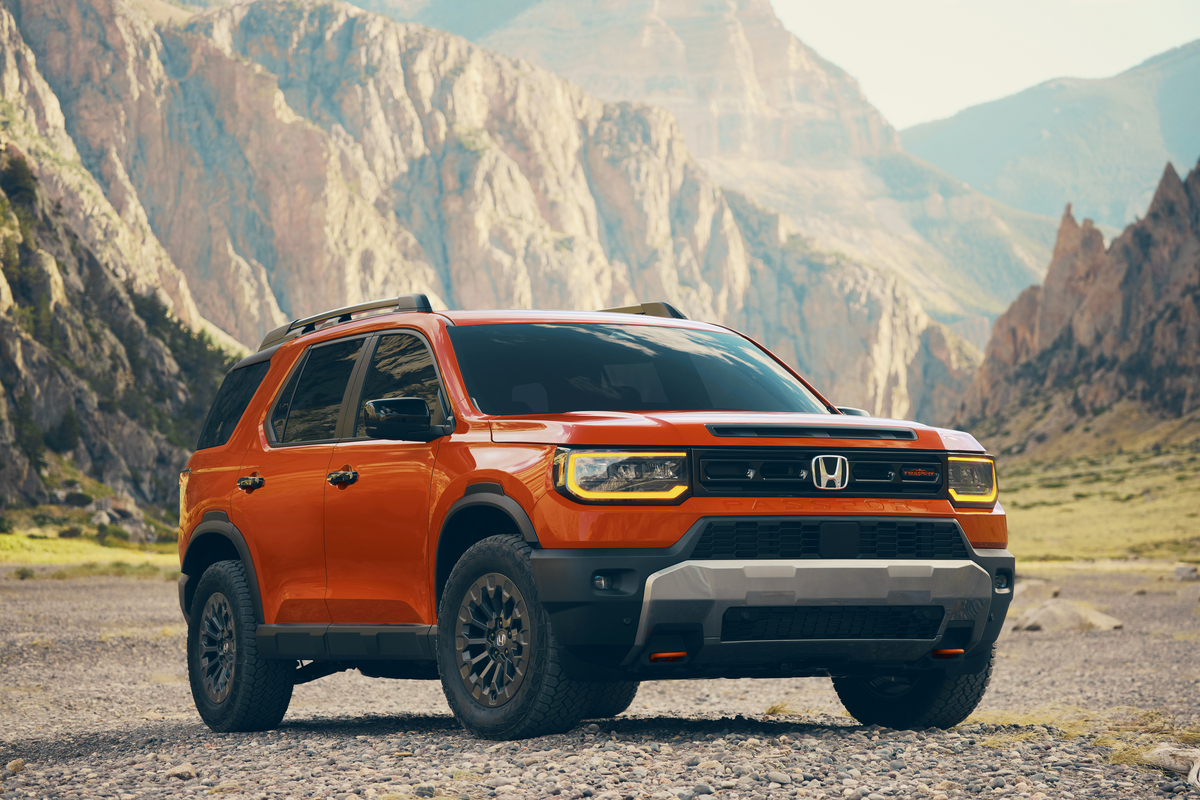
Honda Passport: The Best Honda SUV for Adventurers
CarGurus expert rating: 7.8 out of 10
CarGurus user rating: 4.6 out of 5
Percentage of Good and Great Deals available on CarGurus: 30.4%
Overall CarGurus rating: 4.5 out of 5
| Pros |
Cons |
| Spacious interior and cargo capacity |
Poor fuel economy |
| Improved off-road capability |
High price |
| Easy-to-use technology |
Still lacking key off-road features |
Redesigned for the 2026 model year, the Honda Passport is a midsize SUV with two rows of seats and five-passenger capacity. Honda claims that it is the most off-road-capable SUV in the company’s history and it’s certainly more suited to the rough stuff than any other new Honda SUV. If you need something even more utilitarian, of course, there’s always the Honda Ridgeline truck.
The Passport is available in three core trim levels including the RTL, TrailSport, and TrailSport Elite. You can add a Towing package to the Passport RTL, and all three versions are available with a Blackout package. Prices for the 2026 Passport range from $44,750 to $52,450, not including the destination charge*.
A 3.5-liter V6 is standard, providing 285 hp and 262 lb-ft of torque. A 10-speed automatic transmission powers all four wheels through a standard torque-vectoring AWD system, and the Passport offers 8.3 inches of maximum ground clearance. Official fuel economy ratings are 20 mpg in combined driving with the Passport TrailSport models and 21 mpg for the Passport RTL. With its 18.5-gallon fuel tank it can travel 370 miles to 388 miles in typical city/highway driving.
Honda equips the base RTL model with plenty of standard features. Highlights include remote engine starting, heated side mirrors, roof rails, and a power liftgate. Inside, the RTL features a triple-zone automatic climate control system, heated front seats wrapped in cloth and leather, and 10-way power driver’s seat adjustment.
The Passport has a standard 10.2-inch digital instrumentation panel paired with a 12.3-inch touchscreen infotainment system. Google Built-in and Alexa Built-in are standard, and the infotainment system includes wireless Apple CarPlay, wireless Android Auto, and wireless smartphone charging. Honda Sensing is also standard, and includes blind-spot monitoring and rear cross-traffic alert.
Choose the Passport TrailSport if you plan to go off-roading. It has all-terrain tires, off-road suspension tuning, skid plates, recovery hooks, and power-folding side mirrors to go with its more rugged styling. Standard trailering equipment lets you take advantage of the maximum 5,000-pound towing capacity, while 115-volt outlets enhance the SUV’s utility. TrailSports also have a rear camera washer system, heated wiper blade rests, all-season floor mats, and a panoramic sunroof.
The top-shelf TrailSport Elite blends ruggedness with touches of luxury. Full leather upholstery is standard, along with ventilated front seats, heated rear seats, and a heated steering wheel. You also get a Bose premium sound system, and puddle lights prevent you from stepping out into any muck. This version of the Passport adds a multi-view camera system with a front camera washer, as well as Honda’s TrailWatch system.
Open the rear liftgate, and you’ll discover that you can take plenty of gear with you. Behind the back seat, the Passport provides 44 cubic feet of cargo space. Fold the rear seat down, and this SUV can carry 83.8 cubic feet of your stuff.
Read our most recent Honda Passport review
Honda Pilot: The Best Honda SUV for Large Families
CarGurus expert rating: 7 out of 10
CarGurus user rating: 4.7 out of 5
Percentage of Good and Great Deals available on CarGurus: 30.7%
Overall CarGurus rating: 4.5 out of 5
| Pros |
Cons |
| Comfortable |
No hybrid option |
| Plenty of cargo space |
|
| Plenty of passenger space |
|
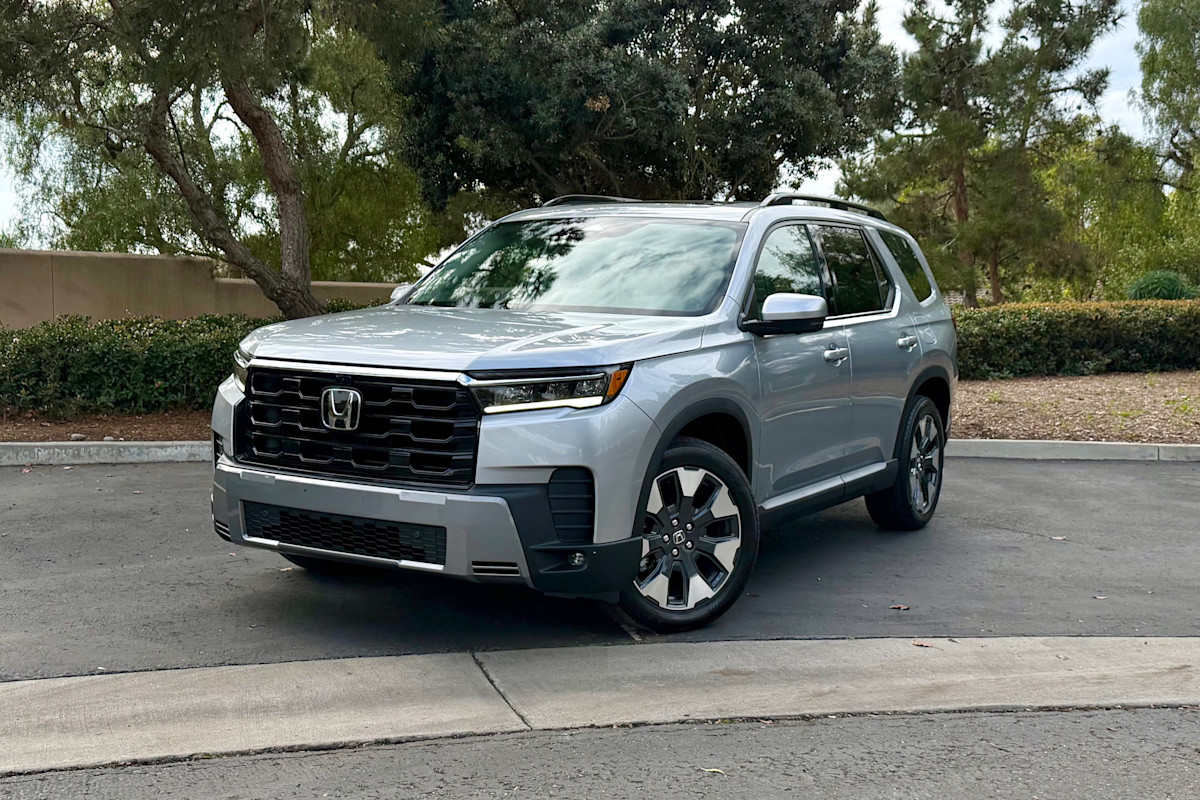
If you need more interior room than a CR-V can supply form a family SUV, check out the Honda Pilot. We think it’s the best Honda SUV for larger families because it offers three rows of seats in a midsize package, and practicality is its arguably its strongest suit. Behind the third-row seat, this SUV provides 18.6 cubic feet of cargo space; fold it down, and you have 48.5 cubic feet. Maximum cargo volume measures up to 87 cubic feet behind the front seats. In short, it’s an incredibly spacious interior.
The Honda Pilot is available in Sport, EX-L, TrailSport, Touring, Elite, and Black Edition trim levels, priced from $40,200 to $54,580, not including the destination charge*. Each one has a 3.5-liter V6 engine generating 285 hp and 262 lb-ft of torque, paired with a 10-speed automatic transmission.
Most Pilots have FWD, with a torque-vectoring AWD system available. The AWD system is standard on the Pilot TrailSport, Elite, and Black Edition models, and optional on other versions of the SUV. However, this three-row crossover offers no more than 7.3 inches of ground clearance unless you get the TrailSport, which provides 8.3 inches courtesy of an off-road suspension and all-terrain tires.
Honda Pilot fuel economy ratings range from 20 mpg to 22 mpg in combined driving. Thanks to its 18.5-gallon fuel tank, you can expect 370 miles to 407 miles of range in typical city/highway mixed conditions.
Eight people can fit into a Pilot (seven in the TrailSport). Standard features include remote engine starting, triple-zone automatic climate control, a 10-way power-adjustable driver’s seat, and heated front seats. The Pilot Sport has rather small seven-inch touchscreen infotainment system with Apple CarPlay and Android Auto. All other trim levels equip the SUV with a larger 9-inch touchscreen, wireless Apple CarPlay, wireless Android Auto, and wireless smartphone charging.
As you might expect, the Honda Pilot is available with numerous upgrades. Depending on the trim level, the spacious cabin’s highlights include artificial or genuine leather upholstery, ventilated front seats, heated second-row seats, and a heated steering wheel. You can also get a power liftgate, a power panoramic sunroof, head-up display and a Bose premium sound system. Some Pilots offer parking sensors, additional exterior camera views, and a TrailWatch system for improved visibility when traveling off-road.
As with Honda’s other SUV models, the Pilot includes the Honda Sensing collection of ADAS, but this model also comes standard with blind-spot monitoring and rear cross-traffic alert. Upper trim levels equip the Pilot with low-speed automatic braking to prevent bumping into obstacles while parking. The Pilot earns a Top Safety Pick rating from the IIHS, and the NHTSA gives it a five-star crash-test rating.
Read our most recent Honda Pilot review
Honda HR-V: The Best Honda SUV for a Smaller Budget
CarGurus expert rating: 5.3 out of 10
CarGurus user rating: 4.5 out of 5
Percentage of Good and Great Deals available on CarGurus: 31.2%
Overall CarGurus rating: 4.4 out of 5
| Pros |
Cons |
| Comfortable driver’s seat |
Sluggish performance |
| Easy-to-use technology |
Poor fuel economy |
| Great safety ratings |
Uncomfortable back seat |
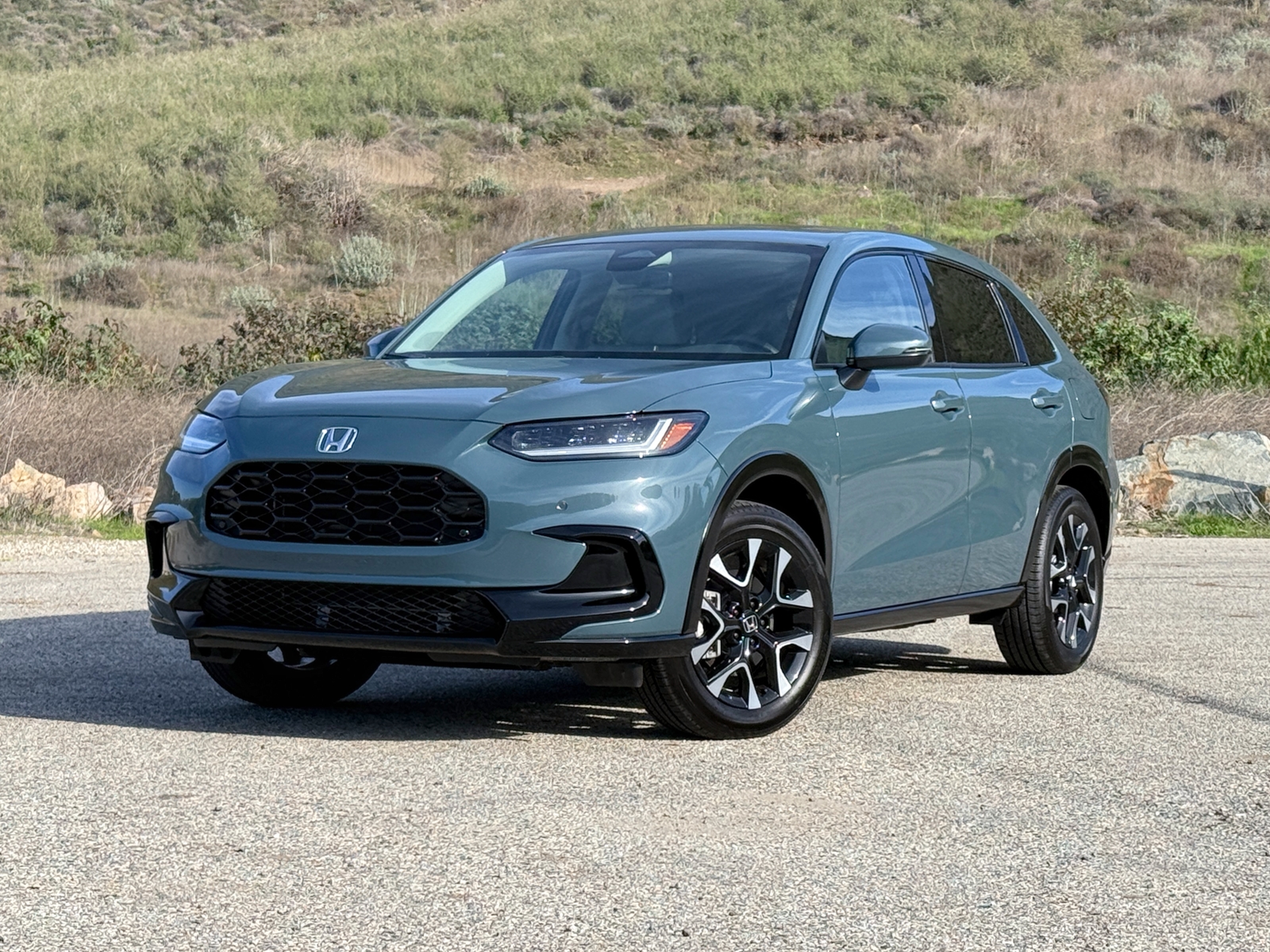
The Honda HR-V is a subcompact SUV that’s a rival for cars such as the Chevrolet Trax and Toyota Corolla Cross. It’s the most affordable Honda SUV and has a lower starting price than the Civic hatchback (if not the sedan) and ideal for commutes.
Honda sells the HR-V in LX, Sport, and EX-L trim levels. As of mid-2025, the dealership MSRP for 2026 HR-V models ranges from $26,200 to $30,050, not including the destination charge*. The SUV is updated for 2026 with subtle styling improvements, new wheel designs, fresh paint colors, and an upgraded standard infotainment system.
There were no changes under the hood, so the HR-V continues with a rather weak 2.0-liter four-cylinder engine supplying 158 horsepower and just 138 pound-feet of torque. A continuously variable transmission (CVT) powers the front wheels, but an all-wheel drive (AWD) system is optional. Its off-road capabilities are limited, since the HR-V offers a modest 7.3 inches of ground clearance.
Acceleration is best described as leisurely, while EPA-rated fuel economy ranges from 27 mpg to 28 mpg in combined driving, with the front-wheel-drive (FWD) models scoring slightly higher. With its 14-gallon fuel tank, the HR-V supplies up to 392 miles of range in typical driving situations.
As far as utility goes, the HR-V provides 24.4 cubic feet of cargo space behind its back seat. That’s essentially identical to the Civic Hatchback. Standard equipment on the HR-V LX includes a nine-inch touchscreen infotainment system, wireless Apple CarPlay, and wireless Android Auto. Available features on higher trim levels can include 18-inch wheels, remote engine starting, heated mirrors and front seats, leather upholstery, a power-adjustable driver’s seat, a power sunroof, and a better sound system with eight speakers.
Honda Sensing is standard on all HR-V models. It is a collection of advanced driving assistance systems (ADAS) and includes numerous safety features such as forward-collision warning, automatic emergency braking, lane-keeping and lane-centering assist, and adaptive cruise control. Notably, blind-spot monitoring and rear cross-traffic alert require you to upgrade to the HR-V Sport trim level.
Honda HR-V safety ratings include a Top Safety Pick+ from the Insurance Institute for Highway Safety (IIHS) for the 2025 calendar year and a five-star overall rating from the National Highway Traffic Safety Administration (NHTSA) for the 2025 model year.
Read our most recent Honda HR-V review
Honda CR-V: The Best All-around Honda SUV
CarGurus expert rating: 7.8 out of 10
CarGurus user rating: 4.6 out of 5
Percentage of Good and Great Deals available on CarGurus: 30.2%
Overall CarGurus rating: 3.9 out of 5
| Pros |
Cons |
| Comfortable |
Irritating transmission |
| Plenty of cargo space |
Uninspired styling |
| Great ride and handling |
Lacks technological innovation |
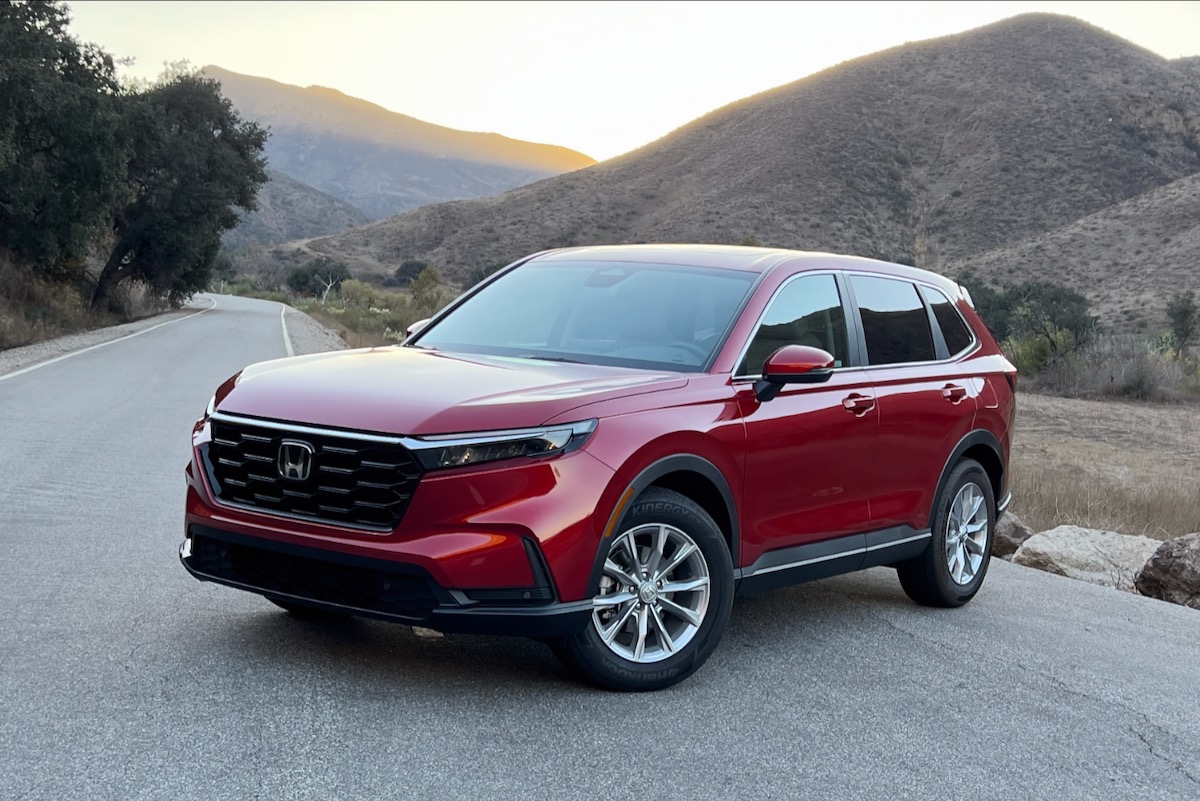
Honda’s CR-V is a go-to choice for shoppers who want an easy-to-live-with compact SUV, and the redesigned 2023 model focuses on the fundamentals families use every day. It’s comfortable on long drives, has the kind of ride and handling that makes commuting less tiring, and provides plenty of cargo space for groceries, strollers, or weekend gear without feeling bulky on the road.
The tradeoffs are the sort you’ll notice most in stop-and-go traffic and on tech-heavy comparison shopping lists. The transmission can be annoying when you’re asking for quick responses, the styling doesn’t try to be flashy, and the CR-V doesn’t push the segment forward with big new technology ideas. For many Honda SUV buyers, that straightforward, refined approach is exactly the point.
The CarGurus Verdict: "With the redesigned CR-V, Honda hones its compact crossover SUV to near perfection." - Christian Wardlaw
Read our most recent Honda CR-V review
Honda Prologue: The Best Honda SUV for People Who Want an Electric Vehicle
CarGurus expert rating: 7.8 out of 10
CarGurus user rating: N/A out of 5
Percentage of Good and Great Deals available on CarGurus: 38.9%
Overall CarGurus rating: 3.8 out of 5
| Pros |
Cons |
| Stylish design |
Every trim comes with large wheels |
| Comfortable |
Some of our favorite features aren't standard |
| Impressive technology |
|
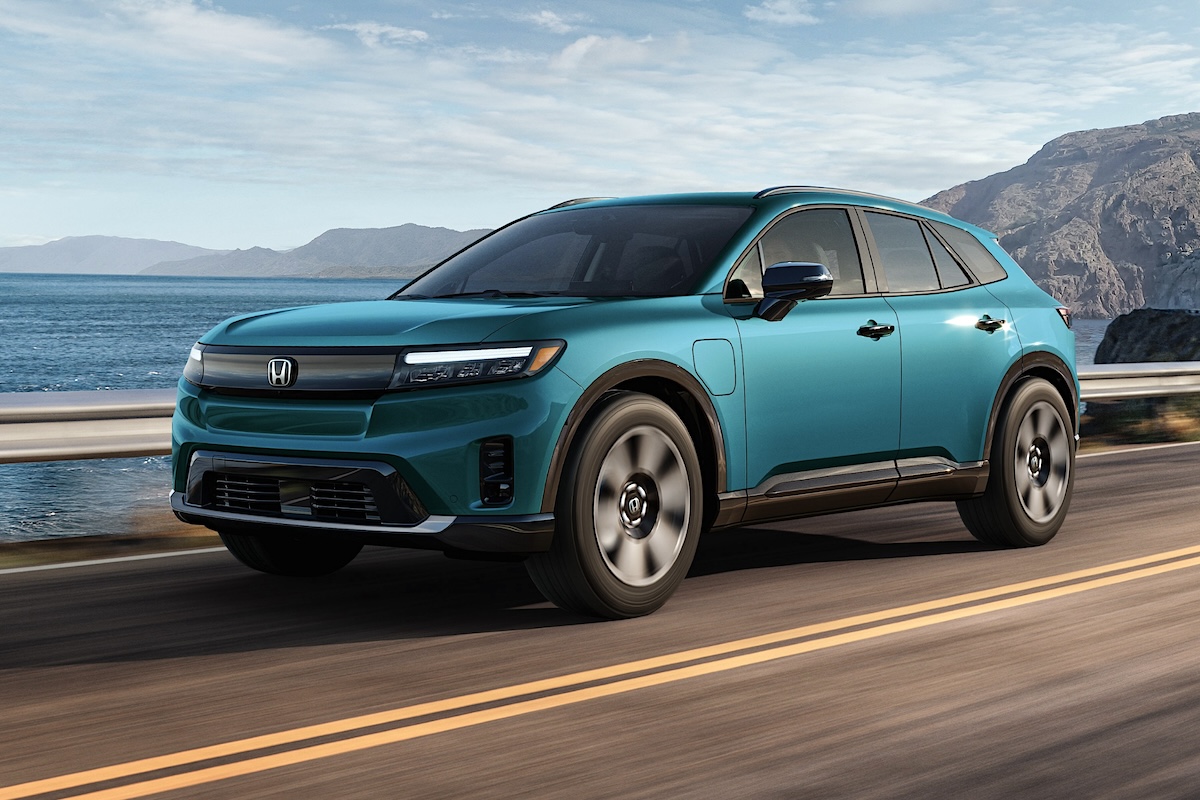
The Honda Prologue is a low-roofed electric crossover SUV created in partnership with General Motors. The Prologue is built on GM’s Ultium platform, uses GM components and technology, and is built in a GM factory in Mexico. It shares many parts with the Chevrolet Blazer EV, and is also related to the Cadillac Lyriq and Acura ZDX. But don’t worry. Aside from the Prologue’s unexpectedly cheap-looking interior finishes, it still looks and feels like a Honda.
The Honda Prologue is available in EX, Touring, and Elite trim levels, and prices range from $47,400 to $57,900, not including the destination charge*. As of this writing, the Prologue qualifies for a federal tax credit of up to $7,500, but that can change, so check before buying or leasing one.
Honda offers the Prologue with a single-motor FWD or a dual-motor AWD drivetrain. The FWD models provide 220 hp and 243 lb-ft of torque, and can travel 308 miles on a fully charged 85-kilowatt-hour (kWh) battery. The AWD versions make 300 hp and 355 lb-ft, and travel 283 to 294 miles on a full charge. Honda says it takes 35 minutes to recharge the battery from 10% to 80% when using a DC fast charging station.
The base EX trim level provides a good amount of equipment, including dual-zone automatic climate control, a 10-way power-adjustable driver’s seat, a height-adjustable front passenger’s seat, and heated front seats. In addition, the EX features an 11-inch digital instrumentation panel, an 11.3-inch touchscreen infotainment system with Google Built-in, wireless Apple CarPlay and Android Auto, and a wireless smartphone charger.
Choose the Prologue Touring or Elite, and, depending on your selection, the EV has self-sealing tires, parking sensors, a panoramic sunroof, a hands-free power liftgate, power-folding side mirrors, and a key-card entry system.
Honda Sensing is standard on all Prologue models. In IIHS safety tests, the EV earns acceptable or good ratings, but does not get a Top Safety Pick or Top Safety Pick+ stamp of approval. The NHTSA says the Honda EV earns a five-star overall rating.
Although the Prologue offers a comfortable midsize interior for up to five passengers, cargo space is on a par with the small Honda HR-V. Behind the back seat, the Prologue offers no more than 23.7 cubic feet of cargo room. Folding the back seat gives the SUV a maximum measurement of 57.7 cubic feet. Unexpectedly, the Prologue offers generous ground clearance, measuring 7.9 inches to 8.1 inches depending on the trim level.
Read our most recent Honda Prologue review
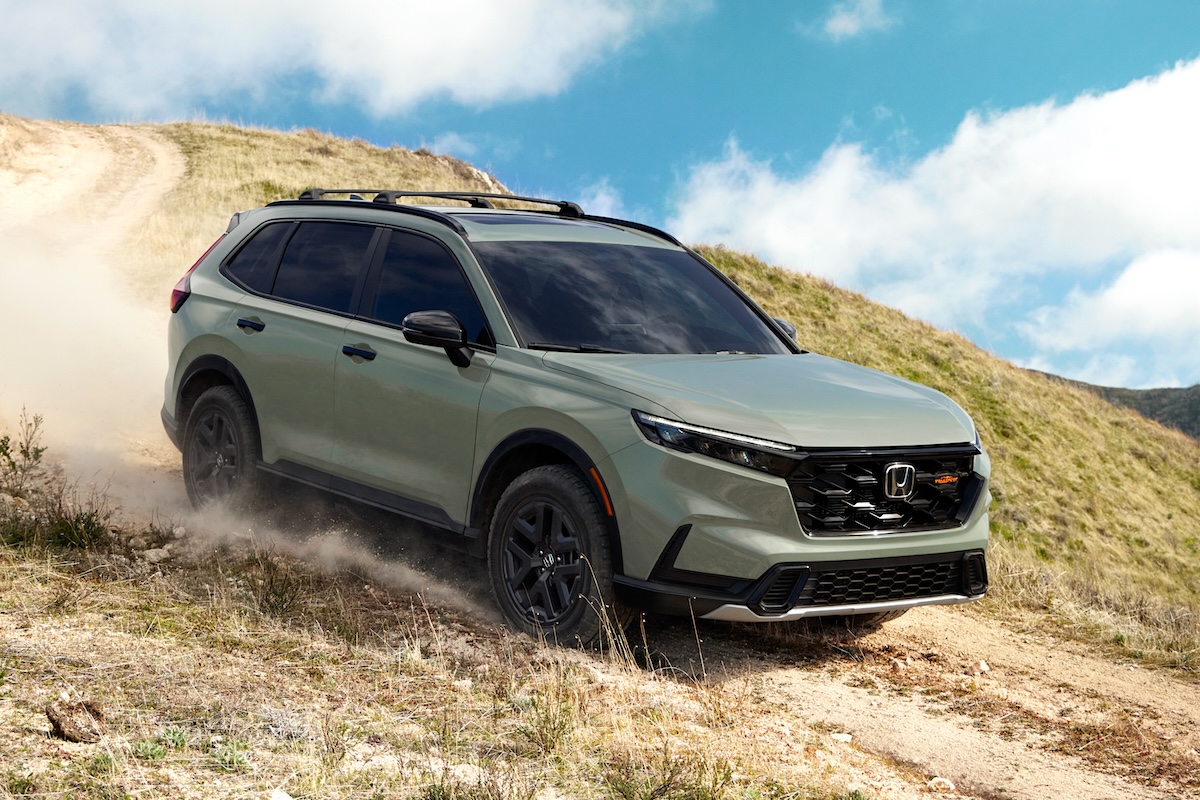
What is the Best Honda SUV?
If we could choose just one of the company’s SUVs, it would have to be the Honda CR-V. The CR-V LX is affordable, the CR-V TrailSport adds a little extra off-roading capability, and any CR-V Hybrid gets up to 40 mpg and has an EV mode for electric-only driving at low speeds. In addition, while it’s true the CR-V can carry only five people, it can haul plenty of cargo.
The main concern with the Honda CR-V is that substandard IIHS safety rating in one of the newer crash-test evaluations. Otherwise, it is the best all-arounder in the Honda SUV lineup.
What Makes CarGurus Best Cars Guides Different?
Most car-shopping websites publish lists of the best cars across a variety of categories, with recommendations generally driven by editorial expertise. Here's what makes ours different: In addition to the insights and verdicts of our team of car-testing experts, our best cars guides take into account other factors that we know matter to buyers-real owner experiences and current market value.
Our expert reviewers are among this country's most trusted automotive journalists, also writing for publications including US News and World Report, Edmunds, Digital Trends, J.D. Power, and Car & Driver. They put each car through real-world testing and create detailed reviews of performance in a range of categories, from practicality and driving manners to cost-effectiveness and safety.
We also analyze hundreds of thousands of used car listings on CarGurus.com to track which models consistently offer the highest percentage of best deals relative to how many are listed for sale. Then we factor in reviews from owners-people who actually live with these cars every day. Our proprietary Best Cars algorithm then creates a final Overall CarGurus rating combining expert scores, user reviews, and the percentage of listings that have earned the Good or Great Deal rating. This multi-pronged approach reveals not just which cars excel on paper, but which ones deliver satisfaction and value when you're ready to buy.
The CarGurus market data used in this guide was last updated in August 2026. Values were accurate at time of publication and should be used as a guide only.
Shopping Tools
Related Topics