By the early 1980s, General Motors faced a major challenge from Japanese manufacturers selling reliable and affordable small and mid-size cars. GM, then the world’s largest automaker, decided to do something bold to address it, but it didn’t just happen overnight.
GM had already started switching its small car lineup from rear-wheel drive to front-wheel drive with cars such as the Chevrolet Cavalier, the Pontiac J2000 LE, the Oldsmobile Firenza LX, the Buick Skyhawk, and the Cadillac Cimarron, but they paled in comparison to the better-built rivals from Japanese car manufacturers. Not only that, but GM’s many divisions competed directly against each other, not to mention burgeoning Japanese rivals such as Honda, Toyota, and Datsun (later Nissan). For GM, the solution was Saturn.
With Saturn, GM Chairman Roger Smith tried something unique: yet another division, but one tied loosely to the automaker’s legacy organization. It would be highly autonomous in decision-making terms, and its cars would look and feel little, if at all, like other GM models. Even Saturn dealerships would have little in common with the group’s traditional outlets.
Three years and $5 billion later, Saturn was formed to take on high-quality, fuel-efficient cars from Japan. In 1985, the time of Saturn’s launch, Toyota held 6.3% of the U.S. market, while Honda had 4.3%. By 1990, when the first Saturns hit the road, Toyota was up to 7.6%, and Honda grew to more than 6%. Time was not on GM’s side if it wanted to address the rising tide of imports.
Saturn Cars: Why Did GM's Different Kind of Car Company Fail?
“A Different Kind of Car. A Different Kind of Company.”
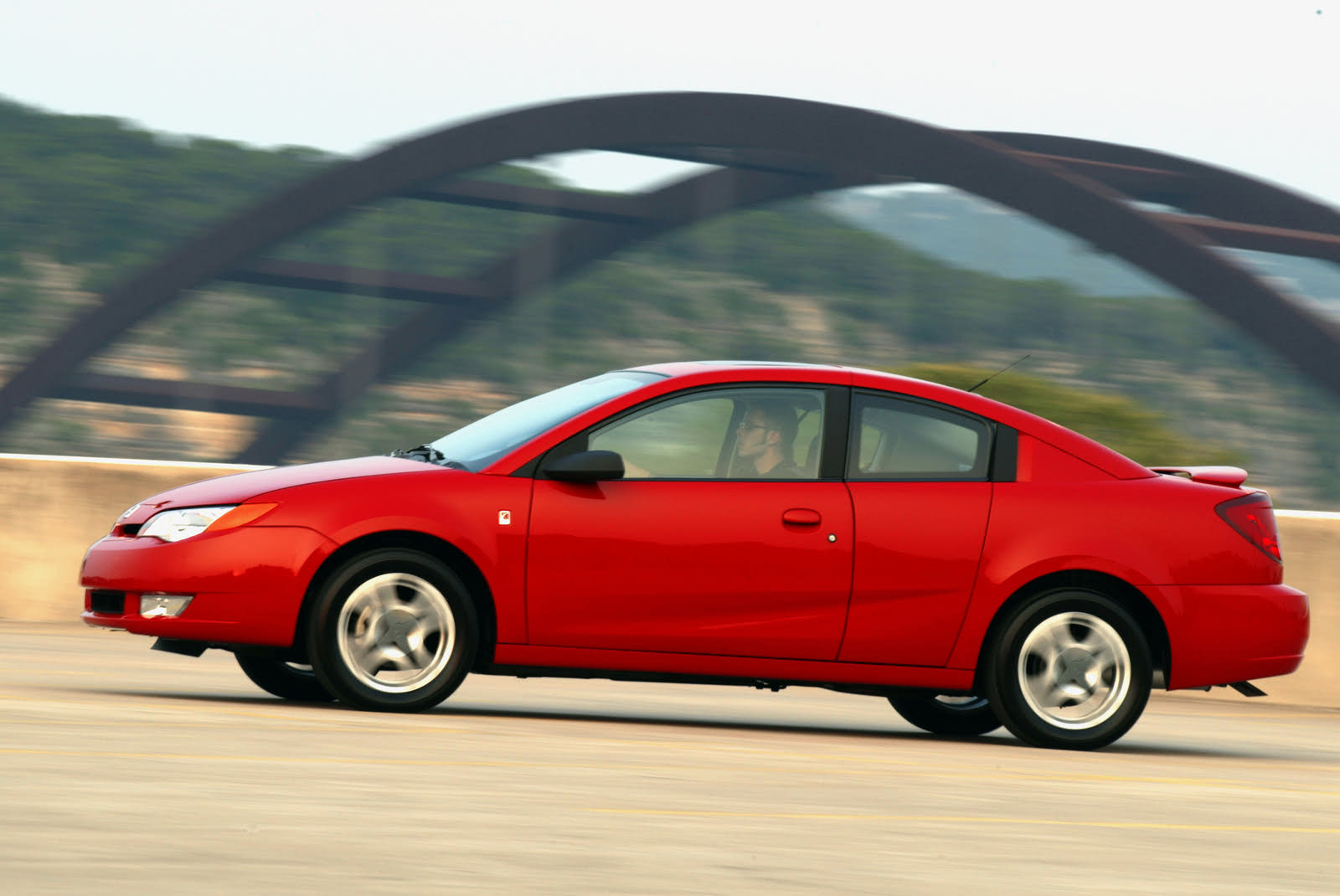
Saturn launched in 1990 to much fanfare, with two small, fuel-efficient vehicles: the SL-series sedans and the SC-series coupes. The SW-series wagons followed later, and together, these were collectively known as the S-Series.
Saturn was aggressive from the get-go. A bit larger than the Honda Civic and Toyota Corolla but still smaller than a Chevy Cavalier, the Saturn SL sedan started at $7,995 (plus a $275 destination charge). Shoppers had to pay $1,000 more for a Corolla sedan and $1,500 more for a Civic sedan. Even better, Saturn included a radio, a rear defroster, and a split-folding rear seat at that price point, which cost extra on the contemporary Corolla and the Civic.
Originally, the Saturn program was to fall under one of the existing GM brands, but the decision was made to treat it more like a (very) distant cousin. Saturn had its own engineering, marketing, and advertising teams, plus a wholly reimagined dealership experience.
Saturn skipped industry-standard steel body panels in favor of rust-proof and dent-resistant polymer (or plastic, as they were commonly called) doors, hoods, and fenders. This gave Saturn a unique selling point, and the material contributed to a relatively low curb weight that helped improve mpg.
Speaking of sales, Saturn was all about community at its dealerships. The sales staff was encouraged to line up and clap when buyers drove off in their new models, which they bought during an intentionally low-pressure, no-haggle experience, as they were fixed price.
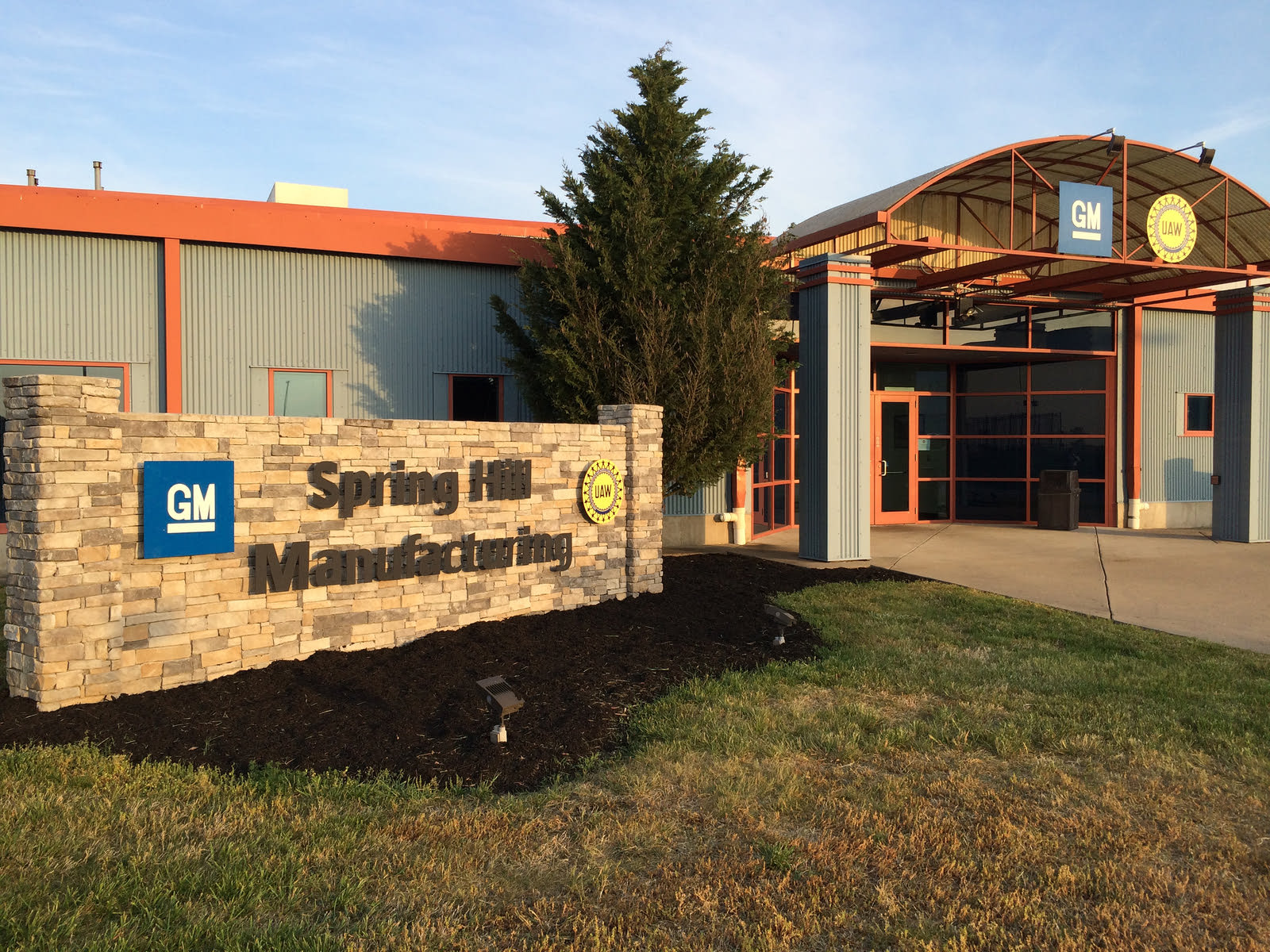
So different was the company and its customer experience that in 1994, when it invited all of its customers to a “Saturn Homecoming Celebration” at its Spring Hill, Tennessee, manufacturing plant, 28,000 enthusiastic owners with families in tow showed up. Such a gathering—at an assembly plant, no less—was unprecedented. Another feather in dealers’ caps came in 1996, when GM released its first-ever production electric car, the EV1, and Saturn stores got the honor of retailing it.
Initial sales for the first four years were strong; by the time of the celebration in 1994, 600,000 Saturns had been sold. Many buyers likely didn’t even realize they were buying a GM car—and that was the point.
But this success came with exorbitant costs in both dollars and goodwill from GM’s other brands, which were still selling their own, competing compact cars.
The High Price of Being “A Different Kind of Company”
That wonderful, white-glove customer experience that knocked Lexus out of first place in the 1992 J.D. Power and Associates Customer Service Index wasn’t cheap for GM. The company had to rethink how it interacted with people before and after they bought a car. GM couldn’t simply follow the status quo, but the cost in terms of internal disputes was greater still.
Every GM division, except Saturn and GMC, had a compact car that was identical under the skin. Those Cavaliers, Skyhawks and other models dated back to the late 1970s. The money that would have been allocated to their replacement was instead funneled to Saturn. This left GM’s other divisions with a bevy of uncompetitive compact cars.
Eventually, GM gave development money back to other divisions, leaving Saturn in the same situation. By the mid-1990s, Saturn’s lineup looked old, and no wholesale redesign was in sight.
The magic that made the S-Series stand out in 1990 began to wane in the 1999 model year, when the first new Saturn since the original compact cars arrived. The L-Series mid-size sedan was a Honda accord rival, yet unlike the original SC, SL, and SW, which were essentially new cars by a new automaker that shared little with other GM products, the L-Series was mostly a tweaked GM car with different styling. Its four- and six-cylinder engines were borrowed from other GM models, and its chassis was derived from a German-market car sold by GM’s Opel division. It wasn’t even built in Spring Hill, but rather at a GM plant in Delaware that had built Buicks, Oldsmobiles, Chevrolets, and other vehicles since the 1940s. It launched with a thud, earning little in the way of praise. Sure, it had Saturn’s signature plastic body panels, but little else to distinguish it.
In retrospect, the L-Series was what turned the original Saturn brand, on its own planet in the GM universe, into one that had little to differentiate itself from other in-house brands, and which failed to make an impression against rivals from Honda, Toyota, and Ford.
A Different Kind of Car Company or Just Another GM Division?
By the early 2000s, most Saturn vehicles were simply versions of other GM products, and none of its new products were truly unique.
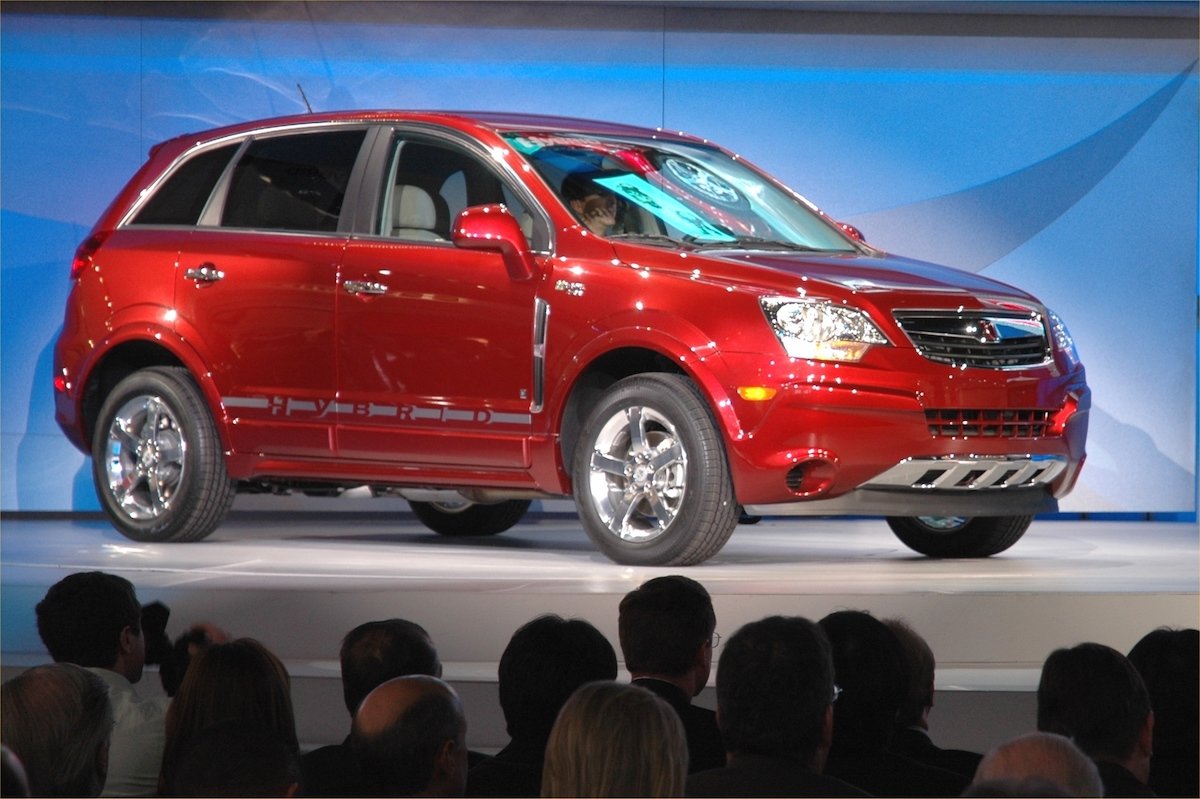
The 2002 Saturn Vue crossover was a Chevrolet Equinox with some plastic body panels.
The 2003 Saturn Ion that replaced the SL and SC (about a decade late) was a Chevy Cobalt with, you guessed it, some plastic panels.
The 2005 Saturn Relay minivan was a Chevrolet Uplander. It didn’t even have plastic body panels.
The 2007 Saturn Sky sports car was a Pontiac Solstice with different styling.
The 2007 Saturn Outlook was a GMC Acadia with different styling.
The 2007 Saturn Aura was a Chevrolet Malibu with different styling
The 2008 Saturn Astra hatchback was a European-market Opel Astra with nearly identical styling to the model sold in Europe.
Saturn also moved away from the no-haggle pricing model for its dealers, although its showrooms remained largely independent. For instance, you couldn’t typically cross-shop a Saturn and a Chevrolet in the same building, but you could often compare a Chevrolet and a Pontiac, because those divisions routinely shared showroom space. This independence was, at least for consumers, the last vestige of a different kind of car company.

Saturn Sky’s the Limit… and a Bankruptcy
By the 2007-2008 global financial crisis, GM was teetering on the verge of insolvency. In 2009, it filed for Chapter 11 reorganization or bankruptcy. In a roundabout way, Saturn led GM into bankruptcy protection.
On June 1, 2009, the corporate-owned Chevrolet-Saturn of Harlem dealership in New York filed for bankruptcy protection, calling parent company GM a debtor in possession. GM leveraged Chevrolet-Saturn of Harlem’s location within the jurisdiction of the United States Bankruptcy Court for the Southern District of New York for the filing rather because of the court’s familiarity in handling complex bankruptcy cases involving large, publicly held companies.
GM had a plan. Just days after filing for bankruptcy, the automaker announced it would sell its entire Saturn division to the Penske Automotive Group, headed by retired pro race driver and businessman Roger Penske. The would-be new owner said it would create future Saturn models based on cars produced by Renault, which was in a major global alliance with Nissan. However, the deal soon fell apart, mostly because of concerns from Japanese automaker Nissan that Saturn could emerge—once again—as a direct rival.
Penske backed out, and GM announced plans to stop building Saturn models and shutter its dealer network by late 2010. The last Saturn car, an Outlook, rolled off the assembly line in late 2009. Dealers once known for their no-haggle approach to sales were now heavily discounting the final Saturn models in something of a fire sale. The Saturn Corporation, or Saturn LLC, formally ceased trading at the end of 2010.
Post-bankruptcy GM authorized many of its dealerships to handle warranty-related services for Saturn models. That’s not to say that some of the brand’s loyal customers have forgotten about Saturn. Its short-lived Sky Roadster has a loyal following and is a highly sought-after used car, covered by enthusiasts and occasionally appearing at car shows or in collector car auctions.
Search for Saturn Cars for sale on CarGurus
Related Topics


