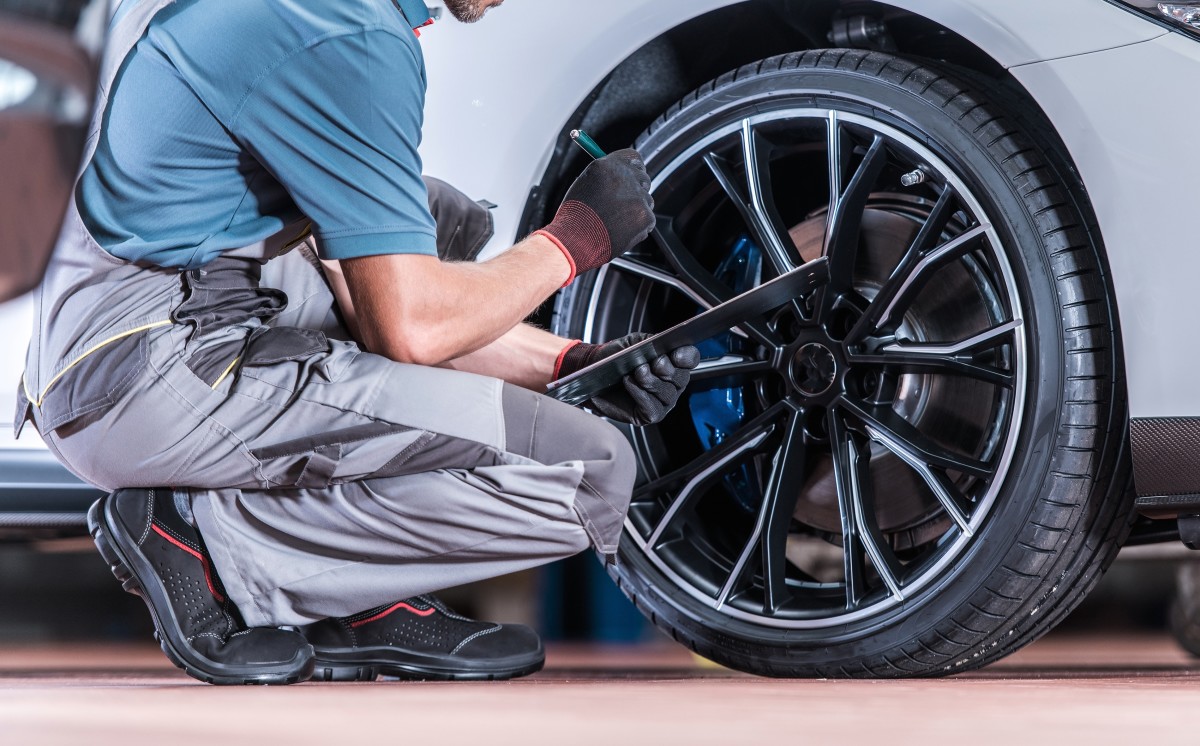
When the time comes to purchase new tires for your vehicle, you can always opt for whatever the automaker originally installed. Alternatively, you could choose a different type that might be a better fit for your driving habits, environment, or performance desires. If the latter appeals, the first thing you need to consider is whether you want conventional tires or run-flats.
Both of these types of tires use air to support the weight of a vehicle. The difference is that run-flat tires have sturdy sidewall supports that prevent the rubber from completely collapsing when punctured. In this article, we break down the advantages and considerations for both options.
Regular Tires vs. Run-Flat Tires: Which Are Best?
- What Are Run-Flat Tires?
- Are Run-Flat Tires Better Than Regular Tires?
- Advantages of run-flat tires
- Advantages of regular tires
- Who Makes Run-Flat Tires?
- Are Run-Flat Tires Safe?
- Can You Fix a Run-Flat Tire?
- Do Run-Flat Tires Wear Faster Than Regular Tires?
- Are Run-Flat Tires Noisy?
- Are Run-Flat Tires More Expensive Than Regular Tires?

What Are Run-Flat Tires?
Run-flat tires are aptly named, because a vehicle can continue to run on them even when they’re “flat” (i.e., punctured or otherwise compromised).
As air leaves a run-flat, the tire collapses somewhat but not entirely. That’s because inside the tire, the sidewalls have built-in reinforcements that can support the vehicle’s weight for a distance — usually 50 miles at speeds of up to 50 mph. Should you get a flat while driving, you don’t have to stop immediately on the side of the road to change the tire. Instead, you can continue to a safe location before dealing with the problem.

Are Run-Flat Tires Better Than Regular Tires?
Some luxury automakers, including BMW and MINI, like to install run-flat tires on their vehicles and sports cars for the peace of mind they offer. But that’s only one of several reasons for selecting this kind of rubber.

Advantages of run-flat tires
Improved roadside safety
As noted above, instead of fiddling with a jack and spare, possibly on the shoulder of a busy highway or during a storm, the driver can take the nearest off-ramp and find a covered shelter (or even drive home) before figuring out the next step.
Better vehicle stability
When punctured, it's possible for a standard tire to deflate rapidly, causing one corner of the vehicle to drop suddenly and catch the driver off-guard. With run-flats, that doesn’t happen. The corner remains up, so there's less chance of the driver losing control.
No spare required
Vehicles equipped with RFTs often don’t come with a spare tire, which saves cargo space and reduces vehicle weight.
Advantages of regular tires
Lower cost
Because they’re simpler to produce, conventional tires are usually more affordable than RFTs. They’re also easier to find.
Nicer ride quality
Regular tires generally have softer sidewalls, which better absorb vibrations from encounters with potholes and other road imperfections. They tend to be better at dampening road noise too.
Longer lifespan
Regular tires tend to last longer, as they don’t experience as much heat-producing friction as RFTs.
Who Makes Run-Flat Tires?
Most of the top-tier manufacturers — from Goodyear and Michelin to Bridgestone and Pirelli — produce run-flat tires, though the various brands use different terminology. For instance, Uniroyal and Continental make self-supporting run-flat tires (or SSR tires), while Goodyear and Dunlop usually categorize this kind of rubber as run-on-flat (ROF). You might also come across the term “extended mobility tires.” They all mean the same thing.
That said, the rubber compound varies and makes a big difference in the tire’s performance. Bridgestone DriveGuard Plus tires are a type of all-season run-flat meant for everyday driving in a range of weather conditions. A ZP-spec (for zero pressure) Michelin Pilot Sport tire, on the other hand, is a high-performance option meant only for summer driving.

Are Run-Flat Tires Safe?
Yes, run-flat tires are safe. Compared with regular tires, RFTs can give the driver better control in a flat-tire or blowout situation and keep the vehicle operable, eliminating the need to stop on the side of the road for a repair.
That said, if your vehicle wasn’t designed to wear run-flat tires, it’s unwise to install them on the stock wheels. Look for a set of rims made for run-flats.
Also, a tire-pressure-monitoring system (TPMS) is an important component of any vehicle — and became a federal requirement for new cars, SUVs, and trucks built after August 2008 — but it’s particularly important for vehicles with RFTs. Without it, a driver may not realize a tire has lost air pressure; were they to drive at full speed on a highway, the tire could fail.

Can You Fix a Run-Flat Tire?
While it may be possible to repair a puncture, most tire manufacturers and repair shops recommend against it. Replacing RFTs after damage is the best option because their self-supporting design can conceal internal structural damage. In fact, trying to fix a puncture could void the tire’s warranty.

Do Run-Flat Tires Wear Faster Than Regular Tires?
Yes, run-flat tires tend to wear more quickly than regular tires. Those reinforced sidewalls make the tire less flexible, which results in more friction with the road and thus increased wear. To extend the life of your RFTs, you should regularly rotate the tires and choose a rubber compound suited to your driving habits and environment: If you regularly drive your vehicle on icy or snowy roads it's a good idea to fit winter tires or, at the very least, all-season tires.

Are Run-Flat Tires Noisy?
Noise is a common complaint with run-flat tires. The stiff sidewalls more readily transmit vibrations into the cabin, amplifying both ride harshness and road noise.
While manufacturers like Goodyear, Michelin, and Bridgestone have made significant improvements in newer models to combat this, conventional tires are usually the quieter, cushier option.

Are Run-Flat Tires More Expensive Than Regular Tires?
Run-flat tires tend to be more expensive than comparable non-run-flat tires, as they require more material and cost more to produce.
Pricing varies, though. For instance, a 245/35ZR-19 Michelin Pilot Sport 4S currently goes for $325 on Tire Rack, while the run-flat variant of the same tire costs $362. For other tires, the difference can be significantly greater, where you’re paying $150 to $200 or more per tire for the run-flat.
Some drivers find the investment worthwhile, considering the potential savings on roadside assistance and eliminating the need for a spare tire. Others would rather have nicer-riding, quieter car tires.