Consumer interest in electric vehicles continues to rise for a number of reasons. Electricity remains a more ecologically friendly alternative to gasoline and it’s more cost effective in most parts of the country. Electric vehicle technology has also improved (it’s now common to find cars capable of driving more than 200 miles on a single charge), and critically, the market has exploded with electric options. Buying an EV today doesn’t mean tying your lifestyle to a small, city-friendly hatchback. Shoppers can buy electric crossovers, sedans, and even pickup trucks.
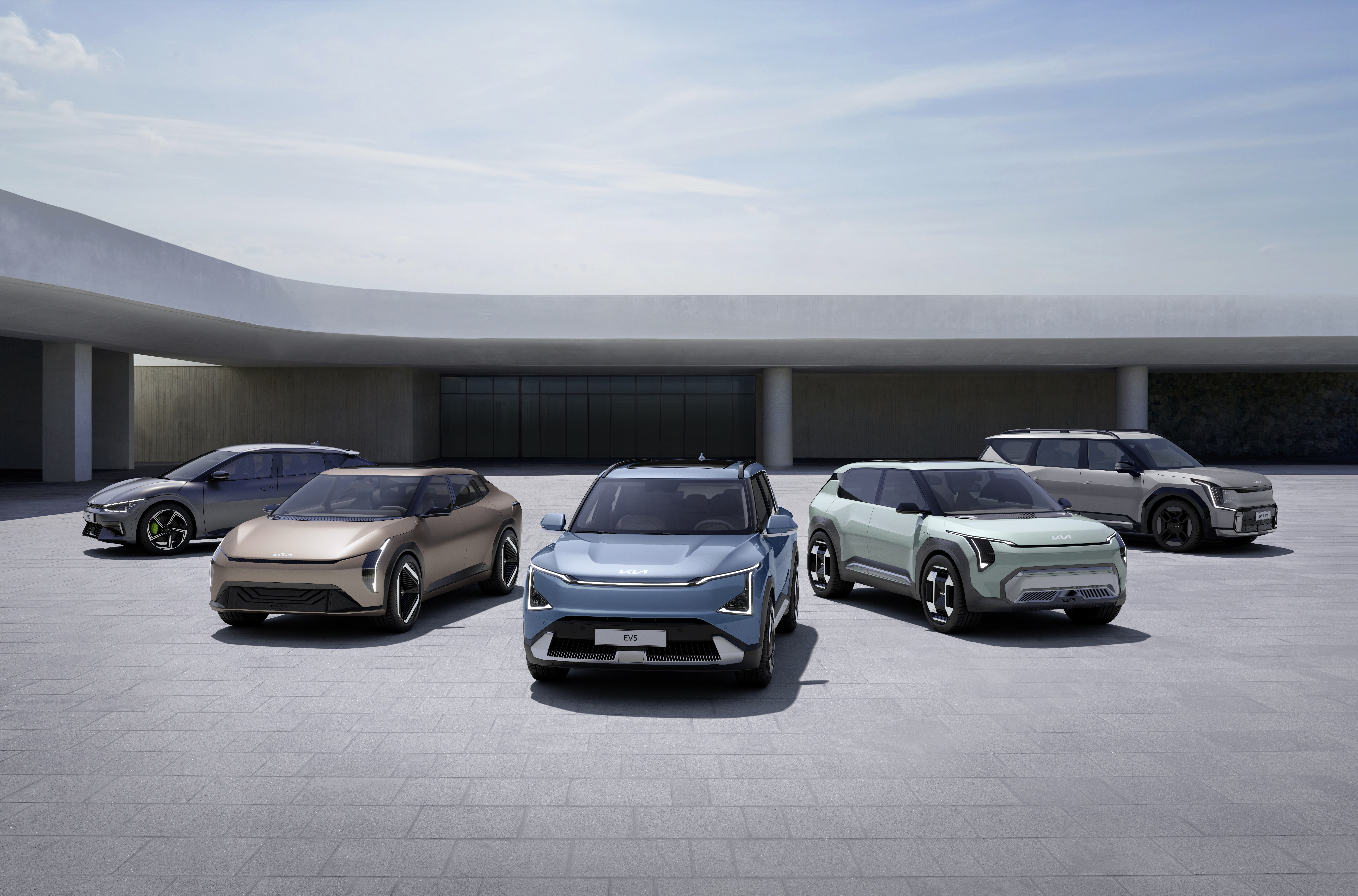
Kia sits near the forefront of the industry’s push toward electrification. As a testament to the company’s commitment to continued progress in the EV space, Kia launched its first annual EV day in 2023–a showcase of current and upcoming EVs wearing the Kia logo. Moreover, the cars on display at Kia EV Day are global products; they’re not restricted to the United States (and, in fact, some are not expected to go on sale here). However, the brand is committed to a range of EV options destined for and built in the US market, spurred largely by the Inflation Reduction Act and its new federal EV tax credit stipulations.
Additionally, with an expectation of one million EVs sold by 2026 (representing 25% of the company’s sales), Kia’s EV future is both exciting and affordable; prices for future Kia EVs could start as low as $30,000. From the Niro to the EV9, these are Kia’s current EVs, plus a look at the Kia EVs on the horizon.
A Comprehensive Guide to Kia Electric Cars
Current Kia EV Models
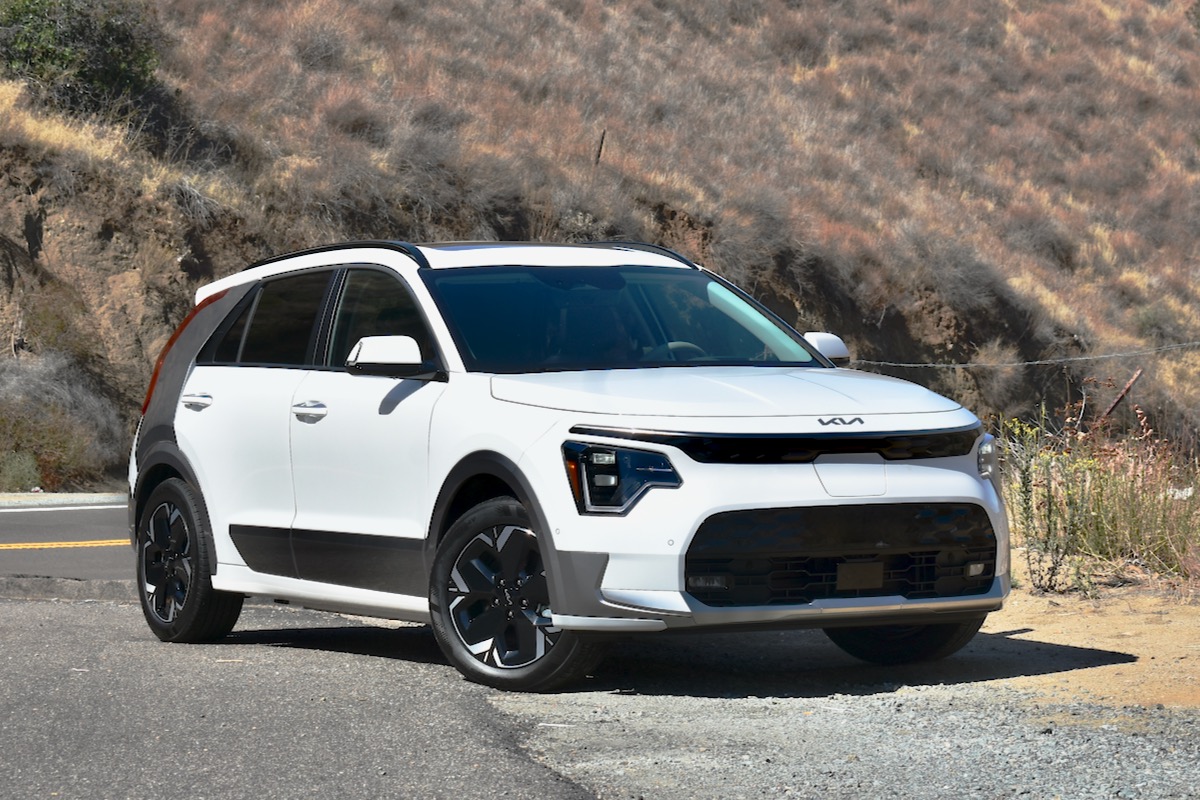
Kia Niro EV
Sold as a hybrid, a plug-in hybrid (PHEV) and a full battery electric vehicle, the Niro was redesigned for the 2023 model year, but it still employs older EV tech than Kia’s other electric options. A 64.8 kilowatt-hour (kWh) battery pairs with a single electric motor for front-wheel drive (FWD), 201 horsepower, and 253 miles of range. On a DC fast charger, the Niro’s older electrical architecture means it’s limited to an 85-kW charging rate. That translates to a 10% - 80% charging speed of roughly 45 minutes. On a level 2 home charger, you can expect to recharge a Niro EV in seven hours.
Despite employing older technology than Kia’s other electric vehicles, the Niro EV may be of interest to shoppers with a more stringent budget. With a starting MSRP of $40,875 (including the destination fee), the Niro undercuts the Kia EV6’s price tag by about $3,000. It also offers a bit more total cargo space, and its tech and other interior controls are a bit simpler and more conventional than the EV6’s. All told, the Niro’s hatchback body style is attractive and practical, and its EV underpinnings are more than serviceable for most driving.
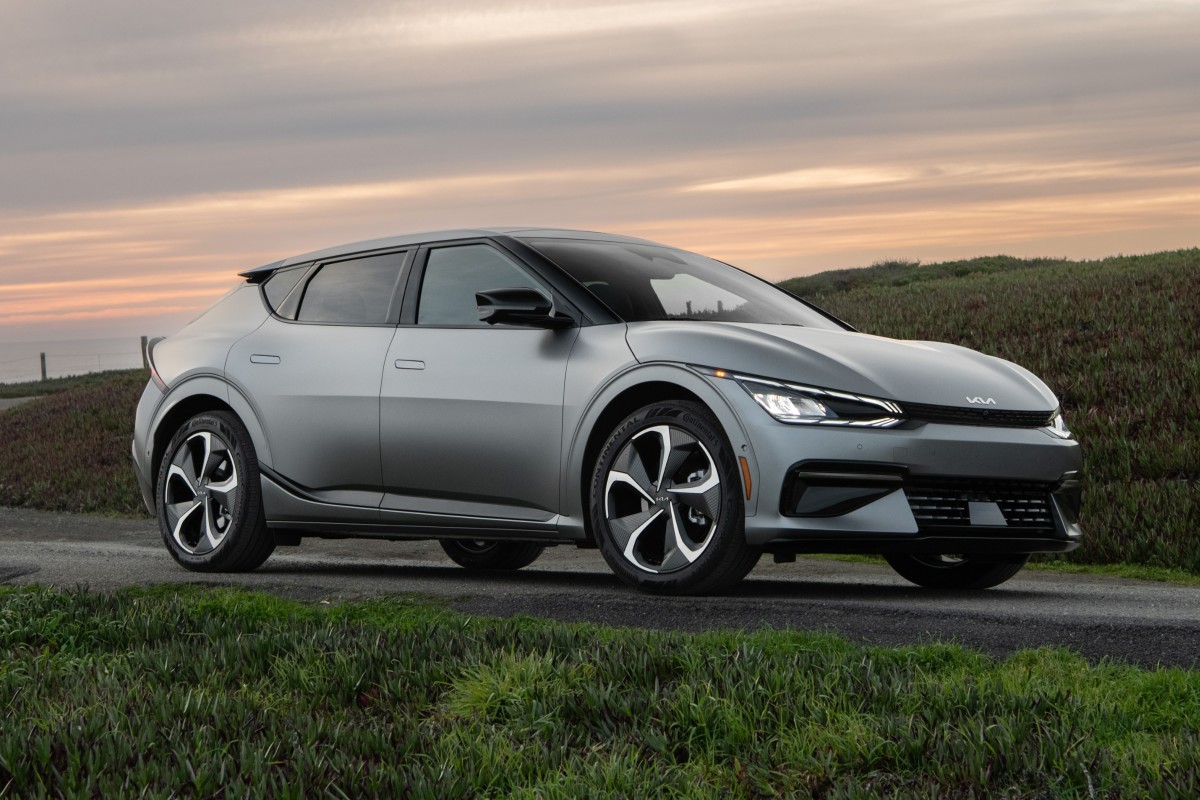
Kia EV6
Unlike the Niro, the Kia EV6 benefits from a cutting edge EV architecture. In partnership with Hyundai, Kia developed the EV6’s Electric Global Modular Platform (E-GMP), and the result is one of the industry’s best EVs. An 800-volt electrical architecture allows the EV6 to charge quickly (10% - 80% in as little as 18 minutes on a DC fast charger, or six hours on a level 2 home charger), and the EV6 benefits from a larger battery and more powerful motors than the Niro. Measuring 77.4-kWh, the EV6’s battery pack can be paired with either a single motor at the rear wheels or dual motors for all-wheel drive. All told, maximum expected driving range comes in at an EPA-estimated 310 miles (with RWD). For those who value speed over distance, however, a 576-hp EV6 GT trim level can be had, the only real price being a significantly reduced driving range of 206 miles.
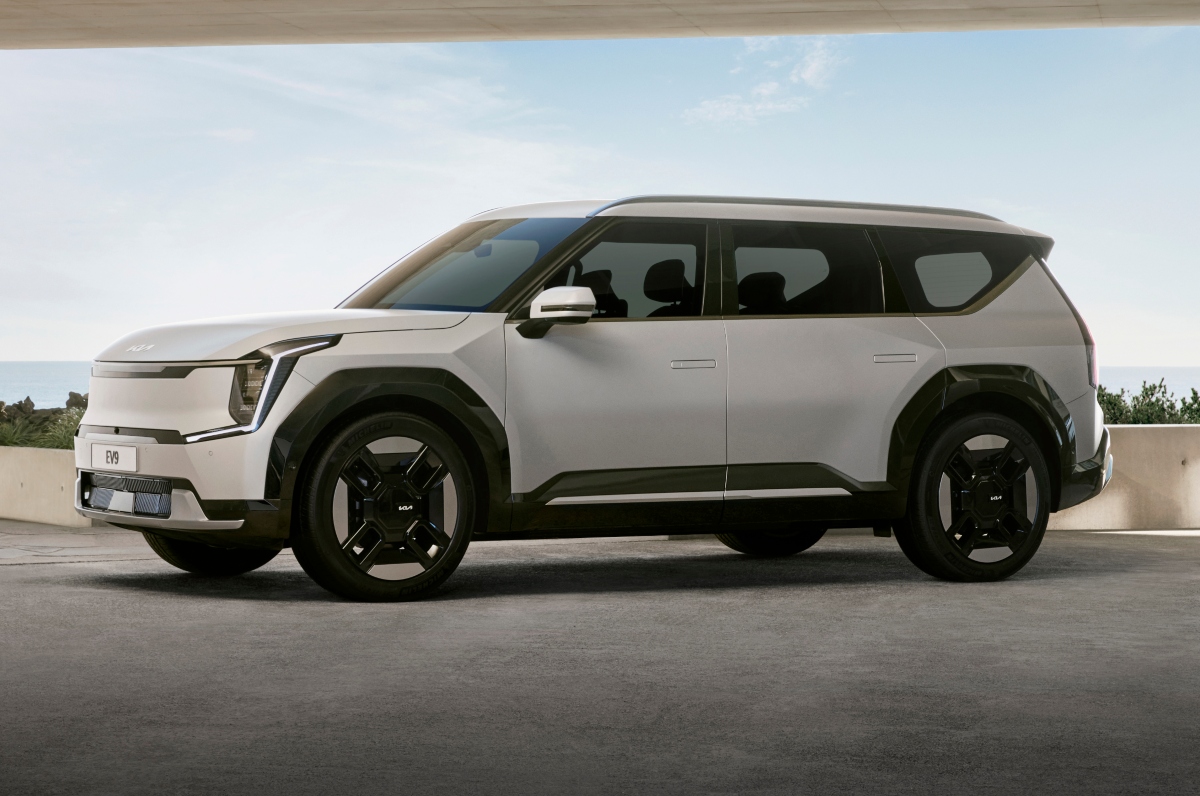
Kia EV9
Like the EV6, the Kia EV9 employs the e-GMP platform to deliver excellent charging speed, range, and performance. Kia fits the EV9 with a 76.1-kWh battery and a rear-mounted electric motor in its base trim, and a 99.8-kWh battery in higher trims. With the bigger battery, the EV9 should charge from 10% - 80% in roughly 24 minutes when using a DC fast charger. The EV9’s sheer size means that, despite the bigger battery, its electric motors have to work a bit harder. In the end, range estimates stretch from roughly 220 miles to nearly 300, depending on the drivetrain choice.
While the EV6 is an attractive two row crossover, the EV9 adds a third row (and quite a bit of sheet metal) to bring the EV experience to families. The EV9 is a big car–bigger than the Telluride–and thanks to the EV platform, it provides incredible interior room. Notably, the EV9 also includes the latest generation of Kia infotainment technology, meaning owners get to enjoy big, beautiful screens and sharp graphics.
Future Kia EVs
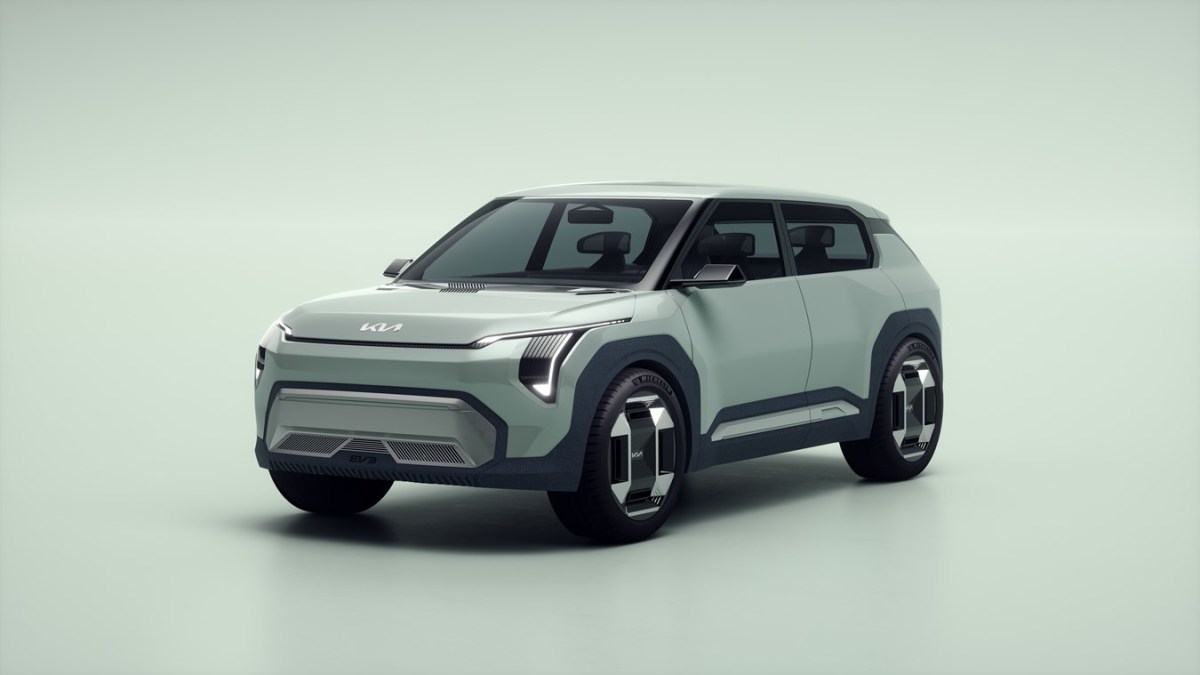
Concept EV3
Revealed at Kia EV Day 2023, the Concept EV3 is a small crossover boasting short dimensions but a wheelbase that pushes the large wheels to the extreme corners. The Concept EV3 has a bit of a bulldog design–petite yet bold. Further, Kia designers have pushed the Concept EV3’s windshield forward to reduce the length of the hood (after all, there’s no engine under there), which opens up a surprisingly airy cabin. The Concept EV3’s squared wheel arches draw visual similarities to the EV9, a floating roof effect courtesy of disconnected C-pillar and wrap-around windshield make it feel modern, and the character lines crossing the Concept EV3’s bodywork give it an origami look.
The Concept EV3 showcases a flat floor and coach (or “suicide”) doors, although we’d expect US-spec production models to revert to traditional doors. Kia says the interior environment promotes emotional wellbeing–something we’d welcome while sitting in traffic. The rear seats are also interesting, with a sort of pod design for the seat back but a flat bench for the seat cushion.
Concept EV4
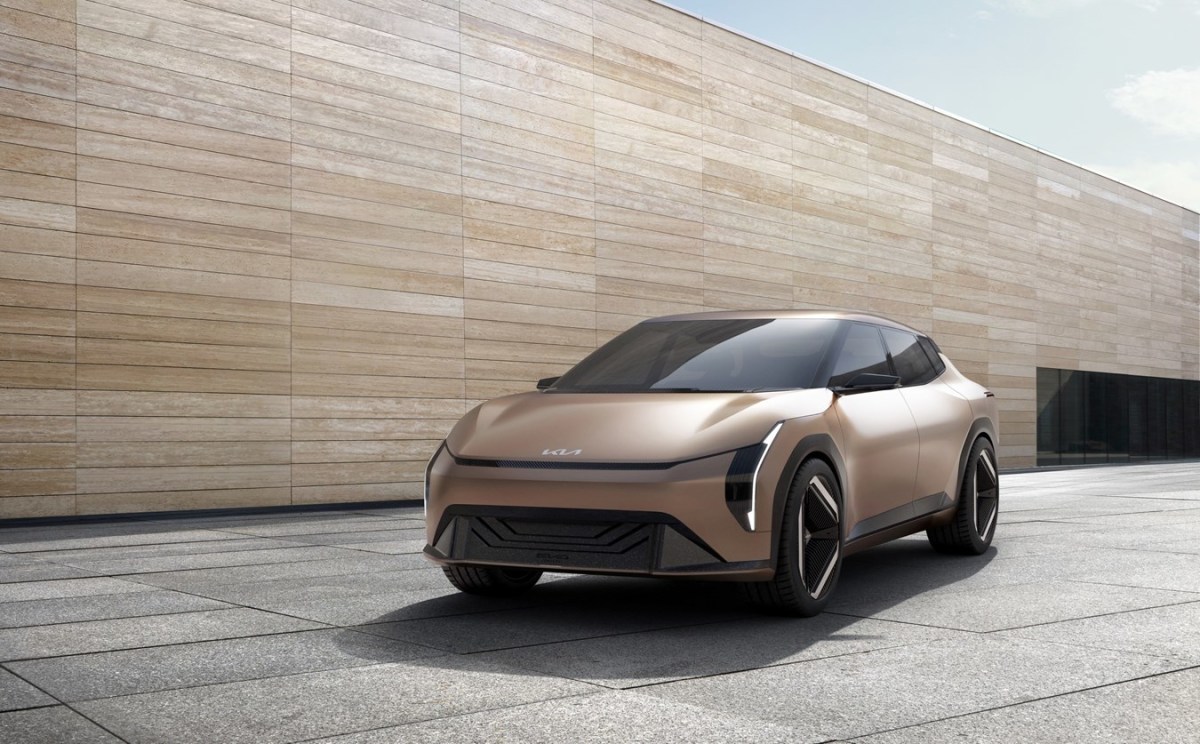
Also shown at Kia EV Day, the Concept EV4 has very distinctive styling and truly evolves the definition of a modern sedan. Yes, it has four doors, but the Concept EV4 also boasts an incredibly long, sloping rear roofline and a liftback-style trunk. At the front, vertical headlights mark the corners and the hood drops low to the ground before terminating at a slim bumper. With the sleek low nose, long-tail silhouette, and a stylish rear decklid spoiler, the Concept EV4’s exterior styling is truly unique (and likely polarizing).
Like the Concept EV3, a flat floor and coach doors provide a welcoming entrance. The Concept EV4’s interior has a cocoon-like ambience. Various “Mind Modes” are programmed to adjust ambient lighting and animated ventilation patterns courtesy of little pin-hole air vents. Most notably, the Concept EV4’s interior is unbelievably simple–truly unbelievable, too; we can’t imagine it heading to production without significant changes. There are almost no buttons, the climate control panel retracts into the center console, and the coach doors are a rare sight on production cars.
Kia EV5
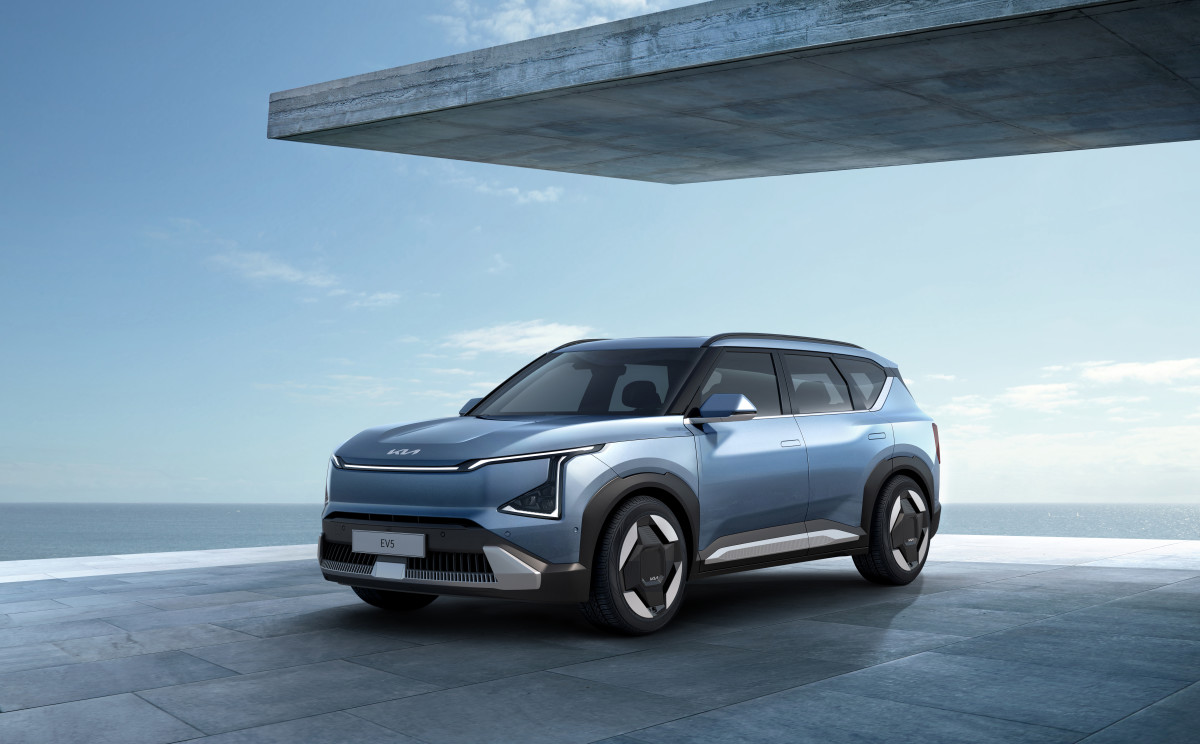
Unlike the Concept EV3 and the Concept EV4, the Kia EV5 is an upcoming production model. As of October, 2023, Kia’s official word is that the EV5 isn’t planned for the United State market, a decision that’s likely influenced by the manufacturing and material-sourcing requirements of the US’ federal EV tax credit program. In order to qualify for the tax incentives, EVs must be built in North America with materials sourced from North America, and as of now, the EV5 is expected to be built in China and Korea. As a result, the EV5 will be sold in Canada but not the United States.
Granted, we wouldn’t be surprised if that plan changed, either because of changes to the tax credit program or simply because the EV5 looks like a sure-fire hit with US customers. Designed for young, millennial families, the EV5 is a compact crossover aimed at accelerating Kia’s EV push by targeting the most competitive segment in automotive.
Styling is good, too. An LED lighting signature across the fascia brings the EV5 in line with the EV9, and the EV5’s profile shares much with the EV9, too (just across a much shorter length). Inside and out, there’s a simplicity to the design that exudes clarity without sacrificing style or elegance.
Short and long range models will be available, with the Chinese-spec latter using a single motor and an 88-kwh battery for an estimated 720-kilometer (450-mile!) driving range. With dual-motor AWD, the Chinese EV5 should return 650 kilometers of range (400 miles).
The long-range Korean model’s range won’t be quite as impressive, as it comes with a smaller battery (81 kWh) and more power (roughly 300 horsepower with AWD).
The EV5 will also benefit from the EV6's heat pump, which should help with cold-weather range and performance. Although it hasn’t been shown yet, a GT trim is also expected.
Inside, the EV5 offers the same dual-12.3-inch screen layout found in the EV9, plus a 5-inch climate control display (also part of the setup we saw with the EV9). The interior features few physical buttons, although there are hard keys for climate control. Over-the-air (OTA) updates will keep EV5 models constantly upgraded and updated, with no need for a dealership visit.
Plug-in Hybrid Electric Vehicles (PHEVs)
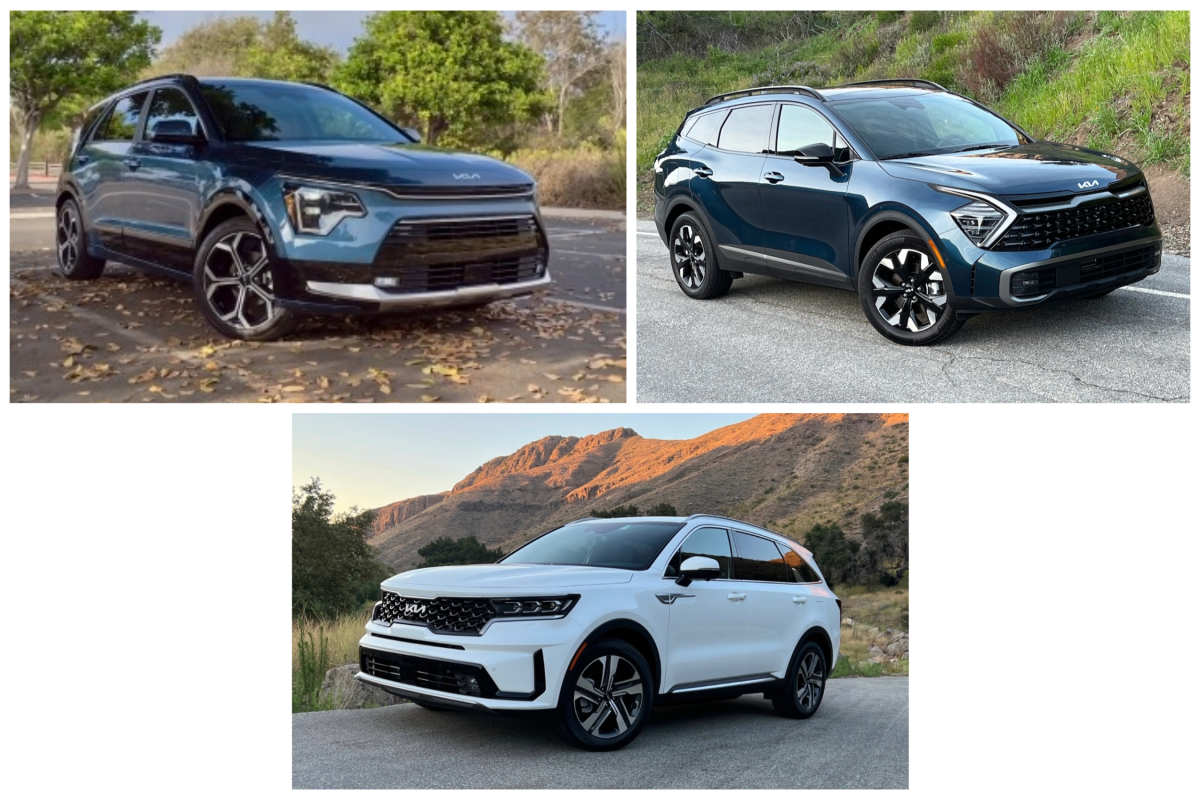
In addition to its battery electric vehicles, Kia also offers a variety of plug-in hybrid electric vehicles (PHEVs). While these vehicles do have a battery and are able to drive on electricity alone, they also have a gasoline engine available for longer-distance trips. Because PHEVs carry the weight of a battery pack and an engine, they don’t quite match the fuel economy of a traditional hybrid when running on solely their engine, nor are they as efficient as a full EV when driving on only electricity. However, with the two powertrain designs combined, PHEVs offer a “best of both worlds” solution for many drivers, and they provide a comfortable and familiar driving experience for most owners.
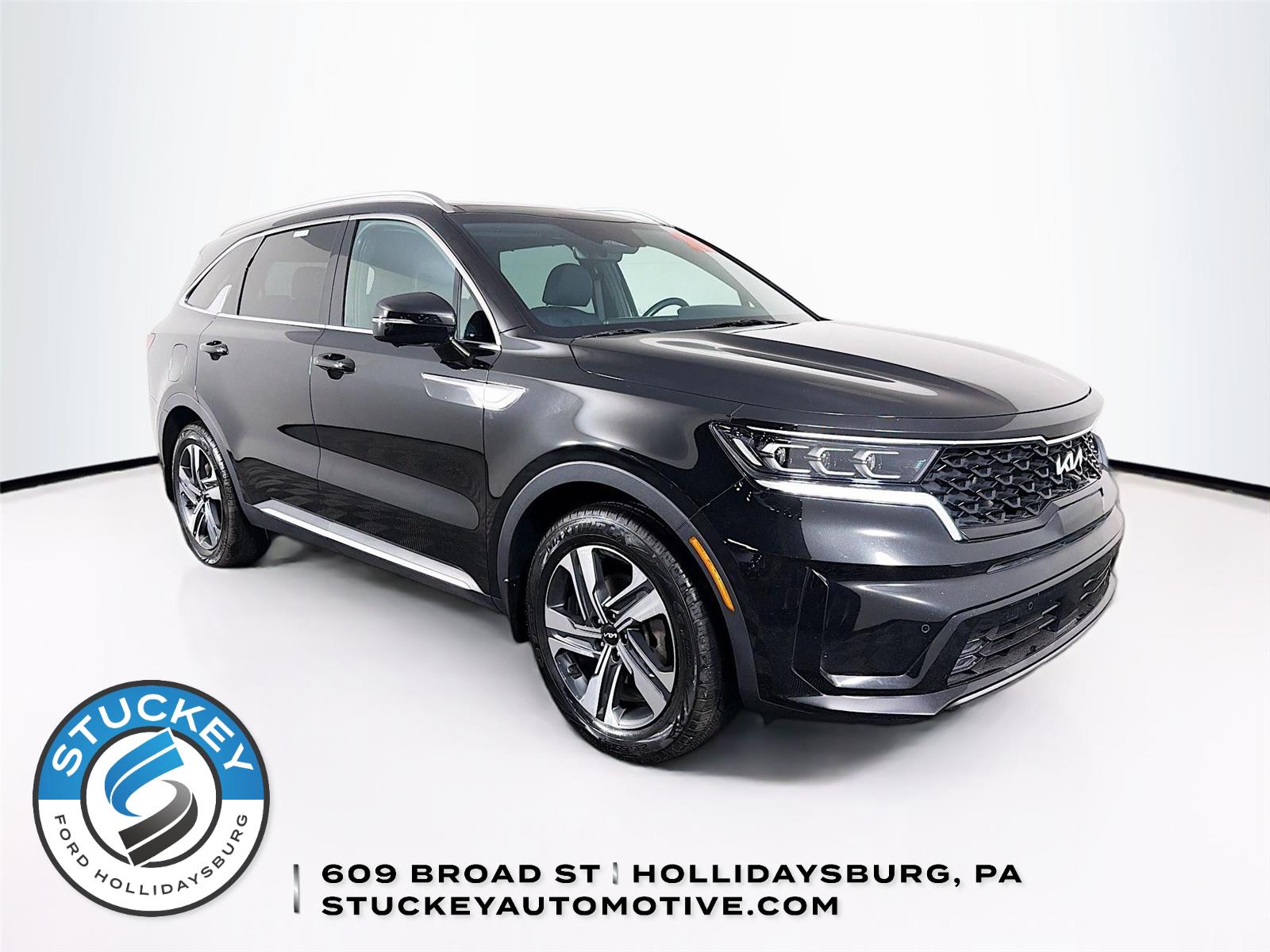
Shoppers interested in the PHEV lifestyle can consider the Kia Niro PHEV, the Kia Sportage PHEV, or the Kia Sorento PHEV. With batteries ranging from 11.1 kWh (in the Niro) to 14 kWh (in the Sorento), these vehicles can travel 32-34 miles on electricity, with their gas engines extending the total driving range into the 500-mile range.

How Long Does it Take to Charge a KIA EV?
Happily, most Kia EV models charge faster than other cars. That’s because Kia’s E-GMP platform employs an 800-volt architecture, so it can accept a higher rate of electricity than a lower-voltage architecture. These faster charging speeds mean cars like the EV6 and EV9 can replenish their batteries from 10% to 80% in less than 25 minutes. The Kia Niro EV, being built on an older EV platform, accepts electricity at lower rates, so it take a bit longer (10% - 80% in roughly 45 minutes).
Additionally, Kia is adopting the North American Charging Standard (NACS) starting in late 2024. This will allow Kia owners of applicable models to utilize the Tesla Supercharger network. Pre-NACS Kias charge via a CCS plug, which is also common among at-home charging products and public charging stations.
In addition to adopting the NACS, Kia is partnering with BMW, GM, Honda, Hyundai, Mercedes-Benz, and Stellantis to build 30,000 fast-charging stations across North America by 2030.
Related Topics