
There are a lot of reasons to buy an electric vehicle (EV). These days, the cost of gasoline averages above $3.50 per gallon, and that’s as good a reason as any to consider a shift to electricity instead of gas for your daily commute.
But we all have a lot of what economists refer to as “sunk cost” in what we’re already driving. We faced a similar conundrum in 2009 when gas prices spiked to a level that—adjusted for inflation—was higher than they are now. At that time, there were no EVs on the market. The only option was a hybrid, and there were two: the Toyota Prius and the Honda Insight. While both of them offered significantly higher fuel economy than their internal combustion counterparts, you still had to buy gas, and it was hard to justify all the costs of a new car, including sales tax, registration, destination charge and the depreciation of trying to sell or trade something like a full-size pickup at the same time. The timeline to recoup the cost of that new Prius purchase in fuel savings was something like infinity.
Plug-in hybrids (PHEVs) split the difference between electric vehicles and conventional gas-powered cars, allowing short distances solely on electric power, but they still require the tank to be filled, and at higher prices per gallon even that can be painful.

Things are different with an EV. You go from buying gas at $3.50 a gallon (or more) to buying a completely different kind of energy. And you have a lot of options about where to charge it. The cost comparison of a gallon of gas versus a similar number of kilowatt-hours to charge a battery at a public charging station really isn’t fair or logical, since—depending on who is doing the research—anywhere from 79 percent to 85 percent of EV owners never use a public charging station. Instead, they have Level 2 chargers in their garage, and the cost is dramatically different. (In fact, it’s possible that the cost can be $0 if you’re collecting energy from a solar array, but we’ll leave public charging and home charging with a solar array for another time.)
The sticker price of an EV is generally higher, despite federal tax credits and state incentives. And a Level 2 charger isn’t free, but it’s getting close. With some of their models, Chevrolet is already providing one with your purchase, and it’s clear that it may be the model for others to follow. On the plus slide of the ledger, cost of ownership is demonstrably lower in an EV thanks to the elimination of a lot of ancillary systems that make an internal combustion engine (ICE) work. Take those pieces away, and maintenance costs drop like a stone.
But we can certainly get to some kind of a logical cost comparison, especially now that there are EVs available in multiple vehicle classes, from sedans to full-size trucks. We’re going to take a look at three different vehicle classes that have vehicles of similar size, so that we can begin to understand just the fueling costs of each.
- What is the Cost Per Mile of Gas vs. EV Charging?
- Compact Crossover: Chevrolet Bolt EUV vs. Honda HR-V
- Compact Car: Nissan Leaf vs. Toyota Corolla Hatchback
- Full Size Pickup: Ford F-150 Lightning vs. Ford F-150
- EV vs Hybrid: Kia Niro EV vs. Kia Niro Hybrid
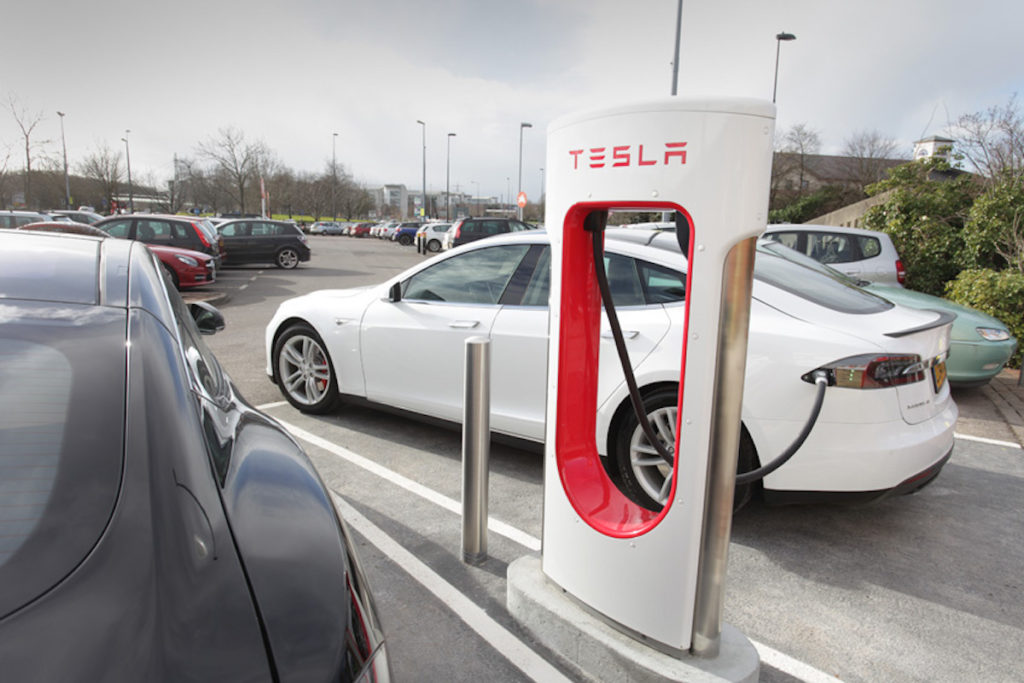
What is the Cost Per Mile of Gas vs. EV Charging?
According to the EPA, if you were to drive 15,000 miles a year, 45 percent on the highway and 55 percent in “city” environments, you’d spend approximately $1,850 per year in gasoline at today’s average price.
The EPA offers a handy comparison tool that allows you to put an EV next to an ICE-powered car and sort of estimate the fuel cost savings of choosing an an electric motor, but it’s pretty meaningless. It’s fine for comparing gas-to-gas-powered vehicles, but it quickly loses the plot when comparing ICEs to electric power.
The price of gas certainly varies from state to state, but the swing in the cost of electricity is dramatic depending on where you live. For instance, the price of gas might range from a low-$3.00 figure in Texas to north of $5.00 in California.
The cost of electricity delivered to your home, on the other hand, ranges from less than ten cents per kWh in Louisiana to more than 30 cents per kWh in Hawaii.
So how do you compare those two things when filling a tank or charging a battery? Let’s take the popular compact crossover class as an example. The closest comparison is looking at driving range to driving range, and normalizing the distance that an EV can drive on a full charge, and comparing that to how much gas it would take to go the same distance in something powered by an ICE.
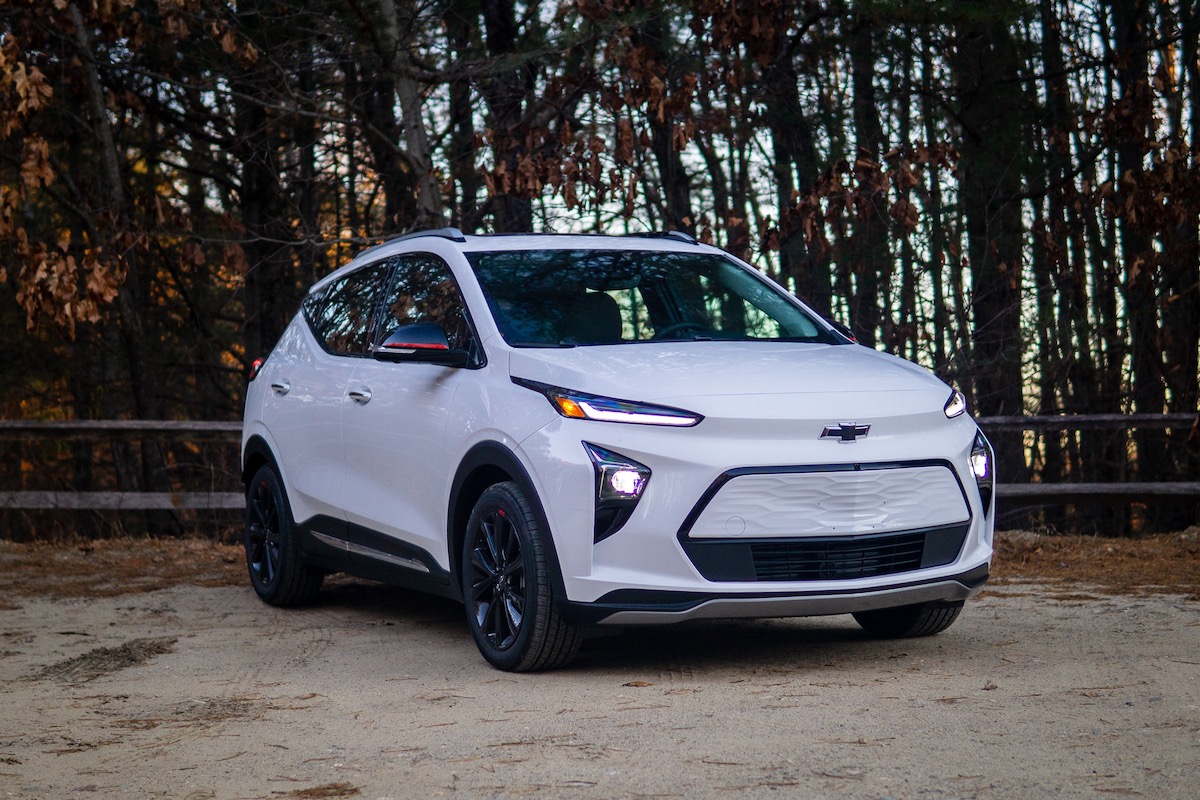
Compact Crossover: Chevrolet Bolt EUV vs. Honda HR-V
A vehicle like the Chevy Bolt EUV has 247 miles of range with a fully charged battery. The similarly sized Honda HR-V has a 392 mile range.
If we wanted to normalize those two things, we’d say that the Bolt has 63 percent of the HR-V’s range. So if we multiplied the HR-V’s 13.2 gallons by .63, we’d see that the HR-V needed 8.316 gallons to equal the range of a Bolt EUV with a full charge.
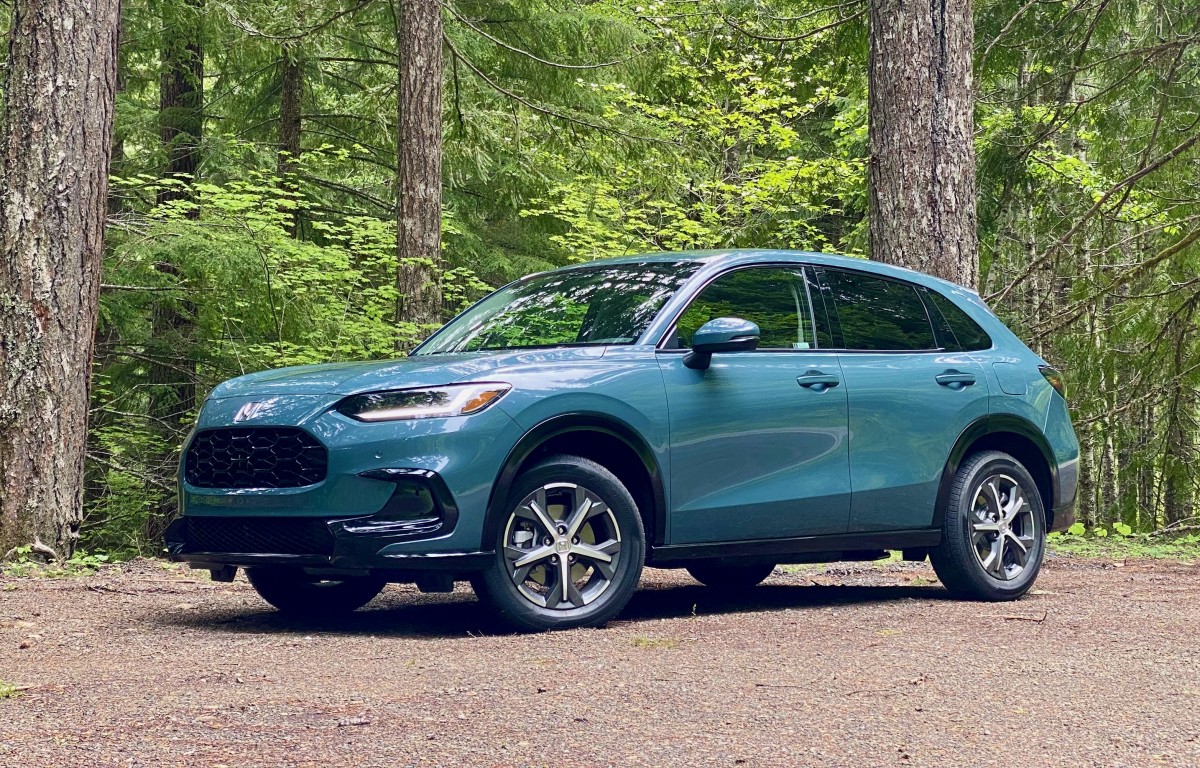 If gas costs $3.50 per gallon multiplied by 8.316 gallons (or $29.11) to get 247 miles out of the HR-V. That equates to $0.12 per mile.
The Bolt EUV has a 65 kWh battery pack. To charge it to 100% from zero, using the national average cost for electricity of $0.17 per kWh, would cost $11.05. That equates to a per mile cost of $0.04 per mile.
Using these figures, over an average 15,000 mile year, a Honda HR-V would cost $1,800. A Bolt EUV would cost $600.
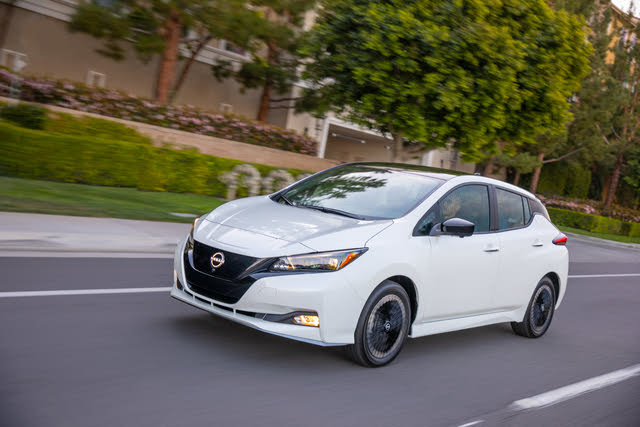
Compact Car: Nissan Leaf vs. Toyota Corolla Hatchback
These are two legacy vehicles that need little introduction. The Nissan Leaf is the grandpappy of all the EVs in production right now, having made its entrance into the marketplace in 2011, and proven that an electric vehicle can be a viable means of transport for American drivers. The Corolla has been a bread-and-butter sedan for Toyota since it first launched in 1966. There is a hybrid available, but for the sake of comparison, we’re working with the internal combustion-powered example.
The Toyota Corolla Hatchback with a 2.0-liter four-cylinder and an automatic transmission offers a 35 mpg combined fuel economy rating from the EPA. If we used the same calculations we ran between the Bolt EUV and the Honda HR-V, we can start to understand the cost difference in running both cars for a year.
 The Leaf is available with a 62-kWh battery pack, which provides the car with an estimated 226 miles of range. The Corolla Hatchback has a 13.2-gallon tank, which provides an estimated 462 miles of range.
A fully charged Leaf has 48.91 percent of the range of a Corolla Hatchback with a full tank. To go 226 miles in the Corolla Hatchback, we’d need 6.45 gallons of fuel in the Corolla, which would cost $22.58, or $.10 per mile.
To fully charge the 62-kWh battery pack in the Leaf at the national average of $0.13 per kWh would cost $10.54, or $0.047 per mile.
Over 15,000 miles, the Corolla would cost $1,500 in a year. The Leaf’s annual charging cost would be $705.
That’s not as dramatic a difference between the two in this subcompact class than we saw between the Bolt EUV and the HR-V. It’s the larger vehicles that have the potential of significant cost savings.

Full Size Pickup: Ford F-150 Lightning vs. Ford F-150
Here, we get to compare the electrified and ICE-powered versions of the exact same vehicle, making this a truly even match. The Ford F-150 Lightning has a 300-mile range thanks to a massive 145-kWh battery pack. The F-150 with the EcoBoost 3.3-liter turbo V6 has a truly impressive driving range of 520 miles, but that’s more due to the size of the fuel tank than the fuel economy, which tops out at 22 mpg highway. The larger of the two tanks is 26 gallons.
To get to the F-150 Lightning’s 300 mile range, you’d fill the tank of the gas-powered F-150 57.69 percent full, for 14.99 gallons. At $3.50 per gallon, your fuel cost would be $52.47, for a per-mile cost of $0.17.
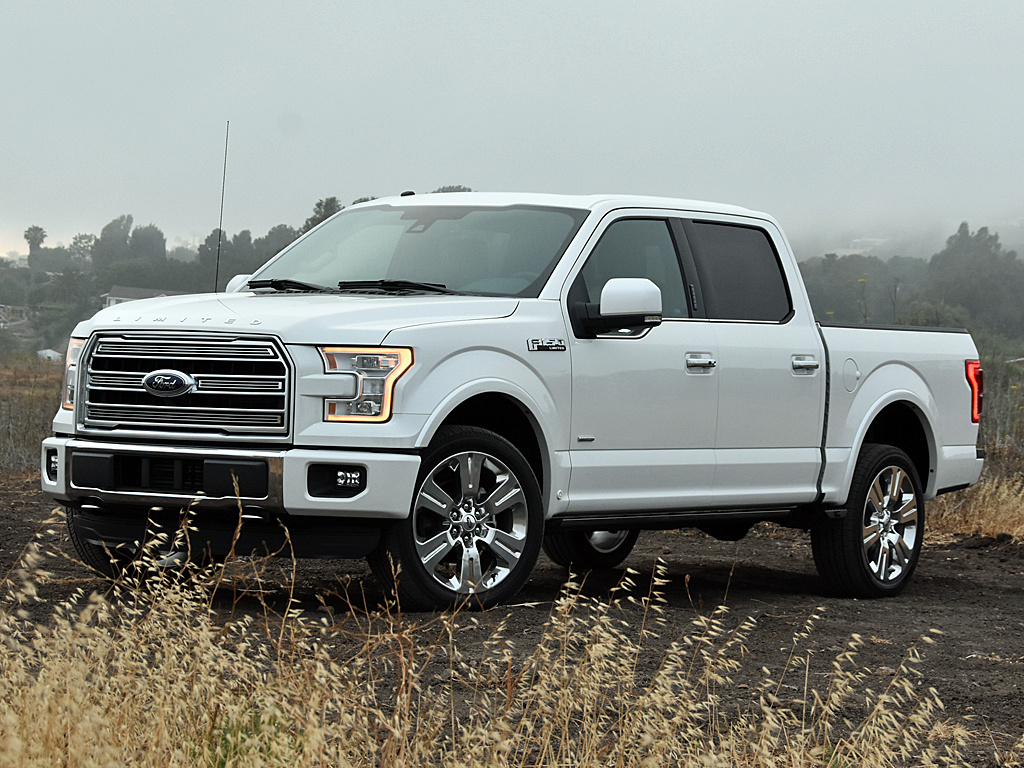 The cost of electricity goes up with the F-150 Lightning’s giant battery pack, too. At $0.17 per kWh, you’re looking at $24.65 to go from 0 to 100%. Per mile, the Lightning costs double what a Leaf would, but it’s still only $0.08 per mile if you’re charging at home.
Over 15,000 miles, an EcoBoost powered F-150 will set you back $2,550 every year.
Over the same mileage, an F-150 Lightning would cost $1,200. At just 47 percent of the cost of driving an ICE-powered F-150, is it worth it? Over the average 11.8 years that most people keep their vehicles in the United States, a $15,930 savings in getting to your destination sure seems it.
EV vs Hybrid: Kia Niro EV vs. Kia Niro Hybrid
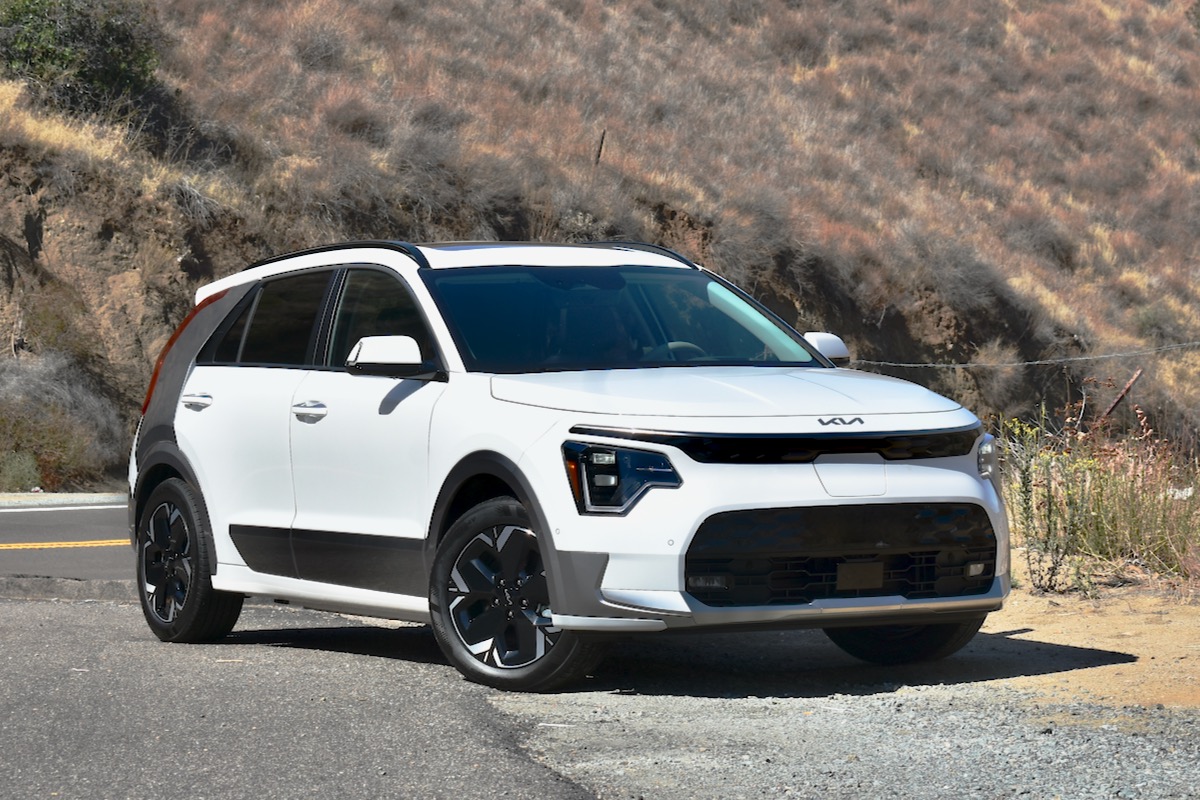
The Kia Niro EV features a driving range of 253 miles when its 64.8 kWh battery is fully charged. On the other hand, the Kia Niro Hybrid offers a longer range of 544 miles and has an 11.4-gallon fuel tank.
When normalizing these two aspects, we can say that the Niro EV's range is 46.5 percent of the Niro Hybrid's range. Therefore, to match the Niro EV's range, the Niro Hybrid would consume approximately 5.3 gallons of fuel (46.5% of 11.4 gallons).
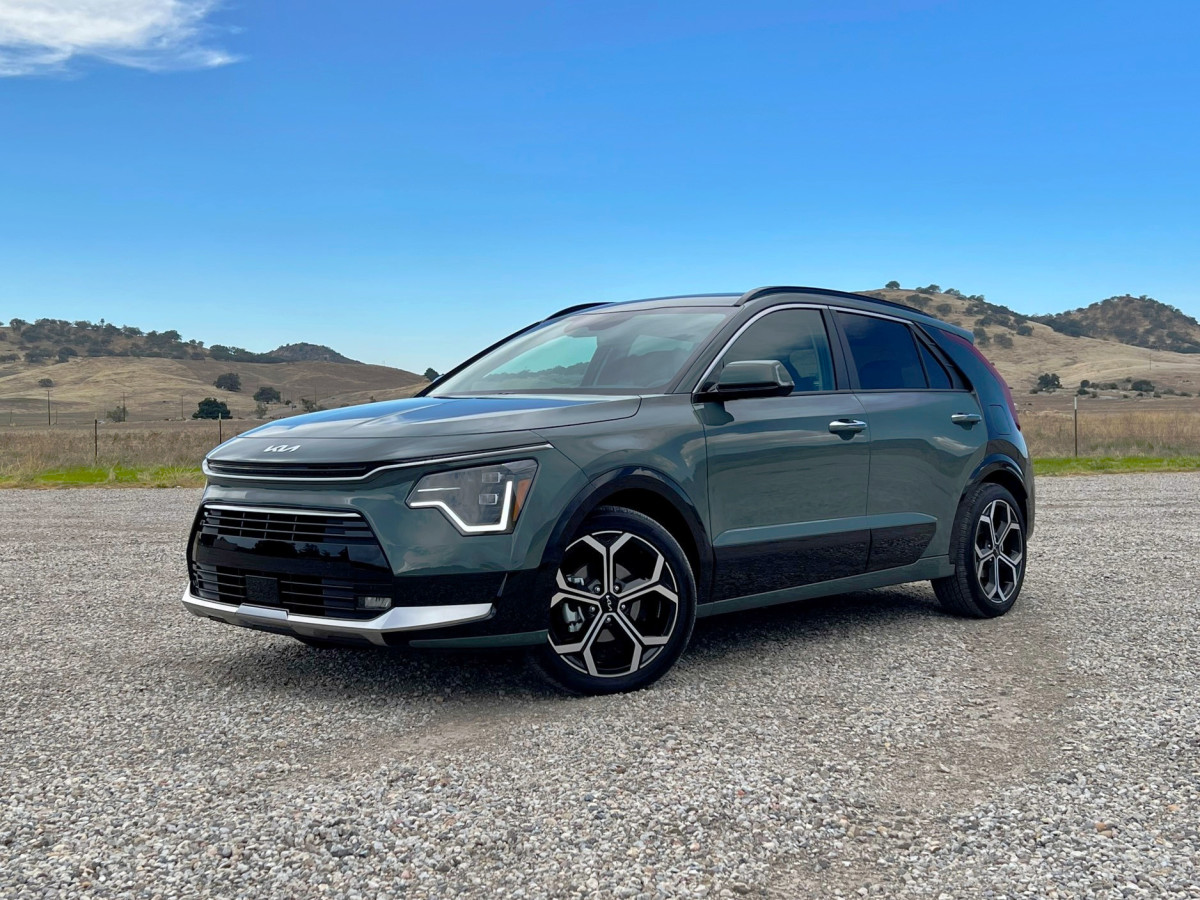 If the cost of gasoline is $3.50 per gallon, it would cost around $18.55 to travel 253 miles in the Niro Hybrid. This results in a cost per mile of roughly $0.07.
To charge the Niro EV's 64.8 kWh battery from zero to full, based on the national average cost for electricity of $0.17 per kWh, it would cost about $11.02. This amounts to a cost per mile of roughly $0.04.
Using these calculations, over an average year of 15,000 miles, the Kia Niro Hybrid would cost about $1,050, while the Kia Niro EV would cost about $600.
The Bottom Line
Generally, the larger the vehicle, the more dramatic the difference is in savings. The potential cost savings in large vehicle classes like full-size SUVs should be an eye-opener for even the most skeptical. Critically, if you're considering an electric vehicle for your next car purchase and you're planning to charge it at home, check what your per-kWh rate is for electricity at home, and do some math to determine just how much that new EV will cost you.
Obviously, fuel savings isn’t the only reason to choose electricity over gasoline. There are environmental reasons, lower emissions (even if you live in a state where coal still provides most of your power), an overall reduction in the dependence on gasoline, and the significantly lower maintenance costs of an EV versus an ICE, which still requires a cooling system, an engine management system, exhaust, and all the other things that make an ICE feasible, and then there’s the benefit of never having to visit a gas station ever again. But the cost savings in fuel alone is significant, and it’s one that can’t be ignored.
The Best Used Electric Cars
The Best Hybrid Cars
The Best Gas Mileage SUVs