Mercedes-Benz GLS vs Hyundai Venue

Overview | |
MSRP$90,250 | MSRP$20,550 |
Listings612 | Listings138 |
Ratings & Reviews | |
User Reviews | User Reviews |
Expert reviews7.8 out of 10 | Expert reviews5.2 out of 10 |
Pros
Cons
| Pros
Cons
|
Reviews SummaryIt could be said that the Mercedes GLS is the S-Class of SUVs, but that’s not entirely accurate. The S-Class sedan commands a significant premium over the GLS, while the legendary G-Class SUV is even more expensive than the S-Class. Nevertheless, for buyers who want a three-row SUV with a three-pointed star on its grille, the 2026 Mercedes-Benz GLS is the right choice because it offers more passenger room and cargo space than any other model in the automaker’s lineup. Verdict: Large, luxury SUVs are a lot more expensive than they used to be, and while the 2026 Mercedes GLS can’t match them for sheer size and capability, its manageable dimensions, undeniable comfort, refinement, and rewarding driving dynamics make a strong case. | |
Reviews SummaryAutomakers have traditionally had a hard time making money on entry-level subcompact cars, because they have low profit margins, but America has largely moved away from cars to crossover SUVs—and higher prices. That allows car companies to offer an entry-level subcompact SUV for thousands more than a similar sedan or hatchback. Such is the case with the Hyundai Venue, which costs more than its predecessor, the subcompact Accent that was dropped after the 2022 model year. While the price is higher, the advantage for buyers is a vehicle that generally has more cargo space and is more practical. We recently drove the 2026 Hyundai Venue SEL w/2-Tone Roof (yes, that’s the trim level name) to find out if a subcompact crossover is a better buy than a cheaper subcompact car. Verdict: The Hyundai Venue sacrifices refinement for a price point that isn’t as low as a comparable subcompact car. We’d be tempted to spend a little more for a slightly larger compact car with more power, features, and refinement. | |
No video found | No video found |
Popular Features & Specs | |
Engine3.0L 375 hp I6 | Engine1.6L 121 hp I4 |
DrivetrainAWD | DrivetrainFWD |
Seating Capacity7 | Seating Capacity5 |
Horsepower375 hp @ 5500 rpm | Horsepower121 hp @ 6300 rpm |
MPG City19 | MPG City29 |
MPG Highway24 | MPG Highway33 |
Engine | |
Engine Name3.0L 375 hp I6 | Engine Name1.6L 121 hp I4 |
Torque369 lb-ft @ 1600 rpm | Torque113 lb-ft @ 4500 rpm |
Horsepower375 hp @ 5500 rpm | Horsepower121 hp @ 6300 rpm |
DrivetrainAWD | DrivetrainFWD |
Fuel Economy | |
MPG City19 | MPG City29 |
MPG Highway24 | MPG Highway33 |
Interior | |
Seating Capacity7 | Seating Capacity5 |
Key Features | |
Navigation SystemStandard | Navigation System |
Sunroof/MoonroofStandard | Sunroof/Moonroof |
Safety | |
Front Crash Overall | Front Crash Overall4 |
Side Crash Overall | Side Crash Overall5 |
Dimensions & Capacity | |
Cargo Space17.4 cu ft | Cargo Space18.7 cu ft |
Curb Weight5523 lbs | Curb Weight2612 lbs |
Height71.8 in | Height61.6 in |
Length205.0 in | Length159.1 in |
Width84.9 in | Width69.7 in |
Wheelbase123.4 in | Wheelbase99.2 in |
Maximum Payload1818 lbs | Maximum Payload1158 lbs |
Number of doors4 | Number of doors4 |
Maximum Towing Capacity7700 lbs | Maximum Towing Capacity |
Overview | ||
MSRP | $90,250 | $20,550 |
Listings | ||
Ratings & Reviews | ||
User reviews | ||
Expert reviews | 7.8 out of 10Read full review | 5.2 out of 10Read full review |
Pros & cons | Pros
Cons
| Pros
Cons
|
Summary | It could be said that the Mercedes GLS is the S-Class of SUVs, but that’s not entirely accurate. The S-Class sedan commands a significant premium over the GLS, while the legendary G-Class SUV is even more expensive than the S-Class. Nevertheless, for buyers who want a three-row SUV with a three-pointed star on its grille, the 2026 Mercedes-Benz GLS is the right choice because it offers more passenger room and cargo space than any other model in the automaker’s lineup. Verdict: Large, luxury SUVs are a lot more expensive than they used to be, and while the 2026 Mercedes GLS can’t match them for sheer size and capability, its manageable dimensions, undeniable comfort, refinement, and rewarding driving dynamics make a strong case. | Automakers have traditionally had a hard time making money on entry-level subcompact cars, because they have low profit margins, but America has largely moved away from cars to crossover SUVs—and higher prices. That allows car companies to offer an entry-level subcompact SUV for thousands more than a similar sedan or hatchback. Such is the case with the Hyundai Venue, which costs more than its predecessor, the subcompact Accent that was dropped after the 2022 model year. While the price is higher, the advantage for buyers is a vehicle that generally has more cargo space and is more practical. We recently drove the 2026 Hyundai Venue SEL w/2-Tone Roof (yes, that’s the trim level name) to find out if a subcompact crossover is a better buy than a cheaper subcompact car. Verdict: The Hyundai Venue sacrifices refinement for a price point that isn’t as low as a comparable subcompact car. We’d be tempted to spend a little more for a slightly larger compact car with more power, features, and refinement. |
Video | No video found | No video found |
Popular Features & Specs | ||
Engine | 3.0L 375 hp I6 | 1.6L 121 hp I4 |
Drivetrain | AWD | FWD |
Seating Capacity | 7 | 5 |
Horsepower | 375 hp @ 5500 rpm | 121 hp @ 6300 rpm |
MPG City | 19 | 29 |
MPG Highway | 24 | 33 |
Engine | ||
Engine Name | 3.0L 375 hp I6 | 1.6L 121 hp I4 |
Torque | 369 lb-ft @ 1600 rpm | 113 lb-ft @ 4500 rpm |
Horsepower | 375 hp @ 5500 rpm | 121 hp @ 6300 rpm |
Drivetrain | AWD | FWD |
Fuel Economy | ||
MPG City | 19 | 29 |
MPG Highway | 24 | 33 |
Interior | ||
Seating Capacity | 7 | 5 |
Key Features | ||
Navigation System | Standard | |
Sunroof/Moonroof | Standard | |
Safety | ||
Front Crash Overall | 4 | |
Side Crash Overall | 5 | |
Dimensions & Capacity | ||
Cargo Space | 17.4 cu ft | 18.7 cu ft |
Curb Weight | 5523 lbs | 2612 lbs |
Height | 71.8 in | 61.6 in |
Length | 205.0 in | 159.1 in |
Width | 84.9 in | 69.7 in |
Wheelbase | 123.4 in | 99.2 in |
Maximum Payload | 1818 lbs | 1158 lbs |
Number of doors | 4 | 4 |
Maximum Towing Capacity | 7700 lbs | |
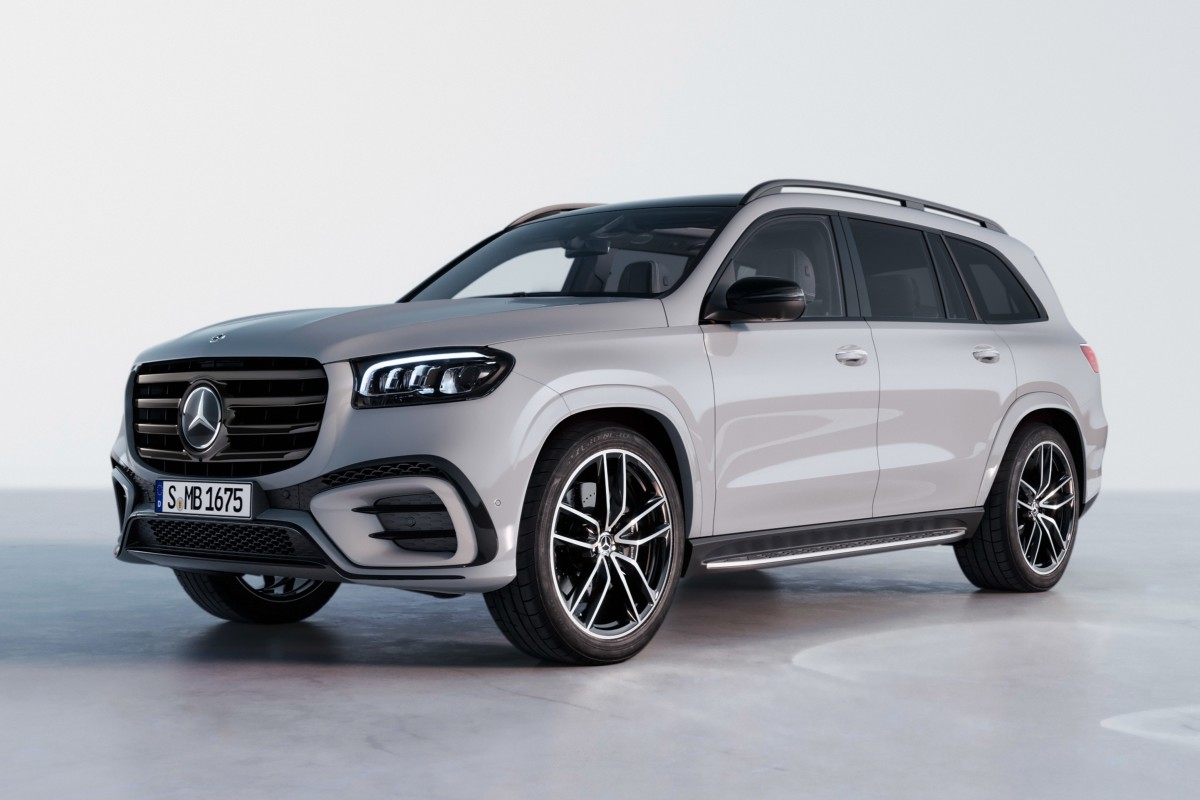
The 2026 Mercedes-Benz GLS presented a luxurious and sporty appearance, especially with the new Manufaktur Edition Package. This package added 21-inch AMG wheels, the AMG Line Exterior Package, the Night Package, and the Exclusive Package, enhancing the base GLS 450 model. The exclusive paint options, such as Manufaktur Silicon Grey, aimed to add a touch of exclusivity, although the color didn't stand out as particularly special. The interior of the GLS was reminiscent of the smaller GLE-Class, featuring high-quality materials and detailing that matched its price tag. However, some body creaks were noted on cold mornings. The GLS 450 came standard with artificial leather upholstery, with options for higher-grade leather and various interior trims. The dual 12.3-inch displays were well-integrated into the dashboard, offering a user-friendly experience.
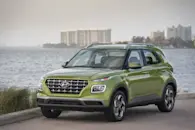
The 2026 Hyundai Venue, classified as a crossover SUV, had a design that leaned more towards a tall hatchback. Its compact size and narrow stance gave it a European runabout feel, with SUV-like features such as a bluff nose and roof rails. The Venue's high nose, lower headlights, and high-set daytime running lights contributed to its SUV appearance. Inside, the Venue offered a simple and functional design, with a digital instrument cluster and a small touchscreen that resembled an iPad on the dash. The interior featured body-color trim around the air vents and shifter, adding a touch of the exterior design to the cabin.

The 2026 Mercedes-Benz GLS 450 was powered by a turbocharged 3.0-liter inline-six engine with mild-hybrid assist, delivering 375 horsepower and 369 pound-feet of torque. Coupled with a nine-speed automatic transmission and standard 4Matic all-wheel-drive, it accelerated from 0-60 mph in an estimated 5.8 seconds. The GLS 450 offered a balance between power and fuel economy, with an EPA rating of 21 mpg combined, although real-world testing showed 19.4 mpg. The GLS featured multiple driving modes, including Comfort, Eco, Sport, Off-Road, and Individual, and came with a standard Airmatic adaptive suspension. It had a maximum towing capacity of 7,700 pounds. The GLS provided a tailored driving experience, with a quiet cabin, composed ride, and solid dynamics, making it easier to manage in urban and suburban settings compared to larger SUVs.
The 2026 Hyundai Venue was equipped with a naturally aspirated 1.6-liter four-cylinder engine, producing 121 horsepower and 113 pound-feet of torque. The power was transmitted through a continuously variable transmission (CVT) to the front wheels. The Venue's 0-60 mph time ranged from 8.5 to 8.8 seconds, aided by its lightweight 2,738-pound frame. While peppy in city traffic, the Venue struggled at highway speeds due to its limited torque and slow transmission response. The Venue's handling benefited from its small size and low weight, making it agile in traffic and easy to park. However, its 6.7 inches of ground clearance resulted in some body lean in corners, and the ride was jiggly on rough surfaces due to the solid rear axle.
The 2026 Mercedes-Benz GLS offered standard seven-passenger seating, with an optional six-passenger configuration featuring second-row captain’s chairs. The GLS was exceptionally comfortable, with features like a four-zone climate control system, heated and ventilated front seats, and optional massaging seats. The Manufaktur Edition Package added fabric pillows to the front-seat head restraints, which were not well-received. The third-row seat provided good thigh support, although legroom was snug. Storage space was limited, with a small center armrest bin and shallow door pockets. The GLS offered 17.4 cubic feet of cargo space behind the third row, expandable to 84.7 cubic feet with the second-row seats folded down.
The 2026 Hyundai Venue featured cloth and H-Tex seats with manual adjustments, providing decent comfort. The front seats offered ample headroom but limited legroom for taller occupants. The rear seat accommodated average-sized adults, but legroom was tight for taller passengers. The rear seats folded flat in a 60/40 split, providing 31.9 cubic feet of cargo space, which was modest compared to larger crossovers. The Venue's rear cargo floor lifted to access a compact spare tire, with cost-cutting evident in the lack of sound deadening. The interior was dominated by hard black plastic, with limited soft-touch surfaces.
The 2026 Mercedes-Benz GLS featured dual 12.3-inch displays with the Mercedes-Benz User Experience (MBUX) infotainment system. It included wireless Apple CarPlay and Android Auto, a navigation system with augmented reality, and a standard Burmester surround-sound system. Options included gesture control, a head-up display, and rear infotainment screens. The MBUX system was user-friendly, with a digital assistant that responded to voice commands, although it occasionally struggled with specific requests.
The 2026 Hyundai Venue came with an 8-inch touchscreen for basic infotainment functions. While small by modern standards, it was functional and responsive. The system included wireless Apple CarPlay and Android Auto but lacked features like navigation and a Wi-Fi hotspot. The Venue's audio system was a basic six-speaker unit, with no premium option available.
The 2026 Mercedes-Benz GLS boasted nearly 40 standard safety and driver-assistance systems, including Pre-Safe, Crosswind Assist, and Active Emergency Stop Assist. It featured parking sensors, a surround-view camera, and a hands-on driver-assistance system. However, rear-seat side-impact airbags were optional, and the hands-free highway driver-assistance technology was not available. The GLS required active driver participation, with some limitations in handling curves.
The 2026 Hyundai Venue offered a good set of standard safety features, including forward-collision warning, automatic emergency braking, and lane-keep assist. Blind-spot monitors and rear cross-traffic alert were available on higher trims. The Venue received a four-star safety rating from the NHTSA, with mixed ratings from the IIHS. The driver attention monitor was overly sensitive during testing.
CarGurus highlights
According to CarGurus experts, the overall rating for the 2026 Mercedes-Benz GLS is 7.8 out of 10, while the 2026 Hyundai Venue scores 5.2 out of 10. Based on these ratings, the Mercedes-Benz GLS is the recommended choice for those seeking a luxurious and well-rounded SUV experience.
Choose the 2026 Hyundai Venue if:
- You are looking for an affordable, compact crossover with basic safety features.
- You need a vehicle that is easy to maneuver and park in urban environments.
- You prioritize wireless smartphone integration over built-in navigation and premium audio.


Choose the 2026 Mercedes-Benz GLS if:
- You prioritize luxury, comfort, and advanced technology in a full-size SUV.
- You need a vehicle with a high towing capacity and versatile driving modes.
- You value a quiet cabin and composed ride for daily driving and long trips.


CarGurus highlights
According to CarGurus experts, the overall rating for the 2026 Mercedes-Benz GLS is 7.8 out of 10, while the 2026 Hyundai Venue scores 5.2 out of 10. Based on these ratings, the Mercedes-Benz GLS is the recommended choice for those seeking a luxurious and well-rounded SUV experience.
Choose the 2026 Hyundai Venue if:
Shop Now- You are looking for an affordable, compact crossover with basic safety features.
- You need a vehicle that is easy to maneuver and park in urban environments.
- You prioritize wireless smartphone integration over built-in navigation and premium audio.
Choose the 2026 Mercedes-Benz GLS if:
Shop Now- You prioritize luxury, comfort, and advanced technology in a full-size SUV.
- You need a vehicle with a high towing capacity and versatile driving modes.
- You value a quiet cabin and composed ride for daily driving and long trips.

By: CarGurus + AI
At CarGurus, our team of experienced automotive writers remain at the heart of our content operation, conducting hands-on car tests and writing insightful guides that are backed by years of industry experience. To complement this, we are harnessing AI to make our content offering more diverse and more helpful to shoppers than ever. To achieve this, our AI systems are based exclusively on CarGurus content, ratings and data, so that what we produce is both unique to CarGurus, and uniquely helpful to car shoppers.

