BMW X5 vs Hyundai Venue

Overview | |
MSRP$68,300 | MSRP$20,550 |
Listings1204 | Listings139 |
Ratings & Reviews | |
User Reviews | User Reviews |
Expert reviews7.5 out of 10 | Expert reviews5.2 out of 10 |
Pros
Cons
| Pros
Cons
|
Reviews SummaryFive versions of this midsize luxury SUV are available for 2026, all satisfying in one way or another. The 40i models cost the least but can be optioned with almost everything buyers could want. The 50e is a plug-in hybrid with 38 miles of electric-only range. The M60i and X5 M are the performance models, and offer a handful of desirable exclusive options, especially for audiophiles with deep pockets. Verdict: Prices rise quickly with upgrades, but few luxury SUVs blend style, quality, comfort, tech, and performance like the 2026 X5. | |
Reviews SummaryAutomakers have traditionally had a hard time making money on entry-level subcompact cars, because they have low profit margins, but America has largely moved away from cars to crossover SUVs—and higher prices. That allows car companies to offer an entry-level subcompact SUV for thousands more than a similar sedan or hatchback. Such is the case with the Hyundai Venue, which costs more than its predecessor, the subcompact Accent that was dropped after the 2022 model year. While the price is higher, the advantage for buyers is a vehicle that generally has more cargo space and is more practical. We recently drove the 2026 Hyundai Venue SEL w/2-Tone Roof (yes, that’s the trim level name) to find out if a subcompact crossover is a better buy than a cheaper subcompact car. Verdict: The Hyundai Venue sacrifices refinement for a price point that isn’t as low as a comparable subcompact car. We’d be tempted to spend a little more for a slightly larger compact car with more power, features, and refinement. | |
No video found | No video found |
Popular Features & Specs | |
Engine3.0L 375 hp I6 | Engine1.6L 121 hp I4 |
DrivetrainRWD | DrivetrainFWD |
Seating Capacity5 | Seating Capacity5 |
Horsepower375 hp @ 5200 rpm | Horsepower121 hp @ 6300 rpm |
MPG City23 | MPG City29 |
MPG Highway27 | MPG Highway33 |
Engine | |
Engine Name3.0L 375 hp I6 | Engine Name1.6L 121 hp I4 |
Torque398 lb-ft @ 1850 rpm | Torque113 lb-ft @ 4500 rpm |
Horsepower375 hp @ 5200 rpm | Horsepower121 hp @ 6300 rpm |
DrivetrainRWD | DrivetrainFWD |
Fuel Economy | |
MPG City23 | MPG City29 |
MPG Highway27 | MPG Highway33 |
Interior | |
Seating Capacity5 | Seating Capacity5 |
Key Features | |
Navigation SystemStandard | Navigation System |
Sunroof/MoonroofStandard | Sunroof/Moonroof |
Safety | |
Front Crash Overall4 | Front Crash Overall4 |
Side Crash Overall5 | Side Crash Overall5 |
Dimensions & Capacity | |
Cargo Space33.9 cu ft | Cargo Space18.7 cu ft |
Curb Weight4919 lbs | Curb Weight2612 lbs |
Height69.1 in | Height61.6 in |
Length194.2 in | Length159.1 in |
Width87.3 in | Width69.7 in |
Wheelbase117.1 in | Wheelbase99.2 in |
Maximum Payload1054 lbs | Maximum Payload1158 lbs |
Number of doors4 | Number of doors4 |
Maximum Towing Capacity7200 lbs | Maximum Towing Capacity |
Overview | ||
MSRP | $68,300 | $20,550 |
Listings | ||
Ratings & Reviews | ||
User reviews | ||
Expert reviews | 7.5 out of 10Read full review | 5.2 out of 10Read full review |
Pros & cons | Pros
Cons
| Pros
Cons
|
Summary | Five versions of this midsize luxury SUV are available for 2026, all satisfying in one way or another. The 40i models cost the least but can be optioned with almost everything buyers could want. The 50e is a plug-in hybrid with 38 miles of electric-only range. The M60i and X5 M are the performance models, and offer a handful of desirable exclusive options, especially for audiophiles with deep pockets. Verdict: Prices rise quickly with upgrades, but few luxury SUVs blend style, quality, comfort, tech, and performance like the 2026 X5. | Automakers have traditionally had a hard time making money on entry-level subcompact cars, because they have low profit margins, but America has largely moved away from cars to crossover SUVs—and higher prices. That allows car companies to offer an entry-level subcompact SUV for thousands more than a similar sedan or hatchback. Such is the case with the Hyundai Venue, which costs more than its predecessor, the subcompact Accent that was dropped after the 2022 model year. While the price is higher, the advantage for buyers is a vehicle that generally has more cargo space and is more practical. We recently drove the 2026 Hyundai Venue SEL w/2-Tone Roof (yes, that’s the trim level name) to find out if a subcompact crossover is a better buy than a cheaper subcompact car. Verdict: The Hyundai Venue sacrifices refinement for a price point that isn’t as low as a comparable subcompact car. We’d be tempted to spend a little more for a slightly larger compact car with more power, features, and refinement. |
Video | No video found | No video found |
Popular Features & Specs | ||
Engine | 3.0L 375 hp I6 | 1.6L 121 hp I4 |
Drivetrain | RWD | FWD |
Seating Capacity | 5 | 5 |
Horsepower | 375 hp @ 5200 rpm | 121 hp @ 6300 rpm |
MPG City | 23 | 29 |
MPG Highway | 27 | 33 |
Engine | ||
Engine Name | 3.0L 375 hp I6 | 1.6L 121 hp I4 |
Torque | 398 lb-ft @ 1850 rpm | 113 lb-ft @ 4500 rpm |
Horsepower | 375 hp @ 5200 rpm | 121 hp @ 6300 rpm |
Drivetrain | RWD | FWD |
Fuel Economy | ||
MPG City | 23 | 29 |
MPG Highway | 27 | 33 |
Interior | ||
Seating Capacity | 5 | 5 |
Key Features | ||
Navigation System | Standard | |
Sunroof/Moonroof | Standard | |
Safety | ||
Front Crash Overall | 4 | 4 |
Side Crash Overall | 5 | 5 |
Dimensions & Capacity | ||
Cargo Space | 33.9 cu ft | 18.7 cu ft |
Curb Weight | 4919 lbs | 2612 lbs |
Height | 69.1 in | 61.6 in |
Length | 194.2 in | 159.1 in |
Width | 87.3 in | 69.7 in |
Wheelbase | 117.1 in | 99.2 in |
Maximum Payload | 1054 lbs | 1158 lbs |
Number of doors | 4 | 4 |
Maximum Towing Capacity | 7200 lbs | |
The 2026 BMW X5 was a testament to the brand's commitment to luxury and performance. The lineup included both rear-wheel-drive and all-wheel-drive models, with prices ranging from $69,750 to $132,450. Our test vehicle, the X5 M60i, was a showcase of opulence with its Manhattan Green paint, 22-inch wheels, and Merino leather upholstery. The design elements harked back to the original X5, with wide kidney grilles and a four-element headlight array. Inside, the X5 aimed for simplicity with a panoramic curved display and minimized controls, yet it was anything but monotonous. The quality of materials, from glass controls to carbon fiber inlays, made the X5 feel worth its price, especially with features like ambient lighting and a panoramic Sky Lounge LED sunroof enhancing the cabin's allure.
In contrast, the 2026 Hyundai Venue presented itself as a practical and budget-friendly option. Classified as a crossover SUV, it offered front-wheel drive and a modest 6.7 inches of ground clearance. The Venue's design leaned more towards a tall hatchback, with SUV cues like a bluff nose and roof rails. Inside, the Venue was simple and functional, with a digital instrument cluster and a small touchscreen that resembled an iPad on the dash. The Venue's interior was characterized by hard black plastic, with only a few soft-touch surfaces, reflecting its cost-effective nature. Despite its modesty, the Venue provided a comfortable ride with ample headroom and a straightforward layout.


The 2026 BMW X5 offered a range of powertrains, with our M60i test car featuring a twin-turbocharged 4.4-liter V8 engine paired with a 48-volt mild-hybrid system. This setup delivered an impressive 532 horsepower and 553 pound-feet of torque, propelling the SUV to 60 mph in just 4.2 seconds. The xDrive AWD system and Pirelli P Zero performance tires ensured that power was delivered smoothly to the ground. However, the M60i's fuel efficiency was a trade-off, with an EPA rating of 19 mpg and observed figures ranging from 16.4 to 21.1 mpg. Despite its hefty 5,355-pound weight, the X5 handled well, thanks to its dynamic M Adaptive suspension and M Sport brakes. While not designed for off-roading, the X5 boasted a towing capacity of 7,200 pounds.
The 2026 Hyundai Venue, on the other hand, was powered by a naturally aspirated 1.6-liter four-cylinder engine, producing 121 horsepower and 113 pound-feet of torque. This engine was paired with a continuously variable transmission (CVT) driving the front wheels. The Venue's performance was modest, with a 0-60 mph time of 8.5–8.8 seconds, but its lightweight 2,738-pound frame made it feel peppy in city traffic. However, highway acceleration required planning due to the limited torque and slow transmission response. The Venue's handling benefited from its small size and low weight, making it agile in urban environments, though its solid rear axle made for a jiggly ride on rough roads.
The 2026 BMW X5 accommodated five passengers in two rows, with the front seats offering extensive adjustments and comfort features like heating, ventilation, and massage options. The rear seats provided acceptable comfort, though taller passengers might find the seat cushions lacking in support. The X5 offered 33.9 cubic feet of cargo space behind the rear seats, expandable to 72.3 cubic feet with the seats folded. The split-opening power liftgate added convenience, though accessing items near the back seat could be challenging for shorter individuals.
In contrast, the 2026 Hyundai Venue featured cloth and H-Tex seats with manual adjustments and seat heating in the SEL models. While headroom was ample, legroom was limited for taller occupants. The rear seat could accommodate two adults comfortably, but three would be a tight fit. The Venue offered 18.7 cubic feet of cargo space with the rear seats up, expanding to 31.9 cubic feet with the seats folded. The rear cargo floor lifted to reveal a compact spare tire, highlighting cost-cutting measures with minimal sound deadening.
The 2026 BMW X5 boasted a sophisticated BMW Curved Display, combining a 12.3-inch digital instrumentation panel and a 14.9-inch touchscreen. The iDrive 8.5 infotainment system offered wireless Apple CarPlay and Android Auto, SiriusXM 360L satellite radio, and a suite of connected services. The Bowers & Wilkins audio system delivered exceptional sound quality, though the infotainment menus could be overwhelming. The digital assistant worked well, except when paired with Apple CarPlay.
The 2026 Hyundai Venue featured a basic 8-inch touchscreen for infotainment, with wireless Apple CarPlay and Android Auto. While lacking features like navigation and a Wi-Fi hotspot, the system was functional and responsive. The Venue's audio system was a simple six-speaker setup, with no premium options available. The digital instrument cluster provided limited information and was not programmable.
The 2026 BMW X5 came standard with a comprehensive suite of safety features, including forward-collision warning, automatic emergency braking, lane-departure warning, and more. The optional Driving Assistance Professional Package added advanced features like adaptive cruise control and lane-centering assist. The X5 received a four-star overall rating from the NHTSA and a Top Safety Pick+ rating from the IIHS.
The 2026 Hyundai Venue offered a good set of standard safety features, including forward-collision warning and lane-keep assist. However, adaptive cruise control was not available. The Venue received a four-star rating from the NHTSA, with some safety ratings from the IIHS still pending.
CarGurus highlights
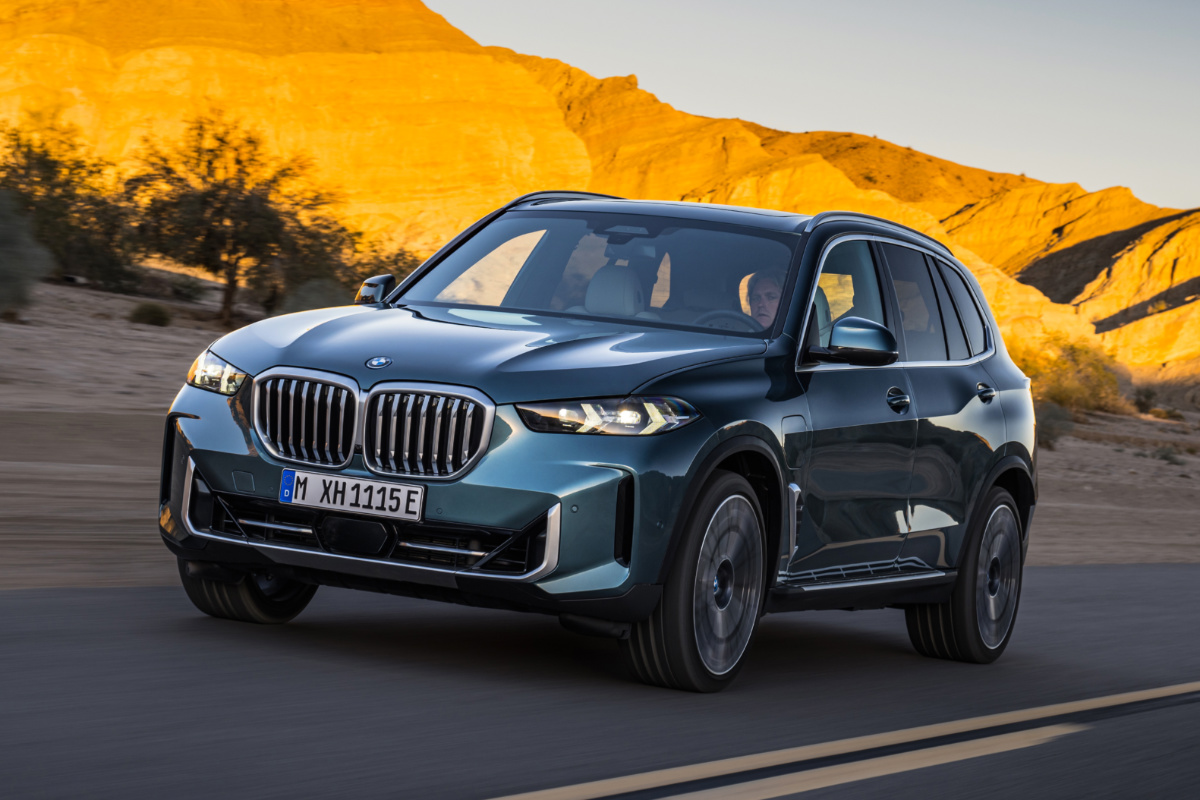
According to CarGurus experts, the overall rating for the 2026 BMW X5 is 7.5 out of 10, while the 2026 Hyundai Venue scores 5.2 out of 10. Based on these ratings, the BMW X5 is the recommended choice for those seeking a luxurious and high-performing SUV, while the Hyundai Venue is suitable for budget-conscious buyers looking for a practical city vehicle.
Choose the 2026 BMW X5 if:
- You prioritize luxury, performance, and advanced technology in your SUV.
- You need a vehicle with a high towing capacity and all-wheel-drive capability.
- You value a premium interior with high-quality materials and features.


Choose the 2026 Hyundai Venue if:
- You are looking for a budget-friendly, compact vehicle for city driving.
- You prioritize fuel efficiency and ease of maneuverability in tight spaces.
- You want a straightforward, no-frills vehicle with essential safety features.


CarGurus highlights
According to CarGurus experts, the overall rating for the 2026 BMW X5 is 7.5 out of 10, while the 2026 Hyundai Venue scores 5.2 out of 10. Based on these ratings, the BMW X5 is the recommended choice for those seeking a luxurious and high-performing SUV, while the Hyundai Venue is suitable for budget-conscious buyers looking for a practical city vehicle.
Choose the 2026 BMW X5 if:
Shop Now- You prioritize luxury, performance, and advanced technology in your SUV.
- You need a vehicle with a high towing capacity and all-wheel-drive capability.
- You value a premium interior with high-quality materials and features.
Choose the 2026 Hyundai Venue if:
Shop Now- You are looking for a budget-friendly, compact vehicle for city driving.
- You prioritize fuel efficiency and ease of maneuverability in tight spaces.
- You want a straightforward, no-frills vehicle with essential safety features.

By: CarGurus + AI
At CarGurus, our team of experienced automotive writers remain at the heart of our content operation, conducting hands-on car tests and writing insightful guides that are backed by years of industry experience. To complement this, we are harnessing AI to make our content offering more diverse and more helpful to shoppers than ever. To achieve this, our AI systems are based exclusively on CarGurus content, ratings and data, so that what we produce is both unique to CarGurus, and uniquely helpful to car shoppers.

