2021 Subaru Crosstrek vs 2021 Toyota RAV4

Overview | |
MSRP$22,245 | MSRP$26,350 |
Listings948 | Listings1871 |
Ratings & Reviews | |
User Reviews | User Reviews |
Expert reviews7.8 out of 10 | Expert reviews7.3 out of 10 |
Pros
Cons
| Pros
Cons
|
2021 Subaru Crosstrek Reviews SummaryThe Crosstrek applies the successful formula of the Subaru Outback to a smaller vehicle. Like the Outback, the Crosstrek is an ordinary car that gets a raised ride height and plastic body cladding to make it look like an SUV, plus standard all-wheel drive. But while the Outback is based on the Subaru Legacy, the Crosstrek is a derivative of the Subaru Impreza. Subaru launched the Crosstrek for the 2013 model year as a replacement for the Outback Sport. The current Crosstrek was introduced for the 2018 model year as the second generation of the model. The 2021 Subaru Crosstrek is the same basic vehicle as before, but gets a handful of notable updates. A new Sport trim level joins the previous base, Premium, and Limited trim levels in a lineup, and a 2.5-liter engine is now available alongside the previous 2.0-liter engine. The 2021 Crosstrek also gets an upgraded version of Subaru’s EyeSight driver-assistance system. | |
2021 Toyota RAV4 Reviews SummarySince its launch in 1997, the Toyota RAV4 has ridden a wave of crossover SUV popularity to become one of Toyota’s bestselling models. Introduced for the 2019 model year, the current-generation RAV4 tries to offer the rugged style of a traditional SUV, but underneath it’s still a car-based crossover pitched against the likes of the Ford Escape, Honda CR-V, Hyundai Tucson, Kia Sportage, Nissan Rogue, Subaru Forester, and Volkswagen Tiguan. Because it’s only in its third model year, this fifth-generation RAV4 doesn’t get many updates for 2021. The biggest news is the addition of the RAV4 Prime plug-in hybrid to the lineup, but that model actually went on sale last year. The only other changes are a new XLE Premium trim level for the RAV4 Hybrid, and a new front stainless steel front skid plate for the gasoline RAV4 TRD Off-Road model. Toyota offers compact SUV buyers more choices than most competitors. The RAV4 LE, XLE, XLE Premium, and Limited trim levels are available with hybrid and non-hybrid powertrains. Toyota also offers the gasoline-only RAV4 Adventure and TRD Off-Road trim levels, plus the RAV4 Hybrid XSE. The RAV4 Prime is also available in two trim levels—SE and XSE. We’ve covered the RAV4 Hybrid and RAV4 Prime in separate reviews, so this review will focus on the gasoline RAV4. Our test car was a RAV4 TRD Off-Road, which joined the lineup for the 2020 model year and is the first RAV4 model tuned by Toyota Racing Development, the automaker’s North American performance division. | |
No video found | |
Popular Features & Specs | |
Engine2.0L 152 hp H4 | Engine2.5L 203 hp I4 |
Drive TrainAWD | Drive TrainFWD |
Seating Capacity5 | Seating Capacity5 |
Horsepower152 hp @ 6000 rpm | Horsepower |
MPG City22 | MPG City28 |
MPG Highway29 | MPG Highway35 |
Engine | |
Engine Name2.0L 152 hp H4 | Engine Name2.5L 203 hp I4 |
Torque145 lb-ft @ 4000 rpm | Torque |
Horsepower152 hp @ 6000 rpm | Horsepower |
DrivetrainAWD | DrivetrainFWD |
Fuel Economy | |
MPG City22 | MPG City28 |
MPG Highway29 | MPG Highway35 |
Interior | |
Seating Capacity5 | Seating Capacity5 |
Safety | |
Front Crash Overall4 | Front Crash Overall4 |
Side Crash Overall5 | Side Crash Overall5 |
Dimensions & Capacity | |
Cargo Space20.8 cu ft | Cargo Space37.6 cu ft |
Curb Weight3188 lbs | Curb Weight3370 lbs |
Height63.6 in | Height67.0 in |
Length176.5 in | Length180.9 in |
Width71.0 in | Width73.0 in |
Wheelbase104.9 in | Wheelbase105.9 in |
Maximum Payload1155 lbs | Maximum Payload1240 lbs |
Number of doors4 | Number of doors4 |
Maximum Towing Capacity1500 lbs | Maximum Towing Capacity1500 lbs |
Overview | ||
MSRP | $22,245 | $26,350 |
Listings | ||
Ratings & Reviews | ||
User reviews | ||
Expert reviews | 7.8 out of 10Read full review | 7.3 out of 10Read full review |
Pros & cons | Pros
Cons
| Pros
Cons
|
Summary | The Crosstrek applies the successful formula of the Subaru Outback to a smaller vehicle. Like the Outback, the Crosstrek is an ordinary car that gets a raised ride height and plastic body cladding to make it look like an SUV, plus standard all-wheel drive. But while the Outback is based on the Subaru Legacy, the Crosstrek is a derivative of the Subaru Impreza. Subaru launched the Crosstrek for the 2013 model year as a replacement for the Outback Sport. The current Crosstrek was introduced for the 2018 model year as the second generation of the model. The 2021 Subaru Crosstrek is the same basic vehicle as before, but gets a handful of notable updates. A new Sport trim level joins the previous base, Premium, and Limited trim levels in a lineup, and a 2.5-liter engine is now available alongside the previous 2.0-liter engine. The 2021 Crosstrek also gets an upgraded version of Subaru’s EyeSight driver-assistance system. | Since its launch in 1997, the Toyota RAV4 has ridden a wave of crossover SUV popularity to become one of Toyota’s bestselling models. Introduced for the 2019 model year, the current-generation RAV4 tries to offer the rugged style of a traditional SUV, but underneath it’s still a car-based crossover pitched against the likes of the Ford Escape, Honda CR-V, Hyundai Tucson, Kia Sportage, Nissan Rogue, Subaru Forester, and Volkswagen Tiguan. Because it’s only in its third model year, this fifth-generation RAV4 doesn’t get many updates for 2021. The biggest news is the addition of the RAV4 Prime plug-in hybrid to the lineup, but that model actually went on sale last year. The only other changes are a new XLE Premium trim level for the RAV4 Hybrid, and a new front stainless steel front skid plate for the gasoline RAV4 TRD Off-Road model. Toyota offers compact SUV buyers more choices than most competitors. The RAV4 LE, XLE, XLE Premium, and Limited trim levels are available with hybrid and non-hybrid powertrains. Toyota also offers the gasoline-only RAV4 Adventure and TRD Off-Road trim levels, plus the RAV4 Hybrid XSE. The RAV4 Prime is also available in two trim levels—SE and XSE. We’ve covered the RAV4 Hybrid and RAV4 Prime in separate reviews, so this review will focus on the gasoline RAV4. Our test car was a RAV4 TRD Off-Road, which joined the lineup for the 2020 model year and is the first RAV4 model tuned by Toyota Racing Development, the automaker’s North American performance division. |
Video | No video found | |
Popular Features & Specs | ||
Engine | 2.0L 152 hp H4 | 2.5L 203 hp I4 |
Drive Train | AWD | FWD |
Seating Capacity | 5 | 5 |
Horsepower | 152 hp @ 6000 rpm | |
MPG City | 22 | 28 |
MPG Highway | 29 | 35 |
Engine | ||
Engine Name | 2.0L 152 hp H4 | 2.5L 203 hp I4 |
Torque | 145 lb-ft @ 4000 rpm | |
Horsepower | 152 hp @ 6000 rpm | |
Drivetrain | AWD | FWD |
Fuel Economy | ||
MPG City | 22 | 28 |
MPG Highway | 29 | 35 |
Interior | ||
Seating Capacity | 5 | 5 |
Safety | ||
Front Crash Overall | 4 | 4 |
Side Crash Overall | 5 | 5 |
Dimensions & Capacity | ||
Cargo Space | 20.8 cu ft | 37.6 cu ft |
Curb Weight | 3188 lbs | 3370 lbs |
Height | 63.6 in | 67.0 in |
Length | 176.5 in | 180.9 in |
Width | 71.0 in | 73.0 in |
Wheelbase | 104.9 in | 105.9 in |
Maximum Payload | 1155 lbs | 1240 lbs |
Number of doors | 4 | 4 |
Maximum Towing Capacity | 1500 lbs | 1500 lbs |
The 2021 Subaru Crosstrek embodied the adage "if you can’t beat ‘em, join ‘em." As car shoppers flocked to crossovers for their rugged looks, available all-wheel drive (AWD), and tall driving positions, Subaru decided to imbue its Impreza hatchback with these very traits. It was a strategy similar to what allowed the larger Outback to outlast nearly every other station wagon in the United States.
The Crosstrek differentiated itself visually from the Impreza with black body cladding, model-specific 17-inch wheels, and a taller ride height that afforded 8.7 inches of ground clearance—a respectable number even for dedicated SUVs. This transformation allowed the Crosstrek to mimic an SUV, providing it with more character than the base Impreza hatchback. Subaru also offered vibrant color options such as Plasma Yellow Pearl for the 2021 model year, adding to its appeal.
Underneath the rugged exterior, the Crosstrek rode on the Subaru Global Platform, the same architecture underpinning the Legacy/Outback, Ascent, and Forester. This design proved to be robust, giving all these models a greater level of polish and refinement.
The Crosstrek's interior remained virtually unchanged from the Impreza hatchback. It was functional but somewhat plain-looking, with mixed results in trims and finishes. For instance, the Sport-trim-level test car had Plasma Yellow Pearl accents that clashed with the Horizon Blue Pearl exterior, and the simulated carbon-fiber trim looked cheap. However, the Sport model did feature water-repellant StarTex upholstery—a practical addition for trips to the beach.
In contrast, the 2021 Toyota RAV4 boasted the rugged-looking exterior reminiscent of a traditional SUV. Its boxy fender flares, chiseled taillights, and scowling front end sharply contrasted the more approachable look of previous RAV4 generations and most other compact crossovers on the market. The aggressive family car styling helped the RAV4 stand out, giving it an edge in appearances compared to many competitors.
Underneath, the RAV4 was based on the Toyota New Global Architecture (TNGA) platform, shared with several other models, including sedans and minivans. This well-engineered platform provided a solid foundation, though it implied that despite the SUV-like exterior, much of the mechanical underpinnings were more akin to a sedan.
Toyota did offer options to add flair within certain RAV4 models. The Adventure model featured an Ice Edge (white) roof for a retro look and orange interior accents, while the TRD Off-Road model included matte black 18-inch wheels, standard LED fog lights, dark gray exterior trim, and red interior accents. Both had distinct touches that catered to specific aesthetic preferences, further setting the RAV4 apart from more conventional compact crossovers.
The interior of the RAV4 included rugged styling touches like large rubberized knobs and door handles. This contributed to a feeling of durability and utility, aligning with its exterior ruggedness. However, material quality did not keep pace with the price in higher trim levels—our TRD Off-Road test model, for example, featured SofTex upholstery, which was lighter than leather and durable. But real leather was unavailable, even on the range-topping Limited trim.


For 2021, the Subaru Crosstrek introduced a new 2.5-liter boxer-four engine, standard on the Sport and Limited trim levels, producing 182 horsepower and 176 pound-feet of torque. The base and Premium trims retained the 2.0-liter boxer-four engine, which delivered 152 hp and 145 lb-ft of torque. Subaru also offered a Crosstrek Hybrid plug-in hybrid variant since 2019 but did not announce an update for 2021.
The boxer engine, a Subaru hallmark with cylinders arranged parallel to the ground, yielded a lower center of gravity that theoretically improved handling. However, the SUV-like raised ride height likely negated some of this benefit.
A six-speed manual transmission remained standard on Base and Premium trims, though most buyers were expected to opt for the continuously variable transmission (CVT), which was mandatory for the Sport and Limited trims to get the larger engine.
All Crosstrek trims came with standard AWD, a notable advantage over many competitors. The system included torque vectoring to assist with turning and cornering, and the X-Mode system—borrowed from the Ascent, Forester, and Outback—designed for loose surfaces and incorporating hill descent control. The new-for-2021 Sport trim also added Snow/Dirt and Deep Snow/Mud modes. While these features did not make the Crosstrek a supreme off-roader, they promised to aid during harsh weather conditions.
In real-world driving, the Crosstrek’s higher center of gravity resulted in noticeable body roll in corners, but this was balanced by a comfortable ride and minimal wind noise. Despite the additional power from the 2.5-liter engine, our Sport test car's acceleration felt adequate at best, accompanied by significant droning from the CVT.
The 2021 Toyota RAV4 came with a single gasoline engine option—the “Dynamic Force” 2.5-liter four-cylinder engine, producing 203 horsepower and 184 pound-feet of torque, mated exclusively to an eight-speed automatic transmission. It was available with either standard front-wheel drive (FWD) or optional AWD. For those seeking more power, the 219-hp RAV4 Hybrid and 302-hp RAV4 Prime plug-in hybrid were available.
The Dynamic Force engine achieved 40% thermal efficiency, a benchmark typically seen in racing engines, which it also emulated by reaching peak power at 6,600 rpm and redlining at 6,750 rpm. Its output was impressive for a naturally aspirated four-cylinder engine.
However, the rest of the RAV4 didn’t match this dynamic engine. The transmission struggled to keep up, hesitating to shift and delaying responses when it did. While the steering was quick, it lacked feel, giving a videogame-like experience. Toyota included a “Sport” driving mode that only added weight to the steering without improving responsiveness.
Ultimately, the RAV4's performance was let down by mismatched characteristics between the powertrain and chassis. While it excelled on the highway with low cabin noise and a suspension that absorbed road imperfections well, it lacked the engaging driving dynamics enthusiasts might crave. Toyota focused on off-road capability instead, equipping Adventure and TRD Off-Road models with a torque-vectoring rear axle, 8.6 inches of ground clearance, model-specific suspension tuning, and all-terrain tires. Despite these features, the RAV4’s limited suspension articulation and shallow angles limited its off-road potential.
The Crosstrek’s interior dimensions were nearly identical to those of the Impreza hatchback. It offered the same front and rear legroom, similar front headroom, and slightly more rear headroom. Cargo capacity stood at 20.8 cubic feet with the rear seats in place and 55.3 cubic feet with the rear seats folded flat—a 60/40 split was standard.
While the Crosstrek was competitive in passenger space compared to other small crossovers, it fell short in cargo space. It offered more cargo capacity than the Hyundai Kona and Jeep Renegade but lagged behind the Honda HR-V, Kia Seltos, Mitsubishi Eclipse Cross, and Nissan Rogue Sport. Despite being marketed as SUVs, these vehicles compromised on passenger and cargo space due to their compact footprints.
CVT-equipped Crosstrek models featured a rear-seat reminder to prevent drivers from leaving children or pets unattended. Up front, a handy cubby hole ahead of the shifter accommodated a phone, along with USB and auxiliary ports. However, the maximum number of USB ports was two, both located up front, inconveniencing rear-seat passengers. Overall storage space was minimal but included decent-sized bottle holders in the doors.
The driving position in the Crosstrek felt higher than an Impreza’s, but it did not provide the commanding view offered by traditional crossovers or SUVs. However, good outward visibility was ensured by the ample side glass extending fairly low, coupled with a car-like front fascia and hood.
The RAV4 featured a tall, upright roof, offering ample headroom in both rows and good outward visibility. However, legroom in both rows was slightly behind competitors. While the front seats in our RAV4 TRD Off-Road tester were extremely comfortable and form-fitting, the rear seats had flat, hard cushions, making long trips less appealing.
A standard 60/40 split-folding bench rear seat did not slide fore and aft, unlike the rear seats in the Ford Escape or Nissan Rogue. The RAV4 offered 37.6 cubic feet of cargo space with the rear seats in place (Toyota did not quote a figure with the seats folded), which was above average but still behind the Honda CR-V. A wide aperture facilitated easier loading, though the cargo area lip was higher compared to the Honda.
The RAV4’s interior featured oversized knobs and steering-wheel controls that simplified use, even with gloves. The center-console storage bin was fairly large, augmented by a space ahead of the shifter designed for smartphones (wireless charging was optional). However, this arrangement seemingly reduced console storage space, echoing old-school SUVs that lacked large cupholders but featured larger levers and knobs.
The Subaru Crosstrek used the Starlink infotainment system, starting with a standard 6.5-inch touchscreen, Apple CarPlay/Android Auto compatibility, and Bluetooth. Higher trim levels, like Premium and Sport, included WiFi, SiriusXM satellite radio, and even a single-disc CD player, a nod to the 1990s. An 8-inch touchscreen with navigation was standard on the Limited trim and optional on others.
Uniquely, Subaru displayed some information on a secondary screen above the main touchscreen, although this appeared somewhat redundant as the same data could also be shown on the instrument cluster.
Our test car’s 8-inch touchscreen was user-friendly and responsive. Subaru complemented this with large analog knobs and buttons for essential functions like audio volume and climate control. Chunky steering wheel buttons controlled the EyeSight driver-assistance features, minimizing the chance of driver error.
Toyota’s RAV4 featured standard Apple CarPlay and Android Auto, Amazon Alexa compatibility, and SiriusXM satellite radio (with a three-month free trial). Most trims had a 7-inch touchscreen as standard, but the Limited models included an 8-inch screen, and the RAV4 Prime plug-in hybrid offered a 9-inch option. Up to five USB ports were available, three in the front row and two in the back. An optional JBL premium audio system enhanced audio quality.
The RAV4's infotainment system was functional and positioned prominently atop the dashboard, with legible graphics and shortcut buttons for navigation, Bluetooth, and audio. However, it wasn’t particularly flashy, and the gasoline RAV4 missed out on features like the head-up display (HUD) found in the RAV4 Prime.
While the RAV4 didn't offer the most cutting-edge tech, its simplicity and ease of use made the infotainment system approachable, minimizing distractions for drivers.
The 2021 Subaru Crosstrek received a five-star overall safety rating from the National Highway Traffic Safety Administration (NHTSA), with five stars in side crash tests and four stars in frontal and rollover crash tests. Though the Insurance Institute for Highway Safety (IIHS) did not test the 2021 model, the nearly identical 2020 Crosstrek earned a “Top Safety Pick” award, with the highest “Good” rating in all crash tests and top marks for front-crash prevention tech. However, this applied only to models fitted with certain optional EyeSight driver-assist features and Steering Responsive Headlights.
EyeSight, utilizing stereo cameras behind the windshield, included features such as adaptive cruise control with lane centering, automatic emergency braking, and lane-departure warning in CVT-equipped models. Automatic high beams, reverse automatic braking, lane-change assist, blind-spot monitoring, and rear cross-traffic alert were standard on the Limited trim and optional on Premium and Sport.
Subaru’s adaptive cruise control was competent, maintaining lane position on straight roads but struggling with even gentle curves. Notably, the blind-spot monitoring system's prominent alert lights on the exterior mirrors were highly effective. However, EyeSight’s cameras could be blocked by wipers or washed out by direct sunlight, limiting their functionality. But, this also protected the cameras better than grille-mounted ones, potentially saving on repair costs.
The 2021 Toyota RAV4 earned a “Top Safety Pick” rating from the IIHS, with top scores in all crash tests and the highest rating for front-crash prevention tech. However, it fell short of the “Top Safety Pick+” rating due to variable headlight scores, with some trims garnering “Marginal” or “Poor” ratings.
NHTSA awarded the RAV4 a five-star overall rating, with four stars in frontal and rollover tests, and five stars in side crash tests.
Standard Toyota Safety Sense 2.0 included forward-collision warning with pedestrian detection, adaptive cruise control, lane-departure warning with steering assist, automatic high beams, road-sign recognition, and Lane Tracing Assist for automated lane centering. Higher trims added blind-spot monitoring, rear cross-traffic alert, reverse automatic emergency braking, and park assist. A 360-degree camera system was available in specific packages.
CarGurus highlights
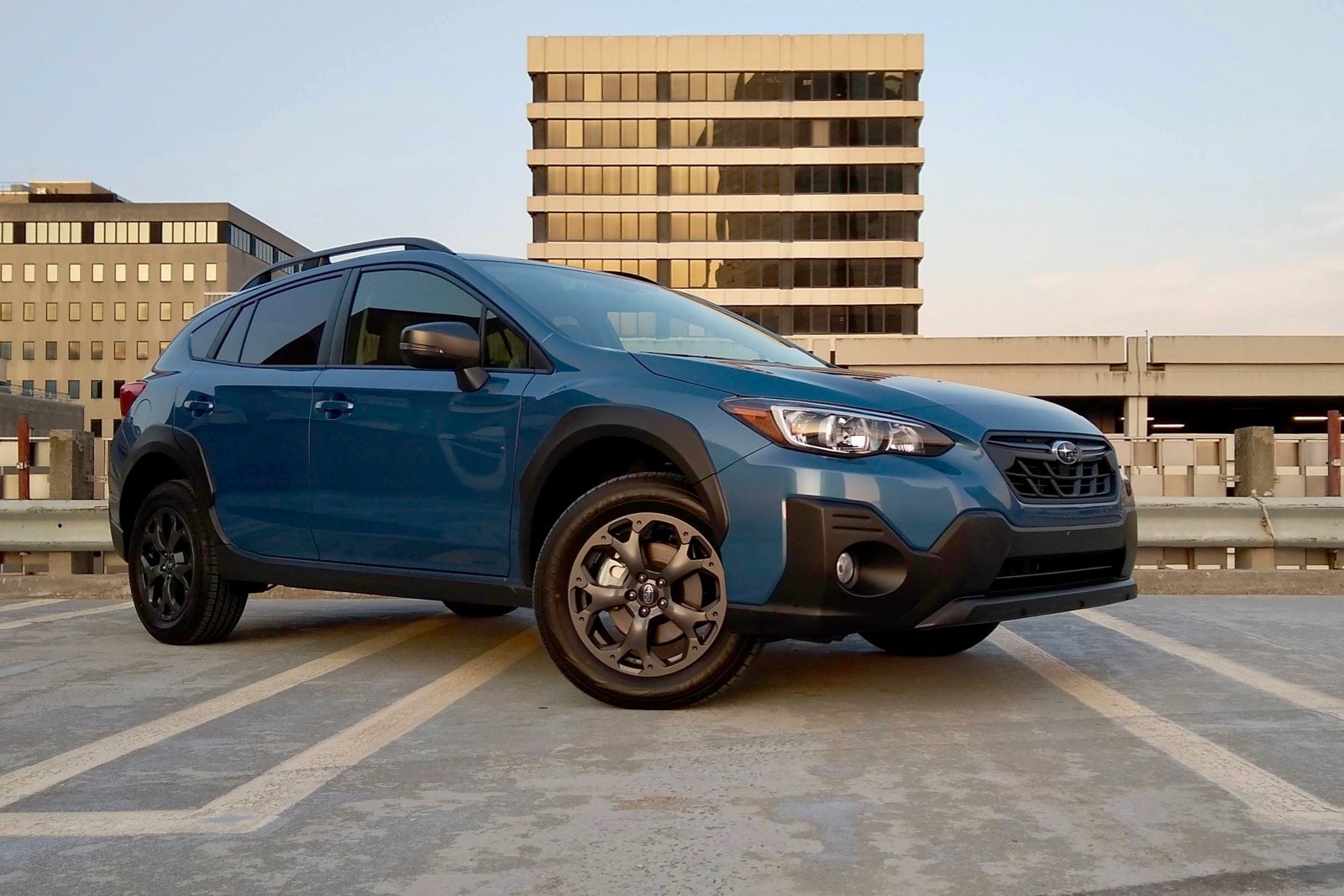
According to CarGurus experts, the overall rating for the 2021 Subaru Crosstrek is 7.8 out of 10, while the 2021 Toyota RAV4 scores 7.3 out of 10. Given these ratings, the Subaru Crosstrek comes out on top, making it the recommended choice for those seeking a versatile, AWD-equipped, and highly-rated compact crossover. The Crosstrek's balance of performance, rugged aesthetics, and comprehensive safety features provide an appealing package for many buyers, beating out the RAV4’s slightly lower-rated but still impressive offering.
Choose the 2021 Subaru Crosstrek if:
- You desire standard AWD across all trims for enhanced road handling and occasional off-road capability.
- You appreciate a vehicle with rugged looks yet car-like driving dynamics and comfort.
- Safety features and a high safety rating are top priorities.


Choose the 2021 Toyota RAV4 if:
- You prefer a vehicle designed with rugged, aggressive styling reminiscent of traditional SUVs.
- You need a highly efficient engine and are interested in hybrid options for greater power and fuel economy.
- Off-road capabilities are important, particularly with the specialized Adventure and TRD Off-Road models.




CarGurus highlights
According to CarGurus experts, the overall rating for the 2021 Subaru Crosstrek is 7.8 out of 10, while the 2021 Toyota RAV4 scores 7.3 out of 10. Given these ratings, the Subaru Crosstrek comes out on top, making it the recommended choice for those seeking a versatile, AWD-equipped, and highly-rated compact crossover. The Crosstrek's balance of performance, rugged aesthetics, and comprehensive safety features provide an appealing package for many buyers, beating out the RAV4’s slightly lower-rated but still impressive offering.
Choose the 2021 Subaru Crosstrek if:
Shop Now- You desire standard AWD across all trims for enhanced road handling and occasional off-road capability.
- You appreciate a vehicle with rugged looks yet car-like driving dynamics and comfort.
- Safety features and a high safety rating are top priorities.


Choose the 2021 Toyota RAV4 if:
Shop Now- You prefer a vehicle designed with rugged, aggressive styling reminiscent of traditional SUVs.
- You need a highly efficient engine and are interested in hybrid options for greater power and fuel economy.
- Off-road capabilities are important, particularly with the specialized Adventure and TRD Off-Road models.





By: CarGurus + AI
At CarGurus, our team of experienced automotive writers remain at the heart of our content operation, conducting hands-on car tests and writing insightful guides that are backed by years of industry experience. To complement this, we are harnessing AI to make our content offering more diverse and more helpful to shoppers than ever. To achieve this, our AI systems are based exclusively on CarGurus content, ratings and data, so that what we produce is both unique to CarGurus, and uniquely helpful to car shoppers.