2022 Hyundai Kona vs 2021 BMW X5
Overview | |
MSRP$59,400 | MSRP$21,300 |
Listings827 | Listings684 |
Ratings & Reviews | |
User Reviews | User Reviews |
Expert reviews8.0 out of 10 | Expert reviews7.7 out of 10 |
Pros
Cons
| Pros
Cons
|
2021 BMW X5 Reviews SummaryThe BMW X5 was fully redesigned for the 2019 model year. In 2020, high-performance models were added to the mix and for 2021, the SUV’s second-generation plug-in hybrid variant joins the family. All feature similar body design and utility, including a large cargo area. | |
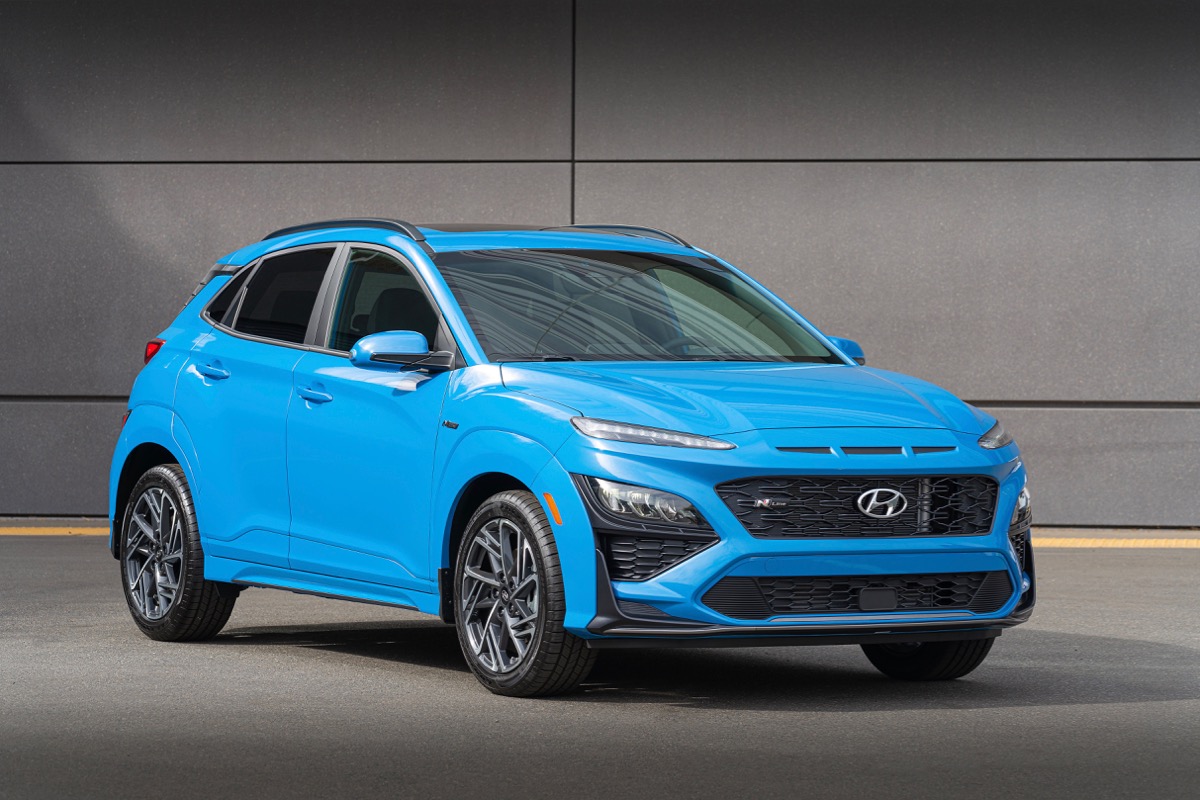
2022 Hyundai Kona Reviews SummaryIn its fifth year on the market, the Hyundai Kona gets its first significant refresh, complete with updated exterior styling, enhanced powertrains, and upgraded convenience, connectivity, and safety features. There are also two new sporty variants—the N Line and the Kona N—giving this subcompact SUV shoppers a legitimate performance option at a budget price. | |
No video found | No video found |
Popular Features & Specs | |
Engine3.0L 335 hp I6 | Engine2.0L 147 hp I4 |
Drive TrainRWD | Drive TrainFWD |
Seating Capacity7 | Seating Capacity5 |
Horsepower335 hp @ 5500 rpm | Horsepower147 hp @ 6200 rpm |
MPG City21 | MPG City30 |
MPG Highway26 | MPG Highway35 |
Engine | |
Engine Name3.0L 335 hp I6 | Engine Name2.0L 147 hp I4 |
Torque330 lb-ft @ 1500 rpm | Torque132 lb-ft @ 4500 rpm |
Horsepower335 hp @ 5500 rpm | Horsepower147 hp @ 6200 rpm |
DrivetrainRWD | DrivetrainFWD |
Fuel Economy | |
MPG City21 | MPG City30 |
MPG Highway26 | MPG Highway35 |
Interior | |
Seating Capacity7 | Seating Capacity5 |
Key Features | |
Navigation SystemStandard | Navigation System |
Sunroof/MoonroofStandard | Sunroof/Moonroof |
Safety | |
Front Crash Overall4 | Front Crash Overall5 |
Side Crash Overall5 | Side Crash Overall5 |
Dimensions & Capacity | |
Cargo Space33.9 cu ft | Cargo Space19.2 cu ft |
Curb Weight4828 lbs | Curb Weight2899 lbs |
Height68.7 in | Height61.0 in |
Length194.3 in | Length165.6 in |
Width87.3 in | Width70.9 in |
Wheelbase117.1 in | Wheelbase102.4 in |
Maximum Payload974 lbs | Maximum Payload1069 lbs |
Number of doors4 | Number of doors4 |
Maximum Towing Capacity7209 lbs | Maximum Towing Capacity |
Overview | ||
MSRP | $59,400 | $21,300 |
Listings | ||
Ratings & Reviews | ||
User reviews | ||
Expert reviews | 8.0 out of 10Read full review | 7.7 out of 10Read full review |
Pros & cons | Pros
Cons
| Pros
Cons
|
Summary | The BMW X5 was fully redesigned for the 2019 model year. In 2020, high-performance models were added to the mix and for 2021, the SUV’s second-generation plug-in hybrid variant joins the family. All feature similar body design and utility, including a large cargo area. | In its fifth year on the market, the Hyundai Kona gets its first significant refresh, complete with updated exterior styling, enhanced powertrains, and upgraded convenience, connectivity, and safety features. There are also two new sporty variants—the N Line and the Kona N—giving this subcompact SUV shoppers a legitimate performance option at a budget price. |
Video | No video found | No video found |
Popular Features & Specs | ||
Engine | 3.0L 335 hp I6 | 2.0L 147 hp I4 |
Drive Train | RWD | FWD |
Seating Capacity | 7 | 5 |
Horsepower | 335 hp @ 5500 rpm | 147 hp @ 6200 rpm |
MPG City | 21 | 30 |
MPG Highway | 26 | 35 |
Engine | ||
Engine Name | 3.0L 335 hp I6 | 2.0L 147 hp I4 |
Torque | 330 lb-ft @ 1500 rpm | 132 lb-ft @ 4500 rpm |
Horsepower | 335 hp @ 5500 rpm | 147 hp @ 6200 rpm |
Drivetrain | RWD | FWD |
Fuel Economy | ||
MPG City | 21 | 30 |
MPG Highway | 26 | 35 |
Interior | ||
Seating Capacity | 7 | 5 |
Key Features | ||
Navigation System | Standard | |
Sunroof/Moonroof | Standard | |
Safety | ||
Front Crash Overall | 4 | 5 |
Side Crash Overall | 5 | 5 |
Dimensions & Capacity | ||
Cargo Space | 33.9 cu ft | 19.2 cu ft |
Curb Weight | 4828 lbs | 2899 lbs |
Height | 68.7 in | 61.0 in |
Length | 194.3 in | 165.6 in |
Width | 87.3 in | 70.9 in |
Wheelbase | 117.1 in | 102.4 in |
Maximum Payload | 974 lbs | 1069 lbs |
Number of doors | 4 | 4 |
Maximum Towing Capacity | 7209 lbs | |
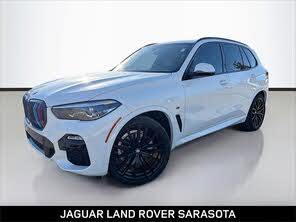
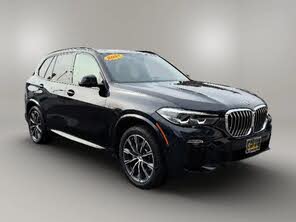
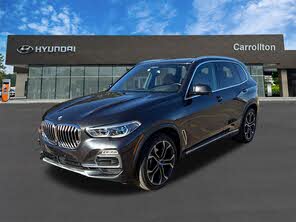
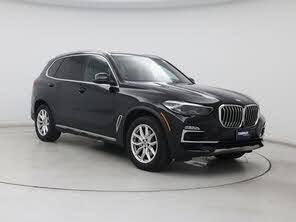
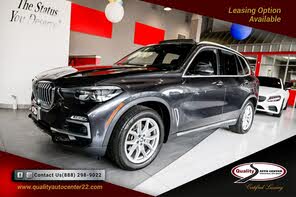
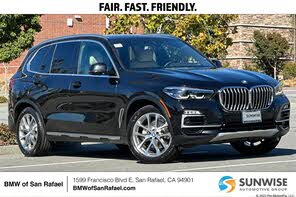
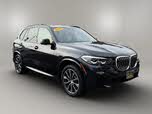
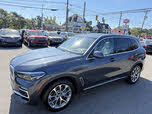
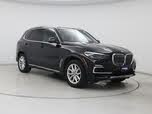
The 2021 BMW X5 was a testament to BMW's high-quality craftsmanship, fitting seamlessly into the brand's true SUV range. Its design, from the kidney grille to the body shape, was unmistakably BMW, though this sameness could make it blend in with other BMWs in a crowded parking lot. The X5 featured full adaptive LED headlights, with xLine models sporting matte aluminum grilles and satin aluminum finishes for an upscale appearance. M Sport models took it a step further with body-color matched trims and high-gloss black accents, enhancing its sporty look. Wheel options ranged from 19 to 22 inches, depending on the trim level.
Inside, the X5's interior was a mix of familiar BMW elements, with switches, dials, and displays that could be found in other models. While the design was consistent, it wasn't shoddy, featuring plenty of leather and soft-touch materials. However, the abundance of black plastic could easily collect dust and spots from liquids. M Sport models offered unique styling with an M sports steering wheel, M-specific pedals, and exclusive interior trim strips, adding a touch of aggression to the luxury SUV.
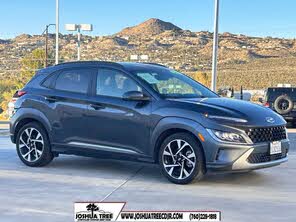
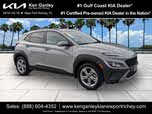
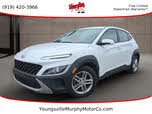
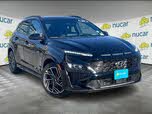
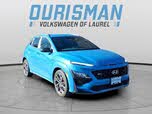
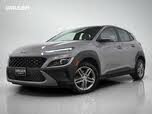
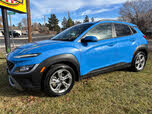
The 2022 Hyundai Kona received a significant makeover, extending its length by 1.6 inches and featuring revised front and rear fascias, enhanced LED lighting, and sporty new character lines. The sharp body lines contrasted with lower body cladding, and new alloy wheel designs completed the exterior updates. Inside, the instrument panel and center console were separated to emphasize a more horizontal layout, giving the interior a wider, more spacious look. New ambient lighting for the front cupholders and footwells added sophistication, while a rear USB port increased convenience for back-seat passengers.
The most exciting development for the 2022 Kona was the addition of the sporty N Line and even sportier Kona N trims. These trims brought unique styling elements, including body-color cladding and rocker panels, and new wheel designs that made the Kona look more athletic. The N Line featured exclusive black seats with red stitching, a black headliner, and alloy sport pedals, while the Kona N added wide fenders, a front lip spoiler, and a double-wing roof spoiler. Inside, the Kona N offered N sport bucket seats and a leather-wrapped steering wheel and shift knob, enhancing the sporty feel.


The 2021 BMW X5 offered a range of powertrain options, all paired with an eight-speed automatic transmission. The base X5 sDrive40i/xDrive40i featured a 3.0-liter inline six-cylinder engine delivering 335 horsepower and 330 pound-feet of torque. The sDrive referred to rear-wheel drive (RWD), while xDrive indicated all-wheel drive (AWD). The X5 M50i came with a twin-turbocharged 4.4-liter V8 engine producing 523 hp and 553 lb-ft of torque, while the X5 M offered 600 hp, increasing to 617 hp with the Competition Package. The X5 xDrive45e plug-in hybrid model achieved 389 hp and 443 lb-ft of torque from its 3.0-liter six-cylinder engine paired with a 24-kilowatt-hour battery, offering up to 30 miles of all-electric range.
The X5's driving dynamics were a mixed bag. While the transition from all-electric to hybrid or gasoline-only power was seamless, the steering at low speeds felt like a full-size truck with plenty of wheel play. At higher speeds, even in Sport mode, the SUV's dynamics were not as engaging as other BMW models, feeling more like a Lincoln. The cabin was quiet, with minimal road or engine noise, and the suspension soaked up bumps and dips well. Charging the X5 was convenient, with a five-hour charge time on a Level 2 charger and an EPA-estimated 400 miles of driving range when fully charged. Fuel efficiency varied, with the X5 M achieving 15 mpg combined, the X5 M50i at 18 mpg combined, the X5 xDrive at 23 mpg combined, and the X5 xDrive45e rated at 50 MPGe when using both electricity and gas.
The 2022 Hyundai Kona offered a variety of engines and transmissions across its lineup. The lower SE and SEL trims featured a 2.0-liter four-cylinder engine paired with a continuously variable transmission (CVT), producing 147 horsepower and 132 pound-feet of torque. The N Line and Limited trims came with a turbocharged 1.6-liter four-cylinder engine paired with a seven-speed dual-clutch automatic transmission (DCT), delivering 195 hp and 195 lb-ft of torque. The new Kona N was powered by a turbocharged 2.0-liter four-cylinder engine with an N eight-speed wet DCT, producing 276 hp and 289 lb-ft of torque. The Kona N also featured exclusive driving features like N Grin Shift, N Power Shift, and N Track Sense Shift, along with launch control, a variable exhaust system, and high-performance brakes and tires.
Our test vehicle, a Kona N Line with the 1.6-liter turbocharged engine and AWD, provided more than adequate power and was enjoyable to drive both in the city and on the highway. The torquey turbo engine and small dimensions made it easy to maneuver through traffic, though there was some minor turbo lag and clunkiness in the lower gears. The Kona felt light yet stable, with surefooted handling and minimal understeer. The low ride height and center of gravity contributed to its composed handling, and the cabin was quieter than expected for a vehicle at this price point.
The 2021 BMW X5 made good use of its interior space. The front cupholders were conveniently placed, and the center console featured buttons, knobs, and dials that were hard to differentiate at night. The wireless phone charging pad kept technology out of the driver's line of sight. Seating was spacious and comfortable for short trips, though the front seats felt hard after a few hours. Heated seats and armrests worked well, and the rear seats were comfortable for kids and two adults. The X5 offered an optional third row, though it was not tested. The climate controls were easy to manage, and the split liftgate with full power functionality made loading cargo easy. The X5 xDrive45e offered slightly less cargo space than the traditional X5, but the difference was negligible for most buyers. However, moving children and cargo in and out of the second row was challenging due to the narrow door openings.
The 2022 Hyundai Kona, despite its small size, provided ample comfort for front-seat occupants. Headroom and legroom were sufficient, even with the optional sunroof, and finding a comfortable driving position was easy. The N Line's front seats did an excellent job of holding occupants in place during spirited driving. Rear-seat occupants, however, faced challenges. The small rear door openings required some twisting to get in, and head- and legroom were compromised by the sloping roof and compact dimensions. Hyundai claimed increased rear-seat legroom for 2022, but it was hard to notice. Three adults in the back seat was impractical, and even three children found hip room limited. Cargo space was tight, with 19.2 cubic feet available with all seats up, expanding to 45.8 cubic feet with the rear seats folded down. Towing was not recommended with the Kona.
The 2021 BMW X5 came with a robust list of standard features, including a 12.3-inch infotainment touchscreen, wireless Apple CarPlay, wireless Android Auto, a 12.3-inch digital gauge cluster, a 10-speaker sound system, voice recognition, Bluetooth, five USB ports, navigation, HD Radio, satellite radio, automatic climate control, proximity key, and a panoramic moonroof. Optional features included remote start, a head-up display, quad-zone automatic climate control, a wireless smartphone charger, massaging seats, a Wi-Fi hot spot, a 16-speaker Harman Kardon premium audio system, a 20-speaker Bowers & Wilkins audio system, rear sunshades, and a dual-panel panoramic roof. The BMW iDrive system required some acclimation but was easy to use once familiar.
The 2022 Hyundai Kona added more tech for the model year. The base SE trim featured an 8-inch display with a six-speaker audio system and Bluetooth connectivity. The SEL trim added SiriusXM satellite radio, HD Radio, and Hyundai Blue Link, which was also standard on the N Line. The Limited and Kona N trims came with a new 10.25-inch touchscreen infotainment system with navigation and traffic information. An eight-speaker Harman Kardon premium audio system was optional on the N Line and standard on the Limited and Kona N. Wireless Android Auto and Apple CarPlay were standard with the base 8-inch screen, while the larger screen only offered wired versions. The Kona also featured Digital Key, a 10.25-inch digital instrument cluster on higher trims, and wireless device charging. Hyundai Blue Link provided connected services like remote engine start, remote locking/unlocking, stolen-vehicle recovery, and voice-controlled destination search. The Kona's infotainment system was intuitive and easy to use, with seamless smartphone connectivity.
The 2021 BMW X5 came equipped with a comprehensive list of standard safety features, including blind-spot monitoring, forward collision warning, automatic emergency braking, pedestrian detection, adaptive cruise control, front and rear parking sensors, rain-sensing windshield wipers, fatigue and focus alert, lane departure warning, and automatic high-beam headlights. A rearview camera was also standard. However, the Driving Assistance Professional Package had issues with adaptive cruise control and lane-keeping systems, particularly in bright sunlight and light rain. The 2021 X5 received nearly all Good ratings from the Insurance Institute for Highway Safety (IIHS) and a four-star overall safety rating from the National Highway Traffic Safety Administration (NHTSA).
The 2022 Hyundai Kona's standard safety features included automatic emergency braking with pedestrian detection, lane-keeping assistance, lane-following assistance, driver attention warning, and rear occupant alert. Available technologies included adaptive cruise control with stop-and-go capability, blind-spot warning with collision avoidance, Highway Drive Assist, rear cross-traffic alert with collision avoidance, and Safe Exit Warning. The NHTSA awarded the 2022 Kona five stars for overall crash protection, with five stars for front and side crash protection and four stars for rollover resistance. The IIHS gave the Kona Good ratings in all six crashworthiness tests and a Superior rating for vehicle-to-vehicle front crash protection. However, the child-seat anchors received a Marginal rating, preventing the Kona from achieving Top Safety Pick status.
CarGurus highlights

According to CarGurus experts, the overall rating for the 2021 BMW X5 is 8.0 out of 10, while the 2022 Hyundai Kona scores 7.7 out of 10. Based on these ratings, the 2021 BMW X5 is the recommended choice for its superior overall performance, luxury, and advanced features.
Choose the 2022 Hyundai Kona if:
- You seek a sporty and stylish subcompact SUV with multiple trim options.
- You want a vehicle with a user-friendly infotainment system and modern tech features.
- You prioritize excellent safety ratings and a suite of driver assistance features.


Choose the 2021 BMW X5 if:
- You prioritize a luxurious and spacious interior with high-quality materials.
- You want a variety of powerful engine options, including a plug-in hybrid.
- You value advanced safety features and a high level of standard technology.



CarGurus highlights
According to CarGurus experts, the overall rating for the 2021 BMW X5 is 8.0 out of 10, while the 2022 Hyundai Kona scores 7.7 out of 10. Based on these ratings, the 2021 BMW X5 is the recommended choice for its superior overall performance, luxury, and advanced features.
Choose the 2022 Hyundai Kona if:
Shop Now- You seek a sporty and stylish subcompact SUV with multiple trim options.
- You want a vehicle with a user-friendly infotainment system and modern tech features.
- You prioritize excellent safety ratings and a suite of driver assistance features.




Choose the 2021 BMW X5 if:
Shop Now- You prioritize a luxurious and spacious interior with high-quality materials.
- You want a variety of powerful engine options, including a plug-in hybrid.
- You value advanced safety features and a high level of standard technology.







By: CarGurus + AI
At CarGurus, our team of experienced automotive writers remain at the heart of our content operation, conducting hands-on car tests and writing insightful guides that are backed by years of industry experience. To complement this, we are harnessing AI to make our content offering more diverse and more helpful to shoppers than ever. To achieve this, our AI systems are based exclusively on CarGurus content, ratings and data, so that what we produce is both unique to CarGurus, and uniquely helpful to car shoppers.