2021 BMW X3 vs 2021 Ford Edge

Overview | |
MSRP$43,000 | MSRP$32,750 |
Listings283 | Listings201 |
Ratings & Reviews | |
User Reviews | User Reviews |
Expert reviews7.5 out of 10 | Expert reviews7.2 out of 10 |
Pros
Cons
| Pros
Cons
|
2021 BMW X3 Reviews SummaryThe BMW X3 is one of the cornerstones of the luxury compact SUV market. Thanks to its combination of a spacious interior, solid driving dynamics, and wealth of technology, it’s one of BMW’s most popular offerings as well. For the 2021 model year, BMW enhances the X3 with more standard safety features and newly available in-car tech features. If you want an upscale, versatile crossover that’s just a bit more exciting to drive than most of its competition, then read on to learn more about the 2021 BMW X3. | |
2021 Ford Edge Reviews SummaryThe Ford Edge proves that trends run in cycles. Launched in the early 2000s, the original Edge was one of the first midsize crossover SUVs, sporting car-like styling that sharply contrasted the more traditional-looking Ford Explorer of the time. However, new-car buyers realized they liked the roominess of three-row SUVs like the Explorer more, and interest in the two-row Edge waned. Now, however, car shoppers are once again eyeing two-row midsize SUVs, this time as an alternative to sedans. The Edge is now part of a growing market segment that includes the Chevrolet Blazer, Honda Passport, Hyundai Santa Fe, Jeep Grand Cherokee, Nissan Murano, and Volkswagen Atlas Cross Sport. Yet while market dynamics have changed, the Edge hasn’t. The current second-generation Edge dates back to the 2015 model year, and even a substantial update undertaken for the 2019 model year is quickly receding in the rearview mirror. The Edge now sits between the much newer Explorer and Ford Escape in the automaker's SUV-heavy lineup. Aside from some new tech features, the 2021 Ford Edge doesn’t get many significant changes, so we can evaluate it based on our experience with previous model years. As with the 2020 model year, trim levels include SE, SEL, ST-Line, Titanium, and ST. | |
No video found | No video found |
Popular Features & Specs | |
Engine2.0L 248 hp I4 | Engine2.0L 250 hp I4 |
Drive TrainRWD | Drive TrainFWD |
Seating Capacity5 | Seating Capacity5 |
Horsepower248 hp @ 5200 rpm | Horsepower250 hp @ 5500 rpm |
MPG City25 | MPG City21 |
MPG Highway29 | MPG Highway29 |
Engine | |
Engine Name2.0L 248 hp I4 | Engine Name2.0L 250 hp I4 |
Torque258 lb-ft @ 1450 rpm | Torque280 lb-ft @ 3000 rpm |
Horsepower248 hp @ 5200 rpm | Horsepower250 hp @ 5500 rpm |
DrivetrainRWD | DrivetrainFWD |
Fuel Economy | |
MPG City25 | MPG City21 |
MPG Highway29 | MPG Highway29 |
Interior | |
Seating Capacity5 | Seating Capacity5 |
Key Features | |
Navigation SystemStandard | Navigation System |
Safety | |
Front Crash Overall5 | Front Crash Overall5 |
Side Crash Overall5 | Side Crash Overall5 |
Dimensions & Capacity | |
Cargo Space28.7 cu ft | Cargo Space39.2 cu ft |
Curb Weight3931 lbs | Curb Weight3960 lbs |
Height66.0 in | Height68.3 in |
Length185.9 in | Length188.8 in |
Width84.2 in | Width85.8 in |
Wheelbase112.8 in | Wheelbase112.2 in |
Maximum Payload888 lbs | Maximum Payload1310 lbs |
Number of doors4 | Number of doors4 |
Maximum Towing Capacity | Maximum Towing Capacity1500 lbs |
Overview | ||
MSRP | $43,000 | $32,750 |
Listings | ||
Ratings & Reviews | ||
User reviews | ||
Expert reviews | 7.5 out of 10Read full review | 7.2 out of 10Read full review |
Pros & cons | Pros
Cons
| Pros
Cons
|
Summary | The BMW X3 is one of the cornerstones of the luxury compact SUV market. Thanks to its combination of a spacious interior, solid driving dynamics, and wealth of technology, it’s one of BMW’s most popular offerings as well. For the 2021 model year, BMW enhances the X3 with more standard safety features and newly available in-car tech features. If you want an upscale, versatile crossover that’s just a bit more exciting to drive than most of its competition, then read on to learn more about the 2021 BMW X3. | The Ford Edge proves that trends run in cycles. Launched in the early 2000s, the original Edge was one of the first midsize crossover SUVs, sporting car-like styling that sharply contrasted the more traditional-looking Ford Explorer of the time. However, new-car buyers realized they liked the roominess of three-row SUVs like the Explorer more, and interest in the two-row Edge waned. Now, however, car shoppers are once again eyeing two-row midsize SUVs, this time as an alternative to sedans. The Edge is now part of a growing market segment that includes the Chevrolet Blazer, Honda Passport, Hyundai Santa Fe, Jeep Grand Cherokee, Nissan Murano, and Volkswagen Atlas Cross Sport. Yet while market dynamics have changed, the Edge hasn’t. The current second-generation Edge dates back to the 2015 model year, and even a substantial update undertaken for the 2019 model year is quickly receding in the rearview mirror. The Edge now sits between the much newer Explorer and Ford Escape in the automaker's SUV-heavy lineup. Aside from some new tech features, the 2021 Ford Edge doesn’t get many significant changes, so we can evaluate it based on our experience with previous model years. As with the 2020 model year, trim levels include SE, SEL, ST-Line, Titanium, and ST. |
Video | No video found | No video found |
Popular Features & Specs | ||
Engine | 2.0L 248 hp I4 | 2.0L 250 hp I4 |
Drive Train | RWD | FWD |
Seating Capacity | 5 | 5 |
Horsepower | 248 hp @ 5200 rpm | 250 hp @ 5500 rpm |
MPG City | 25 | 21 |
MPG Highway | 29 | 29 |
Engine | ||
Engine Name | 2.0L 248 hp I4 | 2.0L 250 hp I4 |
Torque | 258 lb-ft @ 1450 rpm | 280 lb-ft @ 3000 rpm |
Horsepower | 248 hp @ 5200 rpm | 250 hp @ 5500 rpm |
Drivetrain | RWD | FWD |
Fuel Economy | ||
MPG City | 25 | 21 |
MPG Highway | 29 | 29 |
Interior | ||
Seating Capacity | 5 | 5 |
Key Features | ||
Navigation System | Standard | |
Safety | ||
Front Crash Overall | 5 | 5 |
Side Crash Overall | 5 | 5 |
Dimensions & Capacity | ||
Cargo Space | 28.7 cu ft | 39.2 cu ft |
Curb Weight | 3931 lbs | 3960 lbs |
Height | 66.0 in | 68.3 in |
Length | 185.9 in | 188.8 in |
Width | 84.2 in | 85.8 in |
Wheelbase | 112.8 in | 112.2 in |
Maximum Payload | 888 lbs | 1310 lbs |
Number of doors | 4 | 4 |
Maximum Towing Capacity | 1500 lbs | |
The 2021 BMW X3 carried forward the bold stylistic elements of its 2018 redesign, with several updates introduced in 2020, including the addition of a plug-in hybrid model and M performance variants. The third-generation X3 marked a significant refinement in BMW's compact SUV lineup. Externally, the X3 mirrored the larger and more expensive X5, exuding a downsized luxury SUV aesthetic. Its cold and mechanical interior styling was characteristic of the BMW brand, prioritizing functionality over the more aesthetically pleasing designs of competitors like the Mercedes-Benz GLC-Class. The X3's dashboard, though less visually striking, proved to be highly functional.
For the 2021 model year, the X3 offered several trims: sDrive30i, xDrive30i, M40i, and the xDrive30e plug-in hybrid. The sDrive30i and xDrive30i set the standard with 18-inch alloy wheels, push-button start, synthetic leather upholstery, tri-zone climate control, a 10.2-inch infotainment system, navigation, and 10-way power-adjustable front seats. Various options were available to enhance the trims, such as genuine leather upholstery, a panoramic sunroof, and a hands-free power liftgate. Further options included heated and ventilated front seats, heated rear seats, a heated steering wheel, and wireless device charging. The xDrive30e plug-in hybrid shared these optional features.
The M40i trim featured many of the above optional features as standard, along with 19-inch alloy wheels, 14-way power-adjustable front seats, and unique exterior styling, complemented by an M Sport suspension.
Conversely, the 2021 Ford Edge retained the styling updates of its 2019 refresh, aligning its design with more recent Ford models. The refresh achieved a clean and cohesive look, contrasting with the more exaggerated styling of the Chevy Blazer and Hyundai Santa Fe. The Edge Titanium models incorporated additional chrome accents, while the Edge ST displayed a blacked-out grille, standard 20-inch wheels, and a body kit. Ford also offered the ST-Line trim, featuring ST’s exterior styling but sans performance enhancements.
Inside, the Edge’s design began to show its age, struggling to keep up with newer models despite incremental tweaks like a larger touchscreen. The Titanium models offered leather upholstery, and the ST trim featured sporty front seats with added bolstering and a leather-wrapped steering wheel with contrast stitching.


The 2021 BMW X3 presented a diverse range of powertrains tailored to different driving preferences. The sDrive30i and xDrive30i both sported a 2.0-liter turbocharged four-cylinder engine, delivering 248 horsepower through an eight-speed automatic transmission. The sDrive30i utilized rear-wheel drive (RWD), while the xDrive30i came with all-wheel drive (AWD). This turbocharged engine offered solid pickup and was well-suited for both city driving and highway cruising.
The xDrive30e plug-in hybrid combined a conventional engine with electrification, producing a total of 288 horsepower. It featured a purely electric range of 17 miles, rechargeable in about 3.5 hours with a 240-volt Level 2 charger, or almost 12 hours using a standard 120-volt outlet. The hybrid's acceleration was particularly brisk at low speeds.
For those craving performance, the X3 M40i provided a 382-horsepower twin-turbo inline-six engine that promised robust acceleration and responsive cornering abilities. The ultimate performance model, the X3 M, boasted a staggering 473 horsepower, blending family utility with high-speed thrills.
The 2021 Ford Edge primarily used a 2.0-liter turbocharged EcoBoost four-cylinder engine, delivering 250 horsepower and 275 pound-feet of torque. This engine was mated to an eight-speed automatic transmission, with standard front-wheel drive (FWD) and optional AWD.
Ford's performance-oriented Edge ST featured an EcoBoost twin-turbo 2.7-liter V6 engine, producing 335 horsepower and 380 pound-feet of torque on 93-octane fuel. The Edge ST came with standard AWD, an eight-speed automatic transmission, and model-specific suspension tuning. An optional package included upgraded brakes and 21-inch wheels with summer tires.
While some enthusiasts questioned the placement of the ST badge on an SUV, Ford insisted that the Edge ST was benchmarked against performance SUVs like the Porsche Macan during development. Although the comparison to Porsche might have been ambitious, the Edge ST provided a decent driving experience. The base four-cylinder engine in non-ST models, however, was occasionally perceived as sluggish.
In terms of towing, the standard FWD Edge could tow up to 3,958 pounds, AWD models up to 4,122 pounds, and the V6-powered Edge ST up to 4,525 pounds. These figures were respectable but fell short compared to rivals like the Honda Passport and Volkswagen Atlas Cross Sport, both rated to tow 5,000 pounds.
The 2021 BMW X3 excelled in interior space, offering up to 62.7 cubic feet of cargo capacity with the rear seats folded, and 28.7 cubic feet with the seats in use. This provided one of the best cargo volumes in the small luxury SUV segment. A power liftgate was standard, with a hands-free power liftgate available as an option.
Passenger space was equally impressive, with generous headroom and legroom in the front row, as well as a commanding driving position. The X3’s rear seats catered comfortably to adults, even on longer trips. The driver and front passenger appreciated the inclusion of real buttons and dials to complement the main touchscreen, minimizing the learning curve for unfamiliar users handling the vehicle.
The 2021 Ford Edge remained competitive regarding interior space. It boasted the most rear-seat headroom among two-row midsize crossovers and offered ample legroom in both the first and second rows. Dual-zone automatic climate control was also standard.
Cargo space was a significant selling point for the Edge, providing 39.2 cubic feet with the rear seats in place, and an expansive 73.4 cubic feet when the rear seats were folded down. These figures positioned the Edge just behind the Honda Passport and Volkswagen Atlas Cross Sport in terms of cargo capacity. Higher trim levels offered a foot-activated power liftgate for added convenience.
However, Ford’s rotary shift knob, designed to free up space on the center console, didn't result in as much usable space as expected due to the console's narrow width. The raised console did provide a storage nook below, though its location made it somewhat inconvenient to access.
The 2021 BMW X3 was equipped with a 10.2-inch touchscreen running the iDrive infotainment system, known for its user-friendly interface. Unlike some luxury infotainment systems that were often criticized for complexity, the iDrive system was straightforward, offering both touch and dial control to cater to different user preferences.
Standard technological features included Apple CarPlay, with Android Auto offered as an option, which was a point where some rivals surpassed BMW by providing both as standard. Additional options encompassed wireless device charging, a fully digital instrument panel, and a 16-speaker Harman Kardon premium stereo system. BMW's optional gesture control allowed drivers or front passengers to perform basic controls by simply waving their hands, although this feature could occasionally misinterpret hand movements.
The 2021 Ford Edge came up-to-date with technology through the inclusion of Ford’s latest Sync 4 infotainment system. It featured a massive 12-inch touchscreen and offered standard wireless Apple CarPlay and Android Auto, making seamless smartphone integration possible without the need for cables. Other standard tech included Bluetooth, SiriusXM with 360L satellite radio (with a three-month free trial), and a built-in 4G LTE WiFi hotspot. The ST model received a 12-speaker Bang & Olufsen audio system for enhanced sound quality.
The Edge featured four USB ports, including two newly added rear ports for the 2021 model year, one of which was a USB-C port. Though experiences with Sync 4 in other Ford models had been positive, highlighting its simple graphics and user-friendly menu layouts, its edge over competitors with wireless smartphone connectivity was notable.
The 2021 BMW X3 came standard with a suite of advanced driver-assistance features, including automatic emergency braking, forward collision warning, pedestrian detection, and lane departure warning. Blind-spot monitoring, rear cross-traffic alert, and front-and-rear parking sensors were also included as standard.
Buyers could further enhance safety with optional features such as adaptive cruise control, automatic high beams, adaptive headlights, and a head-up display.
The 2021 Ford Edge achieved an "Insurance Institute for Highway Safety (IIHS) Top Safety Pick" designation. It garnered the top "Good" rating in all IIHS crash tests and received the highest "Superior" rating for vehicle-to-vehicle front crash prevention tech. However, the Edge earned a slightly lower “Advanced” rating for vehicle-to-pedestrian front crash prevention tech, an “Acceptable” rating for LATCH child-seat anchor ease of use, and mixed headlight ratings depending on the trim level.
The National Highway Traffic Safety Administration (NHTSA) awarded the Edge a five-star overall safety rating, with five stars in frontal and side crash tests and four stars in rollover tests.
Standard safety features under Ford’s Co-Pilot360 umbrella included automatic high beams, blind-spot monitoring, lane-keep assist, forward-collision warning, automatic emergency braking with pedestrian detection, post-collision braking, dynamic brake support, and rear parking sensors. Adaptive cruise control with stop-and-go and lane centering was standard on all but the base SE trim, along with Evasive Steering Assist.
CarGurus highlights
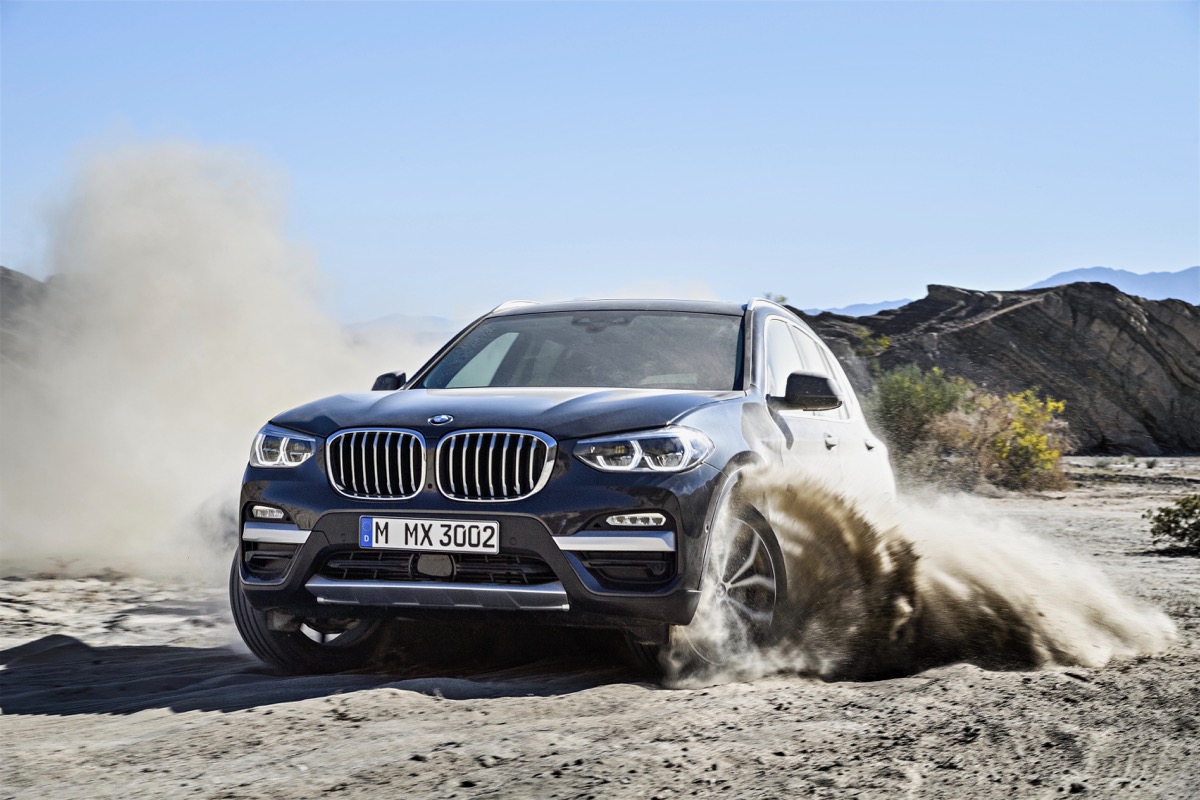
According to CarGurus experts, the overall rating for the 2021 BMW X3 is 7.5 out of 10, while the 2021 Ford Edge scores 7.2 out of 10. While both the BMW X3 and Ford Edge offer robust features and performance, the BMW X3 edges out with a slightly higher rating. Its balance of luxury, performance, and innovative technology make it a compelling choice for consumers seeking a premium SUV experience. Therefore, for the more highly rated and rounded vehicle, we recommend the 2021 BMW X3 over the Ford Edge.
Choose the 2021 BMW X3 if:
- You are looking for a luxury SUV with a refined design that mirrors larger BMW models.
- You value a spacious and functional interior with a variety of high-end standard and optional features.
- You want the flexibility of choosing between efficient hybrid powertrains and high-performance models.


Choose the 2021 Ford Edge if:
- You need a midsize crossover with ample rear-seat headroom and competitive legroom.
- You prefer a vehicle with a large cargo capacity, suitable for family trips or hauling gear.
- You appreciate integrated modern technology, like the Sync 4 system with wireless Apple CarPlay and Android Auto.


CarGurus highlights
According to CarGurus experts, the overall rating for the 2021 BMW X3 is 7.5 out of 10, while the 2021 Ford Edge scores 7.2 out of 10. While both the BMW X3 and Ford Edge offer robust features and performance, the BMW X3 edges out with a slightly higher rating. Its balance of luxury, performance, and innovative technology make it a compelling choice for consumers seeking a premium SUV experience. Therefore, for the more highly rated and rounded vehicle, we recommend the 2021 BMW X3 over the Ford Edge.
Choose the 2021 BMW X3 if:
Shop Now- You are looking for a luxury SUV with a refined design that mirrors larger BMW models.
- You value a spacious and functional interior with a variety of high-end standard and optional features.
- You want the flexibility of choosing between efficient hybrid powertrains and high-performance models.
Choose the 2021 Ford Edge if:
Shop Now- You need a midsize crossover with ample rear-seat headroom and competitive legroom.
- You prefer a vehicle with a large cargo capacity, suitable for family trips or hauling gear.
- You appreciate integrated modern technology, like the Sync 4 system with wireless Apple CarPlay and Android Auto.

By: CarGurus + AI
At CarGurus, our team of experienced automotive writers remain at the heart of our content operation, conducting hands-on car tests and writing insightful guides that are backed by years of industry experience. To complement this, we are harnessing AI to make our content offering more diverse and more helpful to shoppers than ever. To achieve this, our AI systems are based exclusively on CarGurus content, ratings and data, so that what we produce is both unique to CarGurus, and uniquely helpful to car shoppers.

