2020 Mazda MAZDA3 vs 2021 Hyundai Elantra
Overview | |
MSRP$21,500 | MSRP$19,650 |
Listings164 | Listings652 |
Ratings & Reviews | |
User Reviews | User Reviews |
Expert reviews7.8 out of 10 | Expert reviews8.8 out of 10 |
Pros
Cons
| Pros
Cons
|
2020 Mazda MAZDA3 Reviews SummaryMazda redesigned the Mazda3 in 2019, taking what was already one of the best-looking compact cars on the market, and attempting to dress it up even further. The goal was to elevate the brand into near-luxury territory. While the 2020 Mazda3 may not compete on the same plane as a Mercedes-Benz CLA-class or a BMW 2 Series, it feels undeniably premium when benchmarked against more mass-market competitors. | |
2021 Hyundai Elantra Reviews SummaryCompact cars are no longer compact. Cheap cars are no longer cheap. And it is no longer necessary to buy a luxury vehicle for performance, technology, and sophistication. The redesigned 2021 Hyundai Elantra proves it. | |
Popular Features & Specs | |
Engine2.5L 186 hp I4 | Engine2.0L 147 hp I4 |
Drive TrainFWD | Drive TrainFWD |
Seating Capacity5 | Seating Capacity5 |
Horsepower186 hp @ 6000 rpm | Horsepower147 hp @ 6200 rpm |
MPG City27 | MPG City31 |
MPG Highway36 | MPG Highway41 |
Engine | |
Engine Name2.5L 186 hp I4 | Engine Name2.0L 147 hp I4 |
Torque186 lb-ft @ 4000 rpm | Torque132 lb-ft @ 4500 rpm |
Horsepower186 hp @ 6000 rpm | Horsepower147 hp @ 6200 rpm |
DrivetrainFWD | DrivetrainFWD |
Fuel Economy | |
MPG City27 | MPG City31 |
MPG Highway36 | MPG Highway41 |
Interior | |
Seating Capacity5 | Seating Capacity5 |
Safety | |
Front Crash Overall5 | Front Crash Overall |
Side Crash Overall5 | Side Crash Overall |
Dimensions & Capacity | |
Cargo Space13.2 cu ft | Cargo Space14.2 cu ft |
Curb Weight3071 lbs | Curb Weight2725 lbs |
Height56.9 in | Height55.7 in |
Length183.5 in | Length184.1 in |
Width70.7 in | Width71.9 in |
Wheelbase107.3 in | Wheelbase107.1 in |
Maximum Payload1008 lbs | Maximum Payload1133 lbs |
Number of doors4 | Number of doors4 |
Overview | ||
MSRP | $21,500 | $19,650 |
Listings | ||
Ratings & Reviews | ||
User reviews | ||
Expert reviews | 7.8 out of 10Read full review | 8.8 out of 10Read full review |
Pros & cons | Pros
Cons
| Pros
Cons
|
Summary | Mazda redesigned the Mazda3 in 2019, taking what was already one of the best-looking compact cars on the market, and attempting to dress it up even further. The goal was to elevate the brand into near-luxury territory. While the 2020 Mazda3 may not compete on the same plane as a Mercedes-Benz CLA-class or a BMW 2 Series, it feels undeniably premium when benchmarked against more mass-market competitors. | Compact cars are no longer compact. Cheap cars are no longer cheap. And it is no longer necessary to buy a luxury vehicle for performance, technology, and sophistication. The redesigned 2021 Hyundai Elantra proves it. |
Video | ||
Popular Features & Specs | ||
Engine | 2.5L 186 hp I4 | 2.0L 147 hp I4 |
Drive Train | FWD | FWD |
Seating Capacity | 5 | 5 |
Horsepower | 186 hp @ 6000 rpm | 147 hp @ 6200 rpm |
MPG City | 27 | 31 |
MPG Highway | 36 | 41 |
Engine | ||
Engine Name | 2.5L 186 hp I4 | 2.0L 147 hp I4 |
Torque | 186 lb-ft @ 4000 rpm | 132 lb-ft @ 4500 rpm |
Horsepower | 186 hp @ 6000 rpm | 147 hp @ 6200 rpm |
Drivetrain | FWD | FWD |
Fuel Economy | ||
MPG City | 27 | 31 |
MPG Highway | 36 | 41 |
Interior | ||
Seating Capacity | 5 | 5 |
Safety | ||
Front Crash Overall | 5 | |
Side Crash Overall | 5 | |
Dimensions & Capacity | ||
Cargo Space | 13.2 cu ft | 14.2 cu ft |
Curb Weight | 3071 lbs | 2725 lbs |
Height | 56.9 in | 55.7 in |
Length | 183.5 in | 184.1 in |
Width | 70.7 in | 71.9 in |
Wheelbase | 107.3 in | 107.1 in |
Maximum Payload | 1008 lbs | 1133 lbs |
Number of doors | 4 | 4 |
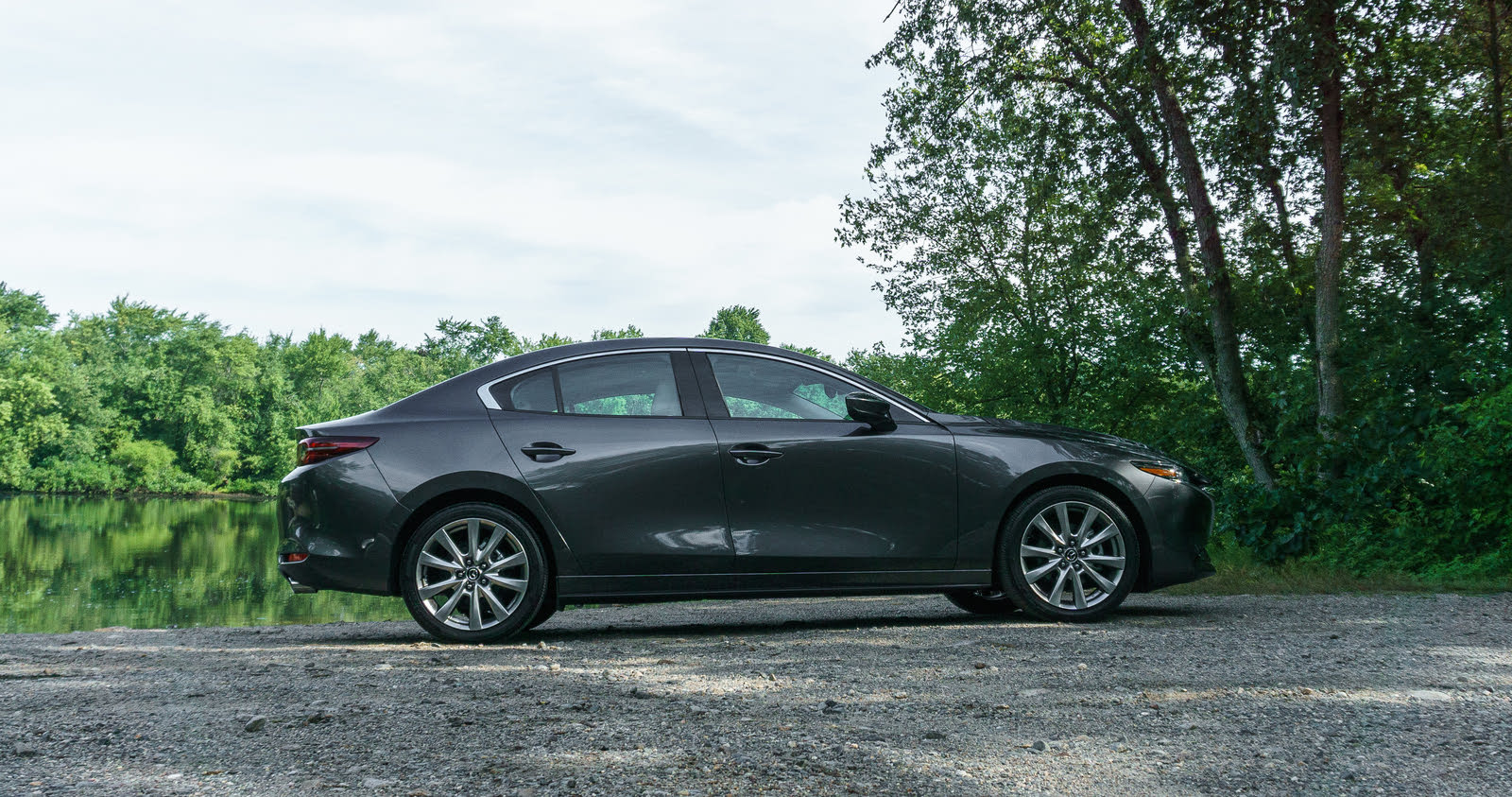
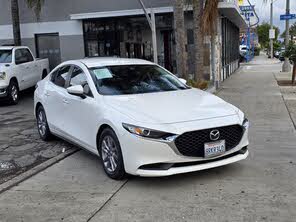
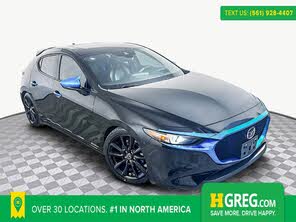
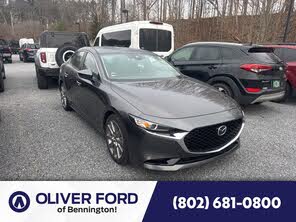
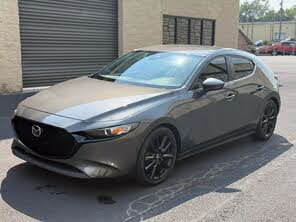
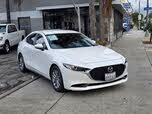
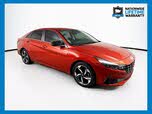
The 2020 Mazda MAZDA3 offered both sedan and hatchback body styles, with the hatchback standing out due to its unique curves and silhouette. The sedan, however, was more popular among U.S. shoppers aiming for an upmarket feel. The test vehicle, a sedan with the Premium Package and all-wheel drive, featured 18-inch alloy wheels, a blacked-out mesh front grille, and round running lamps. The side profile was sculpted without being angular, unlike many competitors. The rear design, however, felt somewhat disproportionate, especially when compared to the larger Mazda6. Inside, the Mazda3 leaned towards a premium feel with minimalist design, creamy white leather, and a driver-focused cockpit. However, the sheet metal felt low rent, and the trunk and doors lacked a satisfying thud when closed.
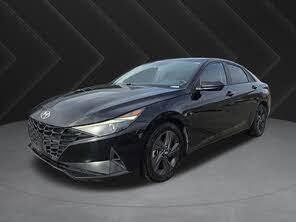
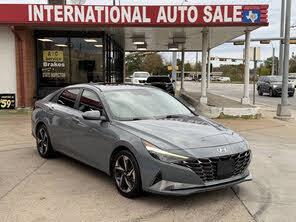
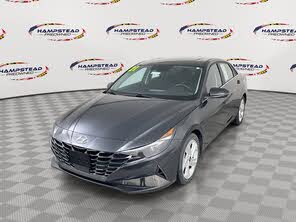
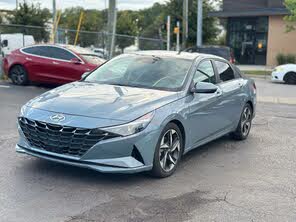
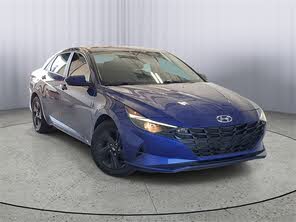
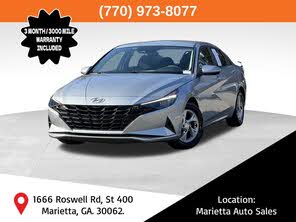
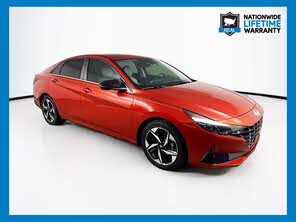
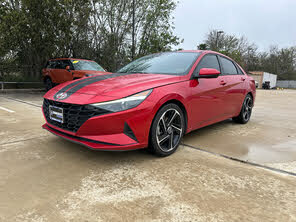
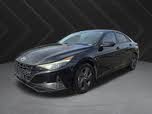
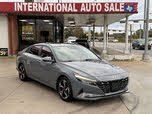
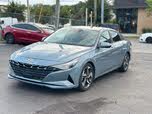
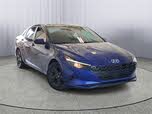
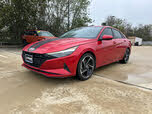
The 2021 Hyundai Elantra, with its Sensuous Sportiness design language and Parametric surfacing, was a collection of sharp creases and dramatic angles, making it distinctive and appealing. The Z-shaped dent in the doors added unique character, breaking conventional design rules. The Elantra came in SE, SEL, N Line, and Limited trims, with a hybrid powertrain option for the SEL and Limited. Prices ranged from $19,650 to $25,450, excluding destination charges. The high-performance Elantra N, debuting in early 2021, promised serious power and Nurburgring-tuned handling, expected to cost less than $34,000. Inside, the Elantra featured a driver-focused dashboard and center console, with higher trims offering a more upscale look and feel. The Limited or Hybrid Limited in Gray was particularly impressive, with light gray seats and Scandinavian-like door panel inserts.


The 2020 Mazda MAZDA3's performance was compromised by its torsion beam rear suspension, a cost-cutting measure that replaced the previous multi-link setup. While this decision might deter enthusiasts, everyday drivers likely wouldn't notice the difference. The steering remained precise, with minimal roll through corners, though the ride could be jostling over potholes. All 2020 Mazda3s were powered by a 2.5-liter SkyActiv four-cylinder engine, producing 186 horsepower and 186 pound-feet of torque. This was an improvement over the previous generation's 2.0-liter engine. The engine was predictable but lacked the immediate punch of turbocharged motors. A six-speed manual transmission was available only with the front-wheel-drive hatchback in preferred or premium packages, while most models came with a six-speed automatic transmission.
The 2021 Hyundai Elantra offered multiple powertrain combinations, including the high-performance Elantra N. The standard Elantra SEL had a 2.0-liter 4-cylinder engine with 147 horsepower and 132 pound-feet of torque, paired with a CVT. It returned 31.4 mpg in combined driving, though the engine felt gutless during highway merging. The Elantra Limited Hybrid used a 1.6-liter Atkinson-cycle engine, an electric motor, and a 1.32-kWh battery, producing 139 horsepower. It returned 42.2 mpg in combined driving, with better performance in city and coastal areas. The Elantra N Line, with a turbocharged 1.6-liter engine making 201 horsepower, was fun to drive with its sport suspension and multi-link rear setup. The high-performance Elantra N, with a turbocharged 2.0-liter engine producing 276 horsepower, offered an exhilarating driving experience, especially on challenging roads.
The 2020 Mazda MAZDA3 sedan measured 183.5 inches in length with a 107.3-inch wheelbase, while the hatchback was 175.6 inches long. Despite compact dimensions, the interior provided ample room for the driver, though rear legroom was tight. The front seats were supportive and adjustable, with materials holding up well even after 10,000 miles. The rear middle seat was compromised by a large transmission hump. The sedan's trunk offered 13.2 cubic feet of cargo space, and the hatchback provided 20.1 cubic feet, both on the smaller side for the segment.
The 2021 Hyundai Elantra, classified as a midsize car by the EPA, felt roomy from the driver's seat. All test cars had a height-adjustable driver's seat and a tilt/telescopic steering wheel, with heated front seats in higher trims. The rear seat offered best-in-class legroom, though the backrest shape and angle lacked upper back support. The trunk measured 14.2 cubic feet, with a 60/40-split folding rear seat for added utility. Some versions included a hands-free trunk lid release. However, the Elantra lacked a height-adjustable front passenger seat and a grab handle inside the trunk.
The 2020 Mazda MAZDA3 featured an 8.8-inch infotainment display integrated into the dashboard, avoiding the tacked-on look. However, it was not a touchscreen; instead, Mazda opted for a rotary dial controller between the front seats, arguing that touchscreens are dangerous while driving. The system included dedicated buttons and a volume knob, with Apple CarPlay, Android Auto, Bluetooth connectivity, and Sirius XM satellite radio available. The head-up display reflected off the windshield, enhancing the premium feel.
The 2021 Hyundai Elantra's SE, SEL, and N Line trims had traditional instrumentation with an 8-inch touchscreen infotainment system, including wireless Apple CarPlay and Android Auto. The Limited trim featured a 10.25-inch touchscreen with navigation and a 10.25-inch digital instrumentation screen, angled toward the driver. This setup included dynamic natural voice recognition and a Sounds of Nature function. The Limited Hybrid's voice recognition system was inconsistent, but a Hyundai spokesperson demonstrated better performance in another car. A new Bose premium sound system and Hyundai Digital Key were also available, enhancing the Elantra's tech offerings.
The 2020 Mazda MAZDA3 was a Top Safety Pick+ by the IIHS, with top scores in all crash tests and a five-star overall safety rating from the NHTSA. It offered advanced driver assistance systems, including forward-collision warning, lane-departure warning, adaptive cruise control, automatic emergency braking, blind-spot monitoring, rear cross-traffic alert, and dynamic brake support. These features were standard, making the Mazda3 a strong choice for safety-conscious buyers.
The 2021 Hyundai Elantra, built on a new platform, featured SmartSense, Hyundai's suite of advanced driving assistance systems. These included forward collision warning with pedestrian detection, automatic emergency braking, lane-departure warning, lane-keeping assistance, lane-centering assistance, automatic high-beam headlights, and a driver attention warning system. Additional safety features included blind-spot warning, rear cross-traffic warning, Rear Occupant Alert, and Safe Exit Warning. Upgrades included cyclist detection, junction turning assistance, adaptive cruise control with stop-and-go capability, rear automatic braking, and Highway Drive Assist, Hyundai's Level 2 ADAS.
CarGurus highlights

According to CarGurus experts, the overall rating for the 2020 Mazda MAZDA3 is 7.8 out of 10, while the 2021 Hyundai Elantra scores 8.8 out of 10. Based on these ratings, the 2021 Hyundai Elantra is the better choice, offering a more distinctive design, advanced technology, and a spacious interior.
Choose the 2020 Mazda MAZDA3 if:
- You prioritize a premium, minimalist interior design.
- You value precise steering and a sporty driving experience.
- You prefer a car with a strong safety rating and advanced driver assistance systems.
Choose the 2021 Hyundai Elantra if:
- You want a distinctive, modern exterior design with sharp creases and angles.
- You need a spacious interior with best-in-class rear-seat legroom.
- You seek advanced technology features, including a large touchscreen and digital instrumentation.


CarGurus highlights
According to CarGurus experts, the overall rating for the 2020 Mazda MAZDA3 is 7.8 out of 10, while the 2021 Hyundai Elantra scores 8.8 out of 10. Based on these ratings, the 2021 Hyundai Elantra is the better choice, offering a more distinctive design, advanced technology, and a spacious interior.
Choose the 2020 Mazda MAZDA3 if:
Shop Now- You prioritize a premium, minimalist interior design.
- You value precise steering and a sporty driving experience.
- You prefer a car with a strong safety rating and advanced driver assistance systems.





Choose the 2021 Hyundai Elantra if:
Shop Now- You want a distinctive, modern exterior design with sharp creases and angles.
- You need a spacious interior with best-in-class rear-seat legroom.
- You seek advanced technology features, including a large touchscreen and digital instrumentation.





By: CarGurus + AI
At CarGurus, our team of experienced automotive writers remain at the heart of our content operation, conducting hands-on car tests and writing insightful guides that are backed by years of industry experience. To complement this, we are harnessing AI to make our content offering more diverse and more helpful to shoppers than ever. To achieve this, our AI systems are based exclusively on CarGurus content, ratings and data, so that what we produce is both unique to CarGurus, and uniquely helpful to car shoppers.