2021 Mazda MAZDA3 vs 2020 Hyundai Elantra

Overview | |
MSRP$19,300 | MSRP$20,650 |
Listings981 | Listings271 |
Ratings & Reviews | |
User Reviews | User Reviews |
Expert reviews8.3 out of 10 | Expert reviews8.3 out of 10 |
Pros
Cons
| Pros
Cons
|
2020 Hyundai Elantra Reviews SummaryHyundai isn’t pulling any punches when it comes to the compact car segment, where value is of utmost importance. And though a completely redesigned 2021 Elantra is coming soon, the automaker bestows several value-enhancing improvements upon the outgoing 2020 Hyundai Elantra compact sedan. They include free scheduled maintenance, improved fuel economy ratings, and new standard safety features. | |
2021 Mazda MAZDA3 Reviews SummaryMazdas are fun. All of them. Even the SUVs. But until recently, they weren’t particularly fast. The joy in driving a Mazda derived from the expertly tuned ride and handling qualities that made piloting the automaker’s products a sheer delight. And then Mazda started turbocharging cars and SUVs equipped with its 2.5-liter 4-cylinder engine. Now, the 2021 Mazda3 2.5 Turbo arrives, one of the last members of Mazda’s fleet to add forced induction for boosted power and performance. The result, as you might guess, is absolutely delightful. | |
No video found | |
Popular Features & Specs | |
Engine2.0L 147 hp I4 | Engine2.0L 155 hp I4 |
Drive TrainFWD | Drive TrainFWD |
Seating Capacity5 | Seating Capacity5 |
Horsepower147 hp @ 6200 rpm | Horsepower |
MPG City31 | MPG City28 |
MPG Highway41 | MPG Highway36 |
Engine | |
Engine Name2.0L 147 hp I4 | Engine Name2.0L 155 hp I4 |
Torque132 lb-ft @ 4500 rpm | Torque |
Horsepower147 hp @ 6200 rpm | Horsepower |
DrivetrainFWD | DrivetrainFWD |
Fuel Economy | |
MPG City31 | MPG City28 |
MPG Highway41 | MPG Highway36 |
Interior | |
Seating Capacity5 | Seating Capacity5 |
Safety | |
Front Crash Overall4 | Front Crash Overall5 |
Side Crash Overall4 | Side Crash Overall5 |
Dimensions & Capacity | |
Cargo Space14.4 cu ft | Cargo Space13.2 cu ft |
Curb Weight2844 lbs | Curb Weight3100 lbs |
Height56.5 in | Height56.9 in |
Length181.9 in | Length183.5 in |
Width70.9 in | Width70.7 in |
Wheelbase106.3 in | Wheelbase107.3 in |
Maximum Payload1080 lbs | Maximum Payload923 lbs |
Number of doors4 | Number of doors4 |
Overview | ||
MSRP | $19,300 | $20,650 |
Listings | ||
Ratings & Reviews | ||
User reviews | ||
Expert reviews | 8.3 out of 10Read full review | 8.3 out of 10Read full review |
Pros & cons | Pros
Cons
| Pros
Cons
|
Summary | Hyundai isn’t pulling any punches when it comes to the compact car segment, where value is of utmost importance. And though a completely redesigned 2021 Elantra is coming soon, the automaker bestows several value-enhancing improvements upon the outgoing 2020 Hyundai Elantra compact sedan. They include free scheduled maintenance, improved fuel economy ratings, and new standard safety features. | Mazdas are fun. All of them. Even the SUVs. But until recently, they weren’t particularly fast. The joy in driving a Mazda derived from the expertly tuned ride and handling qualities that made piloting the automaker’s products a sheer delight. And then Mazda started turbocharging cars and SUVs equipped with its 2.5-liter 4-cylinder engine. Now, the 2021 Mazda3 2.5 Turbo arrives, one of the last members of Mazda’s fleet to add forced induction for boosted power and performance. The result, as you might guess, is absolutely delightful. |
Video | No video found | |
Popular Features & Specs | ||
Engine | 2.0L 147 hp I4 | 2.0L 155 hp I4 |
Drive Train | FWD | FWD |
Seating Capacity | 5 | 5 |
Horsepower | 147 hp @ 6200 rpm | |
MPG City | 31 | 28 |
MPG Highway | 41 | 36 |
Engine | ||
Engine Name | 2.0L 147 hp I4 | 2.0L 155 hp I4 |
Torque | 132 lb-ft @ 4500 rpm | |
Horsepower | 147 hp @ 6200 rpm | |
Drivetrain | FWD | FWD |
Fuel Economy | ||
MPG City | 31 | 28 |
MPG Highway | 41 | 36 |
Interior | ||
Seating Capacity | 5 | 5 |
Safety | ||
Front Crash Overall | 4 | 5 |
Side Crash Overall | 4 | 5 |
Dimensions & Capacity | ||
Cargo Space | 14.4 cu ft | 13.2 cu ft |
Curb Weight | 2844 lbs | 3100 lbs |
Height | 56.5 in | 56.9 in |
Length | 181.9 in | 183.5 in |
Width | 70.9 in | 70.7 in |
Wheelbase | 106.3 in | 107.3 in |
Maximum Payload | 1080 lbs | 923 lbs |
Number of doors | 4 | 4 |
The 2020 Hyundai Elantra, last redesigned in 2017 and restyled in 2019, remained visually unchanged for the 2020 model year. The previous year's restyle introduced a geometric-influenced appearance, setting the stage for the dramatically angular styling of the upcoming 2021 Elantra. Available in six versions—SE, SEL, Value Edition, Eco, Limited, and Sport—the Elantra's price ranged from $19,300 to $24,150. The Limited test vehicle, equipped with the Ultimate Package and floor mats, brought the total to $27,630, including the $975 destination charge. The Elantra GT hatchback was also available for 2020.
A black paint job highlighted the Elantra’s angular headlight, fog light, and wheel designs, contrasting with the chrome grille, beltline, and logo detailing. The restyled exterior was complemented by an updated interior featuring silver trim on various elements, adding an upscale look. However, the presence of hard and glossy plastic reminded occupants that the Elantra was still a mainstream compact car.
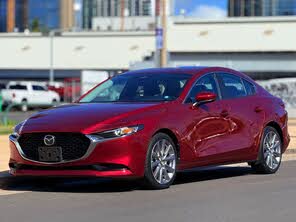
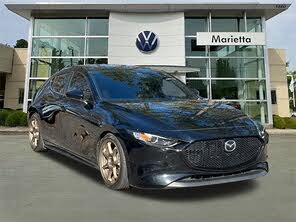
The 2021 Mazda MAZDA3, redesigned in 2019, won the prestigious World Car Design of the Year for 2020. Its bodywork reflected drama and sophistication, with the 4-door sedan being the more conservative version and the 5-door hatchback adopting an aggressive stance. The 2.5 Turbo model, available in both body styles with AWD and Premium Plus trim, started at $29,900 for the sedan and $33,750 for the hatchback. The test sedan, with Premium Plus trim and Machine Gray Metallic paint, totaled $33,890, including the $945 destination charge.
Interior options varied by trim level and body style, with standard leatherette and optional Nappa leather. The hatchback offered black and red leather, while the sedan provided black or white. The test car’s white leather interior supported Mazda’s premium aspirations, featuring close attention to design detail, bright metallic accents, and clear, legible gauges. Despite some hard plastic, the design and driver-focused cabin elevated the Mazda3 to entry-luxury status.


The 2020 Hyundai Elantra featured a base 147-horsepower, 2.0-liter four-cylinder engine paired with a new continuously variable transmission (CVT), replacing the previous six-speed automatic. The CVT, standard with SE trim, contributed to a $1,100 price increase from the previous year. All Elantra models were front-wheel drive. The Elantra Eco model had a turbocharged 1.4-liter four-cylinder engine producing 128 horsepower and 156 lb-ft of torque, paired with a seven-speed dual-clutch automatic transmission (DCT) and an automatic engine start/stop system, achieving 36 mpg in combined driving.
The Elantra Sport trim featured a 1.6-liter turbo four-cylinder engine generating 201 horsepower and 195 lb-ft of torque, with a seven-speed DCT and an independent rear suspension. The Limited test car, with its 2.0-liter engine and new CVT, offered a smooth driving experience, though real-world fuel economy fell short of expectations, averaging 29.3 mpg compared to the EPA-rated 34 mpg. The torsion beam axle rear suspension detracted from ride and handling, making the Elantra Sport’s independent suspension a preferable option for driving enjoyment.
The 2021 Mazda MAZDA3 Turbo, with a turbocharged 2.5-liter four-cylinder engine, produced 250 horsepower and 320 lb-ft of torque on 93-octane fuel, or 227 hp and 310 lb-ft on 87-octane. Paired with a six-speed automatic transmission and i-Activ AWD, the Turbo model delivered transformative performance. The powertrain, tuned for smoothness and predictability, provided stunning speed without freneticism. Sport mode enhanced transmission shifts and cornering response, while improved steering feel and stiffer front suspension springs and dampers contributed to a sporty driving experience.
Despite the torsion beam rear axle, the Mazda3 Turbo’s dynamic tuning and powertrain calibration offered maximum driving pleasure. The car’s speakers enhanced the engine note, and the overall driving experience was smooth, consistent, and predictable. The Mazda3 Turbo averaged 20.4 mpg during testing, falling short of the EPA estimate of 27 mpg, but this was attributed to the spirited driving style during the test.
The 2020 Hyundai Elantra provided roomy accommodations for four adults, with a fifth person fitting for short trips. The Limited test car featured power driver’s seat adjustment, leather upholstery, and a sliding center console armrest. All Elantras included a front passenger's seat-height adjuster and a dual-zone automatic climate control system with a Clean Air ionizer and automatic defogging. Heated front seats were standard on all but the SE and SEL trims, though rear air conditioning vents were absent. The trunk offered 14.4 cubic feet of space, nearly matching some midsize sedans, and included an interior grab handle for easy closure.
The 2021 Mazda MAZDA3 2.5 Turbo, lined in Nappa leather with heated front seats and a heated steering wheel, exuded luxury. However, it lacked front seat ventilation and rear-seat amenities such as air conditioning vents and USB charging ports. In-cabin storage was adequate but limited, with the wireless smartphone charging option reducing center console bin capacity. The sedan’s trunk measured 13.2 cubic feet, while the hatchback offered 20.1 cubic feet behind the rear seat and 47.1 cubic feet with it folded down.
The 2020 Hyundai Elantra came standard with a touchscreen infotainment system, Bluetooth, and a USB port. The base SE trim had a 5-inch screen, while the SEL and higher trims featured a 7-inch display with Apple CarPlay, Android Auto, and SiriusXM satellite radio. The Value Edition included a complimentary three-year subscription to Blue Link Connected Car and Remote plans. The Limited trim added wireless smartphone charging and a premium Infinity sound system, with the Ultimate Package increasing the touchscreen size to 8 inches and adding navigation and Blue Link Guidance service.
The 2021 Mazda MAZDA3 featured the Mazda Connect infotainment system with an 8.8-inch display, Apple CarPlay, Android Auto, and a three-year trial subscription to Mazda Connected Services. A WiFi hotspot was available, and the MyMazda app provided remote operation of the car. However, the non-touchscreen display and subpar voice-recognition technology detracted from the user experience. The 12-speaker Bose premium sound system offered good audio quality, though satellite radio performance was lacking. The Active Driving Display (HUD) was standard on the Turbo model, providing useful information visible even with polarized sunglasses.
The 2020 Hyundai Elantra included Hyundai Smart Sense as standard on all trims, featuring forward-collision warning, automatic emergency braking, lane departure warning, lane-keeping assist, and a driver attention monitor. SEL trim and higher added blind-spot warning and rear cross-traffic alert, while the Limited and Sport trims had full LED headlights with automatic high-beam operation. The Ultimate Package for the Limited trim included adaptive cruise control, pedestrian detection, and Safe Exit Assist. The Elantra earned a Top Safety Pick from the IIHS with full LED headlights and a four-star overall rating from the NHTSA, though rear-door intrusion was a concern in side-impact tests.
The 2021 Mazda MAZDA3’s i-ActiveSense ADAS supported the driver with features like adaptive cruise control with stop-and-go capability and an Adaptive Front Lighting System. The Premium Plus trim added a high-definition surround-view camera, front and rear parking sensors, low-speed reverse automatic braking, and Traffic Jam Assist. The Mazda3 excelled in crash tests, earning top five-star ratings from the NHTSA and a Top Safety Pick+ rating from the IIHS for 2020.
CarGurus highlights
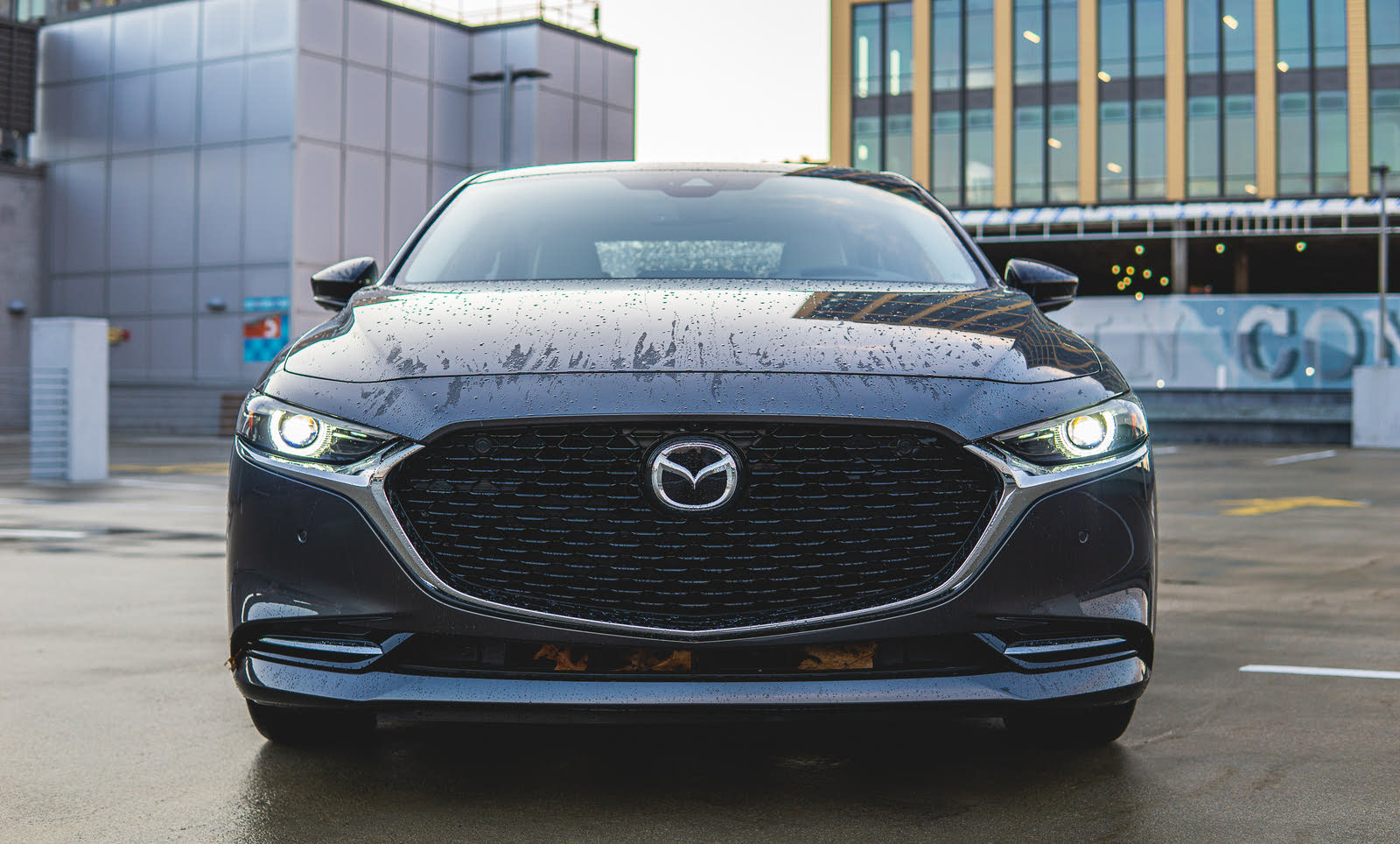
According to CarGurus experts, the overall rating for the 2020 Hyundai Elantra is 8.3 out of 10, while the 2021 Mazda MAZDA3 scores 8.3 out of 10. Given these identical ratings, the final recommendation hinges on individual preferences. If you prioritize a luxurious interior, powerful performance, and advanced safety features, the 2021 Mazda MAZDA3 is the better choice. However, if value for money, a roomy interior, and a user-friendly infotainment system are more important, the 2020 Hyundai Elantra is a solid option.
Choose the 2021 Mazda MAZDA3 if:
- You seek a premium driving experience with powerful performance.
- You value a luxurious interior with high-quality materials and design.
- You want advanced safety features and top safety ratings.





Choose the 2020 Hyundai Elantra if:
- You prioritize a lower starting price and value for money.
- You need a roomy interior with comfortable seating for four adults.
- You prefer a user-friendly infotainment system with easy-to-use controls.


CarGurus highlights
According to CarGurus experts, the overall rating for the 2020 Hyundai Elantra is 8.3 out of 10, while the 2021 Mazda MAZDA3 scores 8.3 out of 10. Given these identical ratings, the final recommendation hinges on individual preferences. If you prioritize a luxurious interior, powerful performance, and advanced safety features, the 2021 Mazda MAZDA3 is the better choice. However, if value for money, a roomy interior, and a user-friendly infotainment system are more important, the 2020 Hyundai Elantra is a solid option.
Choose the 2021 Mazda MAZDA3 if:
Shop Now- You seek a premium driving experience with powerful performance.
- You value a luxurious interior with high-quality materials and design.
- You want advanced safety features and top safety ratings.





Choose the 2020 Hyundai Elantra if:
Shop Now- You prioritize a lower starting price and value for money.
- You need a roomy interior with comfortable seating for four adults.
- You prefer a user-friendly infotainment system with easy-to-use controls.






By: CarGurus + AI
At CarGurus, our team of experienced automotive writers remain at the heart of our content operation, conducting hands-on car tests and writing insightful guides that are backed by years of industry experience. To complement this, we are harnessing AI to make our content offering more diverse and more helpful to shoppers than ever. To achieve this, our AI systems are based exclusively on CarGurus content, ratings and data, so that what we produce is both unique to CarGurus, and uniquely helpful to car shoppers.