2020 Mazda CX-5 vs 2021 Ford Edge

Overview | |
MSRP$25,190 | MSRP$32,750 |
Listings165 | Listings204 |
Ratings & Reviews | |
User Reviews | User Reviews |
Expert reviews7.7 out of 10 | Expert reviews7.2 out of 10 |
Pros
Cons
| Pros
Cons
|
2020 Mazda CX-5 Reviews SummaryAccording to a Harvard Business Review marketing study, there is such a thing as too much choice. And when the marketplace presents consumers with too much choice, there is a chance they won’t buy anything at all. For the 2020 model year, there are more than 40 small or compact SUVs available, half of them sold by luxury brands. Small and scrappy Mazda offers three of them: the CX-3, the CX-30, and the CX-5. However, in a marketplace awash in Chevys, Fords, Hondas, and Toyotas, Mazda has trouble standing apart from the established crowd. What’s the solution? Move upscale into “premium” territory. Premium is where Buick, Fiat, GMC, Jeep, Mini, and Volkswagen play to varying levels of success. Combining the value inherent in a mainstream brand with the design, materials, and technology common to luxury brands, these premium vehicles attempt to provide more than mainstream for less than luxury. At the same time, less is more. Because the 2020 Mazda CX-5 has but four similarly sized competitors in the premium class, that makes it easier for a consumer to choose, and more likely that a consumer will buy. The trick is convincing people that Mazda is a premium brand, and the automaker is taking a pragmatic approach to this emotionally-charged solution. | |
2021 Ford Edge Reviews SummaryThe Ford Edge proves that trends run in cycles. Launched in the early 2000s, the original Edge was one of the first midsize crossover SUVs, sporting car-like styling that sharply contrasted the more traditional-looking Ford Explorer of the time. However, new-car buyers realized they liked the roominess of three-row SUVs like the Explorer more, and interest in the two-row Edge waned. Now, however, car shoppers are once again eyeing two-row midsize SUVs, this time as an alternative to sedans. The Edge is now part of a growing market segment that includes the Chevrolet Blazer, Honda Passport, Hyundai Santa Fe, Jeep Grand Cherokee, Nissan Murano, and Volkswagen Atlas Cross Sport. Yet while market dynamics have changed, the Edge hasn’t. The current second-generation Edge dates back to the 2015 model year, and even a substantial update undertaken for the 2019 model year is quickly receding in the rearview mirror. The Edge now sits between the much newer Explorer and Ford Escape in the automaker's SUV-heavy lineup. Aside from some new tech features, the 2021 Ford Edge doesn’t get many significant changes, so we can evaluate it based on our experience with previous model years. As with the 2020 model year, trim levels include SE, SEL, ST-Line, Titanium, and ST. | |
No video found | No video found |
Popular Features & Specs | |
Engine2.5L 187 hp I4 | Engine2.0L 250 hp I4 |
Drive TrainFWD | Drive TrainFWD |
Seating Capacity5 | Seating Capacity5 |
Horsepower187 hp @ 6000 rpm | Horsepower250 hp @ 5500 rpm |
MPG City25 | MPG City21 |
MPG Highway31 | MPG Highway29 |
Engine | |
Engine Name2.5L 187 hp I4 | Engine Name2.0L 250 hp I4 |
Torque186 lb-ft @ 4000 rpm | Torque280 lb-ft @ 3000 rpm |
Horsepower187 hp @ 6000 rpm | Horsepower250 hp @ 5500 rpm |
DrivetrainFWD | DrivetrainFWD |
Fuel Economy | |
MPG City25 | MPG City21 |
MPG Highway31 | MPG Highway29 |
Interior | |
Seating Capacity5 | Seating Capacity5 |
Safety | |
Front Crash Overall5 | Front Crash Overall5 |
Side Crash Overall5 | Side Crash Overall5 |
Dimensions & Capacity | |
Cargo Space30.9 cu ft | Cargo Space39.2 cu ft |
Curb Weight3541 lbs | Curb Weight3960 lbs |
Height66.2 in | Height68.3 in |
Length179.1 in | Length188.8 in |
Width83.3 in | Width85.8 in |
Wheelbase106.2 in | Wheelbase112.2 in |
Maximum Payload1034 lbs | Maximum Payload1310 lbs |
Number of doors4 | Number of doors4 |
Maximum Towing Capacity2000 lbs | Maximum Towing Capacity1500 lbs |
Overview | ||
MSRP | $25,190 | $32,750 |
Listings | ||
Ratings & Reviews | ||
User reviews | ||
Expert reviews | 7.7 out of 10Read full review | 7.2 out of 10Read full review |
Pros & cons | Pros
Cons
| Pros
Cons
|
Summary | According to a Harvard Business Review marketing study, there is such a thing as too much choice. And when the marketplace presents consumers with too much choice, there is a chance they won’t buy anything at all. For the 2020 model year, there are more than 40 small or compact SUVs available, half of them sold by luxury brands. Small and scrappy Mazda offers three of them: the CX-3, the CX-30, and the CX-5. However, in a marketplace awash in Chevys, Fords, Hondas, and Toyotas, Mazda has trouble standing apart from the established crowd. What’s the solution? Move upscale into “premium” territory. Premium is where Buick, Fiat, GMC, Jeep, Mini, and Volkswagen play to varying levels of success. Combining the value inherent in a mainstream brand with the design, materials, and technology common to luxury brands, these premium vehicles attempt to provide more than mainstream for less than luxury. At the same time, less is more. Because the 2020 Mazda CX-5 has but four similarly sized competitors in the premium class, that makes it easier for a consumer to choose, and more likely that a consumer will buy. The trick is convincing people that Mazda is a premium brand, and the automaker is taking a pragmatic approach to this emotionally-charged solution. | The Ford Edge proves that trends run in cycles. Launched in the early 2000s, the original Edge was one of the first midsize crossover SUVs, sporting car-like styling that sharply contrasted the more traditional-looking Ford Explorer of the time. However, new-car buyers realized they liked the roominess of three-row SUVs like the Explorer more, and interest in the two-row Edge waned. Now, however, car shoppers are once again eyeing two-row midsize SUVs, this time as an alternative to sedans. The Edge is now part of a growing market segment that includes the Chevrolet Blazer, Honda Passport, Hyundai Santa Fe, Jeep Grand Cherokee, Nissan Murano, and Volkswagen Atlas Cross Sport. Yet while market dynamics have changed, the Edge hasn’t. The current second-generation Edge dates back to the 2015 model year, and even a substantial update undertaken for the 2019 model year is quickly receding in the rearview mirror. The Edge now sits between the much newer Explorer and Ford Escape in the automaker's SUV-heavy lineup. Aside from some new tech features, the 2021 Ford Edge doesn’t get many significant changes, so we can evaluate it based on our experience with previous model years. As with the 2020 model year, trim levels include SE, SEL, ST-Line, Titanium, and ST. |
Video | No video found | No video found |
Popular Features & Specs | ||
Engine | 2.5L 187 hp I4 | 2.0L 250 hp I4 |
Drive Train | FWD | FWD |
Seating Capacity | 5 | 5 |
Horsepower | 187 hp @ 6000 rpm | 250 hp @ 5500 rpm |
MPG City | 25 | 21 |
MPG Highway | 31 | 29 |
Engine | ||
Engine Name | 2.5L 187 hp I4 | 2.0L 250 hp I4 |
Torque | 186 lb-ft @ 4000 rpm | 280 lb-ft @ 3000 rpm |
Horsepower | 187 hp @ 6000 rpm | 250 hp @ 5500 rpm |
Drivetrain | FWD | FWD |
Fuel Economy | ||
MPG City | 25 | 21 |
MPG Highway | 31 | 29 |
Interior | ||
Seating Capacity | 5 | 5 |
Safety | ||
Front Crash Overall | 5 | 5 |
Side Crash Overall | 5 | 5 |
Dimensions & Capacity | ||
Cargo Space | 30.9 cu ft | 39.2 cu ft |
Curb Weight | 3541 lbs | 3960 lbs |
Height | 66.2 in | 68.3 in |
Length | 179.1 in | 188.8 in |
Width | 83.3 in | 85.8 in |
Wheelbase | 106.2 in | 112.2 in |
Maximum Payload | 1034 lbs | 1310 lbs |
Number of doors | 4 | 4 |
Maximum Towing Capacity | 2000 lbs | 1500 lbs |
Mazda executed the concept of premium better than its competitors with the 2020 CX-5. The automaker's commitment to building better cars was evident through captivating style, compelling substance, and continual product improvement. The 2020 model year saw more standard equipment, revised instrumentation, and control markings to enhance the cabin's appearance, along with modifications to reduce noise, vibration, and harshness. The turbocharged engine received an increase in torque output, and AWD versions gained a new off-road traction assistance feature. Prices ranged from $25,190 to $37,155, with the test vehicle in Signature trim costing $38,680, including destination charges.
The CX-5's design, rooted in Mazda's "Kodo" styling themes, remained appealing, distinctive, and upscale. The interior, especially in Signature trim, featured premium Nappa leather upholstery, real wood, and a black headliner, giving it a luxurious feel. However, the Caturra Brown leather was almost indistinguishable from the black cabin, reducing the contrast that often makes a vehicle seem premium.
Ford's 2021 Edge maintained its styling since the 2019 refresh, which successfully integrated the current Ford look with the existing Edge body shell. The Edge presented a cleaner alternative to the more elaborate designs of competitors like the Chevy Blazer and Hyundai Santa Fe. The Titanium models featured extra chrome, while the ST trim had a blacked-out grille, standard 20-inch wheels, and a body kit. The ST-Line offered the same exterior styling without the performance upgrades and higher price tag.
Inside, the Edge's design showed its age, awkwardly tweaked over the years to accommodate new features like a larger touchscreen. Titanium models had leather upholstery, while ST models boasted sporty front seats with added bolstering and a leather-wrapped steering wheel with contrast stitching.


The 2020 Mazda CX-5 came standard with a 2.5-liter four-cylinder engine producing 187 horsepower and 186 pound-feet of torque, paired with a six-speed automatic transmission with a Sport mode. Front-wheel drive was standard, with all-wheel drive optional. The Grand Touring Reserve and Signature trims featured a turbocharged version of the engine, generating 250 hp and 320 lb-ft of torque on premium fuel, or 227 hp and 310 lb-ft on regular fuel. This engine also used a six-speed automatic but came only with AWD.
Despite its 3,825-pound curb weight, the turbocharged CX-5 accelerated with authority. The turbo engine was less efficient, rated at 24 mpg combined, compared to 26 mpg combined for the naturally aspirated engine with AWD. The test loop averaged 22.1 mpg. The CX-5 Signature was engaging to drive, thanks to its G-Vectoring Control Plus (GVC Plus) technology, which stabilized the SUV during cornering. However, excessive body motions and a high center of gravity made it less thrilling on winding roads. The steering and brakes were responsive, making the CX-5 enjoyable in typical driving situations.
The 2021 Ford Edge featured a 2.0-liter turbocharged EcoBoost four-cylinder engine, producing 250 horsepower and 275 pound-feet of torque, paired with an eight-speed automatic transmission. It came with standard FWD or optional AWD. The Edge ST performance model had an EcoBoost twin-turbo 2.7-liter V6, generating 335 hp and 380 lb-ft of torque on 93-octane fuel, with standard AWD and an eight-speed automatic transmission. The ST also had model-specific suspension tuning, with an option package for upgraded brakes and 21-inch wheels with summer tires.
The Edge ST aimed to compete with performance SUVs like the Porsche Macan, though the comparison was a stretch. The Edge ST was enjoyable to drive, especially since its competitors didn't emphasize performance. The base FWD four-cylinder Edge had a maximum towing capacity of 3,958 pounds, while the V6-powered Edge ST could tow up to 4,525 pounds. These figures were respectable but fell short of the Honda Passport and Volkswagen Atlas Cross Sport, both rated to tow 5,000 pounds with AWD.
The 2020 Mazda CX-5 aimed to compete with luxury SUVs, addressing its cramped interior compared to mainstream compact crossovers like the Honda CR-V and Toyota RAV4. The CX-5's interior reflected style and good taste, with classy gauges and elegant metallic accents. Touring trim added dual-zone automatic climate control, heated front seats, and rear air conditioning vents. Grand Touring trim included a power height-adjustable front passenger seat, while Grand Touring Reserve added ventilated front seats, heated rear seats, and a heated steering wheel. The Signature trim featured Nappa leather, genuine wood trim, and more.
The CX-5 Signature's front seats were comfortable, though rear passengers might find legroom lacking. Cargo space measured 30.9 cubic feet behind the rear seat, expanding to 59.6 cubic feet with the back seat folded. Higher trims included a power liftgate with a programmable height limit.
The 2021 Ford Edge remained competitive on interior space, offering the most rear-seat headroom among two-row midsize crossovers. Legroom in both rows was second only to the Hyundai Santa Fe. Standard features included dual-zone automatic climate control. Cargo space measured 39.2 cubic feet with the rear seats in place and 73.4 cubic feet with the rear seats folded, trailing only the Honda Passport and Volkswagen Atlas Cross Sport. Higher trims offered a foot-activated power liftgate.
The Edge's rotary shift knob freed up space on the center console, though the narrow width limited its usefulness. The raised console provided a storage nook below, but its out-of-the-way location made it difficult to reach and easy to forget items placed there.
The 2020 Mazda CX-5 featured the Mazda Connect infotainment system, inspired by Audi, BMW, and Mercedes-Benz. The system included a 7-inch touchscreen in Sport trim, which responded to touch only when the vehicle was stationary. Standard features included Bluetooth, HD Radio, text messaging support, integrated internet radio apps, and E911 emergency notification. Touring trim added Apple CarPlay and Android Auto. Grand Touring trim upgraded to an 8-inch touchscreen, satellite radio, and a 10-speaker Bose premium sound system. Signature trim included a navigation system, a surround-view camera system, and a SiriusXM data subscription.
Mazda Connect could be controlled via the touchscreen (when stationary), center console controls, steering wheel controls, or voice-recognition technology. However, none of these methods were ideal. Users were advised to set up the system to their preferences and rely on steering controls to minimize frustration. The voice-recognition technology often failed to interpret commands or provide feedback, making it best to avoid the push-to-talk button.
The 2021 Ford Edge featured the latest Sync 4 infotainment system, with standard wireless Apple CarPlay/Android Auto and a 12-inch touchscreen. Standard features included Bluetooth, SiriusXM with 360L satellite radio (with a three-month free trial), and a built-in 4G LTE WiFi hotspot. The Edge ST models also had a 12-speaker Bang & Olufsen audio system. The Edge included four USB ports, with two rear USB ports (one USB-C) added for the 2021 model year.
Sync 4's simple graphics and straightforward menu layouts made it user-friendly. The system's wireless Apple CarPlay and Android Auto connectivity were notable, as not all competitors offered this feature.
The 2020 Mazda CX-5 excelled in safety, with all advanced driving assistance systems (ADAS) standard on most models. The i-Activsense package included adaptive cruise control with stop-and-go capability, forward collision warning with pedestrian detection, automatic emergency braking, blind-spot monitoring, rear cross-traffic alert, lane departure warning, and lane-keep assist. Standard features also included LED headlights and rain-sensing wipers, with adaptive headlights available on Grand Touring trim.
The CX-5 earned a Top Safety Pick+ rating from the Insurance Institute for Highway Safety (IIHS) and a five-star overall rating from the National Highway Traffic Safety Administration (NHTSA). It received top marks in nearly all individual testing parameters, making it a highly safe SUV.
The 2021 Ford Edge was an IIHS Top Safety Pick, scoring the top "Good" rating in all crash tests and the top "Superior" rating for front crash prevention in vehicle-to-vehicle situations. However, it received a lower "Advanced" rating for vehicle-to-pedestrian front crash prevention, an "Acceptable" rating for LATCH child-seat anchor ease of use, and "Acceptable" and "Poor" headlight ratings depending on trim level. The NHTSA gave the Edge a five-star overall safety rating, with five stars in frontal and side crash tests, and four stars in rollover crash tests.
The Edge's standard safety features under the Ford Co-Pilot360 banner included automatic high beams, blind-spot monitoring, lane-keep assist, forward-collision warning, automatic emergency braking (with pedestrian detection), post-collision braking, dynamic brake support, and rear parking sensors. Adaptive cruise control (with stop-and-go and lane centering) and Evasive Steering Assist were standard on all but the base Edge SE trim level.
CarGurus highlights
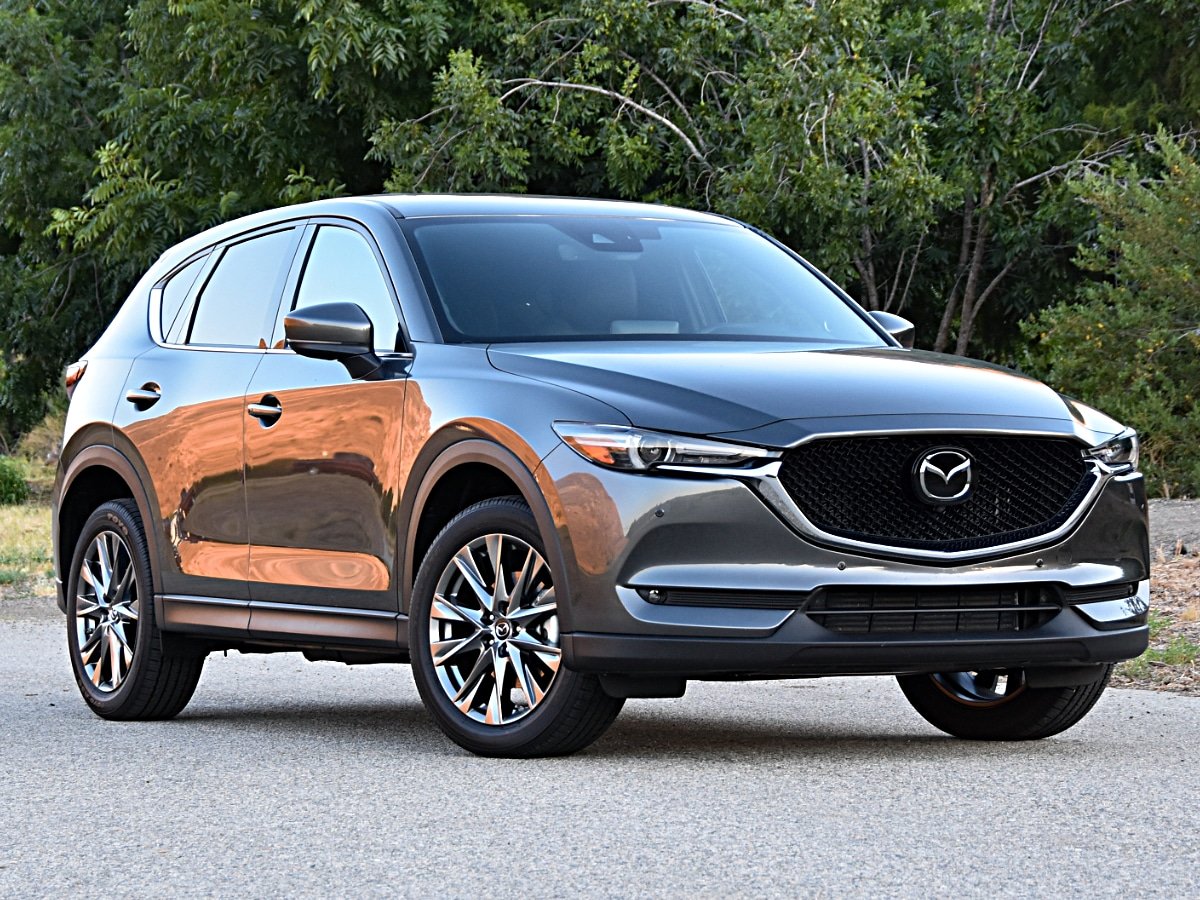
According to CarGurus experts, the overall rating for the 2020 Mazda CX-5 is 7.7 out of 10, while the 2021 Ford Edge scores 7.2 out of 10. Based on these ratings, the 2020 Mazda CX-5 is the recommended choice, offering a more luxurious interior, engaging driving dynamics, and superior safety ratings.
Choose the 2020 Mazda CX-5 if:
- You prioritize a luxurious interior with premium materials.
- You value engaging driving dynamics and responsive handling.
- You seek top-tier safety ratings and comprehensive standard safety features.

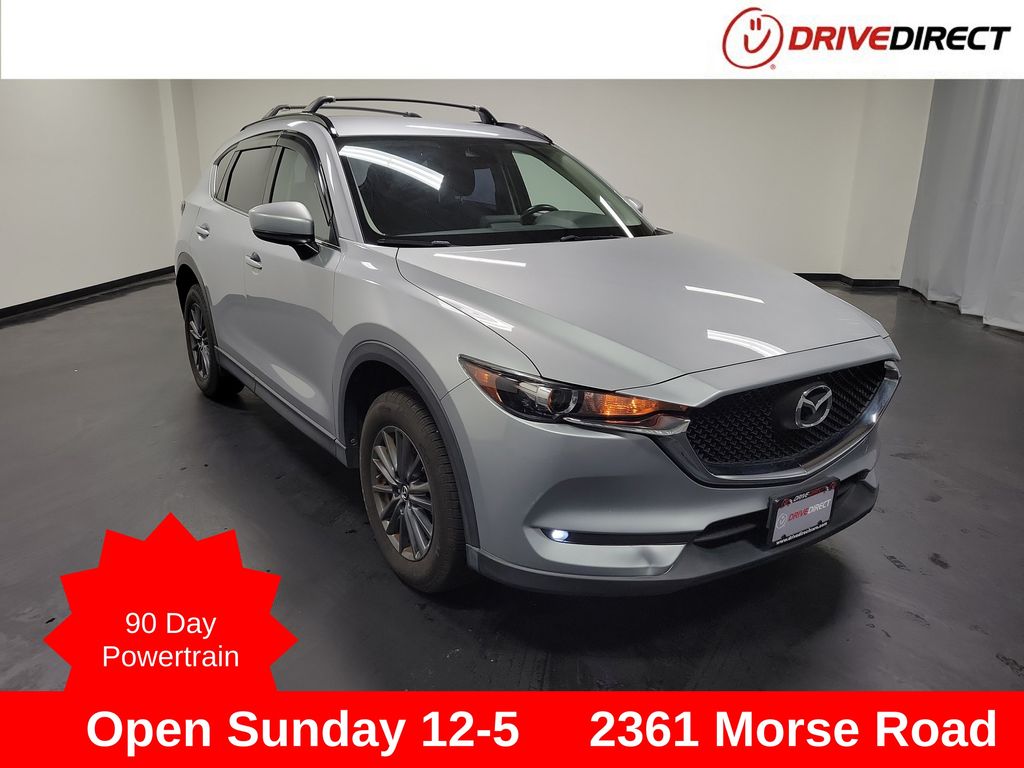


Choose the 2021 Ford Edge if:
- You need more rear-seat headroom and overall interior space.
- You prefer the latest infotainment technology with wireless Apple CarPlay/Android Auto.
- You require higher towing capacity and a performance-oriented ST model.


CarGurus highlights
According to CarGurus experts, the overall rating for the 2020 Mazda CX-5 is 7.7 out of 10, while the 2021 Ford Edge scores 7.2 out of 10. Based on these ratings, the 2020 Mazda CX-5 is the recommended choice, offering a more luxurious interior, engaging driving dynamics, and superior safety ratings.
Choose the 2020 Mazda CX-5 if:
Shop Now- You prioritize a luxurious interior with premium materials.
- You value engaging driving dynamics and responsive handling.
- You seek top-tier safety ratings and comprehensive standard safety features.
Choose the 2021 Ford Edge if:
Shop Now- You need more rear-seat headroom and overall interior space.
- You prefer the latest infotainment technology with wireless Apple CarPlay/Android Auto.
- You require higher towing capacity and a performance-oriented ST model.

By: CarGurus + AI
At CarGurus, our team of experienced automotive writers remain at the heart of our content operation, conducting hands-on car tests and writing insightful guides that are backed by years of industry experience. To complement this, we are harnessing AI to make our content offering more diverse and more helpful to shoppers than ever. To achieve this, our AI systems are based exclusively on CarGurus content, ratings and data, so that what we produce is both unique to CarGurus, and uniquely helpful to car shoppers.

