2020 Subaru WRX vs 2020 Hyundai Elantra

Overview | |
MSRP$19,300 | MSRP$27,495 |
Listings997 | Listings235 |
Ratings & Reviews | |
User Reviews | User Reviews |
Expert reviews8.3 out of 10 | Expert reviews8.3 out of 10 |
Pros
Cons
| Pros
Cons
|
2020 Hyundai Elantra Reviews SummaryHyundai isn’t pulling any punches when it comes to the compact car segment, where value is of utmost importance. And though a completely redesigned 2021 Elantra is coming soon, the automaker bestows several value-enhancing improvements upon the outgoing 2020 Hyundai Elantra compact sedan. They include free scheduled maintenance, improved fuel economy ratings, and new standard safety features. | |
2020 Subaru WRX Reviews SummaryFor many, Subaru is synonymous with camping, skiing, and dog lovers. This active, outdoorsy reputation is one that Subaru has carefully cultivated through the years. But there is another side to the brand and one that is just as critical to its success. Its performance and motorsports efforts helped develop the symmetrical all-wheel-drive system found in nearly every modern Subaru. The 2020 Subaru WRX is the road-going manifestation of decades in world rally racing. The WRX is a home-grown celebration of all the technologies that underpin the lineup of reliable, efficient Subaru wagons, sedans, hatchbacks, and SUVs. But in the WRX these chassis and powertrain innovations are distilled to their hard-driving extremes. Can a four-door, four-cylinder car be a halo car for a brand? When that brand is Subaru, the answer is “yes.” | |
No video found | |
Popular Features & Specs | |
Engine2.0L 147 hp I4 | Engine2.0L 268 hp H4 |
Drive TrainFWD | Drive TrainAWD |
Seating Capacity5 | Seating Capacity5 |
Horsepower147 hp @ 6200 rpm | Horsepower268 hp @ 5600 rpm |
MPG City31 | MPG City21 |
MPG Highway41 | MPG Highway27 |
Engine | |
Engine Name2.0L 147 hp I4 | Engine Name2.0L 268 hp H4 |
Torque132 lb-ft @ 4500 rpm | Torque258 lb-ft @ 2000 rpm |
Horsepower147 hp @ 6200 rpm | Horsepower268 hp @ 5600 rpm |
DrivetrainFWD | DrivetrainAWD |
Fuel Economy | |
MPG City31 | MPG City21 |
MPG Highway41 | MPG Highway27 |
Interior | |
Seating Capacity5 | Seating Capacity5 |
Safety | |
Front Crash Overall4 | Front Crash Overall5 |
Side Crash Overall4 | Side Crash Overall5 |
Dimensions & Capacity | |
Cargo Space14.4 cu ft | Cargo Space12.0 cu ft |
Curb Weight2844 lbs | Curb Weight3294 lbs |
Height56.5 in | Height58.1 in |
Length181.9 in | Length180.9 in |
Width70.9 in | Width78.9 in |
Wheelbase106.3 in | Wheelbase104.3 in |
Maximum Payload1080 lbs | Maximum Payload1115 lbs |
Number of doors4 | Number of doors4 |
Overview | ||
MSRP | $19,300 | $27,495 |
Listings | ||
Ratings & Reviews | ||
User reviews | ||
Expert reviews | 8.3 out of 10Read full review | 8.3 out of 10Read full review |
Pros & cons | Pros
Cons
| Pros
Cons
|
Summary | Hyundai isn’t pulling any punches when it comes to the compact car segment, where value is of utmost importance. And though a completely redesigned 2021 Elantra is coming soon, the automaker bestows several value-enhancing improvements upon the outgoing 2020 Hyundai Elantra compact sedan. They include free scheduled maintenance, improved fuel economy ratings, and new standard safety features. | For many, Subaru is synonymous with camping, skiing, and dog lovers. This active, outdoorsy reputation is one that Subaru has carefully cultivated through the years. But there is another side to the brand and one that is just as critical to its success. Its performance and motorsports efforts helped develop the symmetrical all-wheel-drive system found in nearly every modern Subaru. The 2020 Subaru WRX is the road-going manifestation of decades in world rally racing. The WRX is a home-grown celebration of all the technologies that underpin the lineup of reliable, efficient Subaru wagons, sedans, hatchbacks, and SUVs. But in the WRX these chassis and powertrain innovations are distilled to their hard-driving extremes. Can a four-door, four-cylinder car be a halo car for a brand? When that brand is Subaru, the answer is “yes.” |
Video | No video found | |
Popular Features & Specs | ||
Engine | 2.0L 147 hp I4 | 2.0L 268 hp H4 |
Drive Train | FWD | AWD |
Seating Capacity | 5 | 5 |
Horsepower | 147 hp @ 6200 rpm | 268 hp @ 5600 rpm |
MPG City | 31 | 21 |
MPG Highway | 41 | 27 |
Engine | ||
Engine Name | 2.0L 147 hp I4 | 2.0L 268 hp H4 |
Torque | 132 lb-ft @ 4500 rpm | 258 lb-ft @ 2000 rpm |
Horsepower | 147 hp @ 6200 rpm | 268 hp @ 5600 rpm |
Drivetrain | FWD | AWD |
Fuel Economy | ||
MPG City | 31 | 21 |
MPG Highway | 41 | 27 |
Interior | ||
Seating Capacity | 5 | 5 |
Safety | ||
Front Crash Overall | 4 | 5 |
Side Crash Overall | 4 | 5 |
Dimensions & Capacity | ||
Cargo Space | 14.4 cu ft | 12.0 cu ft |
Curb Weight | 2844 lbs | 3294 lbs |
Height | 56.5 in | 58.1 in |
Length | 181.9 in | 180.9 in |
Width | 70.9 in | 78.9 in |
Wheelbase | 106.3 in | 104.3 in |
Maximum Payload | 1080 lbs | 1115 lbs |
Number of doors | 4 | 4 |
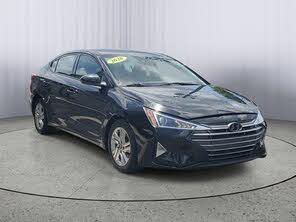
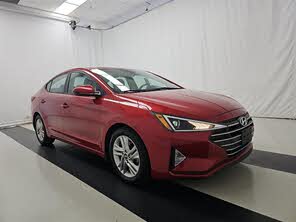
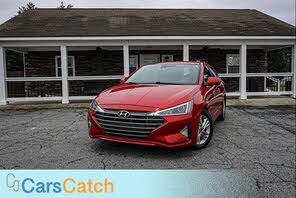
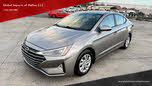
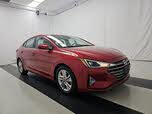
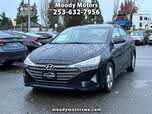
The 2020 Hyundai Elantra, last redesigned in 2017 and restyled in 2019, remained visually unchanged for the 2020 model year. The previous year's restyle introduced a geometric-influenced appearance, setting the stage for the dramatically angular styling of the all-new 2021 Elantra. Available in six versions—SE, SEL, Value Edition, Eco, Limited, and Sport—the Elantra's prices ranged from $19,300 to $24,150. The Limited test vehicle, equipped with the Ultimate Package and floor mats, brought the total to $27,630, including the $975 destination charge. The Elantra GT hatchback was also available for 2020.
A black paint job highlighted the Elantra’s angular headlight, fog light, and wheel designs, contrasting with the chrome grille, beltline, and logo detailing. The result was a stylish small car, though not universally appealing. The interior received an upscale update with silver trim on various elements, but enough hard and glossy plastic remained to remind occupants that it was a mainstream compact car.
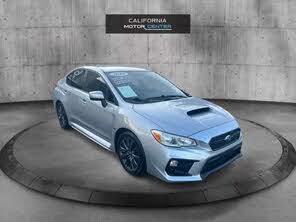
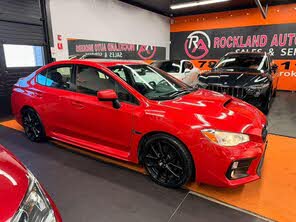
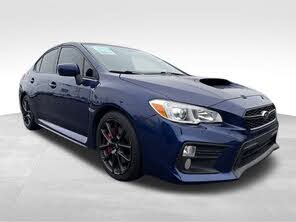
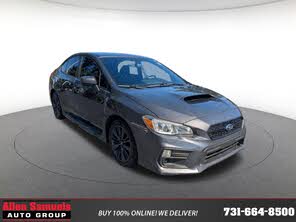
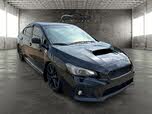
The 2020 Subaru WRX, introduced as a performance variant of the Subaru Impreza in the early 2000s, became its own model in 2015. The 2019 infotainment updates carried over to the 2020 model. The WRX featured a wider stance, lower front splitter, rear deck spoiler, and a large functional air intake, making it the most aggressively styled vehicle in Subaru's lineup. The STI version added a large rear wing and aerodynamic components. Despite its racy touches, the non-STI WRX could be a sleeper, surprising those unaware of its performance capabilities.
Trim levels for the WRX included Base, Premium, and Limited. The Base trim featured 17-inch alloy wheels, automatic climate control, and a 6.5-inch touchscreen infotainment system with Apple CarPlay and Android Auto. The Premium added 18-inch wheels, halogen fog lights, and a larger 7-inch touchscreen. The Limited trim included leather upholstery, push-button start, and a 10-way power-adjustable driver’s seat. The WRX STI, available in STI and Limited trims, featured a 2.5-liter turbocharged engine, Brembo brakes, and a stiffer suspension.


The 2020 Hyundai Elantra came with a base 147-horsepower, 2.0-liter four-cylinder engine paired with a new continuously variable transmission (CVT), replacing the previous six-speed automatic. The CVT, standard with SE trim, contributed to a $1,100 price increase from the previous year. All Elantra models were front-wheel drive. The Elantra Eco featured a turbocharged 1.4-liter four-cylinder engine with 128 horsepower and 156 lb-ft of torque, paired with a seven-speed dual-clutch automatic transmission (DCT) and an automatic engine start/stop system, achieving 36 mpg in combined driving.
The Elantra Sport trim offered a 1.6-liter turbo four-cylinder engine with 201 horsepower and 195 lb-ft of torque, featuring an independent rear suspension for a superior ride. The Sport trim lost its manual gearbox for 2020, making the seven-speed DCT standard. The Elantra Limited test car, with its 2.0-liter engine and new CVT, provided a smooth driving experience, though real-world fuel efficiency fell short of expectations, averaging 29.3 mpg compared to the EPA-rated 34 mpg.
The 2020 Subaru WRX featured a turbocharged and intercooled 2.0-liter boxer-four engine, producing 268 horsepower and 258 lb-ft of torque, paired with a standard six-speed manual transmission or an optional CVT. The CVT included Subaru’s SI-DRIVE with multiple drive modes and paddle shifters with six-speed and eight-speed manual-shift modes. The AWD systems varied based on transmission selection, with the manual offering a 50:50 front:rear torque distribution and the CVT providing a 45:55 front:rear torque-split ratio.
The manual transmission offered precise feedback and a smooth clutch pedal, making the WRX enjoyable to drive. The power delivery was fantastic, with minimal turbo lag and excellent cornering capabilities. The WRX STI, with a 2.5-liter turbocharged engine producing 310 horsepower and 290 lb-ft of torque, featured Brembo brakes and a stiffer suspension for even sharper handling. However, the taut handling resulted in a rough ride, especially on imperfect roads.
The 2020 Hyundai Elantra offered comfortable accommodations for four adults, with a fifth person squeezed in for short trips. The Limited test car featured power driver’s seat adjustment, leather upholstery, and a sliding center console armrest. All Elantra models included a front passenger's seat-height adjuster and a dual-zone automatic climate control system with a Clean Air ionizer and automatic defogging system. Interior storage was well-proportioned, and the trunk provided 14.4 cubic feet of space, nearly as much as some midsize sedans.
The 2020 Subaru WRX’s simple sedan layout provided excellent sightlines, with good rear and side visibility. The large windshield, slanted hood, and quarter windows ensured terrific forward visibility. The cabin featured a straightforward dash layout with easy-to-use controls and plenty of storage compartments. The WRX offered ample first-row seating space and adequate rear-seat space for full-size adults on most trips. The 12 cubic feet of cargo space was low compared to other compact sedans but similar to other performance cars.
The 2020 Hyundai Elantra came standard with a touchscreen infotainment system with Bluetooth and a USB port. The base SE trim featured a 5-inch screen, while the SEL trim included a 7-inch display with Apple CarPlay, Android Auto, and SiriusXM satellite radio. The Value Edition offered a complimentary subscription to Blue Link Connected Car and Remote plans for three years. The Limited trim added wireless smartphone charging and a premium Infinity sound system. The Ultimate Package increased the touchscreen size to 8 inches and added navigation and SiriusXM data services.
The 2020 Subaru WRX featured a standard 6.5-inch infotainment touchscreen, with an available 7-inch screen. The Starlink infotainment system included Apple CarPlay and Android Auto, providing easy navigation between menus. The WRX also had a digital display in the instrument panel and a digital information screen atop the dash, offering key driver information in multiple locations.
The 2020 Hyundai Elantra came standard with Hyundai Smart Sense, a collection of advanced driving assistance systems (ADAS) including forward-collision warning, automatic emergency braking, lane departure warning, lane-keeping assist, and a driver attention monitor. The SEL trim added blind-spot warning and rear cross-traffic alert, while the Limited and Sport trims featured full LED headlights with automatic high-beam operation. The Ultimate Package included adaptive cruise control, pedestrian detection, and Safe Exit Assist. The Elantra earned a Top Safety Pick from the IIHS and a four-star overall rating from the NHTSA.
The 2020 Subaru WRX came standard with front- and side-impact airbags, traction control, and a tire-pressure monitoring system. The EyeSight suite of driver-assistance features, including forward-collision warning, automatic emergency braking, lane-departure warning, automatic high beams, and adaptive cruise control, was optional. Other optional safety features included blind-spot monitoring, rear cross-traffic alert, and reverse automatic emergency braking. The WRX earned top marks from the IIHS and a five-star overall rating from the NHTSA.
CarGurus highlights

According to CarGurus experts, the overall rating for the 2020 Hyundai Elantra is 8.3 out of 10, while the 2020 Subaru WRX scores 8.3 out of 10. Both cars offer unique strengths, but if you prioritize performance and driving engagement, the Subaru WRX is the better choice. For those seeking a more practical and fuel-efficient compact car with advanced safety features, the Hyundai Elantra is a solid option.
Choose the 2020 Subaru WRX if:
- You seek a performance-oriented vehicle with excellent handling and power delivery.
- You prefer a manual transmission for a more engaging driving experience.
- You need a car with all-wheel drive for better traction and stability.






Choose the 2020 Hyundai Elantra if:
- You prioritize fuel efficiency and a smooth driving experience.
- You want a compact car with a spacious interior and ample trunk space.
- You value advanced safety features and a high safety rating.






CarGurus highlights
According to CarGurus experts, the overall rating for the 2020 Hyundai Elantra is 8.3 out of 10, while the 2020 Subaru WRX scores 8.3 out of 10. Both cars offer unique strengths, but if you prioritize performance and driving engagement, the Subaru WRX is the better choice. For those seeking a more practical and fuel-efficient compact car with advanced safety features, the Hyundai Elantra is a solid option.
Choose the 2020 Subaru WRX if:
Shop Now- You seek a performance-oriented vehicle with excellent handling and power delivery.
- You prefer a manual transmission for a more engaging driving experience.
- You need a car with all-wheel drive for better traction and stability.








Choose the 2020 Hyundai Elantra if:
Shop Now- You prioritize fuel efficiency and a smooth driving experience.
- You want a compact car with a spacious interior and ample trunk space.
- You value advanced safety features and a high safety rating.





By: CarGurus + AI
At CarGurus, our team of experienced automotive writers remain at the heart of our content operation, conducting hands-on car tests and writing insightful guides that are backed by years of industry experience. To complement this, we are harnessing AI to make our content offering more diverse and more helpful to shoppers than ever. To achieve this, our AI systems are based exclusively on CarGurus content, ratings and data, so that what we produce is both unique to CarGurus, and uniquely helpful to car shoppers.