2020 Dodge Charger vs 2020 Hyundai Elantra

Overview | |
MSRP$19,300 | MSRP$29,995 |
Listings1045 | Listings769 |
Ratings & Reviews | |
User Reviews | User Reviews |
Expert reviews8.3 out of 10 | Expert reviews8.5 out of 10 |
Pros
Cons
| Pros
Cons
|
2020 Hyundai Elantra Reviews SummaryHyundai isn’t pulling any punches when it comes to the compact car segment, where value is of utmost importance. And though a completely redesigned 2021 Elantra is coming soon, the automaker bestows several value-enhancing improvements upon the outgoing 2020 Hyundai Elantra compact sedan. They include free scheduled maintenance, improved fuel economy ratings, and new standard safety features. | |
2020 Dodge Charger Reviews SummaryThe Dodge Charger represents an all-in-one approach to modern performance. Unlike its Challenger coupe counterpart, the Charger is a sedan, providing the usability of four full doors and five-passenger seating. It offers a wide variety of potent powertrains, as well as the availability of all-wheel drive (AWD). The Charger also provides the latest tech and infotainment features. It may be a classic nameplate, but it is a very different approach to the family sedan. This also makes it a breath of fresh air in the modern sedan market. Thanks to its wide variety of performance models, the Charger's exact competition is hard to pin down. V6-powered versions like the SXT and GT compete with the likes of the Toyota Avalon, Nissan Maxima, and Chevrolet Impala. But the available performance on tap with R/T and Hellcat models opens it up to a world of sports cars and muscle cars. Which model you select determines its rivals. No matter the trim selected, the Charger provides a baseline of athleticism paired with a spacious cabin, large rear seats, and a large trunk. Together, these make the Charger a fun and functional new car, with styling that helps it stand out in a crowd. | |
No video found | No video found |
Popular Features & Specs | |
Engine2.0L 147 hp I4 | Engine3.6L 292 hp V6 |
Drive TrainFWD | Drive TrainRWD |
Seating Capacity5 | Seating Capacity5 |
Horsepower147 hp @ 6200 rpm | Horsepower292 hp @ 6350 rpm |
MPG City31 | MPG City19 |
MPG Highway41 | MPG Highway30 |
Engine | |
Engine Name2.0L 147 hp I4 | Engine Name3.6L 292 hp V6 |
Torque132 lb-ft @ 4500 rpm | Torque260 lb-ft @ 4800 rpm |
Horsepower147 hp @ 6200 rpm | Horsepower292 hp @ 6350 rpm |
DrivetrainFWD | DrivetrainRWD |
Fuel Economy | |
MPG City31 | MPG City19 |
MPG Highway41 | MPG Highway30 |
Interior | |
Seating Capacity5 | Seating Capacity5 |
Safety | |
Front Crash Overall4 | Front Crash Overall4 |
Side Crash Overall4 | Side Crash Overall5 |
Dimensions & Capacity | |
Cargo Space14.4 cu ft | Cargo Space16.5 cu ft |
Curb Weight2844 lbs | Curb Weight3964 lbs |
Height56.5 in | Height57.8 in |
Length181.9 in | Length198.4 in |
Width70.9 in | Width82.7 in |
Wheelbase106.3 in | Wheelbase120.0 in |
Maximum Payload1080 lbs | Maximum Payload1136 lbs |
Number of doors4 | Number of doors4 |
Maximum Towing Capacity | Maximum Towing Capacity1000 lbs |
Overview | ||
MSRP | $19,300 | $29,995 |
Listings | ||
Ratings & Reviews | ||
User reviews | ||
Expert reviews | 8.3 out of 10Read full review | 8.5 out of 10Read full review |
Pros & cons | Pros
Cons
| Pros
Cons
|
Summary | Hyundai isn’t pulling any punches when it comes to the compact car segment, where value is of utmost importance. And though a completely redesigned 2021 Elantra is coming soon, the automaker bestows several value-enhancing improvements upon the outgoing 2020 Hyundai Elantra compact sedan. They include free scheduled maintenance, improved fuel economy ratings, and new standard safety features. | The Dodge Charger represents an all-in-one approach to modern performance. Unlike its Challenger coupe counterpart, the Charger is a sedan, providing the usability of four full doors and five-passenger seating. It offers a wide variety of potent powertrains, as well as the availability of all-wheel drive (AWD). The Charger also provides the latest tech and infotainment features. It may be a classic nameplate, but it is a very different approach to the family sedan. This also makes it a breath of fresh air in the modern sedan market. Thanks to its wide variety of performance models, the Charger's exact competition is hard to pin down. V6-powered versions like the SXT and GT compete with the likes of the Toyota Avalon, Nissan Maxima, and Chevrolet Impala. But the available performance on tap with R/T and Hellcat models opens it up to a world of sports cars and muscle cars. Which model you select determines its rivals. No matter the trim selected, the Charger provides a baseline of athleticism paired with a spacious cabin, large rear seats, and a large trunk. Together, these make the Charger a fun and functional new car, with styling that helps it stand out in a crowd. |
Video | No video found | No video found |
Popular Features & Specs | ||
Engine | 2.0L 147 hp I4 | 3.6L 292 hp V6 |
Drive Train | FWD | RWD |
Seating Capacity | 5 | 5 |
Horsepower | 147 hp @ 6200 rpm | 292 hp @ 6350 rpm |
MPG City | 31 | 19 |
MPG Highway | 41 | 30 |
Engine | ||
Engine Name | 2.0L 147 hp I4 | 3.6L 292 hp V6 |
Torque | 132 lb-ft @ 4500 rpm | 260 lb-ft @ 4800 rpm |
Horsepower | 147 hp @ 6200 rpm | 292 hp @ 6350 rpm |
Drivetrain | FWD | RWD |
Fuel Economy | ||
MPG City | 31 | 19 |
MPG Highway | 41 | 30 |
Interior | ||
Seating Capacity | 5 | 5 |
Safety | ||
Front Crash Overall | 4 | 4 |
Side Crash Overall | 4 | 5 |
Dimensions & Capacity | ||
Cargo Space | 14.4 cu ft | 16.5 cu ft |
Curb Weight | 2844 lbs | 3964 lbs |
Height | 56.5 in | 57.8 in |
Length | 181.9 in | 198.4 in |
Width | 70.9 in | 82.7 in |
Wheelbase | 106.3 in | 120.0 in |
Maximum Payload | 1080 lbs | 1136 lbs |
Number of doors | 4 | 4 |
Maximum Towing Capacity | 1000 lbs | |
The 2020 Hyundai Elantra, last redesigned in 2017 and restyled in 2019, remained visually unchanged for the 2020 model year. The previous year's restyle introduced a geometric-influenced appearance, setting the stage for the dramatically angular styling of the all-new 2021 Elantra. Available in six versions—SE, SEL, Value Edition, Eco, Limited, and Sport—the Elantra's prices ranged from $19,300 to $24,150. The Limited test vehicle, equipped with the Ultimate Package and floor mats, brought the total to $27,630, including the $975 destination charge. The Elantra GT hatchback was also available for 2020.
A black paint job highlighted the Elantra’s angular headlight, fog light, and wheel designs, contrasting sharply with the chrome grille, beltline, and logo detailing. The result was a stylish small car, though not universally appealing. The interior received an upscale update with silver trim on various elements, but enough hard and glossy plastic remained to remind occupants that this was a mainstream compact car.
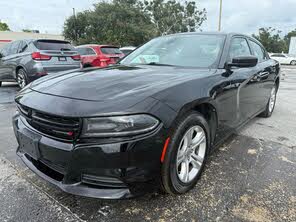
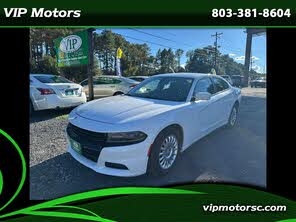
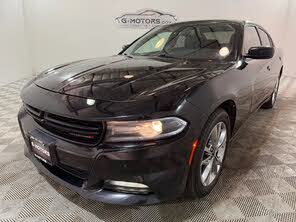
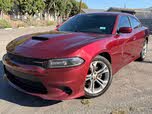
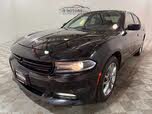
Dodge resurrected the Charger name in 2006 with a modern take on the muscle car silhouette, featuring menacing headlights and a gaping grille. The current-generation car arrived in 2011, with a major facelift in 2015 that aligned with Dodge's identity as a purveyor of modern American performance. The 2015 update replaced the large grille with a thin inlet and significantly altered the headlights, enhancing the "menacing" theme.
The Charger's cabin honored its retro theme while blending old and new. Large vintage-looking bezels housed modern digital displays, and the rear-wheel-drive platform required a raised transmission tunnel, creating a cockpit-like feel for the driver and front passenger. Trim levels for the 2020 Charger included SXT, GT, R/T, and Hellcat, with further sub-trims for the R/T and Hellcat versions. The SXT came standard with 17-inch alloy wheels, remote start, push-button start, power-adjustable front seats, rear parking sensors, and a 7-inch touchscreen infotainment system. The GT trim added visual touches like 20-inch wheels, a more pronounced lower front spoiler, rear trunk lip spoiler, and a hood scoop, along with dual-zone climate control, a WiFi hotspot, HD radio, and a larger 8.4-inch infotainment screen. The R/T and GT shared many visual cues and cabin features, but the GT had the added benefit of a V8 engine. The Charger Hellcat featured the largest engine in the lineup, leather upholstery, heated and ventilated front seats, heated rear seats, and safety features like blind-spot monitoring. The Hellcat also came with a widebody kit, available for the R/T Scat Pack, featuring more pronounced fenders and wider wheels and tires.


The 2020 Hyundai Elantra featured a base 147-horsepower, 2.0-liter four-cylinder engine paired with a new continuously variable transmission (CVT), replacing the previous six-speed automatic. The CVT, standard with SE trim, contributed to a $1,100 price increase from the previous year. All Elantra models were front-wheel drive. The Elantra Eco had a turbocharged 1.4-liter four-cylinder engine producing 128 horsepower and 156 lb-ft of torque, paired with a seven-speed dual-clutch automatic transmission (DCT) and an automatic engine start/stop system, achieving 36 mpg in combined driving. The Elantra Sport trim featured a 1.6-liter turbo four-cylinder engine making 201 horsepower and 195 lb-ft of torque, with a seven-speed DCT and an independent rear suspension for improved ride quality.
The Elantra Limited test car, with its 2.0-liter engine and new CVT, provided a satisfactory driving experience. The CVT, dubbed an “Intelligent Variable Transmission,” employed a chain belt and a wide-ratio pulley system for greater efficiency and improved low-end responsiveness. However, real-world fuel economy fell short, averaging 29.3 mpg compared to the expected 34 mpg. The Elantra's torsion beam axle rear suspension detracted from ride and handling, giving the car an unsettled feeling. The Elantra Sport's independent rear suspension offered a superior ride and more enjoyable driving experience.
The 2020 Dodge Charger offered various powertrain options. The SXT and GT trims featured a 3.6-liter V6 engine, producing 292 horsepower in the SXT and 300 horsepower in the GT, both paired with an 8-speed automatic transmission. The R/T trim came with a 5.7-liter Hemi V8, delivering 370 horsepower and 395 lb-ft of torque, with an upgraded performance suspension and active exhaust. The R/T Scat Pack featured a 6.4-liter Hemi V8 making 485 horsepower and 475 lb-ft of torque, with Brembo high-performance disc brakes and launch assist. The Charger SRT Hellcat Widebody boasted a supercharged 6.2-liter V8, producing 707 horsepower and 650 lb-ft of torque.
The Charger lineup provided a range of performance options, from the base V6 to the powerful Hellcat. The widebody models featured Bilstein adaptive suspension, enhancing cornering precision. The Brembo brakes were essential for managing the Charger's weight, contributing to its dialed-in approach to cornering. The Performance Pages system allowed for detailed monitoring and customization of the vehicle's performance, including lap times, acceleration runs, and drive modes.
The 2020 Hyundai Elantra offered comfortable accommodations for four adults, with a fifth person squeezed in for short trips. The Limited test car featured power driver’s seat adjustment, leather upholstery, and a sliding center console armrest. Every Elantra included a front passenger's seat-height adjuster and a dual-zone automatic climate control system with a Clean Air ionizer and automatic defogging system. Heated front seats were available on all but the SE and SEL trims. Interior storage was well-proportioned, and the trunk provided 14.4 cubic feet of space, nearly as much as some midsize sedans. An interior grab handle inside the trunk lid made it easy to swing shut.
The 2020 Dodge Charger offered ample space, with plenty of legroom for rear passengers. The driver and front passenger enjoyed well-bolstered front bucket seats and generous head- and legroom. The doors featured trays and cup holders, and the center console provided quick and easy storage solutions. The Charger boasted a large trunk, displacing 16.5 cubic feet, with a 60/40 split-fold rear bench for additional storage space.
The 2020 Hyundai Elantra came standard with a touchscreen infotainment system with Bluetooth and a USB port. The base SE trim featured a 5-inch screen, while the SEL trim upgraded to a 7-inch display with Apple CarPlay, Android Auto, and SiriusXM satellite radio. The Value Edition included a complimentary subscription to Blue Link Connected Car and Remote plans for the first three years. The Limited trim added wireless smartphone charging and a premium Infinity sound system. The Ultimate Package increased the touchscreen size to 8 inches and added navigation, Blue Link Guidance service, and SiriusXM data services. The Sport trim offered similar upgrades, packaged differently.
The 2020 Dodge Charger featured a 7-inch touchscreen infotainment system as standard, with an 8.4-inch screen available on higher trims. Both screen sizes ran FCA's Uconnect infotainment system, which included Bluetooth, USB connectivity, available satellite radio, HD radio, Apple CarPlay, and Android Auto. The system's simplicity and logical menu layout made it user-friendly, with docked icons for quick access to various functions. The standard digital display screen at the center of the instrument panel allowed for easy cycling through functions like a trip computer, digital speedometer, vehicle settings, radio station, and phone call information.
The 2020 Hyundai Elantra came standard with Hyundai Smart Sense, a collection of advanced driving assistance systems (ADAS) including forward-collision warning, automatic emergency braking, lane departure warning, lane-keeping assist, and a driver attention monitor. Starting with SEL trim, the Elantra included blind-spot warning and rear cross-traffic alert. The Limited and Sport trims featured full LED headlights with automatic high-beam operation. The Ultimate Package added adaptive cruise control, a pedestrian detection system, and Safe Exit Assist. The Elantra earned a Top Safety Pick from the Insurance Institute for Highway Safety (IIHS) when equipped with full LED headlights and received an overall rating of four stars from the National Highway Traffic Safety Administration (NHTSA).
The 2020 Dodge Charger included standard safety features such as front- and side-impact airbags, traction control, and rear parking sensors. Available safety features included forward-collision avoidance with automatic emergency braking, lane-departure warning, lane-keeping assist, adaptive cruise control, and automatic high-beams. Other options included blind-spot monitoring, rear cross-traffic alert, and rain-sensing windshield wipers. The Charger's crash prevention technology earned the highest score of Superior from the IIHS.
CarGurus highlights
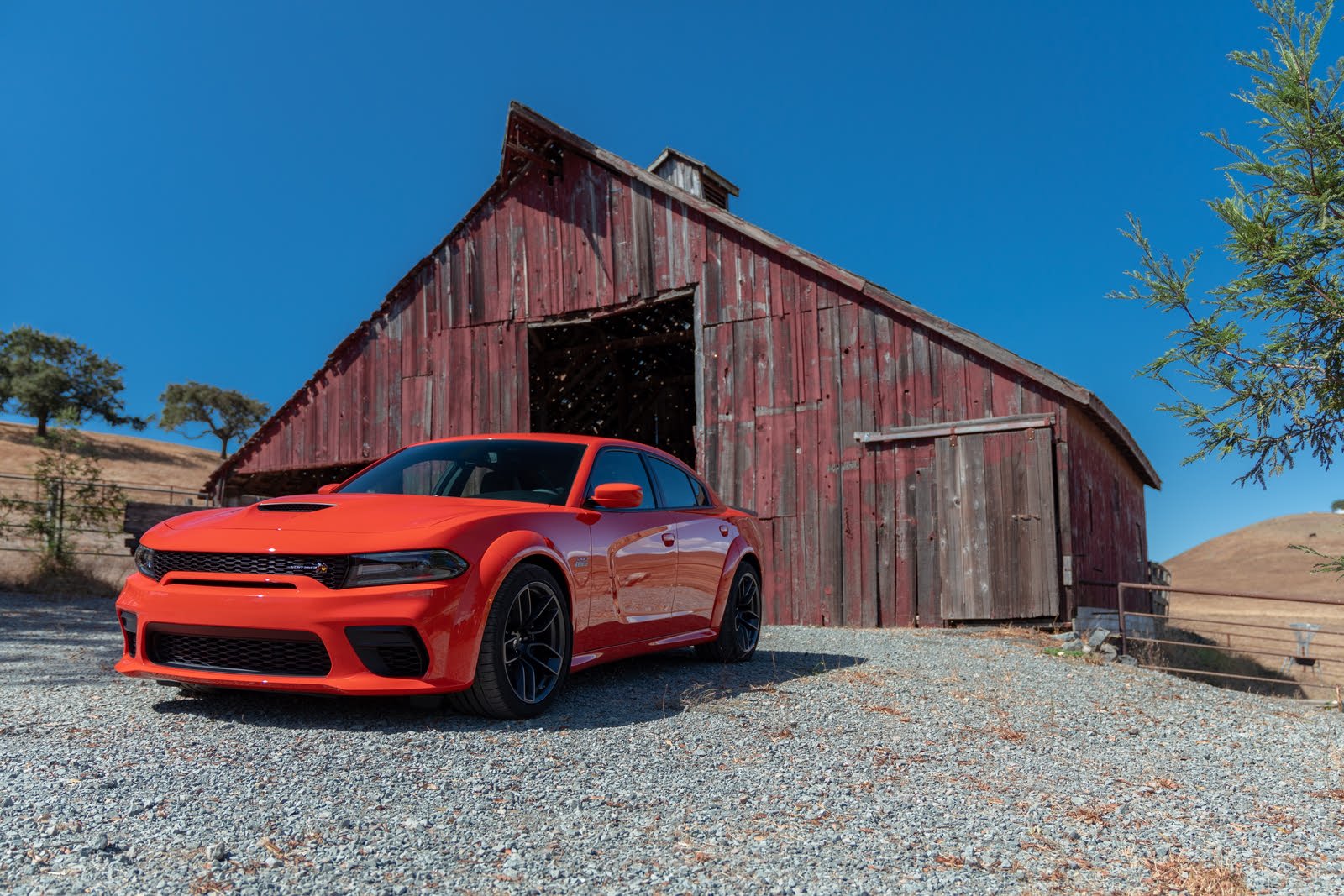
According to CarGurus experts, the overall rating for the 2020 Hyundai Elantra is 8.3 out of 10, while the 2020 Dodge Charger scores 8.5 out of 10. Based on these ratings, the 2020 Dodge Charger is the recommended choice, offering superior performance, spaciousness, and advanced technology features.
Choose the 2020 Dodge Charger if:
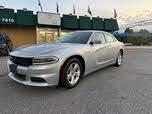
- You seek a powerful performance sedan with multiple engine options.
- You need a spacious interior with ample legroom and trunk space.
- You appreciate a user-friendly infotainment system with advanced customization options.




Choose the 2020 Hyundai Elantra if:
- You prioritize fuel efficiency and a lower starting price.
- You want a compact car with a comfortable and well-equipped interior.
- You value advanced safety features as standard equipment.


CarGurus highlights
According to CarGurus experts, the overall rating for the 2020 Hyundai Elantra is 8.3 out of 10, while the 2020 Dodge Charger scores 8.5 out of 10. Based on these ratings, the 2020 Dodge Charger is the recommended choice, offering superior performance, spaciousness, and advanced technology features.
Choose the 2020 Dodge Charger if:
Shop Now- You seek a powerful performance sedan with multiple engine options.
- You need a spacious interior with ample legroom and trunk space.
- You appreciate a user-friendly infotainment system with advanced customization options.






Choose the 2020 Hyundai Elantra if:
Shop Now- You prioritize fuel efficiency and a lower starting price.
- You want a compact car with a comfortable and well-equipped interior.
- You value advanced safety features as standard equipment.










By: CarGurus + AI
At CarGurus, our team of experienced automotive writers remain at the heart of our content operation, conducting hands-on car tests and writing insightful guides that are backed by years of industry experience. To complement this, we are harnessing AI to make our content offering more diverse and more helpful to shoppers than ever. To achieve this, our AI systems are based exclusively on CarGurus content, ratings and data, so that what we produce is both unique to CarGurus, and uniquely helpful to car shoppers.