2021 Dodge Charger vs 2020 Dodge Charger
Overview | |
MSRP$29,995 | MSRP$31,125 |
Listings225 | Listings255 |
Ratings & Reviews | |
User Reviews | User Reviews |
Expert reviews8.5 out of 10 | Expert reviews7.8 out of 10 |
Pros
Cons
| Pros
Cons
|
2020 Dodge Charger Reviews SummaryThe Dodge Charger represents an all-in-one approach to modern performance. Unlike its Challenger coupe counterpart, the Charger is a sedan, providing the usability of four full doors and five-passenger seating. It offers a wide variety of potent powertrains, as well as the availability of all-wheel drive (AWD). The Charger also provides the latest tech and infotainment features. It may be a classic nameplate, but it is a very different approach to the family sedan. This also makes it a breath of fresh air in the modern sedan market. Thanks to its wide variety of performance models, the Charger's exact competition is hard to pin down. V6-powered versions like the SXT and GT compete with the likes of the Toyota Avalon, Nissan Maxima, and Chevrolet Impala. But the available performance on tap with R/T and Hellcat models opens it up to a world of sports cars and muscle cars. Which model you select determines its rivals. No matter the trim selected, the Charger provides a baseline of athleticism paired with a spacious cabin, large rear seats, and a large trunk. Together, these make the Charger a fun and functional new car, with styling that helps it stand out in a crowd. | |
2021 Dodge Charger Reviews SummaryWhen it comes to American muscle cars, few do it better than the Dodge Charger. It’s a unique breed—new four-door muscle cars just aren’t sold in the United States. anymore. There is a new track-ready variant for the 2021 model year that pushes the limits of the car’s Hellcat V8 engine. Tamer versions of the car offer less horsepower but can still fit three car seats across the back of the car’s roomy cabin and have accommodations comfortable enough to make it a daily driver. | |
No video found | No video found |
Popular Features & Specs | |
Engine3.6L 292 hp V6 | Engine3.6L 292 hp V6 |
DrivetrainRWD | DrivetrainRWD |
Seating Capacity5 | Seating Capacity5 |
Horsepower292 hp @ 6350 rpm | Horsepower292 hp @ 6350 rpm |
MPG City19 | MPG City19 |
MPG Highway30 | MPG Highway30 |
Engine | |
Engine Name3.6L 292 hp V6 | Engine Name3.6L 292 hp V6 |
Torque260 lb-ft @ 4800 rpm | Torque260 lb-ft @ 4800 rpm |
Horsepower292 hp @ 6350 rpm | Horsepower292 hp @ 6350 rpm |
DrivetrainRWD | DrivetrainRWD |
Fuel Economy | |
MPG City19 | MPG City19 |
MPG Highway30 | MPG Highway30 |
Interior | |
Seating Capacity5 | Seating Capacity5 |
Safety | |
Front Crash Overall4 | Front Crash Overall4 |
Side Crash Overall5 | Side Crash Overall5 |
Dimensions & Capacity | |
Cargo Space16.5 cu ft | Cargo Space16.5 cu ft |
Curb Weight3964 lbs | Curb Weight3957 lbs |
Height57.8 in | Height57.8 in |
Length198.4 in | Length198.4 in |
Width82.7 in | Width82.7 in |
Wheelbase120.0 in | Wheelbase120.0 in |
Maximum Payload1136 lbs | Maximum Payload1143 lbs |
Number of doors4 | Number of doors4 |
Maximum Towing Capacity1000 lbs | Maximum Towing Capacity1000 lbs |
Overview | ||
MSRP | $29,995 | $31,125 |
Listings | ||
Ratings & Reviews | ||
User reviews | ||
Expert reviews | 8.5 out of 10Read full review | 7.8 out of 10Read full review |
Pros & cons | Pros
Cons
| Pros
Cons
|
Summary | The Dodge Charger represents an all-in-one approach to modern performance. Unlike its Challenger coupe counterpart, the Charger is a sedan, providing the usability of four full doors and five-passenger seating. It offers a wide variety of potent powertrains, as well as the availability of all-wheel drive (AWD). The Charger also provides the latest tech and infotainment features. It may be a classic nameplate, but it is a very different approach to the family sedan. This also makes it a breath of fresh air in the modern sedan market. Thanks to its wide variety of performance models, the Charger's exact competition is hard to pin down. V6-powered versions like the SXT and GT compete with the likes of the Toyota Avalon, Nissan Maxima, and Chevrolet Impala. But the available performance on tap with R/T and Hellcat models opens it up to a world of sports cars and muscle cars. Which model you select determines its rivals. No matter the trim selected, the Charger provides a baseline of athleticism paired with a spacious cabin, large rear seats, and a large trunk. Together, these make the Charger a fun and functional new car, with styling that helps it stand out in a crowd. | When it comes to American muscle cars, few do it better than the Dodge Charger. It’s a unique breed—new four-door muscle cars just aren’t sold in the United States. anymore. There is a new track-ready variant for the 2021 model year that pushes the limits of the car’s Hellcat V8 engine. Tamer versions of the car offer less horsepower but can still fit three car seats across the back of the car’s roomy cabin and have accommodations comfortable enough to make it a daily driver. |
Video | No video found | No video found |
Popular Features & Specs | ||
Engine | 3.6L 292 hp V6 | 3.6L 292 hp V6 |
Drivetrain | RWD | RWD |
Seating Capacity | 5 | 5 |
Horsepower | 292 hp @ 6350 rpm | 292 hp @ 6350 rpm |
MPG City | 19 | 19 |
MPG Highway | 30 | 30 |
Engine | ||
Engine Name | 3.6L 292 hp V6 | 3.6L 292 hp V6 |
Torque | 260 lb-ft @ 4800 rpm | 260 lb-ft @ 4800 rpm |
Horsepower | 292 hp @ 6350 rpm | 292 hp @ 6350 rpm |
Drivetrain | RWD | RWD |
Fuel Economy | ||
MPG City | 19 | 19 |
MPG Highway | 30 | 30 |
Interior | ||
Seating Capacity | 5 | 5 |
Safety | ||
Front Crash Overall | 4 | 4 |
Side Crash Overall | 5 | 5 |
Dimensions & Capacity | ||
Cargo Space | 16.5 cu ft | 16.5 cu ft |
Curb Weight | 3964 lbs | 3957 lbs |
Height | 57.8 in | 57.8 in |
Length | 198.4 in | 198.4 in |
Width | 82.7 in | 82.7 in |
Wheelbase | 120.0 in | 120.0 in |
Maximum Payload | 1136 lbs | 1143 lbs |
Number of doors | 4 | 4 |
Maximum Towing Capacity | 1000 lbs | 1000 lbs |
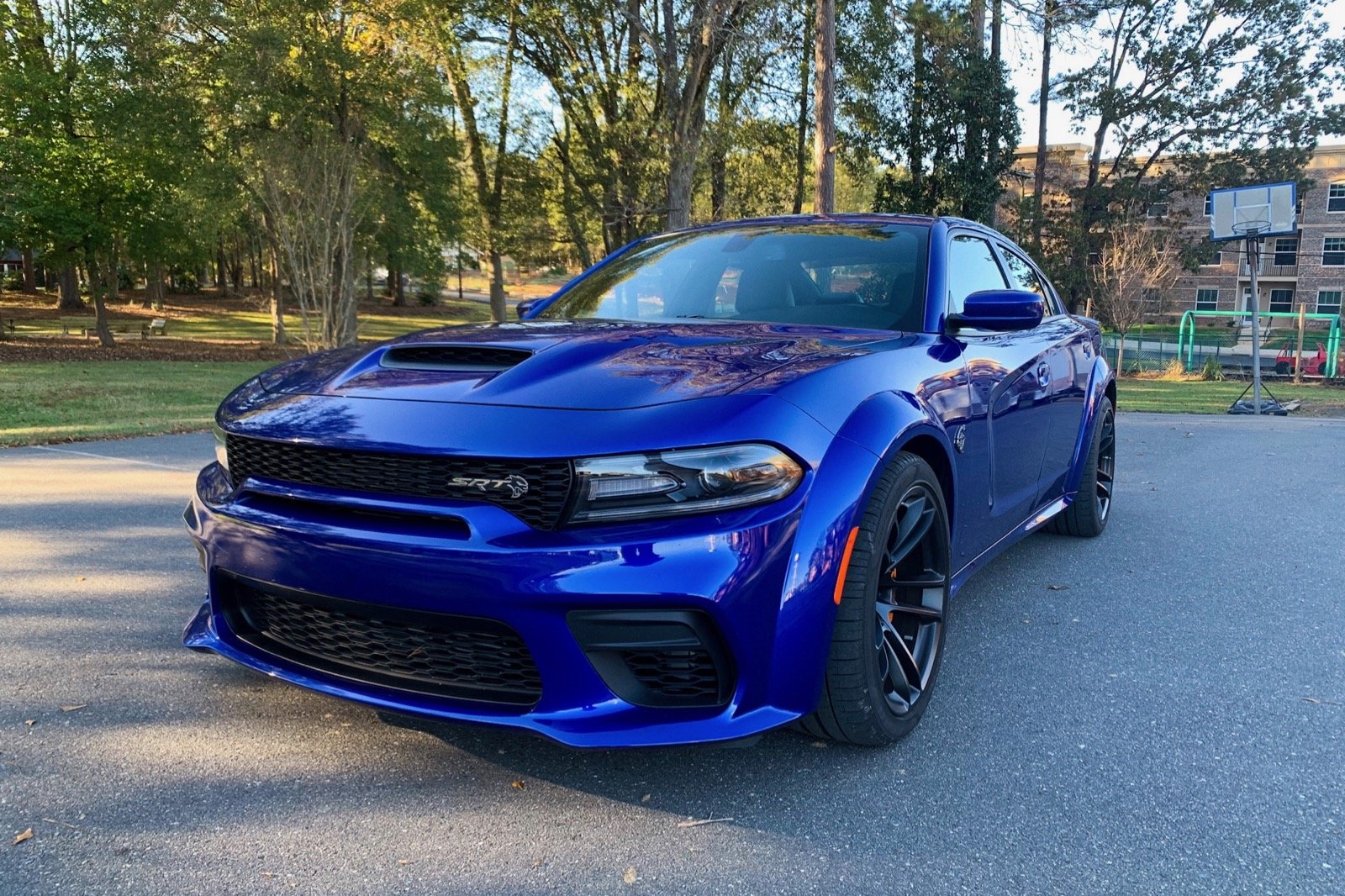
The 2020 Dodge Charger continued to embody the modern muscle car aesthetic that Dodge had been refining since the model's reintroduction in 2006. With its aggressive headlights and distinctive grille, the Charger maintained a menacing presence on the road. The 2015 facelift had introduced a sleeker front end with a thin inlet and a more pronounced lower grille, enhancing its bold look. Inside, the Charger combined retro elements with modern technology, featuring large bezels housing digital displays and a cockpit-like feel due to its raised transmission tunnel. The 2020 model offered various trims, each with unique features, from the base SXT with its 17-inch wheels and 7-inch touchscreen to the high-performance Hellcat with its widebody kit and leather upholstery.
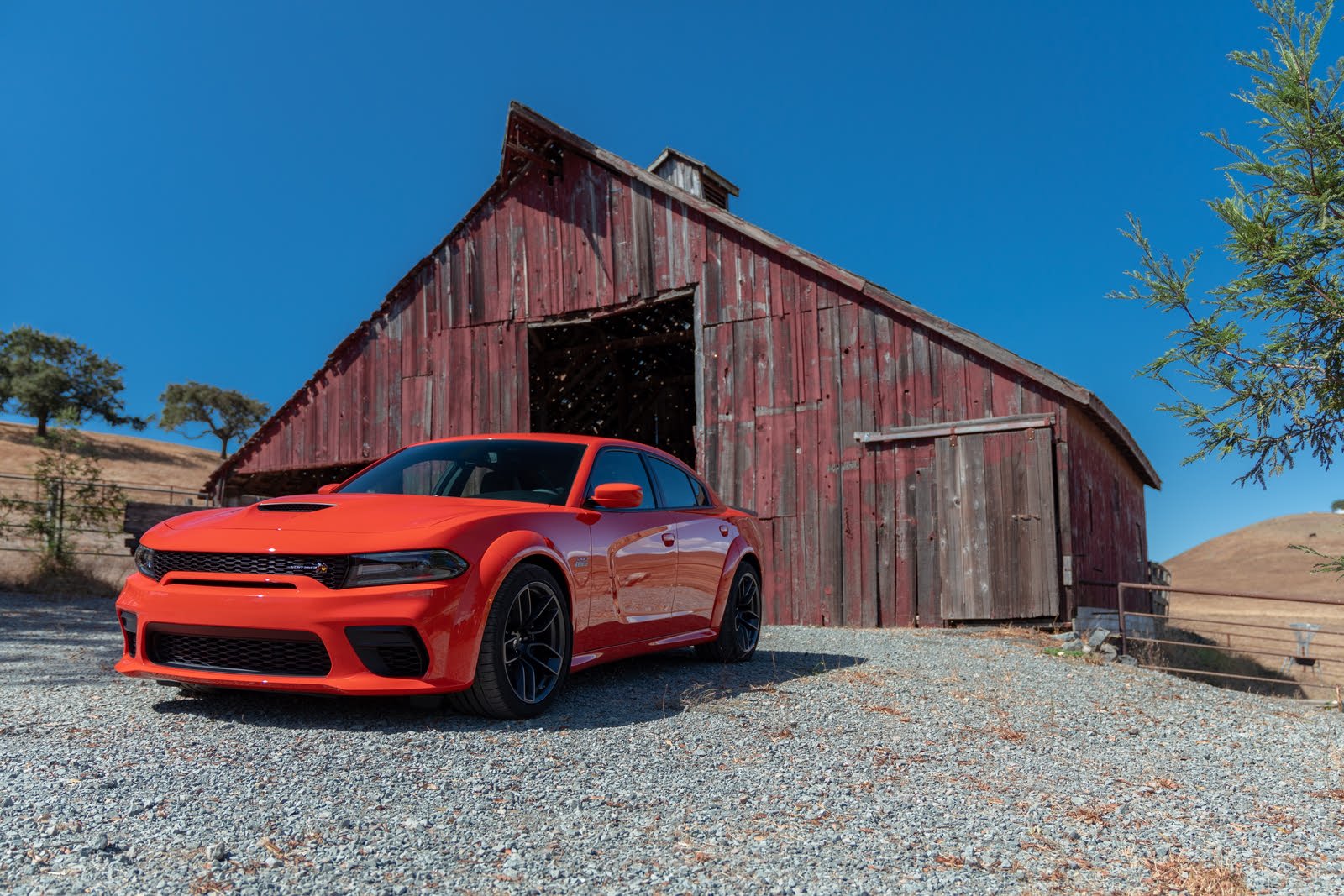
In contrast, the 2021 Dodge Charger retained much of the same design language that had defined the model for a decade. The exterior offered subtle differences between trims, with options for widebody styling and various wheel and brake configurations. The interior, while updated over the years, still lacked some modern comforts and conveniences, with a fair amount of hard plastic and rubberized surfaces. The 2021 model lineup was extensive, including the powerful SRT Hellcat Redeye, which boasted a supercharged engine and a more aggressive stance. Despite its dated technology, the Charger remained a popular choice for those seeking a blend of performance and practicality.


The 2020 Dodge Charger offered a range of powertrains to suit different driving preferences. The SXT and GT trims were equipped with a 3.6-liter V6 engine, producing 292 and 300 horsepower, respectively. Both models featured an 8-speed automatic transmission and optional all-wheel drive. The R/T trim stepped up the performance with a 5.7-liter Hemi V8, delivering 370 horsepower and 395 lb-ft of torque, along with an upgraded suspension and active exhaust. The R/T Scat Pack took it further with a 6.4-liter Hemi V8, generating 485 horsepower and 475 lb-ft of torque, complemented by Brembo brakes and launch assist. The pinnacle of the lineup, the Charger SRT Hellcat, boasted a supercharged 6.2-liter V8 with 707 horsepower, offering exhilarating acceleration and precise handling thanks to its Bilstein adaptive suspension and widebody design.
The 2021 Dodge Charger continued to impress with its performance capabilities. The SXT and GT models shared the same 3.6-liter V6 engine, providing up to 300 horsepower and 264 lb-ft of torque. The R/T trim featured a 5.7-liter HEMI V8, offering 370 horsepower and a towing capacity of 1,000 pounds. The Scat Pack models retained the 6.4-liter HEMI V8, delivering 485 horsepower. The SRT Hellcat upped the ante with a supercharged 6.2-liter HEMI V8, producing 717 horsepower, while the SRT Hellcat Redeye pushed the limits with 797 horsepower and 707 lb-ft of torque. Despite its power, the Redeye managed to balance performance with drivability, though it was the least fuel-efficient option. The 2021 Charger offered configurable drive modes and Performance Pages for in-depth vehicle adjustments, ensuring a connected driving experience.
The 2020 Dodge Charger stood out among high-horsepower sedans for its spacious interior. Unlike many performance sedans, the Charger provided ample legroom in the rear seats, making it a practical choice for families. The front seats were well-bolstered, offering plenty of head- and legroom for the driver and passenger. The cabin featured convenient storage solutions, including door trays, cup holders, and a large center console. The trunk was notably large, with 16.5 cubic feet of space, and the 60/40 split-fold rear bench allowed for additional storage flexibility.
The 2021 Dodge Charger continued to offer a spacious interior, accommodating up to five passengers comfortably. While the technology in the cabin was somewhat dated, the instrument cluster varied by model, reflecting the car's top speed. The steering wheel was functional, with easy-to-reach buttons, and paddle shifters were available on most trims. The rear seats featured a 60/40 split-folding design, expanding the already generous trunk space. Overall, the Charger provided average cargo space compared to other large sedans, balancing performance with practicality.
The 2020 Dodge Charger came equipped with a 7-inch touchscreen infotainment system as standard, with higher trims featuring an 8.4-inch screen. Both sizes utilized FCA's Uconnect system, known for its user-friendly interface. The system included Bluetooth, USB connectivity, satellite radio, Apple CarPlay, and Android Auto. The intuitive menu layout allowed for easy navigation, with docked icons providing quick access to various functions. The digital display in the instrument panel offered additional information, such as trip data and navigation directions, enhancing the driving experience.
In 2021, the Dodge Charger offered a basic set of standard features, including a 7-inch infotainment touchscreen, push-button start, and a rearview camera. Buyers could upgrade to an 8.4-inch screen and add features like a sunroof, dual-zone climate control, and premium audio systems. While the Uconnect system was easy to use, some functions were buried in menus, and the lack of a head-up display made navigation less convenient. Despite these limitations, the Charger provided a range of technology options to suit different preferences.
The 2020 Dodge Charger included standard safety features such as front- and side-impact airbags, traction control, and rear parking sensors. Optional safety technologies included forward-collision avoidance, lane-departure warning, adaptive cruise control, and blind-spot monitoring. The Charger's crash prevention technology received a "Superior" rating from the IIHS, though many of these features were optional rather than standard.
For 2021, the Dodge Charger had not been crash-tested by the IIHS, but the NHTSA awarded it a four-star overall safety rating. Standard safety features included brake assist, electronic stability control, and a tire pressure monitoring system. Additional safety options, such as adaptive cruise control and forward-collision warning, were available on select models, providing a range of safety enhancements.
CarGurus highlights
According to CarGurus experts, the overall rating for the 2020 Dodge Charger is 8.5 out of 10, while the 2021 Dodge Charger scores 7.8 out of 10. Based on these ratings, the 2020 Dodge Charger is the recommended choice, offering a better balance of performance, technology, and value.
Choose the 2021 Dodge Charger if:
- You desire the latest performance enhancements, including the powerful SRT Hellcat Redeye.
- You appreciate a wide range of trim options and customizable features.
- You seek a balance between performance and practicality in a modern muscle car.


Choose the 2020 Dodge Charger if:
- You prioritize a higher overall rating and value for money.
- You prefer a more straightforward infotainment system with intuitive navigation.
- You want a spacious interior with ample trunk space for family use.


CarGurus highlights
According to CarGurus experts, the overall rating for the 2020 Dodge Charger is 8.5 out of 10, while the 2021 Dodge Charger scores 7.8 out of 10. Based on these ratings, the 2020 Dodge Charger is the recommended choice, offering a better balance of performance, technology, and value.
Choose the 2021 Dodge Charger if:
Shop Now- You desire the latest performance enhancements, including the powerful SRT Hellcat Redeye.
- You appreciate a wide range of trim options and customizable features.
- You seek a balance between performance and practicality in a modern muscle car.
Choose the 2020 Dodge Charger if:
Shop Now- You prioritize a higher overall rating and value for money.
- You prefer a more straightforward infotainment system with intuitive navigation.
- You want a spacious interior with ample trunk space for family use.

By: CarGurus + AI
At CarGurus, our team of experienced automotive writers remain at the heart of our content operation, conducting hands-on car tests and writing insightful guides that are backed by years of industry experience. To complement this, we are harnessing AI to make our content offering more diverse and more helpful to shoppers than ever. To achieve this, our AI systems are based exclusively on CarGurus content, ratings and data, so that what we produce is both unique to CarGurus, and uniquely helpful to car shoppers.

