2020 Chevrolet Camaro vs 2020 Dodge Challenger

Overview | |
MSRP$25,000 | MSRP$28,095 |
Listings446 | Listings570 |
Ratings & Reviews | |
User Reviews | User Reviews |
Expert reviews7.0 out of 10 | Expert reviews8.0 out of 10 |
Pros
Cons
| Pros
Cons
|
2020 Chevrolet Camaro Reviews SummaryIn automotive terminology, a sleeper is a fast car that doesn’t look like one. The 2020 Chevrolet Camaro LT1 is that kind of vehicle, a basic Camaro LT with all the tasty Camaro SS go-fast hardware underneath its clean, unadorned sheet metal. And it’s priced lower than the SS, too, coming in below $35,000 before discounts and rebates. | |
2020 Dodge Challenger Reviews SummaryWith its stablemate, the Dodge Charger, the Dodge Challenger is one of the last remaining modern muscle cars. The Ford Mustang and Chevrolet Camaro have both eschewed their “retro” phases to become more forward-looking sporty coupes. But the Challenger holds fast, trading on the past while using current automotive technology to create one of the most fun-loving coupes on the market. This puts the Challenger in a field of one, but for those seeking what the Challenger has to offer, nothing else is needed. The Challenger is largely unchanged for the 2020 model year. It provides several new colors, some additional interior design choices, and adds a 50th Anniversary package for some trims. | |
No video found | |
Popular Features & Specs | |
Engine2.0L 275 hp I4 | Engine3.6L 303 hp V6 |
Drive TrainRWD | Drive TrainRWD |
Seating Capacity4 | Seating Capacity5 |
Horsepower275 hp @ 5600 rpm | Horsepower303 hp @ 6350 rpm |
MPG City20 | MPG City19 |
MPG Highway30 | MPG Highway30 |
Engine | |
Engine Name2.0L 275 hp I4 | Engine Name3.6L 303 hp V6 |
Torque | Torque268 lb-ft @ 4800 rpm |
Horsepower275 hp @ 5600 rpm | Horsepower303 hp @ 6350 rpm |
DrivetrainRWD | DrivetrainRWD |
Fuel Economy | |
MPG City20 | MPG City19 |
MPG Highway30 | MPG Highway30 |
Interior | |
Seating Capacity4 | Seating Capacity5 |
Safety | |
Front Crash Overall4 | Front Crash Overall4 |
Side Crash Overall5 | Side Crash Overall5 |
Dimensions & Capacity | |
Cargo Space9.1 cu ft | Cargo Space16.2 cu ft |
Curb Weight3351 lbs | Curb Weight3858 lbs |
Height53.1 in | Height57.7 in |
Length188.3 in | Length197.9 in |
Width74.7 in | Width85.4 in |
Wheelbase110.7 in | Wheelbase116.0 in |
Maximum Payload | Maximum Payload1092 lbs |
Number of doors2 | Number of doors2 |
Maximum Towing Capacity | Maximum Towing Capacity1000 lbs |
Overview | ||
MSRP | $25,000 | $28,095 |
Listings | ||
Ratings & Reviews | ||
User reviews | ||
Expert reviews | 7.0 out of 10Read full review | 8.0 out of 10Read full review |
Pros & cons | Pros
Cons
| Pros
Cons
|
Summary | In automotive terminology, a sleeper is a fast car that doesn’t look like one. The 2020 Chevrolet Camaro LT1 is that kind of vehicle, a basic Camaro LT with all the tasty Camaro SS go-fast hardware underneath its clean, unadorned sheet metal. And it’s priced lower than the SS, too, coming in below $35,000 before discounts and rebates. | With its stablemate, the Dodge Charger, the Dodge Challenger is one of the last remaining modern muscle cars. The Ford Mustang and Chevrolet Camaro have both eschewed their “retro” phases to become more forward-looking sporty coupes. But the Challenger holds fast, trading on the past while using current automotive technology to create one of the most fun-loving coupes on the market. This puts the Challenger in a field of one, but for those seeking what the Challenger has to offer, nothing else is needed. The Challenger is largely unchanged for the 2020 model year. It provides several new colors, some additional interior design choices, and adds a 50th Anniversary package for some trims. |
Video | No video found | |
Popular Features & Specs | ||
Engine | 2.0L 275 hp I4 | 3.6L 303 hp V6 |
Drive Train | RWD | RWD |
Seating Capacity | 4 | 5 |
Horsepower | 275 hp @ 5600 rpm | 303 hp @ 6350 rpm |
MPG City | 20 | 19 |
MPG Highway | 30 | 30 |
Engine | ||
Engine Name | 2.0L 275 hp I4 | 3.6L 303 hp V6 |
Torque | 268 lb-ft @ 4800 rpm | |
Horsepower | 275 hp @ 5600 rpm | 303 hp @ 6350 rpm |
Drivetrain | RWD | RWD |
Fuel Economy | ||
MPG City | 20 | 19 |
MPG Highway | 30 | 30 |
Interior | ||
Seating Capacity | 4 | 5 |
Safety | ||
Front Crash Overall | 4 | 4 |
Side Crash Overall | 5 | 5 |
Dimensions & Capacity | ||
Cargo Space | 9.1 cu ft | 16.2 cu ft |
Curb Weight | 3351 lbs | 3858 lbs |
Height | 53.1 in | 57.7 in |
Length | 188.3 in | 197.9 in |
Width | 74.7 in | 85.4 in |
Wheelbase | 110.7 in | 116.0 in |
Maximum Payload | 1092 lbs | |
Number of doors | 2 | 2 |
Maximum Towing Capacity | 1000 lbs | |
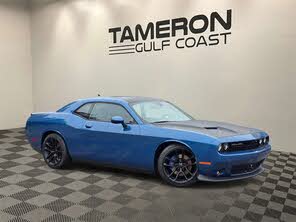
In 2020, the Chevrolet Camaro LT1 presented itself with subtle yet powerful cues pointing to its performance pedigree. The hood vents were a giveaway of the V8 engine roaring beneath, producing 455 horsepower, as was the distinctive dual exhaust system. The Brembo front brake calipers and LT1 badges on each front fender added to its quiet intimidation. Visually, it resembled the more modest Camaro LS with a turbocharged 4-cylinder, aside from these sporty add-ons. The test car in Satin Steel Gray, with plain gray cloth seats and sparkly silver 20-inch wheels, appeared understated and unassuming—perfect for someone looking to enjoy a sports car without drawing too much attention. The new-for-2020 Camaro LT1 was available as both a coupe and a convertible, starting at $34,000 for the coupe, with additional options pushing a test model's price to $37,585. While the Camaro SS and ZL1 models flaunted their brawny nature explicitly, the LT1 maintained a low profile with hidden aggression. Inside, the LT1 was basic, with less refined materials and workmanship, but the V8’s roar was enough to overlook those shortcomings. Despite some issues with build quality, such as the inconsistency of the center console trim, the car's performance was thrilling.
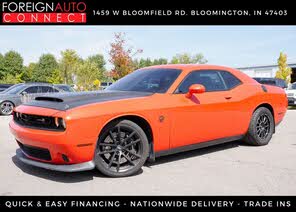
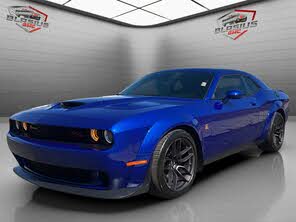
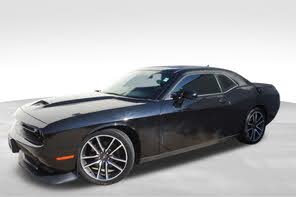
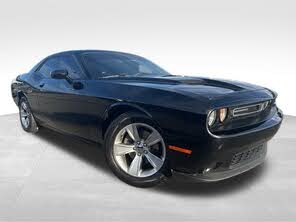
Conversely, the 2020 Dodge Challenger carried a design steeped in nostalgia, with its shape remaining faithful to its 1970s predecessor. Updated elements since its 2015 refresh included various vents, wings, and scoops, while the muscle-bound silhouette stayed intact. The Challenger's recessed headlights and grille exuded menace, a promise of the power within. Inside, the driver was cocooned in a cockpit awash with vintage-inspired styling details juxtaposed against modern technology, such as its infotainment screen and semi-digital instrument panel. The Challenger came in nine trims—SXT, GT, R/T, R/T Scat Pack, R/T Scat Pack Widebody, SRT Hellcat, SRT Hellcat Widebody, SRT Hellcat Redeye, and SRT Hellcat Redeye Widebody. Each trim offered varying degrees of performance and aesthetic enhancements, from the basic SXT's 18-inch wheels and dual-zone climate control to the Hellcat's aggressive dual-intake hood scoop and power amenities. For 2020, new colors like Frostbite and Hellrasin were introduced, along with 50th Anniversary packages for the GT and R/T trims, highlighting the Challenger’s classic appeal further.


For 2020, the Chevrolet Camaro LT1 featured a potent 6.2-liter V8 engine delivering 455 hp and an equal measure of 455 lb-ft of torque. This power was harnessed through a performance-tuned suspension, a limited-slip rear differential, and Brembo brakes, resulting in spirited drives and quick acceleration—0-60 mph in around 4 seconds and a quarter-mile in approximately 12.5 seconds. Built on GM's Alpha platform, shared by Cadillac's ATS and CTS, the Camaro combined luxury sport sedan dynamics with muscle car performance. This platform ensured superior handling, allowing for nimble navigation through twisty roads as effectively as straight-line speed. Forward visibility was a strong suit for the Camaro, aided by hood channels and creased fenders that helped situate the car neatly within its lane, a contrast to the more significant and bulkier dimensions of its competitors. Fuel efficiency was reasonable for its class—averaging 20 mpg during different driving scenarios and officially rated at 16 mpg city, 27 mpg highway, and 20 mpg combined. Enthusiastic driving through mountainous regions highlighted the seamless gear transitions provided by the optional 10-speed automatic, which dynamically adapted to performance needs without requiring paddle shifters. The Camaro's V8 exhaust note, while enjoyable, could be louder than desirable in Sport mode; selecting the standard exhaust could strike a better balance between performance presence and subtleness.
The Dodge Challenger, in 2020, offered a broader range of performance options spanning from the more modest V6 to mighty V8 engines. The base SXT and GT trims packed a 3.6-liter V6 producing 305 hp and 268 lb-ft of torque, available with rear-wheel drive (RWD) or all-wheel drive (AWD). The R/T trim was upgraded with a 5.7-liter Hemi V8, generating up to 475 hp and 410 lb-ft of torque with a 6-speed manual, and slightly less with the 8-speed automatic. The R/T Scat Pack pushed performance up a notch with a 6.4-liter Hemi V8 churning out 485 hp and 475 lb-ft, accompanied by Brembo brakes and launch control. For true muscle, the Hellcat's supercharged 6.2-liter V8 delivered 717 hp and 656 lb-ft, while the Hellcat Redeye upped those figures to 797 hp and 707 lb-ft, necessitating exclusive association with the 8-speed automatic to handle the monstrous output. The Hellcat variants came with dual keys—red for full power access, and black to restrict output, a practical feature for occasions requiring limited performance. Widebody options on Scat Pack, Hellcat, and Redeye models added enhanced stability with flared fenders, wider tires, and refined suspension, transforming the Challenger into a corner-ready machine. The SRT Performance Pages further allowed drivers to customize driving dynamics, from power output to suspension settings, making the Challenger versatile for both everyday driving and track conditions.
In terms of practicality, the 2020 Chevrolet Camaro was dwarfed by the Dodge Challenger. The Camaro’s compact dimensions hampered rear-seat space, making it more suitable for children than adults. The front seats, however, were accommodating with multiple power adjustments, though ingress and egress could be challenging, particularly in tight spaces. The Camaro’s trunk space was a modest 9.1 cubic feet for the coupe and even less for the convertible, making it a tight fit for large luggage, though the lid design helped maximize available space.
By contrast, the Dodge Challenger excelled with a roomier cabin and better rear-seat legroom, facilitated by a quick-release latch that eased access to the back seats. Front passengers also benefited from ample space, though the AWD option introduced a space-consuming hump in the footwell. The Challenger's trunk offered a generous 16.2 cubic feet, dwarfing the Camaro's cargo capacity and even surpassing the Mustang’s 13.5 cubic feet. This made the Challenger more practical for those needing to carry more passengers or cargo.
While the 2020 Chevrolet Camaro LT1’s tech setup was relatively basic, it featured essentials such as a 7-inch touchscreen with the Chevrolet Infotainment System 3, including a reversing camera, Apple CarPlay, Android Auto, OnStar connected services, and a 6-speaker Bose sound system. For tech enthusiasts, options included an 8-inch display, upgraded audio, and an available navigation system. Higher trims like the SS and ZL1 offered performance-specific technologies, including a head-up display, rear camera mirror, and Performance Data Recorder for capturing driving exploits, making them more tech-heavy compared to the LT1.
The 2020 Dodge Challenger was well-equipped starting from the base trims, with a user-friendly 7-inch touchscreen Uconnect system known for its ease of use due to the icon dock and physical buttons for core functions. Apple CarPlay and Android Auto were standard, and an 8.4-inch upgrade with Garmin-based navigation was available. Higher trims like the R/T Scat Pack and Hellcat incorporated an Alpine premium stereo system as standard, while lower trims could have it as an upgrade. The Challenger’s digital driver display featured logical menus and large steering wheel buttons for distraction-free operation, proving that modern technology could be both user-friendly and effective.
Safety-wise, the 2020 Chevrolet Camaro LT1 was scant on advanced features. It came with stability control and a reversing camera as standard, while OnStar services provided automatic collision notifications and SOS calling capabilities. However, it did not offer blind-spot monitoring, adaptive cruise control, or automatic emergency braking—a glaring omission given modern safety standards. The Camaro coupe earned respectable crash-test ratings, including an overall 5-star rating from NHTSA, albeit with a 4-star score for frontal impacts. The IIHS gave it good marks in some areas, but roof strength was rated only Acceptable.
The 2020 Dodge Challenger fared better in terms of safety equipment. Standard features included a full suite of airbags, traction control, brake assist, and a child-seat anchoring system. Optional packages added forward collision warning, adaptive cruise control, blind-spot monitoring, rear cross-path alert, and ParkSense reverse sensing. NHTSA ratings were mixed, with the Challenger scoring four stars for front driver’s side impacts, five stars for front passenger impacts, and four stars for rollovers. The IIHS awarded it a Good rating in various crash tests, though its overall score was Marginal, highlighting some areas for improvement.
CarGurus highlights

According to CarGurus experts, the overall rating for the 2020 Chevrolet Camaro is 7.0 out of 10, while the 2020 Dodge Challenger scores 8.0 out of 10. Based on these ratings, the Dodge Challenger stands out as the better choice among the two vehicles. It combines a nostalgic design with modern performance options, superior interior space, practicality, and a robust technology suite, making it a compelling option for both muscle car enthusiasts and those seeking a more versatile sports coupe experience.
Choose the 2020 Chevrolet Camaro if:
- You prefer a compact sports car with superior forward visibility and nimble handling.
- You want a performance-oriented vehicle that offers thrilling acceleration and dynamic road handling.
- You're looking for a more budget-friendly entry into the V8 muscle car market without shouting about its power.


Choose the 2020 Dodge Challenger if:
- You need a spacious coupe that offers more comfortable rear seating and better overall cargo capacity.
- You appreciate a blend of retro styling with modern conveniences and a user-friendly infotainment experience.
- You want a wider range of powerful engine options, from spirited V6 variants to the immensely powerful Hellcat models.




CarGurus highlights
According to CarGurus experts, the overall rating for the 2020 Chevrolet Camaro is 7.0 out of 10, while the 2020 Dodge Challenger scores 8.0 out of 10. Based on these ratings, the Dodge Challenger stands out as the better choice among the two vehicles. It combines a nostalgic design with modern performance options, superior interior space, practicality, and a robust technology suite, making it a compelling option for both muscle car enthusiasts and those seeking a more versatile sports coupe experience.
Choose the 2020 Chevrolet Camaro if:
Shop Now- You prefer a compact sports car with superior forward visibility and nimble handling.
- You want a performance-oriented vehicle that offers thrilling acceleration and dynamic road handling.
- You're looking for a more budget-friendly entry into the V8 muscle car market without shouting about its power.







Choose the 2020 Dodge Challenger if:
Shop Now- You need a spacious coupe that offers more comfortable rear seating and better overall cargo capacity.
- You appreciate a blend of retro styling with modern conveniences and a user-friendly infotainment experience.
- You want a wider range of powerful engine options, from spirited V6 variants to the immensely powerful Hellcat models.









By: CarGurus + AI
At CarGurus, our team of experienced automotive writers remain at the heart of our content operation, conducting hands-on car tests and writing insightful guides that are backed by years of industry experience. To complement this, we are harnessing AI to make our content offering more diverse and more helpful to shoppers than ever. To achieve this, our AI systems are based exclusively on CarGurus content, ratings and data, so that what we produce is both unique to CarGurus, and uniquely helpful to car shoppers.