2019 Volvo S60 vs 2020 Toyota Prius

Overview | |
MSRP$35,800 | MSRP$24,325 |
Listings53 | Listings25 |
Ratings & Reviews | |
User Reviews | User Reviews |
Expert reviews8.3 out of 10 | Expert reviews7.5 out of 10 |
Pros
Cons
| Pros
Cons
|
2019 Volvo S60 Reviews SummaryThe Volvo S60 competes with the likes of the BMW 3 Series, Mercedes-Benz C-Class, Audi A4, Lexus IS, and Infiniti Q50. But the S60 wasn't always so competitive. In fact, dating back to 2000, it was kind of its own thing, the closest competitor being Saab. Well, Saab is no more, and Volvo woke up, realizing it had to make a sedan with mass appeal. From a visual standpoint, it’s hard not to find the S60 appealing. | |
2020 Toyota Prius Reviews SummaryEver heard of an eponym? It’s a brand or product that is so popular that it’s come to define its respective market. Think of Kleenex for tissues or Band-Aid for medical bandages. For hybrids, the Toyota Prius has ascended to near-eponym status. It was one of the first—and remains one of the most popular—hybrids ever made. As automakers across the industry are rolling out more hybrid models, the Prius continues to be the standard-bearer of this genre. This is largely due to the fact that the Prius is a dedicated hybrid, rather than a hybrid variant of an existing model. Throughout the industry, different companies are taking different approaches to alt-fuel vehicles, including full-electric and hydrogen fuel cell powertrains. The Prius endures as the leader in hybrid power due to a focus on fuel efficiency that doesn’t compromise on style, drivability, and versatility. So how does the Prius hold its ground as more players enter the fray? Read on to find out. | |
No video found | |
Popular Features & Specs | |
Engine2.0L 250 hp I4 | Engine1.8L 121 hp I4 Hybrid |
Drive TrainFWD | Drive TrainFWD |
Seating Capacity5 | Seating Capacity5 |
Horsepower250 hp @ 5500 rpm | Horsepower |
EV Battery Capacity | EV Battery Capacity0.7 kWh |
MPG City24 | MPG City58 |
MPG Highway36 | MPG Highway53 |
Engine | |
Engine Name2.0L 250 hp I4 | Engine Name1.8L 121 hp I4 Hybrid |
Torque258 lb-ft @ 1500 rpm | Torque |
Horsepower250 hp @ 5500 rpm | Horsepower |
DrivetrainFWD | DrivetrainFWD |
Fuel Economy | |
EV Battery Capacity | EV Battery Capacity0.7 kWh |
MPG City24 | MPG City58 |
MPG Highway36 | MPG Highway53 |
Interior | |
Seating Capacity5 | Seating Capacity5 |
Key Features | |
Sunroof/MoonroofStandard | Sunroof/Moonroof |
Safety | |
Front Crash Overall | Front Crash Overall4 |
Side Crash Overall | Side Crash Overall5 |
Dimensions & Capacity | |
Cargo Space11.6 cu ft | Cargo Space27.4 cu ft |
Curb Weight3657 lbs | Curb Weight3010 lbs |
Height56.3 in | Height57.9 in |
Length187.4 in | Length180.0 in |
Width80.3 in | Width69.3 in |
Wheelbase113.1 in | Wheelbase106.3 in |
Maximum Payload | Maximum Payload825 lbs |
Number of doors4 | Number of doors4 |
Overview | ||
MSRP | $35,800 | $24,325 |
Listings | ||
Ratings & Reviews | ||
User reviews | ||
Expert reviews | 8.3 out of 10Read full review | 7.5 out of 10Read full review |
Pros & cons | Pros
Cons
| Pros
Cons
|
Summary | The Volvo S60 competes with the likes of the BMW 3 Series, Mercedes-Benz C-Class, Audi A4, Lexus IS, and Infiniti Q50. But the S60 wasn't always so competitive. In fact, dating back to 2000, it was kind of its own thing, the closest competitor being Saab. Well, Saab is no more, and Volvo woke up, realizing it had to make a sedan with mass appeal. From a visual standpoint, it’s hard not to find the S60 appealing. | Ever heard of an eponym? It’s a brand or product that is so popular that it’s come to define its respective market. Think of Kleenex for tissues or Band-Aid for medical bandages. For hybrids, the Toyota Prius has ascended to near-eponym status. It was one of the first—and remains one of the most popular—hybrids ever made. As automakers across the industry are rolling out more hybrid models, the Prius continues to be the standard-bearer of this genre. This is largely due to the fact that the Prius is a dedicated hybrid, rather than a hybrid variant of an existing model. Throughout the industry, different companies are taking different approaches to alt-fuel vehicles, including full-electric and hydrogen fuel cell powertrains. The Prius endures as the leader in hybrid power due to a focus on fuel efficiency that doesn’t compromise on style, drivability, and versatility. So how does the Prius hold its ground as more players enter the fray? Read on to find out. |
Video | No video found | |
Popular Features & Specs | ||
Engine | 2.0L 250 hp I4 | 1.8L 121 hp I4 Hybrid |
Drive Train | FWD | FWD |
Seating Capacity | 5 | 5 |
Horsepower | 250 hp @ 5500 rpm | |
EV Battery Capacity | 0.7 kWh | |
MPG City | 24 | 58 |
MPG Highway | 36 | 53 |
Engine | ||
Engine Name | 2.0L 250 hp I4 | 1.8L 121 hp I4 Hybrid |
Torque | 258 lb-ft @ 1500 rpm | |
Horsepower | 250 hp @ 5500 rpm | |
Drivetrain | FWD | FWD |
Fuel Economy | ||
EV Battery Capacity | 0.7 kWh | |
MPG City | 24 | 58 |
MPG Highway | 36 | 53 |
Interior | ||
Seating Capacity | 5 | 5 |
Key Features | ||
Sunroof/Moonroof | Standard | |
Safety | ||
Front Crash Overall | 4 | |
Side Crash Overall | 5 | |
Dimensions & Capacity | ||
Cargo Space | 11.6 cu ft | 27.4 cu ft |
Curb Weight | 3657 lbs | 3010 lbs |
Height | 56.3 in | 57.9 in |
Length | 187.4 in | 180.0 in |
Width | 80.3 in | 69.3 in |
Wheelbase | 113.1 in | 106.3 in |
Maximum Payload | 825 lbs | |
Number of doors | 4 | 4 |
Volvo had managed to completely transform its image from quirky to sexy over the past decade. The 2019 S60, a scaled-down version of the flagship S90 sedan, competed with luxury models like the BMW 3 Series and Audi A4. The S60 featured straight lines and precise angles, but its rear fender and C-pillar gave it an athletic stance. The design was so appealing that it invited further investigation, even if it didn't always put function first.
The 2019 Volvo S60 came in three trims: Momentum, R-Design, and Inscription. The entry-level Momentum trim included a panoramic moonroof, dual-zone climate control, and a leather-wrapped steering wheel, among other features. The R-Design, which was the test model, added fog lights, power-retractable side-view mirrors, and an R-Design steering wheel with paddle shifters. The top-tier Inscription trim offered genuine leather upholstery and 4-zone climate control, along with the contents of the Advance Package, which included active bending headlights and a 360-degree camera.
The 2020 Toyota Prius retained its iconic shape, optimized for aerodynamics, which had been a staple since its second generation. Toyota made subtle changes to make it look more like a sedan, but it remained a hatchback. The Prius had a futuristic style that still looked contemporary, with a cabin defined by the central location of its instrumentation and gauges.
The Prius came in four trims: L Eco, LE, XLE, and Limited. The base L Eco trim featured 15-inch alloy wheels, automatic climate control, and a 7-inch touchscreen infotainment system with Apple CarPlay, Android Auto, and Amazon Alexa compatibility. The LE trim added a rear windshield wiper and additional driver-assistance features. The XLE trim included 17-inch alloy wheels, synthetic leather upholstery, and wireless device charging. The Limited trim offered adaptive, self-leveling headlights, a head-up display, and a large 11.6-inch touchscreen.


The 2019 Volvo S60 offered three powertrain options: T5, T6, and T8. The T5 featured a turbocharged 2-liter 4-cylinder engine producing 250 horsepower and 258 pound-feet of torque, sent to front-wheel drive. The T6, which was the test model, had a twin-charged 2-liter 4-cylinder engine making 316 hp and 295 lb-ft, sent to all-wheel drive. The T8 was a plug-in hybrid with a combined output of 400 hp and 495 lb-ft of torque, featuring a 21-mile all-electric range.
The T6 provided plenty of acceleration, with instantaneous throttle and transmission responses. Despite its front-wheel-drive layout, the S60 felt like a firmly planted rear-wheel-drive sedan, staying flat through corners. The T6 with AWD had an estimated fuel economy of 21 mpg city, 32 highway, and 25 combined. The T5 was estimated at 24 mpg city, 36 highway, and 28 combined.
The 2020 Toyota Prius featured a 1.8-liter four-cylinder engine paired with an electric motor, producing a combined 121 horsepower and 105 pound-feet of torque. It came with front-wheel drive, but an all-wheel-drive variant, the Prius AWD-e, was also available. The AWD-e employed a second electric motor for the rear wheels, operating at speeds up to 43 mph.
The Prius had smooth acceleration, especially at lower speeds, with a seamless transition between electric and conventional power. It offered three drive modes: EV, Eco, and Power. The unique shifter design took some getting used to, but the Prius was engaging to drive, with a low center of gravity providing sharper handling than expected. The ride was smooth, making it ideal for commuting.
The 2019 Volvo S60 had a form-over-function approach to its interior design. While it offered sensible steering-wheel-mounted controls and ample cubby space, some controls were awkwardly placed. The starter was located between the front seats, requiring a "T-Rex Arm" reach for those with long arms. The drive-mode selector was a roller that was also awkward to use. However, Volvo made a smart choice with a conventional shifter design, which was more user-friendly.
Backseat space in the S60 was decent, especially compared to competitors like the Lexus IS. The S60 offered 11.6 cubic feet of cargo space, which was average for its class.
The 2020 Toyota Prius made excellent use of its space. The doors had deep pockets, and there were helpful trays around the center console. The front seats were spacious and comfortable, with good driver visibility. The rear seats also offered plenty of space, though taller drivers needed to watch their heads.
The Prius had 50.7 cubic feet of cargo space with the rear seats folded. With the rear seats up, it offered 24.6 cubic feet in LE and AWD-e models, and 27.4 cubic feet in other trims. The hatchback design made loading large items easy, making the Prius one of the most spacious and versatile hybrid options.
The 2019 Volvo S60 featured the Sensus touchscreen infotainment system, which had a tablet-like approach to menu navigation and graphics. However, many features were tucked away in the screen, making simple tasks like changing the temperature cumbersome. The system occasionally lagged and even froze, which could be frustrating.
The 2020 Toyota Prius came standard with a 7-inch touchscreen, featuring a sensible menu layout and standard Android Auto and Apple CarPlay. The Limited trim upgraded to an 11.6-inch screen with a customizable layout. The Prius also offered satellite radio, HD Radio, a head-up display, and a 10-speaker JBL premium audio system. The top-center instrument panel provided critical readouts and could be toggled via the steering wheel.
The 2019 Volvo S60 came standard with front- and side-impact airbags, a reversing camera, and a tire-pressure-monitoring system. It also included driver-assistance systems like forward-collision avoidance, lane-departure warning, and traffic-sign recognition. The Advance Package added a head-up display, headlight washers, a 360-degree camera, and active bending headlights, along with Pilot Assist, a semi-autonomous driving system.
The 2020 Toyota Prius was equipped with Toyota Safety Sense 2.0, which included automatic emergency braking, forward-collision warning, lane-departure warning, adaptive cruise control, and automatic high beams. Optional features included blind-spot monitoring, rear cross-traffic alert, and active park assist. The Prius earned a five-star rating from the NHTSA and a "Top Safety Pick" from the IIHS, though it fell short of the highest "Top Safety Pick+" rating.
CarGurus highlights
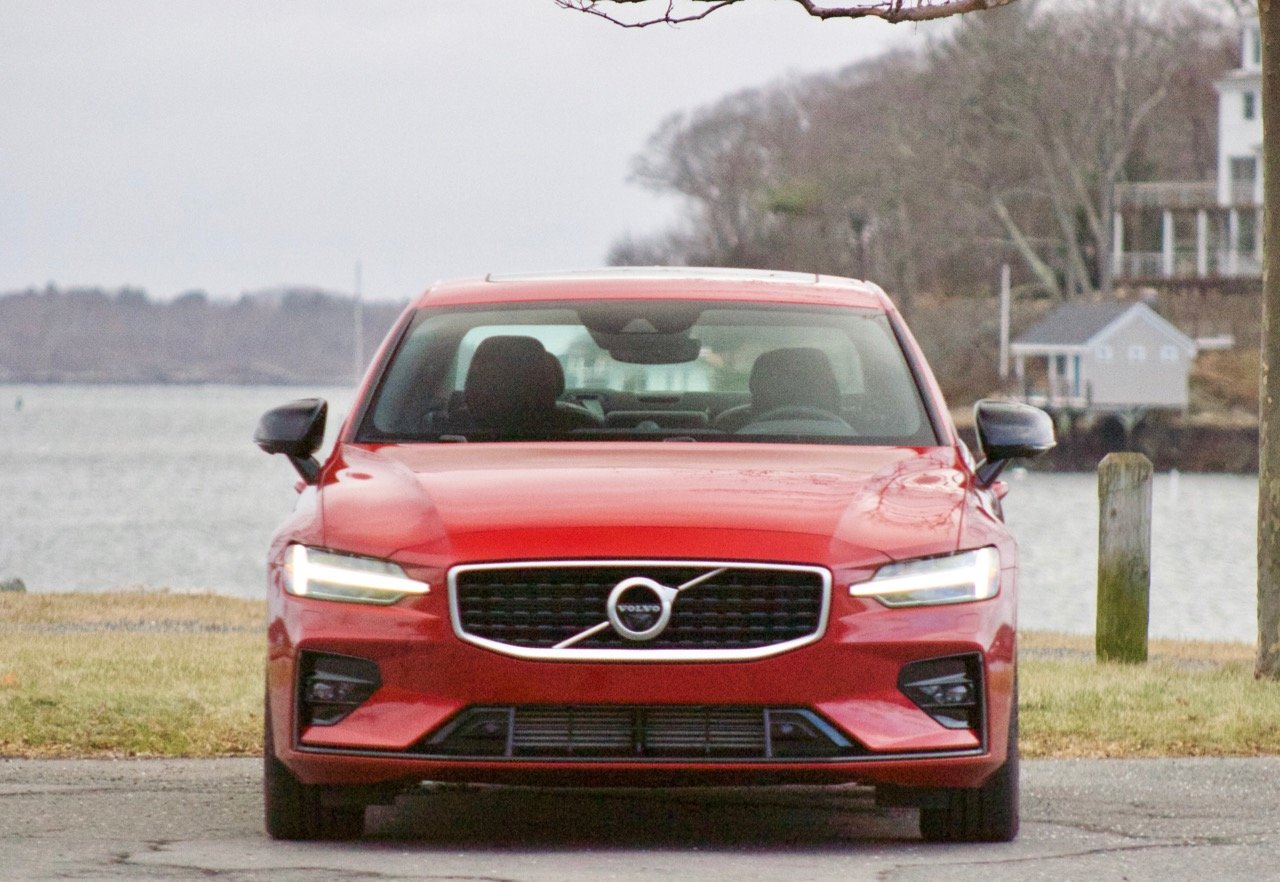
According to CarGurus experts, the overall rating for the 2019 Volvo S60 is 8.3 out of 10, while the 2020 Toyota Prius scores 7.5 out of 10. Based on these ratings, the 2019 Volvo S60 is the recommended choice for its superior performance, advanced technology, and luxurious design.
Choose the 2019 Volvo S60 if:
- You want a luxury sedan with a sporty design and athletic stance.
- You prefer a powerful engine with multiple powertrain options, including a plug-in hybrid.
- You value advanced driver-assistance features and semi-autonomous driving capabilities.


Choose the 2020 Toyota Prius if:
- You need a highly efficient hybrid with excellent fuel economy.
- You prioritize spacious and versatile cargo space in a compact vehicle.
- You want a car with a comprehensive suite of standard safety features and high safety ratings.


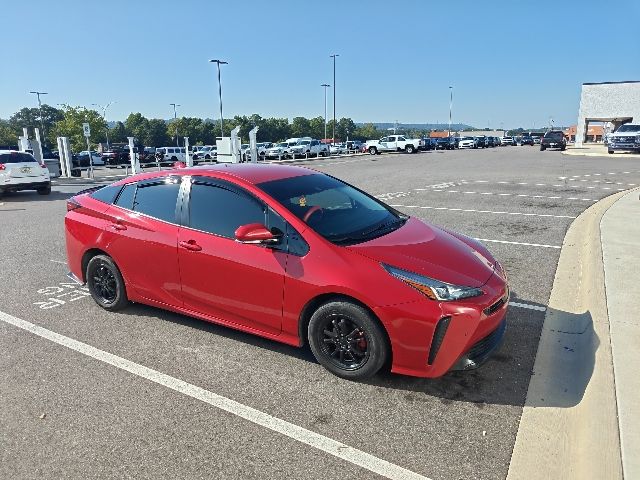


CarGurus highlights
According to CarGurus experts, the overall rating for the 2019 Volvo S60 is 8.3 out of 10, while the 2020 Toyota Prius scores 7.5 out of 10. Based on these ratings, the 2019 Volvo S60 is the recommended choice for its superior performance, advanced technology, and luxurious design.
Choose the 2019 Volvo S60 if:
Shop Now- You want a luxury sedan with a sporty design and athletic stance.
- You prefer a powerful engine with multiple powertrain options, including a plug-in hybrid.
- You value advanced driver-assistance features and semi-autonomous driving capabilities.
Choose the 2020 Toyota Prius if:
Shop Now- You need a highly efficient hybrid with excellent fuel economy.
- You prioritize spacious and versatile cargo space in a compact vehicle.
- You want a car with a comprehensive suite of standard safety features and high safety ratings.

By: CarGurus + AI
At CarGurus, our team of experienced automotive writers remain at the heart of our content operation, conducting hands-on car tests and writing insightful guides that are backed by years of industry experience. To complement this, we are harnessing AI to make our content offering more diverse and more helpful to shoppers than ever. To achieve this, our AI systems are based exclusively on CarGurus content, ratings and data, so that what we produce is both unique to CarGurus, and uniquely helpful to car shoppers.

