2019 INFINITI QX50 vs 2020 Volkswagen Tiguan

Overview | |
MSRP$36,550 | MSRP$24,945 |
Listings322 | Listings907 |
Ratings & Reviews | |
User Reviews | User Reviews |
Expert reviews6.7 out of 10 | Expert reviews7.7 out of 10 |
Pros
Cons
| |
2019 INFINITI QX50 Reviews SummaryIntroduced in 2007 (back when it was called the EX), the QX50 has sat nearly stagnant ever since, receiving slight changes and one refresh during a decade that saw small, luxury crossovers rising in stature to become a dominant class of vehicles in the industry. Finally, in its second generation, the 2019 QX50 shows up with more room, a new tech-savvy engine, and one hell of an impressive interior. | |
2020 Volkswagen Tiguan Reviews SummaryThe Volkswagen Tiguan is one of only two compact crossover SUV’s that currently offer third-row seating. (And the other is the hopelessly outdated Mitsubishi Outlander.) To fit the extra pair of surprisingly spacious seats, VW made the Tiguan much larger than average for its competitive set—which suits a vehicle that fills big shoes in VW dealerships. With five trim levels and prices that stretch from just under $26,000 to a bit over $40,000, the Tiguan is the German brand’s best-selling vehicle in the U.S. | |
No video found | |
Popular Features & Specs | |
Engine2.0L 268 hp I4 | Engine2.0L 184 hp I4 |
Drive TrainFWD | Drive TrainFWD |
Seating Capacity5 | Seating Capacity7 |
Horsepower268 hp @ 5600 rpm | Horsepower184 hp @ 4400 rpm |
MPG City24 | MPG City22 |
MPG Highway31 | MPG Highway29 |
Engine | |
Engine Name2.0L 268 hp I4 | Engine Name2.0L 184 hp I4 |
Torque280 lb-ft @ 1600 rpm | Torque221 lb-ft @ 1600 rpm |
Horsepower268 hp @ 5600 rpm | Horsepower184 hp @ 4400 rpm |
DrivetrainFWD | DrivetrainFWD |
Fuel Economy | |
MPG City24 | MPG City22 |
MPG Highway31 | MPG Highway29 |
Interior | |
Seating Capacity5 | Seating Capacity7 |
Key Features | |
Sunroof/MoonroofStandard | Sunroof/Moonroof |
Safety | |
Front Crash Overall5 | Front Crash Overall4 |
Side Crash Overall5 | Side Crash Overall5 |
Dimensions & Capacity | |
Cargo Space31.4 cu ft | Cargo Space12.0 cu ft |
Curb Weight3810 lbs | Curb Weight3757 lbs |
Height66.0 in | Height66.3 in |
Length184.7 in | Length185.1 in |
Width85.1 in | Width72.4 in |
Wheelbase110.2 in | Wheelbase109.8 in |
Maximum Payload1106 lbs | Maximum Payload1124 lbs |
Number of doors4 | Number of doors4 |
Maximum Towing Capacity | Maximum Towing Capacity1500 lbs |
Overview | ||
MSRP | $36,550 | $24,945 |
Listings | ||
Ratings & Reviews | ||
User reviews | ||
Expert reviews | 6.7 out of 10Read full review | 7.7 out of 10Read full review |
Pros & cons | Pros
Cons
| |
Summary | Introduced in 2007 (back when it was called the EX), the QX50 has sat nearly stagnant ever since, receiving slight changes and one refresh during a decade that saw small, luxury crossovers rising in stature to become a dominant class of vehicles in the industry. Finally, in its second generation, the 2019 QX50 shows up with more room, a new tech-savvy engine, and one hell of an impressive interior. | The Volkswagen Tiguan is one of only two compact crossover SUV’s that currently offer third-row seating. (And the other is the hopelessly outdated Mitsubishi Outlander.) To fit the extra pair of surprisingly spacious seats, VW made the Tiguan much larger than average for its competitive set—which suits a vehicle that fills big shoes in VW dealerships. With five trim levels and prices that stretch from just under $26,000 to a bit over $40,000, the Tiguan is the German brand’s best-selling vehicle in the U.S. |
Video | No video found | |
Popular Features & Specs | ||
Engine | 2.0L 268 hp I4 | 2.0L 184 hp I4 |
Drive Train | FWD | FWD |
Seating Capacity | 5 | 7 |
Horsepower | 268 hp @ 5600 rpm | 184 hp @ 4400 rpm |
MPG City | 24 | 22 |
MPG Highway | 31 | 29 |
Engine | ||
Engine Name | 2.0L 268 hp I4 | 2.0L 184 hp I4 |
Torque | 280 lb-ft @ 1600 rpm | 221 lb-ft @ 1600 rpm |
Horsepower | 268 hp @ 5600 rpm | 184 hp @ 4400 rpm |
Drivetrain | FWD | FWD |
Fuel Economy | ||
MPG City | 24 | 22 |
MPG Highway | 31 | 29 |
Interior | ||
Seating Capacity | 5 | 7 |
Key Features | ||
Sunroof/Moonroof | Standard | |
Safety | ||
Front Crash Overall | 5 | 4 |
Side Crash Overall | 5 | 5 |
Dimensions & Capacity | ||
Cargo Space | 31.4 cu ft | 12.0 cu ft |
Curb Weight | 3810 lbs | 3757 lbs |
Height | 66.0 in | 66.3 in |
Length | 184.7 in | 185.1 in |
Width | 85.1 in | 72.4 in |
Wheelbase | 110.2 in | 109.8 in |
Maximum Payload | 1106 lbs | 1124 lbs |
Number of doors | 4 | 4 |
Maximum Towing Capacity | 1500 lbs | |
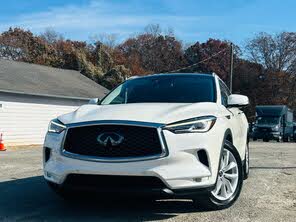
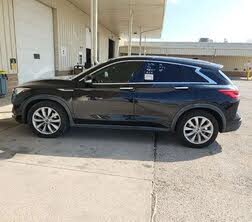
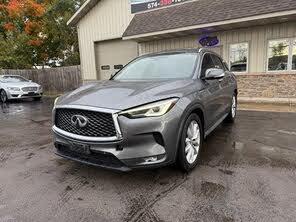
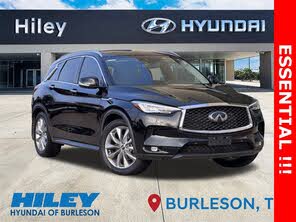
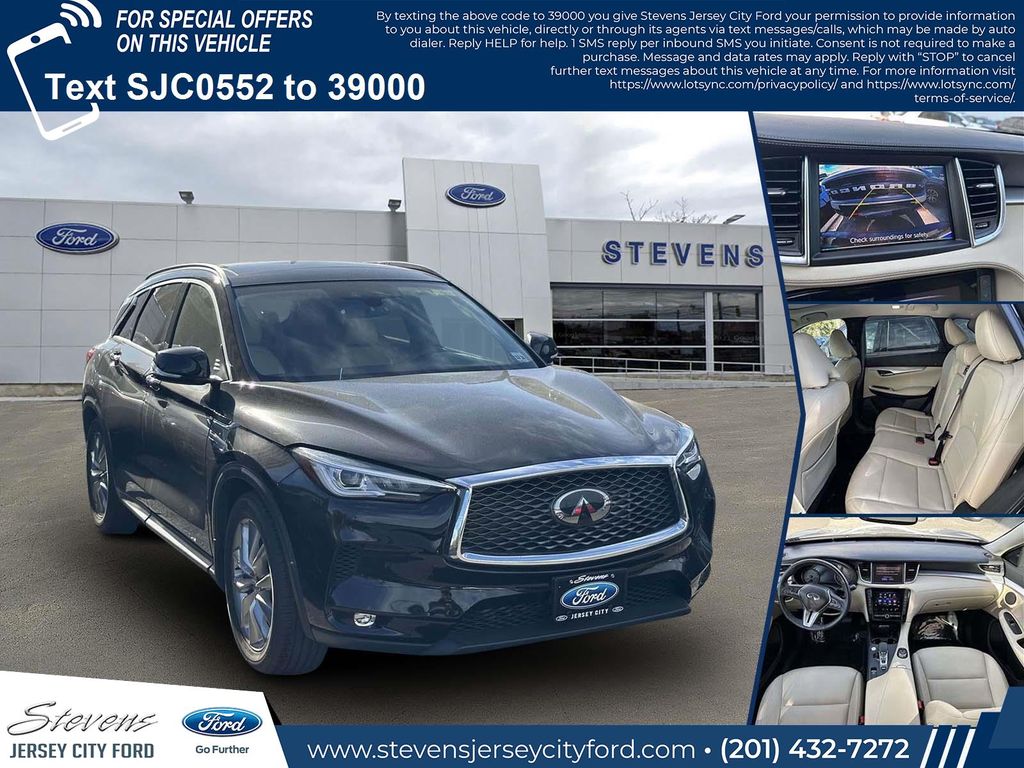
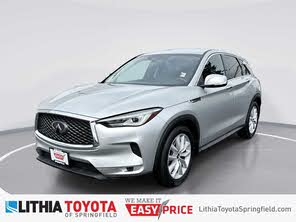
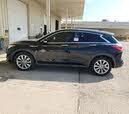
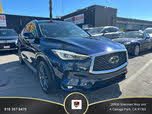
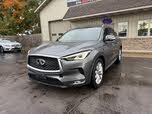
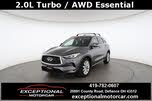
The 2019 INFINITI QX50 was wider and taller than its predecessor, offering two extra inches of ground clearance and more interior space. The trunk provided 31.4 cubic feet of space behind modular rear seats that both slid and reclined. Despite the increased cargo space, rear legroom remained ample, even for a 6’4” individual. However, the panoramic sunroof brought the headliner uncomfortably close to taller passengers' heads. The redesigned interior was spacious, attractive, and filled with high-quality materials, featuring a new infotainment system. The cabin was exceptionally quiet, thanks to a noise-canceling system, making highway conversations easy and enjoyable.
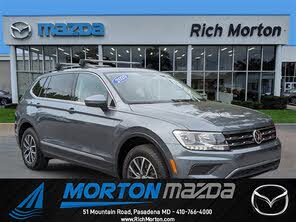
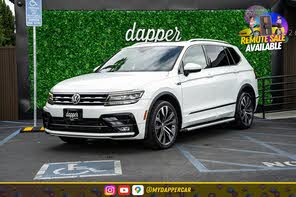
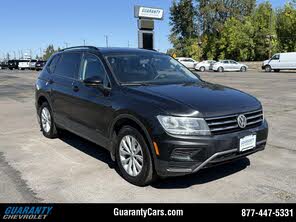
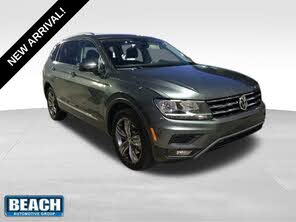
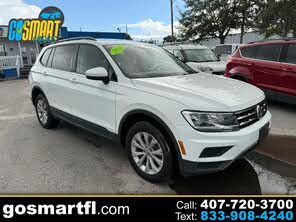
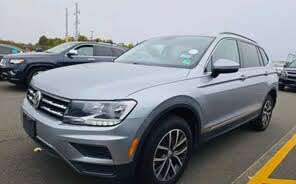
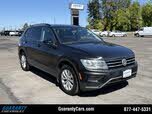
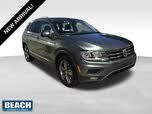
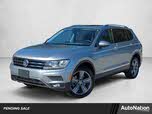
In contrast, the 2020 Volkswagen Tiguan, redesigned in 2018, maintained a stylish yet conservative German aesthetic. The exterior featured clean lines and a horizontal grille connecting the headlights, giving it a contemporary Volkswagen look. Inside, the Tiguan's interior was plain, with dull surfaces and hard black plastic, a far cry from VW’s previous interior excellence. The cockpit was simple, bordering on boring, with the focus shifted to electronics. The optional digital dashboard and glass-covered touchscreen infotainment system were highlights, offering a modern, smartphone-like experience.


The 2019 INFINITI QX50 featured a turbocharged 2.0-liter 4-cylinder engine, the world’s first mass-produced variable-compression engine. This innovative engine could change the height of the piston at top dead center, varying the compression between 8:1 and 14:1 for maximum power or efficiency. Despite this, the engine's 268 horsepower and 280 lb-ft of torque were underwhelming, resulting in a 6.4-second 0-60 time, slower than the outgoing V6. The continuously variable transmission (CVT) was problematic, causing bogging, surging, and wheelspin from a stop, and making unpleasant noises. The QX50’s ride prioritized comfort over sportiness, but the Direct Adaptive Steering (DAS) system, which lacked a mechanical connection between the steering wheel and tires, felt inconsistent and unnatural.
The 2020 Volkswagen Tiguan was powered by a turbocharged 2.0-liter four-cylinder engine, producing 184 horsepower and 221 lb-ft of torque. This engine drove either the front or all four wheels through an eight-speed automatic transmission. The Tiguan’s powertrain offered a snappy throttle response with minimal turbo lag, but its larger size and weight made it only moderately quick. The automatic transmission downshifted smoothly, but highway passing required patience. The Tiguan’s engine was relatively quiet, and the cabin was well-insulated from wind noise, making it a comfortable highway cruiser. However, the Tiguan’s larger size impacted its handling, making it less nimble than competitors. The suspension was soft, ensuring a comfortable ride even on rough roads, but the steering remained too light, even in sport mode.
The 2019 INFINITI QX50’s interior was high-quality, with pleasing materials and ample space. However, the abundance of tech made the dash cluttered and confusing, with a mix of buttons, dials, and touchscreens. The infotainment system had input delays, causing frustration, especially with the navigation system. The shifter’s PARK button was oddly placed behind the shifter, leading to potential safety concerns.
The 2020 Volkswagen Tiguan excelled in practicality, starting with the second row of seats, which could slide up to seven inches, making the third row useful. The third row, though not spacious, was adequate for shorter adults and children. Front-drive Tiguans had a standard third row, while AWD models were five-seaters with an optional third row. The second row folded flat, providing 65.7 cubic feet of cargo space with the third row collapsed, and 73.5 cubic feet in two-row models. The Tiguan’s front seats offered plenty of room, and the abundant glass made the cabin feel spacious. The seating position made the Tiguan feel larger than it was, appealing to those downsizing from larger SUVs.
The 2019 INFINITI QX50 offered advanced tech, especially in the $2,000 ProActive package, which included intelligent cruise, blind-spot intervention, lane-departure warning, and ProPilot assist. However, these features were only available on the top-tier Essential trim, making the starting price for these safety features $45,900. The base QX50 was well-equipped, but the infotainment system’s frustrations detracted from the experience.
The 2020 Volkswagen Tiguan featured the MIB II infotainment system, soon to be replaced by MIB3. The current system was already one of the best, with a 6.5-inch touchscreen in the base S trim and an 8-inch capacitive touchscreen in higher trims. The system was responsive and user-friendly. The Tiguan S had a single USB-C port, while higher trims had USB-A ports and a wireless charging pad. VW’s Digital Cockpit, available on top SEL trims, was a customizable digital instrument panel. Standard features included Apple CarPlay, Android Auto, Bluetooth connectivity, and a WiFi hotspot.
The 2019 INFINITI QX50’s safety features were limited to higher trims, with the base model lacking even a blind-spot monitoring system. The QX50 had not been tested by the National Highway Traffic Safety Administration (NHTSA) or the Insurance Institute for Highway Safety (IIHS).
The 2020 Volkswagen Tiguan improved its standard safety package, adding forward-collision warning with automatic emergency braking, blind spot monitoring, and rear cross-traffic alert to all models. Adaptive cruise control with lane-keeping assistance and LED headlights with automatic high beams were reserved for the top SEL trim. VW’s Car-Net telematics package connected the vehicle to an owner’s smartphone, offering remote locking, status checks, and vehicle location. The IIHS rated the Tiguan a Top Safety Pick for SEL Premium models with LED headlights, while most Tiguans had halogen headlights rated poor.
CarGurus highlights

According to CarGurus experts, the overall rating for the 2019 INFINITI QX50 is 6.7 out of 10, while the 2020 Volkswagen Tiguan scores 7.7 out of 10. Based on these ratings, the 2020 Volkswagen Tiguan is the better choice, offering a more practical and spacious interior, a superior infotainment system, and a comprehensive safety package across all trims.
Choose the 2019 INFINITI QX50 if:
- You prioritize a quiet, high-quality interior with ample space.
- You value advanced safety tech and are willing to pay for higher trims.
- You prefer a comfortable ride over sporty handling.




Choose the 2020 Volkswagen Tiguan if:
- You need a practical, spacious vehicle with a useful third row.
- You appreciate a user-friendly infotainment system with modern tech.
- You want a well-rounded safety package available on all trims.




CarGurus highlights
According to CarGurus experts, the overall rating for the 2019 INFINITI QX50 is 6.7 out of 10, while the 2020 Volkswagen Tiguan scores 7.7 out of 10. Based on these ratings, the 2020 Volkswagen Tiguan is the better choice, offering a more practical and spacious interior, a superior infotainment system, and a comprehensive safety package across all trims.
Choose the 2019 INFINITI QX50 if:
Shop Now- You prioritize a quiet, high-quality interior with ample space.
- You value advanced safety tech and are willing to pay for higher trims.
- You prefer a comfortable ride over sporty handling.





Choose the 2020 Volkswagen Tiguan if:
Shop Now- You need a practical, spacious vehicle with a useful third row.
- You appreciate a user-friendly infotainment system with modern tech.
- You want a well-rounded safety package available on all trims.








By: CarGurus + AI
At CarGurus, our team of experienced automotive writers remain at the heart of our content operation, conducting hands-on car tests and writing insightful guides that are backed by years of industry experience. To complement this, we are harnessing AI to make our content offering more diverse and more helpful to shoppers than ever. To achieve this, our AI systems are based exclusively on CarGurus content, ratings and data, so that what we produce is both unique to CarGurus, and uniquely helpful to car shoppers.