2020 Honda Passport vs 2019 Honda Pilot

Overview | |
MSRP$31,450 | MSRP$31,990 |
Listings1009 | Listings211 |
Ratings & Reviews | |
User Reviews | User Reviews |
Expert reviews8.3 out of 10 | Expert reviews8.8 out of 10 |
Pros
Cons
| |
2019 Honda Pilot Reviews SummaryThe 3-row crossover is the king of family vehicles. Sure, minivans remain a popular choice for large families, but there has been a pendulum swing from the days of blocky old Dodge Caravans to now. Having one or two children does not immediately necessitate a minivan, and there are plenty of useful, capable, and more nimble SUVs from which to choose. The 2019 Honda Pilot stands as one of the cornerstones of this 3-row SUV market. It’s large, versatile, and designed specifically with families in mind. It may not have the sliding doors or built-in vacuum of the Honda Odyssey, but for active families, a vehicle like this truly rivals a minivan in actual usability. The Pilot joined the SUV market in the early 2000s, at the height of the SUV craze and in the waning days of the minivan’s rule. With plenty of cabin space, moderate ability to get off the beaten trail, and V6 power, the Pilot was perfectly positioned for rising fuel prices later in the decade. As many consumers ditched their traditional truck-based SUVs to save on fuel, the Pilot only grew in popularity. The Pilot is now in its third generation, having received a mild refresh for 2019 that includes slightly updated front and rear styling. It also receives an updated infotainment system and, more importantly, it brings the Honda Sensing suite of driver-assistance features as standard equipment. | |
2020 Honda Passport Reviews SummaryHonda has brought back the Passport name for its latest SUV offering. The two-row crossover is an upmarket take on transport that proves just as comfortable on the road as it is on the trail. Though the model doesn’t break the Honda mold, it has a lot to like, including off-road capability and thoughtful interior functionality. | |
No video found | |
Popular Features & Specs | |
Engine3.5L 280 hp V6 | Engine3.5L 280 hp V6 |
Drive TrainFWD | Drive TrainFWD |
Seating Capacity8 | Seating Capacity5 |
Horsepower280 hp @ 6000 rpm | Horsepower280 hp @ 6000 rpm |
MPG City19 | MPG City20 |
MPG Highway27 | MPG Highway25 |
Engine | |
Engine Name3.5L 280 hp V6 | Engine Name3.5L 280 hp V6 |
Torque262 lb-ft @ 4700 rpm | Torque262 lb-ft @ 4700 rpm |
Horsepower280 hp @ 6000 rpm | Horsepower280 hp @ 6000 rpm |
DrivetrainFWD | DrivetrainFWD |
Fuel Economy | |
MPG City19 | MPG City20 |
MPG Highway27 | MPG Highway25 |
Interior | |
Seating Capacity8 | Seating Capacity5 |
Safety | |
Front Crash Overall4 | Front Crash Overall4 |
Side Crash Overall5 | Side Crash Overall5 |
Dimensions & Capacity | |
Cargo Space16.5 cu ft | Cargo Space41.2 cu ft |
Curb Weight4036 lbs | Curb Weight3959 lbs |
Height70.6 in | Height71.6 in |
Length196.5 in | Length190.5 in |
Width78.6 in | Width78.6 in |
Wheelbase111.0 in | Wheelbase111.0 in |
Maximum Payload1509 lbs | Maximum Payload1332 lbs |
Number of doors4 | Number of doors4 |
Maximum Towing Capacity3500 lbs | Maximum Towing Capacity3500 lbs |
Overview | ||
MSRP | $31,450 | $31,990 |
Listings | ||
Ratings & Reviews | ||
User reviews | ||
Expert reviews | 8.3 out of 10Read full review | 8.8 out of 10Read full review |
Pros & cons | Pros
Cons
| |
Summary | The 3-row crossover is the king of family vehicles. Sure, minivans remain a popular choice for large families, but there has been a pendulum swing from the days of blocky old Dodge Caravans to now. Having one or two children does not immediately necessitate a minivan, and there are plenty of useful, capable, and more nimble SUVs from which to choose. The 2019 Honda Pilot stands as one of the cornerstones of this 3-row SUV market. It’s large, versatile, and designed specifically with families in mind. It may not have the sliding doors or built-in vacuum of the Honda Odyssey, but for active families, a vehicle like this truly rivals a minivan in actual usability. The Pilot joined the SUV market in the early 2000s, at the height of the SUV craze and in the waning days of the minivan’s rule. With plenty of cabin space, moderate ability to get off the beaten trail, and V6 power, the Pilot was perfectly positioned for rising fuel prices later in the decade. As many consumers ditched their traditional truck-based SUVs to save on fuel, the Pilot only grew in popularity. The Pilot is now in its third generation, having received a mild refresh for 2019 that includes slightly updated front and rear styling. It also receives an updated infotainment system and, more importantly, it brings the Honda Sensing suite of driver-assistance features as standard equipment. | Honda has brought back the Passport name for its latest SUV offering. The two-row crossover is an upmarket take on transport that proves just as comfortable on the road as it is on the trail. Though the model doesn’t break the Honda mold, it has a lot to like, including off-road capability and thoughtful interior functionality. |
Video | No video found | |
Popular Features & Specs | ||
Engine | 3.5L 280 hp V6 | 3.5L 280 hp V6 |
Drive Train | FWD | FWD |
Seating Capacity | 8 | 5 |
Horsepower | 280 hp @ 6000 rpm | 280 hp @ 6000 rpm |
MPG City | 19 | 20 |
MPG Highway | 27 | 25 |
Engine | ||
Engine Name | 3.5L 280 hp V6 | 3.5L 280 hp V6 |
Torque | 262 lb-ft @ 4700 rpm | 262 lb-ft @ 4700 rpm |
Horsepower | 280 hp @ 6000 rpm | 280 hp @ 6000 rpm |
Drivetrain | FWD | FWD |
Fuel Economy | ||
MPG City | 19 | 20 |
MPG Highway | 27 | 25 |
Interior | ||
Seating Capacity | 8 | 5 |
Safety | ||
Front Crash Overall | 4 | 4 |
Side Crash Overall | 5 | 5 |
Dimensions & Capacity | ||
Cargo Space | 16.5 cu ft | 41.2 cu ft |
Curb Weight | 4036 lbs | 3959 lbs |
Height | 70.6 in | 71.6 in |
Length | 196.5 in | 190.5 in |
Width | 78.6 in | 78.6 in |
Wheelbase | 111.0 in | 111.0 in |
Maximum Payload | 1509 lbs | 1332 lbs |
Number of doors | 4 | 4 |
Maximum Towing Capacity | 3500 lbs | 3500 lbs |
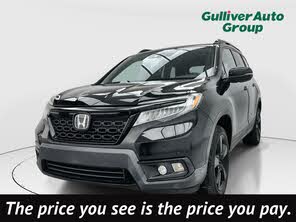
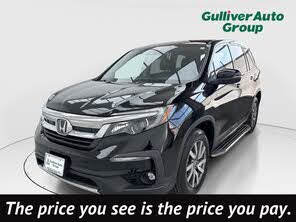
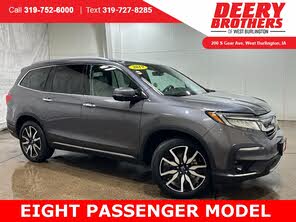
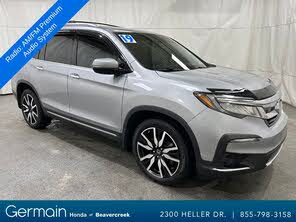
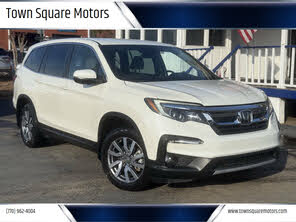
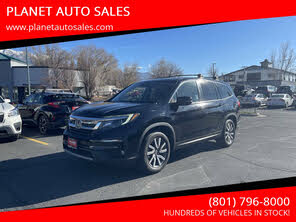
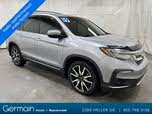
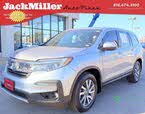
The 2019 Honda Pilot received subtle visual updates that a keen Honda enthusiast would notice. The headlights were more futuristic, and the lower front valence had a cleaner design. The grille area resembled the refreshed Honda CR-V but scaled up to Pilot size, featuring a larger Honda “H” logo. At the rear, Honda added more detail around the lower bumper, and the taillights incorporated more white and amber portions, giving the Pilot a slightly more distinguished look. Inside, the Pilot featured an updated steering wheel, Honda’s new proprietary shifter design, and a new infotainment system. The climate-control vents saw slight changes, and the trims ranged from the base LX to the range-topping Elite, each offering various features and upgrades.
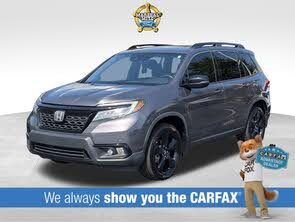
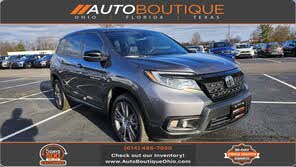
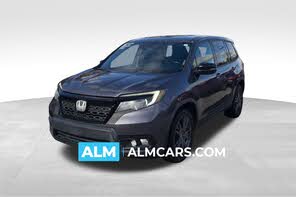
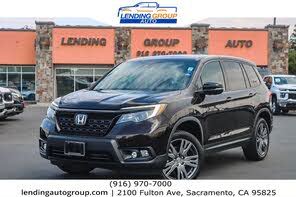
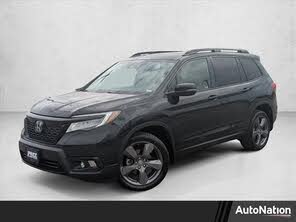
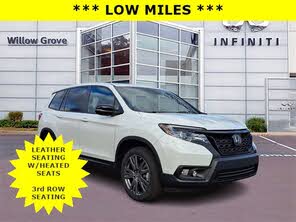
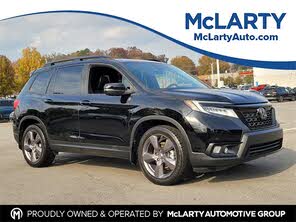
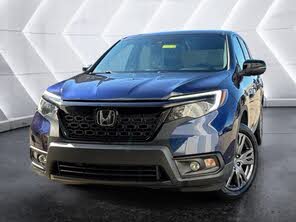
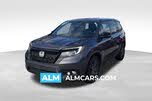
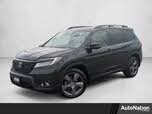
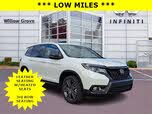
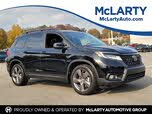
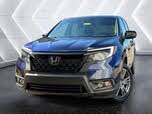
The 2020 Honda Passport followed Honda’s playbook closely, presenting a practical and rugged aesthetic. The exterior styling cues made it appear more athletic than the Pilot and CR-V, with a scratch-resistant matte black grille and bumper, 20-inch black alloy wheels, and black-rimmed LED headlights. The Passport had more ground clearance than the Pilot, enhancing its off-road capability. Inside, the Passport’s cabin was sophisticated, featuring a mix of hard-wearing and soft-to-the-touch materials. The Elite trim came with perforated, heated, and ventilated front seats, a leather-trimmed heated steering wheel, and other premium features. The interior design emphasized spaciousness and practicality, with thoughtful storage solutions and comfortable seating.


The 2019 Honda Pilot came standard with a 3.5-liter V6 engine across all trims, producing 280 horsepower and 262 pound-feet of torque. This engine included cylinder deactivation and auto stop/start to save fuel, though the stop/start system could be abrupt. The V6 was paired with a 6-speed automatic transmission in most trims, while the Touring and Elite trims featured a 9-speed automatic. The 9-speed transmission offered better power management and improved fuel economy, along with steering-wheel-mounted paddle shifters. The Pilot’s driving experience felt somewhat disconnected from the road, with vague gas and brake pedal responses and noticeable body roll. However, it handled rough roads well. Fuel economy varied by trim and transmission, with the FWD Touring being the most efficient at 20 mpg city, 27 highway, and 23 combined.
The 2020 Honda Passport also featured a 3.5-liter V6 engine, generating 280 horsepower and 262 pound-feet of torque, paired with a nine-speed automatic transmission. The Passport’s fuel economy was slightly lower than the Pilot’s, with FWD models achieving 20 mpg city, 25 highway, and 22 combined, and AWD models achieving 19 mpg city, 24 highway, and 21 combined. The Passport excelled in various driving conditions, including high elevations and off-road trails. The Elite trim came standard with torque-vectoring AWD, enhancing its stability and off-road capability. The Passport could tow up to 5,000 pounds with the available towing package, outperforming rivals like the Nissan Murano and Chevrolet Blazer.
The 2019 Honda Pilot was one of the few midsize 3-row SUVs with truly adult-friendly third-row seating, alongside the Volkswagen Atlas and Chevrolet Traverse. It offered ample space for kids and their gear, with double-level in-door storage spaces and 15 cupholders. Cargo volume varied by trim, with up to 83.9 cubic feet of space with all seats folded. The Pilot’s cargo capacity was comparable to the Toyota Highlander and slightly less than the Subaru Ascent, but it fell short of the Volkswagen Atlas and Chevrolet Traverse.
The 2020 Honda Passport was practical and right-sized, offering good visibility and spacious seating for four adults. It did not have a third-row option but featured height-adjustable seatbelts and three full LATCH connections in the second row. The Passport’s seats were comfortable and provided ample knee- and legroom, similar to the Pilot and Honda Odyssey. The SUV offered 41.2 cubic feet of cargo space behind the rear seats, the most under-floor storage in its class, and a power liftgate. The Passport excelled in small-item storage, with a large center console and secondary shelf space in the front doors. The interior featured easy-to-clean surfaces and functional heating and cooling systems.
The 2019 Honda Pilot introduced a new infotainment system with a Volume knob, a welcome addition after years without one. The touchscreen, standard on trims above the base LX, featured crisp graphics and easy menu navigation. The Touring and Elite trims included a flip-down rear entertainment screen, rear USB ports, and a mobile hotspot. Parent-friendly tools included a wide-angle cabin mirror and the CabinTalk PA system, which allowed the driver to speak to rear passengers through the rear entertainment system headphones or rear speakers.
The 2020 Honda Passport’s base Sport model came with a 5.0-inch display monitor, while higher trims featured an 8.0-inch Display Audio infotainment system with Apple CarPlay and Android Auto integration. The larger screen was responsive and easy to navigate, with a manual power button and volume knob. Standard features included Bluetooth, a USB port, a seven-speaker audio system, push-button start, and keyless entry. Higher trims offered a 10-speaker audio system, satellite radio, additional USB ports, a wireless phone charger, and a Wi-Fi hotspot. The Passport’s dashboard design was similar to the Pilot’s, appearing slightly outdated but functional.
The 2019 Honda Pilot came standard with a full array of front- and side-impact airbags, vehicle stability control, a reversing camera, and a tire pressure monitoring system with fill assist. The Honda Sensing suite of driver-assistance features, including forward-collision warning and avoidance, adaptive cruise control, lane-departure warning, and automatic high beams, was standard on all trims. Blind-spot monitoring with rear cross-traffic alert was available on trims above the LX.
The 2020 Honda Passport prioritized safety, achieving good scores from the IIHS and NHTSA and being named an IIHS Top Safety Pick. The Honda Sensing suite of safety and driver-assist technology was standard, including Collision Mitigation Braking System, lane departure warning, lane-keeping assist, automatic emergency braking, and adaptive cruise control. The Passport also featured a standard rearview camera with a birds-eye view. Higher trims offered dynamic gridlines for the rearview camera, blind-spot monitoring, parking sensors, and rear cross-traffic detection.
CarGurus highlights

According to CarGurus experts, the overall rating for the 2019 Honda Pilot is 8.3 out of 10, while the 2020 Honda Passport scores 8.8 out of 10. Based on these ratings, the 2020 Honda Passport is the better choice, offering a more practical design, better off-road capability, and a higher overall rating.
Choose the 2020 Honda Passport if:
- You prefer a practical, right-sized SUV with ample cargo space and storage solutions.
- You need a vehicle with good off-road capability and higher ground clearance.
- You want a modern infotainment system with Apple CarPlay and Android Auto integration.

Choose the 2019 Honda Pilot if:
- You need a midsize SUV with adult-friendly third-row seating.
- You prioritize a variety of trim options with different features and upgrades.
- You want a vehicle with a new infotainment system and parent-friendly tools.



CarGurus highlights
According to CarGurus experts, the overall rating for the 2019 Honda Pilot is 8.3 out of 10, while the 2020 Honda Passport scores 8.8 out of 10. Based on these ratings, the 2020 Honda Passport is the better choice, offering a more practical design, better off-road capability, and a higher overall rating.
Choose the 2020 Honda Passport if:
Shop Now- You prefer a practical, right-sized SUV with ample cargo space and storage solutions.
- You need a vehicle with good off-road capability and higher ground clearance.
- You want a modern infotainment system with Apple CarPlay and Android Auto integration.



Choose the 2019 Honda Pilot if:
Shop Now- You need a midsize SUV with adult-friendly third-row seating.
- You prioritize a variety of trim options with different features and upgrades.
- You want a vehicle with a new infotainment system and parent-friendly tools.







By: CarGurus + AI
At CarGurus, our team of experienced automotive writers remain at the heart of our content operation, conducting hands-on car tests and writing insightful guides that are backed by years of industry experience. To complement this, we are harnessing AI to make our content offering more diverse and more helpful to shoppers than ever. To achieve this, our AI systems are based exclusively on CarGurus content, ratings and data, so that what we produce is both unique to CarGurus, and uniquely helpful to car shoppers.