2019 Honda Pilot vs 2019 Honda CR-V
Overview | |
MSRP$31,450 | MSRP$24,450 |
Listings1009 | Listings1804 |
Ratings & Reviews | |
User Reviews | User Reviews |
Expert reviews8.3 out of 10 | Expert reviews8.0 out of 10 |
2019 Honda Pilot Reviews SummaryThe 3-row crossover is the king of family vehicles. Sure, minivans remain a popular choice for large families, but there has been a pendulum swing from the days of blocky old Dodge Caravans to now. Having one or two children does not immediately necessitate a minivan, and there are plenty of useful, capable, and more nimble SUVs from which to choose. The 2019 Honda Pilot stands as one of the cornerstones of this 3-row SUV market. It’s large, versatile, and designed specifically with families in mind. It may not have the sliding doors or built-in vacuum of the Honda Odyssey, but for active families, a vehicle like this truly rivals a minivan in actual usability. The Pilot joined the SUV market in the early 2000s, at the height of the SUV craze and in the waning days of the minivan’s rule. With plenty of cabin space, moderate ability to get off the beaten trail, and V6 power, the Pilot was perfectly positioned for rising fuel prices later in the decade. As many consumers ditched their traditional truck-based SUVs to save on fuel, the Pilot only grew in popularity. The Pilot is now in its third generation, having received a mild refresh for 2019 that includes slightly updated front and rear styling. It also receives an updated infotainment system and, more importantly, it brings the Honda Sensing suite of driver-assistance features as standard equipment. | |
2019 Honda CR-V Reviews SummaryRefined, roomy, and historically reliable, the Honda CR-V has earned its status as one of the best selling vehicles in America. This is a safe SUV, too, and it returns good fuel economy while delivering lively performance. There are few reasons to cross the 2019 Honda CR-V off of your shopping list, and numerous reasons to drive one home from the dealership. | |
Popular Features & Specs | |
Engine3.5L 280 hp V6 | Engine2.4L 184 hp I4 |
Drive TrainFWD | Drive TrainFWD |
Seating Capacity8 | Seating Capacity5 |
Horsepower280 hp @ 6000 rpm | Horsepower184 hp @ 6400 rpm |
MPG City19 | MPG City26 |
MPG Highway27 | MPG Highway32 |
Engine | |
Engine Name3.5L 280 hp V6 | Engine Name2.4L 184 hp I4 |
Torque262 lb-ft @ 4700 rpm | Torque180 lb-ft @ 3900 rpm |
Horsepower280 hp @ 6000 rpm | Horsepower184 hp @ 6400 rpm |
DrivetrainFWD | DrivetrainFWD |
Fuel Economy | |
MPG City19 | MPG City26 |
MPG Highway27 | MPG Highway32 |
Interior | |
Seating Capacity8 | Seating Capacity5 |
Safety | |
Front Crash Overall4 | Front Crash Overall5 |
Side Crash Overall5 | Side Crash Overall5 |
Dimensions & Capacity | |
Cargo Space16.5 cu ft | Cargo Space39.2 cu ft |
Curb Weight4036 lbs | Curb Weight3307 lbs |
Height70.6 in | Height66.1 in |
Length196.5 in | Length180.6 in |
Width78.6 in | Width73.0 in |
Wheelbase111.0 in | Wheelbase104.7 in |
Maximum Payload1509 lbs | Maximum Payload1388 lbs |
Number of doors4 | Number of doors4 |
Maximum Towing Capacity3500 lbs | Maximum Towing Capacity1500 lbs |
Overview | ||
MSRP | $31,450 | $24,450 |
Listings | ||
Ratings & Reviews | ||
User reviews | ||
Expert reviews | 8.3 out of 10Read full review | 8.0 out of 10Read full review |
Pros & cons | ||
Summary | The 3-row crossover is the king of family vehicles. Sure, minivans remain a popular choice for large families, but there has been a pendulum swing from the days of blocky old Dodge Caravans to now. Having one or two children does not immediately necessitate a minivan, and there are plenty of useful, capable, and more nimble SUVs from which to choose. The 2019 Honda Pilot stands as one of the cornerstones of this 3-row SUV market. It’s large, versatile, and designed specifically with families in mind. It may not have the sliding doors or built-in vacuum of the Honda Odyssey, but for active families, a vehicle like this truly rivals a minivan in actual usability. The Pilot joined the SUV market in the early 2000s, at the height of the SUV craze and in the waning days of the minivan’s rule. With plenty of cabin space, moderate ability to get off the beaten trail, and V6 power, the Pilot was perfectly positioned for rising fuel prices later in the decade. As many consumers ditched their traditional truck-based SUVs to save on fuel, the Pilot only grew in popularity. The Pilot is now in its third generation, having received a mild refresh for 2019 that includes slightly updated front and rear styling. It also receives an updated infotainment system and, more importantly, it brings the Honda Sensing suite of driver-assistance features as standard equipment. | Refined, roomy, and historically reliable, the Honda CR-V has earned its status as one of the best selling vehicles in America. This is a safe SUV, too, and it returns good fuel economy while delivering lively performance. There are few reasons to cross the 2019 Honda CR-V off of your shopping list, and numerous reasons to drive one home from the dealership. |
Video | ||
Popular Features & Specs | ||
Engine | 3.5L 280 hp V6 | 2.4L 184 hp I4 |
Drive Train | FWD | FWD |
Seating Capacity | 8 | 5 |
Horsepower | 280 hp @ 6000 rpm | 184 hp @ 6400 rpm |
MPG City | 19 | 26 |
MPG Highway | 27 | 32 |
Engine | ||
Engine Name | 3.5L 280 hp V6 | 2.4L 184 hp I4 |
Torque | 262 lb-ft @ 4700 rpm | 180 lb-ft @ 3900 rpm |
Horsepower | 280 hp @ 6000 rpm | 184 hp @ 6400 rpm |
Drivetrain | FWD | FWD |
Fuel Economy | ||
MPG City | 19 | 26 |
MPG Highway | 27 | 32 |
Interior | ||
Seating Capacity | 8 | 5 |
Safety | ||
Front Crash Overall | 4 | 5 |
Side Crash Overall | 5 | 5 |
Dimensions & Capacity | ||
Cargo Space | 16.5 cu ft | 39.2 cu ft |
Curb Weight | 4036 lbs | 3307 lbs |
Height | 70.6 in | 66.1 in |
Length | 196.5 in | 180.6 in |
Width | 78.6 in | 73.0 in |
Wheelbase | 111.0 in | 104.7 in |
Maximum Payload | 1509 lbs | 1388 lbs |
Number of doors | 4 | 4 |
Maximum Towing Capacity | 3500 lbs | 1500 lbs |
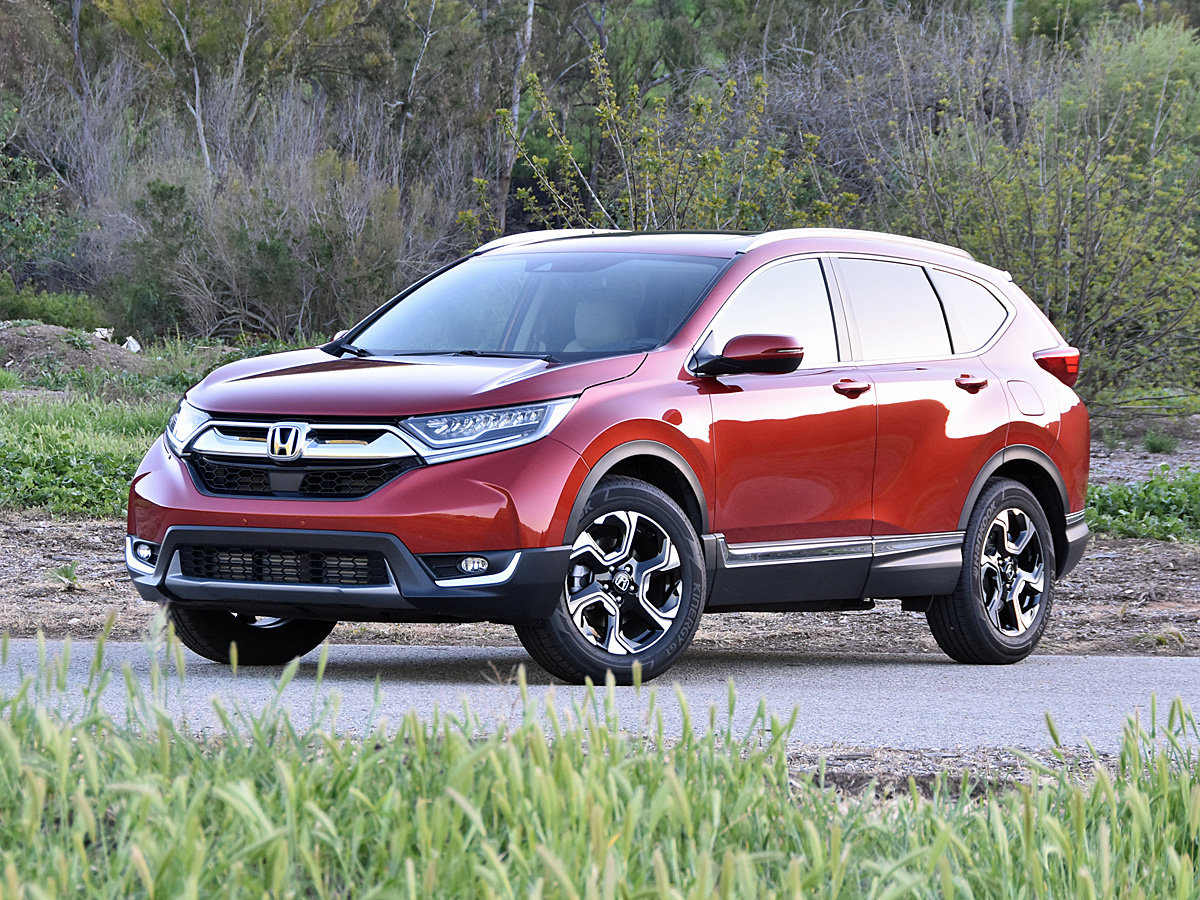
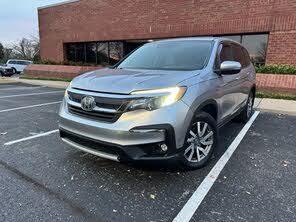
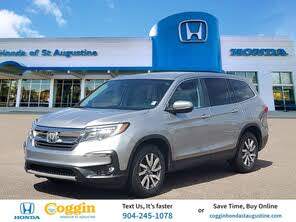
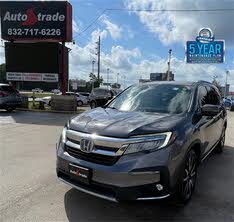
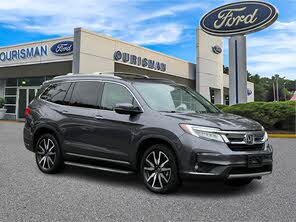
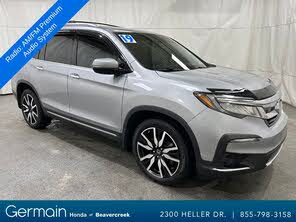
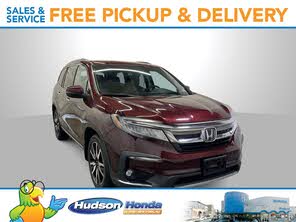
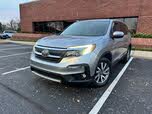
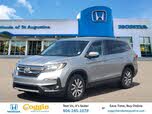
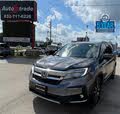
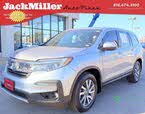
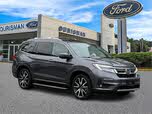
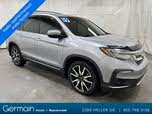
The 2019 Honda Pilot displayed subtle but noticeable visual updates that would catch the eye of an enthusiastic and knowledgeable Honda shopper. Its headlights looked more futuristic, and the lower front valence had a cleaner design. The grille area mirrored the recently refreshed Honda CR-V’s front grille but scaled up to Pilot size, complete with a larger Honda “H” logo, giving it a bold presence.
At the rear, the Pilot showcased enhanced detailing around the lower rear bumper, and the taillights incorporated more white and amber portions, imparting a slightly more distinguished look. Inside, the steering wheel, proprietary shifter, and infotainment system were updated, along with minor tweaks to the climate-control vents, making the interior both functional and modern.
The Pilot offered multiple trims: LX, EX, EX-L, Touring, and the range-topping Elite. The base LX came with 18-inch alloy wheels, push-button start, USB ports, Bluetooth connectivity, and a 5-inch color display. The EX added features like passive entry, LED fog lights, a 12-way power driver's seat, and an 8-inch Display Audio system with Apple CarPlay and Android Auto. The EX-L upped the ante with leather upholstery, power tailgate, moonroof, and additional luxury touches. The Touring trim included navigation, a premium audio system, and advanced rear entertainment. The Elite added even more luxury with a panoramic moonroof, heated and ventilated front seats, and a wireless charging pad.
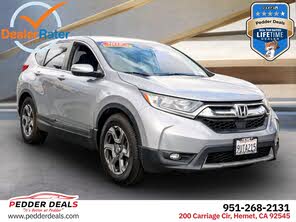
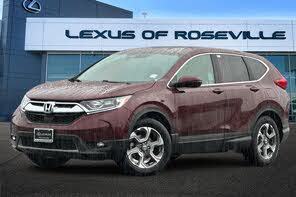
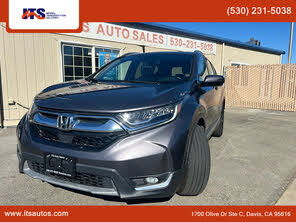
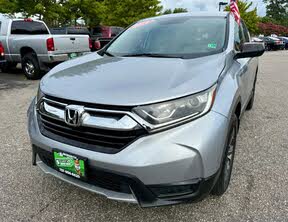
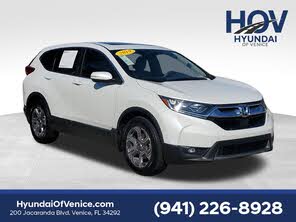
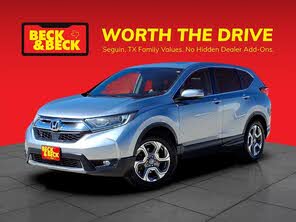
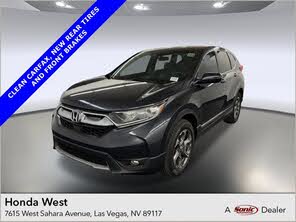
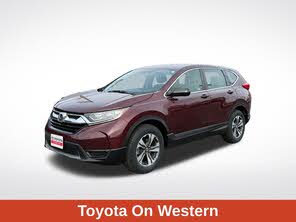
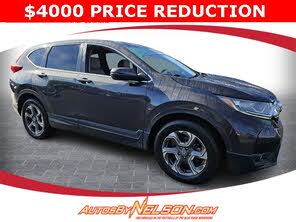
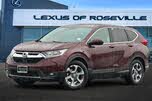
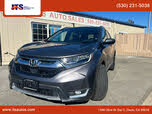
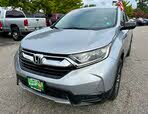
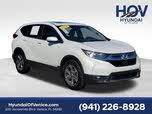
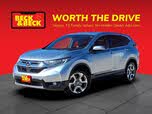
In contrast, the 2019 Honda CR-V streamlined its visual appeal across four trim levels: LX, EX, EX-L, and Touring, with options for front-wheel drive (FWD) or all-wheel drive (AWD). Prices started at $24,350 (plus destination charges). The CR-V LX, though basic, featured attractive 17-inch aluminum wheels. Higher trims received body-color trim, bigger 18-inch wheels, and rear privacy glass, giving the SUV a upscale look, especially from the rear.
Inside, the CR-V exuded quality with excellent materials, construction, and the test vehicle's two-tone tan-over-black interior treatment. The cabin layout was intuitive, and while the presence of hard plastic was noticeable, it didn’t detract from the overall premium feel. The lack of a height-adjustment feature for the front passenger seat was a notable downside, affecting comfort for some occupants.


The 2019 Honda Pilot was powered by a robust 3.5-liter V6 engine, delivering 280 horsepower and 262 pound-feet of torque. This engine featured cylinder deactivation and auto stop/start technology to improve fuel efficiency. Most trims came with a 6-speed automatic transmission, while the Touring and Elite trims received a 9-speed automatic designed for better power management and fuel economy. The 9-speed also included paddle shifters for a sportier drive experience. Despite strong acceleration, the Pilot's driving experience felt somewhat disconnected due to vague gas and brake pedal feedback and noticeable body roll, mimicking a minivan's ride quality.
FWD was standard, but AWD was available, particularly Honda’s Intelligent Variable Torque Management (i-VTM4) system, which was standard on the Elite trim. Drive modes included various settings for different terrains, enhancing its off-road capabilities. Fuel economy varied by trim and transmission, with the most efficient FWD Touring achieving 20 mpg city, 27 highway, and 23 combined.
The 2019 Honda CR-V LX came equipped with a 2.4-liter 4-cylinder engine producing 184 horsepower and 180 pound-feet of torque, paired with a CVT. Higher trims (EX, EX-L, Touring) featured a turbocharged 1.5-liter 4-cylinder engine delivering 190 horsepower and 179 lb-ft of torque. This engine was more responsive, offering satisfying acceleration and better fuel economy, though it had issues in cold weather with potential oil dilution. CR-V equipped with Real Time 4WD operated primarily in FWD, sending up to 40% power to the rear wheels when needed, suitable for slippery conditions rather than off-roading.
The CR-V’s driving dynamics were impressive, with a MacPherson strut front and multi-link rear suspension providing a balanced ride. Its dual-pinion, variable-ratio electric steering was responsive, and braking performance was excellent, even under demanding conditions.
The 2019 Honda Pilot excelled in accommodating passengers and cargo. It was one of the few midsize 3-row SUVs with adult-friendly third-row seating. With the third row folded, the Pilot offered 46.8 cubic feet of cargo space (46.0 in the Elite). With all seats folded, cargo capacity reached up to 83.9 cubic feet, slightly less in higher trims. This capacity was comparable to competitors like the Toyota Highlander and Subaru Ascent, but trailed behind the Volkswagen Atlas (96 cubic feet) and Chevrolet Traverse (98 cubic feet). The Pilot also featured numerous storage compartments and an impressive 15 cupholders distributed throughout the cabin.
The 2019 Honda CR-V, while smaller, provided ample room for passengers and cargo. It had 39.2 cubic feet of cargo space behind the rear seats, expandable to 75.8 cubic feet with the seats folded, rivaling some midsize SUVs. The lack of a height-adjustable passenger seat affected comfort, but the driver’s seat was highly adjustable and provided excellent comfort. The rear seats were spacious enough for taller adults and offered conveniences like air vents and USB ports.
The 2019 Honda Pilot featured an upgraded infotainment system with a Volume knob, a welcome addition. The 8-inch touchscreen (available on higher trims) featured crisp graphics and intuitive navigation, significantly improving over previous iterations. Higher trims also offered a flip-down rear entertainment screen with headphones, rear USB ports, and a mobile hotspot for streaming.
For parents, there were thoughtful features like the wide-angle cabin mirror and CabinTalk PA system on higher trims, which allowed the driver to communicate with rear passengers through the headphones or rear speakers.
The 2019 Honda CR-V boasted an upgraded infotainment system starting with the EX trim, including a 7-inch touchscreen, Apple CarPlay, Android Auto, SiriusXM, and HondaLink connected services. The interface included a Volume knob but lacked a tuning knob and menu shortcut buttons, making it less user-friendly. Voice activation was available but cumbersome to use, requiring specific prompts and frequently misinterpreting commands.
The 2019 Honda Pilot came standard with a comprehensive array of safety features, including front- and side-impact airbags, vehicle stability control, a reversing camera, and a tire pressure monitoring system. All trims included Honda Sensing, which offered forward-collision warning, adaptive cruise control, lane-departure warning, and automatic high beams. Advanced features like blind-spot monitoring required upgrading to higher trims.
The 2019 Honda CR-V’s safety suite, Honda Sensing, was included on all trims except the base LX. It provided adaptive cruise control, forward-collision warning with automatic emergency braking, lane-departure warning, lane-keeping assist, and a road-departure mitigation system. Higher trims also included blind-spot monitoring and rear cross-traffic alert. The CR-V was an IIHS Top Safety Pick, with only headlight performance preventing it from achieving the Top Safety Pick Plus rating.
CarGurus highlights

According to CarGurus experts, the overall rating for the 2019 Honda Pilot was 8.3 out of 10, while the 2019 Honda CR-V scored 8.0 out of 10. Both vehicles have their distinct advantages, but the Pilot’s higher rating combined with its superior third-row seating, powerful V6 engine, and extensive safety features make it the recommended choice for families needing a versatile and capable midsize SUV.
Choose the 2019 Honda Pilot if:
- You need a family SUV with adult-friendly third-row seating and ample cargo space.
- You value robust V6 performance and multiple drive mode capabilities.
- You prefer a vehicle equipped with extensive safety features as standard across all trims.



Choose the 2019 Honda CR-V if:
- You seek a compact SUV with strong fuel efficiency and peppy turbocharged engine options.
- You appreciate a spacious and high-quality interior with versatile cargo space.
- You want advanced safety and driver-assistance features available on most trims at an affordable price.

CarGurus highlights
According to CarGurus experts, the overall rating for the 2019 Honda Pilot was 8.3 out of 10, while the 2019 Honda CR-V scored 8.0 out of 10. Both vehicles have their distinct advantages, but the Pilot’s higher rating combined with its superior third-row seating, powerful V6 engine, and extensive safety features make it the recommended choice for families needing a versatile and capable midsize SUV.
Choose the 2019 Honda Pilot if:
Shop Now- You need a family SUV with adult-friendly third-row seating and ample cargo space.
- You value robust V6 performance and multiple drive mode capabilities.
- You prefer a vehicle equipped with extensive safety features as standard across all trims.




Choose the 2019 Honda CR-V if:
Shop Now- You seek a compact SUV with strong fuel efficiency and peppy turbocharged engine options.
- You appreciate a spacious and high-quality interior with versatile cargo space.
- You want advanced safety and driver-assistance features available on most trims at an affordable price.



By: CarGurus + AI
At CarGurus, our team of experienced automotive writers remain at the heart of our content operation, conducting hands-on car tests and writing insightful guides that are backed by years of industry experience. To complement this, we are harnessing AI to make our content offering more diverse and more helpful to shoppers than ever. To achieve this, our AI systems are based exclusively on CarGurus content, ratings and data, so that what we produce is both unique to CarGurus, and uniquely helpful to car shoppers.