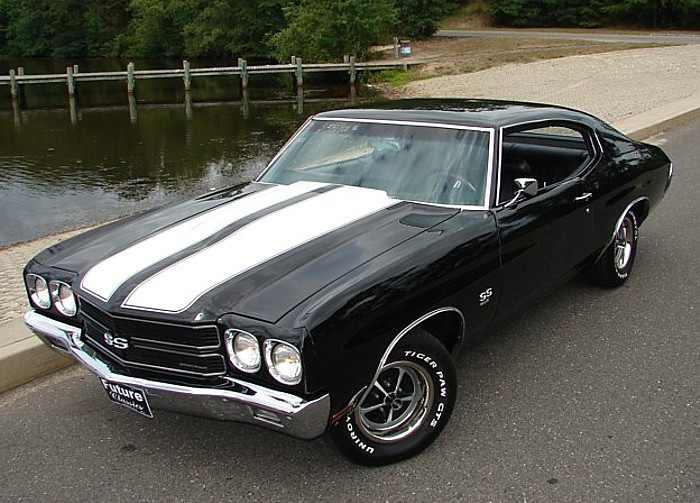
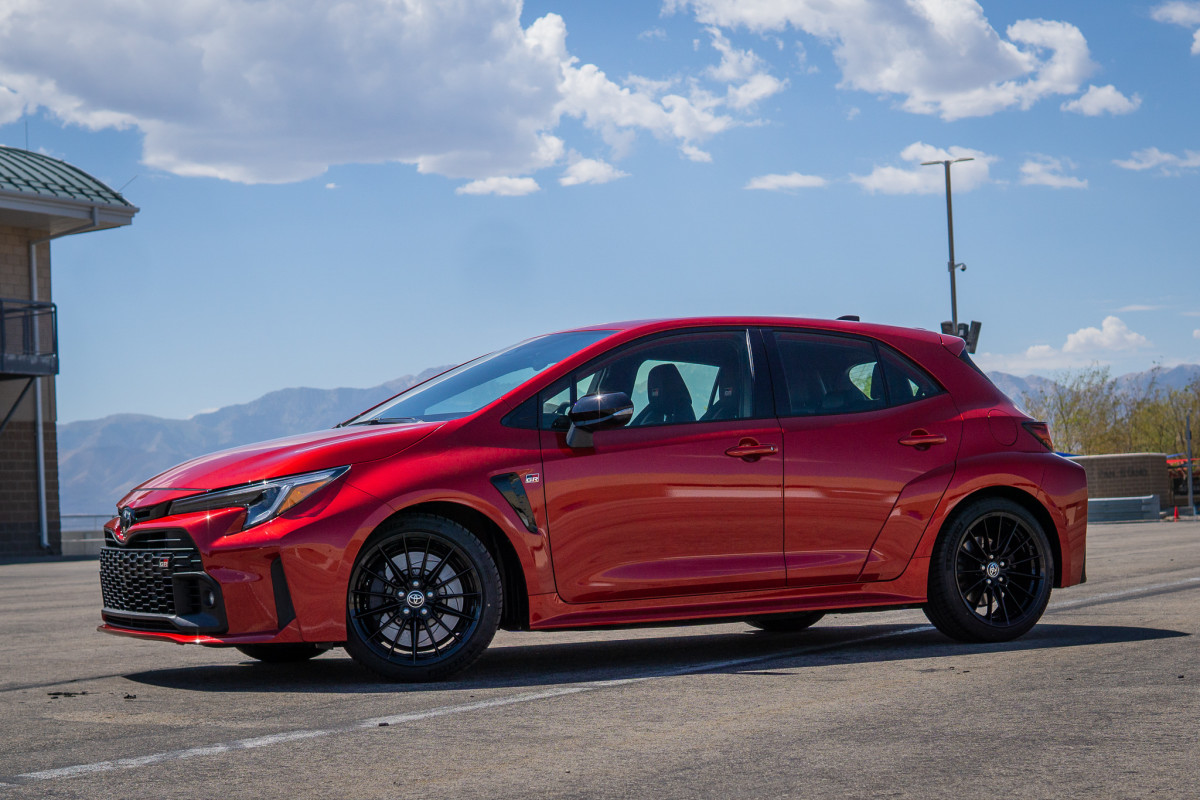
Muscle cars have been a cornerstone of American automotive culture since the 1960s, with legendary machines like the Chevrolet Chevelle, Oldsmobile 442, Pontiac GTO, Plymouth Barracuda, Ford Mustang GT, Dodge Charger, and countless others winning over anyone who craved a thunderous V8 rumble and exhilarating straight-line performance in their daily driver.
Even today, as the automotive world pushes further toward advanced driver assistance systems, intuitive electric vehicles, and autonomous technology, plenty of enthusiasts still crave a big, rowdy V8 wrapped in an affordable package.
You can't walk into a dealership and drive home a brand-new V8 muscle car for less than $45,000. More specifically, the only brand-new muscle car still standing is the Ford Mustang—which technically also qualifies as a pony car. All of its former rivals have either been discontinued or, in the case of the redesigned Dodge Charger, returned without a V8 under the hood. And since classic-era examples have climbed well out of reach for most enthusiasts, the smart money is on muscular late-model used cars.
Fortunately, there's no shortage of affordable muscle car options if you keep an open mind about what qualifies as a "muscle car" and you're willing to do a little hunting. In this guide, we've rounded up a selection of American muscle cars—plus one European wild card—priced under $20,000, along with some that can be had for less than $10,000. You can still track down something from the '60s or '70s in this price range, but expect a project car on your hands. Let's get into it.
The Best Muscle Cars You Can Get for Cheap in 2026
The Cheapest Seats: Muscle Cars Under $10,000
FAQs
What Makes CarGurus Best Cars Guides Different
Shopping Tools
Related Topics
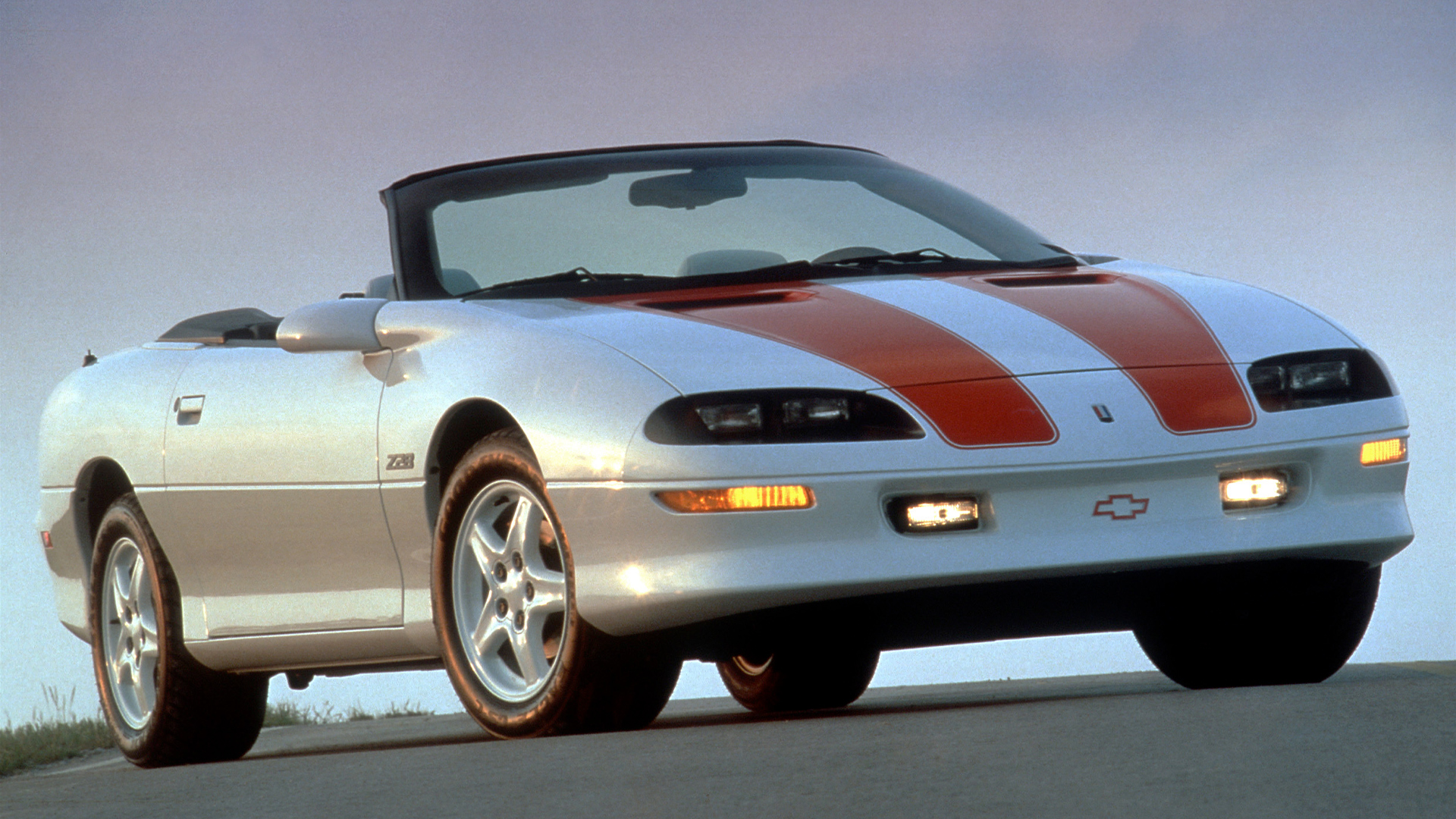
1993 to 2002 Chevrolet Camaro
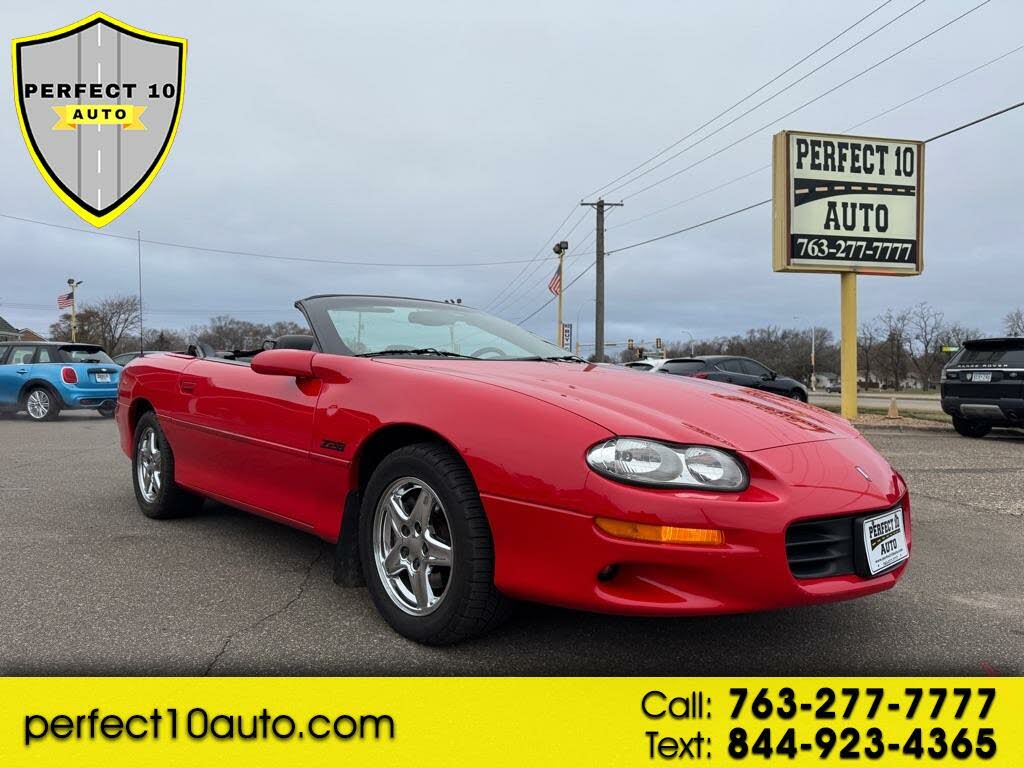
The sleek, wedge-shaped fourth-generation Camaro was unlike anything else on the road when it debuted in 1993, and it still commands attention today. A mid-cycle refresh in 1998 delivered more performance but split opinion with its revised fish-eye front fascia. These days, fourth-gen Camaros have achieved genuine classic car status, yet they remain modern enough to serve as everyday drivers—provided you don't live somewhere buried under snow for half the year. Beyond the striking exterior, these Camaros brought sharper driving dynamics, more power, and a more compliant ride than the generations that preceded them.
Two V6 options were available across these years, displacing 3.4 and 3.8 liters respectively. The 3.4 is best avoided, but the famously bulletproof 3.8 produced 200 horsepower and could reach 60 mph in around 7.5 seconds. Naturally, it's the V8s that attract the most attention, and three Chevy small blocks were on offer: the LT1, LT4, and LS1 (from 1998 onward). They produced roughly 275-285, 330, and 310 hp respectively, though the LS1 was deliberately underrated at the factory. V8 buyers could choose between a four-speed automatic or a six-speed manual—a step up from the more common five-speed of the era.
Today, the fourth-gen Camaro's cabin is a study in black plastic, and its zero-to-60 times don't carry quite the same shock value they did three decades ago, but there's still plenty to appreciate. These cars—especially pre-1998 models—carry the analog character of classic muscle cars while offering stronger performance, more robust crash structures than anything built before 1980, and solid long-term durability. Hatchback coupe examples tend to be the most affordable, but convertibles exist too, and with some patience you might even unearth a special edition like an Indy 500 pace car replica for under $20,000.
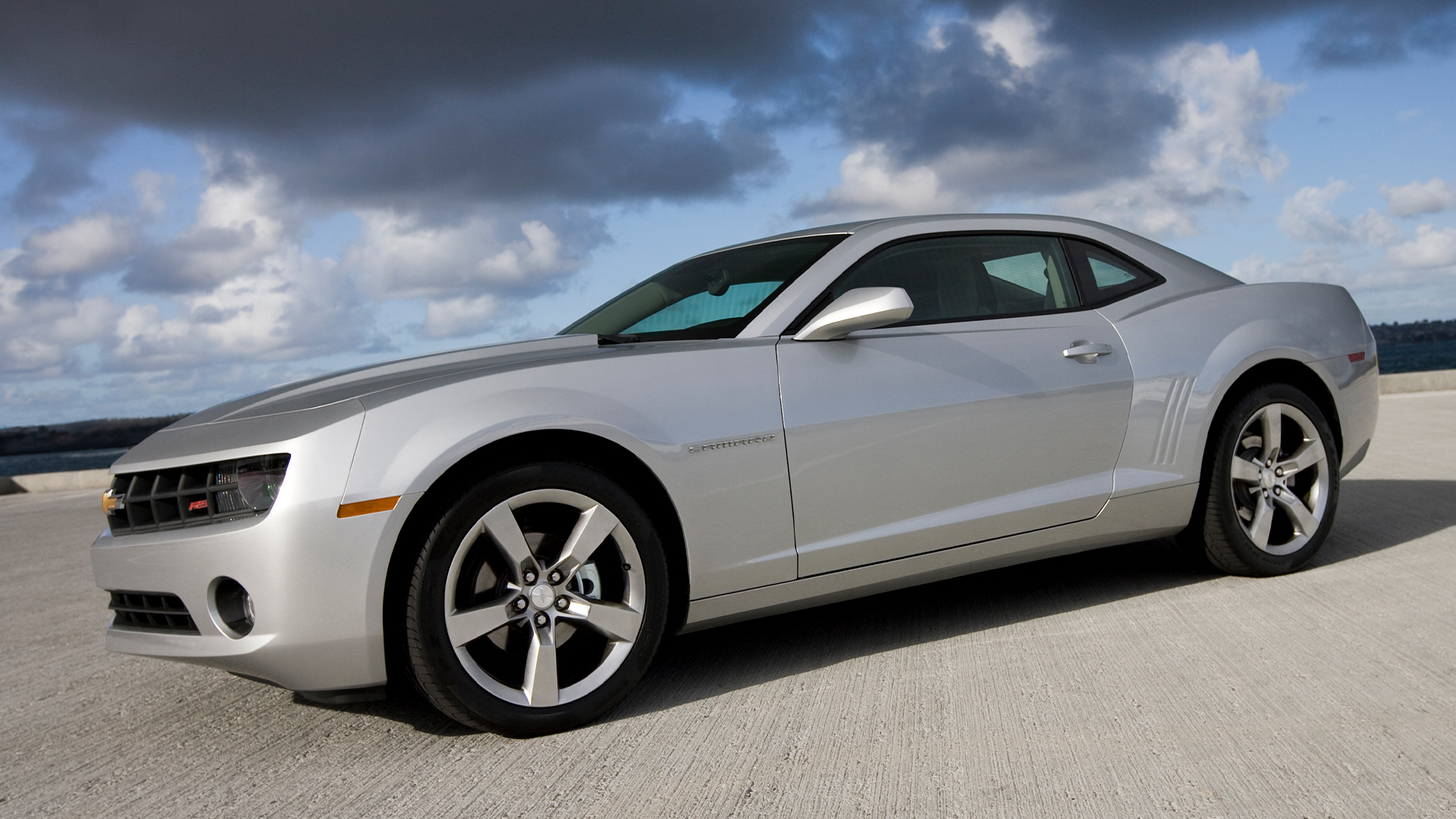
2009 to 2017 Chevrolet Camaro
The 2009 to 2017 model years span both the fifth-generation (introduced in 2009) and sixth-generation (new in 2016) Camaros, both of which wear retro-inspired styling that pays homage to the 1960s original.
After the fourth-generation model was retired in 2003 due to sluggish sales, Chevrolet brought it back for 2009, teasing the revival with the car's starring role in the 2007 blockbuster Transformers. The reimagined fifth-gen Camaro was a substantially better handler and quicker than any of its predecessors. To put that in perspective, the 2009 Camaro's base V6 produced 312 hp—more than the original LT1 V8 in the previous generation—while a pair of 6.2-liter V8s offered 400 and 426 hp from the outset, later joined by 5.3- and 7.0-liter variants pushing up to 580 horsepower through six-speed automatics or manuals across several configurations.
Today, fifth-generation V8 Camaros are plentiful enough that solid examples regularly surface for under $20,000, though the most extreme ZL1s and Z/28s remain out of reach at this price. Even the V6 models are no slouch—they're substantially quicker than any muscle car that rolled out of the 1980s. The main drawbacks? The interior is dark and claustrophobic, filled with plastic that feels decidedly budget-grade. It's retro in the same way the exterior is, and while there are some appealing touches, the overall feel is low-rent.
The sixth-generation Camaro arrived for 2015, looking nearly identical to its predecessor on the outside but featuring meaningful chassis upgrades that elevated it into the ranks of the sharpest-handling muscle cars ever produced. Power also increased, with a standard 275-hp four-cylinder that matches the output of V8s from 20 years prior. A 335-hp V6 and V8s producing 455 or 680 horsepower round out the lineup, along with a suite of mechanical options catering to track day enthusiasts. V8-equipped sixth-gens are harder to find at this price point, but they do exist. The interior criticisms from the fifth generation carry over here as well.
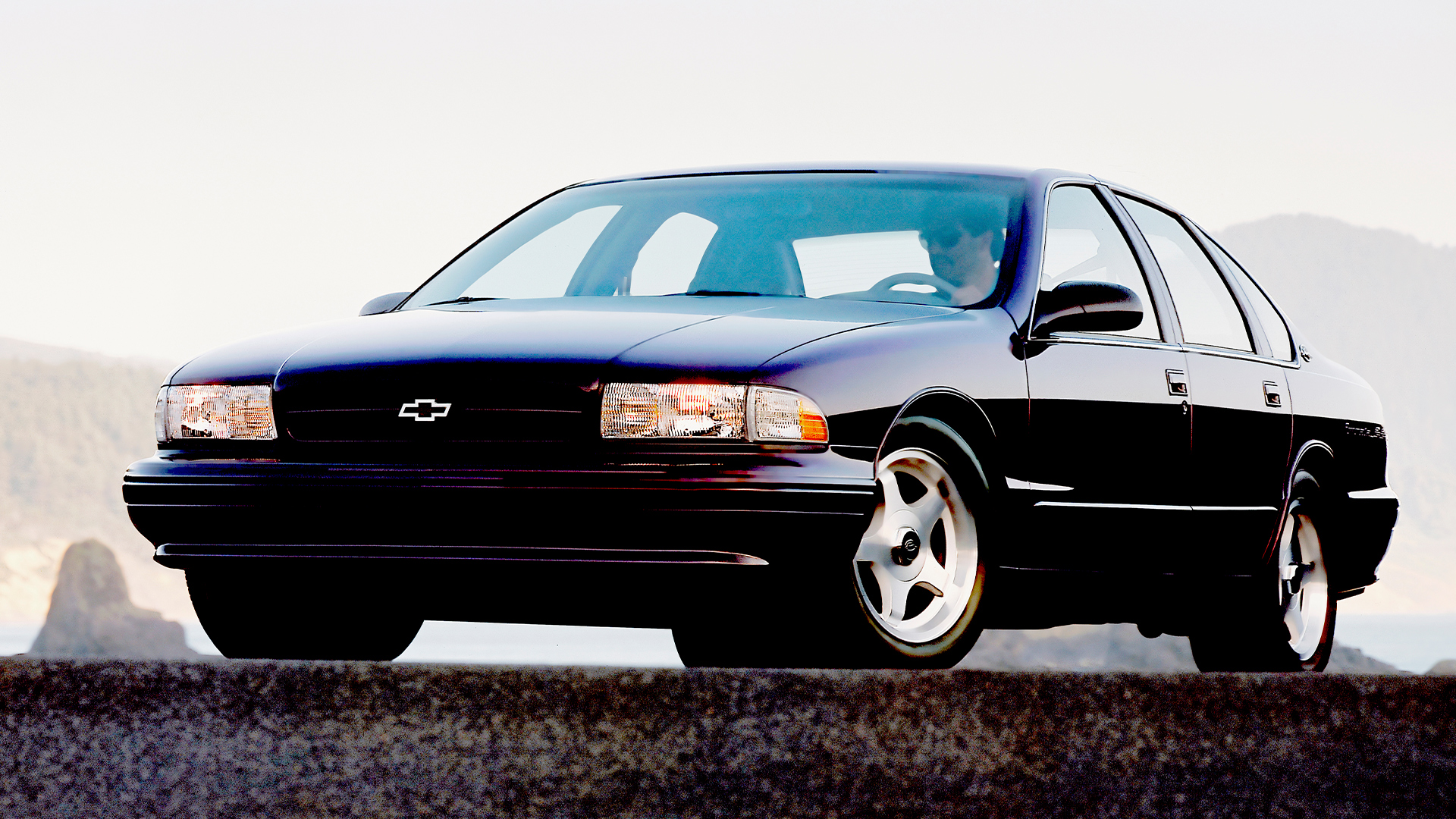
1994 to 1996 Chevrolet Impala SS
It was an unlikely concept. In 1992, Jon Moss, manager of Chevy's Specialty Vehicles Group skunkworks, channeled the spirit of AC/DC's "Back in Black" almost note for note by transforming a rear-wheel-drive (RWD) Caprice Classic police cruiser into a heavy metal hot rod packing an 8.0-liter V8. The Impala SS concept that year generated such an enthusiastic response that Chevrolet fast-tracked it for production, putting it on sale for the 1994 model year. The formula was elegantly simple: borrow the heavy-duty mechanical components from the police interceptor, bolt on some sharp rims and dual exhaust, drop the ride height, and unleash it with a 260-hp LT1 V8 and four-speed automatic transmission.
This same powertrain appeared in the Camaro in a slightly different state of tune, and for the era, the results were genuinely exciting. The Caprice Classic was a wallowing barge favored by retirees and law enforcement alike, but the Impala SS projected the menacing energy of a street-level hot rod. The legendary nameplate—dormant since the mid-1980s—stirred up plenty of nostalgia as well. While the Caprice quietly faded from the scene, the Impala's following steadily grew, but GM pulled the plug on all of its traditional B-body sedans in 1996 to free up production capacity for SUVs.
A collector's item from the moment it left the factory, the Impala SS isn't a drag strip terror by today's benchmarks, but it delivers genuine muscle car character and undeniable street presence. It's also a genuinely large sedan that comfortably seats five and offers more than 20 cubic feet of trunk space—a figure that shames most modern cars. Chevrolet's mechanicals are straightforward, reliable, and long-lasting, partly because they were engineered to withstand the rigors of police duty. With some diligent searching, a clean example can still be found for under $20,000.
It's worth noting that Chevy also built a V8 Impala SS from 2006 to 2009, but that car was a far less compelling front-wheel-drive (FWD) machine.
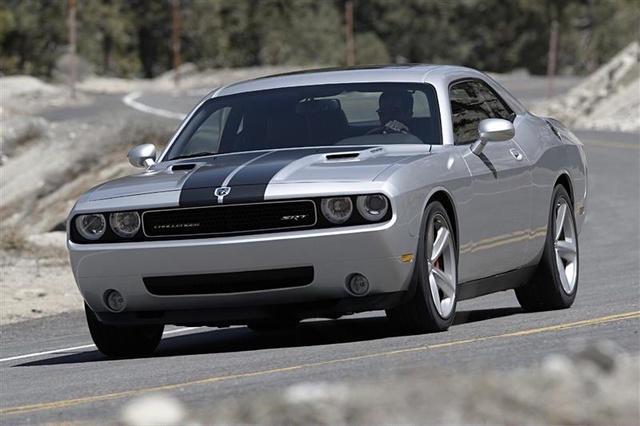
2009 to 2017 Dodge Challenger
One of the most eagerly anticipated new cars of the 2000s, the reborn Dodge Challenger made its triumphant return to showrooms in 2008 after decades away. While a Mitsubishi-based Challenger had briefly appeared in the late 1970s and early 1980s, this new generation drew its inspiration directly from the original 1970 model—one of the most ferocious entries in the first wave of muscle cars, developed right at the genre's peak. The modern Challenger echoed that original in more ways than one, arriving with a 425-hp Hemi V8 to back up its retro styling.
Unfortunately, both the revived Challenger and the new Camaro launched straight into the teeth of the Great Recession, which dampened early sales figures. Even so, the Challenger found a loyal audience for a relatively premium-priced muscle car, and Dodge continued refining it until production wrapped up in late 2023. In the early years, the 5.7-liter Hemi was joined by a 250-hp V6, which was later replaced by the more capable 305-hp 3.6-liter Pentastar V6 in 2011. That same year, the SRT8 debuted with a 6.4-liter Hemi producing 470 hp.
Pentastar V6-equipped Challengers are far from slow by historical standards, capable of reaching 60 mph in the low six-second range. At this price point, however, you should have no trouble finding plenty of older Hemi V8 examples, most of them wearing the R/T badge. The 2015 model year brought a modest refresh and the arrival of the fire-breathing SRT Hellcat, while an all-wheel-drive (AWD) GT variant joined the lineup in 2017. Well-preserved, low-mileage GTs can be elusive, and finding a respectable Hellcat for $20,000 or less is essentially out of the question.
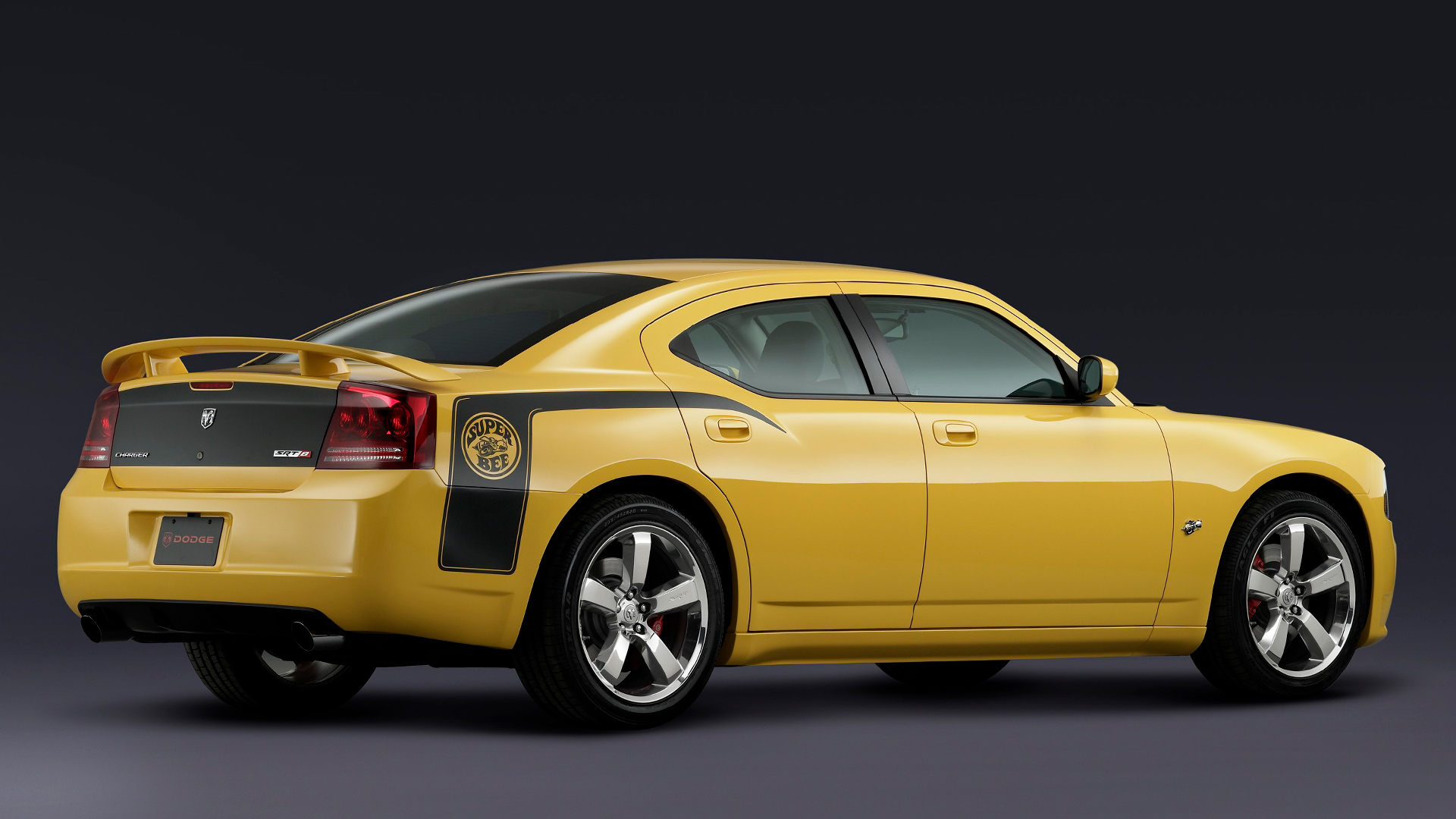
2006 to 2015 Dodge Charger
After years of tantalizing enthusiasts with bold four-door Charger concept cars, Dodge finally delivered the production version starting in 2006. Built on the Chrysler 300 platform with technology inherited from the long-ago DaimlerChrysler partnership, the Charger was a big, aggressive rear-drive bruiser in the same spirit as the Impala SS from a decade earlier—only with a broader lineup, more technology, and more power. Alongside the 340-hp 5.7-liter Hemi R/T, there were V6 models producing 178 and 250 hp, plus an SRT8 variant packing a 425-hp 6.1-liter Hemi.
Those early V8 versions also resurrected storied names from the past—Daytona and Super Bee among them—both reimagined versions of 1960s icons complete with period-inspired graphics. There are numerous special editions to explore, in part because the Charger remained in production all the way through late 2023. Over its long run, the car received continuous improvements, including a thorough refresh and visual overhaul in 2011 and further technology upgrades in subsequent years. The 5.7-liter Hemi eventually climbed to 370 hp, while SRT8 models pumped out 470 or 485. A 707-hp Charger Hellcat eventually joined the party, but those examples remain far too expensive for this list.
Beyond its intimidating looks and strong performance, the Charger brings genuine practicality to the table. It's a substantial car by current standards, with a cavernous trunk and a roomy back seat. While rear-wheel drive is the default, AWD models were available from 2007, though not always paired with the most powerful engines. The Charger also wears its age remarkably well in terms of styling. It may carry two extra doors to satisfy a purist's definition of a muscle car, but as a value proposition, it's hard to argue with.
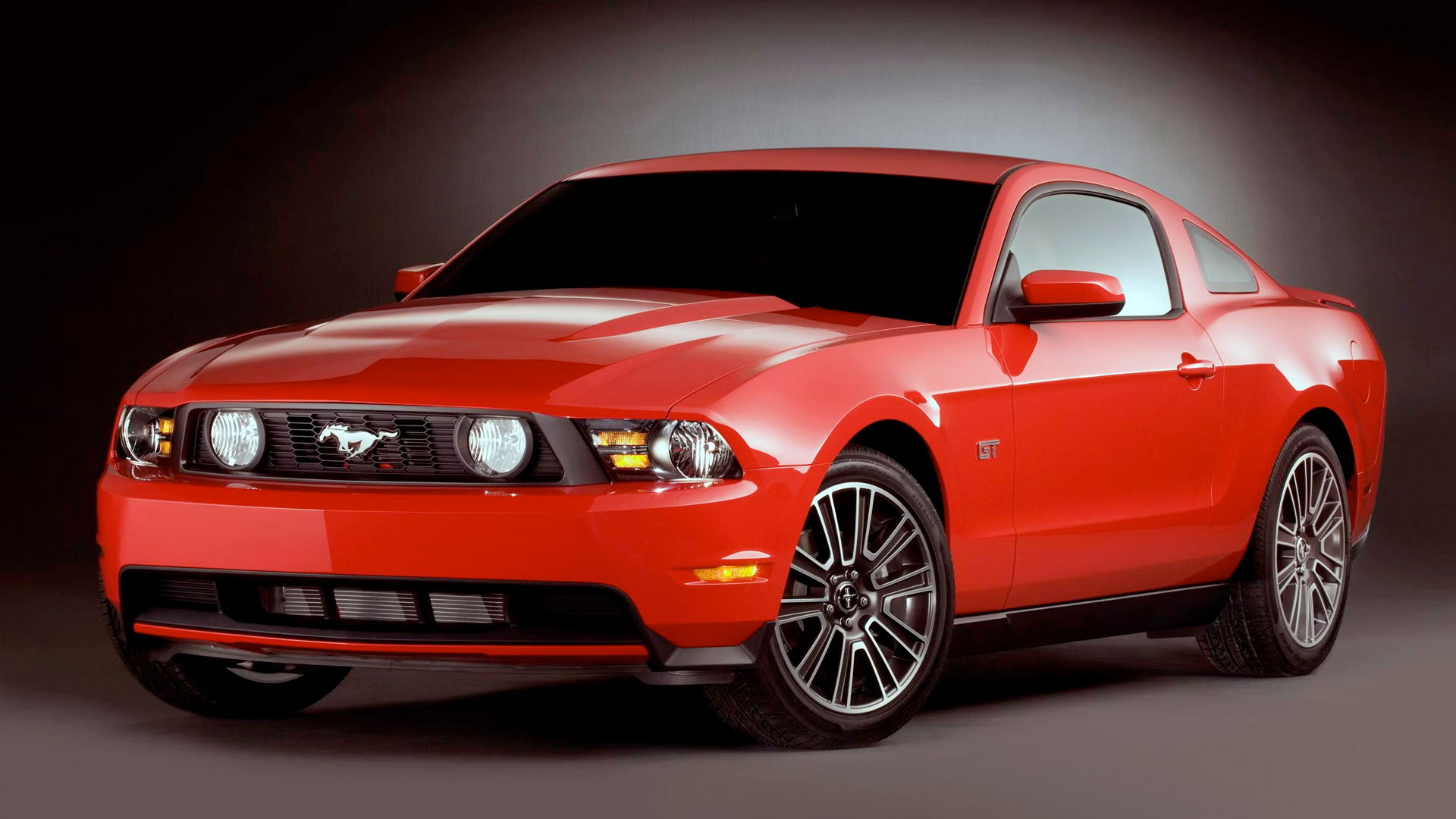
2005 to 2017 Ford Mustang
These model years cover both the fifth-generation (new for 2005) and sixth-generation (introduced in 2015) Mustang. Despite their shared lineage and broadly similar silhouettes, they're distinctly different cars to drive. As with the Camaro, the later Mustangs are sharper handlers and offer potent non-V8 powertrains that would have seemed unthinkable in earlier generations.
After spending a quarter century on the 1970s-derived "Fox" platform, the Mustang was completely redesigned for its 40th anniversary in 2005. The retro-flavored styling and modern interior were a dramatic improvement over the outgoing model, and V8 versions gained meaningful power in the process. The fourth-generation "S197" Mustang—named for its internal development code—initially offered a 4.0-liter, 210-hp V6 or a 300-hp 4.6-liter V8, with a 315-hp "Bullitt" 4.6 and a 500-hp Shelby variant joining later. For 2005 to 2010 examples, the 4.6-liter V8 is the engine worth seeking out.
Ford gave the S197 a significant style and technology update for 2010, followed in 2011 by new powerplants: a 310-hp 3.7-liter V6 and the 412-hp "Coyote" V8 that continues to power high-performance Fords to this day. Both can be found for under $20,000 now, and the 2011-2014 S197 represents the most refined and powerful iteration of that generation. Boss 302 and Shelby variants of these later cars exist but still command a premium. Notably, 2014 Mustangs were frequently discounted heavily when new, depressing their resale values further, as the sixth-generation S550 debuted that spring.
Arriving for 2015 to mark the nameplate's 50th anniversary, the S550 Mustang was the most sophisticated version yet. In a significant engineering shift, it adopted a fully independent rear suspension and a new BMW-influenced front suspension design, resulting in genuine sports car handling that makes it a formidable track day weapon. The Coyote V8 carried over, but the headline news for budget-minded buyers was the debut of the 2.3-liter EcoBoost turbocharged four-cylinder. Producing 310 hp in a lighter package than its stablemates, it's arguably the most entertaining four-cylinder muscle car ever built, capable of sprinting to 60 mph in just five seconds.
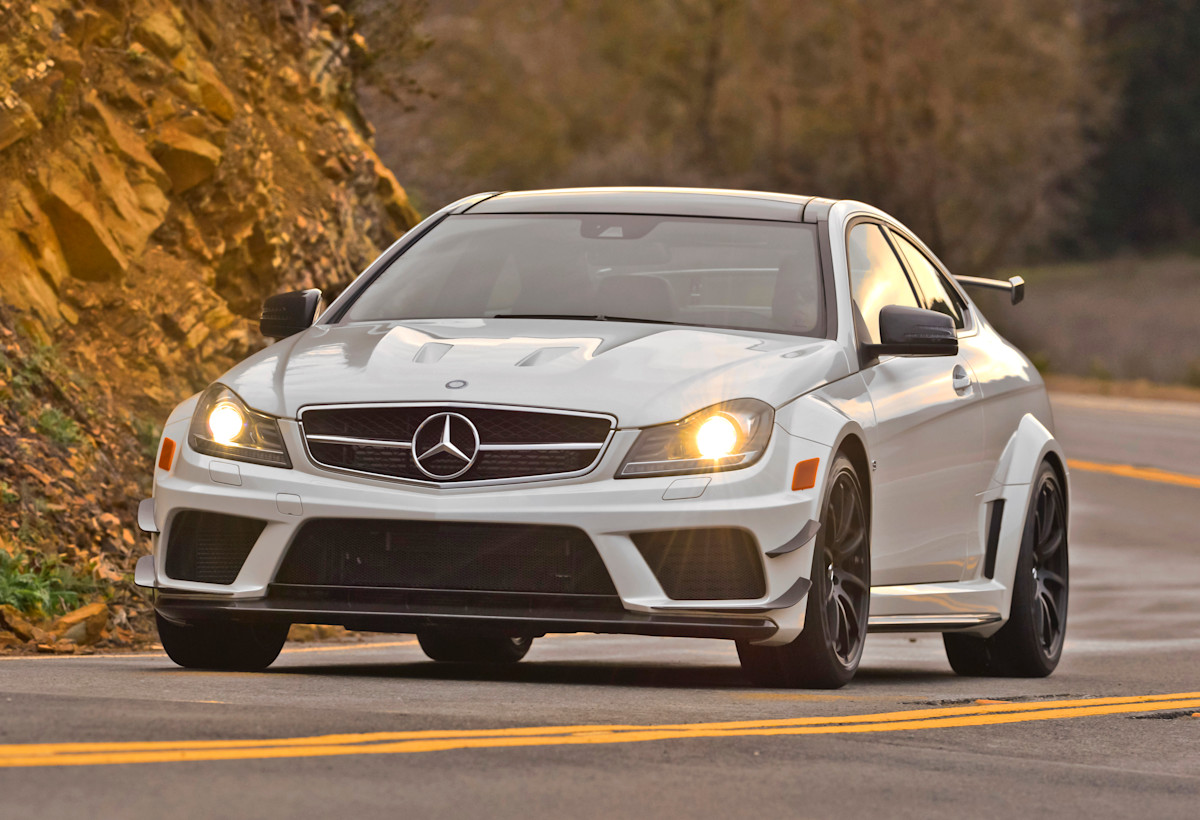
2008 to 2015 Mercedes-Benz C63 AMG
We couldn't resist throwing this fire-breathing C-Class into the mix. While it carries a Stuttgart address rather than a Detroit one, it speaks the muscle car language fluently—naturally aspirated 6.2-liter V8, rear-wheel-drive (RWD) layout, available in sedan or coupe form, and an exhaust note that will make the hair on your arms stand up.
Producing between 475 and 500 hp depending on the year and trim level, these cars are absolute weapons, capable of running door-to-door with supercars of their era. They'll dispatch the 0-60 sprint in under four seconds, lay down impressive smoky burnouts and drifts on demand, and still function as a composed, comfortable luxury daily driver when you need them to. Starting in 2012, a new coupe body joined the sedan, offering a silhouette that ages particularly well. That same year brought a light refresh to the lineup, along with a handful of reliability refinements—the later the model year you can source, with a thorough service history, the better. When shopping, watch for accelerated suspension bushing wear and potential issues with the engine's head bolts. Outside of those minor concerns, these are surprisingly robust machines.
Depending on mileage and condition, this ferocious, under-the-radar Mercedes can represent outstanding value for anyone chasing European V8 thrills. And if an all-American muscle car isn't a strict requirement, also consider the Lexus RC F, the Porsche Panamera GTS, or virtually any Audi sedan, wagon, or coupe wearing the legendary RS badge.
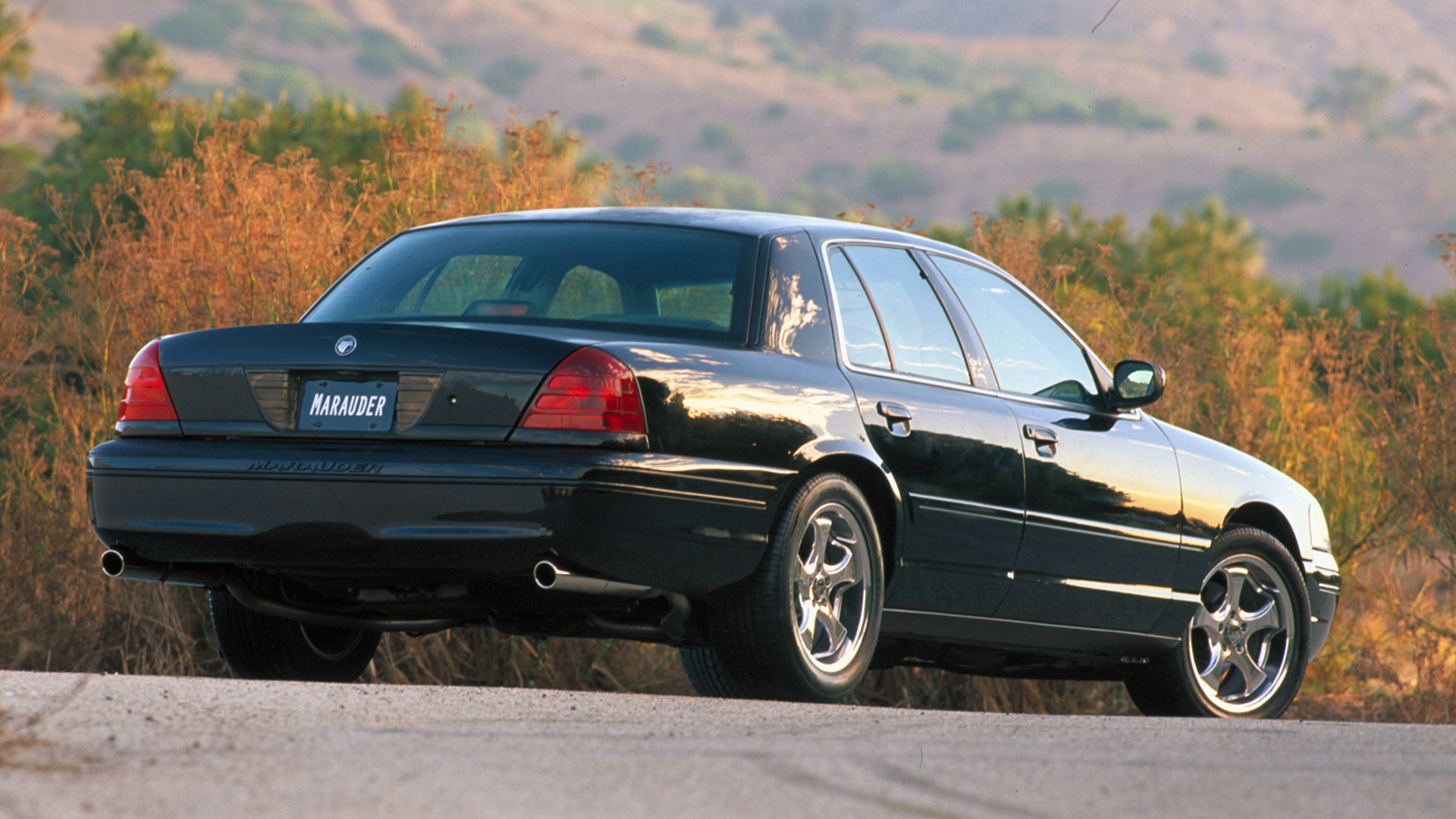
2003 to 2004 Mercury Marauder
Watching Chevrolet score a hit in the 1990s with the Impala SS, Mercury decided to run the same play with the 2003 Marauder. The platform here was the stately and conservative Mercury Grand Marquis sedan, supplemented with hardware borrowed from the Ford Crown Victoria P71 Police Interceptor. Add some bold chrome wheels, subtly restyled bumpers, and the mechanical upgrades from the Interceptor, and you had yourself a genuine muscle car in the grand tradition.
The name, like the Impala's, was resurrected from a high-performance model of the past—the 1960s Marauder, which had once been a force to be reckoned with in stock car racing. Nearly all examples were finished in black, though a handful were delivered in silver, blue, and burgundy monochromatic schemes. Every Marauder came equipped with a 302-hp version of Ford's 4.6-liter "Modular" V8—the same engine found in the Mustang—and could reach 60 mph in roughly six seconds, which was genuinely impressive for a two-ton sedan at the time. The menacing presence didn't hurt either.
Mercury fell well short of its sales targets for the Marauder, which is why the model lasted only two years. A lower-profile alternative with essentially the same mechanical package was offered by Ford as the Crown Victoria LX Sport. In both cases, the front bench seat gave way to bucket seats and a center console, but these remained enormous sedans capable of hauling five passengers and all their belongings in comfort. Marauders are becoming harder to come across, but they still don't command eye-watering prices unless you're looking at near-pristine, low-mileage originals.
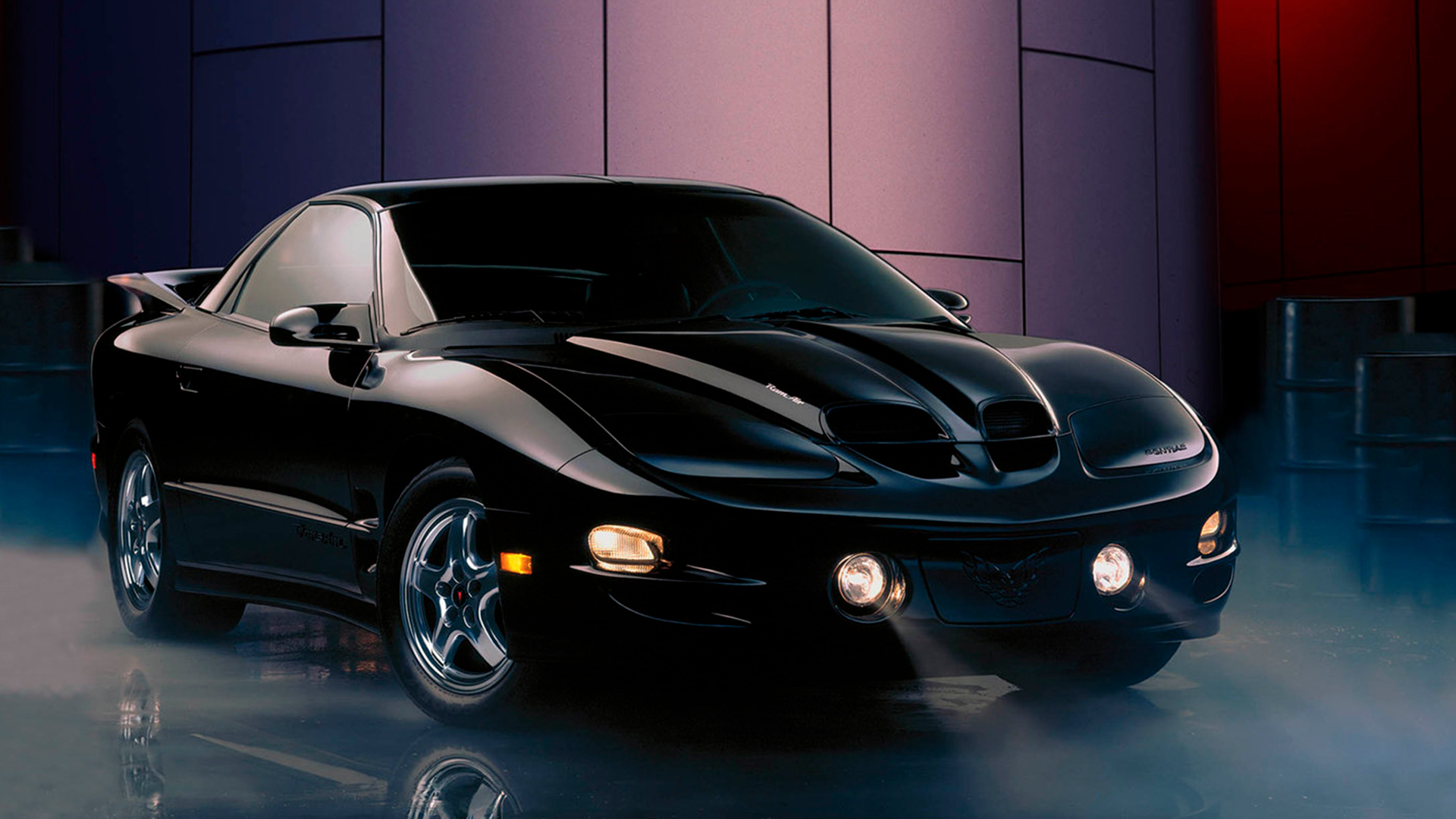
1993 to 2002 Pontiac Firebird
Sister car to the Chevrolet Camaro of those same years, the fourth-generation Pontiac Firebird cut an even wilder profile than its Chevy stablemate when it was new. The retractable pop-up headlights, when closed, gave the front end an almost otherworldly aerodynamic appearance, and the Firebird looked every bit like a production concept car—specifically the 1988 Pontiac Banshee. As with the Camaro, the 1998 refresh was a polarizing update, though the Firebird arguably wore its new look better than its sibling.
A beloved name from a brand that no longer exists, Firebirds are somewhat rarer than Camaros and tend to carry slightly higher asking prices, but mechanically the two cars are closely related. Two V6 engines were offered, with the 3.8-liter, 200-hp unit becoming standard after 1996. All three V8 options were available as well, producing roughly 285 to 310 hp. Pontiac used the same transmission choices but applied its own suspension tuning, and of course the famous Trans Am variant remained the crown jewel of the lineup.
Like the Camaro, the Firebird's interior leans heavily on plastic, the driving position sits close to the floor, and the Trans Am rides a touch firmer than most variants. Even so, these Firebirds deliver real driving enjoyment while remaining practical and dependable day-to-day. They're also beginning to appreciate in collector value, particularly given the permanent disappearance of the Pontiac brand. Several special editions are out there, some with meaningful mechanical enhancements—the Firehawk and the 1994 Trans Am GT among them. Solid examples remain plentiful for under $20,000.
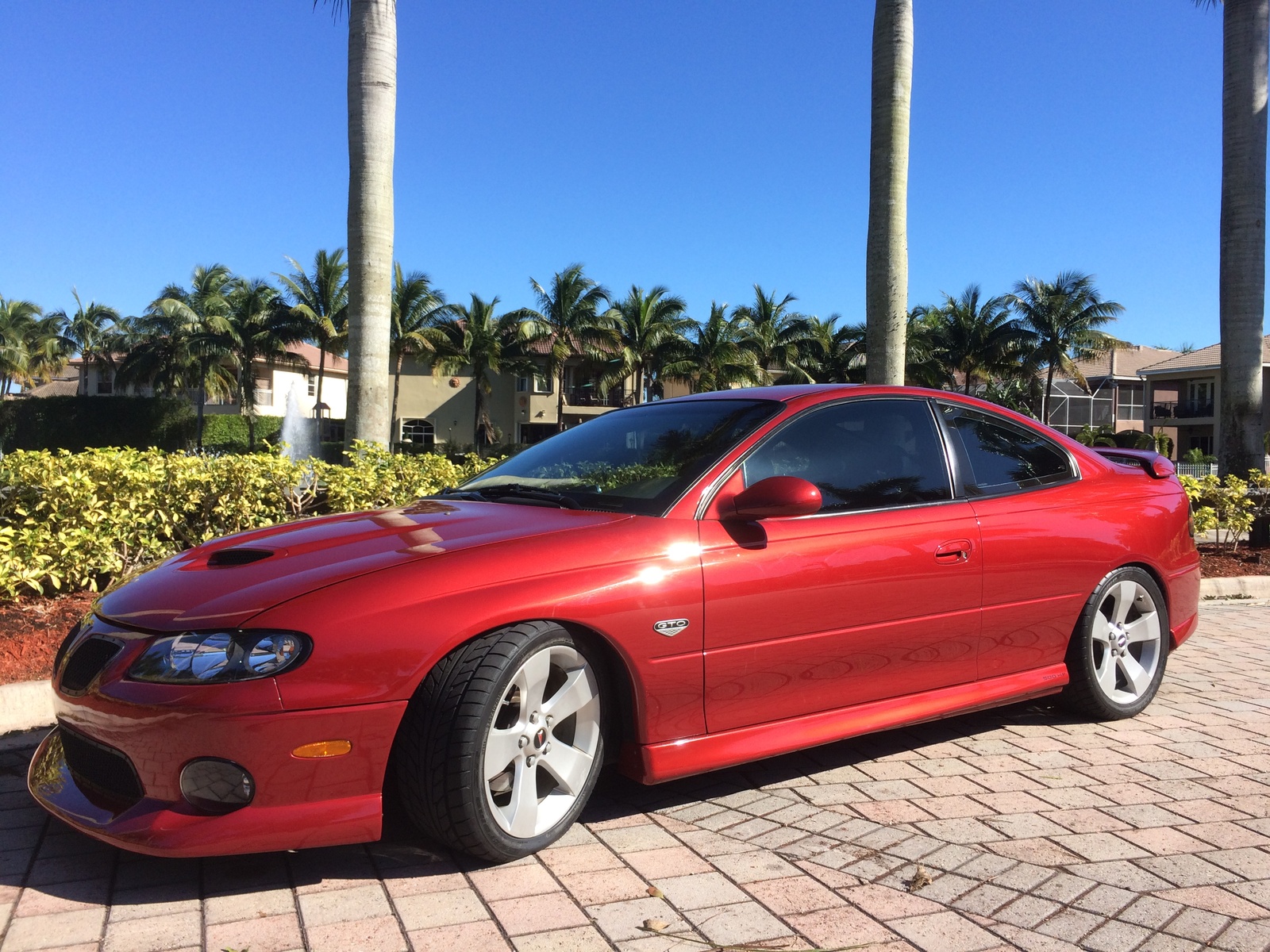
2004 to 2006 Pontiac GTO
Decades after being claimed by the early 1970s muscle car die-off, the Pontiac GTO was reborn for 2004 thanks to General Motors' Australian division, Holden. Down under, the classic muscle car formula never really died, with Holden and Ford Australia continuing to build traditional rear-drive performance cars well into the 2010s. One of those cars, the Holden Monaro, gave Pontiac a ready-made vehicle to reintroduce its storied GTO nameplate following the end of Firebird production in 2003. The idea traced back to a glowing Car & Driver review of the related Holden Commodore in 2000.
Because the Monaro was never sold in North America, the GTO was a genuinely unique product in Pontiac's lineup—and one that honored the name's heritage with substance. For 2004, power came from a 350-hp 5.7-liter LS1 V8, while 2005 and 2006 models stepped up to the 400-hp 6.0-liter LS2. Crucially, both engines were shared with the Chevrolet Corvette. With zero-to-60 times of five seconds or better and quarter-mile runs deep in the 12-second range, the GTO was the real deal. Pontiac simply failed to tell anyone about it.
The Monaro's understated styling was carried over largely intact, and many potential buyers felt it lacked the visual drama that Pontiacs were historically known for. The interior was refined and clean for its time but a bit characterless. As a result, sales disappointed and the GTO's run was cut short. As a used buy, however, it has all the hallmarks of a future classic: rare, fast, handsome in a subtle way, and genuinely unusual. Decent examples can still be found for under $20,000.
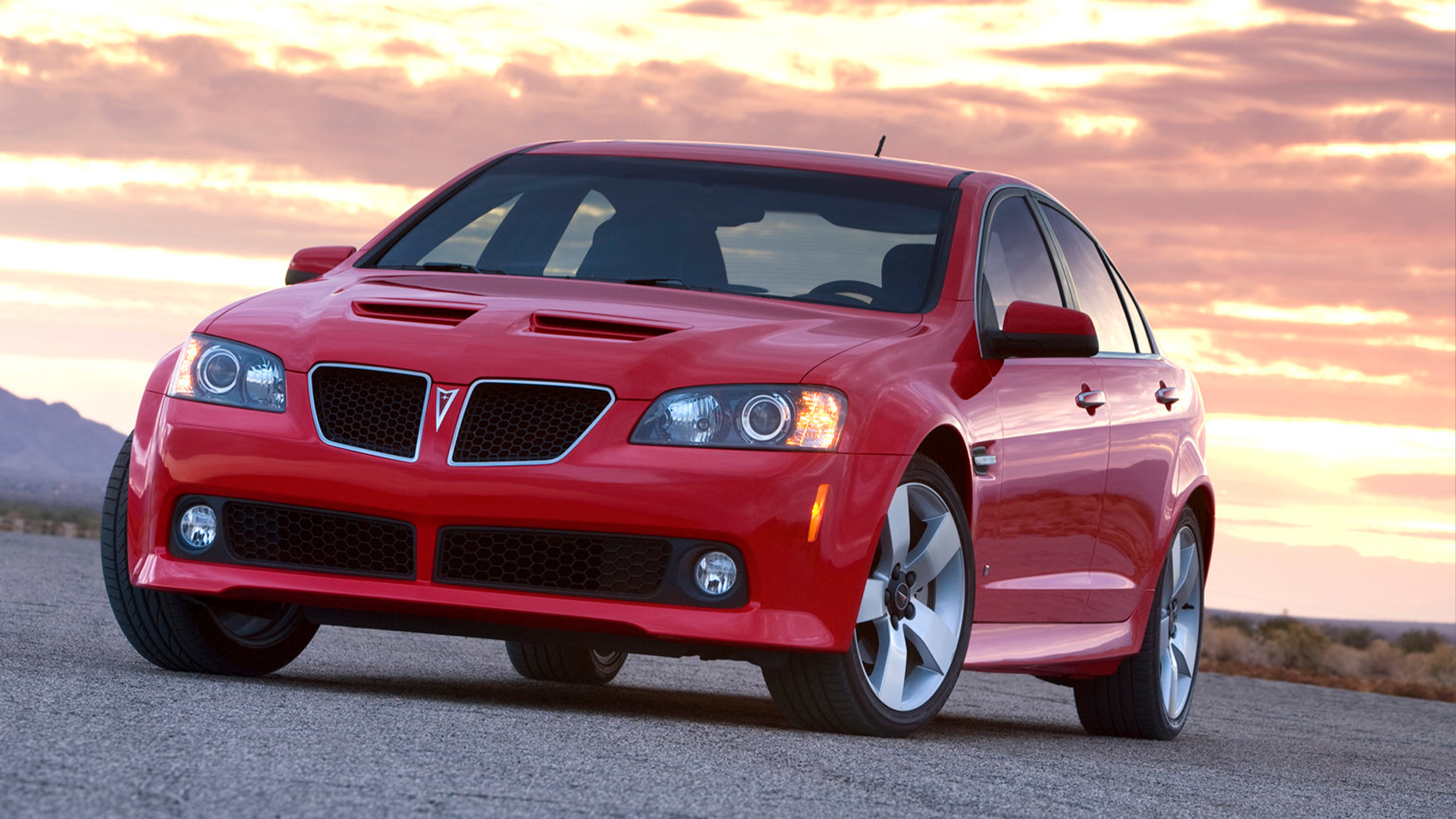
2008 to 2009 Pontiac G8
Despite the GTO's underwhelming sales performance, Pontiac wasn't ready to abandon the concept of an Americanized Holden performance car. In 2008, the idea resurfaced in the form of the G8, a sedan derived from the Australian-market Holden Commodore. When it arrived, the G8 was Pontiac's first genuinely new, traditional, RWD sedan in 30 years—a fact that sent muscle car enthusiasts into a frenzy. The G8 wore a more distinctly Pontiac face than the GTO, drove with the composure of a European sports sedan, and came with a noticeably more modern interior.
Three powertrains were available: a standard 256-hp 3.6-liter V6, a 361-hp 6.0-liter V8 in the GT, and a 415-hp 6.2-liter V8 in the top-of-the-line GXP. The GXP also came with an optional six-speed manual transmission, massive Brembo brakes, and a suspension tuned at the Nürburgring. Every version was a strong performer, but the G8 became a casualty of the Great Recession. Approximately 38,000 units were sold before both the G8 and the Pontiac brand were discontinued in 2009. The majority of G8s are V6-powered, and values have held up remarkably well for a short-lived car from a defunct brand—but G8 GTs in good condition can still be found for under $20,000 with some searching.
The G8's legacy didn't end there. General Motors clearly couldn't let the concept go, and from 2014 to 2017, an evolved version of the same basic car returned to the US market as the Chevrolet SS—a premium four-door performance sedan comparable in specification to the G8 GXP.
The Cheapest Seats: Muscle Cars Under $10,000
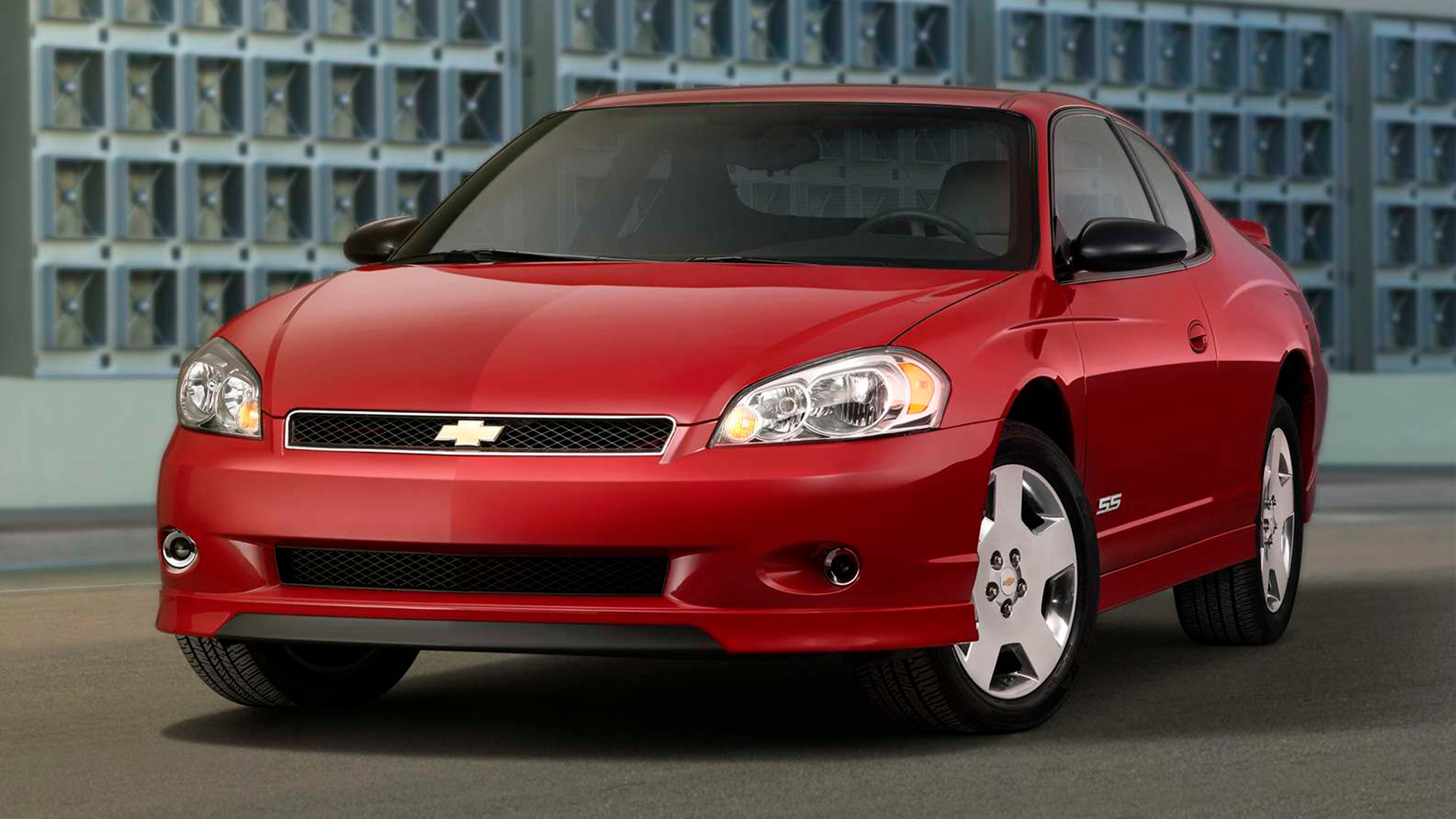
2006 to 2007 Chevrolet Monte Carlo SS
Old-school, RWD, V8-powered Monte Carlos—the kind that built the nameplate's reputation from 1970 to 1988—can still be tracked down for under $10,000, but you'll need patience and persistence. If you'd prefer something a bit easier to locate and considerably more modern, the very last Monte Carlo SS is worth a look. The Monte Carlo reappeared in the 1990s as a V6-powered front-wheel-drive (FWD) machine aimed squarely at the Chrysler Sebring and Toyota Camry Solara crowd, but in 2005 Chevy moved to reinvigorate the lineup by reaching back into the playbook, dropping a 5.3-liter V8 into a high-performance SS variant.
With 303 hp, a two-door body, and that unmistakable V8 soundtrack, this Monte Carlo SS ticks the traditional muscle car boxes. The catch is that the SS was built on an older FWD platform, which wasn't exactly the ideal foundation for 303 horsepower. Chevrolet countered with a sophisticated traction control system, but the result is pronounced torque steer that's hard to fully mask. Switch traction control off and spinning the front wheels requires almost no effort, even in relaxed driving.
Predictably, these cars have a voracious appetite for front tires, but they're genuinely entertaining and were quick by the standards of their day. Both Pontiac (the Grand Prix GXP) and Buick (the LaCrosse Super) received versions of this same V8 setup, as did the four-door Impala SS. Pontiac's take benefits from a superior suspension and tire package, but the Monte Carlo is the only one that looks like a traditional muscle car, and it's far easier to find than the Grand Prix GXP. Easier, though not necessarily easy—truly pristine examples will push past the $10,000 mark.
Search for Chevrolet Monte Carlo
See all
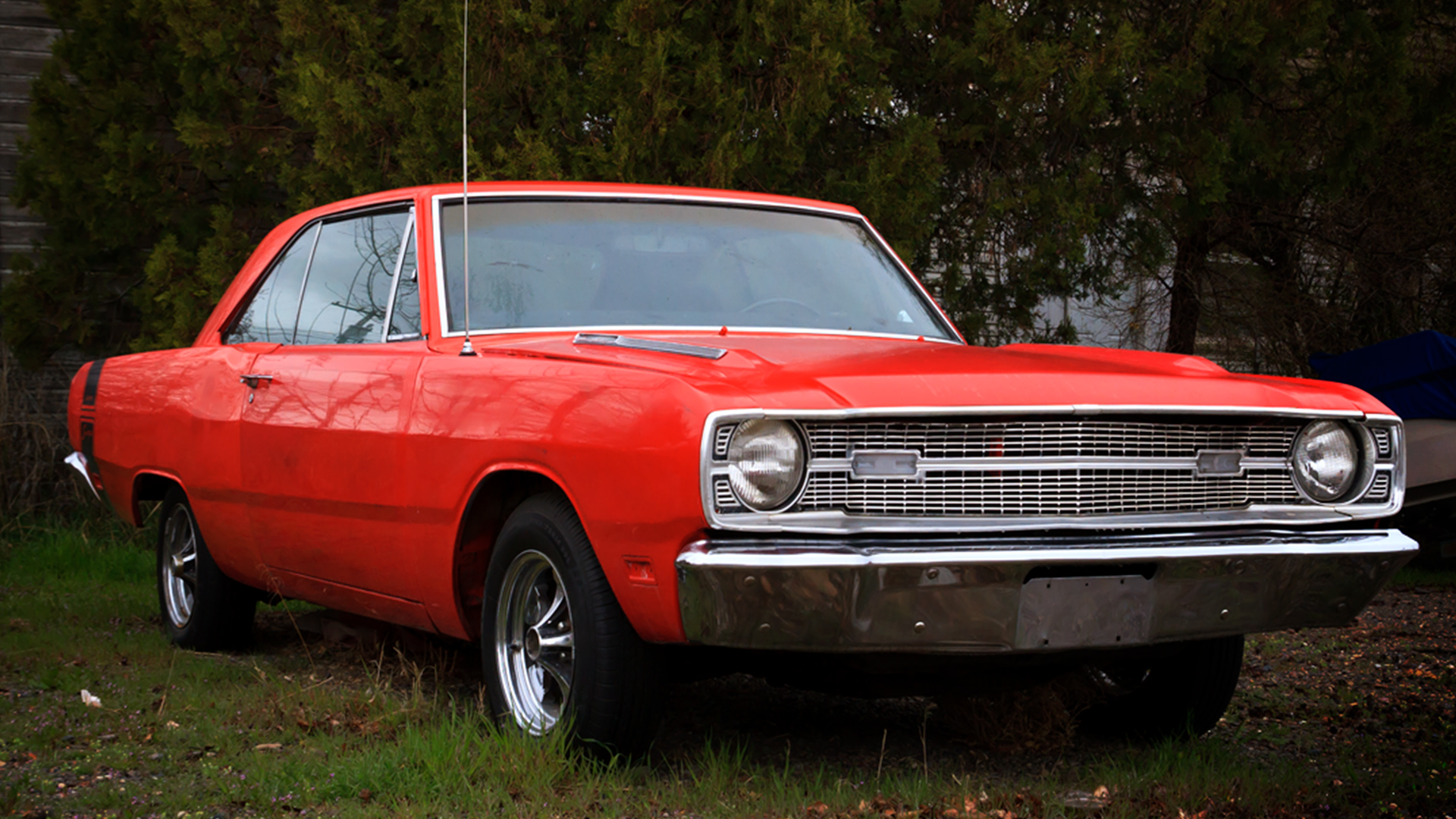
1967 to 1976 Dodge Dart
The only true old-school muscle car on our list, the Dart might catch younger readers off guard: it was primarily an economy car when it was new, and it held that role for what felt like an eternity. This Dart and its Plymouth Valiant sibling debuted in the fall of 1966 and remained on sale for a full decade. During the 1960s, there were plenty of hot variants—including the GT and GTS models—some packing the potent 340 (5.6-liter) and 383 (6.3-liter) V8s. Those examples are no longer findable for under $20,000, but there are plenty of more modestly specified 1960s and 1970s Darts that deliver the look and feel of that era, with later examples offering marginally more modern safety equipment.
No car of this vintage can be called truly safe by contemporary standards, but post-1971 Darts are guaranteed to have modern three-point seatbelts and front disc brakes, both of which make a meaningful difference in a real-world emergency. Engine outputs dropped sharply in the early 1970s under the weight of new emissions regulations, but the 318 (5.2-liter), 340, and 360 (5.9-liter) V8s still produced healthy torque figures, and over the past 50-plus years, many have been modified to extract considerably more performance. The Dart's relatively light weight compared to the bigger Mopar muscle cars of its era, combined with extensive parts-sharing with those same cars, makes it an exceptionally easy platform to modify—a characteristic that remains true today.
Because so many Darts were produced, they remain among the more commonly encountered 1970s cars. Non-V8 versions and sedan models are never in a rush, however, even if the standard "slant six" engine is famously indestructible. For genuine muscle car character, you'll want to seek out V8-powered, two-door examples—available in three body styles: a two-door sedan, a two-door hardtop, and a two-door Dart Sport coupe. Targeting later 1974-76 models with their impact bumpers will also lower the cost of entry.
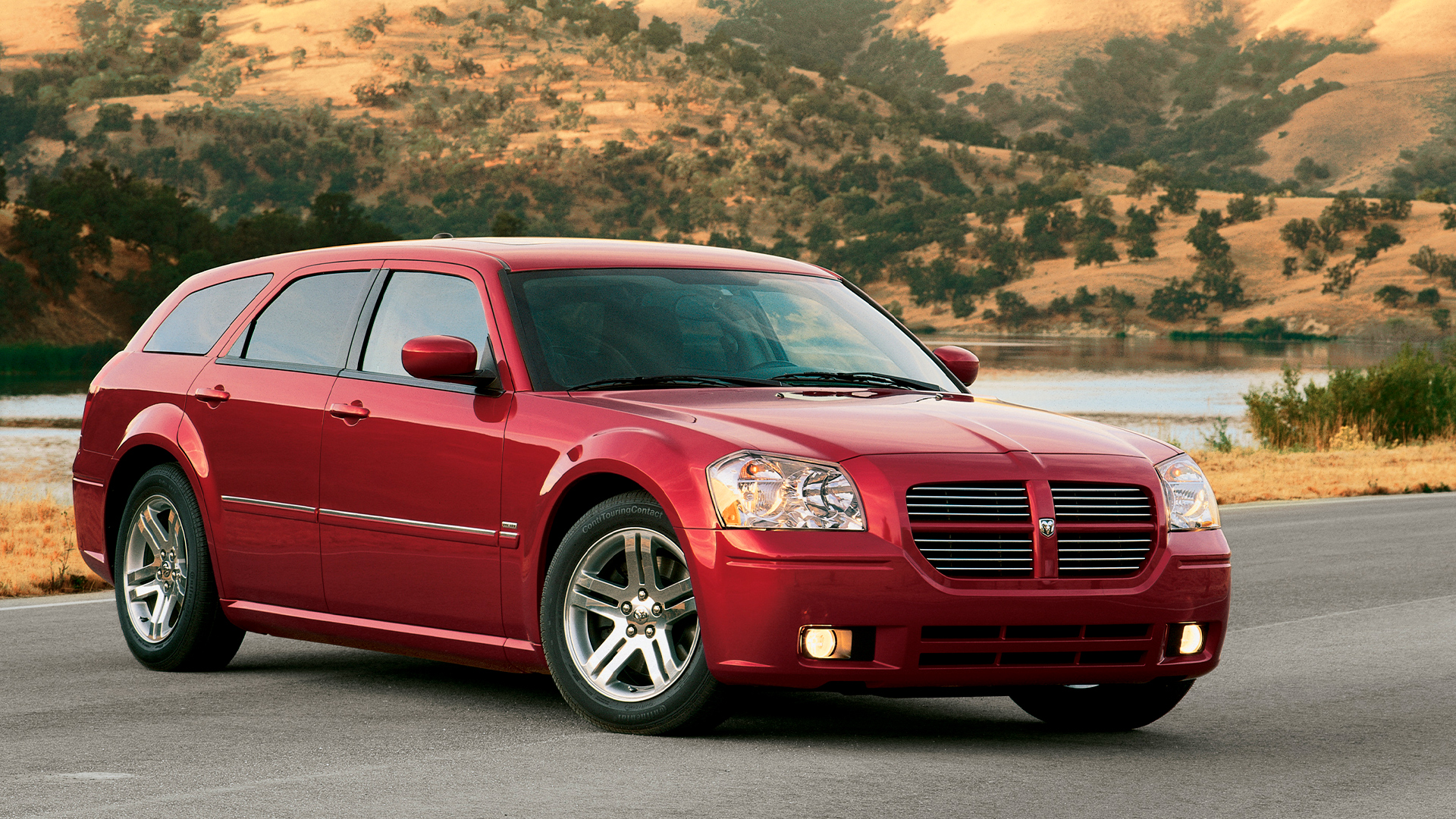
2005 to 2008 Dodge Magnum
Launched alongside the Charger in 2005, the Dodge Magnum was essentially a station wagon interpretation of that car. The Magnum shared its engines, chassis, and capabilities with the Charger—including the 5.7 and 6.1-liter Hemi V8s—it just happened to wear a far more practical wagon body. What enthusiasts celebrated, mainstream buyers largely ignored, preferring SUVs in overwhelming numbers. The Magnum was discontinued after just a few model years while its LX-platform siblings soldiered on through 2023.
Its relative obscurity and position near the bottom of its depreciation curve have made the Magnum exceptionally affordable. SRT8 examples won't surface at $10,000, but 5.7-liter V8 Magnums can be found at this price point without too much difficulty. They offer everything a comparable Charger delivers, with the added bonus of genuine wagon practicality.
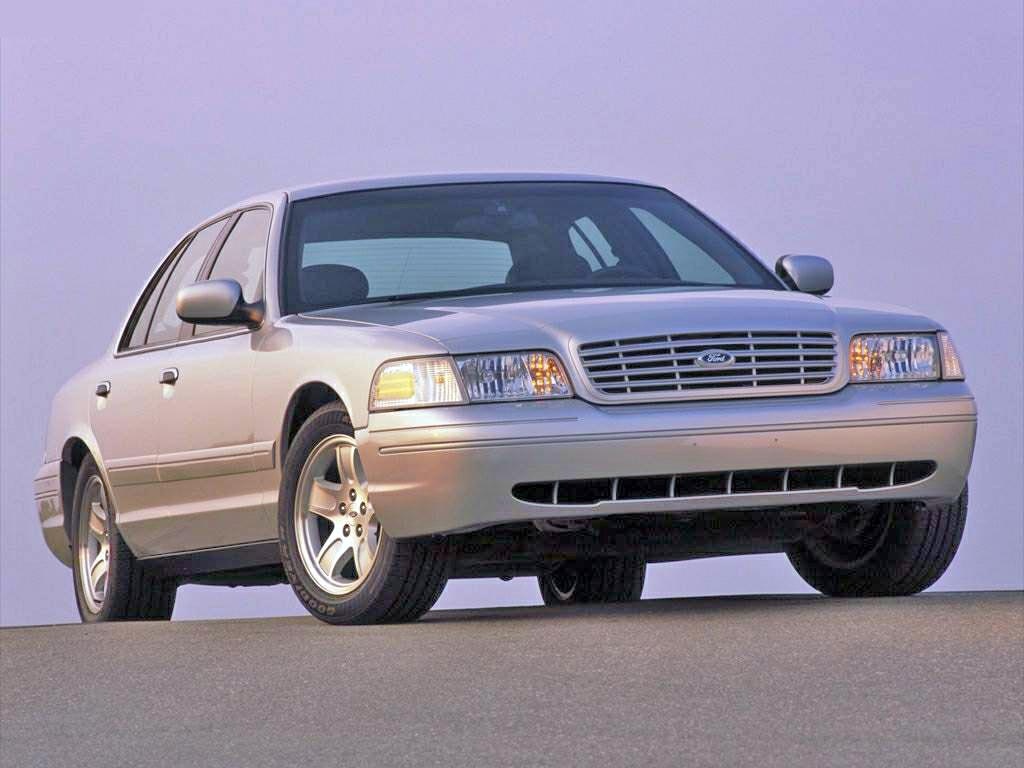
1998 to 2012 Ford Crown Victoria
Calling the Crown Victoria a "muscle car" in the traditional sense is a stretch, but as the 1990s Chevrolet Impala SS and the 2000s Mercury Marauder both demonstrated, all the ingredients are present. The Crown Victoria LX Sport from the mid-2000s was, after all, essentially the same car as the Marauder wearing more understated clothes. It's a large, traditional, V8-only, RWD sedan built on tough mechanical underpinnings—and best of all, it's affordable. The main caveat is that most available examples are former fleet vehicles, which in many cases have been worked harder than any performance car.
The platform underlying this car first appeared in late 1978 but was continually developed, so there's a wide range of model years to consider. Muscle car enthusiasts will want to focus on 2003 and newer examples. That was the year the Crown Vic gained rack-and-pinion steering, a package of chassis improvements, and a power increase to 224 hp for standard models and 239 hp for dual-exhaust versions. Police Interceptor models received a bump to 250 hp in 2004. Earlier cars look nearly identical but don't handle as crisply and were rated at 200 hp from the factory. All use some variant of Ford's 4.6-liter "Modular" V8, a platform with a rich catalog of available performance parts.
Crown Vic LX Sports don't fetch a large premium, but they're genuinely scarce, and a standard civilian version or a retired Interceptor will be far easier to locate. This is a two-ton car—the largest conventional family sedan of its era—so it doesn't exactly telegraph sportiness. But like the Impala and the Marauder, it compensates with space, comfort, and exceptional reliability. Police Interceptors come with spartan interiors as a matter of course, so factor that into your expectations if one is on your radar.
Search for Ford Crown Victoria
See all
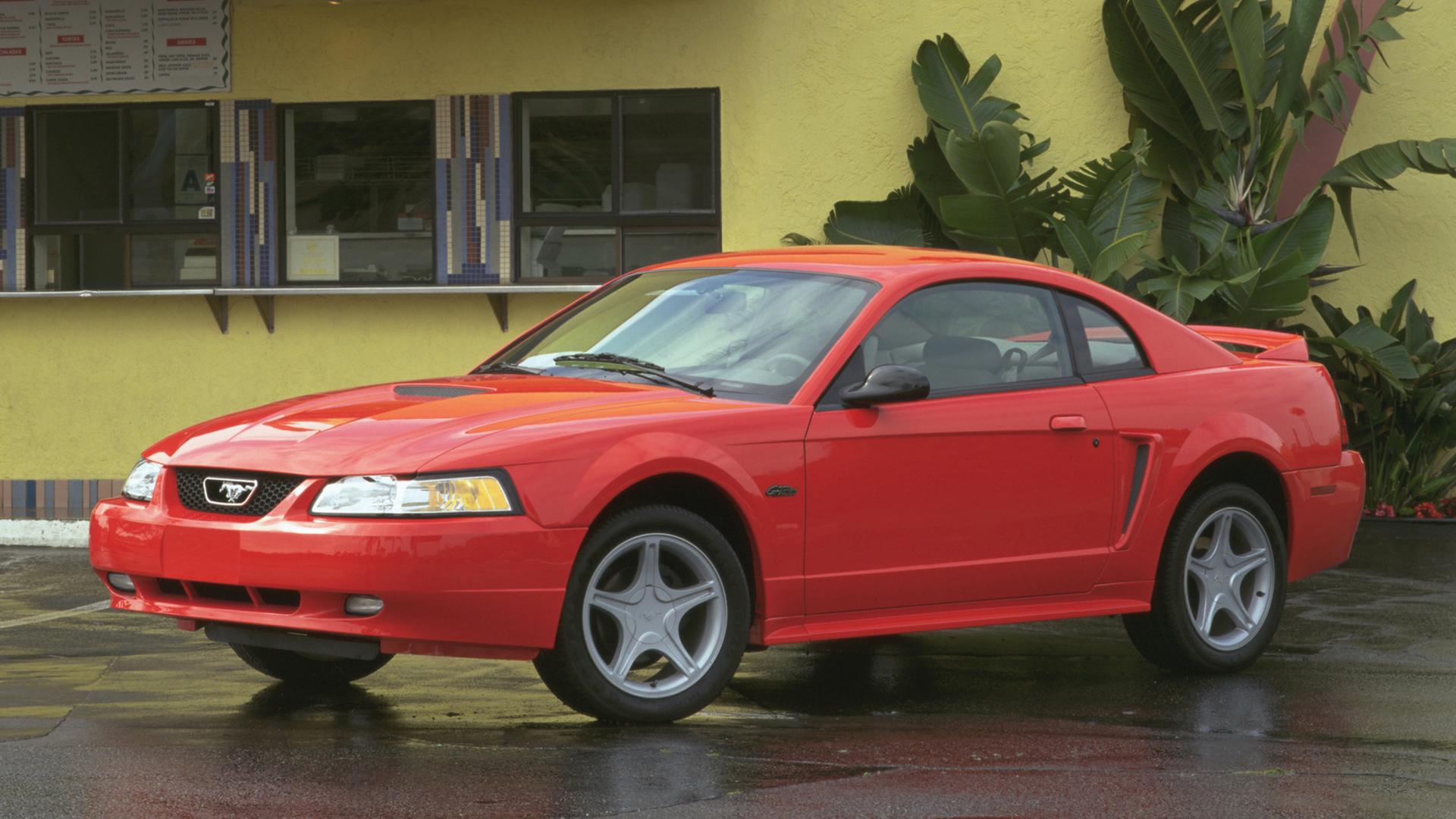
1994 to 2004 Ford Mustang
Redesigned for the first time in 15 years, the 1994 "SN95" Mustang brought a fresh exterior and interior while retaining familiar mechanical foundations. Underneath, it continued on the same platform as its predecessor and held onto the aging 3.8-liter V6 and 5.0-liter V8. Over time, the old V8 gave way to Ford's modern "Modular" single-overhead-cam 4.6-liter unit, though initial power output was a modest 215 hp. By 1999, that figure had grown to 260 hp, where it remained through 2004. More potent Cobra, Cobra R, and Bullitt variants existed with up to 390 hp, but their rarity keeps prices elevated.
Caught between the Fox-body Mustang—now a prized collectible among Gen-X and Millennial enthusiasts—and the faster, more sophisticated generations described above, the fourth-generation Mustang occupies an affordable middle ground that lacks some of the desirability of its neighbors. The styling has also aged less gracefully than other Mustang generations. Two distinct visual eras exist: the rounded "Jellybean" look from 1994-1998 and the sharper "New Edge" design from 1999-2004, though performance and capability are broadly similar between them. Six-cylinder versions feel slow by modern standards, but the V8 GT remains an entertaining companion. These cars are consistently available at bargain prices and aren't difficult to find.
The Best Muscle Cars You Can Get for Cheap in 2026 FAQs
What is the cheapest new muscle car you can buy today?
The Ford Mustang is the only brand-new muscle car still on sale, and you won't find one at a dealership for less than $45,000. All of its former rivals have either been discontinued or, in the case of the redesigned Dodge Charger, returned without a V8 under the hood. That makes the used market the most practical place to shop if you want affordable muscle car performance.
What are the best used muscle cars to buy for under $20,000?
Solid options at this price point include the fifth- and sixth-generation Chevrolet Camaro, the Dodge Challenger R/T with its Hemi V8, and the Ford Mustang GT from the 2005–2017 era. More unconventional picks like the Pontiac G8 GT, the Pontiac GTO, and even the Mercedes-Benz C63 AMG can also surface in this range depending on mileage and condition. Keeping an open mind about what counts as a muscle car — including four-door options like the Dodge Charger — significantly expands your choices.
What muscle cars can you actually find for under $10,000?
At the $10,000 threshold, your best bets include the 2005–2008 Dodge Magnum with the 5.7-liter Hemi V8, the 1994–2004 Ford Mustang GT, and the 2006–2007 Chevrolet Monte Carlo SS. The Ford Crown Victoria also fits the bill as a large, V8-powered, rear-wheel-drive sedan available at bargain prices, though most examples are former fleet vehicles. Classic-era cars like the 1967–1976 Dodge Dart are findable in this range too, but expect a project car rather than a ready-to-drive example.
Are discontinued Pontiac muscle cars like the Firebird and GTO worth buying used?
Both are genuinely compelling options for different reasons. The 1993–2002 Firebird shares most of its mechanicals with the Camaro of the same era, making it reliable and easy to maintain, while its rarity and the permanent disappearance of the Pontiac brand mean it's slowly appreciating in collector value. The 2004–2006 GTO is an even more unusual find — it came equipped with the same LS1 and LS2 V8s used in the Chevrolet Corvette and could run the quarter mile deep into the 12-second range, with decent examples still available for under $20,000.
What Makes CarGurus Best Cars Guides Different?
Most car-shopping websites publish lists of the best cars across a variety of categories, with recommendations generally driven by editorial expertise. Here's what makes ours different: In addition to the insights and verdicts of our team of car-testing experts, our best cars guides take into account other factors that we know matter to buyers-real owner experiences and current market value.
Our expert reviewers are among this country's most trusted automotive journalists, also writing for publications including US News and World Report, Edmunds, Digital Trends, J.D. Power, and Car & Driver. They put each car through real-world testing and create detailed reviews of performance in a range of categories, from practicality and driving manners to cost-effectiveness and safety.
We also analyze hundreds of thousands of used car listings on CarGurus.com to track which models consistently offer the highest percentage of best deals relative to how many are listed for sale. Then we factor in reviews from owners-people who actually live with these cars every day. Our proprietary Best Cars algorithm then creates a final Overall CarGurus rating combining expert scores, user reviews, and the percentage of listings that have earned the Good or Great Deal rating. This multi-pronged approach reveals not just which cars excel on paper, but which ones deliver satisfaction and value when you're ready to buy.
The CarGurus market data used in this guide was last updated in July 2026. Values were accurate at time of publication and should be used as a guide only.
Shopping Tools
Related Topics