2007 Chrysler 300 Reviews, Pricing & Specs
Write a review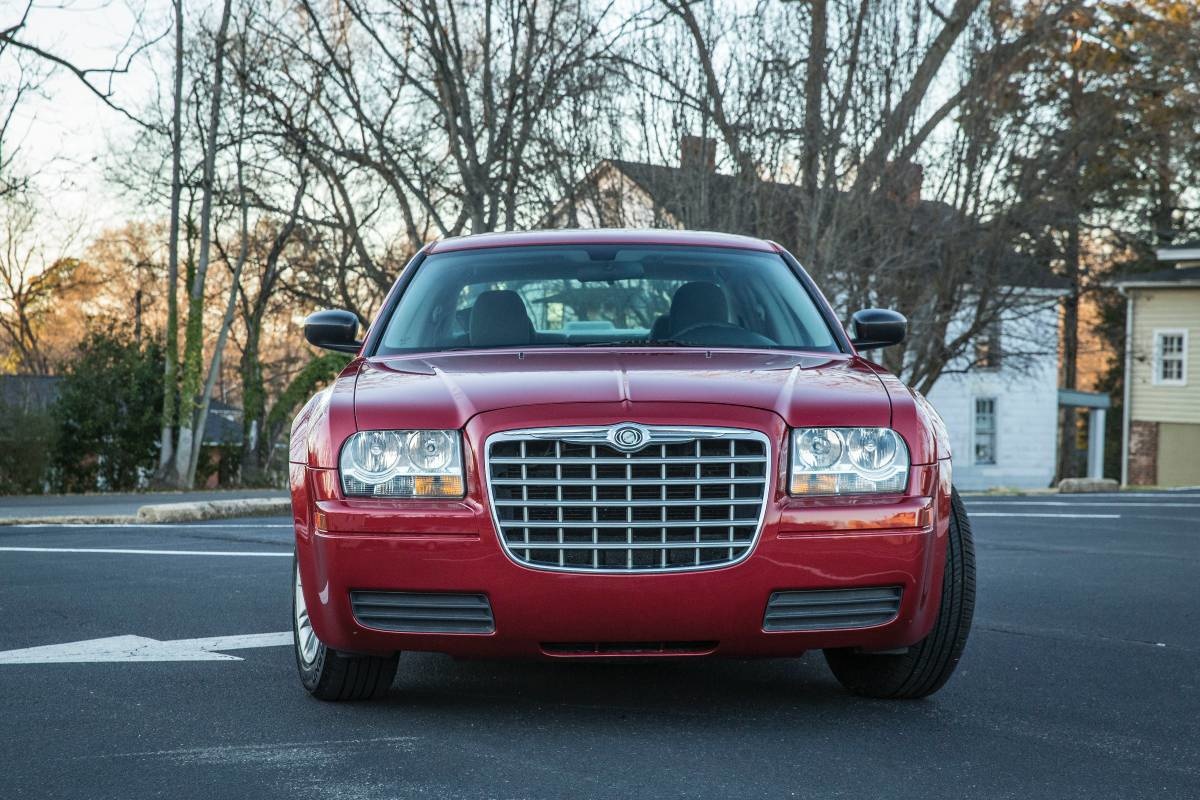
The Chrysler 300 is more than Detroit’s answer to German luxury sedans. It’s a great value that shows what can be accomplished with a large car when a company listens to its customers.
Since its arrival three years ago, the Chrysler 300 has been the company’s flagship sedan, and as such, it is available with a long list of luxury features and amenities. Even though this generation is now showing its age, the 300 stands up well to competition from Europe and elsewhere, and it offers a performance SRT8 trim that makes it downright rowdy.
Thanks to its roots as a DaimlerChrysler-era car and the fact that it shares a platform with a Mercedes E-Class of the era, the 300 has a composed rear-drive platform and lively handling that makes it feel and drive like a smaller car.
The Chrysler 300 is aimed at car buyers that are looking for a luxurious car that won’t break the bank, as base trims start at under $25,000. There are five trims in all: Base, Touring, Limited, 300C, and Hemi-powered SRT-8. The price tops out at just over $40,000, which undercuts comparably equipped European luxury sedans.
Engine choices start with a 190-hp 2.7-liter V6 in the base trims. From there, a 250-hp 3.5-liter V6 is available, as are a 340-hp 5.7-liter V8 in the 300C and a 425-hp 6.1-liter V8 in the SRT-8. Either a four-speed or a five-speed automatic transmission is available.

The Chrysler 300’s old school styling and big-car aesthetic make it one of the most distinctive cars on the road today. The front end is decidedly Bentley-esque and features a large grille with a sloping hood that gives the 300 a muscular stance. Slab sides and a squared-off rear complete the look, though the car avoids looking boxy. Chrysler offers a variety of wheel sizes for the car, up to 20 inches, which can add a real “pop” to the 300.
The high-performance SRT-8 trim has functional air ducts to direct airflow toward the brakes, and a functional rear spoiler adds some degree of downforce to the rear of the car. The SRT -8’s 20-inch wheels are staggered in size for a true performance look, as the rears are slightly wider than the tires in the front.
Inside, the cabin is styled in much the same way, though with more purpose and function. The seats are positioned high, and though the car’s roof slopes gently, all passengers maintain a decent amount of headroom. The dash and all controls are styled in such a way as to be upscale but clean, with almost no unnecessary decoration to clutter the look.

The Chrysler 300’s draw goes further than its styling. The car is one of the more engaging performers of any American sedan of its era, regardless of size or price. It’s certainly got the right layout to be an enthusiast’s car, and though rear-wheel drive may not be the best pick for people living in places where it snows, the 300 does well with the right tires.
In its most basic form, the Chrysler 300 performs admirably. Its 2.7-liter V6 isn’t going to raise any eyebrows with its performance, but it’s more than powerful enough to make the 300 a competent commuter. As buyers step up through the powertrain levels, the car gains power and performance but doesn’t become a true performer until one of the two available V8 engines are optioned in.
Handling is surprising for a car of the 300’s size. It maintains a high level of composure during spirited driving, and can even be a weekend thrill ride for someone wanting to carve up a canyon road. Thanks to its Mercedes E-Class roots, the ride is smooth but controlled, and the steering is weighted just right to make the car feel responsive.

The biggest problem with the 300 is that the interior can’t cash the checks that the exterior appearance writes. Premium cloth seats are standard, but that’s not the problem. The car’s cabin is built for function, but people buying this near-luxury sedan will likely want more than what the 300 can deliver.
The dash and all controls/gauges are easily visible and clearly labeled, and the center stack is functional without much in the way of decoration. Fit and finish is not cheap, but the lack of anything that isn’t completely functional is disappointing when the rest of the car is quite good. The four-spoke steering wheel is accented with wood trim, almost like those found in Mercedes-Benz vehicles. Leather seats are optional, and they’re soft and luxurious when equipped, and the SRT-8 trim has suede inserts that help grip passengers’ backsides as the vehicle is tossed around.
The interior is quiet and calming, as it should be in a car that has such luxurious aspirations. Wind and road noise are all but squashed, and the long wheelbase gives the car a wealth of space inside. Back-seat passengers have a generous 40 inches of rear legroom and can enjoy amenities like a folding armrest with cupholders. Large door openings make entering and exiting the rear seat very easy, and give parents an extra few inches to load car seats. The driveshaft tunnel cuts into that oasis a bit, but the outboard back seats are large and easily accessed.


The 300 comes standard with front seatbelt pretensioners, rear-door child safety locks, child seat anchors, and a passenger-sensing airbag system. Optional features include four-wheel anti-lock brakes, fog lights, stability control, an anti-theft alarm, four-wheel ABS, ventilated disc brakes, automatic headlights, traction control, and a tire pressure monitoring system.
The Insurance Institute for Highway Safety (IIHS) rated the 2007 Chrysler 300 Good for moderate overlap front crashworthiness, Marginal for side crash tests, and Marginal for the head restraints and seats. It’s worth noting that side crashworthiness is rated Poor without the optional side airbags.
The National Highway Traffic Safety Administration (NHTSA) rated the 300 five stars in both front crash test categories, four stars for driver-side crashworthiness, five stars on the passenger side, and four stars for rollover resistance.

Value runs strong with the Chrysler 300. Its starting retail price of less than $25,000 is noteworthy, not just for the car’s standard feature set, but also because of how comfortable and composed it is on the road. Not many cars are on the same level, even for much more money. Stepping up through the trim levels is a gradual process, jumping between $3,000 and $5,000 for each trim. The Chrysler 300 SRT-8, at just over $40,000, brings muscle car performance, an intoxicating sound, and all the luxury that the rest of the 300 lineup brings, and does so in style.
If there are any weak spots in the 300’s armor, it’s the fuel economy. Full-size cars deliver full-size gas mileage, but the Chrysler 300 delivers near-SUV mileage.
The base model, equipped with the 2.7-liter engine, the Chrysler 300 is rated at 18/26/21 mpg city/highway/combined, which is the most respectable mileage of the model line.
Both the 3.5-liter engine and Chrysler 300c with a 5.7-liter V8 are rated at 15/22/18 mpg city/highway/combined, so if there’s anything impressive to say about the 300’s fuel economy, it’s that the large V8 gets V6-level gas mileage.
The SRT-8 gets 13/18/15, which isn’t surprising when you consider how large the engine is and how much power it puts down.
Gas mileage aside, the Chrysler 300 makes for a compelling alternative to more expensive offerings from BMW or Cadillac, though newcomers like the Hyundai Azera bring some competition to the segment. The good news for Chrysler is that Chevrolet, Ford, and other popular automakers like Toyota and Nissan don’t have a comparable car in their lineups.

User reviews for 2007 Chrysler 300
Write a review2007 Chrysler 300 Pricing
Trims & specs
Air Conditioning
Single front air conditioning zones
Airbags
Dual front airbags · Passenger airbag deactivation: occupant sensing deactivation · Front and rear side curtain airbags
Audio System
Antenna Type: element · CD changer: 6 · Single disc in-Dash CD · MP3 player: CD MP3 Playback · Boston Acoustics premium brand speakers · AM/FM radio · Sirius Satellite Radio · Total Number of Speakers: 6 · 276 watts
Brakes
ABS: 4-wheel · Front brake diameter: 12.6 · Front brake width: 1.1 · Front brakes: ventilated disc · Rear brake diameter: 12.6 · Rear brake width: 0.4 · Rear brakes: disc
Comfort Features
Armrests: rear center folding with storage · Floor Mat Material: carpet · Floor Mats: front
Convenience Features
Adjustable pedals: power · Center console: front console with storage · Cupholders: rear · Multi-function remote: trunk release · One-touch windows: 1 · Power outlet(s): 12V front · Power steering: hydraulic · Reading lights: rear · Steering wheel: tilt and telescopic · Storage: cargo tie-down anchors and hooks · Vanity mirrors: dual illuminating
Driver Seat
Adjustable lumbar support: manual · Power adjustments: 8
Drivetrain
Axle ratio: 3.90
Exterior Features
Body side moldings: body-color · Grille color: chrome · Paint: pearl
Headrests
Adjustable rear headrests: integrated headrests · Front headrests: adjustable · Number of front headrests: 2 · Number of rear headrests: 2
Instrumentation
Warnings and reminders: low fuel level
Lights
Exterior entry lights: security approach lamps
Mirrors
Exterior mirrors: power · Inside rearview mirror: auto-dimming with microphone
Passenger Seat
Adjustable lumbar support: manual
Rear Seats
Type: bench
Safety
Child seat anchors: LATCH system
Seatbelts
Rear center seatbelt: 3-point · Seatbelt force limiters: front · Seatbelt pretensioners: front
Seats
Driver seat power adjustments: height · Front seat type: bucket · Rear seat folding: split · Upholstery: premium cloth
Spare Tire
Mount Location: inside · Size: temporary
Spare Wheel
Rim Type: steel
Stability and Traction
Stability control: electronic
Suspension
Front Arm Type: short and long arm (SLA) · Front Shock Type: gas shock absorbers · Front Spring Type: coil springs · Front Suspension Classification: independent · Front Suspension Type: strut · Rear Shock Type: gas shock absorbers · Rear Spring Type: coil springs · Rear Suspension Classification: independent · Rear Suspension Type: multi-link · Stabilizer bar(s): front
Telematics
Phone: voice activated · Phone wireless data link: Bluetooth
Tires
Type: all season
Tires and Rims
Wheels: steel
Wheels
Wheel covers: full
Windows
Front wipers: intermittent
Air Conditioning
Automatic climate control front air conditioning · Dual front air conditioning zones
Airbags
Dual front airbags · Passenger airbag deactivation: occupant sensing deactivation · Front and rear side curtain airbags
Audio System
Antenna Type: element · 6 disc in-dash CD · MP3 player: CD MP3 Playback · Boston Acoustics premium brand speakers · AM/FM radio · Sirius Satellite Radio · Total Number of Speakers: 4 · 276 watts
Brakes
ABS: 4-wheel · Front brake diameter: 12.6 · Front brake width: 1.1 · Front brakes: ventilated disc · Rear brake diameter: 12.6 · Rear brake width: 0.4 · Rear brakes: disc
Comfort Features
Armrests: rear center folding with storage · Floor Mat Material: carpet · Floor Mats: front · Shift knob trim: wood · Steering wheel trim: leather
Convenience Features
Adjustable pedals: power · Center console: front console with storage · Cruise control: adaptive · Cupholders: rear · Dimming rearview mirror: auto-dimming · Multi-function remote: trunk release · One-touch windows: 1 · Power outlet(s): 12V front · Power steering: hydraulic · Reading lights: front · Steering wheel: tilt and telescopic · Steering wheel mounted controls: audio · Storage: door pockets · Vanity mirrors: dual illuminating
Driver Seat
Adjustable lumbar support: manual · Power adjustments: 8
Drivetrain
Axle ratio: 2.87
Exterior Features
Grille color: chrome · Paint: pearl
Headrests
Adjustable rear headrests: integrated headrests · Front headrests: adjustable · Number of front headrests: 2 · Number of rear headrests: 2
In Car Entertainment
Video monitor location: rear
Instrumentation
Warnings and reminders: low fuel level
Lights
Exterior entry lights: security approach lamps · Headlights: automatic high beam dimmer
Mirrors
Exterior mirrors: heated · Inside rearview mirror: auto-dimming with microphone
Passenger Seat
Adjustable lumbar support: manual
Rear Seats
Type: bench
Roof
Sunroof: power glass
Seatbelts
Rear center seatbelt: 3-point · Seatbelt force limiters: front · Seatbelt pretensioners: front
Seats
Driver seat power adjustments: reclining · Front seat type: bucket · Heated: front seats · Rear seat folding: split · Upholstery: leather
Spare Tire
Mount Location: inside · Size: temporary
Spare Wheel
Rim Type: steel
Suspension
Front Arm Type: short and long arm (SLA) · Front Shock Type: gas shock absorbers · Front Spring Type: coil springs · Front Suspension Classification: independent · Front Suspension Type: strut · Rear Shock Type: gas shock absorbers · Rear Spring Type: coil springs · Rear Suspension Classification: independent · Rear Suspension Type: multi-link · Stabilizer bar(s): front
Telematics
Phone: voice activated · Phone wireless data link: Bluetooth
Tires
Type: all season
Tires and Rims
Wheels: chrome aluminum
Wheels
Width: 7.5
Windows
Front wipers: intermittent · Power windows: front
Air Conditioning
Automatic climate control front air conditioning · Dual front air conditioning zones
Airbags
Dual front airbags · Passenger airbag deactivation: occupant sensing deactivation · Front and rear side curtain airbags
Audio System
Antenna Type: element · Single disc in-Dash CD · MP3 player: CD MP3 Playback · Premium Brand Speakers: Kicker · AM/FM radio · Satellite Radio: Sirius ready · Total Number of Speakers: 6 · 276 watts
Brakes
ABS: 4-wheel · Front brake diameter: 13.6 · Front brake width: 1.1 · Front brakes: ventilated disc · Rear brake diameter: 12.6 · Rear brake width: 0.87 · Rear brakes: ventilated disc
Comfort Features
Armrests: rear center folding with storage · Floor Mat Material: carpet · Floor Mats: front · Shift knob trim: leather · Steering wheel trim: leather
Convenience Features
Adjustable pedals: power · Center console: front console with storage · Cruise control: adaptive · Cupholders: front · Dimming rearview mirror: auto-dimming · Multi-function remote: trunk release · One-touch windows: 1 · Power outlet(s): 12V front · Power steering: hydraulic · Reading lights: rear · Steering wheel: tilt and telescopic · Steering wheel mounted controls: audio · Storage: door pockets · Vanity mirrors: dual illuminating
Driver Seat
Adjustable lumbar support: manual · Power adjustments: 8
Drivetrain
4WD Type: on demand · Axle ratio: 3.07
Exterior Features
Grille color: chrome · Paint: pearl
Headrests
Adjustable rear headrests: integrated headrests · Front headrests: adjustable · Number of front headrests: 2 · Number of rear headrests: 2
In Car Entertainment
Video monitor location: rear
Instrumentation
Warnings and reminders: low fuel level
Lights
Exterior entry lights: security approach lamps · Headlights: Auto on/off
Mirrors
Exterior mirrors: heated · Inside rearview mirror: auto-dimming with microphone
Passenger Seat
Adjustable lumbar support: manual
Rear Seats
Type: bench
Roof
Sunroof: power glass
Seatbelts
Rear center seatbelt: 3-point · Seatbelt force limiters: front · Seatbelt pretensioners: front
Seats
Driver seat power adjustments: height · Front seat type: bucket · Heated: front seats · Rear seat folding: split · Upholstery: leather
Spare Tire
Mount Location: inside · Size: temporary
Spare Wheel
Rim Type: steel
Suspension
Front Arm Type: short and long arm (SLA) · Front Shock Type: gas shock absorbers · Front Spring Type: coil springs · Front Suspension Classification: independent · Front Suspension Type: strut · Rear Shock Type: gas shock absorbers · Rear Spring Type: coil springs · Rear Suspension Classification: independent · Rear Suspension Type: multi-link · Stabilizer bar(s): rear
Telematics
Phone: voice activated · Phone wireless data link: Bluetooth
Tires
Type: all season
Tires and Rims
Wheels: chrome alloy
Windows
Front wipers: rain sensing · Power windows: front
Air Conditioning
Automatic climate control front air conditioning · Dual front air conditioning zones
Airbags
Dual front airbags · Passenger airbag deactivation: occupant sensing deactivation · Front and rear side curtain airbags
Audio System
Antenna Type: element · 6 disc in-dash CD · MP3 player: CD MP3 Playback · Boston Acoustics premium brand · Premium Brand Speakers: Kicker · AM/FM radio · 1 subwoofer · Total Number of Speakers: 6 · 276 watts
Brakes
ABS: 4-wheel · Front brake diameter: 13.6 · Front brake width: 1.1 · Front brakes: ventilated disc · Rear brake diameter: 12.6 · Rear brake width: 0.87 · Rear brakes: ventilated disc
Comfort Features
Armrests: rear center folding with storage · Floor Mat Material: carpet · Floor Mats: front and rear · Shift knob trim: wood · Steering wheel trim: leather and wood
Convenience Features
Adjustable pedals: power · Center console: front console with storage · Cupholders: rear · Dimming rearview mirror: auto-dimming · Memorized settings: audio system · Multi-function remote: keyless entry · One-touch windows: 2 · Parking sensors: rear · Power outlet(s): 12V front · Power steering: hydraulic · Reading lights: rear · Steering wheel: tilt and telescopic · Steering wheel mounted controls: audio · Storage: front seatback · Vanity mirrors: dual illuminating
Driver Seat
Adjustable lumbar support: manual
Drivetrain
Axle ratio: 2.82
Exterior Features
Body side moldings: chrome · Grille color: chrome · Mirror color: body-color · Paint: pearl
Headrests
Adjustable rear headrests: integrated headrests · Front headrests: adjustable · Number of front headrests: 2 · Number of rear headrests: 2
In Car Entertainment
Video monitor location: rear
Instrumentation
Warnings and reminders: low fuel level
Lights
Exterior entry lights: security approach lamps · Headlight cleaners: high pressure washers · Headlights: HID
Mirrors
Exterior mirrors: integrated turn signals
Passenger Seat
Adjustable lumbar support: manual · Manual Adjustments: 2 · Power adjustments: 6
Rear Seats
Heated: second row · Type: bench
Roof
Sunroof: power glass
Safety
Parking sensors: rear
Seatbelts
Rear center seatbelt: 3-point · Seatbelt force limiters: front · Seatbelt pretensioners: front
Seats
Front seat type: bucket · Passenger seat manual adjustments: reclining · Passenger seat power adjustments: height · Rear seat folding: split · Upholstery: leather
Spare Tire
Mount Location: inside · Size: temporary
Spare Wheel
Rim Type: steel
Suspension
Front Arm Type: short and long arm (SLA) · Front Shock Type: gas shock absorbers · Front Spring Type: coil springs · Front Suspension Classification: independent · Front Suspension Type: strut · Rear Shock Type: gas shock absorbers · Rear Spring Type: coil springs · Rear Suspension Classification: independent · Rear Suspension Type: multi-link · Stabilizer bar(s): front
Telematics
Phone: voice activated · Phone wireless data link: Bluetooth
Tires
Type: all season
Tires and Rims
Wheels: aluminum
Wheels
Width: 8
Windows
Front wipers: intermittent
Air Conditioning
Automatic climate control front air conditioning · Dual front air conditioning zones
Airbags
Dual front airbags · Passenger airbag deactivation: occupant sensing deactivation · Front and rear side curtain airbags
Audio System
Antenna Type: element · 6 disc in-dash CD · MP3 player: CD MP3 Playback · Boston Acoustics premium brand · Premium Brand Speakers: Kicker · AM/FM radio · 1 subwoofer · Total Number of Speakers: 7 · 276 watts
Brakes
ABS: 4-wheel · Front brake diameter: 13.6 · Front brake width: 1.1 · Front brakes: ventilated disc · Rear brake diameter: 12.6 · Rear brake width: 0.87 · Rear brakes: ventilated disc
Comfort Features
Armrests: rear center folding with storage · Floor Mat Material: carpet · Floor Mats: front · Shift knob trim: wood · Steering wheel trim: leather and wood
Convenience Features
Adjustable pedals: power · Center console: front console with storage · Cupholders: front · Dimming rearview mirror: auto-dimming · Memorized settings: 3 driver · Multi-function remote: trunk release · One-touch windows: 2 · Parking sensors: rear · Power outlet(s): 12V front · Reading lights: rear · Steering wheel: tilt and telescopic · Steering wheel mounted controls: audio · Storage: cargo tie-down anchors and hooks · Vanity mirrors: dual illuminating
Driver Seat
Adjustable lumbar support: manual
Drivetrain
4WD Type: on demand · Axle ratio: 3.07
Exterior Features
Grille color: chrome · Paint: pearl
Headrests
Adjustable rear headrests: integrated headrests · Front headrests: adjustable · Number of front headrests: 2 · Number of rear headrests: 2
In Car Entertainment
Video monitor location: rear
Instrumentation
Warnings and reminders: low fuel level
Lights
Exterior entry lights: security approach lamps · Headlight cleaners: high pressure washers · Headlights: Auto on
Mirrors
Exterior mirrors: auto-dimming
Passenger Seat
Adjustable lumbar support: manual · Manual Adjustments: 2 · Power adjustments: 6
Rear Seats
Heated: second row · Type: bench
Roof
Sunroof: power glass
Seatbelts
Rear center seatbelt: 3-point · Seatbelt force limiters: front · Seatbelt pretensioners: front
Seats
Front seat type: bucket · Passenger seat manual adjustments: reclining · Passenger seat power adjustments: height · Rear seat folding: split · Upholstery: leather
Spare Tire
Mount Location: inside · Size: temporary
Spare Wheel
Rim Type: steel
Suspension
Front Arm Type: short and long arm (SLA) · Front Shock Type: gas shock absorbers · Front Spring Type: coil springs · Front Suspension Classification: independent · Front Suspension Type: strut · Rear Shock Type: gas shock absorbers · Rear Spring Type: coil springs · Rear Suspension Classification: independent · Rear Suspension Type: multi-link · Stabilizer bar(s): front
Telematics
Phone: voice activated · Phone wireless data link: Bluetooth
Tires
Type: performance
Tires and Rims
Wheels: chrome alloy
Windows
Front wipers: intermittent
Air Conditioning
Automatic climate control front air conditioning · Dual front air conditioning zones
Airbags
Dual front airbags · Passenger airbag deactivation: occupant sensing deactivation · Front and rear side curtain airbags
Audio System
Antenna Type: diversity · 6 disc in-dash CD · MP3 player: CD MP3 Playback · Boston Acoustics premium brand · Premium Brand Speakers: Kicker · AM/FM radio · 1 subwoofer · Total Number of Speakers: 13 · 276 watts
Brakes
ABS: 4-wheel · Front brake diameter: 14.2 · Front brake width: 1.3 · Front brakes: ventilated disc · Rear brake diameter: 13.8 · Rear brake width: 1.1 · Rear brakes: ventilated disc
Comfort Features
Armrests: rear center folding with storage · Floor Mat Material: carpet · Floor Mats: front · Shift knob trim: leather · Steering wheel trim: leather
Convenience Features
Adjustable pedals: power · Center console: front console with storage · Cupholders: front · Dimming rearview mirror: auto-dimming · Memorized settings: side mirrors · Multi-function remote: keyless entry · One-touch windows: 2 · Power outlet(s): 12V front · Power steering: hydraulic · Reading lights: rear · Steering wheel: tilt and telescopic · Steering wheel mounted controls: audio · Storage: cargo tie-down anchors and hooks · Vanity mirrors: dual illuminating
Driver Seat
Adjustable lumbar support: manual · Power adjustments: 8
Drivetrain
Axle ratio: 3.06
Exterior Features
Grille color: chrome · Paint: pearl
Headrests
Adjustable rear headrests: integrated headrests · Front headrests: adjustable · Number of front headrests: 2 · Number of rear headrests: 2
In Car Entertainment
Video monitor location: rear
Instrumentation
Warnings and reminders: low fuel level
Lights
Exterior entry lights: security approach lamps · Headlights: auto delay off
Mirrors
Exterior mirrors: heated
Passenger Seat
Adjustable lumbar support: manual · Power adjustments: 6
Rear Seats
Type: bench
Roof
Sunroof: power glass
Safety
Parking sensors: rear
Seatbelts
Rear center seatbelt: 3-point · Seatbelt force limiters: front · Seatbelt pretensioners: front
Seats
Driver seat power adjustments: height · Front seat type: bucket · Passenger seat manual adjustments: reclining · Passenger seat power adjustments: height · Rear seat folding: split · Upholstery: leather · Upholstery accents: faux suede
Suspension
Front Arm Type: short and long arm (SLA) · Front Shock Type: gas shock absorbers · Front Spring Type: coil springs · Front Suspension Classification: independent · Front Suspension Type: strut · Leveling: self leveling suspension · Rear Shock Type: gas shock absorbers · Rear Spring Type: coil springs · Rear Suspension Classification: independent · Rear Suspension Type: multi-link · Stabilizer bar(s): front
Tires
Type: all season
Windows
Front wipers: rain sensing

