Kia Niro Hybrid Plug-In vs Kia Niro EV

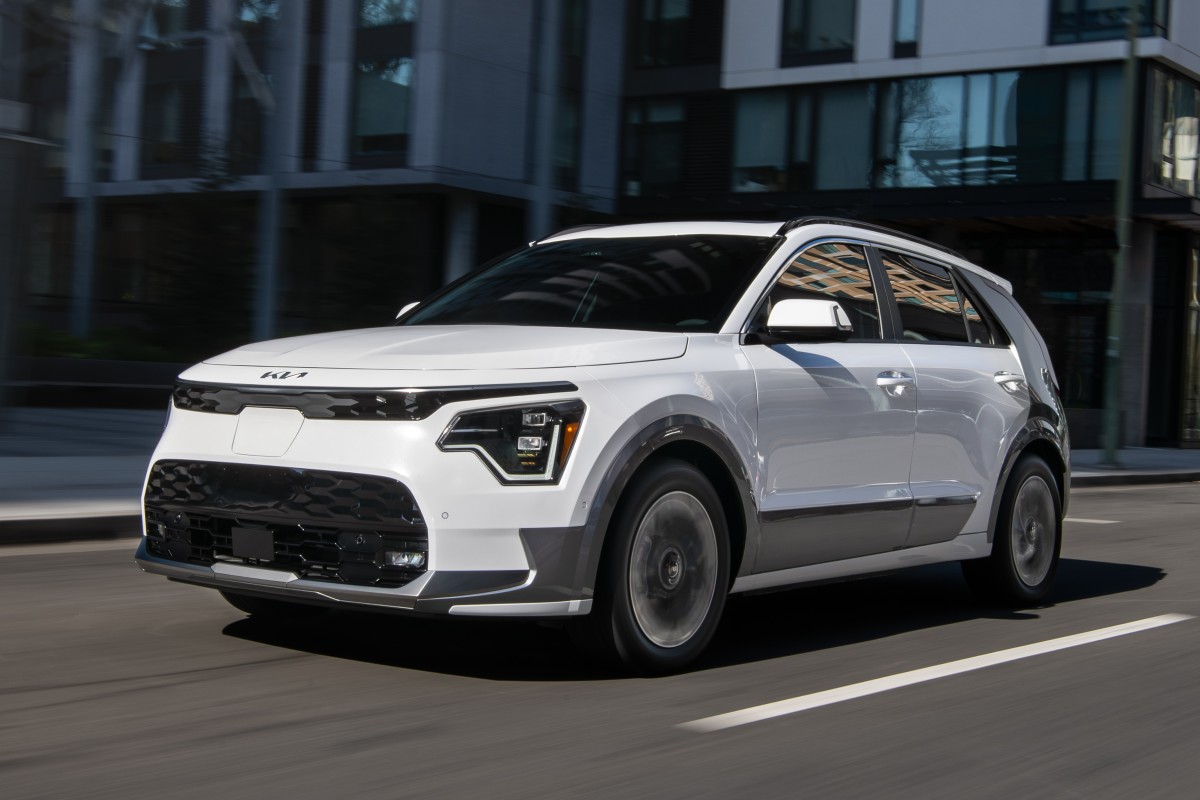
Overview | |
MSRP$33,840 | MSRP$39,550 |
Listings297 | Listings1070 |
Ratings & Reviews | |
User Reviews | User Reviews |
Expert reviews7.2 out of 10 | Expert reviews7.2 out of 10 |
Pros
Cons
| Pros
Cons
|
Reviews SummaryThe Kia Niro gets redesigned for 2023 model year, but keeps its trifecta of hybrid, plug-in hybrid, and all-electric powertrains. With the demise of its Hyundai Ioniq (not to be confused with the Ioniq 5) cousin, the Niro is now the only vehicle sold in the United States with those three powertrain options, ranging from a traditional hybrid to a fully electric vehicle. The second-generation 2023 Kia Niro PHEV plug-in hybrid gets the same updates as its Kia Niro Hybrid and Niro EV siblings (which we’ll cover in separate reviews), including dramatic new styling and a revamped interior, plus more power and electric range than the previous-generation Niro PHEV, which dated back to the 2018 model year. The plug-in hybrid market has shifted a bit since that first-generation Niro PHEV was launched. That version was considered significant because it wasn’t derived from a non-electrified model, but that no longer seems to be a priority for automakers or customers. Aside from the Toyota Prius Prime, most mainstream plug-in hybrids are now variants of existing crossovers, such as the Ford Escape PHEV, Hyundai Tucson Plug-In Hybrid, Mitsubishi Outlander Plug-In Hybrid, and Toyota RAV4 Prime—as well as Kia’s own Sportage PHEV. So the question for the 2023 Niro PHEV is, with plug-in hybrid versions of familiar crossover models now available, does a dedicated design still matter? | |
Reviews SummaryThe 2023 Kia Niro enters its second generation with fresh styling and numerous mechanical and tech updates, but it still offers a choice of three powertrains, with the Niro Hybrid, Niro EV, and Niro PHEV plug-in hybrid all returning for 2023. That means a change in focus for the all-electric Niro EV, which is the subject of this review. The first-generation Niro EV was Kia’s first mass-market electric car not based on an existing gasoline model (the Soul EV paved the way for it). But the redesigned 2023 Kia Niro EV now shares the lineup with the Kia EV6. That model takes aim at more premium EVs like the Ford Mustang Mach-E, Hyundai Ioniq 5, and Nissan Ariya, leaving the Niro EV to compete with entry-level models, such as the Chevrolet Bolt EV and EUV, Volkswagen ID.4, and Nissan’s Leaf. Available in all 50 states, the 2023 Niro EV launches in whimsically named Wind and Wave trim levels. We spent some time in the higher-level Wave version for this review. | |
No video found | No video found |
Popular Features & Specs | |
Engine1.6L 180 hp I4 Hybrid | Engine201 hp Electric |
Drive TrainFWD | Drive TrainFWD |
Seating Capacity5 | Seating Capacity5 |
Horsepower180 hp @ 5700 rpm | Horsepower |
EV Battery Capacity11.1 kWh | EV Battery Capacity65 kWh |
MPG City113 | MPG City126 |
MPG Highway102 | MPG Highway101 |
Battery Charge Time (120V)8.75 hours | Battery Charge Time (120V)59 hours |
Battery Charge Time (240V)2.25 hours | Battery Charge Time (240V) |
Engine | |
Engine Name1.6L 180 hp I4 Hybrid | Engine Name201 hp Electric |
Torque195 lb-ft @ 4000 rpm | Torque |
Horsepower180 hp @ 5700 rpm | Horsepower |
Battery Charge Time (120V)8.75 hours | Battery Charge Time (120V)59 hours |
Battery Charge Time (240V)2.25 hours | Battery Charge Time (240V) |
DrivetrainFWD | DrivetrainFWD |
Fuel Economy | |
EV Battery Capacity11.1 kWh | EV Battery Capacity65 kWh |
MPG City113 | MPG City126 |
MPG Highway102 | MPG Highway101 |
Interior | |
Seating Capacity5 | Seating Capacity5 |
Key Features | |
Navigation SystemStandard | Navigation SystemStandard |
Dimensions & Capacity | |
Cargo Space19.4 cu ft | Cargo Space22.8 cu ft |
Curb Weight3336 lbs | Curb Weight3721 lbs |
Height60.8 in | Height61.8 in |
Length174.0 in | Length174.0 in |
Width71.8 in | Width71.8 in |
Wheelbase107.1 in | Wheelbase107.0 in |
Maximum Payload1161 lbs | Maximum Payload1063 lbs |
Number of doors4 | Number of doors4 |
Overview | ||
MSRP | $33,840 | $39,550 |
Listings | ||
Ratings & Reviews | ||
User reviews | ||
Expert reviews | 7.2 out of 10Read full review | 7.2 out of 10Read full review |
Pros & cons | Pros
Cons
| Pros
Cons
|
Summary | The Kia Niro gets redesigned for 2023 model year, but keeps its trifecta of hybrid, plug-in hybrid, and all-electric powertrains. With the demise of its Hyundai Ioniq (not to be confused with the Ioniq 5) cousin, the Niro is now the only vehicle sold in the United States with those three powertrain options, ranging from a traditional hybrid to a fully electric vehicle. The second-generation 2023 Kia Niro PHEV plug-in hybrid gets the same updates as its Kia Niro Hybrid and Niro EV siblings (which we’ll cover in separate reviews), including dramatic new styling and a revamped interior, plus more power and electric range than the previous-generation Niro PHEV, which dated back to the 2018 model year. The plug-in hybrid market has shifted a bit since that first-generation Niro PHEV was launched. That version was considered significant because it wasn’t derived from a non-electrified model, but that no longer seems to be a priority for automakers or customers. Aside from the Toyota Prius Prime, most mainstream plug-in hybrids are now variants of existing crossovers, such as the Ford Escape PHEV, Hyundai Tucson Plug-In Hybrid, Mitsubishi Outlander Plug-In Hybrid, and Toyota RAV4 Prime—as well as Kia’s own Sportage PHEV. So the question for the 2023 Niro PHEV is, with plug-in hybrid versions of familiar crossover models now available, does a dedicated design still matter? | The 2023 Kia Niro enters its second generation with fresh styling and numerous mechanical and tech updates, but it still offers a choice of three powertrains, with the Niro Hybrid, Niro EV, and Niro PHEV plug-in hybrid all returning for 2023. That means a change in focus for the all-electric Niro EV, which is the subject of this review. The first-generation Niro EV was Kia’s first mass-market electric car not based on an existing gasoline model (the Soul EV paved the way for it). But the redesigned 2023 Kia Niro EV now shares the lineup with the Kia EV6. That model takes aim at more premium EVs like the Ford Mustang Mach-E, Hyundai Ioniq 5, and Nissan Ariya, leaving the Niro EV to compete with entry-level models, such as the Chevrolet Bolt EV and EUV, Volkswagen ID.4, and Nissan’s Leaf. Available in all 50 states, the 2023 Niro EV launches in whimsically named Wind and Wave trim levels. We spent some time in the higher-level Wave version for this review. |
Video | No video found | No video found |
Popular Features & Specs | ||
Engine | 1.6L 180 hp I4 Hybrid | 201 hp Electric |
Drive Train | FWD | FWD |
Seating Capacity | 5 | 5 |
Horsepower | 180 hp @ 5700 rpm | |
EV Battery Capacity | 11.1 kWh | 65 kWh |
MPG City | 113 | 126 |
MPG Highway | 102 | 101 |
Battery Charge Time (120V) | 8.75 hours | 59 hours |
Battery Charge Time (240V) | 2.25 hours | |
Engine | ||
Engine Name | 1.6L 180 hp I4 Hybrid | 201 hp Electric |
Torque | 195 lb-ft @ 4000 rpm | |
Horsepower | 180 hp @ 5700 rpm | |
Battery Charge Time (120V) | 8.75 hours | 59 hours |
Battery Charge Time (240V) | 2.25 hours | |
Drivetrain | FWD | FWD |
Fuel Economy | ||
EV Battery Capacity | 11.1 kWh | 65 kWh |
MPG City | 113 | 126 |
MPG Highway | 102 | 101 |
Interior | ||
Seating Capacity | 5 | 5 |
Key Features | ||
Navigation System | Standard | Standard |
Dimensions & Capacity | ||
Cargo Space | 19.4 cu ft | 22.8 cu ft |
Curb Weight | 3336 lbs | 3721 lbs |
Height | 60.8 in | 61.8 in |
Length | 174.0 in | 174.0 in |
Width | 71.8 in | 71.8 in |
Wheelbase | 107.1 in | 107.0 in |
Maximum Payload | 1161 lbs | 1063 lbs |
Number of doors | 4 | 4 |


By: CarGurus + AI
At CarGurus, our team of experienced automotive writers remain at the heart of our content operation, conducting hands-on car tests and writing insightful guides that are backed by years of industry experience. To complement this, we are harnessing AI to make our content offering more diverse and more helpful to shoppers than ever. To achieve this, our AI systems are based exclusively on CarGurus content, ratings and data, so that what we produce is both unique to CarGurus, and uniquely helpful to car shoppers.

