Every new car sold in the United States is required to be delivered to consumers with a sheet listing out basic specifications, any equipment add-ons, fuel economy and safety data, its retail price, and destination charges.
Colloquially, this document is known as the car’s “window sticker” because dealerships typically display it in the vehicle’s window. It’s also sometimes called a “Monroney label” or “Monroney sticker,” a name that comes from a 1958 bill sponsored by Oklahoma Senator Almer “Mike” Monroney, which made these price stickers a federally mandated requirement overseen by the Federal Trade Commission.
With all that information condensed into a single piece of paper, a window sticker can be intimidating. This article serves as a starting point for what you need to know about how to read the window sticker.
How to Read a Car Window Sticker
- Do All Vehicles Have a Window Sticker?
- Parts Content and Where the Vehicle Is Built
- MSRP and Sticker Price
- Equipment and Other Important Information
- Government Safety Ratings
- Fuel Economy and the Environment
Do All Vehicles Have a Window Sticker?
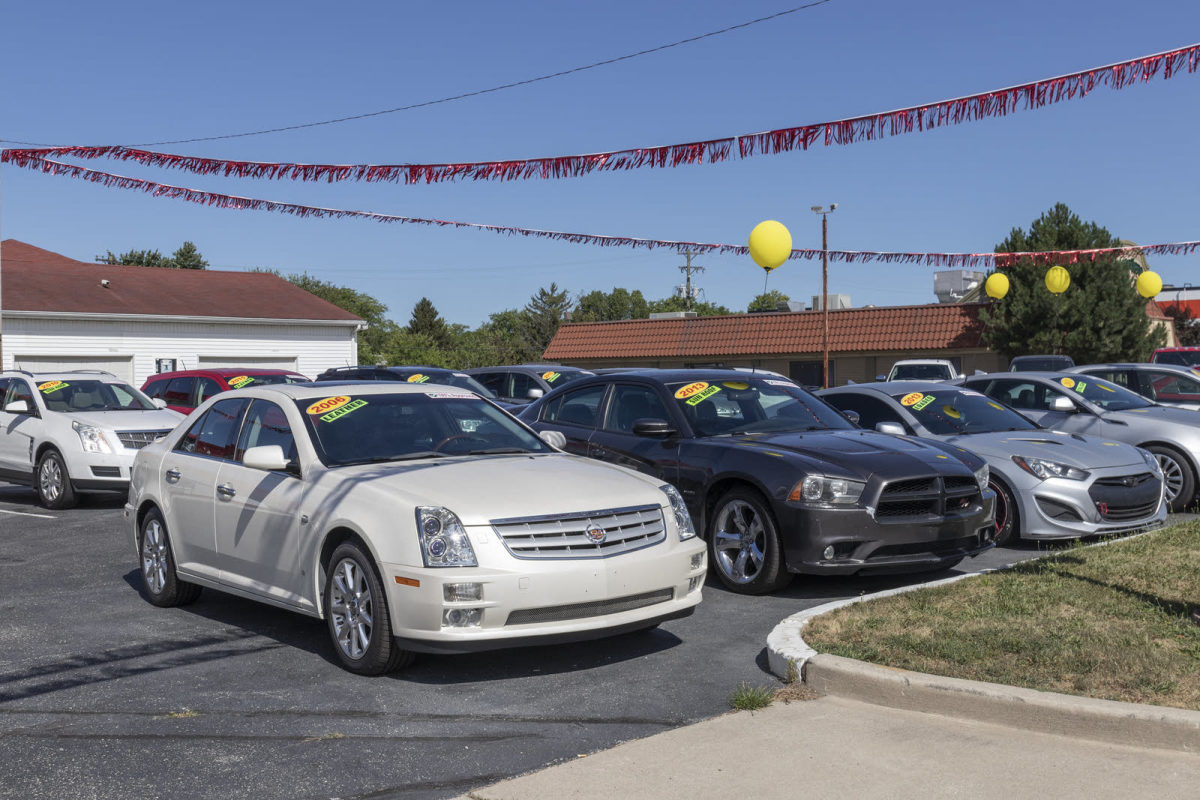
The government only requires window stickers on new vehicles, though they may be included with a used car or trade-in if the original owner or the used-car dealer kept them with the vehicle. The exact format and content of window stickers have changed over time, and automakers are largely free to come up with their own designs. As a result, it is generally easier to compare window stickers across vehicle models rather than vehicle brands.
Car dealers can also add what’s called an “addendum sticker” to the vehicle, which lists any dealer-installed options, add-ons, or, for high-demand models, a market value adjustment.
Like mattress tags, window stickers are only supposed to be removed by consumers, though many dealerships will do this as part of the pre-delivery process to remove sticky adhesive residue.

Parts Content and Where the Vehicle Is Built
The window sticker lists the vehicle's final assembly location. This location can impact any federal tariffs, tax incentives, or rebates that may apply depending on where the car was built.
Just because a car was assembled in, say, Alabama doesn’t mean that it was wholly made of parts sourced locally. As a result, the window sticker often includes a breakdown of where major components, such as the engine and transmission, were built.
In light of the tariffs announced by President Trump in early 2025, this information could have a major impact on new car prices. As of April 2025 it’s an ongoing situation, with a 25% tariff already applied to imported vehicles and a separate 25% tariff on auto parts due to take effect from May 3. There’s also a 25% tariff on steel and aluminium, both heavily used in the auto industry, so even a vehicle built solely in the US could be affected by the levies. Many industry experts have suggested that price rises are inevitable.
The window sticker also lists the dealership where the vehicle was originally delivered and the method of transport used. This bit of information is generally most useful at ports or trucking depots.

MSRP and Sticker Price
For consumers, the most important windshield numbers may be the vehicle’s Manufacturer’s Suggested Retail Price (MSRP). As the “suggested” part of that name implies, this is the vehicle’s suggested price—the amount an automaker recommends dealerships charge. At their discretion, auto dealers may discount the price of the vehicle—or, for particularly high-demand models, they may add a market value adjustment or markup to boost their bottom line. Additionally, the sticker will include what’s called a destination charge, which is the fee charged by an automaker to cover the cost of transporting a new vehicle from the factory to the dealership.
The term “sticker price” generally refers to the MSRP. MSRP typically does not account for add-ons or destination charges, and MSRP isn’t the same thing as an invoice price, which is just an account of how much the automaker charges the car dealership for a new vehicle from the factory.

Equipment and Other Important Information
Automakers list a handful of standard features on the window sticker, though there is no federal requirement specifying what they must include.
Though the window sticker includes optional equipment, option packages, and add-ons, it doesn’t necessarily provide an extensive list of features included in each package, though it does give buyers a good starting point. Additionally, automakers may occasionally delete a previously standard feature due to, say, a parts shortage. This will be noted on the sticker.
Window stickers usually note the vehicle’s exterior paint color and its interior upholstery color, too.
Automakers can also choose to include additional information, such as maintenance that’s included in the price of the vehicle or details about the vehicle’s warranty.
Finally, the window sticker contains the 17-digit Vehicle Identification Number (VIN). During the car-buying process, you should compare the number on the sticker with what is on the vehicle itself—the VIN is usually marked on a special panel at the base of the windscreen, the inside of the driver’s door, the dashboard, or sometimes in the engine bay. If they are different, the window sticker is likely incorrectly placed.

Government Safety Ratings
At its discretion, the National Highway Traffic Safety Administration (NHTSA) will perform crash testing on new vehicles. The NHTSA rates vehicles for how they hold up to frontal, side-impact, and rollover crashes using a five-star scale. These ratings are included on the window sticker.
If the window sticker does not show any results for the “Government 5-Star Safety Ratings,” don’t worry. That means that the NHTSA has yet to test the vehicle. The NHTSA may not test many high-end or low-volume models like sports cars. For example, you usually won’t find NHTSA results on a Mazda MX-5 Miata window sticker because it hasn’t been tested.

Fuel Economy and the Environment
Automakers are required to submit fuel and energy consumption estimates to the Environmental Protection Agency (EPA). The fuel economy estimates on the window sticker are based on automaker-performed evaluations using EPA guidelines.
The window sticker also shows how much more or less a specific car might cost to fuel annually and over the course of five years using an EPA-derived calculation factoring in average gas prices and average miles driven. The sticker also provides an overall fuel economy rating and a smog rating based on the car’s tailpipe carbon dioxide emissions in grams.
Window stickers for plug-in hybrid and fully electric cars also show pertinent information like the vehicle’s miles per gallon equivalent (MPGe) estimate, a calculation based on the amount of energy in a gallon of gasoline. Additionally, the window sticker displays the vehicle’s estimated driving range, the number of kilowatt-hours the vehicle will consume over 100 miles, and the amount of time it will take to charge up on a Level 2 (240-volt) charger. Somewhat confusingly, the window sticker refers to electrical energy as a “fuel.”
Stickers on plug-in hybrid models go a step further by displaying the combined fuel-economy estimate when the vehicle is operating as a hybrid rather than full-EV mode.
While some EVs and plug-hybrids might be eligible for tax incentives or rebates, these will not be listed on the sticker or factored into the price of the vehicle from the dealership or the MSRP.