The Toyota RAV4 Hybrid combines two of Toyota’s areas of expertise—SUVs and hybrid technology. Available in the US since 2015, the RAV4 Hybrid was a pioneer— while few hybrid compact SUVs were available when it was launched, there are now plenty to choose from.
Toyota introduced the hybrid model as part of the mid-life facelift for the fourth-generation RAV4, adding it to the existing gas-powered version. It combines a 2.5-litre four-cylinder gas engine with an electric motor for the front axle and another one for the rear, with a CVT automatic transmission as standard. Most of the time it operates in front-wheel drive (FWD) mode, but the two motors give on-demand all-wheel drive (AWD), with the rear motor kicking in if extra traction is needed.
Toyota refined the recipe for the second-generation RAV4 Hybrid model, which was introduced in 2018 for the 2019 model year as part of the fifth-generation RAV4 lineup. It gained an updated and more powerful hybrid system, with a total output of 219 horsepower. This was followed in 2020 by the introduction of the Toyota RAV4 Prime, a plug-in hybrid (PHEV) variant with a total output of 302 horsepower and a pure-electric range of 42 miles. It was renamed simply RAV4 Plug-in Hybrid in 2024.
Sales of the hybrid versions of the RAV4 have steadily risen over the years. While the first-generation model accounted for between 11% and 12% of total RAV4 sales in the US, the combined total of RAV4 Hybrid and RAV4 Prime/Plug-in Hybrid models made up more than 43% of total sales in 2023.
Starting with the 2026 model year, all Toyota RAV4s will have either a hybrid of plug-in hybrid (PHEV) powertrain, meaning the separate Toyota RAV4 Hybrid model name will be phased out. For information on the new Toyota RAV4 and its hybrid engine, read our Toyota RAV4 buying guide. This buying guide looks at how the Toyota RAV4 Hybrid has evolved over the course of its first two generations, which models are available and how much you can expect to pay for one.
Toyota RAV4 Hybrid Buying Guide: Cost, Reliability, and the Best Years to Buy
Frequently Asked Questions
Which Toyota RAV4 Hybrid years are the best?
The Toyota RAV4 Hybrid introduced in 2019 is the best of the two generations available, giving useful extra space, performance, and fuel economy compared with the first. It costs more, but it’s excellent value nonetheless.
What are the worst Toyota RAV4 Hybrid years?
The worst year for Toyota RAV4 Hybrid reliability is 2019, according to data from carcomplaints.com, although most of the issues revolve around a fuel tank issue that Toyota has since rectified. In general, the RAV4 Hybrid should be an impressively reliable option.
Is a used Toyota RAV4 Hybrid a good deal?
A Toyota RAV4 Hybrid could be a great deal if you’re looking for a dependable and affordable compact SUV. The latest model adds a bit more style and fun to the mix, although it remains a car that’s sensible rather than sporty.
Toyota RAV4 Hybrid Pros and Cons
Pros:
- Good fuel economy, especially with post-2019 cars
- Great value for money, likely to be very reliable
- Practical, well-built interior
Cons:
- Infotainment systems not cutting-edge
- Cargo area is smaller than some rivals’
- First-generation models are rather plain
Find Out More About Toyota RAV4 Reliability
Ready to take a more detailed look at the Toyota RAV4's reliability record? Check out these resources:
Toyota RAV4 Hybrid Generations
Second Generation (2019-present)
The new RAV4 Hybrid was added to the lineup in spring 2019, a few months after the introduction of the fifth-generation Toyota RAV4 was launched. Slightly larger than its predecessor, the second-generation RAV4 Hybrid has a tougher, more angular look inside and a similarly sharp-edged appearance inside. The hybrid powertrain shares the basics of its predecessor, with a combination of a 2.5-litre inline four-cylinder engine and an electric motor for each axle, with an on-demand all-wheel drive system that only uses the rear motor when extra traction is needed. A CVT automatic transmission is standard, while 219 horsepower represents an increase of 25 horsepower over the first-gen model. Despite the extra oomph, fuel economy takes a big step forward, with a combined figure of 39 mpg—a 20% improvement. Gas models, for reference, give about 30 mpg.
As you’d expect, this is the most technologically advanced RAV4 to date. Innovations include a new multimedia infotainment system with a larger touchscreen, Amazon Alexa and Google Assistant capability and, for the first time, Android Auto and Apple CarPlay compatibility. The latest version of Toyota Safety Sense—a package of driver assistance systems—has been included as standard from the start. It includes automatic braking with pedestrian detection, radar cruise control, Lane Departure Alert with Steering Assist, Road Sign Assist, and Lane Tracing Assist, which uses steering input to help keep the car centered in its lane on the highway.
The range of trim levels available for the RAV4 Hybrid has increased for its second generation. Initially, there were LE Hybrid, XLE Hybrid, XSE Hybrid and Limited Hybrid trim levels, all of them well-equipped. LE Hybrid trim includes features such as alloy wheels, dual-zone climate control with rear-seat vents, LED headlights, and a rear parking camera. XLE Hybrid adds upgraded headlights with automatic high beams, a power-adjustable driver's seat, and a smart key system. XSE Hybrid gives a sportier look and feel, with black alloy wheels, sport-tuned suspension, Softex (synthetic leather) upholstery, and a two-tone exterior color scheme with a black roof. Top-spec Limited Hybrid trim includes an 11-speaker JBL premium audio system.
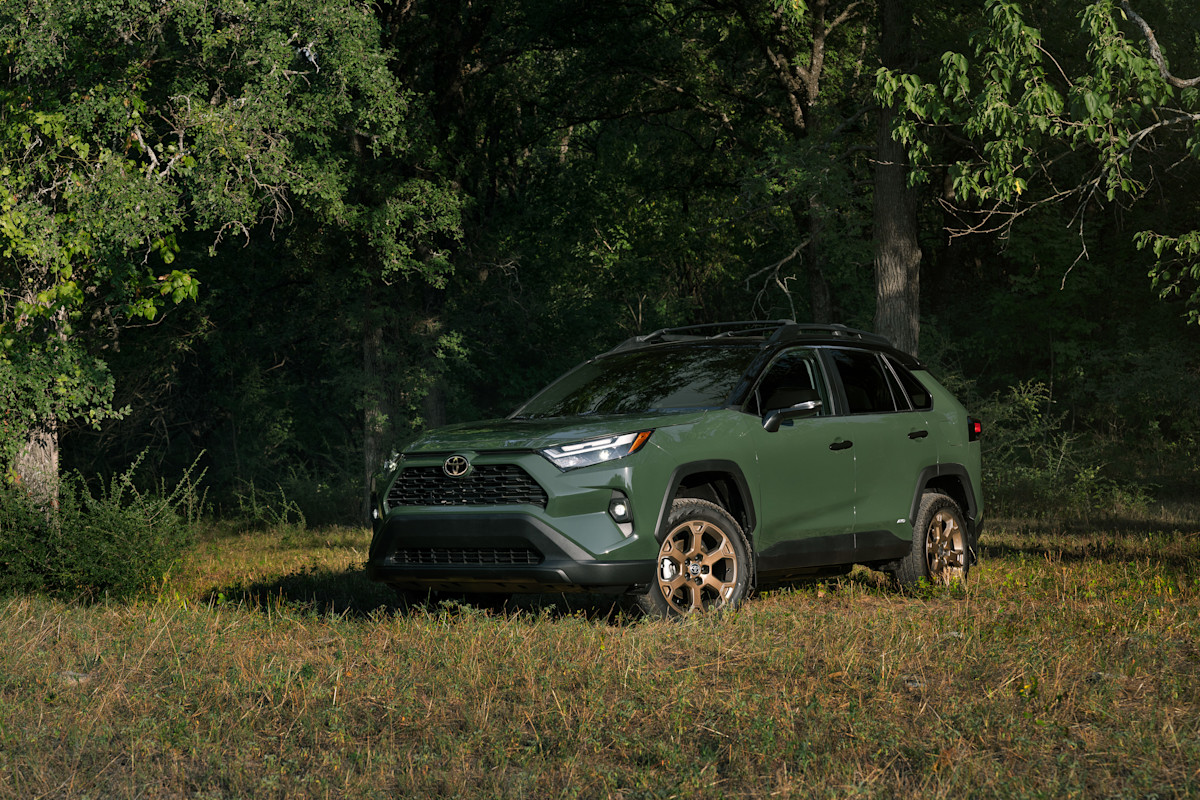
A range of upgrades for the 2021 model year included the addition of a new, high-spec XLE Premium Hybrid trim level. More significantly, it also saw the introduction of the Toyota RAV4 Prime—a plug-in hybrid model with a larger, rechargeable battery and a more powerful front electric motor than the standard hybrid. Total power output is 302 horsepower, giving a 0-60mph time of less than six seconds and an electric-only range of 42 miles when fully charged. Bespoke Prime SE and Prime XSE trim levels are both very well-equipped and include a premium audio system and special black diamond-patterned front grille. Updates for the 2022 model year included a switch-up of the trim level names to Hybrid LE, Hybrid XLE, Hybrid XLE Premium, Hybrid SE, Hybrid XSE and Hybrid Limited. At the same time as all RAV4 models got an upgraded infotainment system for the 2023 model year (with a larger touchscreen and wireless Apple CarPlay/Android Auto support), a new Hybrid Woodland Edition trim level joined the range. It has a more rugged look and feel, with TRD-tuned suspension aimed at giving extra off-road ability, integrated fog lights, bronze-coloured alloy wheels, raised black roof rails with cross bars, and Falken all-terrain tires.
In January 2025, the MSRP for the RAV4 Hybrid kicked off at just under $31,000 and rose to a shade over $42,000. That looks like decent value against rivals, and we’d suggest the $3,000 premium or so over an equivalent gas model is worth it for the superior performance and fuel economy. Used prices for the second-generation model start at about $17,000 for high-mileage examples, or about $21,000 for one that’s covered less than 80,000 miles.
The latest RAV4 Hybrid is generally proving as reliable as its predecessor. Some 2019/2020 cars experienced a problem with the fuel tank that means it can’t be filled properly, but Toyota contacted affected owners and the problem should have been fixed for free.
First Generation (2015-2018)
The first-generation Toyota RAV4 Hybrid went on sale in the US in 2015 for the 2016 model year. It wasn’t Toyota’s first hybrid-powered SUV, because the Highlander Hybrid had been on the market for a decade by that point, and Lexus, Toyota’s premium arm, had been selling hybrid versions of the Lexus RX longer than that. A hybrid-powered RAV4 was a big deal, though, since the RAV4 was well-established in the US as both one of Toyota’s most popular models, and one of the best-selling compact SUVs. The hybrid model joined the RAV4 range as part of what was otherwise a mild mid-life update of the fourth-generation model, adding a differentiator from many rivals since there were few compact hybrid SUVs around at that point. Honda’s CR-V Hybrid, for example, didn’t arrive until the 2020 model year.
Regular RAV4 models have a 2.5-liter gas engine with 176 horsepower, a six-speed automatic transmission and the option of front-wheel drive or all-wheel drive. The RAV4 Hybrid adds an electric motor on the front and rear axle for a total of 194 horsepower and standard all-wheel drive. The rear motor only drives the rear wheels if extra traction is needed, while a CVT automatic transmission is standard. EPA combined fuel economy for RAV4 Hybrid models is 32 mpg, which compares with 24-26 mpg for gas models, depending on spec and transmission.
Trim levels from launch were XLE Hybrid, SE Hybrid and Limited Hybrid. Entry-level XLE Hybrid is fairly comprehensive, with standard features including dual-zone automatic climate control, cruise control, alloy wheels, power moonroof, power liftgate, touchscreen infotainment system, leather-trimmed steering wheel, and a reversing camera. It also includes Toyota Safety Sense—a package of driver-assistance safety features including automatic braking, lane-departure alert, automatic high beams, and radar cruise control. SE Hybrid and Limited Hybrid trim levels add extras such as LED headlights, a power-adjustable driver’s seat, SofTex (artificial leather) trim, heated front seats, blind-spot monitor, and rear cross-traffic alert. An LE Hybrid trim level was added below XLE Hybrid for the 2018 model year, becoming the base version and missing out on a few of the XLE’s neat features but still offering a good level of equipment.
The first-generation RAV4 Hybrid upholds Toyota’s generally excellent reputation for reliability. Data from independent sources such as the Consumer Report Survey and Carcomplaints.com suggests that it’s likely to be very dependable. Some owners have had problems with a faulty power liftgate, but most other issues raised were smaller electrical glitches or minor bodywork faults.
Prices for the first-generation RAV4 Hybrid start at about $18,500 for a car that’s covered less than 80,000 miles, while later, high-spec models can fetch $25,000 or so.
Related Topics