The Toyota Camry Hybrid is the hybrid-powered version of the Toyota Camry—one of the best-selling cars in the U.S. and the big brother of the best-selling Toyota Corolla. While the non-hybrid version of the Camry has been around since 1983, the hybrid model was introduced as part of the sixth-generation Camry range in 2006. Building on Toyota’s status as a pioneer of hybrid technology, having launched the Prius way back in 1997, the Camry Hybrid became one of the first mainstream midsize hybrid models.
The drivetrain recipe for the Toyota Camry Hybrid hasn’t changed much over the years—a four-cylinder engine combined with an electric motor for a total of 200 horsepower or so, driving the front wheels. The power output has crept up over the years, while the latest version is also available with an extra electric motor to provide all-wheel drive (AWD). Initially, the hybrid model was available only in a standalone trim, but more variants have been added over time. In fact, the introduction of the ninth-generation Camry in spring 2024 saw it go hybrid-only, so the “Hybrid” part of the name has now been dropped.
Hybrid powertrain apart, the Camry Hybrid shares the virtues of the standard Camry so it’s good value, spacious, comfortable, easy to drive and not especially exciting to look at or sit in. In its two most recent generations, the Camry has moved slightly upmarket, and all versions are now very well-equipped. Prices have crept up, but as of January 2025 the entry-level model was less than $30,000 and came with standard equipment including automatic LED headlights, dual-zone climate control, power-adjustable front seats, wireless Apple CarPlay/Android Auto support and a reversing camera.
Our buying guide to the Toyota Camry Hybrid covers each of the four generations and examines how the model has evolved over time, which are the best and worst versions and how much you’re likely to pay for one.
Toyota Camry Hybrid Buying Guide: Cost, Reliability, and the Best Years to Buy
The current Toyota Camry Hybrid is the most sophisticated version yet, but the 2017-2023 model is arguable the best choice if you’re looking for a used model. It looks very similar, comes with loads of high-tech features and is likely to be very reliable.
What are the worst Toyota Camry Hybrid years?
The worst year for Toyota Camry Hybrid reliability is 2007, according to data from carcomplaints.com, although 2008 and 2009 versions aren’t far behind. Cars from this era can suffer from excessive oil consumption and brake actuator failure. In general the 2006-2011 Toyota Camry model doesn’t have the same outstanding reliability record as the previous and subsequent models.
Is a used Toyota Camry Hybrid a good deal?
If you want a hybrid car that’s comfortable, reliable, and decent value, then the Toyota Camry could be a great deal. It’s spacious and well-equipped, and although it’s not especially stylish or fun to drive, it’s likely to be very reliable.
Toyota Camry Hybrid Pros and Cons
Pros:
Spacious, user-friendly interior
Most models have a good reliability record
Reasonably fuel-efficient and good value for money
Cons:
Not very exciting to drive or look at
Some reliability concerns for earliest versions
Interior of early models is bland
Toyota Camry Hybrid Generations
Fourth Generation (2024-present)
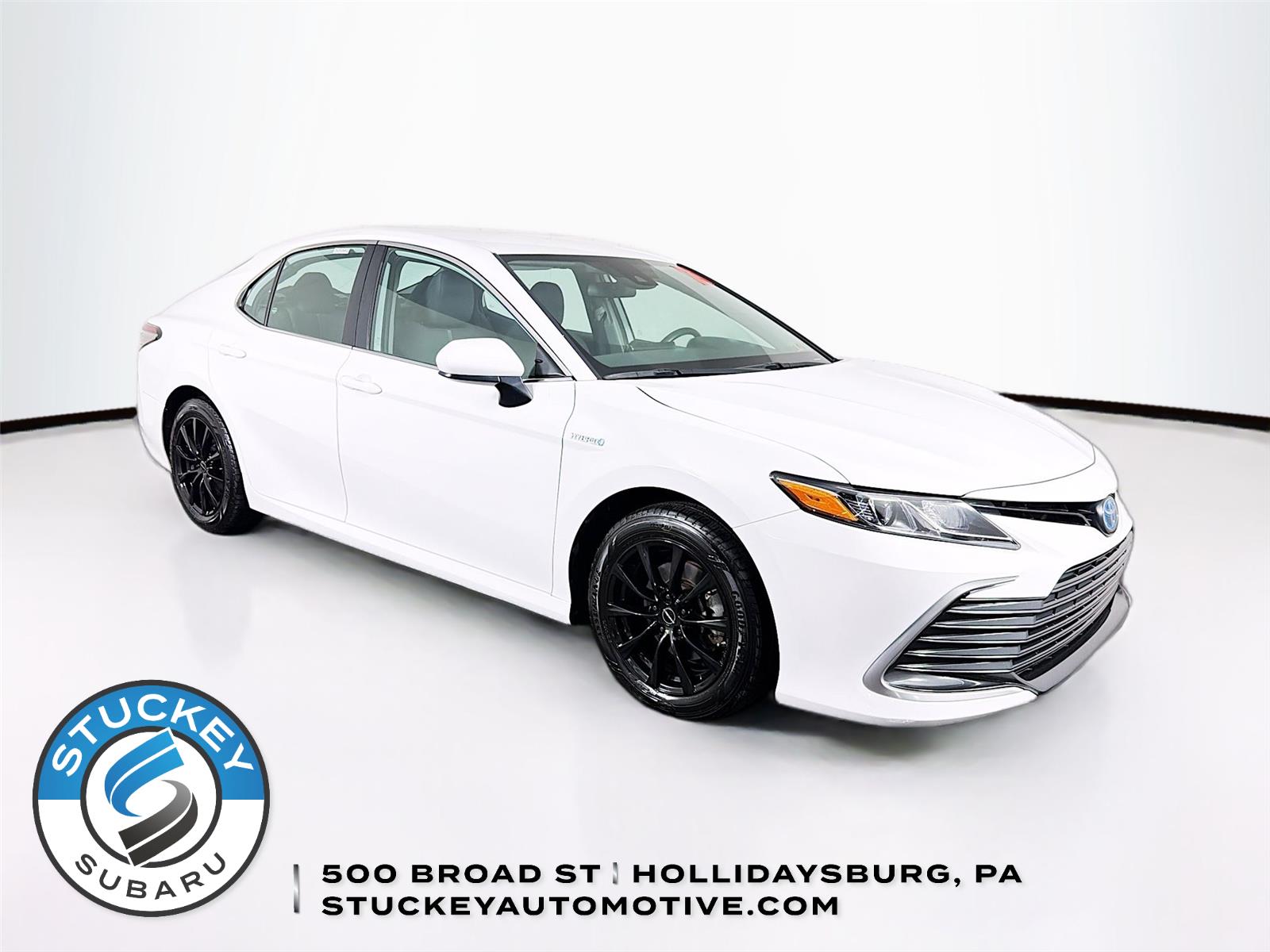
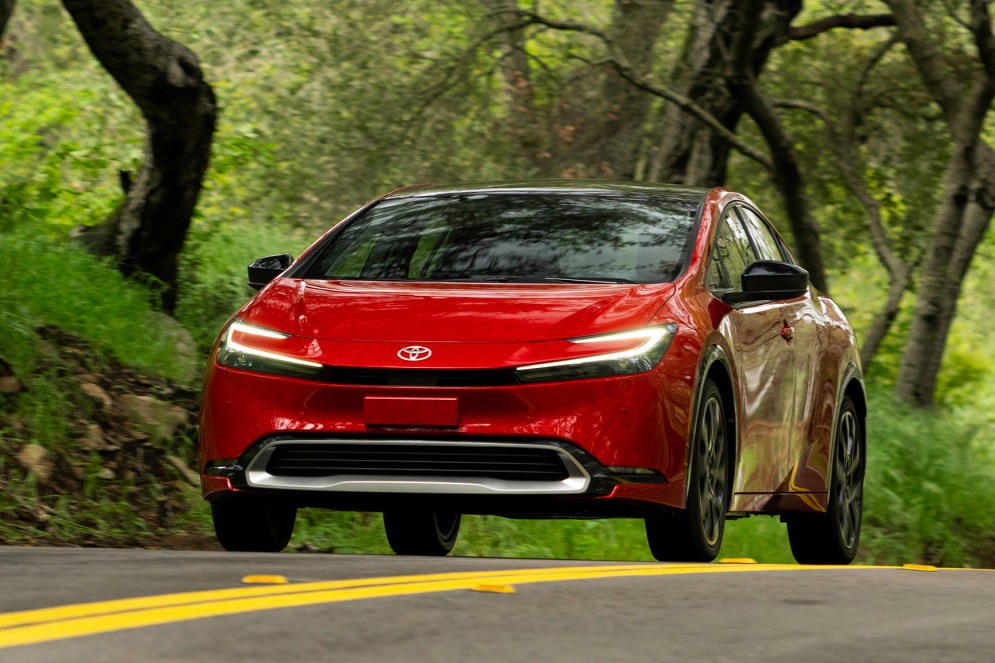
The fourth-generation Toyota Camry Hybrid is, in fact, the ninth-generation Toyota Camry. That’s because the Camry has gone hybrid-only for the first time ever. Introduced in spring 2024, it has almost identical dimensions to the previous Camry and uses the same basic structure, including its front doors and windscreen. The exterior styling has evolved, with hints of the latest Prius at the front. The interior is all-new, with a more conventional yet more modern design, Toyota’s latest infotainment system, and more high-tech features.
The hybrid powertrain has been upgraded. As before, there’s a four-cylinder 2.5-liter gas engine, this time paired with a 100 kW electric motor for a total output of 225hp—an increase of 17 horsepower—and there’s a first for the Camry Hybrid in the shape of optional all-wheel drive (AWD). These models have an additional 30 kW motor on the rear axle to give a total output of 232 horsepower. As ever, a CVT automatic transmission is standard. Combined fuel economy ranges between 44 mpg and 51 mpg, depending on spec.
There’s a choice of four trim levels, which is more than any previous Camry Hybrid. All are well-equipped, with standard features for entry-level Toyota Camry LE including alloy wheels, selectable drive modes, LED headlights, dual-zone automatic climate control, and an eight-inch touchscreen with wireless Apple CarPlay and Android Auto support. Camry SE trim gives a sportier look and feel, with black alloy wheels, “Softex” interior trim and sport-tuned suspension. New Camry XSE and Camry XLE models add luxury features such as heated front seats, noise-reducing front side glass, keyless entry, and a larger digital driver’s display. The standard Toyota Safety Sense package for all trim levels includes driver assistance safety features such as adaptive cruise control, lane departure alert, pedestrian detection, and a blind spot monitor with rear cross-traffic alert.
The latest Camry Hybrid hasn’t been on sale long so there’s no reliability data available, but if it follows the pattern of its predecessors, it should be a dependable choice. Many of the parts it uses are shared with the previous-generation Camry, which has a very good reliability record and consistently achieved top or high rankings in the midsize category of independent reliability surveys. Basic warranty cover is three years or 60,000 miles, but there’s a five-year/60,000-mile powertrain warranty.
You can already find used examples of the latest Camry Hybrid for sale, and most are very low-mileage cars. You’ll pay a little less than the MSRP for these, with prices ranging from about $28,000 to $35,000, as of January 2025.
Third Generation (2017-2024)
The third-generation Toyota Camry Hybrid was introduced in 2017 as a model in the eighth-generation Toyota Camry range. This time, there was a noticeable shift upmarket for the Camry, as well as a different look. Although still a sedan, it gained a “fastback” rear end, with a sloped rear window and short trunk lid. A slightly lower roofline and a longer, wider body add to the somewhat sportier styling, while the interior had a more adventurous design, with a curvy dashboard and high-tech center console, reminiscent of some Lexus models. Despite the new look and feel it retained the core Camry values of affordability, practicality, and ease of ownership.
Power for the Camry Hybrid increased to 208hp, an increase of eight horsepower. As before, this came courtesy of a 2.5-liter four-cylinder engine and an electric motor, and drove the front wheels via a CVT. Fuel economy ranged from 46-52 mpg on the EPA combined cycle, depending on spec.
The number of core trim levels available for the hybrid model expanded to three, with a choice of Hybrid LE, Hybrid SE, or Hybrid HLE. Entry-level Hybrid LE wanted for little, with LED headlights, dual-zone climate control, a rear-view camera, heated front seats, an electrically adjustable driver’s seat, and radar cruise control as standard. It also came with Toyota’s Star Safety System and Toyota Safety Sense packages, which included driver aids such as an automatic braking system with pedestrian detection and a lane-departure alert function with steering assist (a bit of a mouthful). Hybrid LE trim added a few cosmetic extras for a sportier look, including alloy wheels, a rear spoiler and a black front grille with a mesh insert. Top-of-the-line Hybrid XLE trim included features such as rear-seat climate control vents, leather upholstery, a head-up display, a blind spot monitor and rear cross-traffic alert. A mid-life update for the 2020 model year added Apple CarPlay/Android Auto integration for all trims and some mild cosmetic updates, including a new front grille.
The third-generation Camry Hybrid appears to be justifying its reputation as a car that’s well-built and unlikely to let you down. Despite its popularity, there are only a handful of issues raised on carcomplaints.com, and most of these are minor problems. During its time on sale Toyota as a brand has consistently finished near the top of independent reliability surveys.
Early, well-used examples of the third-generation Camry Hybrid start at about $12,000, but we’re talking really well-used, with some covering 200,000 miles or more. While it’s good to know it’s capable of that kind of mileage, you may prefer something a little less... used. In which case, budget at least $17,000 for a car with less than 70,000 miles on the clock.
Second Generation (2011-2017)
The second-generation Toyota Camry Hybrid was available as part of the eighth-generation Camry range from the start. Introduced in 2011 for the 2012 model year, it was a very similar package to its predecessor, in both its design and dimensions. The powertrain for the hybrid model was updated, though, with a new 2.5-liter four-cylinder engine paired with an electric motor for a total of 200 horsepower—a 12 horsepower increase. Fuel economy improved by 39%, with a combined rating of 40-41mpg, depending on spec.
Instead of the single trim level available for the first-generation car, the Camry Hybrid was available in a choice of Hybrid LE and Hybrid XLE trims, which were roughly equivalent to the LE and XLE trim levels for non-hybrid models. Standard equipment for Hybrid LE cars includes dual-zone climate control, a USB port, an electrically adjustable driver’s seat, steel wheels, and cruise control. Standard safety features included 10 airbags, a tyre pressure monitoring system and Toyota’s Star Safety System, which included stability control and a brake-assist function. Hybrid XLE added features such as alloy wheels, heated door mirrors, rear-seat climate control vents, and an upgraded audio system.
A high-spec Hybrid SE Limited Edition with slightly sportier details was added for the 2014 model year, while a mid-life facelift for the Camry range was rolled out in 2014. It was unusually extensive, with major styling changes on the outside, a higher-quality interior, and equipment upgrades for all trim levels. It also added a new Camry Hybrid SE trim level, fitting in between the existing Hybrid LE and Hybrid XLE trim levels.
The second-generation Toyota Camry Hybrid has a better reputation for reliability than the first, and a generally good one overall. The Camry was the best-ranked midsize car in the 2017 J.D. Power Vehicle Dependability Study, and the issues raised on carcomplaints.com generally relate to minor problems, such as infotainment system foibles, noisy brakes, and paintwork.
Prices for the second-generation Toyota Camry Hybrid start at about $10,000 for high-mileage examples, with sub-70,000-mile examples starting at about $16,000.
First Generation (2006-2011)
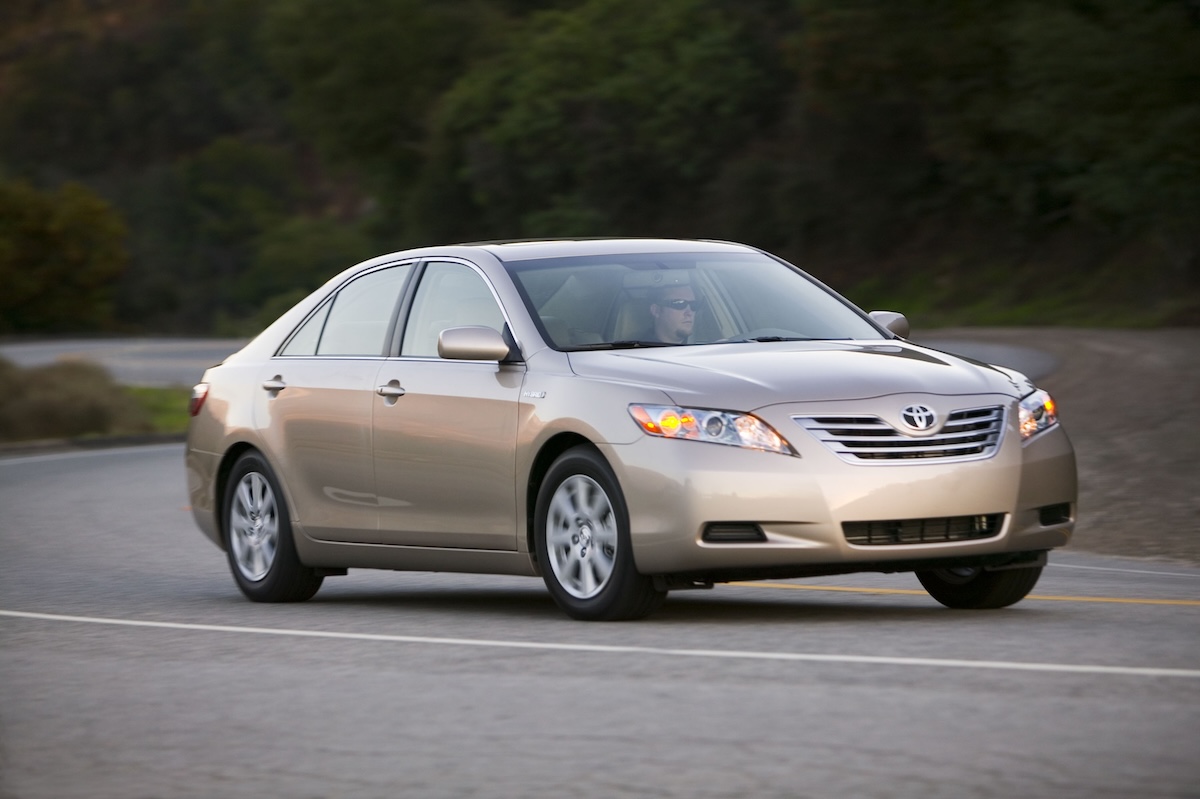
Almost a decade after its first production hybrid car, the Prius, went on sale, Toyota created a hybrid version of its hugely popular Camry. Introduced in 2006 at the same time as the rest of the sixth-generation Camry range, the first-generation Camry Hybrid combined a 147 horsepower 2.4-liter engine with a 105 kW electric motor for a total output of 188 horsepower. Whereas the standard Camry was offered with a choice of manual or automatic and front-wheel drive or all-wheel drive, the Camry Hybrid was FWD-only, with a CVT (labelled e-CVT) as standard. The hybrid model, as you’d hope, gave the best fuel economy of the range, with an estimated 38-40mpg according to the ratings of the time.
The Toyota Camry had a few technical differences under the bodywork to accommodate the hybrid powertrain, including a bespoke front subframe, but on the outside, it looked the same apart from “Hybrid” badging, a special chrome grille and unique LED tail lights.
Initially, the Camry Hybrid was available in a single, bespoke trim level that provided a mid-to-high level of equipment somewhere between the LE and XLE trim levels available for non-hybrid models. As standard, it included 16-inch steel wheels, dual-zone climate control, cruise control, a JBL audio system and an electrically adjustable driver’s’ seat. Standard safety features included front, side, and curtain airbags and a driver’s knee airbag. As a new car, there were a number of options available, either individually or as part of option packs, including a power moonroof, heated front seats and door mirrors, leather upholstery, and a voice-activated navigation system. Stability control was standard for the Camry Hybrid from the start, as part of Toyota’s Vehicle Dynamics Integrated Management System (VDIM)—an upgrade over non-hybrid models, where stability control was initially an option, but became standard as part of an update for the 2010 model year. Model updates over the years increased standard specification for the Camry Hybrid, but it remained a standalone trim level.
The first Camry Hybrid represents something of a blip in the model’s otherwise impressive record for reliability. Some early models suffered from excessive oil consumption and brake actuator failure, with 2007 the worst year according to Carcomplaints.com. Despite this, the Camry was one of the top-rated midsize cars in the 2012 J.D. Power Vehicle Dependability Study and later models have a better record overall.
You can find first-generation Toyota Camry Hybrids of this era with 200,000 miles or more on the clock for $4,000 or less. A decent sub-80,000-mile car will cost upwards of $8,500, while later models can set you back up to $12,000 or so.
Leo is a writer and editor specialising in the automotive sector. He has held senior roles at What Car?, MSN Cars, The Telegraph and Cazoo, and since gone on to write for brands including Auto Trader and CarGurus. Over the past twenty-plus years he has driven and reviewed hundreds of cars, from budget-priced runarounds to luxury SUVs.
The content above is for informational purposes only and should be independently verified. Please see our Terms of Use for more details.