Every Tesla comes with a battery and drive unit warranty of eight years or a minimum of 100,000 miles, depending on your model–it’s up to 150,000 miles for the Tesla Model S, Model X, and Cybertruck.
A battery experiencing excessive degradation is covered under the Tesla battery warranty. Tesla states the battery must retain 70% of its original capacity over the warranty period. In other words, a 30% loss in capacity over eight years or 100,000 miles is considered acceptable.
How Long Do Tesla Batteries Last?
- Factors That Affect Tesla Battery Lifespan
- CarGuru Tips:
- Tesla Battery Degradation and Warranty Coverage
- Maximizing Tesla Battery Range
- Tesla Battery Replacement Cost
- Longevity of Tesla Batteries in Real-World Scenarios
- Sustainable Energy Solutions for Tesla Battery Charging
Factors That Affect Tesla Battery Lifespan:
Tesla uses lithium-based car batteries for its models, like the batteries found in smartphones and computers. As we know, lithium batteries do wear out over time and with regular use. The same is true of the lithium batteries used by Tesla.
Over time, with regular use, batteries degrade, and they will eventually need to be replaced when the battery capacity is too low. However, there are steps you can take to prolong your battery’s lifespan.
Just as in cars powered by internal combustion engines, temperature impacts electric vehicle (EV) range. In the summer, running air conditioning uses energy, and in the winter, running heat and the window defrosters also uses energy.
Electric motors and electric vehicle batteries also have target operating temperatures, just like gasoline engines, so the car may need to use energy to regulate battery-pack temperatures.
Extreme heat is most harmful to lithium batteries; however, if a battery is too cold, you need to use energy to warm it up.
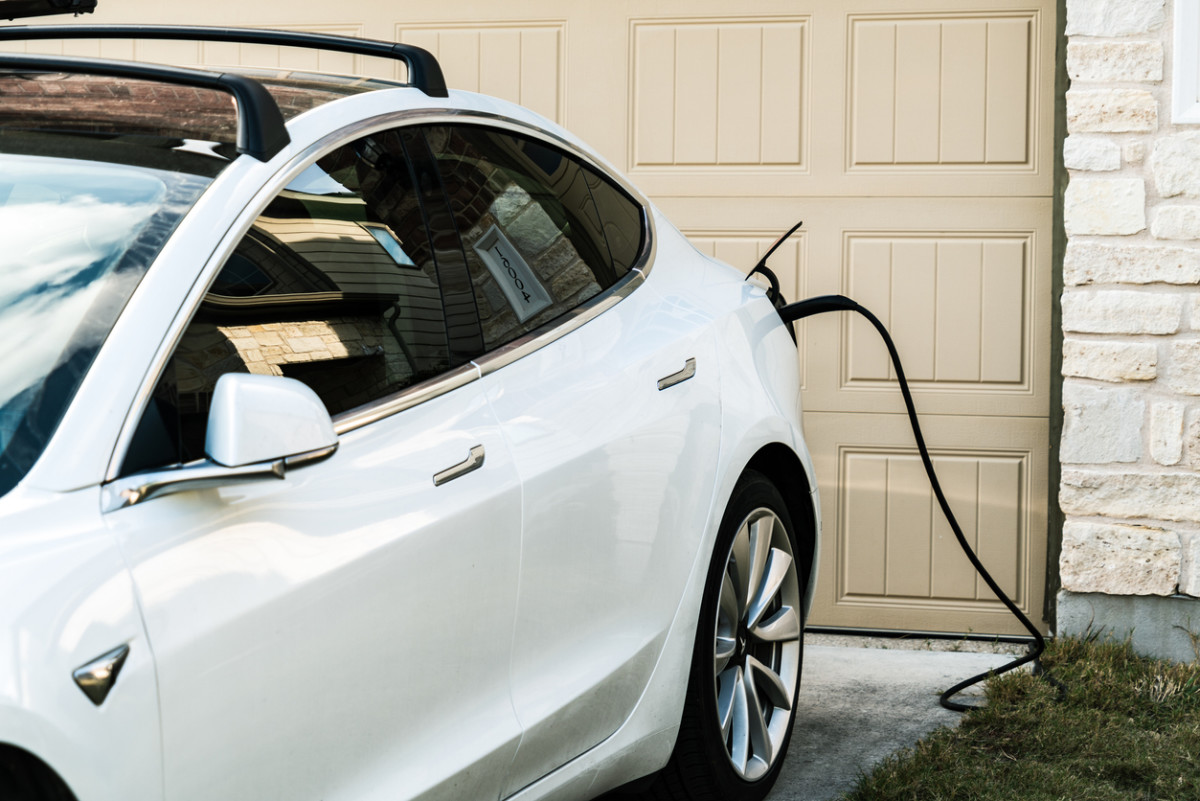
If you do daily-drive a Tesla, keep your car regularly plugged in and schedule departure times so your car is ready at the optimum temperatures whenever you need it. By setting these schedules, you can let the car know to use electricity sourced from the wall outlet to condition the cabin and battery for maximum efficiency.
Lithium batteries, in general, do not like to be at the extremes of 0% or 100% full. It is best to keep your Tesla between 20 to 80% state of charge for better battery longevity. For daily use, regular AC charging, whether Level 1 or Level 2, is recommended. Supercharger public charging stations are best reserved for road tripping, as regular use can accelerate wear and degradation of the battery due to the high heat, current, and amperages involved.
CarGuru Tips:
-
Maintaining a Tesla car battery is simple. Our main recommendation is to keep the battery charged and never let it fully discharge to 0%. Regularly plugging in your Tesla is best, even if you leave it idle for several weeks.
-
Remember to set a charge limit so your car is not constantly fully charged to 100% to maximize battery health. Regularly charging your battery to a state of charge around 55% to 80% of max is recommended to reduce degradation.
-
Your Tesla’s onboard computer also has a few energy-saving features, including the ability to limit the use of displays while the car is charging and to optimize charging times to coincide with off-peak electricity rates.
Tesla Battery Degradation and Warranty Coverage
Over time, with regular use, all lithium-ion batteries will experience power or energy loss, reducing capacity. A lower capacity results in reduced driving range on a full charge. Unfortunately, battery degradation capacity is inevitable as you drive your car.
The good news is that Tesla’s battery-management system does an excellent job of maximizing battery life, and real-world degradation is better than anticipated. The entry-level rear-wheel drive (RWD) Tesla Model 3 equipped with the lithium iron phosphate (LFP) battery has shown very little degradation since its introduction in 2022.
As mentioned above, Tesla’s batteries are covered under warranty, including limits on how much the batteries degrade over time. If you experience degradation greater than 30%, a warranty claim may be in order.
Be careful to maintain the conditions of your car’s battery warranty. Damage resulting from intentional actions can void your warranty. This includes damage from collisions or accidents, ignoring safety warnings, or having the battery serviced by non-Tesla or non-certified personnel. In most cases, the battery does not require any regular maintenance other than regular charging.
Maximizing Tesla Battery Range
There are quite a few ways you can maximize your driving range.
Before You Even Drive:
Our first tip starts before you even start driving: Use the Scheduled Departure settings to warm or cool your cabin and battery. Any time you use the climate control, you are using energy from the battery pack, which reduces driving range. By using the Scheduled Departure function while your Tesla is plugged in, you can ensure that cabin and battery temperatures will be regulated using power from the mains or the outlet, not the battery itself.
Once You’re on the Road:
Once you start your drive, use the Energy App in the infotainment system to track the energy consumed by the various vehicle systems, your driving style, and the environmental conditions. Behind the wheel, there are a few things you can do to maximize your range on a single charge.
Use regenerative braking as much as possible. Regenerative braking recaptures kinetic energy when decelerating, sending it back to the electric car battery.
On long descents, you can watch your battery state of charge increase as the system works to recover energy. City driving is where Teslas can be most efficient, with lots of acceleration and deceleration events allowing ample use of regenerative braking.
Watch your speed. Highway driving can be a little more challenging for electric vehicles for a few different reasons. Highway speeds require more power and steady-state throttle positions to maintain speed, limiting the use of regenerative braking.
Additionally, aerodynamics play an important role at highway speeds. As speed increases, so does aerodynamic drag and this increase is not linear. With a doubling of speed, aerodynamic drag is quadrupled. Traveling at 80 miles per hour will have a dramatic impact on range compared to traveling at 65 miles per hour.
Tesla Battery Replacement Cost
Battery replacement has been a big topic as more electric vehicles hit the road. EV batteries are large and expensive, and replacing them comes at a considerable cost.
At a minimum, replacing your Tesla’s battery will cost $10,000, with some quotes ranging as high as $25,000. More and more used and salvaged batteries are available to purchase at a lower cost, with the higher cost reflecting new OEM replacements directly from Tesla. Aftermarket support is still limited.
The good news is that it’s unlikely you will need to replace a Tesla battery pack. Stock is limited, for both used and new batteries. Because Tesla has built a reliable battery pack, many companies that offer EV conversions for classic cars are sourcing used Tesla packs. Individual modules are available through these suppliers.
Warranty replacements on older Model S and Model 3 show that remanufactured batteries cost between $10,000 and $15,000, and labor costs can add up to another $2,500. The larger battery packs will cost more; however, these more modern packs are proving to be quite reliable as battery technology has improved.
Longevity of Tesla Batteries in Real-World Scenarios
Real-world results show that Teslas have good battery longevity with low degradation. Tesla’s 2023 Impact Report showed a 12% loss in capacity for the Model S and X after 200,000 miles and a 15% loss in capacity for the Tesla Model Y and Model 3 after 200,000 miles.
There will be additional degradation as a result of battery age: EV batteries are expected to last 10 to 20 years. Long-range batteries, which started with a higher capacity, are performing better than the smaller standard-range batteries.
Supercharging, also known as DC Fast Charging, can accelerate the wear on the battery with its high voltages and amperages. The latest V3 Superchargers can now deliver up to 250 kilowatts, which is a lot of energy and heat. Luckily, the Tesla battery-management system is proving to be quite robust, and owners are not reporting excess degradation from regular Supercharging.
We still recommend Tesla owners avoid Supercharging in extreme hot or cold, and avoid extreme states of charge (less than 5% or greater that 95%). These situations will put additional heat and stress on the battery. Regularly using the pre-conditioning functions before Supercharging and charging to around 80% is recommended to maximize your Tesla’s battery life.
Tesla owners report favorable numbers, echoing Tesla’s claim of 12 to 15% degradation over 200,000 miles. Tesla regularly improves its cars: Models from 2016 and later use notably improved powertrains and batteries.
In 2022, Tesla started using cheaper, less energy-dense, yet more durable LFP batteries in entry-level models. Many owners report that degradation is worst in the first year before tapering off and averaging around 2% per year.
Sustainable Energy Solutions for Tesla Battery Charging
Charging an electric car allows us to consider the energy sources for electricity production in the lifecycle of an electric vehicle. Recharging your Tesla with renewable energy can dramatically lower your carbon footprint by reducing greenhouse gas emissions in both your energy source and your vehicle.
Homeowners looking to further reduce their carbon footprint may consider installing solar panels to produce their own clean energy. With a big enough solar system, it is possible to reliably charge your Tesla using clean, sustainable energy.
Tesla offers solar panel installations with the ability to add the “Powerwall” battery backup to store excess solar energy for power outages or when the electricity rates are at peak hours. Additional incentives from the federal, state, and local governments may also apply.
Solar panels are not required to charge at home. At a minimum, only the Tesla Mobile Connector is required for home charging. These chargers used to be included as standard equipment but are now sold separately. The Mobile Connector can be plugged into either a standard grounded 120-volt outlet for Level 1 AC charging or a 240-volt NEMA 14-50 outlet for Level 2 AC charging.
Homeowners may also choose to professionally install the Tesla Wall Connector charger for convenient home Level 2 AC charging, up to 11.5 kW. A universal version will charge both Teslas using the NACS charge port and non-Tesla vehicles using the CCS charge port.