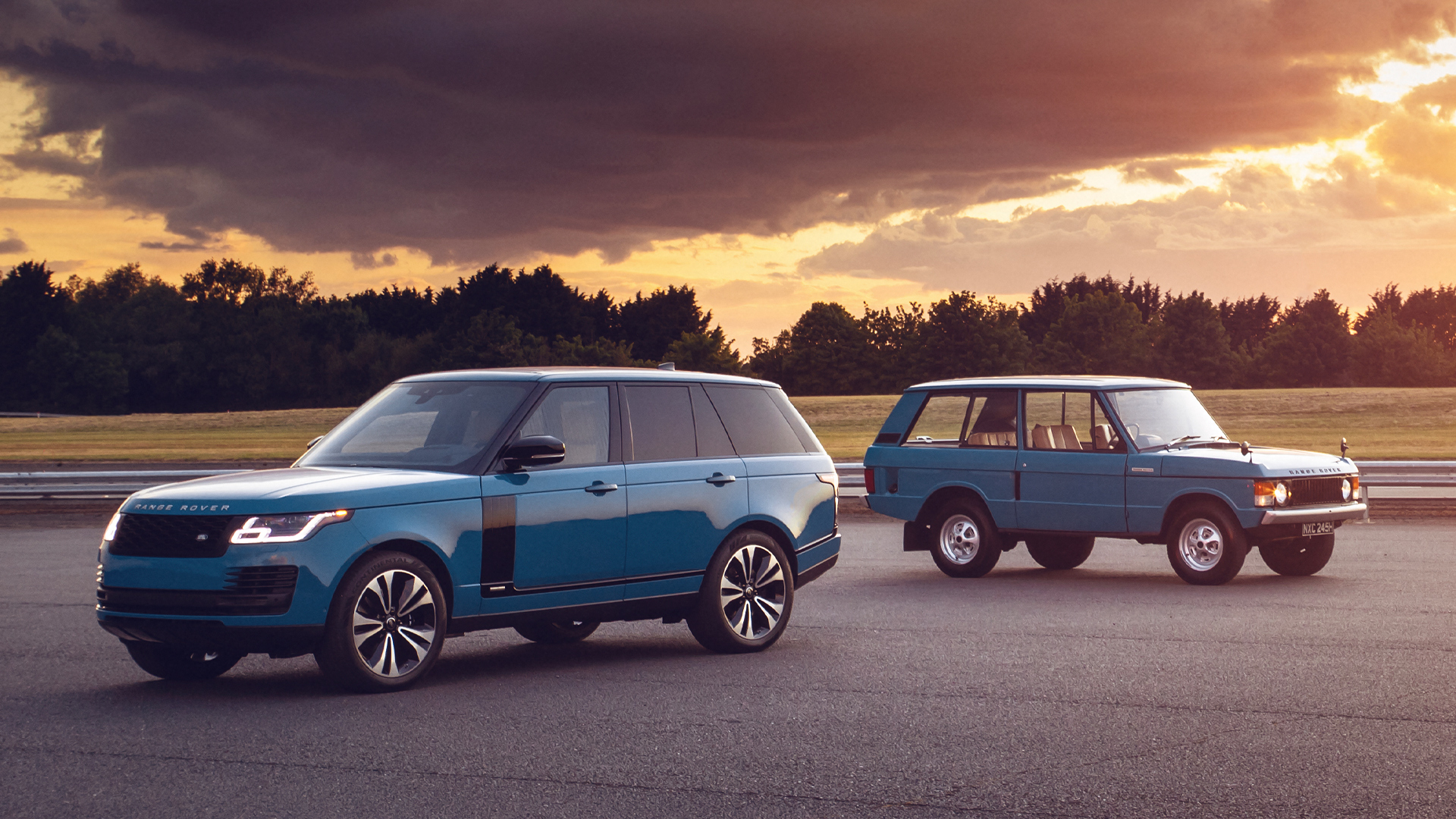
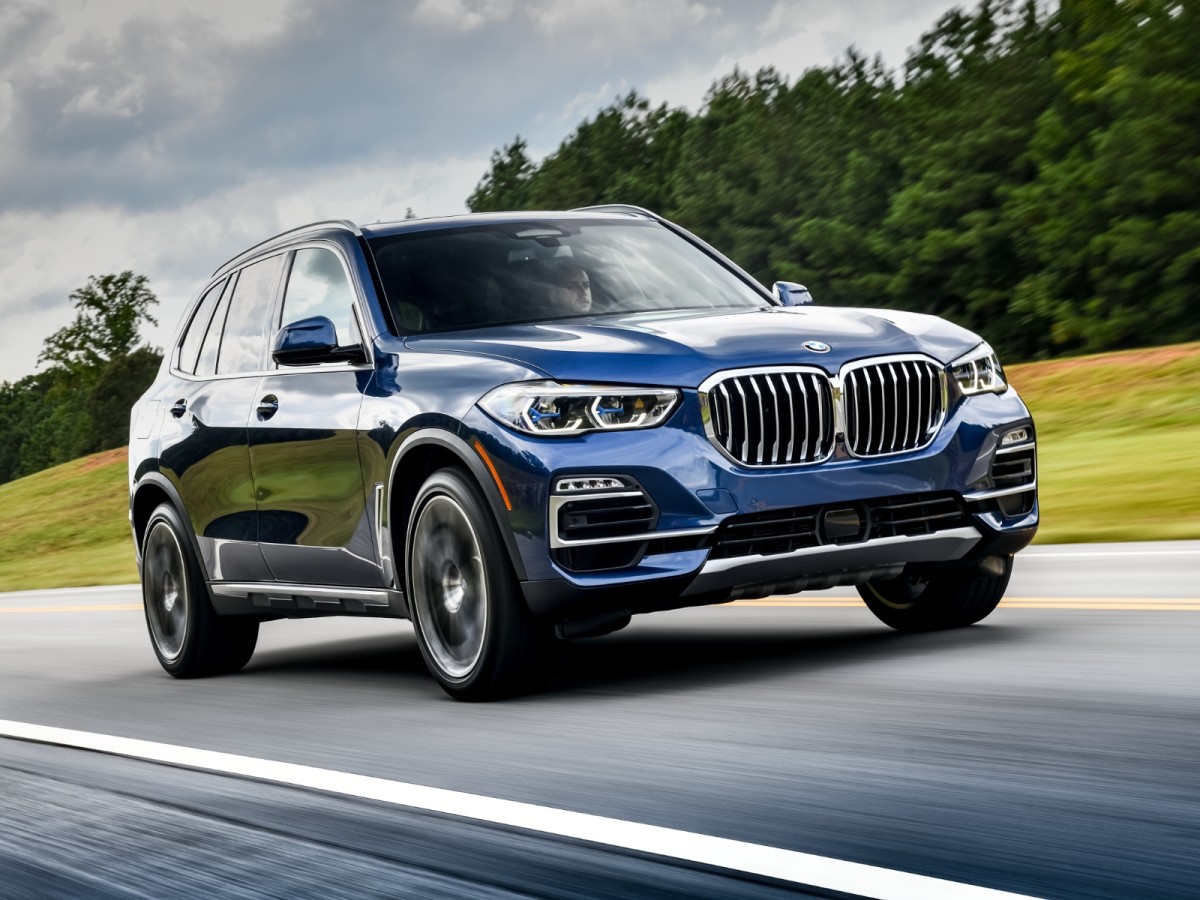
The Range Rover Sport is Land Rover's second-best-selling vehicle in the U.S. behind the Land Rover Defender. Unlike most automakers, Land Rover's most affordable models are its least popular, and for a midsize SUV that starts at more than $80,000 and can reach $200,000, the Range Rover Sport is an anomaly within the luxury sector.
Land Rover's decades of 4x4 prowess and perfection of automatic, sensor-driven off-road driving also lend the Range Rover Sport an unusual credence among all luxury SUVs. It is truly capable and near unstoppable in the harshest terrains and climates, while its competitors can, at best, only offer partial capability in the worst conditions.
Positioned between the compact Range Rover Velar and the flagship Range Rover, the Range Rover Sport impresses with sports car-level performance, flawless four-wheel drive (there’s no part-time all-wheel drive/AWD here—this is the real deal), and high-end cabins. Its reliability, service costs, and fuel consumption make this SUV difficult to recommend as a used vehicle, though there are bright spots among the three generations.
Land Rover Range Rover Sport Buying Guide: Cost, Reliability, and the Best Years to Buy
Frequently Asked Questions
Which Land Rover Range Rover Sport years are the best?
Early models of the second generation (2014-2017) are the most reliable from an electronics point of view, as the hardware and software for the vehicle's many systems, including infotainment, are older and stable. The supercharged engines, without the later electric turbochargers of the last model years of this generation, are also very good.
Which Land Rover Range Rover Sport years are the worst?
The first generation is the worst, as examples are often too old and too worn—especially those with the air suspension system, which is prone to leaking—to be comfortable daily drivers.
Is a used Land Rover Range Rover Sport a good deal?
Generally, no. While Land Rover models that have aged past their warranty period are affordable, they are affordable because their mechanical and electrical reliability is poor and requires expensive maintenance.
Pros and Cons
Pros:
- Classic, high-end style
- Lush and lavish to drive
- Great engines and off-road performance
Cons:
- Poor reliability
- Poor fuel economy
- Low resale out of warranty
Land Rover Range Rover Sport Generations
Land Rover Range Rover Sport Third Generation (2023-Present)
Subtle exterior changes mark this new Range Rover Sport. Thinner LED headlights, a trio of stacked grilles, smoother body lines, new alloy wheels, and horizontal taillights were the major changes. Inside, Land Rover reverted to physical climate and Terrain Response controls, while retaining the tall, angled dash, the slim air vents, and much of the classic look of the seats and door panels.
The infotainment display was now tacked onto the dash instead of its cleanly integrated placement from years past. The 14-inch display included new software, called Pivi Pro, which was faster and more reliable than the InControl Touch Pro system. It could also update the vehicle's computer modules over the air and included wireless Apple CarPlay and Android Auto, along with specs such as an AI voice assistant and standard 360-degree cameras. There was also a 13.7-inch interactive driver display with a configurable three-panel layout and a high-resolution head-up display.
The P530 First Edition was the best of all the trim levels and well worth a test drive. It included gray fabric on the doors, a 29-speaker Meridian stereo (trumping the standard 15-speaker setup and the mid-level 19-speaker 3D surround sound system), forged carbon fiber trim, and 22-way power leather seats. The third row jump seat was dropped from all trims.
The turbocharged inline-six engines continued as before, though a new plug-in hybrid powertrain used that engine and paired it with a 32-kWh battery for big improvements in power and mileage—up to 434 horsepower, 619 lb-ft, and an EPA-estimated 51-mile electric range. The supercharged V8 was discontinued in favor of a BMW-built 4.4-liter twin-turbo V8 with 523 horsepower and 553 lb-ft of torque. This V8 was featured only on the P530 First Edition. The air springs on all trims now had two chambers and could change their spring rates. Electrically controlled anti-roll bars, similar to those from the first-generation Range Rover Sport, could react faster to keep the body planted in corners. Rear-wheel steering was also available.
For 2024, the Range Rover Sport SV Edition One came with a 626-horsepower turbo V8, 23-inch wheels, and a sportier version of the air suspension. Top speed was 180 mph, and the plug-in hybrid now made 542 horsepower. The First Edition and its V8 engine were discontinued. Land Rover again removed the climate controls and the Terrain Response controls, plus the volume knob, and put all of them (and more) into the touchscreen. For 2025, Land Rover introduced the less-powerful V8 from the First Edition on the P530, added a second plug-in hybrid with less power (454 horsepower) and the same battery range, and launched the SV Edition Two. The manufacturer’s SV Bespoke commissioning service was made available for the Range Rover Sport in the same year, offering serious scope for tailored personalization. There were no changes for the 2026 model year.
As of this writing, prices start at around $85,500 MSRP for the 2026 Range Rover Sport SE, $97,000 for the Dynamic SE, and $123,000 for the Autobiography. SV Editions start at $154,000, with the SV Black and SV Carbon Editions coming in at $163,500 and $172,000, respectively. Average list prices for a used Range Rover Sport in this generation hovered around $67,000 for 2023 models, $78,000 for 2024 models, and $88,000 for 2025 models.
Land Rover Range Rover Sport Second Generation (2014-2022)
The second generation dramatically improved handling by switching from a steel body-on-frame chassis to an aluminum unibody. In the process, the Range Rover Sport shed hundreds of pounds, rode even smoother, drove a lot faster, and was significantly roomier for passengers and cargo with its seven-inch stretch in wheelbase and 2.5-inch increase in total length. It succeeded in feeling more expensive, which was important when Land Rover was asking for thousands more for each Range Rover Sport trim ($63,000 to start). Due to the extra space, Land Rover offered an optional third row that was sold as a "5+2" seating arrangement, which indicated it was only large enough to serve as a jump seat for children.
A 3.0-liter supercharged V6 replaced the naturally aspirated 5.0-liter V8, which was still fitted with a supercharger on the Supercharged trim with the same output. The V6, shared with other Jaguar Land Rover vehicles, had 340 horsepower and 332 lb-ft. That was down from the V8, but with the new eight-speed automatic, improved gearing, and reduced weight, the Range Rover Sport was indeed quicker. A low-range transfer case for the four-wheel drive system was now optional. Handling and grip were up, body roll was down, and fuel economy was indeed higher with the V6 (above 20 mpg for the first time). Electric power steering, an updated Terrain Response 2 system, and torque vectoring on the rear axle were in addition to the overhauled chassis and suspension components.
The sporty SVR was the big kahuna for 2015. With the same 550-horsepower V8 engine as the Jaguar F-Type R and a stiffer suspension, the Range Rover Sport SVR was a loud, popping, and crackling menace of a vehicle. It also featured bucket front seats and rear seats, special two-tone leather interiors, and upgraded wheels. Land Rover added a diesel V6 for 2016 on the HSE Td6, which greatly improved fuel economy (29 mpg highway) and torque (443 lb-ft). A hands-free power tailgate and support for InControl Remote, which allowed remote locking and tracking of the vehicle, became standard and the air suspension added an "auto access height" that lowered the body when parked.
For 2017, Land Rover removed the shortcut buttons on the sides of the infotainment screen's bezel, widened the display, and introduced the InControl Touch Pro software which had a redesigned user interface, WiFi, and 4G connectivity. With that upgrade came standard forward emergency braking, blind spot monitoring, and lane-keep assist. An exterior refresh with new lighting and sleeker bumpers came for 2018, along with the replacement of many physical controls for a second touchscreen which now controlled the climate, Terrain Response, and other vehicle functions. The SVR gained 25 horsepower for a total of 575 horsepower and offered optional 22-inch wheels and an exposed carbon hood.
For 2019, Land Rover replaced the supercharged V6 with a turbocharged inline-6, including a version with a mild hybrid (MHEV) setup that powered an additional supercharger. Power and torque were 355 horsepower and 365 lb-ft on P360 trims and 395 horsepower and 406 lb-ft on P400 trims, while the supercharged V8 engines were unchanged. Some 2019 models still had the supercharged V6, as Land Rover did not immediately make the switch to the hybrid inline-sixes.
A plug-in hybrid (PHEV) was added for 2020, known as the P400e, which used a turbo inline-4 and 13-kWh battery for 398 horsepower and an EPA-estimated 19-mile electric range. An HSE Silver Edition and SVR Carbon Edition were added as special trims for 2021. Land Rover dropped the plug-in hybrid and the diesel for 2022 and added USB-C ports.
At the time of writing, average list prices on CarGurus ranged from $15,400 for 2014 models to $53,000 for 2022 models.
Land Rover Range Rover Sport First Generation (2006-2013)
Until 2006, Range Rover was a single model. It was sold as the most upscale and lavish Land Rover—an SUV driven by Queen Elizabeth II and highbrow types in the wealthiest neighborhoods and cities the world over. If you couldn’t afford the Range Rover, you bought the Land Rover Discovery or, outside the U.S. save for a few model years, a Defender. That was it. The Range Rover Sport was the perfect in-between model that would herald the expansion of Range Rover as a brand, followed by the Evoque in 2012 and Velar in 2018.
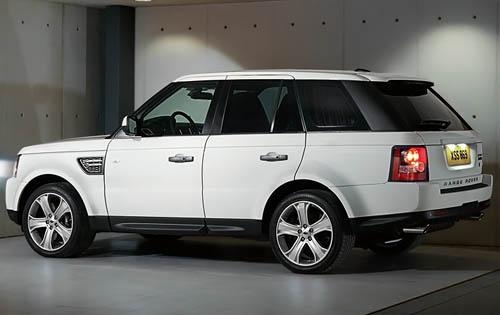
While based on the Discovery, the original Range Rover Sport was four inches shorter, lost its third-row seat, and felt cramped inside while costing tens of thousands of dollars extra. The formula worked, because it looked and felt like the big Range Rover at a discount. The boxy silhouette and basic proportions have hardly changed since. While the leather quality was top notch, a lot of the dashboard materials were not, and the lower price point bought more hard plastic. At the time, the Porsche Cayenne and the BMW X5 were far more athletic on the road, but the Range Rover Sport could tow up to 7,700 pounds and had all the requisite luxuries, including bi-xenon adaptive headlights, parking sensors, surround sound stereos, and unique features such as a refrigerated console and a heated windshield.
The HSE came with a 4.4-liter V8 with 300 horsepower and 315 pound-feet of torque, while the Supercharged had a (supercharged) 4.2-liter V8 good for 390 horsepower and 410 lb-ft. A six-speed automatic transmission and full-time four-wheel drive were standard, as was Terrain Response—Land Rover's innovative and heavily-patented drive mode selector that was the first of its kind. The system could alter throttle response, shifting, torque split, differential locking, traction control, and the air suspension's height for the best performance on specific road conditions. A Dynamic Response System could adjust the tension on the anti-roll bars for flatter, higher-speed cornering on the road and a looser feel off the road, when extra wheel articulation was needed. Fuel economy was abysmal from either engine and many owners averaged in the low teens, but snappy acceleration, louder exhausts, stronger brakes, and stiffer suspension changed the perception of Range Rover as a driver's SUV, even though it was still overly heavy, had numb steering, and exhibited plenty of body roll.
For 2007, Land Rover added Bluetooth phone connectivity as a standard feature. For 2008, the Range Rover Sport gained a power tilt-telescopic steering wheel, power-folding mirrors, and an eight-way power passenger seat. An appearance package debuted for 2009 on the Supercharged, called the HST Limited Edition.
A mid-cycle refresh for 2010 brought a sleeker, more uniform front fascia to better mirror the design of the larger Range Rover, circular LED running lights, new taillights, and an overhauled interior that felt twice as nice. The cabin featured more wood, padding, leather on the dash, better fit and finish, a new infotainment interface with 360-degree cameras, and less plastic. Everything about the layout was redone while keeping the angled, upright appearance and the two glove boxes. Land Rover replaced the two V8 engines with a single 5.0-liter, which made 375 horsepower and 375 lb-ft in the HSE and 510 horsepower and 461 lb-ft in the Supercharged, which now came with paddle shifters. The 2011 Supercharged trim offered a new Autobiography package with softer leather and other upgrades, while the GT Limited Edition was available in Fuji White with many of the Autobiography's upgrades. There were few changes for 2012 or 2013, the latter of which included carbon fiber trim on the Supercharged Limited Edition.
Average list prices on CarGurus are $8,000 to $12,000 when we checked.
Related Topics