BMW's base of driving enthusiasts was not happy when it introduced the X5 Sports Activity Vehicle (SAV) for the 2000 model year. How could an overweight and overgrown SUV match the elegance and athleticism of a 5 Series wagon, let alone hope to meet BMW's claim to build "ultimate driving machines"?
Indeed, that first-generation X5 was an ugly pug of an SUV. But after Cadillac, Lincoln, and Mercedes-Benz entered the luxury SUV segment, the writing on the wall was as clear as a Banksy: BMW needed one, too.
A quarter of a century and five generations later, the BMW X5 is the company's best-selling model in the United States (according to 2023 model year data). Available with multiple drivetrain configurations, including plug-in hybrid and high-performance M sport-tuned hardware, the X5 offers something for everybody. That includes skeptical driving enthusiasts, because newer X5s are among the most dynamic SUVs in their class, with handling far more precise than that of arch rivals the Audi Q7 and the Mercedes GLE and sharp enough to rival the Land Rover Discovery Sport.
BMW builds the X5 on a rear-wheel drive platform and equips it with inline-six or V8 engines. The exception is the four-cylinder engines, which form the basis of the first two plug-in hybrid models. The company's xDrive all-wheel drive system is available, but the X5 isn't designed for going off-road. Moderately challenging trails are the limit, especially if you're driving one equipped with larger wheels wrapped in performance tires, which are common.
Since the beginning, the X5 has been a midsize, two-row, five-passenger SUV. In some years, a small third-row seat was available, but it was phased out after BMW debuted the larger three-row X7 model in 2019. The X5 is roomy inside, with outstanding visibility, and cargo space is generous. However, BMW's split tailgate design has its drawbacks, mainly when trying to reach an item that has rolled forward to the base of the back seat.
Overall, the BMW X5 has an unimpressive reliability rating, but so do most luxury SUVs. According to CarComplaints.com, the second-generation X5 appears more troublesome than others. Newer models reflect the improvements in reliability that Consumer Reports and other research organizations have noted. Also, V8-engined X5s are not fuel-efficient, which increases ownership costs.
When buying a used BMW X5, look for newer, properly maintained, well-cared-for examples, and set aside money for upkeep and repairs.
BMW X5 Buying Guide: Cost, Reliability, and the Best Years to Buy
Frequently Asked Questions
Which BMW X5 years are the best?
Owner complaints about BMW's midsize SUV dropped dramatically with the third-generation in 2014. However, keep in mind that RepairPal says X5 reliability is below average across all model years, which is a common rating for luxury SUVs in this segment. The third- and fourth-generation models offer the best blends of value, reliability, performance, and technology. For context, third-generation models (2014–2018) tend to average around $11,900 to $17,800, while fourth-generation models (2019–2026) run roughly $26,100 to $72,000 on the used market.
What are the worst BMW X5 years?
According to CarComplaints, second-generation examples (2007-2013) have the most owner complaints. Reported engine problems between 2011 and 2013, shortly after BMW installed new turbocharged six-cylinder and V8 engines, are among the most significant issues with this version.
How much does a late-model BMW X5 cost?
On the used market, a 1-year-old (2025) X5 averages around $62,300. A 3-year-old (2023) model averages around $43,400, and a 5-year-old (2021) example averages around $33,100.
Research BMW X5 Price Trends on CarGurus
Is a used BMW X5 a good deal?
Like most used BMWs, the X5 is likely to require increasing amounts of money and time to maintain and repair as it ages. CarEdge says this SUV depreciates by 50% after five years, so the sweet spot is to capitalize on that drop in value while the X5 is still relatively new, then sell it before significant problems crop up.
Pros and Cons
Pros
- Roomy and comfortable interior
- Rewarding to drive (for an SUV)
- Rapid depreciation makes them a used SUV bargain
Cons
- Unimpressive reliability record for older models
- Expensive to maintain and repair
- Poor fuel economy with V8 engines
BMW X5 Generations
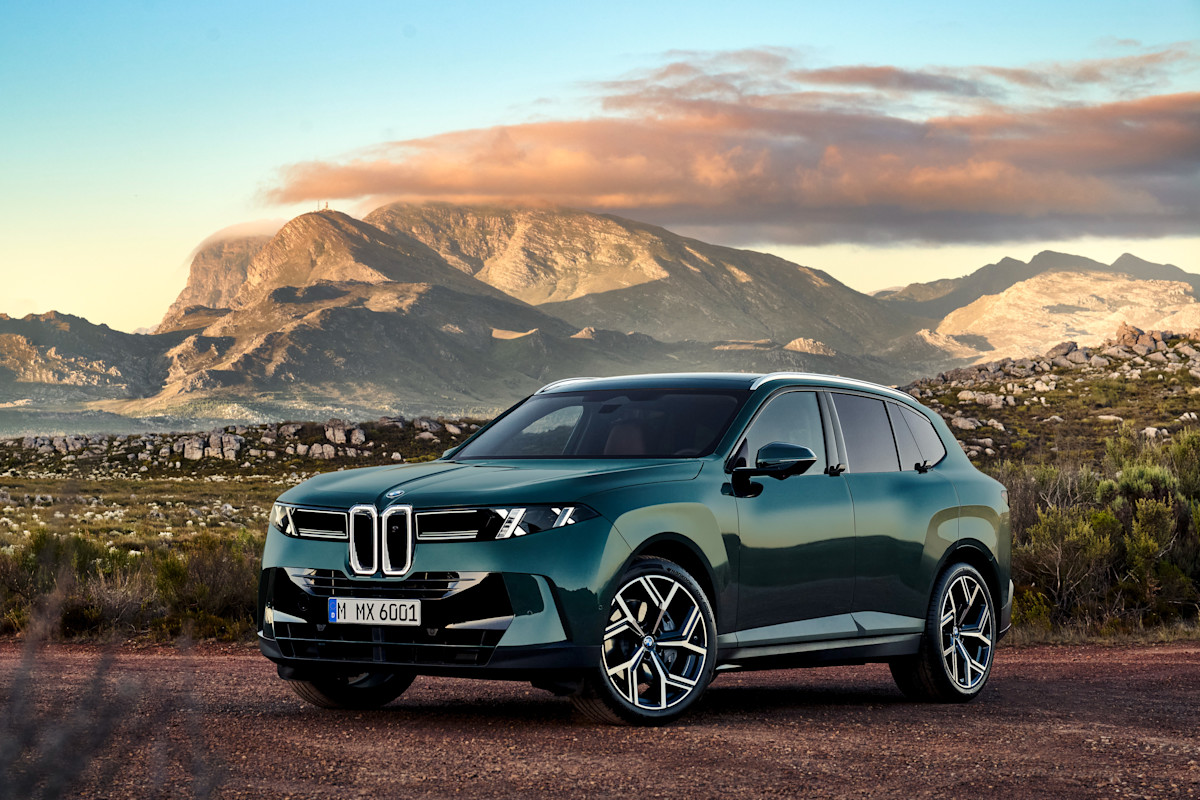
Fifth generation (2027 to Present)
BMW gave the X5 a ground-up redesign for 2027, launching its fifth generation. The SUV adopts BMW's Neue Klasse design language, which debuted on the iX3. A longer wheelbase adds 2.4 inches for more rear legroom, and overall length grows as well.
The redesign brings X-shaped LED headlights set in a black band, an elongated twin-kidney grille, and winglet-shaped, pressure-sensitive door handles. Wide taillights, a roof spoiler, and standard 21-inch wheels complete the look, with 22- and 23-inch wheels available. The split-folding tailgate from earlier X5s is gone, replaced by a one-piece power liftgate.
The lineup launches with a mild-hybrid gas model and a plug-in hybrid, with electric and hydrogen fuel-cell iX5 versions also planned. The X5 40 (rear-wheel drive) and 40 xDrive (all-wheel drive) use a turbocharged 3.0-liter inline-six with a 48-volt mild-hybrid system. It makes 394 horsepower and 428 lb-ft of torque through an eight-speed automatic.
At least one V8 is coming but has not been detailed, and fuel economy and towing figures are not yet announced. The 50e xDrive plug-in hybrid pairs that inline-six with a stronger electric motor for 483 hp and 516 lb-ft. Its 26.5-kWh battery gives a quoted 44 miles of electric range, and all-wheel drive is tuned for all-weather security, not off-roading.
The two-row cabin comes with standard synthetic leather and heated power sport seats, with Merino leather optional. A 17.9-inch touchscreen runs iDrive X (iDrive 10) with "Hey BMW" voice control. A windshield-wide BMW Panoramic Vision display replaces the digital gauge cluster, and an optional 14.6-inch passenger screen streams video and games.
Wireless Apple CarPlay and Android Auto are standard, and a head-up display is optional. Audio starts with a 12-speaker, 280-watt system, and an 18-speaker, 775-watt Bowers & Wilkins setup is available.
The 2027 X5 40 xDrive goes on sale in October at an MSRP of $73,550, including a mandatory $1,450 destination fee. The rear-wheel-drive X5 40 arrives in the first quarter of 2027 starting at $71,250, and the 50e xDrive plug-in hybrid follows at $78,950. A V8-powered M model comes later in 2027, and because these models are brand-new, used-market pricing is not yet available.
<br/ >
Fourth generation (2019 to 2026)
Evolutionary design changes and an oversized BMW twin-kidney grille signaled the arrival of a redesigned X5 in 2019. There was more room inside and an additional pair of 12.3-inch digital displays, housing the instrumentation and the latest iDrive infotainment system. Turbocharged inline six-cylinder and V8 engines continued to power either the rear wheels (with base sDrive40i models) or all four wheels (from the xDrive 40i upwards) through an eight-speed automatic transmission.
A second V8-powered version arrived in 2020. Known as X5 M50i, it featured light M division performance massage, while the full-fat BMW X5 M also returned to the lineup that year, boasting a minimum of 600 horsepower and handling that defied the laws of physics and an MSRP to match. The X5 M Competition supplied 617 horses, mainly for bragging rights.
The following year, in 2021, the plug-in hybrid electric vehicle version returned, and BMW finally added Android Auto support to go along with the Apple CarPlay connectivity that first debuted in the third-generation X5. The X5 xDrive45e's electric motor supplied 31 miles of driving range before the turbocharged gas-fueled four-cylinder engine kicked in, but after that it was significantly less efficient than the standard six-cylinder models.
Due to microchip shortages following the global pandemic, some features of the 2022 and 2023 X5 models were unavailable. For example, the wireless smartphone charger disappeared for 2022, but returned in 2023. However, by the time the significantly refreshed 2024 BMW X5 arrived, the automaker had sorted these issues out.
The 2024 facelift sharpened the X5's styling, added a new BMW Curved Display housing the digital gauges and next-generation iDrive infotainment, and bolted a new standard six-cylinder engine with more power and better fuel economy. The X5 xDrive50e plug-in hybrid swapped its four-cylinder gas engine for the new six-cylinder, becoming significantly more powerful and offering up to 40 miles of electric range. And the V8-equipped X5 models added mild-hybrid technology to boost output and efficiency.
Following the major changes for 2024, the 2025 X5 carried over without significant updates. By then, the fourth-generation model had been in production for seven years, and by historical standards, was due for a redesign.
Many people lease new BMW X5s, and the complimentary maintenance program typically means they receive dealership service at the scheduled time. As long as those records are complete, you can confidently buy a clean, well-maintained fourth-generation X5 and likely count on it for years to come. It won't be cheap to run compared to some brands, but significant repairs are probably far enough in the future that you'll have time to stash some cash.
Plenty of fourth-generation X5s are available with less than 50,000 miles, and prices range from about $30,000 to around six figures for a nearly new X5 M60i. As you might expect, prices for the X5 M are considerably higher, but you can find examples with just under 50,000 miles for about $65,000. Standard models with the M Sport package are popular, because they sharpen up the X5's looks inside and out, courtesy of adaptive suspension, an M steering wheel, an aerodynamic Kit, and exclusive paint and wheel options.

Third generation (2014 to 2018)
The third-generation X5 arrived in 2014 and lost some of the second-gen's muscularity in favor of a cleaner and more conservative design. It retained everything owners and critics liked about the previous model, but with an added layer of refinement and sophistication.
Gasoline engines included a turbocharged inline six-cylinder (known as the sDrive 35i and the xDrive35i) and turbo V8s (the xDrive50i), along with a turbocharged diesel (the xDrive35d). Minor modifications slightly improved performance and fuel economy in some models, and the third-gen X5 lineup offered an eight-speed automatic transmission and rear-wheel drive or all-wheel drive.
In 2015, the redesigned X5 M performance model arrived with 567 horsepower and a four-second 60 mph time. BMW followed that up in 2016 with a new plug-in hybrid powertrain based on a turbocharged four-cylinder engine. Electric-only range was just 14 miles, but it got 24 mpg in combined driving.
Available for a short five-year run, the third-generation X5 didn't change much over time. It offered the latest versions of BMW's iDrive infotainment technology and many of the modern safety features that are common today, and the luxurious interior still came with a small, optional third-row seat. Unsurprisingly, you'll want a newer version of the SUV to benefit from the most desirable tech, including iDrive 6.0 with touchscreen functionality, wireless smartphone charging, and Wi-Fi hotspot access starting with the 2017 model year.
According to Car Complaints, the third-generation X5 experienced fewer problems than first- and second-generation models. That tracks with efforts BMW made during this era to improve its quality and reliability, culminating in a third-place ranking behind Toyota and Lexus in a 2022 Consumer Reports study. Still, when something does require major maintenance or repair, a fix is likely to cost more than average.
That's why, for about the same price as a new Honda Civic or Accord, you can easily find a low-mileage example of a third-generation BMW X5. Bump your budget to $45,000, and you can get into an X5 M with fewer than 50,000 miles on the odometer. Either way, if you obtain a clear vehicle history report and a clean bill of health from an expert mechanic, a properly maintained third-generation X5 will probably serve you as well as most other luxury SUVs.

Second generation (2007 to 2013)
BMW redesigned the X5 for the 2007 model year, fixing the SUV's awkward proportions while increasing interior room enough to offer a cramped third-row seat. It continued with an inline six-cylinder engine or a V8, an automatic transmission, and rear- or all-wheel drive. BMW improved the X5's driving dynamics, its interior quality, and its safety features, but also installed the unloved iDrive infotainment system.
A turbocharged diesel engine was added in 2009, the next-generation iDrive infotainment system arrived in 2010, and BMW made significant changes under the hood in 2011. New turbocharged six-cylinder and V8 engines arrived that year, married to an eight-speed automatic transmission. According to CarComplaints, powertrain problems spiked shortly thereafter.
BMW's Motorsport division also got in on the act, crafting a new performance version of the SUV known as the X5 M. It arrived for the 2010 model year, fortified with a twin-turbocharged V8 engine producing 555 horsepower and 501 pound-feet of torque, and it could sprint to 60 mph in a reported 4.7 seconds. The year to get is the 2013 X5 M, which had standard multi-contour front seats.
The second-generation X5 is reportedly more problematic than the first-generation model. The arrival of new engines in 2011 corresponded to an increase in complaints, and this was the first X5 equipped with BMW's iDrive infotainment technology. Still, this SUV was great to drive, especially the X5 M.
Finding low-mileage examples of the second-generation BMW X5 for around $15,000 is easy. Perhaps too easy, which suggests you'll ultimately spend the money you save up front on maintenance and repairs. And upgrading to the X5 M won't cost much more, which is a little alarming. However, according to BMW Blog, the X5 M's twin-turbo V8 and the turbodiesel are the most reliable engines.
The best advice is to obtain a vehicle history report and have a qualified mechanic who specializes in old BMWs give any potential purchase a thorough inspection in order to avoid unpleasant surprises as much as possible.

First generation (2000 to 2006)
When the original BMW X5 first rolled out of the company's assembly plant in Spartanburg, South Carolina, it set new SUV standards for on-pavement driving dynamics and safety. The company freely admitted the X5 wasn't a boulder basher, but it was a luxurious vehicle designed for daily driving.
At first, only a thirsty 4.4-liter V8 engine was available. A more efficient 3.0-liter inline six-cylinder arrived in 2001, followed by a more powerful 4.6-liter V8 in the 2002 X5 4.6is. Unusually, BMW offered a six-speed manual transmission with the six-cylinder engine. In 2004, the X5 4.4i got a new V8 engine and BMW rolled out the X5 4.8is with 355 horsepower and acceleration to 60 mph in about six seconds.
The X5 gained incremental safety and infotainment upgrades across all first-generation model years. For example, a CD player was standard starting in 2002, and a DVD-based navigation system followed soon thereafter. Would wonders never cease?
Most owner complaints about the first-generation X5 pertain to mechanical problems, and the self-leveling rear suspension is notoriously prone to failure. The SUV was also subject to numerous recalls, including the Takata airbag issue wherein faulty airbag inflators could explode and injure or kill the driver and/or passengers. If you're buying a used 2000-2004 X5, you must ensure the airbag problem has been addressed.
Used first-generation X5s are cheap to buy, but not to own and maintain, and you should get a vehicle history report in addition to an inspection by a mechanic who specializes in old German cars. The performance-tuned V8 models hold their value the best, but they're also the least efficient and most likely to have seen some hard driving. You may wish to stick with a low-mileage six-cylinder version, but keep in mind that when something inevitably breaks, it won't be cheap to fix.
Related Topics