For years, Honda merely dabbled with electrified versions of the Accord, but it got serious about improving the Accord Hybrid's power, efficiency, refinement, and sophistication for the 2017 model year. Today, most Accord trim levels include the hybrid drivetrain as standard equipment, and this Honda is competitive with its arch-rival, the Toyota Camry Hybrid.
The first Accord Hybrid went on sale in 2005 and lasted through 2007. Equipped with a V6 engine and Honda's Integrated Motor Assist (IMA) hybrid technology, it was the most powerful and the most efficient version of the seventh-generation Accord sedan, getting up to 28 mpg in combined driving while supplying 255 horsepower.
Honda followed that one up with the 2014 Accord Hybrid. It debuted the company's new two-motor hybrid technology, based on a four-cylinder engine, and wasn't as strong or refined as the previous Accord Hybrid, but was significantly more fuel efficient at 47 mpg in combined driving. Honda offered an Accord Plug-in Hybrid version with up to 15 miles of electric range, but it lasted just a year.
Honda dropped the Accord Hybrid in 2016 but returned it to the lineup with a more powerful and efficient second-generation two-motor hybrid drivetrain in 2017. It came with refreshed styling and numerous enhancements.
A redesigned Accord arrived in 2018. The hybrid models had a new third-generation version of Honda's two-motor hybrid, offering improved packaging. Power output remained the same, but the fuel economy estimates fell slightly. Honda offered this powertrain for the duration of the 10th-generation Accord's production run.
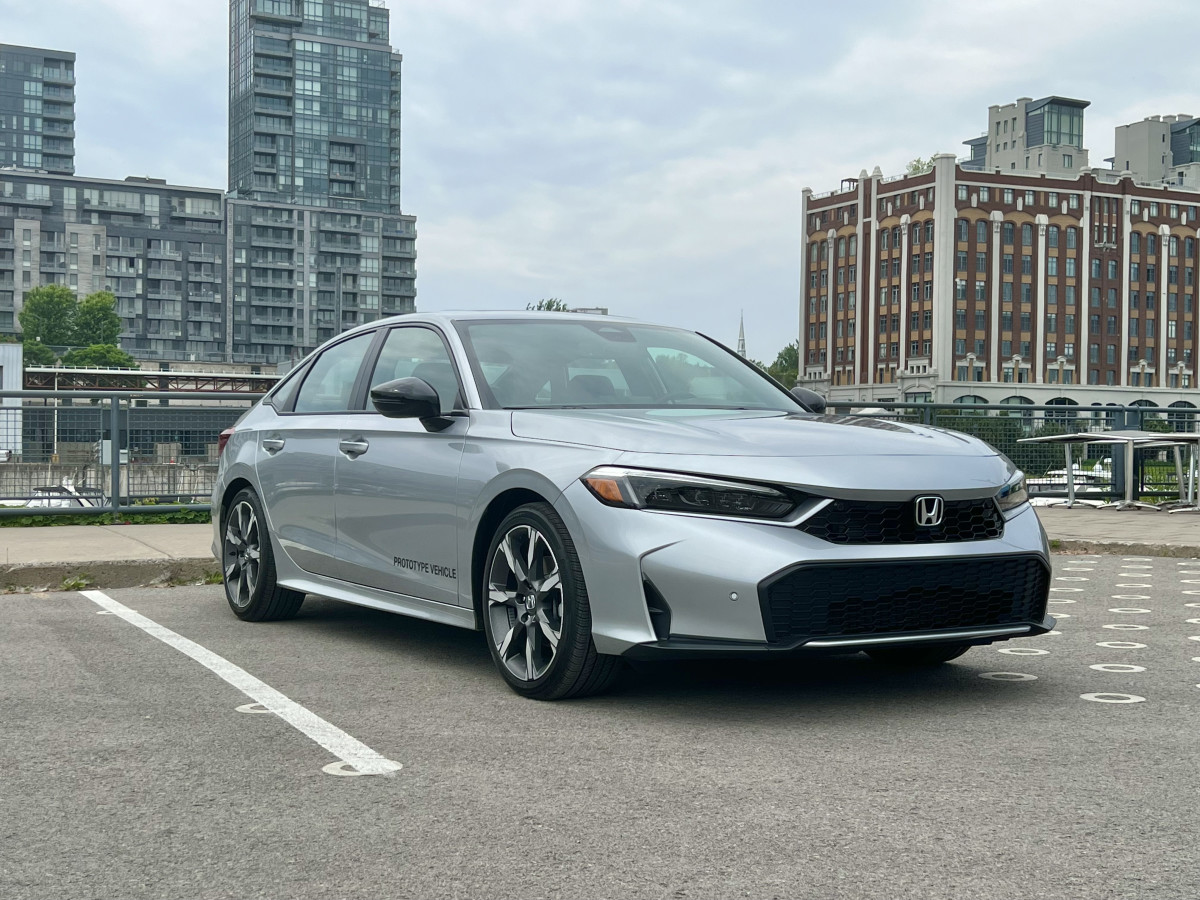
The Accord received a redesign for 2023, and with it came a new fourth-generation version of the two-motor hybrid. Still front-wheel drive and more refined than ever, Honda made the hybrid drivetrain standard equipment on all but the base LX and mid-grade EX models. If you wanted an Accord in Sport, EX-L, or Touring trim, hybrid power and its accompanying fuel efficiency came standard. Honda has made only minor updates to the Accord since the 2023 redesign.
RepairPal says the Accord is more reliable than most midsize cars, with an Excellent rating. However, that rating includes all Accord models and not just the hybrids.
CarComplaints breaks out its data on the Accord Hybrid and says the second-generation was the most troublesome. However, it's worth noting that people mainly complained about the cars falling short of official EPA fuel economy estimates and expensive repairs related to the driving assistance technology in 2017 models.
It's not uncommon for hybrids to fall short of their official fuel economy estimates. Since 2014, the Accord Hybrids have consistently earned ratings of 44 to 48 mpg, depending on the generation and trim level. Owners consistently report shortfalls, according to the Environmental Protection Agency.
Honda Accord Hybrid Buying Guide: Cost, Reliability, and the Best Years to Buy
Frequently Asked Questions
Which Honda Accord Hybrid years are the best?
Equipped with a fourth-generation Honda two-motor hybrid drivetrain, the 2023 and newer versions of the car are satisfyingly powerful, feel and sound natural to a driver when accelerating, and benefit from the latest infotainment and safety features. If they are outside your price range, the 2018-2022 Accord Hybrids are also good choices, though they make unpleasant sounds under hard acceleration.
What are the worst Honda Accord Hybrid years?
The second-generation Honda Accord Hybrids are less desirable, particularly the one-year-only 2014 Accord Plug-in Hybrid. They are mechanically sound and impressively efficient, but only the 2017 model offers anything close to the overall polish and sophistication found in Accord Hybrids made from 2018.
Is a used Honda Accord Hybrid a good deal?
Since owner-reported complaints about the Accord Hybrid pertain mainly to disappointment in the real-world gas mileage, this car could be a good deal if it has lower mileage and has benefited from proper care over time. The newer the model, the happier you are likely to be. Still, ensure you obtain a vehicle history report for any used Accord Hybrid not sold as a Honda-certified used vehicle.
Pros and Cons
Pros
- Excellent fourth-generation two-motor hybrid powertrain
- Impressive fuel economy (2014 on)
- Roomy interior and trunk (2018 on)
Cons
- Loud, unpleasant droning under acceleration (second and third-generation)
- Compromised trunk space and utility (second-generation)
- One-year-only 2014 Accord Plug-in Hybrid with 10-15 miles of range
Honda Accord Hybrid Generations
Fourth generation (2023 to Present)
When Honda redesigned the Accord for the 2023 model year, the automaker introduced its new fourth-generation two-motor hybrid system and made it standard equipment on several trim levels, as only the Accord LX and SE (or the EX on the 2023 and 2024 model years) continued with a turbocharged gas-only engine. The Accord Sport, the Honda Accord EX-L, the Sport-L Hybrid, and the Touring included the latest version of Honda's hybrid powertrain.
A new Atkinson-cycle 2.0-liter four-cylinder gasoline engine paired with two electric motors reconfigured to allow for a larger propulsion motor. Total output measured 204 horsepower and 247 lb-ft of torque, while Honda's e-CVT transmission helped to eliminate the drivetrain's tendency to emit steady-state droning under hard acceleration, greatly improving the driving experience.
It was well-equipped, too. The entry-level (for the Hybrid—gas Accords are relegated lower LX and EX/SE trims) Sport Hybrid model came with the likes of a dual-zone automatic climate control system, a 12.3-inch touchscreen with built-in HD radio accessibility, a leather-trimmed steering wheel, adaptive cruise control, and a power moonroof. The top-end Touring Hybrid added the likes of a head-up display and a 12-speaker premium Bose sound system.
With EX-L Hybrid trim, the fourth-generation Accord Hybrid (part of the eleventh-generation Accord lineup) earned a fuel economy rating of 48 mpg in combined driving. Other hybrid trims had larger wheels and tires, so the gas mileage rating for the Sport, Sport-L, and Touring was 44 mpg. Your author owns a 2024 Accord Sport Hybrid, and consistently sees 40-42 mpg in typical driving situations.
Honda made no changes to the 2024 Accord Hybrid, but in 2025, all versions of the car got rear air conditioning vents and USB-C charging ports. In addition, the Sport trim level gained standard heated front seats and wireless smartphone charging. In 2026, wireless Apple CarPlay and Android Auto became standard, and the Sport received sportier styling and black trim.
Owners have reported few problems to CarComplaints, and at least one of them is invalid, pertaining to lane-keeping assist technology that "bounces back and forth"— which is what lane-keeping assist does. Lane-centering assist is what centers the Accord in the middle of the lane.
Brand new, a Honda Accord Hybrid, including the $1,195 destination charge, will cost you between $35,000 and $40,000. On the used market, you can snag a deal on the Accord Hybrid, with the current generation averaging between $27,000 and $32,000.
Third generation (2018 to 2022)
Honda dramatically redesigned the tenth-generation Accord, and a third-generation two-motor hybrid powertrain was available for the model's entire five-year run. Honda offered it in a base model plus EX, EX-L, and Touring trim levels. For its final production year, in 2022, a Sport Hybrid became available, replacing the EX.
The third-generation two-motor hybrid powertrain supplied 212 horsepower and 232 lb-ft of torque, making the car agile and responsive. Unfortunately, when accelerating hard, such as when getting onto a freeway or passing slower vehicles, the powertrain tended to emit a constant, steady-state, unpleasant droning noise that dulled the driving experience. Accord Hybrid fuel economy ratings ranged from 43 to 47 mpg in combined driving, with the Sport and Touring trims getting the lower estimate due to their larger wheels.
The award-winning 10th-generation Accord was much roomier inside and equipped with a huge trunk. The Hybrid model's battery and other components moved to a new location under the back seat, preserving that cargo room and allowing Honda to install a 60/40-split folding rear seat to improve utility.
Honda made no substantial changes to the Accord Hybrid until 2021. That year, updated styling, improved headlights, and new 19-inch wheels for the Touring trim debuted. A larger touchscreen infotainment system with wired Apple CarPlay and Android Auto connectivity was standard, and upper trim levels featured wireless Apple CarPlay and Android Auto. The car also gained a rear seat reminder system, while the more expensive models added low-speed automatic braking.
This Accord Hybrid's final year was 2022, when Honda dropped the EX trim level and added the Sport trim to the Hybrid lineup for the first time. Equipped with larger wheels, like the Touring, it earned a lower fuel economy rating in exchange for its improved looks and better tire grip.
CarComplaints has logged several gripes from owners of the 2018 and 2019 Accord Hybrid, but none appear to be widespread, aside from unexplained windshield cracks. From 2020 to 2022, there are few issues of note. This quality record and the impressive RepairPal reliability rating suggest a used third-generation Honda Accord Hybrid is a worthy choice.
For a used 2018-2022 Accord Hybrid with less than 80,000 miles, you can expect to pay anywhere from $18,000 to $35,000, depending on the year, the trim level, and the mileage. Be sure to obtain a vehicle identification number (VIN) history report to identify any potential issues with the car and avoid those displaying signs of abuse and neglect.
Second generation (2014 to 2015; 2017)
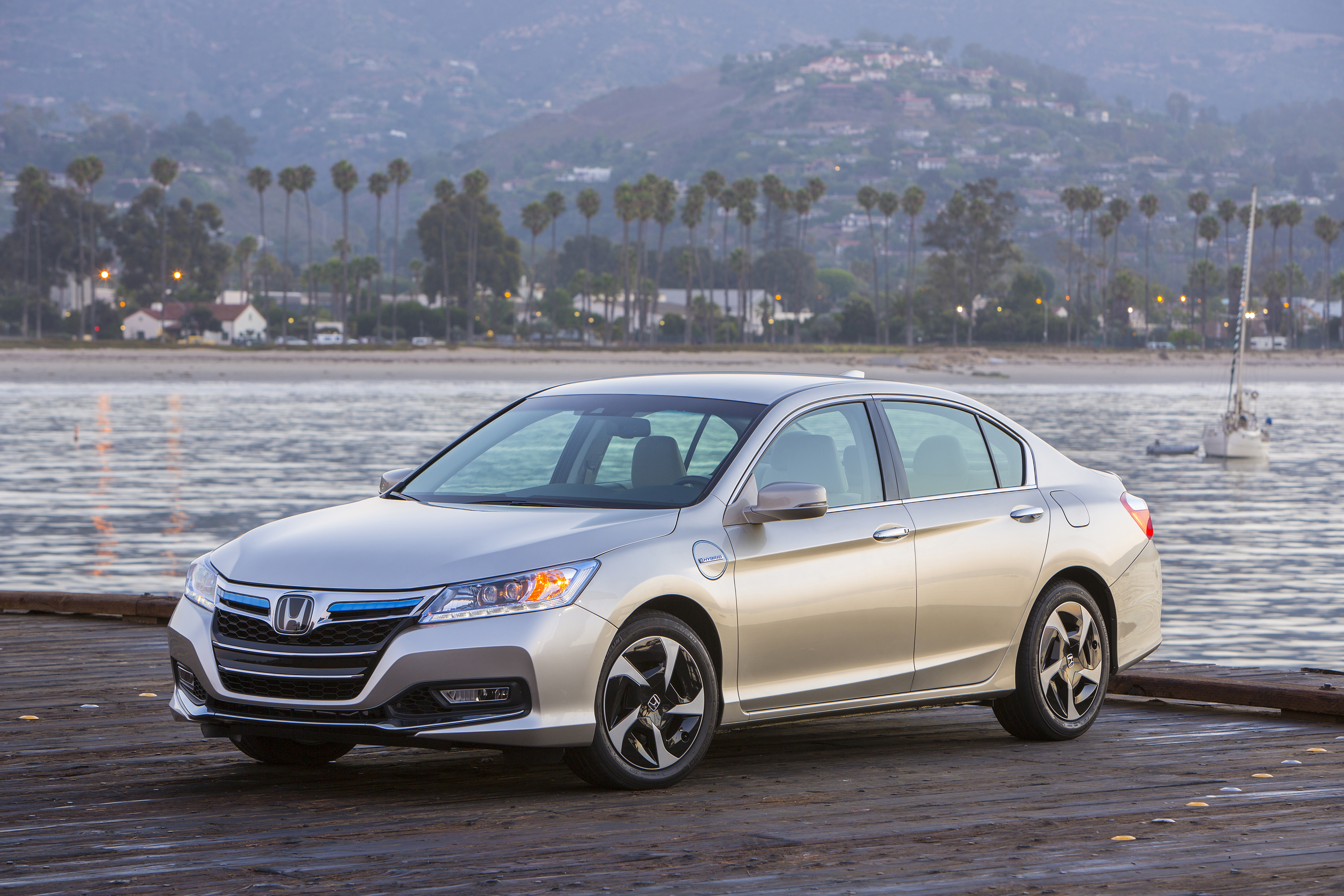
Following the three-year run of 2005-2007 Accord Hybrid models, Honda took a six-year hiatus before reintroducing the electrified powertrain. The second-generation Accord Hybrid arrived in 2014 as part of the ninth-generation Accord lineup, equipped with a new two-motor hybrid powertrain based on a 2.0-liter four-cylinder engine.
That year, Honda offered an Accord Hybrid and an Accord Plug-in Hybrid, identifiable by its unique styling details and plug-in power port. Hybrids supplied 196 horsepower and 226 lb-ft of torque while returning 47 mpg in combined driving. Plug-in Hybrids provided 196 horsepower and 232 lb-ft and offered 10 to 15 miles of electric-only driving range. After that range was used up, the Plug-in Hybrid returned 46 mpg.
Whether it was the unusual styling, limited range, restricted cargo capacity, or near-$5,000 premium, the Accord Plug-in Hybrid lasted only a year. Honda canceled it for the 2015 model year, making it a rarity to avoid unless you value technological obscurity.
Shortly thereafter, Honda paused Accord Hybrid production for 2016. In 2017, a thoroughly refreshed Accord Hybrid returned with a second-generation version of the two-motor hybrid drivetrain, featuring an Atkinson-cycle 2.0-liter four-cylinder engine and a more compact battery, increasing trunk space to a reasonable 13.2 cubic feet. Power output jumped to 212 horsepower and 232 lb-ft, and the fuel economy rating increased to 48 mpg in combined driving.
The 2017 Accord Hybrid featured revised styling, standard Honda Sensing driving assistance technologies, and a seven-inch touchscreen infotainment system with Apple CarPlay and Android Auto. Other new features included automatic high-beam headlights, rain-sensing wipers, remote engine starting, and parking sensors.
This generation of Accord Hybrid models is the most problematic, according to CarComplaints. However, few are serious, and many appear related to unsatisfying fuel economy. Unfortunately, what should be the best of this generation, the 2017 model, appears to suffer the most consequential problem, related to the standard Honda Sensing technology that can result in a costly repair.
If you're considering a second-gen Accord Hybrid, get a vehicle history report. You can find examples of this car with less than 100,000 miles for between $14,000 and $24,000.
First generation (2005-2007)
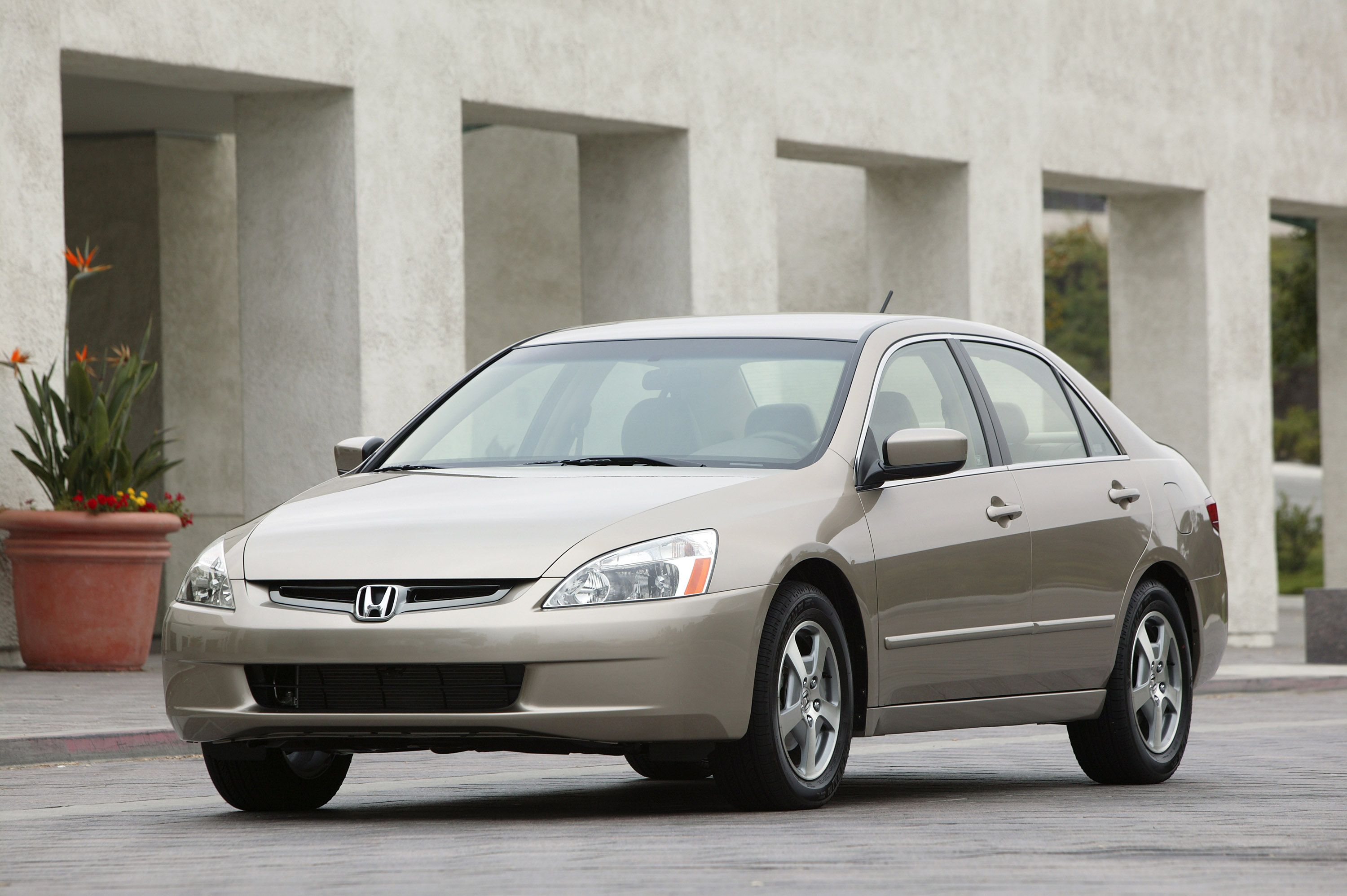
The first Honda Accord Hybrid went on sale for the 2005 model year, midway through the seventh-generation Accord's production run.
Based on Honda's 3.0-liter V6 engine and using the automaker's Integrated Motor Assist (IMA) technology, the first-generation Accord Hybrid made more power and provided greater fuel efficiency than any version of the midsize sedan. Output measured 255 horsepower and 232 lb-ft of torque compared to the V6 engine's 240 horsepower and 212 lb-ft. The Accord Hybrid averaged 28 mpg in combined driving, while the Accord V6 got 21-22 mpg.
In 2006, styling updates arrived for all Accords, and the V6 engine closed the power gap with the hybrid powertrain, though not completely. Honda made no substantial changes to the car for the 2007 model year.
There aren't many owner complaints about the first-generation Accord Hybrid, but this is an extremely rare version of the car. As of this writing, only two were available nationwide with less than 140,000 miles, priced between $8,000 and $10,000. Given that a four-cylinder Accord is nearly as fuel efficient, we advise skipping the Accord Hybrid because its rarity and Integrated Motor Assist technology could make it prohibitively expensive to repair.
Related Topics: