Introduced in 1965 and continuing to this day, the Ford Mustang is one of Detroit's most enduring sports cars, as well as one of the most notable, perhaps notorious, nameplates in America's automotive history. The Mustang makes performance accessible to the masses, even though it's also been one of the vehicles that's helped to change the notion of what a performance car or a muscle car can be—to wit, the Mustang is the inspiration for Ford's Mustang Mach-e fully electric crossover (which won't be covered here, but is noteworthy in relation to the legacy).
Ford Mustang Buying Guide: Cost, Reliability, and the Best Years to Buy
Search for Ford Mustang
See all


The Mustang is both Ford's longest-running vehicle and one that has endured as its notable competitors have wound down. The Dodge Challenger and Charger were discontinued at the end of 2023 in favor of new electric versions, as was the Chevrolet Camaro. Together, these vehicles represented decades of innovation for Detroit's automakers. When you look back at the 1970s, 1980s, and 1990s, it's kind of wild that one generation of the Ford Mustang spanned all three decades.
Over the years, the Ford Mustang has been available in coupe and convertible forms. Often, these standard body styles were dressed up with special editions, even going back to the early years, and these retro touches were often brought back to simultaneously keep this two-door car modern and respect its heritage. Notable editions include the Mustang Mach 1 and the Mustang Shelby GT500, as well as numerous GT models. Here's what you need to know if you're shopping for one of the most iconic cars of the last 50 years.
Ford Mustang Buying Guide: Cost, Reliability, and the Best Years to Buy
- Frequently Asked Questions
- Ford Mustang Pros and Cons
- Ford Mustang Generations
- Seventh Generation (2024-present)
- Sixth Generation (2015-2023)
- Fifth Generation (2005-2014)
- Fourth Generation (1994-2004)
- Third Generation (1979-1993)
- Second Generation (1974-1978)
- First Generation (1965-1973)
Frequently Asked Questions
Which Ford Mustang years are the best?
If reliability is a big factor, then stick with the fifth generation, built from 2005 to 2014. That leaves plenty of options for savvy shoppers, but it's worth remembering that models with the 4.6-liter V8 engine have a better reputation for reliability than the V6 options or the larger 5.0-liter V8.
What are the worst Ford Mustang years?
The second generation, colloquially known as the "Mustang II," is widely regarded as the worst. It was sold from the 1974 to 1978 model years and its smaller proportions were intended for better fuel efficiency (despite the fact that it was actually heavier than its predecessor) as well as the ability to compete with increasingly popular subcompact cars from Japan. This generation is known for its lackluster performance and polarizing styling, as well as relatively low horsepower for a sporty car.
How much does a late-model Ford Mustang cost?
Based on current CarGurus listings, a one-year-old 2025 Ford Mustang averages about $45,000, a three-year-old 2023 model averages about $32,300, and a five-year-old 2021 model averages about $31,900.
Research Ford Mustang Price Trends on CarGurus
Is a used Ford Mustang a good deal?
Like almost any collector car, a used Ford Mustang can be a good deal, but there are certainly bad deals out there, too. If you hold out for a Mustang you like, in good condition, at a price you feel is fair, then, yes, a Mustang can be a good deal and a great choice for a used car. Keep in mind that there's a lot of variation in specs, not only between each generation, but even from one model year to another. It's worth noting that used Mustang prices have risen about 7.5% year over year, outpacing the broader used car market's roughly 3% increase over the same period.
Ford Mustang Pros and Cons
Pros:
- Tons of choices
- Iconic
- Fun to drive
Cons:
- Can be expensive
- Parts availability may be difficult for older models
- Small rear seat
Ford Mustang Generations
Seventh Generation (2024-present)
Ford introduced the seventh generation of the Mustang pony car in 2022, ahead of its 2024 model year launch. Like its predecessors, it's assembled at Ford's Flat Rock production facility in Michigan. It maintains the familiar front-engine, rear-wheel drive configuration, and in coupe and convertible body styles.
So far, the current generation Mustang is available with Ford's EcoBoost turbocharged 2.3-liter inline four-cylinder engine, powering base and mainstream trims. This engine is widely used across the manufacturer's lineup in vehicles such as the Ford Explorer and Ranger. Upper trims are available with 5.0-liter V8 engines producing 480 hp or 500 hp, depending on trim. A 10-speed automatic transmission is the most common, though some trims are available with six-speed manuals.
At launch, the seventh-generation Mustang was available in EcoBoost, Ford Mustang GT, and Mustang Dark Horse trims. In 2025, Ford offered a 60th Anniversary special-edition package with only 1,965 produced in a special Brittany Blue color. For the 2026 model year, the Mustang offered a RTR Package for the EcoBoost, which added signature lit "notrils" within the front grille, specialty badging and optional Hyper Lime brake calipers and interior stitching. Ford also introduced an FX Appearance Package exclusive to the GT Premium trim, featuring Oxford White wheels and retro plaid leather seat inserts, along with two new paint options: Adriatic Blue Metallic and Orange Fury Metallic Tri-Coat.
With just a few model years of the seventh-generation Mustang on the road so far, it's important to remember that new problems may arise even in a car that's free of known issues at the time of sale. So far, the 2024 and 2025 Ford Mustangs have been reported to suffer from powertrain vibrations as well as problems with inconsistent interior build quality, the limited-slip differential, and the electronic stability control system. If you're shopping for a used example, consider finding one that has had these issues already repaired under warranty, or has a remaining factory warranty. Also, bear in mind that, although the EcoBoost engine may get good mpg ratings, it requires premium fuel.
As of this writing, the average listing price for a pre-owned 2024 Mustang is about $38,600, while 2025 models average about $45,000. That might not seem like a deal, since a brand-new base Mustang starts at $35,330, but depending on trim level and other options, you can run that ticket north of $71,000.
Sixth Generation (2015-2023)
The crisply styled sixth-generation Ford Mustang, complete with a newly patterned grille, was revealed in late 2013 and began production in the summer of 2014, for the 2015 model year. Sleeker and smoother than the previous generation, the new Mustang carried over its coupe and soft-top convertible options, the latter with a new electric system to open and close the top. Notably, this was the first time Ford produced and marketed the Mustang for a global audience, and it was the first Mustang to feature Ford's EcoBoost engine lineup. A new independent rear suspension system was a key part of the ground-up redesign.
Ford's EcoBoost turbocharged 2.3-liter inline four-cylinder engine powers base Mustangs in this generation, while other available engines include a 3.7-liter V6, the 5.0-liter Coyote V8, and two versions of the 5.2-liter V8, exclusive to the Shelby GT350 and the GT500. Transmission options, depending on the engine, include two six-speed manuals, six- and 10-speed automatics, and a seven-speed dual-clutch automatic. As always, this Mustang is exclusively rear-wheel drive.
The sixth-generation Mustang might seem like a smart buy, since it's possible to find one that's only a few model years old, which should therefore be relatively problem-free, but shoppers should also keep in mind that a Mustang from this generation could still be harboring issues. Models with the EcoBoost engine, in particular, are known for problems with oil consumption and potential head gasket failure, while the transmission may be prone to slippage.
Shoppers in search of a sixth-generation Ford Mustang should, on average, budget about $20,500 for a 2015 model, and that price steadily increases to a high average of about $34,500 for a 2022 example, while 2023 models average about $32,300. Average sale prices for this generation have been trending upward in recent months, with most model years showing gains of 7% to 12% over the past 90 days.

Fifth Generation (2005-2014)
Ford introduced the fifth-generation Mustang in 2004 for the 2005 model year. Though it carried over in coupe and convertible body styles, the overall look and feel were a significant departure from the previous generation, with much bolder bodywork and chunky taillights. The 2009 model was the first Mustang to be available with Ford's Sync infotainment system and the whole car was refreshed for 2010 with updated exterior and interior styling.
The Mustang retained its customary rear-drive layout, though unlike previous generations, offered only three engines. Base trims got a 4.0-liter V6, while upgraded trims and editions got either a 4.6-liter V8 or a 5.4-liter supercharged V8. Transmission options were five- and six-speed manuals and a five-speed automatic.
Base Mustang models were the V6 Standard and the V6 Deluxe, and the former was available only in 2006. Special trim levels of the fifth-generation Mustang include the Mustang GT, GT-H (exclusive to Hertz for rental cars), GT California Special, Boss 302, Bullitt, Shelby GT500, and Shelby GT500KR. Editions and packages included the Pony Package and V6 Appearance Package—both with suspension upgrades plus exclusive styling such as wheels and badging—and the 45th Anniversary and Iacocca Silver 45th Anniversary Editions (the latter to commemorate the Mustang's original developer, Lee Iacocca).
Fifth-generation Mustangs are prone to electrical problems, which can result in dead batteries and alternator failures. Carefully inspect the body, too, since peeling or chipped paint can lead to exposure that results in rust.
According to CarGurus sales data, shoppers should be able to buy a fifth-generation Mustang for an average of about $12,600 to about $19,600. Of course, there are notable outliers, primarily low-mileage GT and Boss 302 models, with listing prices that can reach into the six figures. In other words, there are some deals to be found in these years, but collectors in search of a unique Mustang should expect to pay a lot more.
Fourth Generation (1994-2004)
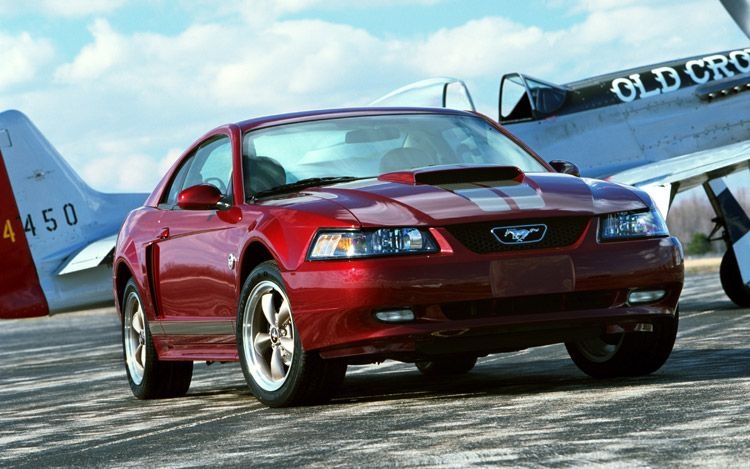
By the time the fourth-generation Mustang rolled around, it was long overdue a redesign. It rode on the same Fox platform as its predecessor, but the platform itself was updated. It was available in coupe and convertible body styles, a more straightforward lineup than in previous years, and it was facelifted for the 1999 model year, with sharper body lines and new wheels.
A variety of V6 and V8 engines were available. The V6 was primarily a 3.8-liter unit, but in 2004, the generation's final year, it was replaced with a 3.9-liter version. Meanwhile, GT and Cobra trims across the model years and trim levels were available with different V8 engines, including 4.6-liter, 5.0-liter, 5.4-liter, and 5.8-liter versions. Transmission options included five- and six-speed manuals and a four-speed automatic, all paired, of course, with rear-wheel drive.
In addition to the Mustang's base, GT, and SVT Cobra performance versions, this generation was also available in Spring Feature Edition, 35th Anniversary Edition, 40th Anniversary Edition, 100th Anniversary Edition (celebrating the Ford brand, not the Mustang itself) and Bullitt edition models.
A lot of years can mean a lot of problems, and fourth-generation Mustangs can be prone to engine issues, while fragile clear coat and paint can also be a hallmark of this generation. Get records for any engine repairs, or ensure you're comfortable fixing potential problems, and inspect the body for rust.
With 11 model years in this generation, there are a lot of options, but perhaps not as much variation in price as you might expect. CarGurus sales data shows that 1997 and 1998 models are the least expensive, on average, with transaction prices at around $8,500. Budget about $15,000, on average, for a 2003 or 2004 model. Our data shows a 2001 model averages about $13,500.

Third Generation (1979-1993)
The third generation of the Ford Mustang is a fascinating one, for reasons that weren't even a reason when it was new. Available in coupe and convertible forms, and—oddly—as a hatchback, it was born in the 1970s, persisted throughout the '80s, and wrapped up in the '90s—talk about an identity crisis. Ford planned a redesigned fourth-generation Mustang for the late 1980s, though consumers protested when they found out it was based on the front-wheel drive Mazda MX-6. That model instead became the Ford Probe, and designers went back to the drawing board for the next Mustang. A Mercury clone of the Mustang, the Capri, was available from 1979 to 1986, so it's worth including that model as part of a Mustang search if you want to broaden your horizons.
The Mustang retained its rear-wheel drive layout, paired with 2.3-liter inline four-cylinder, 2.3-liter turbo-four, 3.3-liter inline-six, 2.8-liter V6, 3.6-liter V6, 4.2-liter V8, and 4.9-liter V8 engines (commonly referred to, however, as a 5.0-liter). Manual transmission options were four- and five-speeds, and three- and four-speed automatics were also available.
It should be no surprise that such a long life cycle spawned a lot of trim levels. The third-generation Mustang included Ghia and Cobra models that carried over from the second generation. Ford then introduced a naming convention that included L, GL, GLX, GT, Turbo GT, and GT-350 trims. Other special editions included SVO (Special Vehicle Operations) and Cobra R trims, as well as a Pace Car replica to commemorate the 1979 Indianapolis 500.
The most well-known issue with the third-generation Mustang is that early models equipped with the turbocharged inline four-cylinder engine suffered from reliability issues, such that the powertrain was pulled from the market until it was rectified, then reintroduced in 1983.
Prices for the third generation of the Ford Mustang, much like the Mustang itself during these years, are all over the place. The low average is about $9,000 for a 1985 Mustang, and the high average is about $28,000 for a 1993 example, though there are several other model years with averages reaching into the $20,000 range. Pricing trends are wild, too, and that's likely due to outliers. For example, the 1979 Mustang is up 39% year over year, while the 1980 Mustang is down 65% over that same period. The 1986 and 1993 models have experienced consistent increases in value over the time period shown by our data, while most other model years in this generation are consistently down—or they fluctuate.
Second Generation (1974-1978)
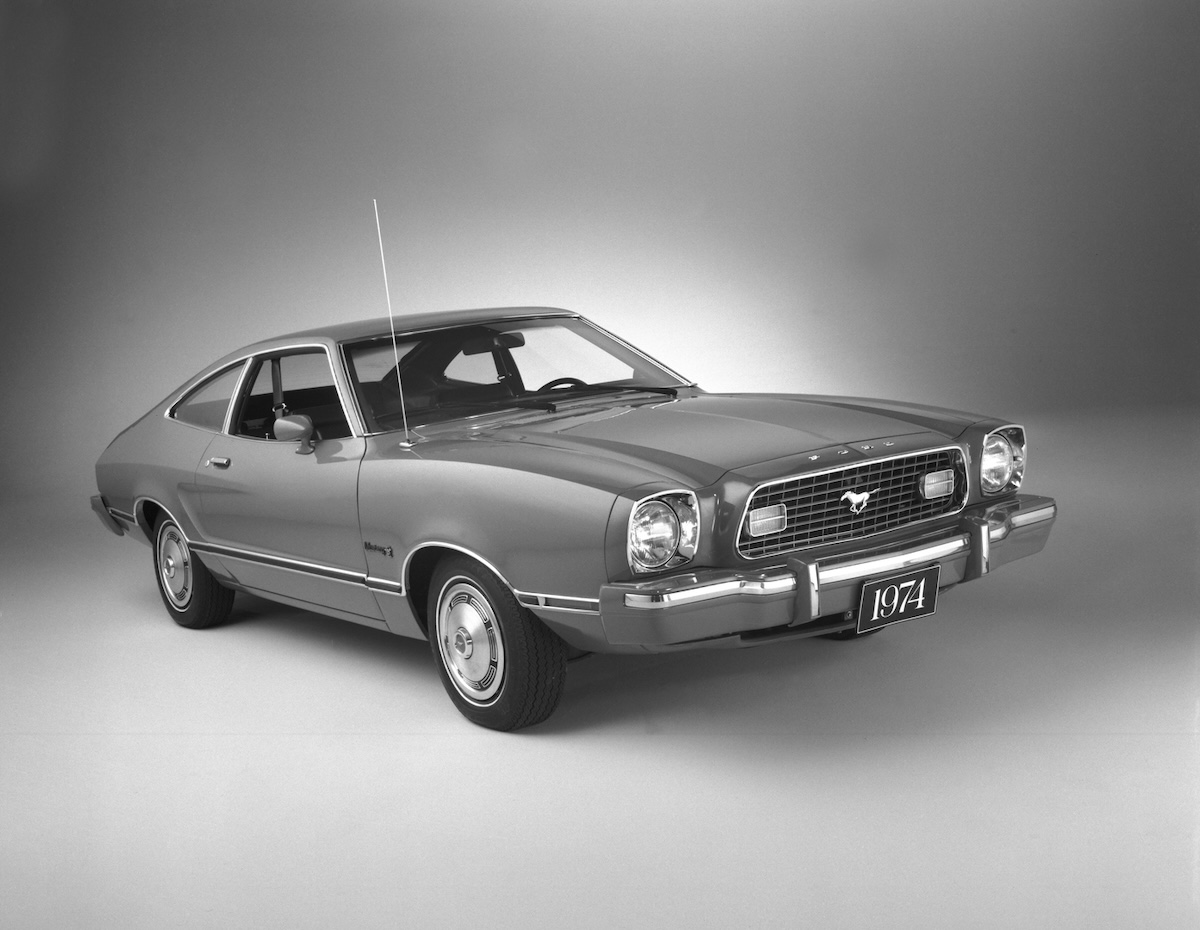
Colloquially known as the Mustang II, the second generation of Ford Mustang was designed to be smaller and lighter, to respond to what Ford perceived as customer demand. It was based on the Ford Pinto, smaller than the first-generation Mustang, and as such, had lighter and less powerful engines. This smaller platform, and new notchback coupe and liftback body designs, exposed the Mustang to a different set of competitors, including both sporty domestic subcompact cars, such as the Pontiac Sunfire, and imports, such as the Toyota Celica. The Mustang II sold well at the time, but in retrospect is perceived as the least popular generation.
The smaller, lighter second-generation Ford Mustang maintained its rear-wheel drive layout and came with a choice of 2.4-liter inline four-cylinder, 2.8-liter V6, and 4.9-liter V8 engines. Notably, it was not available with high-output V8 options like the first generation. Transmission options were a four-speed manual and a three-speed automatic. The Mustang II is also recognized for being the first American car to use a rack-and-pinion power steering system.
Appearance packages included the Stallion, Cobra II, King Cobra, Sports Appearance Group, and Fashion Accessory Package. Each variant offered different color combinations, which may have included specific exterior and interior color pairings, exterior and interior trim, and racing stripes or graphics. Other variants included the Ghia model, distinguished by the flair of the famed Italian coach builder, and in 1977, a T-top version of the fastback was introduced.
The second-generation Mustang was not nearly as popular as the first generation. In many consumers' opinions, the styling is the worst of any Mustang generation and performance was poorer than the first generation's. However, its unloved status isn't the result of any widespread reliability or quality issues.
CarGurus does not have price trend data for this generation of Mustang, nor were there any currently listed for sale as of this writing.
First Generation (1965-1973)
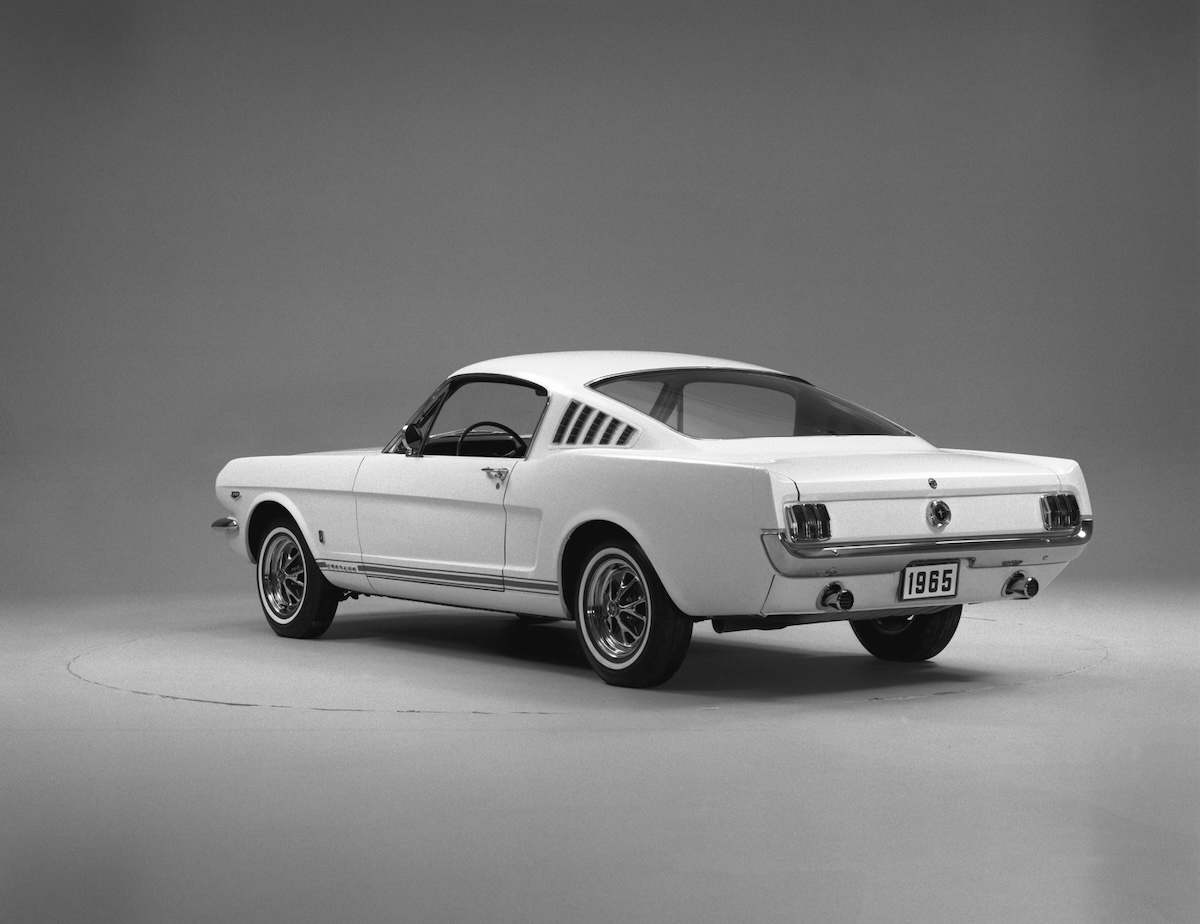
The Ford Mustang was introduced in 1964 as a fun yet affordable line of coupes and convertibles. It was derived from existing Ford vehicles, though it's credited with popularizing the long hood and short deck (or greenhouse) that characterized this new genre, soon to be known as the pony car. The Mustang, which was developed in just 18 months, was an instant hit, meeting sales targets in just three months.
The first iteration of the first-generation Mustang was available with a 2.8-liter V6, a 3.3-liter V6, a 4.3-liter V8, and two versions of a 4.7-liter V8. Transmission options included three-speed and four-speed manuals and a three-speed automatic. The powertrain lineup for 1967 and 1968 added 4.9-, 6.4-, and 7.0-liter V8s, including the infamous Cobra Jet version of the latter. The engine lineup was pared down for the last few years of the first generation. Production first-generation Mustangs were rear-wheel drive, though some aftermarket companies modified a few examples to all-wheel drive configurations.
Ford did not introduce trim variants other than the GT for the first-generation Mustang until 1969, when it was clear the lineup needed more differentiation to generate interest. The GT featured a V8 engine and racing stripes. At that point, Ford introduced the Mach 1, the Boss 302, and the Boss 429 performance configurations, the latter two of which were for racing compliance. A coupe-only Grande trim went for luxury customers, with a softer suspension system and extra insulation. There was also a Shelby Mustang (which we cover separately) in 1965, and this marked the debut of the Mustang's fastback body style.
The most commonly noted issue with first-generation Ford Mustangs is the cramped cabin, which potentially makes it difficult for larger or taller drivers, and that outward visibility is compromised. In terms of reliability, as with any collector car this age, maintenance and condition are far more important than any problems the car may have suffered when new.
With the exception of late-model high-performance or special edition Mustangs, the first generation is the most expensive for collectors. Across this generation, data shows that a 1972 or 1973 Mustang may be accessible for an average of $31,000 or so, but averages go as high as $78,000 for a 1969 model. Keep in mind, however, that an outlier, such as a high-profile or extremely desirable example, can easily throw off averages of vehicles that tend to change hands in low numbers.
Related Topics


by Cherise Threewitt
Cherise is a Chicago-based automotive writer and editor with nearly 15 years of experience covering the automotive industry. As the Features Editor, Auto at US News & World Report, Cherise loves writing about car culture and sharing common-sense car-buying advice. She owns a 2019 Subaru WRX Series.Gray, 2020 Subaru Outback Onyx XT, 2007 Genuine Buddy Italia 150, 2015 Honda Grom, and 1979 Boston Whaler Montauk.
The content above is for informational purposes only and should be independently verified. Please see our Terms of Use for more details.


