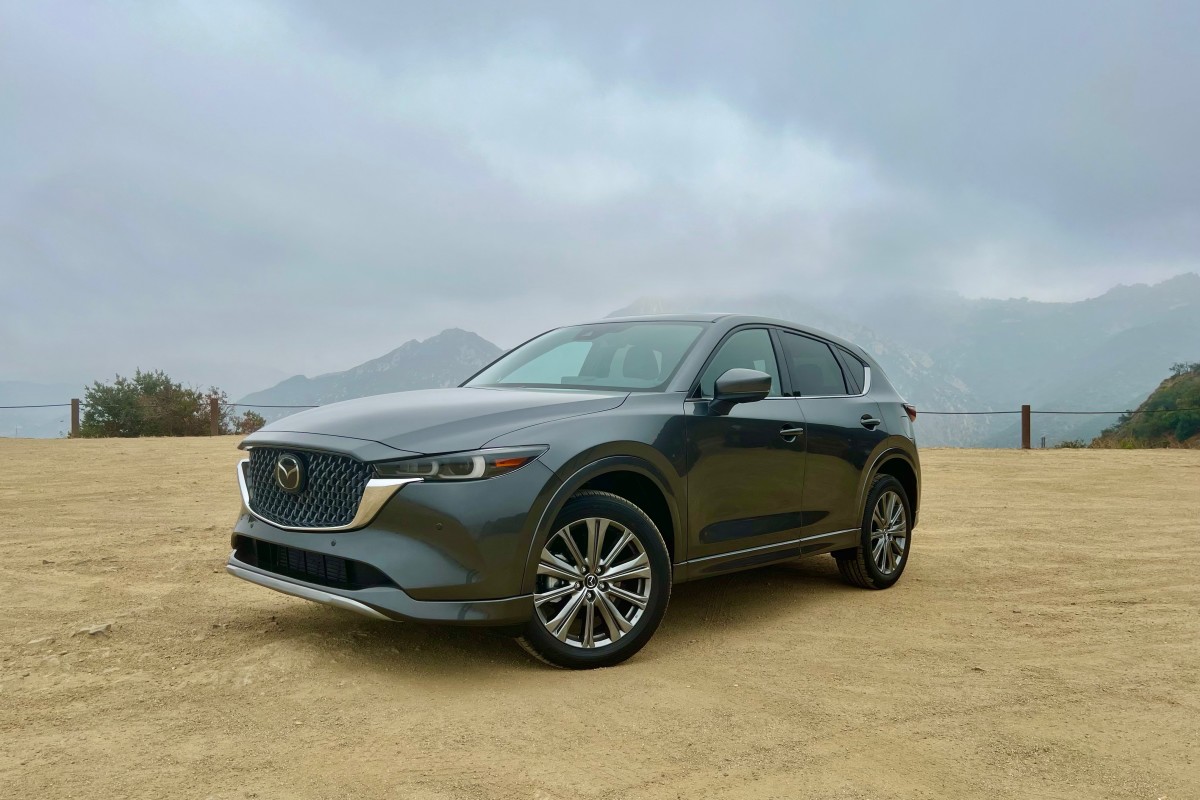
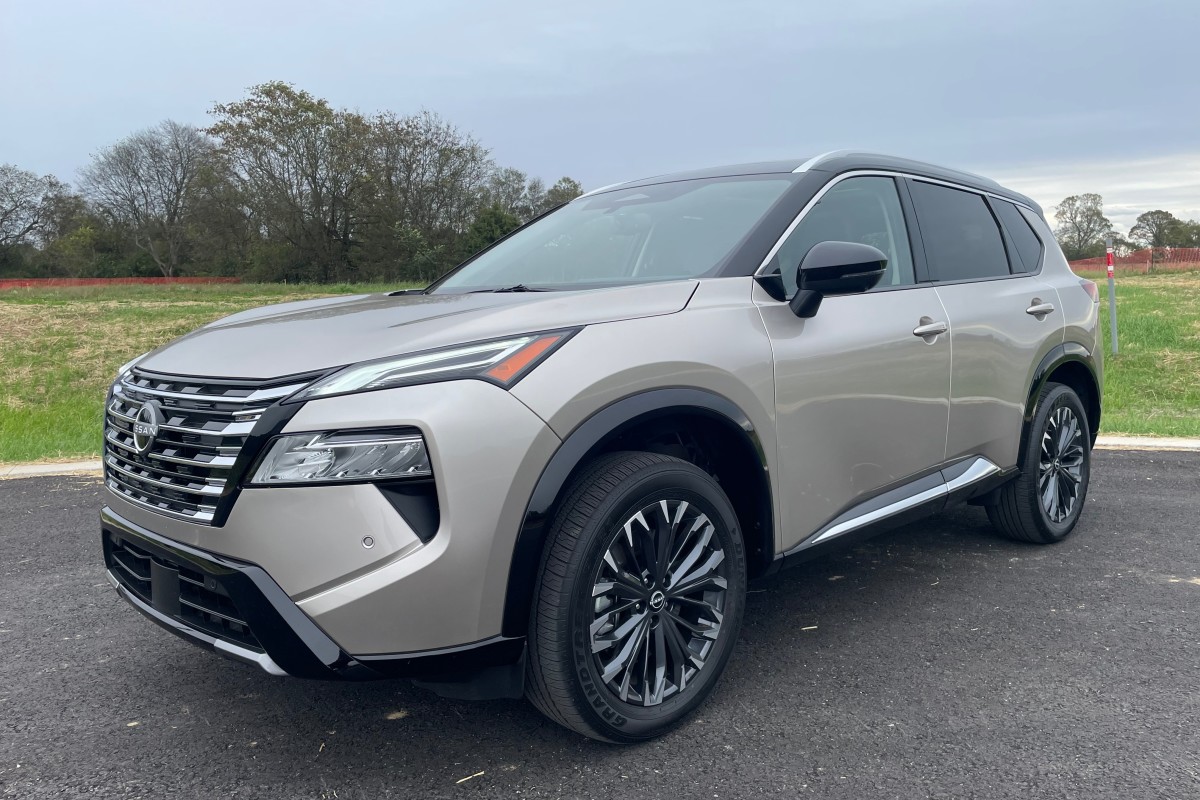
The Dodge Hornet is a small crossover SUV with styling that’s meant to evoke the hot hatches of the 1980s and 1990s. It’s available with gas-only or plug-in hybrid powertrains. Competitors include the Mazda CX-5 and the Toyota RAV4 Plug-In Hybrid.
2025 Dodge Hornet Pricing, Specs, and Release Date
- What’s New for the 2025 Dodge Hornet
- Design
- Powertrain
- Interior
- Technology
- Safety
- Pricing and Release Date
- Further Research

What’s New for the 2025 Dodge Hornet
For 2025, the Dodge Hornet is now available with paddle shifters. Otherwise, this hatchback crossover carries into its third year unchanged. The Hornet would be a much more appealing vehicle if it was priced from a value standpoint, but as such, there are better buys in the class, whether you’re looking at its four-cylinder version or the plug-in hybrid version. It’s fun to drive, but then, so are plenty of others.
Design
The Hornet skillfully adapts Dodge’s muscle car-like styling to a small crossover, while paying homage to ‘80s sporty yet affordable hatchbacks. The Hornet’s front end wears a combination of grilles and vents, and a taillight bar spans the width of the rear, with big tailpipes peeking out from under the rear bumper. Typical of Dodge, the Hornet is available in bright colors and can be dressed up with options like black wheels and dark badges.
Powertrain
Each of the Hornet’s trims, GT and R/T, gets its own powertrain. The GT is the gas version, driven by a 2.0-liter turbocharged four-cylinder engine rated for 268 horsepower and 295 pound-feet of torque, which are competitive figures for a car in this segment. A nine-speed automatic transmission and all-wheel drive (AWD) complete the package. It’s estimated by the EPA to get 21 mpg in the city, 29 highway, and 24 combined, which isn’t especially good for the class. Also, it requires premium fuel. The R/T PHEV version features a 1.3-liter turbocharged four-cylinder engine paired with two electric motors and a 15.5-kWh battery pack. That setup is good for 288 horsepower and 383 pound-feet of torque. This Hornet gets a slightly different AWD system, driven by the electric motors, and a six-speed automatic transmission. It’s good for about 30 miles of all-electric range.

Interior
The Hornet is related to the Alfa Romeo Tonale, and that connection is most apparent in the cabin, thanks to a mix of sporty and upscale elements. It boasts a beefy leather-trimmed steering wheel, firmly bolstered sport seats, and a combination of cloth and synthetic leather upholstery. Options include leather upholstery, heated and ventilated front seats, and driver’s seat memory settings. The Hornet’s base GT trim has 27 cubic feet of cargo space behind the second row, though the PHEV powertrain shrinks that to just 22.9 cubic feet in the R/T.
Technology
The Hornet’s standard technology setup combines a highly configurable 12.3-inch digital information display and a crisp, clear 10.25-inch touchscreen powered by Dodge’s user-friendly Uconnect 5 system. The Hornet features wireless Apple CarPlay and Android Auto, Amazon Alexa, Bluetooth, voice recognition, and an audio system with six speakers. Options include wireless charging and a Harman Kardon stereo.
Safety
The Dodge Hornet comes standard with a rearview camera, adaptive cruise control, automatic emergency braking, blind-spot monitoring, lane-departure warnings, lane-keeping assists, and rear cross-traffic alert. Options include advanced adaptive cruise control with traffic-sign recognition, lane-tracing assist, and intelligent speed assist. In its three years on the market, the Dodge Hornet hasn’t been crash-tested by the National Highway Traffic Safety Administration (NHTSA) or the Insurance Institute for Highway Safety (IIHS).

Pricing and Release Date
The 2025 Dodge Hornet is available now. As of this writing, Dodge lists pricing starting at $29,995 for the GT AWD model, $35,985 for the GT Plus AWD, $41,645 for the R/T EAWD, and a steep $47,485 for the R/T Plus EAWD. Dodge tacks on another $1,595 for a destination fee.