Volkswagen ID.4 vs Dodge Hornet
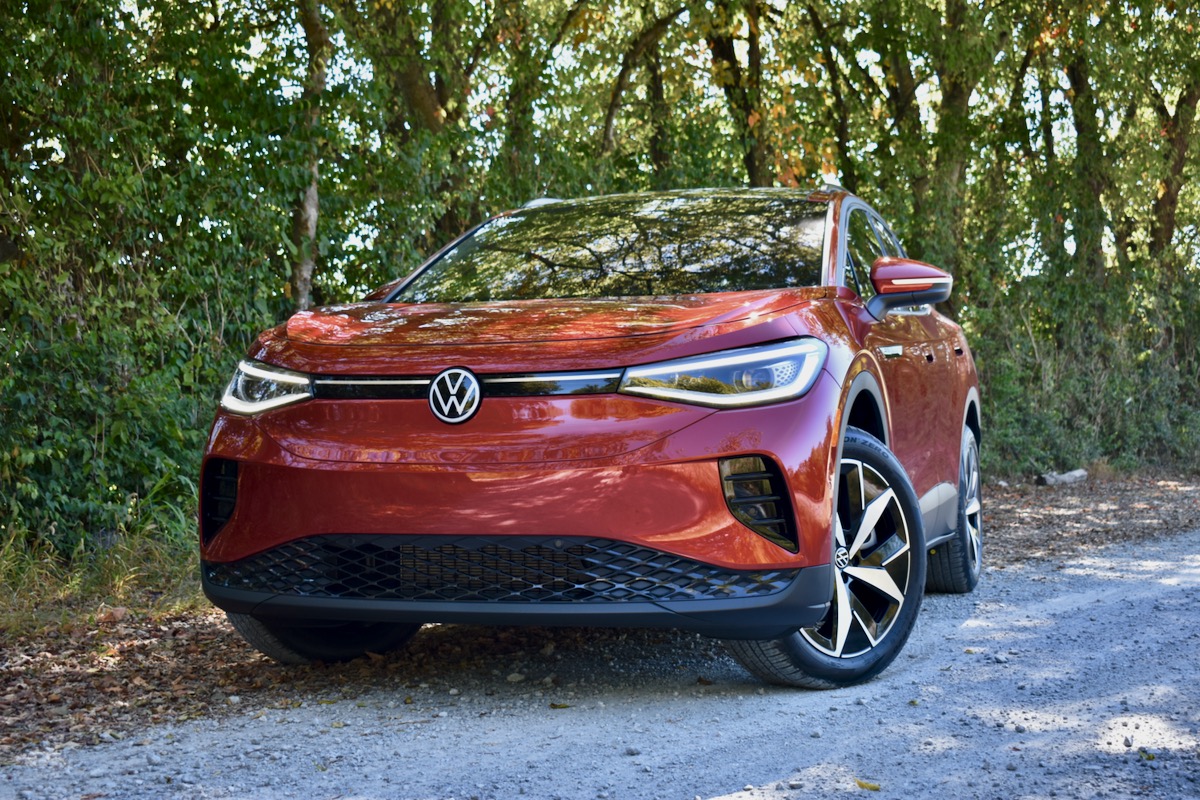
Overview | |
MSRP$39,735 | MSRP$31,400 |
Listings144 | Listings98 |
Ratings & Reviews | |
User Reviews | User Reviews |
Expert reviews7.5 out of 10 | Expert reviews7.2 out of 10 |
Pros
Cons
| Pros
Cons
|
Reviews SummaryThanks to a new, more powerful rear-drive motor, increased driving range to nearly 300 miles, a next-generation infotainment system with substantial user-experience improvements, and a handful of comfort and convenience upgrades, the 2024 Volkswagen ID.4 is a better electric SUV than before. However, it no longer includes complimentary DC fast charging for three years. Instead, you get up to 500 kWh of free charging, after which you’ll pay to play. Verdict: While the downgrade in free charging is a bummer, the updated 2024 Volkswagen ID.4 is not. With the technology better sorted, improved comfort, an impressive sound system, and more power, performance, and range, VeeDub’s electric SUV need not make apologies. | |
Reviews SummaryThere’s no V8 under the hood of a Dodge Hornet. Instead, this compact crossover (or compact utility vehicle, as Dodge calls it) comes equipped with a four-cylinder engine or, in the case of the 2024 R/T trim, a plug-in hybrid powertrain. As fuel-efficiency and low-emissions vehicles become more appealing to shoppers, the Hornet represents a major milestone for Dodge. If the company is going to remain relevant in an increasingly eco-conscious marketplace, this little crossover needs to be a hit. | |
No video found | |
Popular Features & Specs | |
Engine201 hp Electric | Engine2.0L 268 hp I4 |
Drive TrainRWD | Drive TrainAWD |
Seating Capacity5 | Seating Capacity5 |
EV Battery Capacity62 kWh | EV Battery Capacity |
MPG City115 | MPG City21 |
MPG Highway98 | MPG Highway29 |
Battery Charge Time (120V)65 hours | Battery Charge Time (120V) |
Battery Charge Time (240V)6.25 hours | Battery Charge Time (240V) |
Engine | |
Engine Name201 hp Electric | Engine Name2.0L 268 hp I4 |
Battery Charge Time (120V)65 hours | Battery Charge Time (120V) |
Battery Charge Time (240V)6.25 hours | Battery Charge Time (240V) |
DrivetrainRWD | DrivetrainAWD |
Fuel Economy | |
EV Battery Capacity62 kWh | EV Battery Capacity |
MPG City115 | MPG City21 |
MPG Highway98 | MPG Highway29 |
Interior | |
Seating Capacity5 | Seating Capacity5 |
Key Features | |
Navigation SystemStandard | Navigation System |
Safety | |
Front Crash Overall5 | Front Crash Overall |
Side Crash Overall5 | Side Crash Overall |
Dimensions & Capacity | |
Cargo Space30.3 cu ft | Cargo Space27.0 cu ft |
Curb Weight4308 lbs | Curb Weight3715 lbs |
Height64.5 in | Height63.8 in |
Length180.5 in | Length178.3 in |
Width83.0 in | Width82.0 in |
Wheelbase108.9 in | Wheelbase103.8 in |
Maximum Payload981 lbs | Maximum Payload1245 lbs |
Number of doors4 | Number of doors4 |
Maximum Towing Capacity2200 lbs | Maximum Towing Capacity2000 lbs |
Overview | ||
MSRP | $39,735 | $31,400 |
Listings | ||
Ratings & Reviews | ||
User reviews | ||
Expert reviews | 7.5 out of 10Read full review | 7.2 out of 10Read full review |
Pros & cons | Pros
Cons
| Pros
Cons
|
Summary | Thanks to a new, more powerful rear-drive motor, increased driving range to nearly 300 miles, a next-generation infotainment system with substantial user-experience improvements, and a handful of comfort and convenience upgrades, the 2024 Volkswagen ID.4 is a better electric SUV than before. However, it no longer includes complimentary DC fast charging for three years. Instead, you get up to 500 kWh of free charging, after which you’ll pay to play. Verdict: While the downgrade in free charging is a bummer, the updated 2024 Volkswagen ID.4 is not. With the technology better sorted, improved comfort, an impressive sound system, and more power, performance, and range, VeeDub’s electric SUV need not make apologies. | There’s no V8 under the hood of a Dodge Hornet. Instead, this compact crossover (or compact utility vehicle, as Dodge calls it) comes equipped with a four-cylinder engine or, in the case of the 2024 R/T trim, a plug-in hybrid powertrain. As fuel-efficiency and low-emissions vehicles become more appealing to shoppers, the Hornet represents a major milestone for Dodge. If the company is going to remain relevant in an increasingly eco-conscious marketplace, this little crossover needs to be a hit. |
Video | No video found | |
Popular Features & Specs | ||
Engine | 201 hp Electric | 2.0L 268 hp I4 |
Drive Train | RWD | AWD |
Seating Capacity | 5 | 5 |
EV Battery Capacity | 62 kWh | |
MPG City | 115 | 21 |
MPG Highway | 98 | 29 |
Battery Charge Time (120V) | 65 hours | |
Battery Charge Time (240V) | 6.25 hours | |
Engine | ||
Engine Name | 201 hp Electric | 2.0L 268 hp I4 |
Battery Charge Time (120V) | 65 hours | |
Battery Charge Time (240V) | 6.25 hours | |
Drivetrain | RWD | AWD |
Fuel Economy | ||
EV Battery Capacity | 62 kWh | |
MPG City | 115 | 21 |
MPG Highway | 98 | 29 |
Interior | ||
Seating Capacity | 5 | 5 |
Key Features | ||
Navigation System | Standard | |
Safety | ||
Front Crash Overall | 5 | |
Side Crash Overall | 5 | |
Dimensions & Capacity | ||
Cargo Space | 30.3 cu ft | 27.0 cu ft |
Curb Weight | 4308 lbs | 3715 lbs |
Height | 64.5 in | 63.8 in |
Length | 180.5 in | 178.3 in |
Width | 83.0 in | 82.0 in |
Wheelbase | 108.9 in | 103.8 in |
Maximum Payload | 981 lbs | 1245 lbs |
Number of doors | 4 | 4 |
Maximum Towing Capacity | 2200 lbs | 2000 lbs |
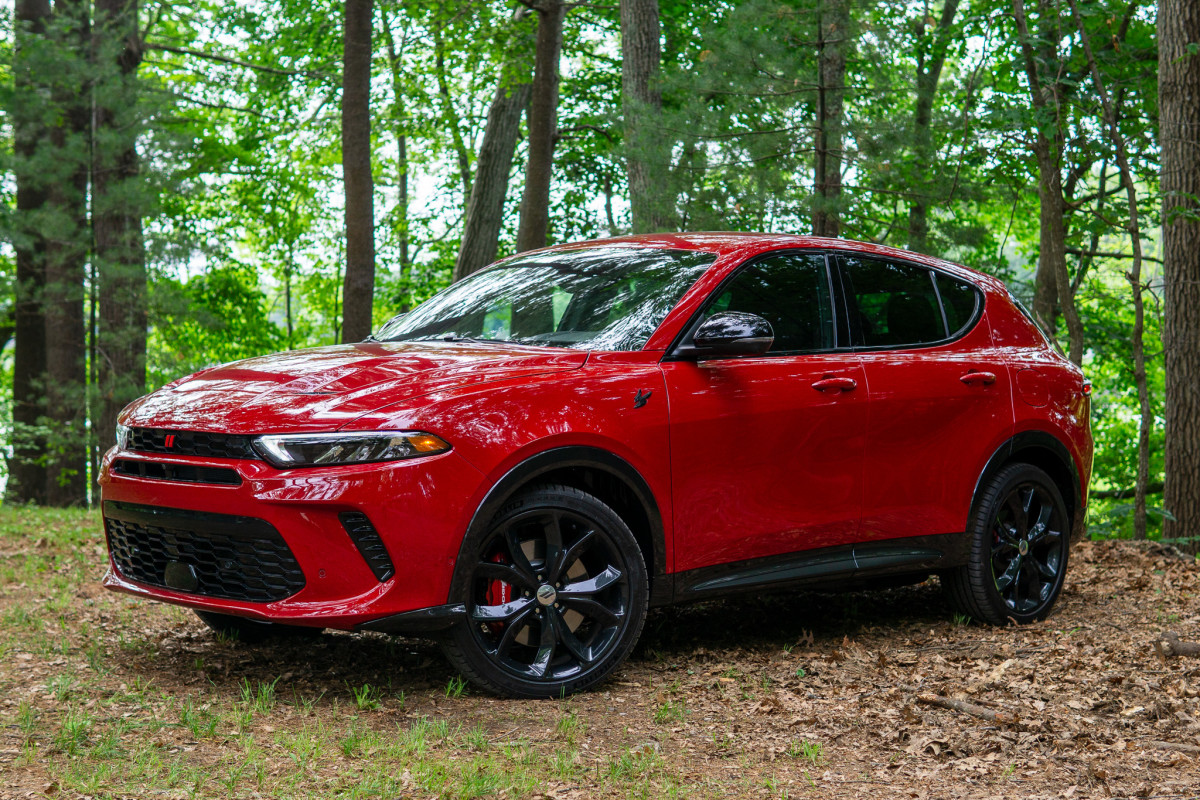
The 2024 Dodge Hornet brought a muscular aesthetic that stayed true to Dodge’s brand identity, even if it wasn't a classic V8 muscle car like the Charger or Challenger. Its aggressive front end, paired with integrated heat extractors on the hood, gave it a bold, tough appearance. The grille design featured a large opening at the bottom, a smaller “mail slot” opening in the middle, and a new Rhombi logo sitting prominently at the top. This new emblem, showcased as the primary identifier, added a fresh yet recognizably Dodge element to the Hornet's design.
At the rear, the Hornet’s tail lamp extended across the width of the crossover and included an illuminated Rhomb logo at its center. Oversized tailpipes hinted at the Hornet’s performance pedigree, distinguishing it as a not-so-regular crossover. Dodge offered the Hornet in four trim levels: GT and GT Plus with a regular gas engine, and the R/T and R/T Plus with a more advanced plug-in hybrid (PHEV) powertrain. The R/T Plus model we reviewed came with the Blacktop Package, which included black wheels, mirror caps, darker badging, and window trim, costing roughly $1,600.
Built alongside the Alfa Romeo Tonale, the Hornet shared several visual similarities with its Italian sibling. However, its blunt nose, a signature Dodge design element, set it apart from the more streamlined front of the Tonale. The Hornet’s interior benefited from its Italian heritage, offering a modern aesthetic missing in other Dodge models. Features included Alcantara upholstery with a Dodge Rhombi logo and a center stack slightly tilted toward the driver.
In contrast, the 2024 Volkswagen ID.4 had a conservative yet timeless look that aged well. The new AWD versions came standard with 20-inch wheels, while the S Plus trim flaunted a 21-inch design. The lineup consisted of the ID.4 and ID.4 Pro, differentiated by their battery sizes, with the ID.4 having a 62-kWh battery and the ID.4 Pro an 82-kWh battery.
Volkswagen made several improvements to the ID.4's interior for 2024. The Cosmic interior treatment was replaced with new options like Cosmic Black and Galaxy, featuring different color schemes. The transmission shift stalk moved to the right of the steering column, steering wheel controls were revised, and new features included ventilated front seats and an optional Harman Kardon premium sound system. Every ID.4 Pro also received a new 12.9-inch touchscreen infotainment system.
Overall, the ID.4's interior changes aimed at improving usability and comfort, making it less unusual and more in line with modern expectations, especially from an electric vehicle.


The 2024 Dodge Hornet was available in multiple powertrains across its GT and R/T trim levels, with “Plus” iterations of each. The GT model featured a 2.0-liter turbocharged four-cylinder engine producing 268 horsepower and 295 pound-feet of torque. This engine, paired with a nine-speed automatic transmission and standard all-wheel drive (AWD), required premium fuel.
The R/T trim, a PHEV, combined a 1.3-liter turbocharged four-cylinder engine with a 15.5-kWh battery and two electric motors, generating a total of 288 horsepower and 383 pound-feet of torque. Unlike the GT, the R/T used a six-speed automatic transmission and an electric AWD system. The PHEV setup added 425 pounds to the Hornet but provided a sporty experience, especially with the Sport mode and “Powershot” feature that temporarily boosted power by 30 horsepower.
Despite its weight, the Hornet R/T offered a pleasant driving experience, with a balanced suspension that managed to soak up road imperfections while maintaining stiff enough settings to reduce body roll during aggressive maneuvers. Short commutes were well-suited for the Hornet R/T’s all-electric driving range, which was around 30 miles on a full charge. While the Hornet GT returned fuel economy figures of 21 mpg city, 29 highway, and 24 combined, the R/T’s fuel efficiency in hybrid mode remained undisclosed.
The 2024 Volkswagen ID.4, on the other hand, featured a new rear electric drive motor for the single-motor Pro models with the larger 82-kWh battery. This motor offered 282 horsepower and 402 pound-feet of torque, enabling a 0-60 mph sprint in 5.9 seconds. The standard 62-kWh models retained the previous motor’s 201 horsepower and 229 pound-feet of torque.
The ID.4 Pro with AWD added an electric motor at the front, making a combined 335 horsepower with 402 pound-feet of torque. It accelerated to 60 mph in just 4.9 seconds. The Pro models with the 82-kWh battery offered an EPA-estimated range of 291 miles for RWD and 263 miles for AWD, while the 62-kWh battery models achieved a range of 206 miles.
Chargers rated at 11 kW (Level 2) could fully recharge the 62-kWh battery in about 6.25 hours and the 82-kWh battery in eight hours. Fast chargers topped off the 62-kWh battery at rates up to 140 kW and the 82-kWh battery at 175 kW, achieving a 10%-80% charge in about 30 minutes.
During testing, the ID.4 Pro S with RWD showed impressive acceleration and handling on various terrains. Its driving dynamics, including city, freeway, and mountainous routes, proved that the ID.4 is a strong performer among EVs.
The 2024 Dodge Hornet’s interior was designed primarily for front passengers, with good headroom and visibility up front. The back seat, however, felt cramped despite decent legroom and headroom measurements of around 38 inches. The all-black interior contributed to a claustrophobic feeling in the rear.
The Hornet R/T’s PHEV battery slightly reduced cargo capacity, offering 22.9 cubic feet behind the rear seats and 50.5 cubic feet with them folded down. The GT trims, which do not have the battery, provided 27 cubic feet of cargo space, expandable to 54.7 cubic feet. Both versions, however, fell short compared to the Hyundai Tucson PHEV, which offered nearly 32 cubic feet with the second row up and almost 72 cubic feet with it down.
The 2024 Volkswagen ID.4 featured several interior updates to enhance usability and comfort. The transmission selector’s move and the updated controls made the interior more intuitive. The Pro versions benefitted from a new 12.9-inch touchscreen that improved the user experience. Climate controls were more accessible, and the touch-sensing sliders for volume and temperature were now illuminated at night.
Comfort in the Pro S and Pro S Plus trims improved with the addition of ventilated front seats. Standard features included heated front seats, side mirrors, and washer nozzles, while AWD models added a heated windshield. The S Plus trims included heated rear seats and a triple-zone climate control system.
Rear passengers enjoyed adequate legroom and footroom, with good thigh support and backrest angle. Storage conveniences included air conditioning vents, USB-C charging ports, a small cubby, and a center armrest with cupholders. The 60/40-split folding back seat had a center pass-through for carrying longer items.
Cargo capacity in the ID.4 measured 30.3 cubic feet behind the rear seats and expanded to 64.2 cubic feet with them folded down, providing more space compared to the Hornet.
The 2024 Dodge Hornet impressed with its standard 12.3-inch digital driver information display, customizable across three separate zones. The 10.25-inch widescreen infotainment display also stood out, operating on Dodge’s Android-based UConnect 5 system. The system was user-friendly, customizable, and came standard with wireless Android Auto and Apple CarPlay. The premium Harman Kardon audio system and wireless phone charger were also noteworthy.
In contrast, the 2024 Volkswagen ID.4’s standout technological feature was its new 12.9-inch infotainment system in the Pro models. The user experience improved significantly, with a home screen offering four main data panels, quick access to primary menu tiles, and always-visible climate controls. The system also benefited from illuminated touch sliders for volume and temperature adjustments.
The ID.4 included a nine-speaker Harman Kardon premium sound system and a battery preconditioning feature that prepared the EV for DC fast charging when approaching a charging station. The infotainment system supported wireless Apple CarPlay, and a three-year complimentary access to Plus Nav and Plus Speech was included.
Volkswagen also offered remote battery charging, climate control operation, and charging station search via the Car-Net connected services, providing five years of Remote Access and Safe & Secure plans. Wi-Fi hotspot capability, internet radio access, and a digital voice assistant named Ida were other notable tech features, although Ida had mixed success during testing.
The 2024 Dodge Hornet had not yet been crash-tested by NHTSA or IIHS. However, it came with an impressive suite of standard Advanced Driver Assistance Systems (ADAS), including automatic emergency braking, lane-departure warning, lane-keeping assist, blind-spot monitoring, rear cross-traffic alert, and adaptive cruise control. The Tech Pack ($2,245) test car included additional level 2 autonomous driving functions, such as intelligent speed assist and lane-tracing assist.
The 2024 Volkswagen ID.4, meanwhile, came standard with Volkswagen’s IQ.Drive collection of ADAS features, including Travel Assist and Emergency Assist. The post-collision braking system was another standard feature. The semi-autonomous Travel Assist effectively managed following distances and lane-centering, while the parking assist system with Memory Parking could autonomously execute stored parking maneuvers.
In crash testing, the ID.4 received favorable ratings from NHTSA, and preliminary IIHS evaluations also showed promising results.
CarGurus highlights
According to CarGurus experts, the overall rating for the 2024 Dodge Hornet is 7.2 out of 10, while the 2024 Volkswagen ID.4 scores 7.5 out of 10. Based on these ratings, the 2024 Volkswagen ID.4 comes out ahead. Its combination of an extended electric driving range, improved interior functionality, and advanced technology makes it a compelling choice for consumers seeking a blend of performance and practicality in an electric crossover. The ID.4's advanced safety features and favorable crash-test ratings further bolster its appeal, making it a well-rounded and competitive option in today’s market.
Choose the 2024 Dodge Hornet if:
- You desire a crossover with a distinctly aggressive and muscular design.
- Impressive horsepower and torque figures are crucial for your driving needs.
- You prefer a vehicle with modern, customizable driver and infotainment displays.


Choose the 2024 Volkswagen ID.4 if:
- You want an EV with a substantial driving range and efficient charging capabilities.
- An intuitive and user-friendly infotainment system is essential.
- Advanced safety features and high crash-test ratings are a priority.


CarGurus highlights
According to CarGurus experts, the overall rating for the 2024 Dodge Hornet is 7.2 out of 10, while the 2024 Volkswagen ID.4 scores 7.5 out of 10. Based on these ratings, the 2024 Volkswagen ID.4 comes out ahead. Its combination of an extended electric driving range, improved interior functionality, and advanced technology makes it a compelling choice for consumers seeking a blend of performance and practicality in an electric crossover. The ID.4's advanced safety features and favorable crash-test ratings further bolster its appeal, making it a well-rounded and competitive option in today’s market.
Choose the 2024 Dodge Hornet if:
Shop Now- You desire a crossover with a distinctly aggressive and muscular design.
- Impressive horsepower and torque figures are crucial for your driving needs.
- You prefer a vehicle with modern, customizable driver and infotainment displays.
Choose the 2024 Volkswagen ID.4 if:
Shop Now- You want an EV with a substantial driving range and efficient charging capabilities.
- An intuitive and user-friendly infotainment system is essential.
- Advanced safety features and high crash-test ratings are a priority.

By: CarGurus + AI
At CarGurus, our team of experienced automotive writers remain at the heart of our content operation, conducting hands-on car tests and writing insightful guides that are backed by years of industry experience. To complement this, we are harnessing AI to make our content offering more diverse and more helpful to shoppers than ever. To achieve this, our AI systems are based exclusively on CarGurus content, ratings and data, so that what we produce is both unique to CarGurus, and uniquely helpful to car shoppers.

