Mazda CX-30 vs Hyundai Venue
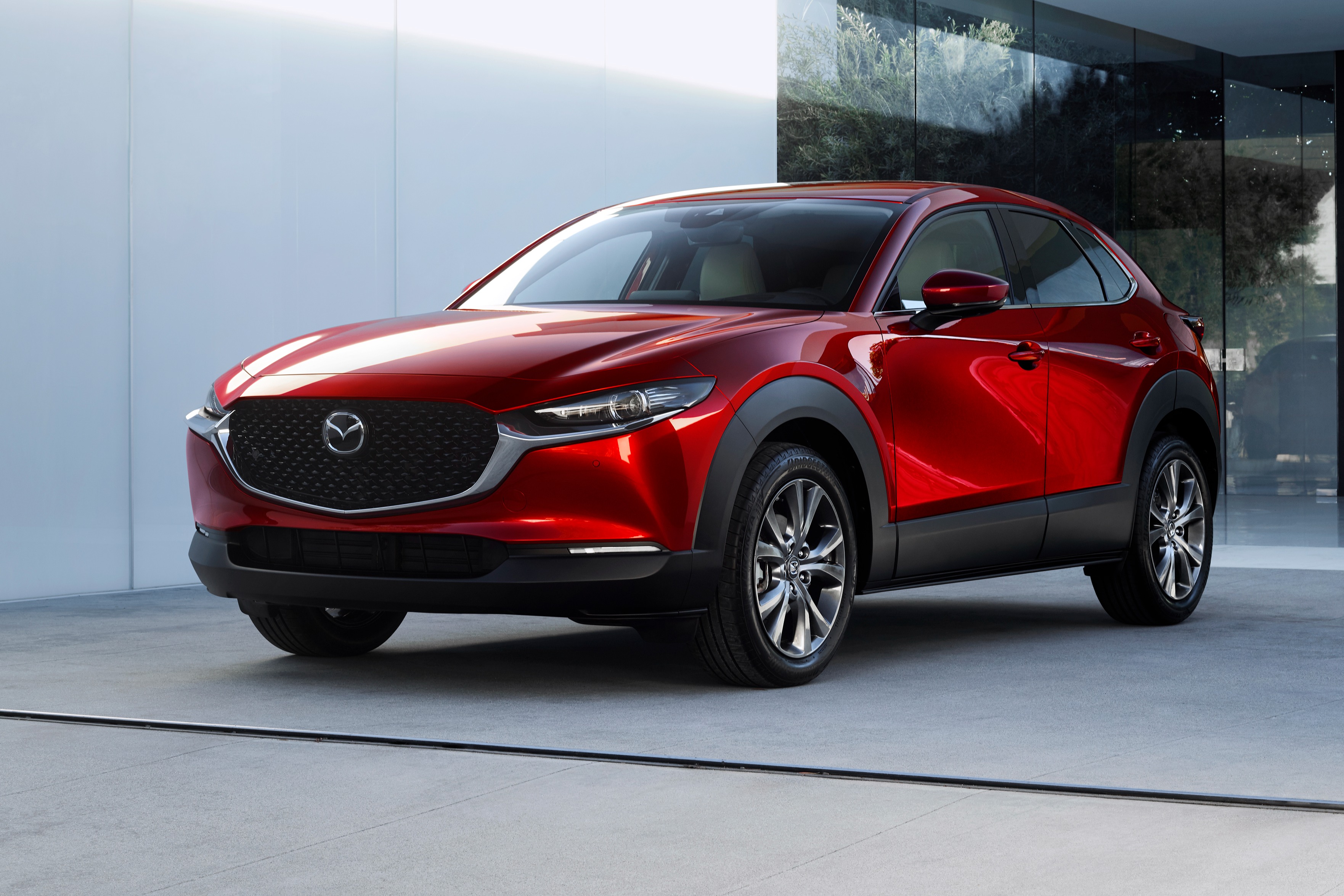
Overview | |
MSRP$26,375 | MSRP$20,550 |
Listings372 | Listings139 |
Ratings & Reviews | |
User Reviews | User Reviews |
Expert reviews7.0 out of 10 | Expert reviews5.2 out of 10 |
Pros
Cons
| Pros
Cons
|
Reviews SummaryIf rear seat room and an accommodating cargo area are high on your wish list, skip the Mazda CX-30. If those things don’t matter as much as good looks, an upscale interior, rewarding driving dynamics, promising reliability, and top-notch safety ratings, then this Mazda delivers. This year, new Aire Edition trim levels, drivetrain and suspension enhancements, and a larger infotainment screen make the CX-30 even more appealing. Verdict: We like the 2026 Mazda CX-30, but it’s not the right choice for everybody. The back seat and cargo area are cramped, and the infotainment controls are fussy. Otherwise, the CX-30 looks and feels like entry-luxury instead of entry-level. | |
Reviews SummaryAutomakers have traditionally had a hard time making money on entry-level subcompact cars, because they have low profit margins, but America has largely moved away from cars to crossover SUVs—and higher prices. That allows car companies to offer an entry-level subcompact SUV for thousands more than a similar sedan or hatchback. Such is the case with the Hyundai Venue, which costs more than its predecessor, the subcompact Accent that was dropped after the 2022 model year. While the price is higher, the advantage for buyers is a vehicle that generally has more cargo space and is more practical. We recently drove the 2026 Hyundai Venue SEL w/2-Tone Roof (yes, that’s the trim level name) to find out if a subcompact crossover is a better buy than a cheaper subcompact car. Verdict: The Hyundai Venue sacrifices refinement for a price point that isn’t as low as a comparable subcompact car. We’d be tempted to spend a little more for a slightly larger compact car with more power, features, and refinement. | |
No video found | No video found |
Popular Features & Specs | |
Engine2.5L 186 hp I4 | Engine1.6L 121 hp I4 |
DrivetrainAWD | DrivetrainFWD |
Seating Capacity5 | Seating Capacity5 |
Horsepower186 hp @ 6000 rpm | Horsepower121 hp @ 6300 rpm |
MPG City24 | MPG City29 |
MPG Highway31 | MPG Highway33 |
Engine | |
Engine Name2.5L 186 hp I4 | Engine Name1.6L 121 hp I4 |
Torque186 lb-ft @ 4000 rpm | Torque113 lb-ft @ 4500 rpm |
Horsepower186 hp @ 6000 rpm | Horsepower121 hp @ 6300 rpm |
DrivetrainAWD | DrivetrainFWD |
Fuel Economy | |
MPG City24 | MPG City29 |
MPG Highway31 | MPG Highway33 |
Interior | |
Seating Capacity5 | Seating Capacity5 |
Safety | |
Front Crash Overall5 | Front Crash Overall4 |
Side Crash Overall5 | Side Crash Overall5 |
Dimensions & Capacity | |
Cargo Space20.2 cu ft | Cargo Space18.7 cu ft |
Curb Weight3395 lbs | Curb Weight2612 lbs |
Height61.4 in | Height61.6 in |
Length173.0 in | Length159.1 in |
Width70.7 in | Width69.7 in |
Wheelbase104.4 in | Wheelbase99.2 in |
Maximum Payload986 lbs | Maximum Payload1158 lbs |
Number of doors4 | Number of doors4 |
Overview | ||
MSRP | $26,375 | $20,550 |
Listings | ||
Ratings & Reviews | ||
User reviews | ||
Expert reviews | 7.0 out of 10Read full review | 5.2 out of 10Read full review |
Pros & cons | Pros
Cons
| Pros
Cons
|
Summary | If rear seat room and an accommodating cargo area are high on your wish list, skip the Mazda CX-30. If those things don’t matter as much as good looks, an upscale interior, rewarding driving dynamics, promising reliability, and top-notch safety ratings, then this Mazda delivers. This year, new Aire Edition trim levels, drivetrain and suspension enhancements, and a larger infotainment screen make the CX-30 even more appealing. Verdict: We like the 2026 Mazda CX-30, but it’s not the right choice for everybody. The back seat and cargo area are cramped, and the infotainment controls are fussy. Otherwise, the CX-30 looks and feels like entry-luxury instead of entry-level. | Automakers have traditionally had a hard time making money on entry-level subcompact cars, because they have low profit margins, but America has largely moved away from cars to crossover SUVs—and higher prices. That allows car companies to offer an entry-level subcompact SUV for thousands more than a similar sedan or hatchback. Such is the case with the Hyundai Venue, which costs more than its predecessor, the subcompact Accent that was dropped after the 2022 model year. While the price is higher, the advantage for buyers is a vehicle that generally has more cargo space and is more practical. We recently drove the 2026 Hyundai Venue SEL w/2-Tone Roof (yes, that’s the trim level name) to find out if a subcompact crossover is a better buy than a cheaper subcompact car. Verdict: The Hyundai Venue sacrifices refinement for a price point that isn’t as low as a comparable subcompact car. We’d be tempted to spend a little more for a slightly larger compact car with more power, features, and refinement. |
Video | No video found | No video found |
Popular Features & Specs | ||
Engine | 2.5L 186 hp I4 | 1.6L 121 hp I4 |
Drivetrain | AWD | FWD |
Seating Capacity | 5 | 5 |
Horsepower | 186 hp @ 6000 rpm | 121 hp @ 6300 rpm |
MPG City | 24 | 29 |
MPG Highway | 31 | 33 |
Engine | ||
Engine Name | 2.5L 186 hp I4 | 1.6L 121 hp I4 |
Torque | 186 lb-ft @ 4000 rpm | 113 lb-ft @ 4500 rpm |
Horsepower | 186 hp @ 6000 rpm | 121 hp @ 6300 rpm |
Drivetrain | AWD | FWD |
Fuel Economy | ||
MPG City | 24 | 29 |
MPG Highway | 31 | 33 |
Interior | ||
Seating Capacity | 5 | 5 |
Safety | ||
Front Crash Overall | 5 | 4 |
Side Crash Overall | 5 | 5 |
Dimensions & Capacity | ||
Cargo Space | 20.2 cu ft | 18.7 cu ft |
Curb Weight | 3395 lbs | 2612 lbs |
Height | 61.4 in | 61.6 in |
Length | 173.0 in | 159.1 in |
Width | 70.7 in | 69.7 in |
Wheelbase | 104.4 in | 99.2 in |
Maximum Payload | 986 lbs | 1158 lbs |
Number of doors | 4 | 4 |
The 2026 Hyundai Venue was classified as a crossover SUV, though its design leaned more towards a tall hatchback. It featured only front-wheel drive and had a ground clearance of 6.7 inches, which was higher than a typical car but not as tall as a standard crossover SUV. The EPA classified it as a midsize car due to its interior space. The Venue's design was more crossover-like, with a small and narrow appearance reminiscent of European runabouts. It had an upright windshield, a bluff nose, and standard roof rails, giving it an SUV-like look. The Venue's exterior included lower headlights, high-set daytime running lights, and a satin metallic lower fascia. Black wheel flares and a two-tone roof added to its SUV cues. Inside, the Venue had a simple and functional look, with a digital instrument cluster and a small touchscreen that resembled an iPad on the dash. Body-color trim surrounded the air vents and shifter, bringing some of the exterior feel inside.
The 2026 Mazda CX-30 was available in eight trim levels, all equipped with a 2.5-liter four-cylinder engine, automatic transmission, and all-wheel drive. The trim levels included the S, S Select Sport, S Preferred, S Aire Edition, S Carbon Edition, S Premium, Turbo Aire Edition, and Turbo Premium Plus, with prices ranging from $27,870 to $39,395. The CX-30 Aire Edition featured blacked-out exterior trim and accents, white artificial leather upholstery, and suede-like dashboard trim. The Aero Gray color provided a sharp contrast with the black exterior details, giving the CX-30 an upscale look and feel. The CX-30's control layout and displays were well-designed, though the Mazda Connect infotainment system required a learning curve. Once accustomed to it, the system was natural to use. The CX-30's overall appearance and interior treatment were considered premium, making it seem like it should cost more than it did.


The 2026 Hyundai Venue was powered by a naturally aspirated 1.6-liter four-cylinder engine, producing 121 horsepower and 113 pound-feet of torque. The power was delivered through a continuously variable transmission (CVT) to the front wheels, with no all-wheel drive option. The Venue's 0-60 mph time ranged from 8.5 to 8.8 seconds, which was better than expected given its power output. Weighing in at 2,738 pounds, the Venue felt peppy in city traffic but struggled at highway speeds. The transmission was slow to downshift, and the engine droned under heavy throttle. Sport mode made power more accessible but increased noise levels. The Venue's handling benefited from its small size and low weight, with a length of 159.1 inches and a wheelbase of 99.1 inches. It was easy to maneuver in traffic and fit into tight parking spots. The 6.7 inches of ground clearance allowed for some lean in corners, but the steering was stable and direct. The ride was generally comfortable, though the solid rear axle made it jiggly on rough roads.
The 2026 Mazda CX-30 offered a 2.5-liter four-cylinder engine across all models, with higher trims featuring a turbocharger. The standard engine produced 186 horsepower and 186 pound-feet of torque, while the turbocharged version delivered 227 hp and 310 lb-ft on regular gas, or 250 hp and 320 lb-ft on premium. Both engines were paired with a six-speed automatic transmission and Mazda's i-Activ AWD system. The CX-30's fuel economy was rated at 27 mpg combined for the standard engine and 25 mpg for the turbo. In testing, the naturally aspirated 2.5 S Aire Edition averaged 28.5 mpg on a mixed driving loop and 25.5 mpg on a mountainous route. The CX-30's turbocharged engine provided significant torque, but the standard drivetrain was lively enough for most drivers. The CX-30's handling was engaging, with G-Vectoring Control Plus technology and a brake-based limited-slip differential enhancing traction and stability. The CX-30 offered a smooth, refined driving experience, with precise steering, responsive brakes, and commendable grip. It was capable off-road, with 8.0 inches of ground clearance and standard AWD.
The 2026 Hyundai Venue's interior featured cloth and H-Tex seats with black upholstery and white contrast stitching, providing a sporty appearance. The seats were comfortable, with six-way manual adjustments for the driver. Headroom was plentiful, but legroom was limited for taller occupants. The rear seat offered just enough space for average-sized adults, but taller passengers would struggle for legroom. The rear seat could accommodate two adults comfortably, but three would be cramped. The rear seats folded flat in a 60/40 split, providing 31.9 cubic feet of cargo space, which was modest compared to typical compact crossovers. With the rear seats up, cargo space was 18.7 cubic feet. The Venue's interior featured hard black plastic surfaces, with soft-touch materials limited to the top of the center console and door armrests.
The 2026 Mazda CX-30's practicality was hindered by small door openings and a tight back seat. The front seats were comfortable but snug, with only the eight-way power driver's seat offering height adjustment. Heated front seats were standard on all trims except the base S. The air conditioning system struggled in hot weather and was loud. The back seat offered supportive cushions and soft padding but lacked space. Rear air conditioning vents helped keep passengers cool, but there were no rear USB charging ports. The CX-30's front storage space was reasonable, with a roomy bin under the center armrest, sizable cupholders, and practical door pockets. The cargo area offered 20.2 cubic feet of space, expanding to 45.2 cubic feet with the rear seats folded. The CX-30's cargo space was smaller than many competitors, but it could hold four full-size suitcases.
The 2026 Hyundai Venue featured a simple 8-inch touchscreen for basic infotainment functions. While the screen size felt small by modern standards, it was functional, with large icons and quick response times. The system included phone, radio, media, and phone-projection connections, as well as voice memos and settings controls. It lacked navigation, a Wi-Fi hotspot, and SiriusXM satellite radio, but offered wireless Apple CarPlay and Android Auto. The digital instrument cluster displayed limited information and was not programmable. The Venue's audio system was a basic six-speaker unit, with no premium option available.
The 2026 Mazda CX-30's Mazda Connect infotainment system offered two screen sizes and varying functionality. The base S trim featured an 8.8-inch display with wired Apple CarPlay and Android Auto, two USB-C ports, and basic voice recognition. Mazda Connected Services provided remote access features and Wi-Fi connectivity. Higher trims added wireless Apple CarPlay, wireless Android Auto, and Alexa built-in. The S Preferred trim and above featured a 10.25-inch screen with touchscreen functionality for Apple CarPlay and Android Auto. A 12-speaker Bose premium sound system was available on top trims, with SiriusXM satellite radio offered only on the Turbo Premium Plus trim. The system's native Mazda Connect was accessible via a center console knob, which required acclimation. The voice-recognition technology was limited, but Apple CarPlay and Android Auto provided better alternatives.
The 2026 Hyundai Venue came with a good set of standard safety features, including forward-collision warning, automatic emergency braking, lane-keep assist, a driver-attention monitor, and a rear-occupant warning. Higher trims added blind-spot monitors and rear cross-traffic alert, but adaptive cruise control was unavailable. The Venue received a four-star safety rating from the NHTSA, with a top "Good" score in the small front overlap test from the IIHS. However, ratings for other tests were unavailable, and its headlights received "Acceptable" or "Marginal" ratings.
The 2026 Mazda CX-30 offered impressive safety features and favorable crash-test ratings. Standard driver assistance systems included adaptive cruise control, forward collision warning, automatic emergency braking, blind-spot monitoring, rear cross-traffic alert, lane-departure warning, lane-keeping assist, and a safe exit alert. Higher trims added parking sensors, rear automatic braking, and a surround-view camera system. The Turbo Premium Plus trim featured Mazda's Cruising and Traffic Support technology. The CX-30 received a five-star overall rating from the NHTSA and a "Top Safety Pick+" award from the IIHS, with top ratings in most assessments.
CarGurus highlights

According to CarGurus experts, the overall rating for the 2026 Hyundai Venue is 5.2 out of 10, while the 2026 Mazda CX-30 scores 7.0 out of 10. Based on these ratings, the Mazda CX-30 is the recommended choice for those seeking a more refined and capable vehicle with better performance, safety features, and interior quality.
Choose the 2026 Mazda CX-30 if:
- You desire a more powerful engine and engaging driving experience.
- You appreciate a premium look and feel with upscale interior materials.
- You want a vehicle with advanced safety features and top safety ratings.


Choose the 2026 Hyundai Venue if:
- You prioritize affordability and a compact size for city driving.
- You value a simple and functional interior with essential features.
- You need a vehicle with good maneuverability and easy parking.


CarGurus highlights
According to CarGurus experts, the overall rating for the 2026 Hyundai Venue is 5.2 out of 10, while the 2026 Mazda CX-30 scores 7.0 out of 10. Based on these ratings, the Mazda CX-30 is the recommended choice for those seeking a more refined and capable vehicle with better performance, safety features, and interior quality.
Choose the 2026 Mazda CX-30 if:
Shop Now- You desire a more powerful engine and engaging driving experience.
- You appreciate a premium look and feel with upscale interior materials.
- You want a vehicle with advanced safety features and top safety ratings.
Choose the 2026 Hyundai Venue if:
Shop Now- You prioritize affordability and a compact size for city driving.
- You value a simple and functional interior with essential features.
- You need a vehicle with good maneuverability and easy parking.

By: CarGurus + AI
At CarGurus, our team of experienced automotive writers remain at the heart of our content operation, conducting hands-on car tests and writing insightful guides that are backed by years of industry experience. To complement this, we are harnessing AI to make our content offering more diverse and more helpful to shoppers than ever. To achieve this, our AI systems are based exclusively on CarGurus content, ratings and data, so that what we produce is both unique to CarGurus, and uniquely helpful to car shoppers.

