2026 Mazda CX-30 Reviews, Pricing & Specs
Pros & cons
What we like
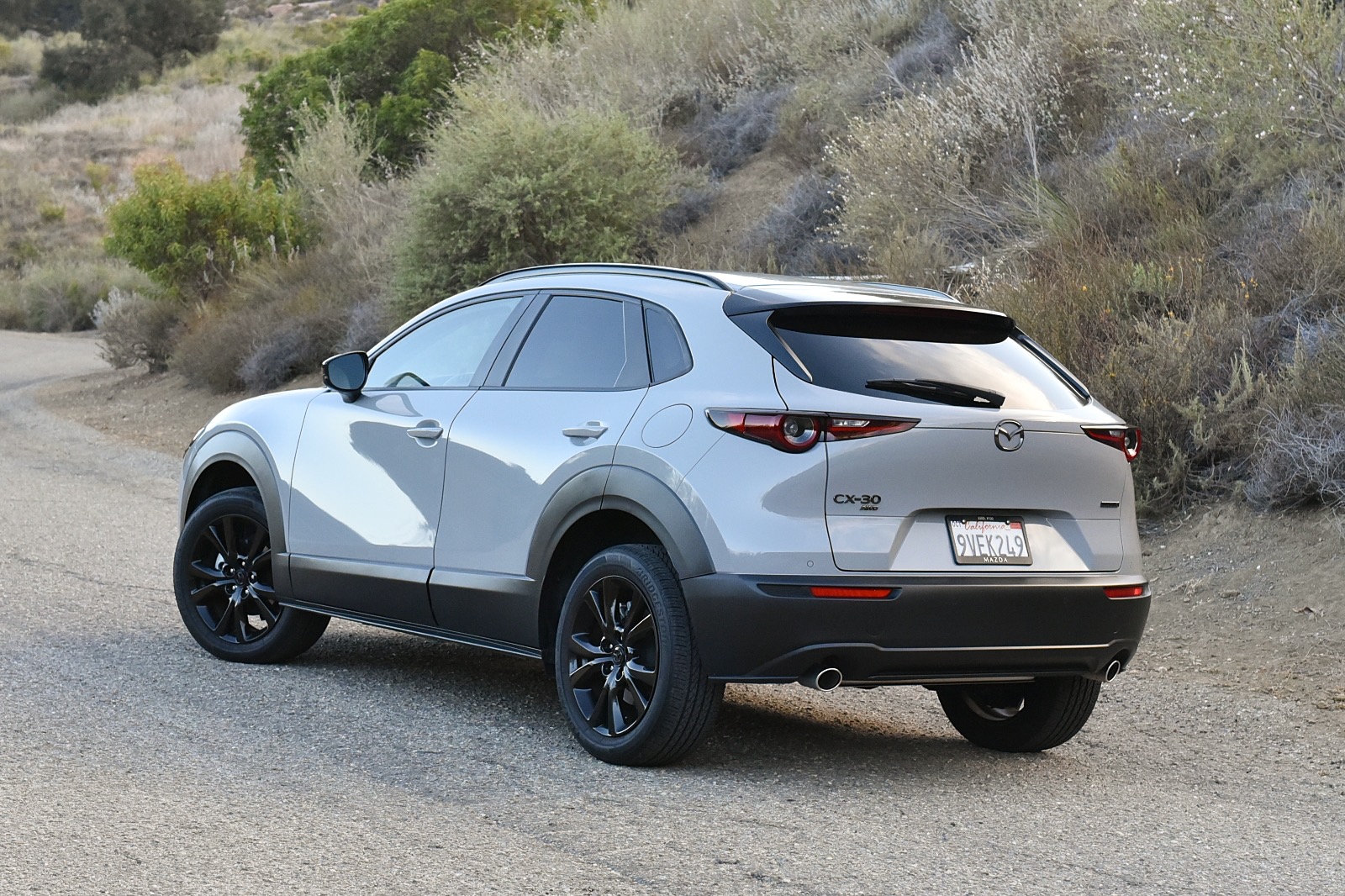
Stylish design
Fun to drive
Great safety ratings
What to consider
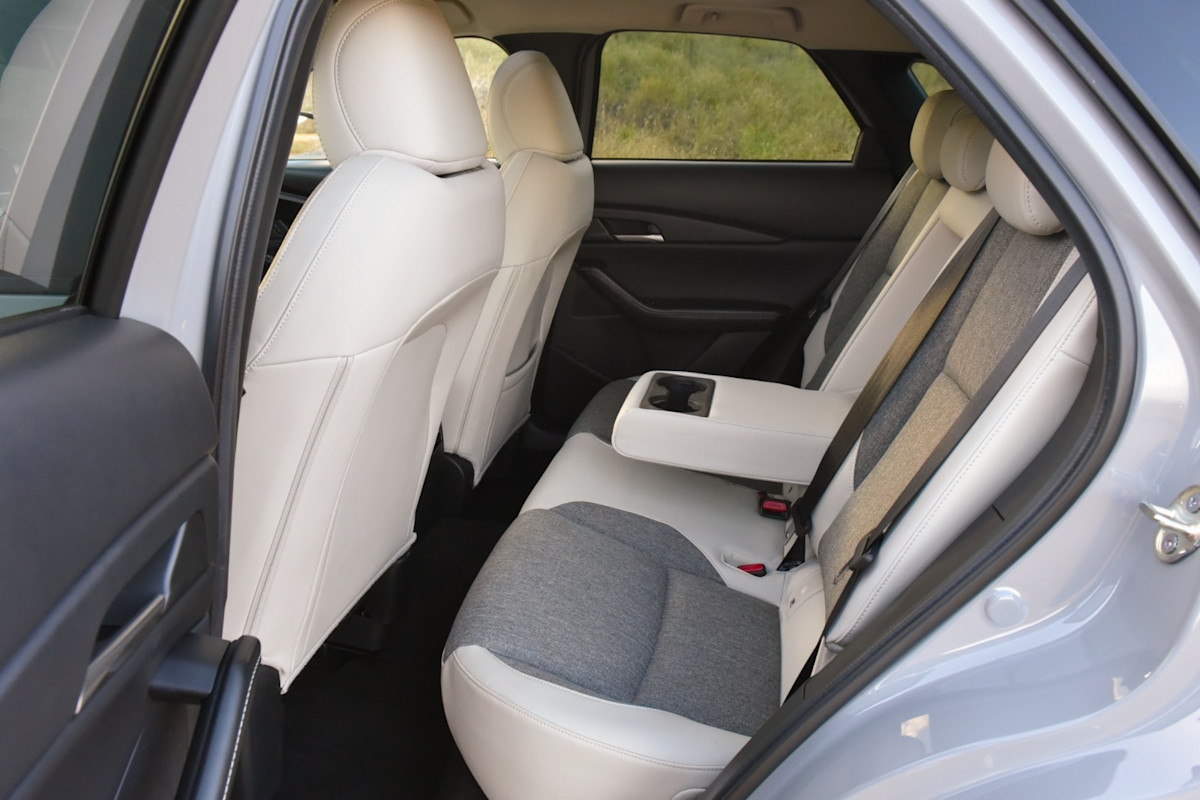
Cramped back seat
Not much cargo space
Unintuitive infotainment interface
The CarGurus verdict
The 2026 Mazda CX-30 is stylish, speedy, safe, and really small.
If rear seat room and an accommodating cargo area are high on your wish list, skip the Mazda CX-30. If those things don’t matter as much as good looks, an upscale interior, rewarding driving dynamics, promising reliability, and top-notch safety ratings, then this Mazda delivers. This year, new Aire Edition trim levels, drivetrain and suspension enhancements, and a larger infotainment screen make the CX-30 even more appealing.
Verdict: We like the 2026 Mazda CX-30, but it’s not the right choice for everybody. The back seat and cargo area are cramped, and the infotainment controls are fussy. Otherwise, the CX-30 looks and feels like entry-luxury instead of entry-level.
out of 10 expert review
Look & feel
Mazda sells the 2026 CX-30 in eight trim levels, all equipped with a 2.5-liter four-cylinder engine, an automatic transmission, and all-wheel drive (AWD). They include the S, S Select Sport, S Preferred, S Aire Edition, S Carbon Edition, S Premium, Turbo Aire Edition, and Turbo Premium Plus. Prices range from $27,870 to $39,395, including the $1,495 destination charge.
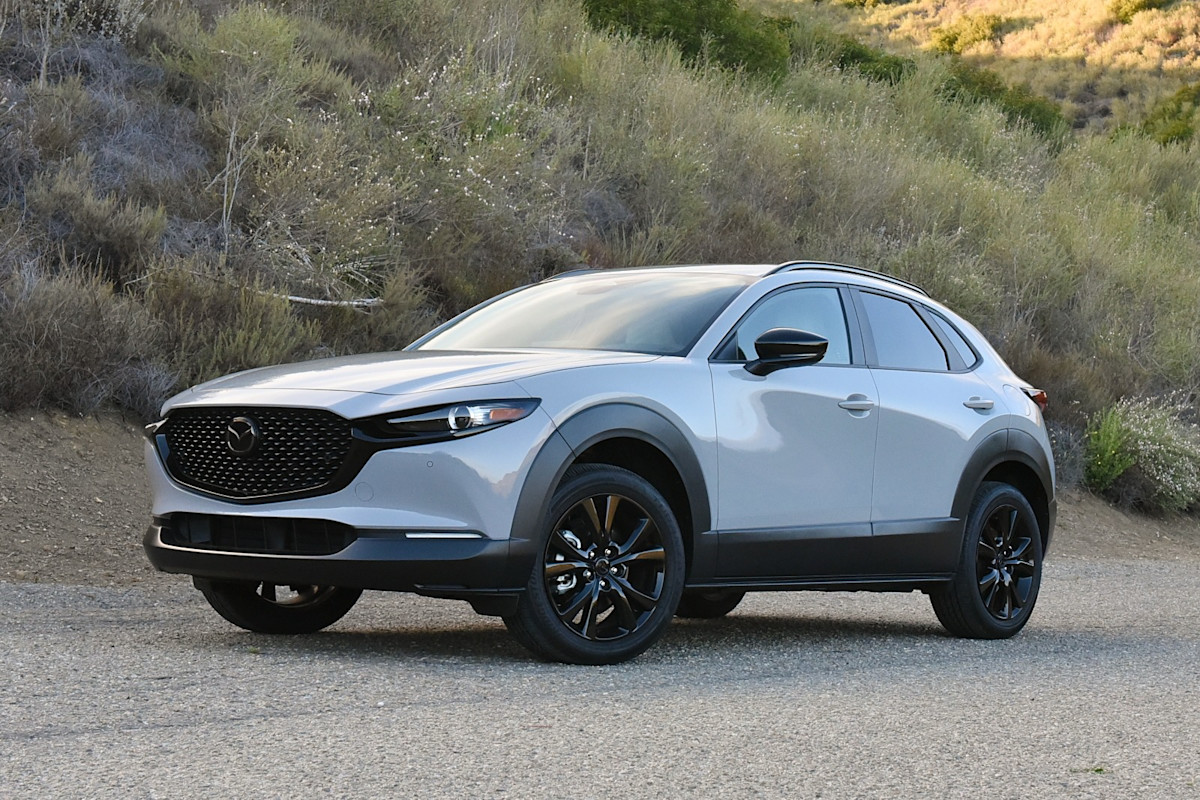
Our test vehicle arrived in S Aire Edition specification with the following options: Aero Gray paint, illuminated door sill plates, a navigation system, and a cargo cover. The manufacturer’s suggested retail price (MSRP) came to $33,130.
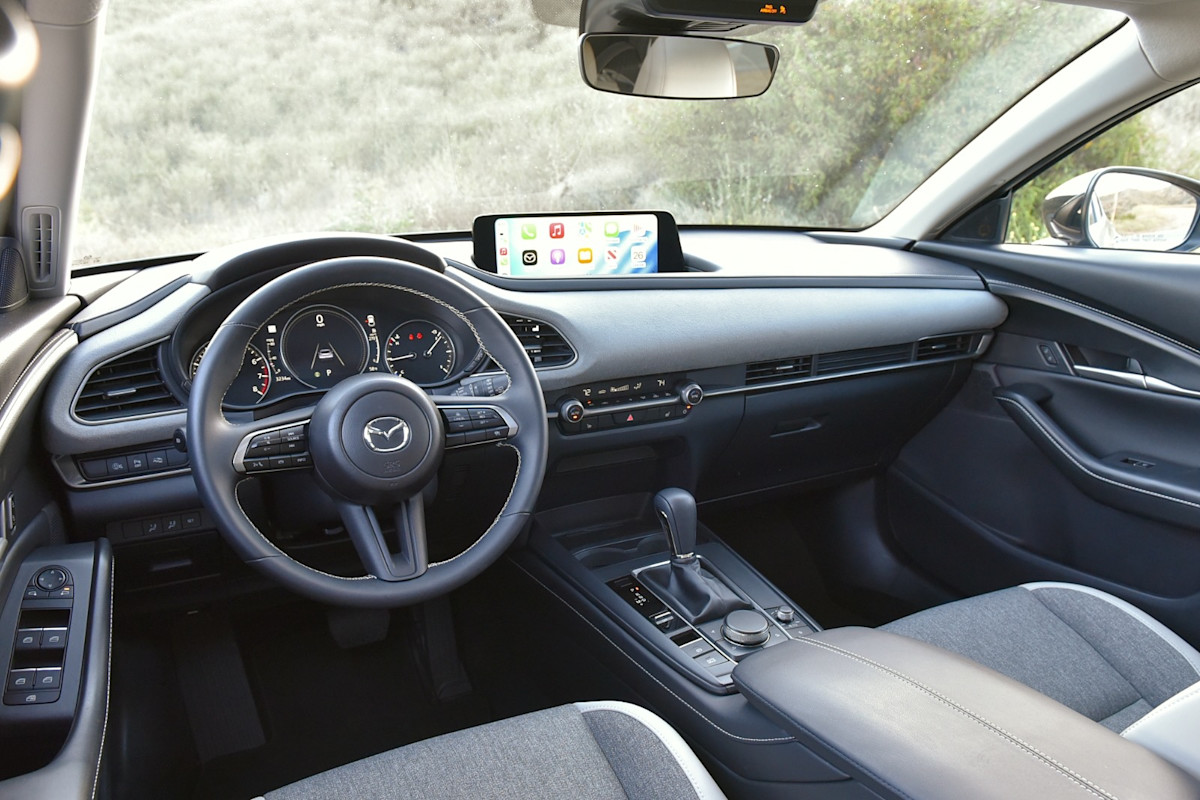
That’s not out of bounds for a small SUV, especially one with the premium look and feel of the Mazda CX-30. The Aire Edition features blacked-out exterior trim and accents paired with white artificial leather upholstery and cloth or simulated suede inserts. Light gray contrast stitching and suede-like dashboard trim are also a part of the Aire Edition treatment.
In our opinion, Aero Gray is one of the better color choices for the Aire Edition, providing sharp contrast with the black exterior details. We think the CX-30’s lower-perimeter body cladding is too thick, but it sure does protect against chips, dings, and dents. Aero Gray looks great with the interior treatment, too, and the Aire Edition’s overall look and feel is upscale, inside and out. It seems like it should cost more than you paid, which is always a good thing.
Mazda does a great job with the CX-30’s control layout and displays, with one exception. For the uninitiated, using the Mazda Connect infotainment system controls located on the center console represents a steep learning curve. However, once you’ve acclimated to them, they’re natural to use.
Performance
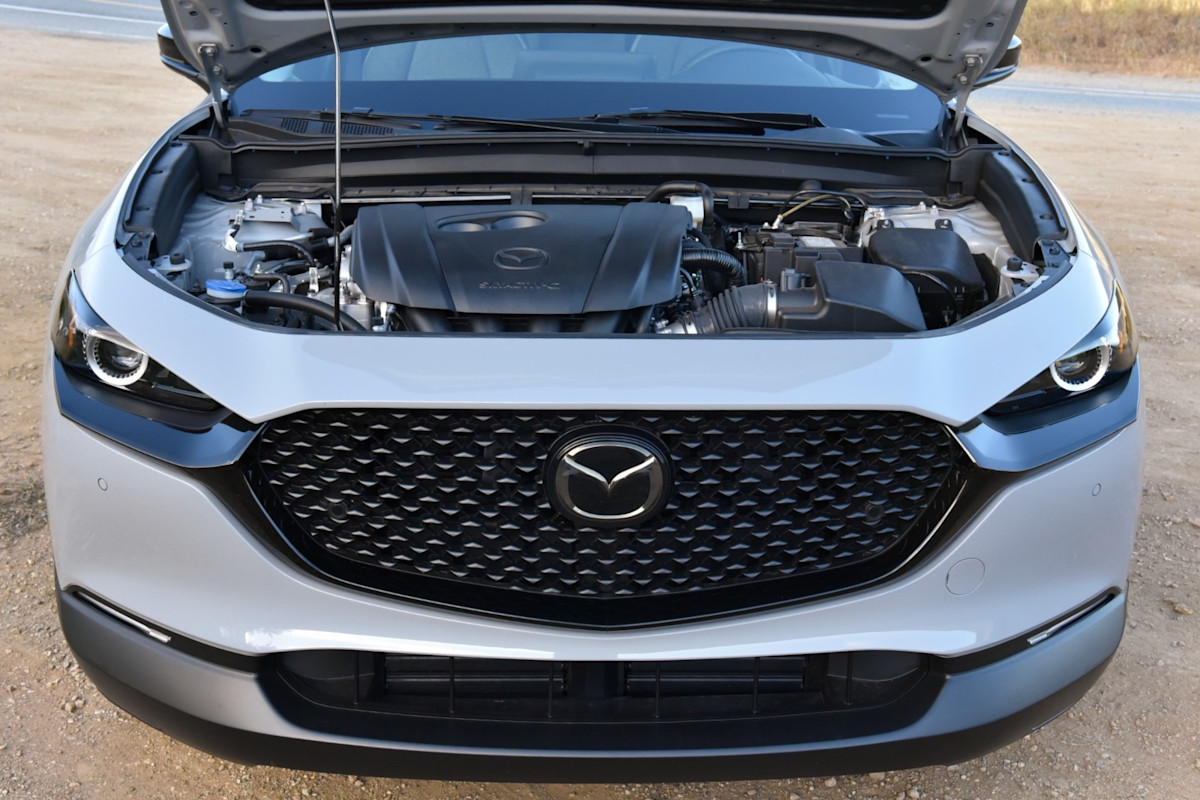
All CX-30 models have a 2.5-liter four-cylinder engine, but higher trim levels add a turbocharger. Without turbocharging, the engine makes a healthy 186 horsepower and 186 pound-feet of torque. With the turbo, it cranks out 227 hp and 310 lb-ft of torque when running on regular gas, or 250 hp/320 lb-ft on premium.
Both engines bolt to a six-speed automatic transmission and Mazda’s i-Activ AWD system, which automatically varies power distribution as necessary. Drivers can leave the powertrain in its default setting, or switch into a Sport mode.
Fuel economy ratings are 27 mpg combined with the standard engine, and 25 mpg combined with the turbo. On our Southern California fuel-economy testing loop, which is 50% city/suburban and 50% highway driving, the naturally aspirated 2.5 S Aire Edition averaged 28.5 mpg. Separately, on the mountainous evaluation driving route, it returned 25.5 mpg. Notably, the CX-30’s fuel tank holds just 12.7 gallons, so the distance between fuel stops is short.
We’ve driven the turbocharged CX-30 before, and the considerable torque makes a difference. However, unless you live at elevation where turbocharging negates the effect of a thinner atmosphere on a normally-aspirated engine, the added power and torque is not significant enough to recommend the more expensive and less fuel-efficient powertrain.
Why not? Mazda calibrates the standard drivetrain to feel lively enough to satisfy most drivers, especially when stacked up against the competition. For example, a turbocharged Hyundai Kona or Kia Seltos whips up 190 hp and 195 lb-ft, barely more than the CX-30’s standard engine. The standard 2.0-liter four-cylinder in those models is downright wheezy compared to the Mazda.
Outright power isn’t the only determining factor when it comes to driving enjoyment, and here, the tossable and engaging CX-30 shines. It doesn’t feel as quick or athletic as, say, a Mazda 3 hatchback, but it is more fun to drive than most rivals.
One reason is the standard G-Vectoring Control Plus technology, which uses subtle braking inputs to stabilize the CX-30, making its behavior more predictable to a driver and the ride more enjoyable for a passenger. For 2026, Mazda has enhanced the drivetrain with a brake-based limited-slip differential to improve traction in a variety of driving situations. Those features, combined with the CX-30’s precise steering, responsive brakes, and commendable grip, make it a rewarding little SUV to drive. You don’t need a winding road to enjoy it, either.
Whether you’re commuting, running errands, or road-tripping on the Interstate, there is a smooth, refined, and predictable fluidity to its behavior that builds driver trust and overall satisfaction. Simply put, and to draw a phrase from vintage Mazda advertising, it just feels right.
It is more capable off-road than you might expect, too. Ground clearance is modest at 8.0 inches, especially compared to a Subaru Crosstrek’s 8.7 inches. Still, thanks to its standard AWD, raised height, and Off-Road Traction Assist feature, the CX-30 will go places you’d never dare try in, say, a Buick Envista.
Form & function
When it comes to practicality and utility, the CX-30 earns a few demerits. While it sits high off the ground, small door openings make it harder to get in and out of. Also, the back seat is tight for adults, the cargo area is small for the segment, and the air conditioning system struggles in hot weather.
Both front seats are comfortable, but they’re a snug fit within the intimate cabin, and only the eight-way power driver’s seat offers height adjustment. That’s included, along with heated front seats, in all CX-30s except the base S. The places where you’re likely to rest your arm or leg are also padded, and the steering wheel is pleasing to grip. The more expensive CX-30 trims include a heated steering wheel.
Mazda has cold-weather comfort handled, but on a hot day, the air conditioning takes a long time to cool the interior. Also, it is annoyingly loud. Generally speaking, we’ve found the automaker’s air conditioning systems slow to work whenever the temperature is over 85 degrees.
Adults fit into the back seat, which offers a supportive cushion and soft, knee-friendly front seatback padding. However, there isn’t any room to spare, and getting in or out requires extra effort due to the small door openings. Eventually, the rear air conditioning vents help the people riding back there to keep their cool, and cupholders are available in the center armrest. Easily accessible rear USB charging ports are unavailable, though, so you’ll need to run a cable from the ones under the front center armrest for the rear passengers to use.
Up front, storage space is reasonably good, with a roomy bin under the sliding center armrest, sizable cupholders, practical door panel pockets, and a tray perfect for holding a smartphone. In most CX-30s, that tray also serves as the wireless charging pad. Mazda could improve small-item storage by adding trays in the door armrests, and the Hyundai Kona demonstrates how to do so in an artful manner. But there’s a coin box to the left of the steering wheel, a throwback to a different era.
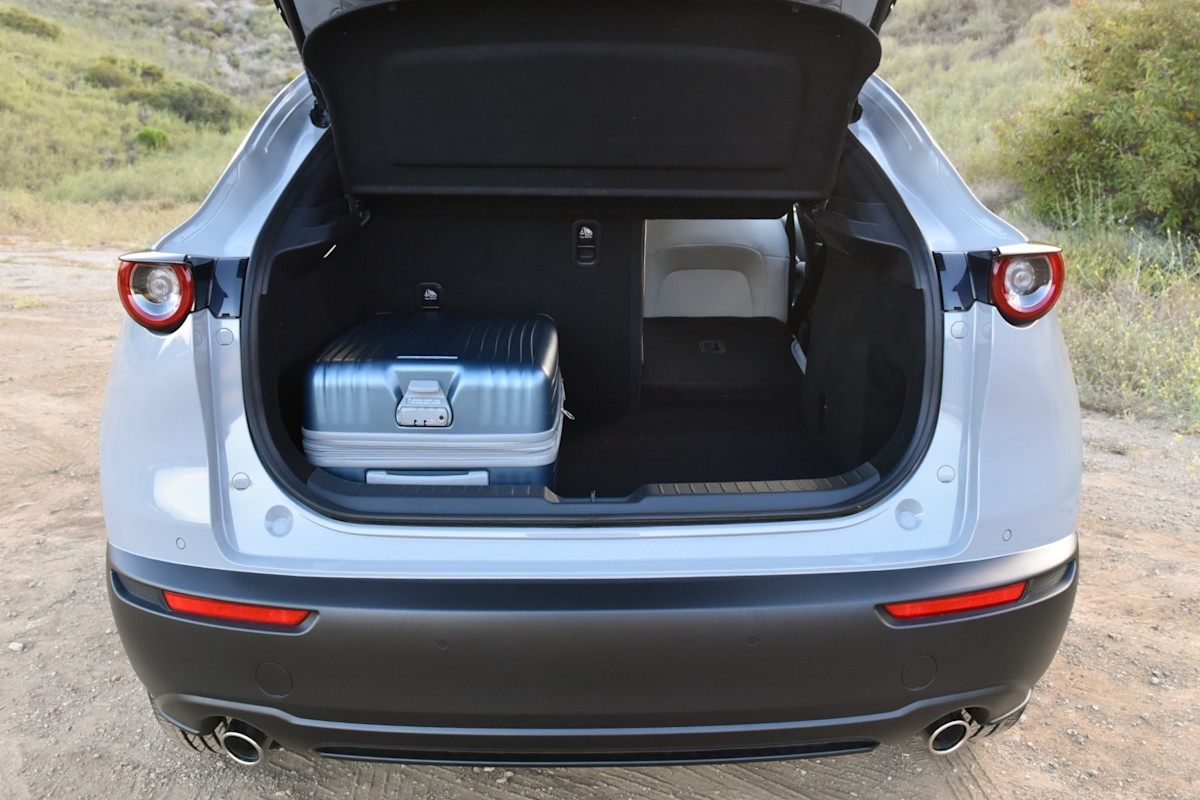
Behind the rear seat, the CX-30 offers 20.2 cubic feet of cargo space, just 0.1 of a cubic foot more than a Mazda 3 hatchback. The optional cargo cover reduces usable space somewhat, but the CX-30 can hold four full-size suitcases. Also, the test vehicle had a spare tire under the cargo floor, which is good to know. Fold the 60/40-split rear seat down and the cargo area expands to 45.2 cubic feet, one of the smaller measurements in the segment.
Technology
Mazda Connect is the name of the CX-30’s infotainment system, and it comes with two different screen sizes and varying levels of functionality.
In the S, you get an 8.8-inch display, wired Apple CarPlay and Android Auto, two USB-C ports, and basic voice recognition technology. Mazda Connected Services is also standard, providing an automatic 911 emergency notification system, remote engine starting, remote access to the door locks, a vehicle finder, and access to Wi-Fi connectivity.
Upgrade to the S Select Sport, and the system adds wireless Apple CarPlay, wireless Android Auto, and Alexa built-in. Starting with S Preferred trim, the screen grows to 10.25 inches and adds touchscreen functionality for Apple CarPlay and Android Auto, along with wireless smartphone charging.
A 12-speaker Bose premium sound system replaces the perfectly satisfactory standard eight-speaker audio in the top four trims, while SiriusXM satellite radio is available only in the Turbo Premium Plus trim.
This stair-step approach to features is not unusual. What’s strange is that Mazda provides touchscreen operation only for Apple CarPlay and Android Auto. The native Mazda Connect is only accessible via the knob on the center console. At first, that is a distraction. Over time, it becomes more natural.
Alexa doesn’t work without Wi-Fi, so we relied on the standard voice-recognition tech, which falls far short of expectations. It had trouble understanding what the driver said, and didn't respond as expected much of the time. It also lacks the conversational smarts of other systems, only responding to more rigid commands. Fortunately, you can bypass the native Mazda Connect tech in favor of Apple CarPlay or Android Auto, as we did for most of our week in the CX-30.
Safety
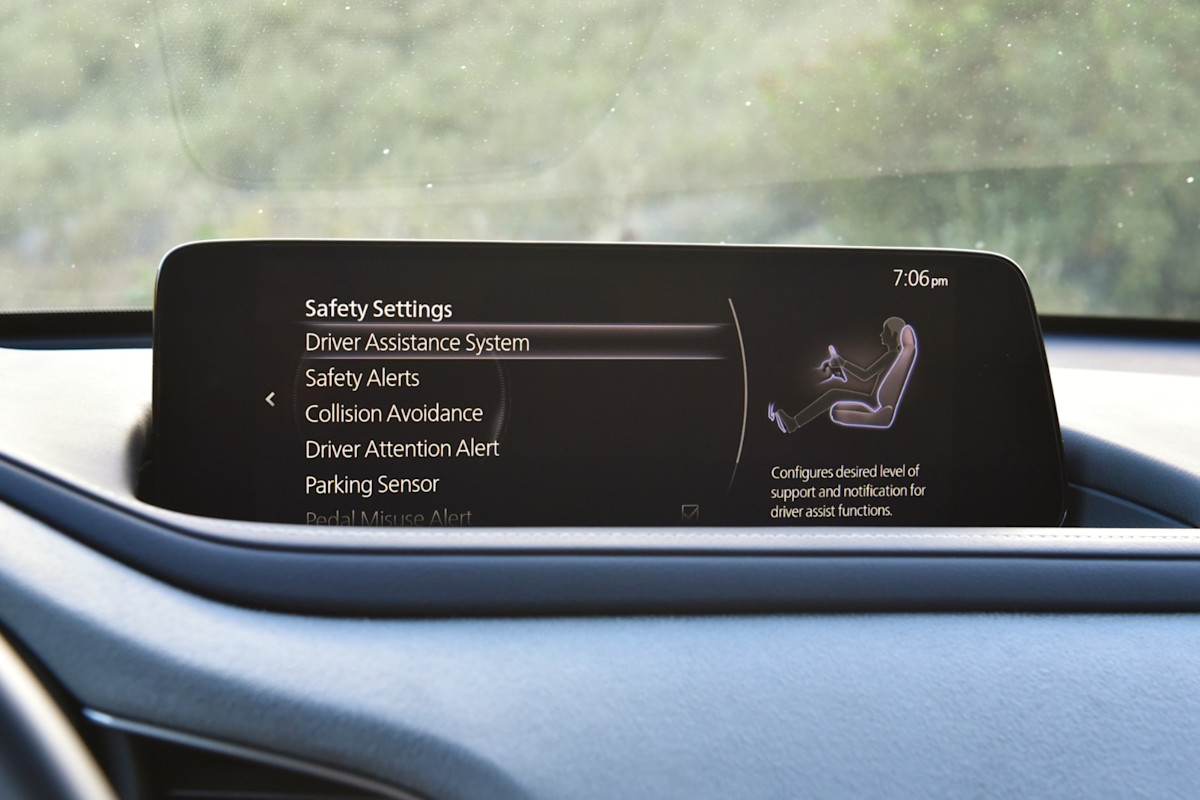
If the CX-30’s infotainment system falls short of expectations, the standard and available safety features are impressive. The CX-30 also receives favorable crash-test ratings.
Standard driver assistance systems include: adaptive cruise control, forward collision warning, automatic emergency braking, blind-spot monitoring, rear cross-traffic alert, lane-departure warning, lane-keeping assist, and a safe exit alert.
Upgrade to the S Preferred trim level for front and rear parking sensors and rear automatic braking. A surround-view camera system is standard on the S Premium and two turbocharged models. The top-of-the-line Turbo Premium Plus features Mazda’s Cruising and Traffic Support technology, which adds lane-centering assist and works at low speeds to assist a driver in heavy traffic.
Our CX-30 Aire Edition had most, but not all, of these features. During testing, the adaptive cruise control system worked well most of the time, with smooth distance management to vehicles ahead. However, on one sharper curve on Pacific Coast Highway, the CX-30 scrubbed too much speed, causing irritation in the drivers following behind us.
We also experienced a quirk with the adaptive cruise control’s stop-and-go functionality. When following a truck towing a low, flatbed trailer with a forklift on it, the Mazda came to a stop behind it, but then the brakes released, allowing the CX-30 to creep forward. At the next traffic light, while following the same truck and trailer, the tech brought us to a stop and held the brakes, as expected.
Similarly, the lane-departure warning and lane-keeping assist systems operated properly most of the time. However, on a rural two-lane road cutting across farmland, the tech inconsistently detected the lane markings, and flipped the script by “seeing” the faded ones and failing to recognize the brighter and more visible ones.
One thing we like about Mazdas is how the driver assistance display within the gauge cluster (and the head-up display in models so-equipped), shows you when other vehicles are in the blind spots. That’s most effective at reducing distraction with a head-up display, but we appreciated it in the CX-30 nonetheless.
The 2026 Mazda CX-30 earned a five-star overall rating from the National Highway Traffic Safety Administration (NHTSA), the agency’s highest. It received five-star ratings in all crash tests, plus a four-star rollover resistance rating.
The Insurance Institute for Highway Safety (IIHS) also rates the CX-30 favorably, giving the SUV its highest “Top Safety Pick+” award for the 2026 calendar year. It earns the top “Good” or “Good+” rating in every assessment except for the effectiveness of its vehicle-to-vehicle front crash prevention capability, which receives the second-highest “Acceptable” rating.
Cost-effectiveness
Mazda doesn’t provide an industry-leading warranty, complementary scheduled maintenance, or a variety of connected services plans with free trial subscriptions. Rivals offer at least one of these, along with more interior space in most cases.
Where the CX-30’s cost-effectiveness shines through is in design, quality, safety, and dependability. It looks and feels more expensive than it is, receives top-notch safety ratings, and while the Mazda brand has recently fallen in the Consumer Reports new-car reliability rankings, that’s mainly due to the larger CX-90 skewing results with its lower scores. For long-term reliability, Mazda ranks third behind Toyota and Lexus.
The CX-30 is also just plain fun to drive—no matter where you’re driving it. You don’t need the turbocharged engine, either. So, if you can live with the cramped cabin—and given the popularity of the Subaru Crosstrek, we know many people shopping for a small SUV can—then the Mazda CX-30 deserves consideration unless you absolutely require the Subie’s extra ground clearance.

What owners say
Great car! It looks brand new and has all the features I want. Very comfortable and great handling. All the bells and whistles.
October 12, 2026Trims & specs
Base MSRP $28,060 | Seating 5 |
Engine 2.5L 186 hp I4 | Cargo Capacity 20.2 cu ft |
Combined MPG 27 | Drivetrain AWD |
Base MSRP $33,640 | Seating 5 |
Engine 2.5L 186 hp I4 | Cargo Capacity 20.2 cu ft |
Combined MPG 27 | Drivetrain AWD |
Base MSRP $29,690 | Seating 5 |
Engine 2.5L 186 hp I4 | Cargo Capacity 20.2 cu ft |
Combined MPG 27 | Drivetrain AWD |
Base MSRP N/A | Seating N/A |
Engine N/A | Cargo Capacity N/A |
Combined MPG N/A | Drivetrain N/A |
Base MSRP $26,375 | Seating 5 |
Engine 2.5L 186 hp I4 | Cargo Capacity 20.2 cu ft |
Combined MPG 27 | Drivetrain AWD |
Base MSRP N/A | Seating N/A |
Engine N/A | Cargo Capacity N/A |
Combined MPG N/A | Drivetrain N/A |
Base MSRP $34,410 | Seating 5 |
Engine 2.5L 250 hp I4 | Cargo Capacity 20.2 cu ft |
Combined MPG 26 | Drivetrain AWD |
Base MSRP $30,250 | Seating 5 |
Engine 2.5L 186 hp I4 | Cargo Capacity 20.2 cu ft |
Combined MPG 27 | Drivetrain AWD |
Base MSRP $37,900 | Seating 5 |
Engine 2.5L 250 hp I4 | Cargo Capacity 20.2 cu ft |
Combined MPG 26 | Drivetrain AWD |
Base MSRP N/A | Seating N/A |
Engine N/A | Cargo Capacity N/A |
Combined MPG N/A | Drivetrain N/A |
Base MSRP $31,430 | Seating 5 |
Engine 2.5L 186 hp I4 | Cargo Capacity 20.2 cu ft |
Combined MPG 27 | Drivetrain AWD |
Base MSRP N/A | Seating N/A |
Engine N/A | Cargo Capacity N/A |
Combined MPG N/A | Drivetrain N/A |
Base MSRP N/A | Seating N/A |
Engine N/A | Cargo Capacity N/A |
Combined MPG N/A | Drivetrain N/A |
Base MSRP N/A | Seating N/A |
Engine N/A | Cargo Capacity N/A |
Combined MPG N/A | Drivetrain N/A |


Pricing trends
MSRP range
$26,375 - $37,900
Current avg. market price
$28,639
Trending down by 0.4% this month
May 2026 - October 2026


