2025 Lincoln Aviator vs 2025 Toyota Sequoia
Overview | |
MSRP$57,830 | MSRP$62,425 |
Listings632 | Listings460 |
Ratings & Reviews | |
User Reviews | User Reviews |
Expert reviews7.8 out of 10 | Expert reviews5.5 out of 10 |
Pros
Cons
| Pros
Cons
|
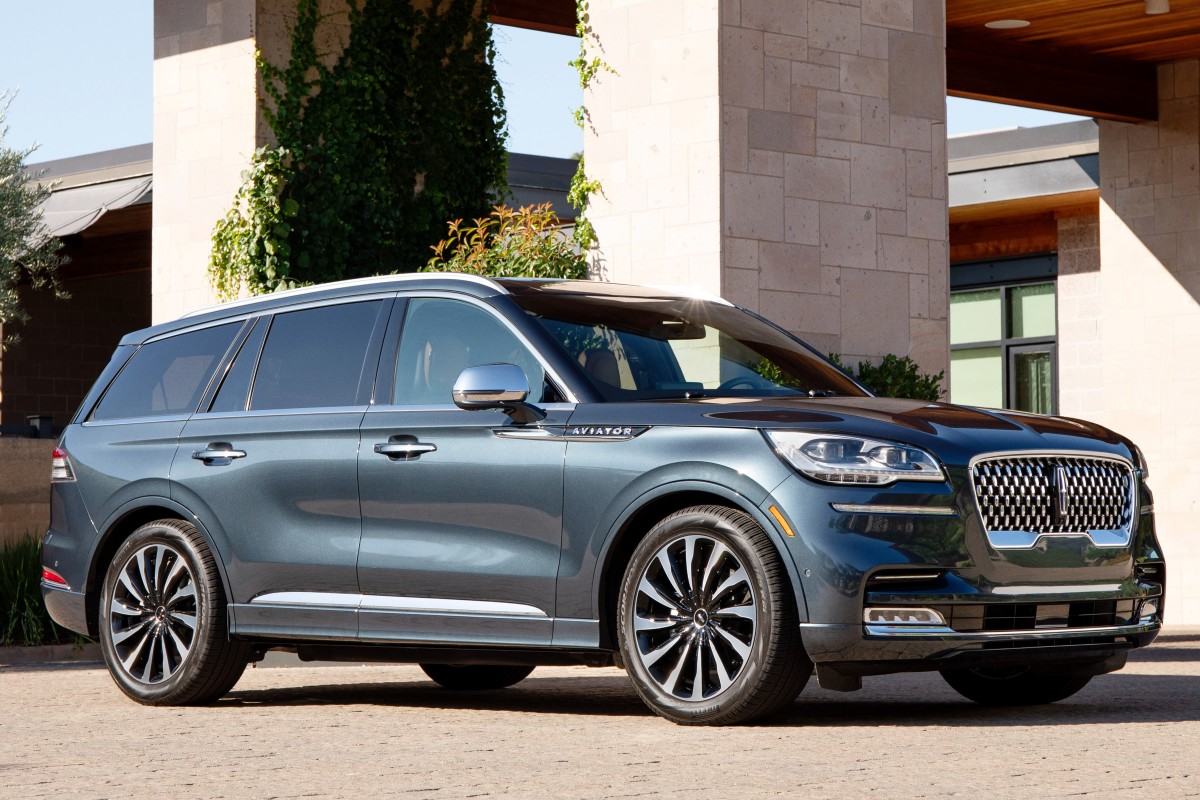
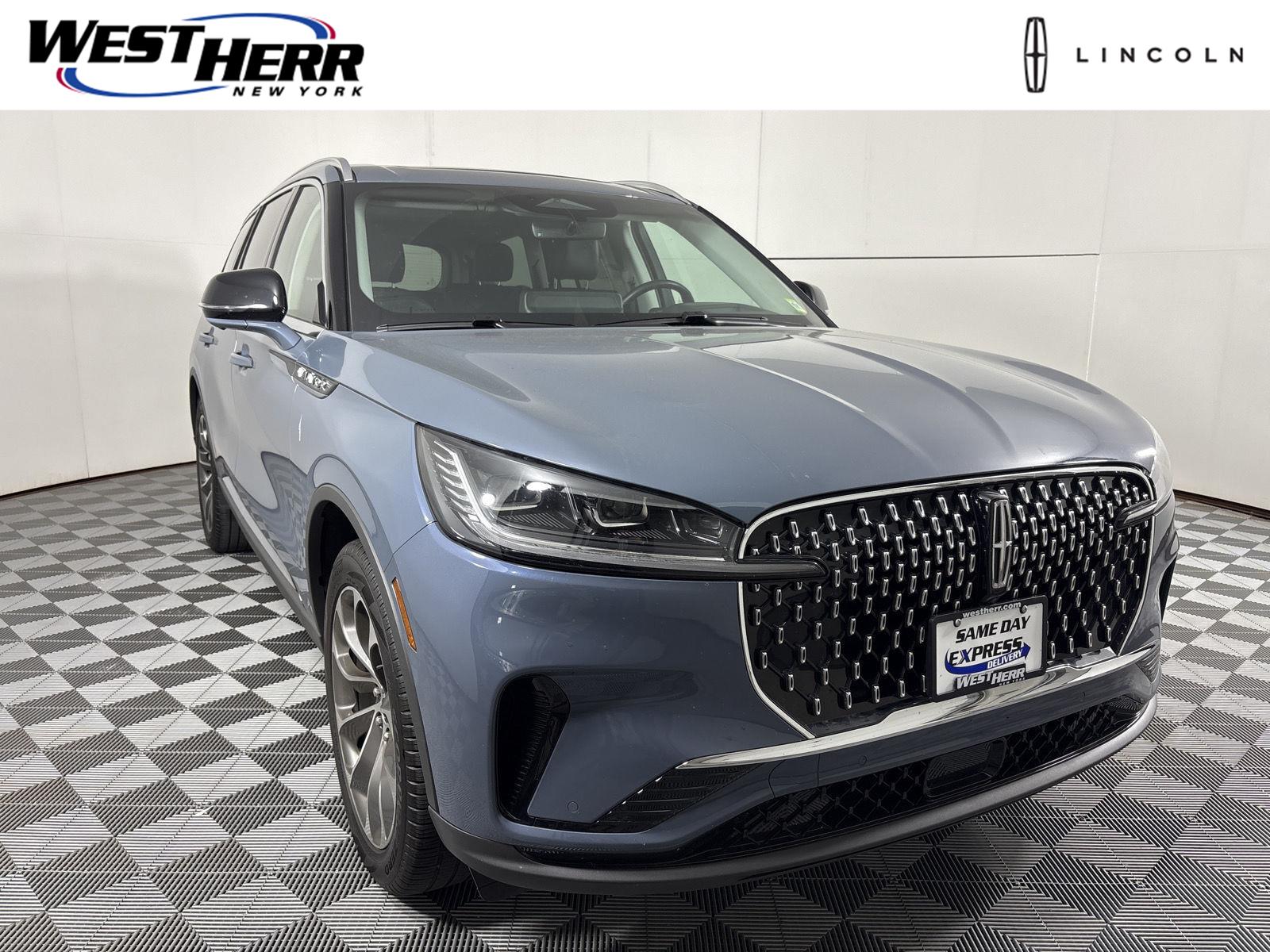
2025 Lincoln Aviator Reviews SummaryIn the midsize, three-row luxury SUV segment, the 2025 Aviator embraces the mid-century modern cues of the past while delivering a calm, unhurried sanctuary for the present. Yet, starting in 2025, this Lincoln simultaneously contains some of the most advanced technology of any of its rivals. Fresh styling and new thematic packages are also available; however, the previously offered plug-in hybrid model has not been reintroduced to the lineup, leaving a twin-turbocharged V6 as the sole engine option. Verdict: Distinctive without resorting to polarization, the 2025 Lincoln Aviator is a compelling choice for people seeking a powerful, quiet, and comfortable luxury SUV. It’s been around since 2019, yet you can’t consider this Lincoln to be a relic thanks to its undeniable technological sophistication. | |
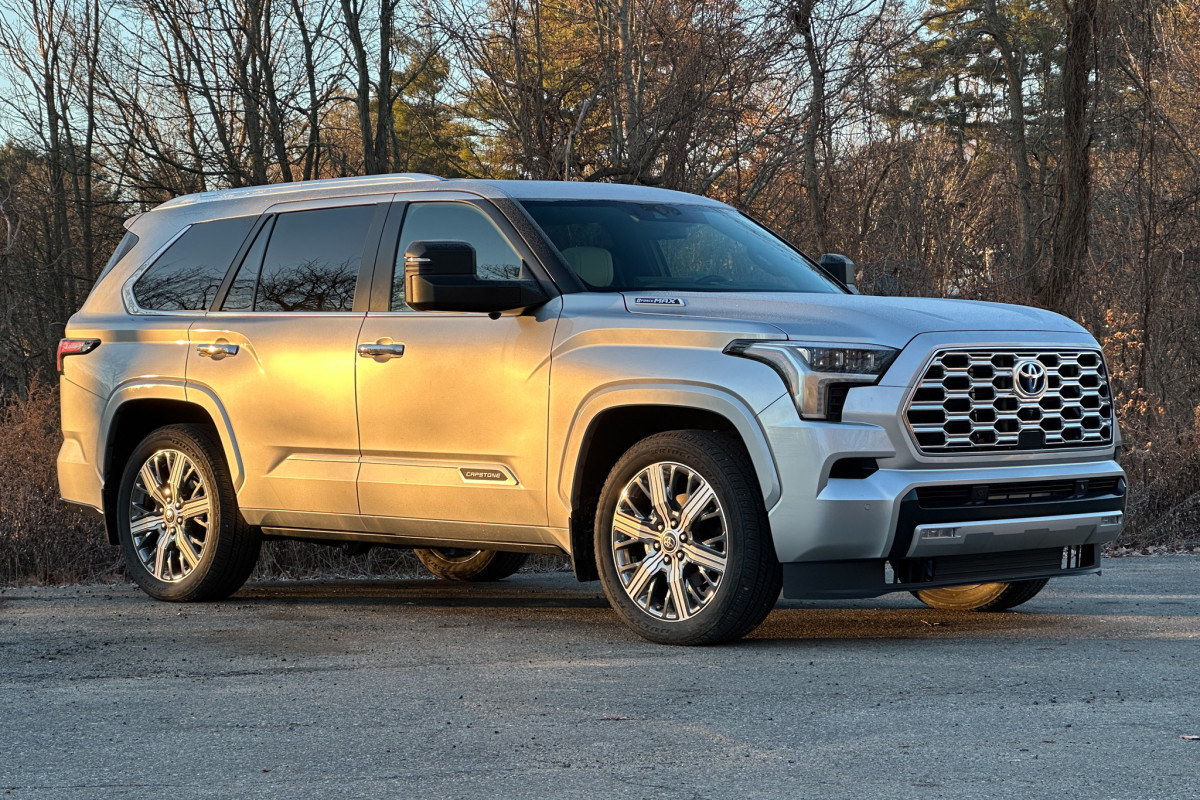
2025 Toyota Sequoia Reviews SummaryThe 2025 Sequoia is Toyota’s full-size SUV, based on the same platform as the Tundra pickup truck and using the same i-Force Max hybrid powertrain. It seats up to eight people, holds up to 86.9 cubic feet of cargo, carries up to 1,730 pounds of payload, and tows up to 9,520 pounds of trailer. The new Sequoia 1794 Edition slots into the lineup as a Texas-themed luxury model, and it certainly is nice. But it cannot mask this SUV’s fundamental flaws. Verdict: People buy full-size SUVs to carry lots of people, haul lots of cargo, and tow lots of weight. However, due to its packaging requirements, the Sequoia is a rock star only if you’re attaching a trailer to it, and even then, it’s not class-leading in capability. | |
No video found | No video found |
Popular Features & Specs | |
Engine3.0L 400 hp V6 | Engine3.4L 437 hp V6 Hybrid |
DrivetrainRWD | Drivetrain4X2 |
Seating Capacity7 | Seating Capacity8 |
Horsepower | Horsepower437 hp @ 5200 rpm |
EV Battery Capacity | EV Battery Capacity1.9 kWh |
MPG City18 | MPG City21 |
MPG Highway25 | MPG Highway24 |
Engine | |
Engine Name3.0L 400 hp V6 | Engine Name3.4L 437 hp V6 Hybrid |
Torque | Torque583 lb-ft @ 2400 rpm |
Horsepower | Horsepower437 hp @ 5200 rpm |
DrivetrainRWD | Drivetrain4X2 |
Fuel Economy | |
EV Battery Capacity | EV Battery Capacity1.9 kWh |
MPG City18 | MPG City21 |
MPG Highway25 | MPG Highway24 |
Interior | |
Seating Capacity7 | Seating Capacity8 |
Key Features | |
Navigation SystemStandard | Navigation System |
Sunroof/MoonroofStandard | Sunroof/MoonroofStandard |
Safety | |
Front Crash Overall5 | Front Crash Overall |
Side Crash Overall5 | Side Crash Overall |
Dimensions & Capacity | |
Cargo Space16.5 cu ft | Cargo Space22.3 cu ft |
Curb Weight4745 lbs | Curb Weight5620 lbs |
Height69.2 in | Height74.5 in |
Length199.7 in | Length208.1 in |
Width89.9 in | Width79.8 in |
Wheelbase119.1 in | Wheelbase122.0 in |
Maximum Payload1615 lbs | Maximum Payload1730 lbs |
Number of doors4 | Number of doors4 |
Maximum Towing Capacity5000 lbs | Maximum Towing Capacity9520 lbs |
Standard Towing Capacity | Standard Towing Capacity9520 lbs |
Overview | ||
MSRP | $57,830 | $62,425 |
Listings | ||
Ratings & Reviews | ||
User reviews | ||
Expert reviews | 7.8 out of 10Read full review | 5.5 out of 10Read full review |
Pros & cons | Pros
Cons
| Pros
Cons
|
Summary | In the midsize, three-row luxury SUV segment, the 2025 Aviator embraces the mid-century modern cues of the past while delivering a calm, unhurried sanctuary for the present. Yet, starting in 2025, this Lincoln simultaneously contains some of the most advanced technology of any of its rivals. Fresh styling and new thematic packages are also available; however, the previously offered plug-in hybrid model has not been reintroduced to the lineup, leaving a twin-turbocharged V6 as the sole engine option. Verdict: Distinctive without resorting to polarization, the 2025 Lincoln Aviator is a compelling choice for people seeking a powerful, quiet, and comfortable luxury SUV. It’s been around since 2019, yet you can’t consider this Lincoln to be a relic thanks to its undeniable technological sophistication. | The 2025 Sequoia is Toyota’s full-size SUV, based on the same platform as the Tundra pickup truck and using the same i-Force Max hybrid powertrain. It seats up to eight people, holds up to 86.9 cubic feet of cargo, carries up to 1,730 pounds of payload, and tows up to 9,520 pounds of trailer. The new Sequoia 1794 Edition slots into the lineup as a Texas-themed luxury model, and it certainly is nice. But it cannot mask this SUV’s fundamental flaws. Verdict: People buy full-size SUVs to carry lots of people, haul lots of cargo, and tow lots of weight. However, due to its packaging requirements, the Sequoia is a rock star only if you’re attaching a trailer to it, and even then, it’s not class-leading in capability. |
Video | No video found | No video found |
Popular Features & Specs | ||
Engine | 3.0L 400 hp V6 | 3.4L 437 hp V6 Hybrid |
Drivetrain | RWD | 4X2 |
Seating Capacity | 7 | 8 |
Horsepower | 437 hp @ 5200 rpm | |
EV Battery Capacity | 1.9 kWh | |
MPG City | 18 | 21 |
MPG Highway | 25 | 24 |
Engine | ||
Engine Name | 3.0L 400 hp V6 | 3.4L 437 hp V6 Hybrid |
Torque | 583 lb-ft @ 2400 rpm | |
Horsepower | 437 hp @ 5200 rpm | |
Drivetrain | RWD | 4X2 |
Fuel Economy | ||
EV Battery Capacity | 1.9 kWh | |
MPG City | 18 | 21 |
MPG Highway | 25 | 24 |
Interior | ||
Seating Capacity | 7 | 8 |
Key Features | ||
Navigation System | Standard | |
Sunroof/Moonroof | Standard | Standard |
Safety | ||
Front Crash Overall | 5 | |
Side Crash Overall | 5 | |
Dimensions & Capacity | ||
Cargo Space | 16.5 cu ft | 22.3 cu ft |
Curb Weight | 4745 lbs | 5620 lbs |
Height | 69.2 in | 74.5 in |
Length | 199.7 in | 208.1 in |
Width | 89.9 in | 79.8 in |
Wheelbase | 119.1 in | 122.0 in |
Maximum Payload | 1615 lbs | 1730 lbs |
Number of doors | 4 | 4 |
Maximum Towing Capacity | 5000 lbs | 9520 lbs |
Standard Towing Capacity | 9520 lbs | |
The 2025 Lincoln Aviator, built on a rear-wheel-drive platform shared with the Ford Explorer, showcased classic design proportions. Its blunt nose, short front overhang, and appealing dash-to-axle ratio contributed to its sports wagon-like appearance, though the 2025 styling updates were seen as less elegant. The interior, accessed through doors with electronic releases, offered a plush, traditional design without overwhelming screens, favoring a more classic architectural sensibility. However, the remote keyless entry fob was criticized for its cheap plastic construction. The Aviator was available in Premiere, Reserve, and Black Label trims, with our test vehicle in Reserve trim featuring optional all-wheel drive and several packages, bringing its MSRP to $83,550.
The Reserve II Package added numerous desirable features, including upgraded exterior lighting, 30-way-adjustable Perfect Position front seats with massage, and a 28-speaker Revel Ultima audio system. Despite its appealing design, the Aviator's third-row passenger room was compromised by its tapered roofline. The interior was praised for its comfort and traditional approach, though the key fob was a noted drawback. The Aviator's pricing ranged from $60,990 to $89,090, including destination charges.
The 2025 Toyota Sequoia 1794 Edition, named after the ranch year of its assembly plant, built on the Sequoia Platinum with machined-finish 20-inch wheels, more chrome, and Saddle Tan leather upholstery. It joined a lineup that included the SR5, Limited, Platinum, TRD Pro, and Capstone trims, with prices ranging from $62,425 to $83,915, plus destination charges. Our test vehicle, equipped with the TRD Off-Road Package, had an MSRP of $85,700. The Sequoia's Lunar Rock paint and black TRD off-road wheels garnered attention, despite the model's age.
Inside, the Saddle Tan leather and walnut wood trim contrasted with the otherwise black interior, though the rest of the cabin featured typical Toyota-grade plastic. The TRD Off-Road Package's red accents were out of place, but the aluminum pedals were a nice touch. The Sequoia's interior suggested a lower price point than its sticker indicated. Despite its rugged appearance, the Sequoia's interior materials and design left something to be desired, especially given its price.
The 2025 Lincoln Aviator was powered by a twin-turbocharged 3.0-liter V6 engine, delivering 400 horsepower and 415 lb-ft of torque through a 10-speed automatic transmission. It offered various driving modes, including Excite and Conserve, and featured adaptive air suspension. While the Aviator had plenty of power for acceleration and passing, its fuel economy was disappointing, with an observed 17.7 mpg compared to the EPA's 20 mpg rating. The Aviator's ride quality was generally pleasant, though larger bumps and road noise from the 22-inch wheels were noticeable.
The Aviator's adaptive Air Glide suspension excelled at maintaining composure, ensuring a secure and calming ride. Despite its power, the Aviator wasn't particularly exciting to drive, with a heavy steering feel and a focus on comfort rather than athleticism. The SUV's sightlines were clear, aided by thin windshield pillars and large side mirrors. The Aviator's driving character was more about providing a composed and luxurious experience than delivering thrills.
The 2025 Toyota Sequoia featured an i-Force Max hybrid powertrain, combining a twin-turbocharged 3.4-liter V6 engine with an electric motor and a 10-speed automatic transmission. It produced 437 horsepower and 583 lb-ft of torque, with a part-time 4WD system standard on the 1794 Edition. Despite its weight, the Sequoia offered quick acceleration and a strong engine note, though its fuel economy fell short of expectations, averaging 16.2 mpg compared to the EPA's 20 mpg rating.
The Sequoia's towing and payload capacities were impressive, but its packaging and driving dynamics were compromised by the battery pack's placement and solid rear axle. The ride was jittery over bumps, and the steering, while light and fluid, lacked feel. The Sequoia's off-road capabilities were limited by its air dam and ground clearance, though the Falken Wildpeak tires performed well on pavement. The brakes were criticized for poor initial bite and modulation, with fade occurring during hard braking tests.
The 2025 Lincoln Aviator offered exceptional comfort with its Perfect Position front seats, featuring 30-way adjustability, heating, ventilation, and massage functions. The second-row captain's chairs were also comfortable, though less adjustable. The third-row seats were less accommodating, with low cushions and limited legroom, making them more suitable for children. Storage space was excellent, with a well-organized center console and deep door pockets.
The Aviator provided 19.2 cubic feet of cargo space behind the third row, expanding to 42.7 cubic feet with the seats folded. Maximum cargo capacity was 78.6 cubic feet, offering practicality despite not being class-leading. The interior was thoughtfully designed, though the absence of side window sunshades was noted.
The 2025 Toyota Sequoia accommodated up to eight passengers, though the third row was best suited for shorter individuals. The 1794 Edition's front seats offered 10-way power adjustment, heating, ventilation, and massage, ensuring comfort. Access to the second and third rows was facilitated by long rear doors, though they could be cumbersome in tight spaces.
The Sequoia's second-row captain's chairs were comfortable but lacked adjustability and a console. The third row's high floor and low roof made entry and exit awkward, with limited headroom. Cargo space was limited to 11.5 cubic feet with the third row in use, expanding to 49 cubic feet with the seats folded. Maximum cargo capacity was 86.9 cubic feet, less than rival full-size SUVs. The Sequoia's interior design and materials were not as refined as expected for its price.
The 2025 Lincoln Aviator featured a 12.4-inch digital instrument cluster and a 13.2-inch touchscreen infotainment system powered by Lincoln Digital Experience. It supported Google Built-in, Alexa Built-in, and wireless Apple CarPlay and Android Auto. However, the Google Assistant struggled with voice prompts, though Apple CarPlay and Siri worked well. The Aviator's 28-speaker Revel Ultima 3D sound system was praised for its quality.
The Aviator's head-up display provided a widescreen presentation of data, including lane departure warnings and blind-spot alerts. The Elevated Journey app offered mindfulness coaching, though its utility was subjective. Overall, the Aviator's technology was advanced, though some features required refinement.
The 2025 Toyota Sequoia 1794 Edition came with a 12.3-inch digital instrumentation panel and a 14-inch touchscreen infotainment system. It offered five connected services plans, with trial subscriptions ranging from one to ten years. Wireless Apple CarPlay and Android Auto were standard, along with a 14-speaker JBL premium sound system.
The Sequoia's infotainment system featured a large volume knob but lacked a tuning knob, which was frustrating. The Intelligent Assistant voice recognition system was capable but had limitations. The Sequoia also included a surround-view camera system and a digital rearview mirror, enhancing convenience and safety.
The 2025 Lincoln Aviator was equipped with Lincoln Co-Pilot360 Drive 2.0, offering a comprehensive suite of advanced driver assistance systems. Notable features included active blind-spot monitoring with trailer coverage, intersection assist, and evasive steering assist. The reverse braking assist system was overly sensitive, but adaptive cruise control and lane-centering assist worked well. BlueCruise, a hands-free driving assistance system, was standard, providing a proactive approach to driver control.
The Aviator received five-star ratings from the NHTSA and Good ratings from the IIHS, indicating strong safety performance. However, blind-spot warnings were only displayed when signaling a lane change, which could be improved.
The 2025 Toyota Sequoia featured Toyota Safety Sense 2.5, including adaptive cruise control, forward collision warning, and lane departure warning. Blind-spot monitoring and rear cross-traffic alert were also standard. While the safety tech was comprehensive, the lane assist features were sometimes intrusive. Crash-test ratings from the IIHS and NHTSA were not available at the time of publication.
CarGurus highlights
According to CarGurus experts, the overall rating for the 2025 Lincoln Aviator is 7.8 out of 10, while the 2025 Toyota Sequoia scores 5.5 out of 10. Based on these ratings, the Lincoln Aviator is the recommended choice, offering a more refined and luxurious experience with superior safety and technology features.
Choose the 2025 Lincoln Aviator if:
- You prioritize a luxurious and comfortable interior with advanced seating options.
- You value a comprehensive suite of safety features and strong crash-test ratings.
- You prefer a composed and calming driving experience with advanced technology.




Choose the 2025 Toyota Sequoia if:
- You need a powerful hybrid powertrain with impressive towing capabilities.
- You require a full-size SUV with off-road capabilities and rugged styling.
- You appreciate a spacious interior with comfortable seating for long journeys.


CarGurus highlights
According to CarGurus experts, the overall rating for the 2025 Lincoln Aviator is 7.8 out of 10, while the 2025 Toyota Sequoia scores 5.5 out of 10. Based on these ratings, the Lincoln Aviator is the recommended choice, offering a more refined and luxurious experience with superior safety and technology features.
Choose the 2025 Lincoln Aviator if:
Shop Now- You prioritize a luxurious and comfortable interior with advanced seating options.
- You value a comprehensive suite of safety features and strong crash-test ratings.
- You prefer a composed and calming driving experience with advanced technology.
Choose the 2025 Toyota Sequoia if:
Shop Now- You need a powerful hybrid powertrain with impressive towing capabilities.
- You require a full-size SUV with off-road capabilities and rugged styling.
- You appreciate a spacious interior with comfortable seating for long journeys.

By: CarGurus + AI
At CarGurus, our team of experienced automotive writers remain at the heart of our content operation, conducting hands-on car tests and writing insightful guides that are backed by years of industry experience. To complement this, we are harnessing AI to make our content offering more diverse and more helpful to shoppers than ever. To achieve this, our AI systems are based exclusively on CarGurus content, ratings and data, so that what we produce is both unique to CarGurus, and uniquely helpful to car shoppers.

