2023 Toyota Prius vs 2023 Volkswagen Jetta
Overview | |
MSRP$20,655 | MSRP$27,450 |
Listings544 | Listings273 |
Ratings & Reviews | |
User Reviews | User Reviews |
Expert reviews6.8 out of 10 | Expert reviews7.5 out of 10 |
Pros
Cons
| Pros
Cons
|
2023 Volkswagen Jetta Reviews SummaryThe popularity of sedans such as the Jetta might have tumbled as buyers flock to big SUVs and even bigger pickups, but there's still plenty to like about VW's family car. The base 1.5-litre gas engine's 158 horsepower is plenty for a front-drive family car, and can be paired with either manual or automatic transmission. And for those who get a kick from driving, there's the sportier Jetta GLI with retuned suspension and a turbocharged 2.0-litre engine pumping out 228 horsepower. All 2023 Jettas feature a pleasant if not very exciting interior design. To make it as smart as possible, we recommend going for SEL trim or above to get VW's upgraded 10.25-inch digital dials and an 8-inch infotainment touchscreen. | |
2023 Toyota Prius Reviews SummaryAfter decades of being the frumpy leader of the fuel-efficiency movement, the Prius emerges as one of the better-looking new cars to hit the market recently. This fifth-generation revelation in looks is then backed up by a huge jump in power without sacrificing any of the fuel-sipping ways of the earlier model. Add in impressive standard safety features and a reasonable suite of interior tech and comfort goodies, and you have an impressive hatchback that just now happens to be a hybrid. | |
No video found | |
Popular Features & Specs | |
Engine1.5L 158 hp I4 | Engine2.0L 194 hp I4 Hybrid |
Drive TrainFWD | Drive TrainFWD |
Seating Capacity5 | Seating Capacity5 |
EV Battery Capacity | EV Battery Capacity0.9 kWh |
MPG City31 | MPG City57 |
MPG Highway41 | MPG Highway56 |
Engine | |
Engine Name1.5L 158 hp I4 | Engine Name2.0L 194 hp I4 Hybrid |
DrivetrainFWD | DrivetrainFWD |
Fuel Economy | |
EV Battery Capacity | EV Battery Capacity0.9 kWh |
MPG City31 | MPG City57 |
MPG Highway41 | MPG Highway56 |
Interior | |
Seating Capacity5 | Seating Capacity5 |
Safety | |
Front Crash Overall4 | Front Crash Overall5 |
Side Crash Overall5 | Side Crash Overall5 |
Dimensions & Capacity | |
Cargo Space14.1 cu ft | Cargo Space23.8 cu ft |
Curb Weight2915 lbs | Curb Weight3097 lbs |
Height57.7 in | Height55.9 in |
Length186.5 in | Length181.1 in |
Width80.2 in | Width70.2 in |
Wheelbase105.7 in | Wheelbase108.3 in |
Maximum Payload937 lbs | Maximum Payload860 lbs |
Number of doors4 | Number of doors4 |
Overview | ||
MSRP | $20,655 | $27,450 |
Listings | ||
Ratings & Reviews | ||
User reviews | ||
Expert reviews | 6.8 out of 10Read full review | 7.5 out of 10Read full review |
Pros & cons | Pros
Cons
| Pros
Cons
|
Summary | The popularity of sedans such as the Jetta might have tumbled as buyers flock to big SUVs and even bigger pickups, but there's still plenty to like about VW's family car. The base 1.5-litre gas engine's 158 horsepower is plenty for a front-drive family car, and can be paired with either manual or automatic transmission. And for those who get a kick from driving, there's the sportier Jetta GLI with retuned suspension and a turbocharged 2.0-litre engine pumping out 228 horsepower. All 2023 Jettas feature a pleasant if not very exciting interior design. To make it as smart as possible, we recommend going for SEL trim or above to get VW's upgraded 10.25-inch digital dials and an 8-inch infotainment touchscreen. | After decades of being the frumpy leader of the fuel-efficiency movement, the Prius emerges as one of the better-looking new cars to hit the market recently. This fifth-generation revelation in looks is then backed up by a huge jump in power without sacrificing any of the fuel-sipping ways of the earlier model. Add in impressive standard safety features and a reasonable suite of interior tech and comfort goodies, and you have an impressive hatchback that just now happens to be a hybrid. |
Video | No video found | |
Popular Features & Specs | ||
Engine | 1.5L 158 hp I4 | 2.0L 194 hp I4 Hybrid |
Drive Train | FWD | FWD |
Seating Capacity | 5 | 5 |
EV Battery Capacity | 0.9 kWh | |
MPG City | 31 | 57 |
MPG Highway | 41 | 56 |
Engine | ||
Engine Name | 1.5L 158 hp I4 | 2.0L 194 hp I4 Hybrid |
Drivetrain | FWD | FWD |
Fuel Economy | ||
EV Battery Capacity | 0.9 kWh | |
MPG City | 31 | 57 |
MPG Highway | 41 | 56 |
Interior | ||
Seating Capacity | 5 | 5 |
Safety | ||
Front Crash Overall | 4 | 5 |
Side Crash Overall | 5 | 5 |
Dimensions & Capacity | ||
Cargo Space | 14.1 cu ft | 23.8 cu ft |
Curb Weight | 2915 lbs | 3097 lbs |
Height | 57.7 in | 55.9 in |
Length | 186.5 in | 181.1 in |
Width | 80.2 in | 70.2 in |
Wheelbase | 105.7 in | 108.3 in |
Maximum Payload | 937 lbs | 860 lbs |
Number of doors | 4 | 4 |
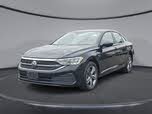
The 2023 Volkswagen Jetta, while an affordable choice in the segment, faced a dilemma as it was a traditional four-door sedan in an era where crossovers and hatchbacks were favored for their utility and style. Alternatives like VW’s own Taos crossover SUV and the Mazda Mazda3 Hatchback provided more in these areas.
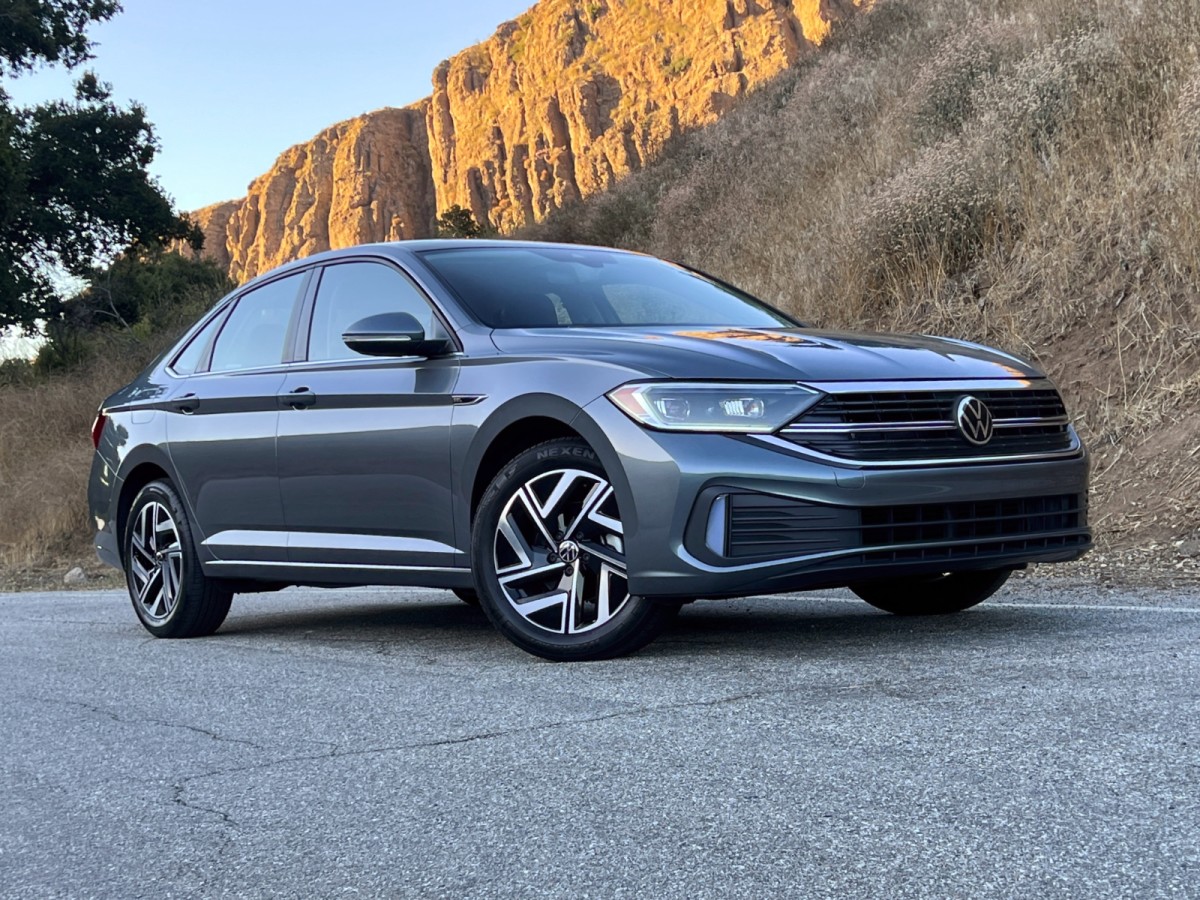
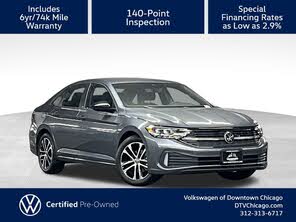
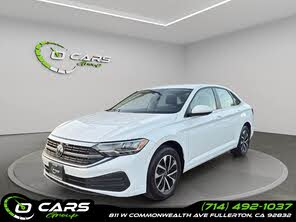
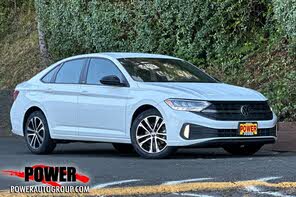
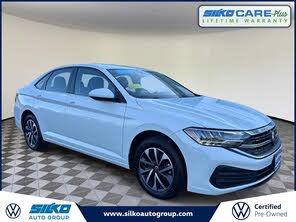
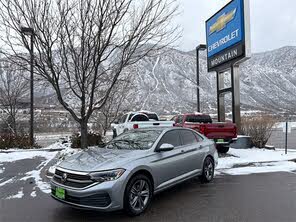
Volkswagen marketed the Jetta in various trims: S, Sport, SE, SEL, and GLI, with prices starting from $20,665 to $31,585, with a $1,095 destination charge. The sporty GLI model, though not included in this review, was noted for its exciting driving dynamics. Our reviewed vehicle was a Jetta SEL adorned in Platinum Gray Metallic paint and featured a Volcano Brown over Titan Black interior. Priced at $29,480 with destination included, it lacked any additional accessories.
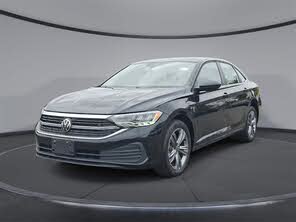
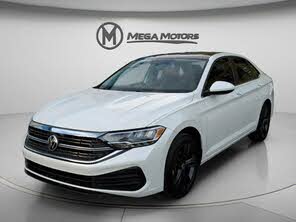
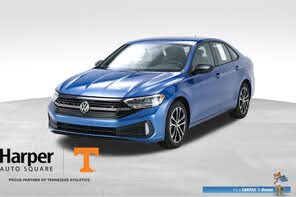
What truly hindered the Jetta was its bland appearance. Traditionally, Volkswagen had styled its cars conservatively, ensuring they aged well. However, the current-generation Jetta, even after a recent refresh, lacked the clean, symmetrical design that had previously characterized its lineage. Though visually inoffensive, its appeal seemed to wane compared to its competitors. Inside, the Jetta SEL exuded a sense of luxury reminiscent of the VW Group’s Audi brand, thanks to features like ambient lighting, genuine leather upholstery, a large power sunroof, and expansive digital instrumentation and infotainment screens. Despite these upscale touches, the Jetta’s exterior and interior failed to stir strong emotions.
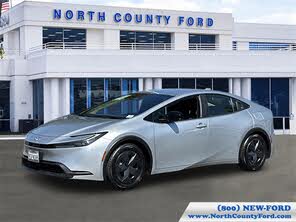
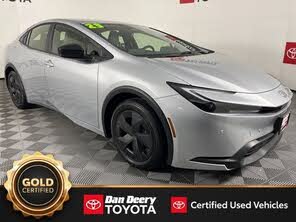
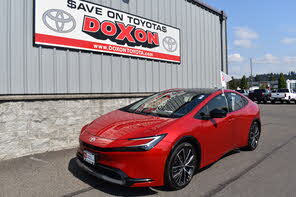
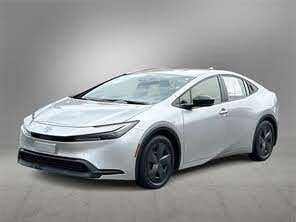
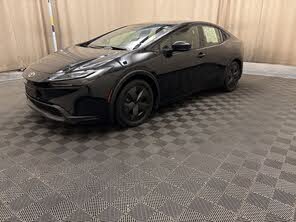
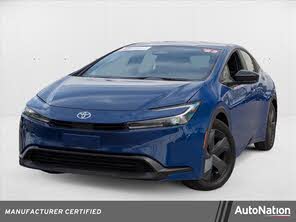
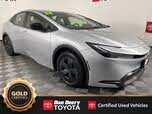
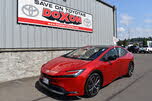
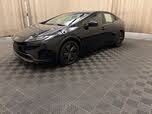
In contrast, the 2023 Toyota Prius underwent a complete redesign, finally gaining the head-turning style it had long lacked. In response to growing competition from cheaper electric vehicles and other hybrids, Toyota admitted the Prius needed to balance efficiency with attractiveness.
The new Prius boasted a sleek exterior, a blend of curves and edges that suggested a futuristic appeal while remaining palatable to conservative buyers. The wheels were pushed further into the corners for improved handling, and the car was longer, lower, and wider than its predecessor. The new platform it rode on felt robust over rough surfaces, marking a departure from the lightweight, tinny feel of earlier models. The doors shut with a reassuring 'thunk,' and the cabin materials and fit and finish were of high quality.
Inside, the Prius featured a pair of screens: an instrument panel in front of the driver and a dashboard-mounted infotainment screen, marking a significant evolution from the centrally-mounted display of older models. The cabin design prioritized function over form, with minimal decorative elements, yet it still provided a comfortable environment for its occupants.


Driving the 2023 Volkswagen Jetta confirmed its German roots, though it wasn’t a sports sedan (for that, see the Jetta GLI). The standard Jetta felt lively with its turbocharged 1.5-liter inline four-cylinder engine, producing 158 horsepower and 184 pound-feet of torque. Except for the GLI, the SEL and SE trims came with an eight-speed automatic transmission, while the S and Sport trims offered a six-speed manual as standard.
The Jetta supplied zippy acceleration and an agile, responsive steering experience, perfect for urban and suburban driving. However, the automatic transmission exhibited a noticeable lag between pressing the gas pedal and actual acceleration, a delay that could become annoying. The turbocharged engine’s thrust tended to come all at once, surprising the driver and causing unexpected tire spins during turns. Switching to the Sport mode could mitigate this issue but at the cost of fuel efficiency. While the EPA rated the Jetta SEL at 33 mpg in combined driving, real-world tests averaged around 30 mpg.
Despite these quirks, the Jetta SEL convinced drivers of its German engineering when pushed on mountain roads. Its light and nimble feel, precise steering, reliable brakes, and predictable handling earned it high marks. The all-season Nexen Nfera AU7 tires offered excellent grip and delivered good feedback, enhancing the car’s overall driving experience.
The 2023 Toyota Prius, utilizing a new 2.0-liter four-cylinder engine paired with a more powerful electric motor and lithium-ion battery, brought significant performance improvements. The total system output was 194 horsepower for front-wheel-drive models and 196 horsepower for all-wheel-drive versions, a substantial leap from the previous model’s 121 horsepower. This setup operated through a continuously variable automatic transmission.
In everyday conditions, the new Prius felt more athletic and responsive, with smooth acceleration in various driving scenarios. It offered a much-improved 0-60 mph time of 7.1 seconds, compared to the previous model’s 10.5.
Noise levels inside were well-managed, though spirited acceleration could make the engine's drone more noticeable. The Prius displayed agile and athletic handling, thanks to its revised suspension and longer wheelbase that positioned the wheels at the corners. The car handled rough roads with composure, and the brakes, though slightly squishy as with most hybrids, still felt competent.
Contrary to some beliefs, the 2023 Volkswagen Jetta was no longer a small car. It deftly bridged the gap between compact and midsize sedans, comfortably accommodating four adults, with room for a fifth on short trips. The interior storage was generous, and the trunk’s 14.1 cubic feet of cargo space rivaled some midsize sedans. The expansive trunk opening facilitated easy loading of luggage, and the 60/40-split folding back seat enhanced its cargo-carrying flexibility.
The Jetta SEL included features like an eight-way power-adjustable driver’s seat, heated and ventilated front seats, and a heated steering wheel, enhancing comfort. The flat hood, thin windshield pillars, and large side mirrors provided excellent outward visibility. While the front passenger lacked a height adjuster for their seat, the back seat offered ample legroom and comfort, with its large doors and tall, supportive cushion. However, the absence of rear air conditioning vents was a slight drawback.
The 2023 Toyota Prius, despite exterior growth, saw a reduction in some interior dimensions compared to its predecessor, notably in headroom. However, legroom increased, allowing taller passengers to sit comfortably in the rear seats. The optional fixed glass roof, available on the mid-grade XLE and standard on the Limited trim, helped mitigate any sense of claustrophobia but did not provide operable sections for ventilation.
Cargo space in the Prius also saw a reduction, with the XLE and Limited trims offering 20 cubic feet, and the LE offering 24 cubic feet. Forward visibility was generally good, but the removal of the split rear window hampered rear visibility.
Inside, the Prius maintained a functional layout with numerous cupholders, a slick center console pocket for wireless phone charging on the XLE and Limited trims, and a hidden compartment beneath a dashboard tray. USB-C charging ports were available for both front and rear passengers. The cargo area featured small underfloor storage cubbies, albeit shallow, that could’ve been more practical as a single large compartment. A flexible cargo cover was built into the rear window to help conceal belongings.
The 2023 Volkswagen Jetta SEL came with a larger 10.25-inch Digital Cockpit Pro instrumentation panel, an upgrade from the standard 8-inch screen. Though not as advanced as Audi’s offerings, it impressed within its segment. The SEL trim also elevated the infotainment touchscreen from 6.5 inches to 8.0 inches, featuring proximity sensing, knobs for volume and other functions, and shortcut tiles for main menus.
Users primarily interacted with the infotainment system for phone calls, wireless Apple CarPlay and Android Auto, and music streaming via apps or SiriusXM 360L premium satellite radio. However, changing radio stations required more steps than expected, as the system first needed to display the radio screen.
The native voice recognition system in the Jetta was basic, and advanced natural language recognition required subscribing to Car-Net connected services. Car-Net offered useful features like a Wi-Fi hotspot, SOS emergency calling, and remote engine starting for the first five years. However, the SEL’s Beats Audio premium sound system was underwhelming compared to previous systems by Fender.
The base LE and mid-grade XLE models of the 2023 Toyota Prius included an 8-inch color touchscreen infotainment system with wireless Apple CarPlay and Android Auto connectivity. The XLE offered a 12.3-inch touchscreen upgrade, standard on the Limited trim, which we found worth the additional $735 for its responsiveness and intuitive menus. However, the cloud-based navigation system required a $160 annual subscription to Toyota’s Drive Connect system.
All models featured a 7-inch digital instrument cluster, which was overly crowded with information despite being an improvement over the previous center-mounted display. The cabin included six USB-C charge ports, and the XLE and Limited trims had standard wireless smartphone charging. An AT&T Wi-Fi hotspot was standard across all trims, though it necessitated a subscription.
Toyota offered three subscription-based connectivity bundles: Remote Connect for remote access via Google Assistant and Amazon Alexa, Safety Connect for roadside assistance and collision alerts, and Drive Connect for cloud navigation and voice-activated features. Each aimed to enhance the driving experience through added connectivity and safety functions.
The 2023 Volkswagen Jetta SE and SEL trims featured IQ.Drive, a comprehensive suite of advanced driving assistance systems. IQ.Drive included adaptive cruise control, lane-centering assist, Travel Assist, and Emergency Assist, the latter detecting an unresponsive driver and bringing the car to a stop.
Travel Assist effectively managed adaptive cruise control and lane-centering functions, proving reliable on challenging routes such as the Pacific Coast Highway. However, the system occasionally issued false lane departure warnings and added unnatural steering inputs. Emergency Assist stood out for its ability to identify and respond to driver incapacitation.
NHTSA awarded the Jetta a five-star overall safety rating, but with four stars for frontal-impact protection. IIHS rated the Jetta’s safety as Poor in moderate overlap frontal-impact tests and criticized the standard and available headlights.
The 2023 Toyota Prius featured Toyota Safety Sense 3.0, covering adaptive cruise control, pre-collision braking with pedestrian detection, lane departure alerts with steering assist, lane-tracing assist, and Proactive Driving Assist. The latter showed impressive functionality during tests, akin to the regenerative braking feel of an EV when approaching obstacles.
Aside from these active safety systems, the Prius included stability and traction control, eight airbags, and blind-spot monitoring with rear cross-traffic alerts. The Limited trim offered an optional hands-free automatic parallel parking feature called Advanced Park. As of now, IIHS and NHTSA have not yet crash-tested the 2023 Prius.
CarGurus highlights

According to CarGurus experts, the overall rating for the 2023 Volkswagen Jetta was 6.8 out of 10, while the 2023 Toyota Prius scored 7.5 out of 10. Given these ratings, the 2023 Toyota Prius emerges as the more compelling choice. Its striking design, enhanced performance, and extensive safety features make it a standout in the hybrid market, appealing to both efficiency-minded and style-conscious buyers.
Choose the 2023 Toyota Prius if:
- You value a sleek and stylish design that also enhances aerodynamics and handling.
- You want a fuel-efficient hybrid with significantly improved performance.
- You prefer an extensive suite of active safety features available across all trim levels.



Choose the 2023 Volkswagen Jetta if:
- You prefer a car with German engineering and responsive, agile handling.
- You need a spacious trunk with plenty of interior storage options.
- You appreciate advanced driver assistance features like Travel Assist and Emergency Assist.


CarGurus highlights
According to CarGurus experts, the overall rating for the 2023 Volkswagen Jetta was 6.8 out of 10, while the 2023 Toyota Prius scored 7.5 out of 10. Given these ratings, the 2023 Toyota Prius emerges as the more compelling choice. Its striking design, enhanced performance, and extensive safety features make it a standout in the hybrid market, appealing to both efficiency-minded and style-conscious buyers.
Choose the 2023 Toyota Prius if:
Shop Now- You value a sleek and stylish design that also enhances aerodynamics and handling.
- You want a fuel-efficient hybrid with significantly improved performance.
- You prefer an extensive suite of active safety features available across all trim levels.






Choose the 2023 Volkswagen Jetta if:
Shop Now- You prefer a car with German engineering and responsive, agile handling.
- You need a spacious trunk with plenty of interior storage options.
- You appreciate advanced driver assistance features like Travel Assist and Emergency Assist.










By: CarGurus + AI
At CarGurus, our team of experienced automotive writers remain at the heart of our content operation, conducting hands-on car tests and writing insightful guides that are backed by years of industry experience. To complement this, we are harnessing AI to make our content offering more diverse and more helpful to shoppers than ever. To achieve this, our AI systems are based exclusively on CarGurus content, ratings and data, so that what we produce is both unique to CarGurus, and uniquely helpful to car shoppers.