2021 Audi Q5 vs 2021 Volkswagen Tiguan
Overview | |
MSRP$43,300 | MSRP$25,245 |
Listings466 | Listings1325 |
Ratings & Reviews | |
User Reviews | User Reviews |
Expert reviews8.0 out of 10 | Expert reviews7.3 out of 10 |
Pros
Cons
| Pros
Cons
|
2021 Audi Q5 Reviews SummaryAudi has made a commitment to electrification across its lineup. That takes the form of all-electric (BEV), hybrid (HEV), and plug-in hybrid vehicles (PHEV). The Q5, which entered its second generation in the 2018 model year, has offered a PHEV powertrain since 2020 in the Audi Q5 55 TFSI e quattro. | |
2021 Volkswagen Tiguan Reviews SummaryYou may have noticed that crossover SUVs are popular. Among them, compact models dominate, having essentially replaced the traditional midsize sedan in American driveways. Offering room for five people, available all-wheel drive (AWD), and more cargo than any family car, they are the preferred method of transportation for a broad cross section of new vehicle buyers. But that’s not the only explanation for the runaway success of the 2021 Volkswagen Tiguan. | |
No video found | No video found |
Popular Features & Specs | |
Engine | Engine2.0L 184 hp I4 |
Drive Train | Drive TrainFWD |
Seating Capacity5 | Seating Capacity7 |
Horsepower | Horsepower184 hp @ 4400 rpm |
MPG City | MPG City23 |
MPG Highway | MPG Highway29 |
Engine | |
Engine Name2.0L 261 hp I4 | Engine Name2.0L 184 hp I4 |
Torque273 lb-ft @ 1600 rpm | Torque221 lb-ft @ 1600 rpm |
Horsepower261 hp @ 5250 rpm | Horsepower184 hp @ 4400 rpm |
DrivetrainAWD | DrivetrainFWD |
Fuel Economy | |
MPG City | MPG City23 |
MPG Highway | MPG Highway29 |
Interior | |
Leather SeatsStandard | Leather Seats |
Seating Capacity5 | Seating Capacity7 |
Safety | |
Front Crash Overall5 | Front Crash Overall4 |
Side Crash Overall5 | Side Crash Overall5 |
Dimensions & Capacity | |
Cargo Space25.9 cu ft | Cargo Space12.0 cu ft |
Curb Weight4079 lbs | Curb Weight3735 lbs |
Height65.5 in | Height66.3 in |
Length184.3 in | Length185.1 in |
Width84.2 in | Width72.4 in |
Wheelbase111.0 in | Wheelbase109.8 in |
Maximum Payload1036 lbs | Maximum Payload1146 lbs |
Number of doors4 | Number of doors4 |
Maximum Towing Capacity4400 lbs | Maximum Towing Capacity1500 lbs |
Overview | ||
MSRP | $43,300 | $25,245 |
Listings | ||
Ratings & Reviews | ||
User reviews | ||
Expert reviews | 8.0 out of 10Read full review | 7.3 out of 10Read full review |
Pros & cons | Pros
Cons
| Pros
Cons
|
Summary | Audi has made a commitment to electrification across its lineup. That takes the form of all-electric (BEV), hybrid (HEV), and plug-in hybrid vehicles (PHEV). The Q5, which entered its second generation in the 2018 model year, has offered a PHEV powertrain since 2020 in the Audi Q5 55 TFSI e quattro. | You may have noticed that crossover SUVs are popular. Among them, compact models dominate, having essentially replaced the traditional midsize sedan in American driveways. Offering room for five people, available all-wheel drive (AWD), and more cargo than any family car, they are the preferred method of transportation for a broad cross section of new vehicle buyers. But that’s not the only explanation for the runaway success of the 2021 Volkswagen Tiguan. |
Video | No video found | No video found |
Popular Features & Specs | ||
Engine | 2.0L 184 hp I4 | |
Drive Train | FWD | |
Seating Capacity | 5 | 7 |
Horsepower | 184 hp @ 4400 rpm | |
MPG City | 23 | |
MPG Highway | 29 | |
Engine | ||
Engine Name | 2.0L 261 hp I4 | 2.0L 184 hp I4 |
Torque | 273 lb-ft @ 1600 rpm | 221 lb-ft @ 1600 rpm |
Horsepower | 261 hp @ 5250 rpm | 184 hp @ 4400 rpm |
Drivetrain | AWD | FWD |
Fuel Economy | ||
MPG City | 23 | |
MPG Highway | 29 | |
Interior | ||
Leather Seats | Standard | |
Seating Capacity | 5 | 7 |
Safety | ||
Front Crash Overall | 5 | 4 |
Side Crash Overall | 5 | 5 |
Dimensions & Capacity | ||
Cargo Space | 25.9 cu ft | 12.0 cu ft |
Curb Weight | 4079 lbs | 3735 lbs |
Height | 65.5 in | 66.3 in |
Length | 184.3 in | 185.1 in |
Width | 84.2 in | 72.4 in |
Wheelbase | 111.0 in | 109.8 in |
Maximum Payload | 1036 lbs | 1146 lbs |
Number of doors | 4 | 4 |
Maximum Towing Capacity | 4400 lbs | 1500 lbs |
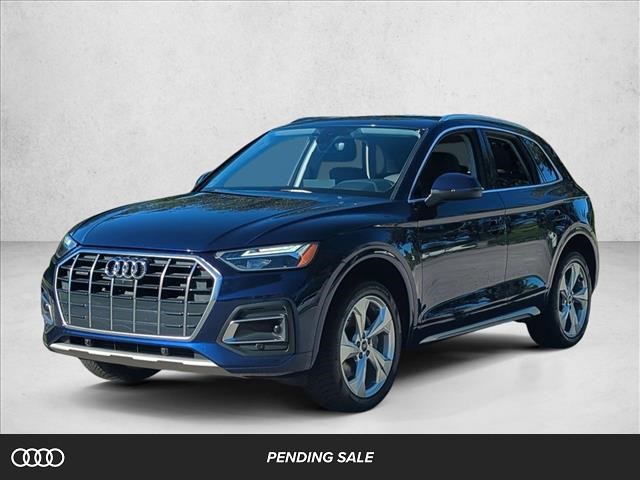
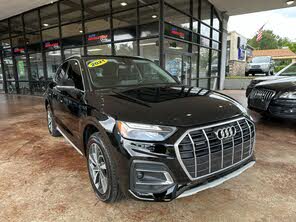
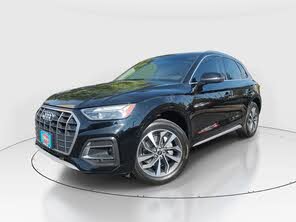
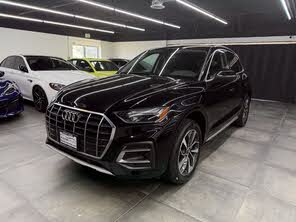
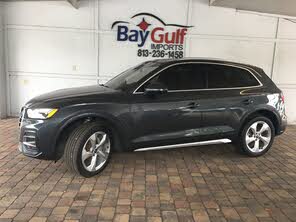
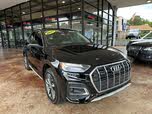
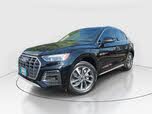
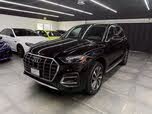
The 2021 Audi Q5 stood out as a sharp-looking crossover SUV that epitomized the Audi design language while maintaining its unique character. The vehicle boasted an expressive front end, highlighted by LED headlights that flanked the large Audi Singleframe grille, with horizontal elements that accentuated its width. The body featured crisp character lines, and the greenhouse resembled a protective shell. The rear of the Q5 was adorned with bold, large taillights, contributing to its classy and modern appearance from front to back. Moreover, the Q5 displayed exceptional fit and finish throughout. The plug-in hybrid version of the Q5 came equipped with some S-Line trim pieces and enhancements, which set it apart from the gasoline-only model and further enhanced its appearance, including standard 19-inch wheels or optional 20-inch wheels.
Inside the Q5, the ambiance was similarly classy and modern. Despite being packed with technology, the interior maintained an uncluttered look. Buttons, switches, and knobs were smartly grouped and segregated by function, presenting a unity of design that was visually pleasing. High-quality materials were used throughout, and where different materials met, the lines were crisp and well-defined. The materials were authentic, featuring real wood, real metal, and honed surfaces. The 10.1-inch touchscreen was positioned at the top of the center stack, conveniently in the driver’s line of sight. The second row was also nicely appointed with standard leather seating surfaces.
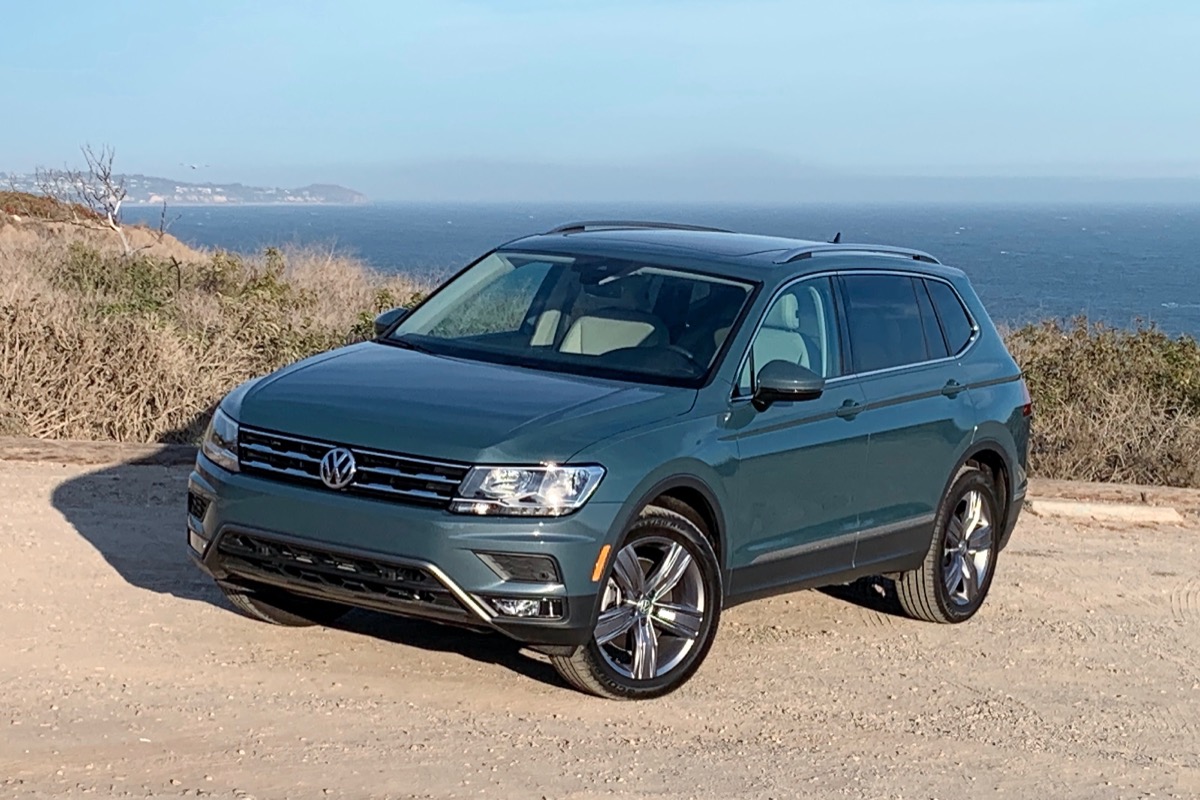
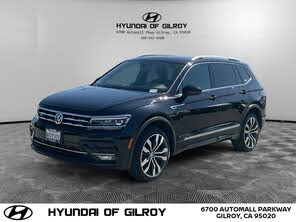
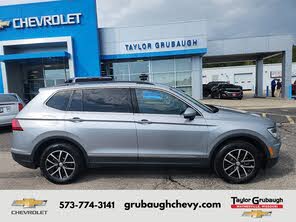
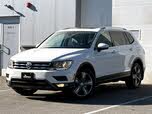
The 2021 Volkswagen Tiguan, on the other hand, presented itself with clean lines and balanced proportions. While its styling might have been perceived as understated or even boring by some, there was an inherent beauty in its conservative, upscale, and timeless design that promised to age gracefully. Notably, the second-generation Tiguan offered a larger size, correcting the mistake of the compact dimensions of the first-generation model, making it nearly as spacious inside as a Hyundai Santa Fe or Kia Sorento.
This upsizing resulted in a roomy and accommodating interior with ample space for four people, although it could carry five if necessary. An optional small third-row seat expanded passenger capacity to seven, although at least three of these passengers would need to be children.
True to many German automakers, Volkswagen combined modern geometric interior forms with a purposeful, no-nonsense control layout. The only unusual element was the location of the engine start button on the center console, to the upper left of the gear selector, rather than on the dashboard. The cabin featured shiny detailing, available digital instrumentation, and a touchscreen infotainment system with a flush display, adding a touch of modernity. However, the Tiguan’s interior had a significant amount of hard plastic, and the steering wheel stalks felt somewhat flimsy, differentiating it from the more luxurious feel of an Audi.
Trim levels for the 2021 Tigeran included S, SE, and SEL, with prices ranging from $25,245 to $39,095, not including a $1,195 destination charge. Special R-Line variants, such as SE R-Line Black and SEL Premium R-Line, offered sportier design and equipment upgrades.
In summary, the Audi Q5 appealed with its sharp, classy design and high-quality materials, while the Volkswagen Tiguan offered a larger, more versatile interior with a timeless exterior design.


The 2021 Audi Q5 PHEV (Plug-in Hybrid Electric Vehicle) enhanced an already fun-to-drive crossover. The standard gasoline-only version (badged as Q5 45) was enjoyable, and adding an electric motor provided an additional 114 horsepower and 96 pound-feet of torque through a 14.1-kWh battery, resulting in a total combined output of 362 hp and 373 lb-ft of torque. This was a perfect match for the vehicle’s 4,665-lb curb weight. The electric motor worked in tandem with the 2.0-liter turbocharged inline four-cylinder gasoline engine, offering a boost function and providing support during coasting and low-demand conditions. The setup delivered impressive acceleration, with Audi claiming a 0 – 60 mph time of 5.0 seconds, and fuel-economy figures of 65 MPGe combined. In gasoline-only mode, the Q5 PHEV returned 27 mpg combined.
The Q5 PHEV’s battery pack could be recharged overnight with household current (Level 1, 120 volts) or in 2.4 hours with Level 2, 240-volt service. The vehicle’s seven-speed S Tronic automatic transmission and full-time Quattro all-wheel drive ensured smooth power delivery. Drivers could switch between driving modes to use battery power alone (up to 20 miles), reserve battery power for later, or drive in hybrid mode for maximum efficiency. The vehicle featured speed-sensitive electromechanical power steering, a slightly stiff, sporty suspension setting, minimal body roll, and predictable braking, all contributing to its engaging driving dynamics.
Every 2021 Volkswagen Tiguan was equipped with a turbocharged 2.0-liter four-cylinder engine that generated 184 horsepower at 4,360 rpm and 221 pound-feet of torque at a low 1,600 rpm. An eight-speed automatic transmission sent power to the front wheels by default, with the 4Motion AWD system available as a $1,400 option on most models and standard on the SEL Premium R-Line.
This powertrain was adequate for everyday driving, although it suffered from turbocharger lag. At times, when the accelerator was pressed, there was a delay before the turbo spooled up to deliver its torque. Once engaged, the engine performed well, although it felt somewhat lacking in power during passing maneuvers or when extra acceleration was needed for freeway driving. The Tiguan’s nearly 4,000-pound curb weight likely contributed to this feeling of lethargy.
The EPA rated the Tiguan at 25 mpg in combined driving with FWD and 24 mpg with AWD. In real-world testing, the Tiguan AWD averaged 22.6 mpg. Despite the lackluster fuel efficiency, the Tiguan provided a pleasurable driving experience. Its light but responsive steering, compliant ride, refined braking action, and nimble handling were perfect for daily urban and suburban driving. However, the suspension lacked proper isolation over sharp speed bumps and railroad tracks.
While the Tiguan handled predictably on curvy roads, the tires lost grip early in corners, and the suspension allowed considerable body motion, urging the driver to slow down. Conversely, the Tiguan was quiet and composed on highways, making long road trips more enjoyable.
The Audi Q5’s PHEV powertrain offered superior performance, acceleration, and a novel hybrid system compared to the Tiguan’s turbocharged engine, which, while capable, couldn’t match the Audi’s dynamic range and fuel economy.
The 2021 Audi Q5 PHEV took advantage of smart packaging to accommodate its battery pack under the luggage compartment floor, thereby preserving cargo space. The vehicle provided 25.1 cubic feet of cargo space behind the second row, which expanded to 53.1 cubic feet with the second-row seats folded down.
Occupants in the second row enjoyed a reasonable amount of legroom (37.8 inches) along with generous headroom (37.7 inches) and shoulder room (56.5 inches). Two adults could sit comfortably in the back, with a third adult able to squeeze in for shorter journeys. The driver and front-seat passenger were treated to super comfortable and supportive seats with a wide range of adjustments, heating, and, in the Prestige trim, ventilation.
Audi ensured the interior featured numerous storage options, including cupholders, cubbies, and a small center-console storage bin. The thoughtfully designed and uncluttered interior layout made everything inside function smoothly and efficiently.
Inside the Volkswagen Tiguan, comfort was a priority. Large doors and tall seating hip points made entry and exit easy, and the front seats offered a wide range of adjustments, ensuring proper support and excellent visibility. Volkswagen’s perforated V-Tex leatherette upholstery mimicked real leather, and the dual-zone climate control system was effective.
The back seat provided excellent occupant support combined with ample legroom and foot space. Rear passengers benefited from air conditioning vents, USB charging ports, and soft front seatback material that enhanced comfort. The Tiguan also offered sufficient clearance for reverse-facing child safety seats.
The Tiguan had a 40/20/40-split folding rear seat, allowing owners to carry long items and four passengers simultaneously. Depending on the configuration, the cargo space ranged from 33 to 37.6 cubic feet behind the second row, with the smaller number reflecting the three-row model. Maximum cargo capacity ranged from 65.7 to 73.5 cubic feet.
In terms of cargo space, the Tiguan offered more capacity than the Q5. The Tiguan’s flexibility in seating and cargo configurations made it a practical choice for families requiring versatile storage solutions.
The 2021 Q5 PHEV featured Audi’s latest MMI 10.1-inch touchscreen infotainment system, which stood out for its user-friendly interface and responsiveness. The Audi Virtual Cockpit Plus 12.3-inch HD instrument cluster offered three customizable views: classic, sport, and dynamic, adding to the futuristic feel of the cabin. The combination of this technology with adjustable LED ambient lighting allowed for a personalized driving environment.
The Navigation Package, included in the Prestige Package and optional on the Premium Plus trim level, worked seamlessly with the hybrid system to optimize fuel consumption based on route information. Additionally, the Q5 came with a standard Integrated Toll Module (ITM), offering a built-in transponder compatible with most U.S. toll road services.
For audiophiles, the available Bang & Olufsen 3D audio system with 19 speakers and a 16-channel/755-watt amplifier delivered an exceptional listening experience. Wireless Apple CarPlay integration was also standard, enhancing connectivity and ease of use.
Volkswagen updated the 2021 Tiguan with the next-generation Modular Infotainment Toolkit (MIB3), available from the SE trim onwards. MIB3 included an 8-inch touchscreen, faster processing times, wireless Apple CarPlay and Android Auto, WiFi for up to four devices, SiriusXM 360L satellite radio, Amazon Alexa compatibility, and an extensive suite of Car-Net connected services.
While the MIB3 system was an improvement, it had some quirks, particularly with the user interface and voice recognition. The standard six-speaker sound system struggled at higher volumes, unlike the nine-speaker Fender premium audio system that came with the SEL Premium R-Line trim, which offered a significantly better auditory experience.
The SEL and SEL Premium R-Line trims featured Volkswagen Digital Cockpit instrumentation, providing an understated but high-quality information display.
In terms of technology, the Audi Q5’s more advanced and customizable infotainment and instrument cluster systems offered a more luxurious and user-friendly experience compared to the Volkswagen Tiguan’s tech suite, which, while comprehensive, had notable shortcomings.
Standard safety features included six airbags, an anti-lock braking system with brake assist, Audi Pre Sense basic preventive occupant protection, low-speed collision assist, power child safety locks, electronic stability control with off-road mode, an anti-theft alarm, LED lights, and a tire-pressure monitoring system (TPMS). Available driver-assistance features included Audi Advanced Key, Audi Pre Sense rear, Audi Side Assist with rear cross-traffic alert, parking sensors, adaptive cruise control, park steering assist, traffic-sign recognition, and a top-view camera system.
The 2021 Volkswagen Tiguan came equipped with the standard IQ Drive collection of advanced driving assistance systems, which included forward-collision warning, pedestrian detection, automatic emergency braking, blind-spot monitoring, and rear cross-traffic alert. Adaptive cruise control was standard starting with the SE trim, while the SEL trim added lane-departure warning with lane-keep assist. The SEL Premium R-Line featured automatic high-beam headlights, and all trims except for S and SE included front and rear parking sensors.
While testing, the adaptive cruise control demonstrated smooth operation but had a lag in response when a vehicle cut into the gap ahead. Lane-keep assist was effective but somewhat inconsistent. The blind-spot warning indicator was clearly visible, enhancing safety. The Tiguan’s parking sensors were sensitive, occasionally mistaking the street for a collision threat during nose-first driveway exits.
The standard reversing camera provided clear rear visibility, with the top-down surround-view available on the SEL Premium R-Line trim. Automatic post-collision braking was also standard, preventing secondary impacts after a collision. Car-Net connected services enhanced safety with features like automatic collision notification, emergency calling, and Family Guardian alerts. According to the IIHS, the 2021 Tiguan earned a “Top Safety Pick” rating in SEL and SEL Premium R-Line trims, while the NHTSA had not yet published complete crash-test results for the model.
Overall, both vehicles offered robust safety features, although the Tiguan’s standard IQ Drive systems and higher IIHS ratings in certain trims gave it a slight edge over the Q5.
CarGurus highlights

According to CarGurus experts, the overall rating for the 2021 Audi Q5 was 8.0 out of 10, while the 2021 Volkswagen Tiguan scored 7.3 out of 10. Based on these ratings, the Audi Q5 was the superior vehicle, offering a more advanced technology suite, higher-quality materials, and better performance and fuel efficiency. Therefore, the Audi Q5 was the better choice for those seeking a luxurious, high-performance compact SUV with cutting-edge features.
Choose the 2021 Audi Q5 if:
- You value cutting-edge technology and a luxurious, modern interior.
- You seek superior performance, acceleration, and fuel efficiency from a hybrid powertrain.
- High-quality materials and exceptional fit and finish are must-haves for your driving experience.


Choose the 2021 Volkswagen Tiguan if:
- You need ample cargo space and flexible seating configurations for family use.
- Comprehensive safety features and high IIHS ratings are important to you.
- An understated, timeless exterior design appeals to your aesthetic preferences.



CarGurus highlights
According to CarGurus experts, the overall rating for the 2021 Audi Q5 was 8.0 out of 10, while the 2021 Volkswagen Tiguan scored 7.3 out of 10. Based on these ratings, the Audi Q5 was the superior vehicle, offering a more advanced technology suite, higher-quality materials, and better performance and fuel efficiency. Therefore, the Audi Q5 was the better choice for those seeking a luxurious, high-performance compact SUV with cutting-edge features.
Choose the 2021 Audi Q5 if:
Shop Now- You value cutting-edge technology and a luxurious, modern interior.
- You seek superior performance, acceleration, and fuel efficiency from a hybrid powertrain.
- High-quality materials and exceptional fit and finish are must-haves for your driving experience.




Choose the 2021 Volkswagen Tiguan if:
Shop Now- You need ample cargo space and flexible seating configurations for family use.
- Comprehensive safety features and high IIHS ratings are important to you.
- An understated, timeless exterior design appeals to your aesthetic preferences.







By: CarGurus + AI
At CarGurus, our team of experienced automotive writers remain at the heart of our content operation, conducting hands-on car tests and writing insightful guides that are backed by years of industry experience. To complement this, we are harnessing AI to make our content offering more diverse and more helpful to shoppers than ever. To achieve this, our AI systems are based exclusively on CarGurus content, ratings and data, so that what we produce is both unique to CarGurus, and uniquely helpful to car shoppers.