2020 Hyundai Kona vs 2020 Volvo XC90

Overview | |
MSRP$48,350 | MSRP$20,300 |
Listings304 | Listings406 |
Ratings & Reviews | |
User Reviews | User Reviews |
Expert reviews8.5 out of 10 | Expert reviews6.8 out of 10 |
Pros
Cons
| Pros
Cons
|
2020 Volvo XC90 Reviews SummaryThe XC90 has been one of our favorite family shuttles for 18 model years. This 3-row Volvo continues for 2020 as it was during its 2016 redesign, which brought dramatic new design language, chassis architecture, electrified powertrains, infotainment, and semi-automated driving capability. Among midsize SUVs, the XC90 is among the few I would recommend without any hesitation. Families who can afford to splurge will find a stylish and pampering truck that's built upon decades of safety research, which very few automakers can match. | |
2020 Hyundai Kona Reviews SummaryThe Hyundai Kona subcompact SUV is one of the smallest cars you can buy with all-wheel drive. It competes in a class of four-door hatchbacks with the lifted suspensions and higher driving positions that crossover buyers want—and with the same generous list of convenience and safety features that come on larger crossovers. We last tested the Kona when it came out for 2018, but a new trim level and more standard driver assists are the major changes for 2020. For what Hyundai charges, the Kona is cramped and the interior disappoints, yet exterior style and on-road performance are spectacular. | |
Popular Features & Specs | |
Engine2.0L 250 hp I4 | Engine2.0L 147 hp I4 |
Drive TrainFWD | Drive TrainFWD |
Seating Capacity7 | Seating Capacity5 |
Horsepower250 hp @ 5500 rpm | Horsepower147 hp @ 6200 rpm |
MPG City21 | MPG City27 |
MPG Highway30 | MPG Highway33 |
Engine | |
Engine Name2.0L 250 hp I4 | Engine Name2.0L 147 hp I4 |
Torque258 lb-ft @ 1500 rpm | Torque132 lb-ft @ 4500 rpm |
Horsepower250 hp @ 5500 rpm | Horsepower147 hp @ 6200 rpm |
DrivetrainFWD | DrivetrainFWD |
Fuel Economy | |
MPG City21 | MPG City27 |
MPG Highway30 | MPG Highway33 |
Interior | |
Seating Capacity7 | Seating Capacity5 |
Key Features | |
Sunroof/MoonroofStandard | Sunroof/Moonroof |
Safety | |
Front Crash Overall5 | Front Crash Overall5 |
Side Crash Overall5 | Side Crash Overall5 |
Dimensions & Capacity | |
Cargo Space15.8 cu ft | Cargo Space19.2 cu ft |
Curb Weight4375 lbs | Curb Weight2890 lbs |
Height69.9 in | Height61.0 in |
Length195.0 in | Length164.0 in |
Width84.3 in | Width70.9 in |
Wheelbase117.5 in | Wheelbase102.4 in |
Maximum Payload1210 lbs | Maximum Payload1089 lbs |
Number of doors4 | Number of doors4 |
Maximum Towing Capacity4000 lbs | Maximum Towing Capacity |
Overview | ||
MSRP | $48,350 | $20,300 |
Listings | ||
Ratings & Reviews | ||
User reviews | ||
Expert reviews | 8.5 out of 10Read full review | 6.8 out of 10Read full review |
Pros & cons | Pros
Cons
| Pros
Cons
|
Summary | The XC90 has been one of our favorite family shuttles for 18 model years. This 3-row Volvo continues for 2020 as it was during its 2016 redesign, which brought dramatic new design language, chassis architecture, electrified powertrains, infotainment, and semi-automated driving capability. Among midsize SUVs, the XC90 is among the few I would recommend without any hesitation. Families who can afford to splurge will find a stylish and pampering truck that's built upon decades of safety research, which very few automakers can match. | The Hyundai Kona subcompact SUV is one of the smallest cars you can buy with all-wheel drive. It competes in a class of four-door hatchbacks with the lifted suspensions and higher driving positions that crossover buyers want—and with the same generous list of convenience and safety features that come on larger crossovers. We last tested the Kona when it came out for 2018, but a new trim level and more standard driver assists are the major changes for 2020. For what Hyundai charges, the Kona is cramped and the interior disappoints, yet exterior style and on-road performance are spectacular. |
Video | ||
Popular Features & Specs | ||
Engine | 2.0L 250 hp I4 | 2.0L 147 hp I4 |
Drive Train | FWD | FWD |
Seating Capacity | 7 | 5 |
Horsepower | 250 hp @ 5500 rpm | 147 hp @ 6200 rpm |
MPG City | 21 | 27 |
MPG Highway | 30 | 33 |
Engine | ||
Engine Name | 2.0L 250 hp I4 | 2.0L 147 hp I4 |
Torque | 258 lb-ft @ 1500 rpm | 132 lb-ft @ 4500 rpm |
Horsepower | 250 hp @ 5500 rpm | 147 hp @ 6200 rpm |
Drivetrain | FWD | FWD |
Fuel Economy | ||
MPG City | 21 | 27 |
MPG Highway | 30 | 33 |
Interior | ||
Seating Capacity | 7 | 5 |
Key Features | ||
Sunroof/Moonroof | Standard | |
Safety | ||
Front Crash Overall | 5 | 5 |
Side Crash Overall | 5 | 5 |
Dimensions & Capacity | ||
Cargo Space | 15.8 cu ft | 19.2 cu ft |
Curb Weight | 4375 lbs | 2890 lbs |
Height | 69.9 in | 61.0 in |
Length | 195.0 in | 164.0 in |
Width | 84.3 in | 70.9 in |
Wheelbase | 117.5 in | 102.4 in |
Maximum Payload | 1210 lbs | 1089 lbs |
Number of doors | 4 | 4 |
Maximum Towing Capacity | 4000 lbs | |
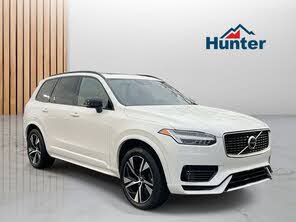
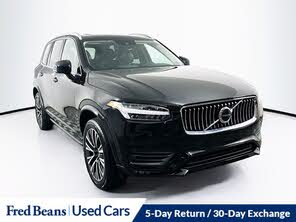
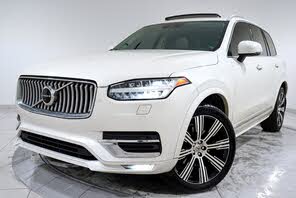
The 2020 Volvo XC90 was a testament to the brand's evolution in design, showcasing a modern aesthetic that was both elegant and commanding. The SUV's exterior featured distinctive elements like the blacked-out honeycomb grille on the R-Design trim, "Thor's hammer" LED headlights, and a sleek Thunder Grey Metallic paint that added a touch of sophistication. Inside, the XC90 offered a luxurious experience with options for wool fabric seats and matte wood trim, while the leather and aluminum interior exuded quality. The seats were designed for comfort, with power-adjustable thigh extensions and optional massage functions, making long journeys a pleasure. The attention to detail was evident in features like the Swedish flag tag and the twist-action ignition knob, emphasizing Volvo's commitment to craftsmanship and simplicity.
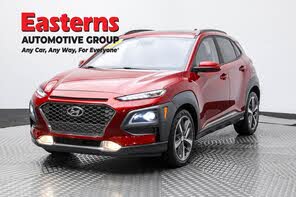
In contrast, the 2020 Hyundai Kona presented a bold and sporty exterior that stood out in the subcompact SUV segment. Its design was characterized by tiered lighting, a tall grille, and chunky matte plastic trim, giving it a dynamic and youthful appearance. The Kona's compact size was cleverly utilized to create a sleek and dramatic look, with features like slim LED running lamps and two-tone wheels enhancing its visual appeal. However, the interior did not match the exterior's excitement, with hard plastics and lackluster finishes. While the layout was functional and the screens were high-resolution, the overall tactile quality fell short compared to competitors like the Mazda CX-30 and Honda HR-V. Despite this, the Kona's design was a testament to Hyundai's ability to create an attractive vehicle without a hefty price tag.


The 2020 Volvo XC90 offered three powertrains, all featuring a turbocharged 2.0-liter inline-4 engine paired with an 8-speed automatic transmission. The T5 model produced 250 horsepower and 258 pound-feet of torque, which was deemed insufficient for the vehicle's size. The T6 model, with its supercharged and turbocharged engine, delivered 316 hp and 295 lb-ft, providing the necessary power for a large SUV. The Polestar tune further enhanced the T6's output to 330 hp and 325 lb-ft. Despite these figures, the XC90 was not a performance powerhouse, with mid-range acceleration being adequate but not exceptional. Fuel economy was also a concern, with the T6 AWD rated at 18 mpg city, 26 highway, and 21 combined. The T8 plug-in hybrid offered 400 hp and 472 lb-ft of torque, but its added weight and limited electric range did not significantly improve performance or fuel efficiency.
The 2020 Hyundai Kona, on the other hand, surprised with its impressive powertrain and chassis. The 1.6-liter turbocharged inline-four engine produced 175 horsepower and 195 pound-feet of torque, offering strong acceleration and confidence when merging onto highways. The 7-speed dual-clutch transmission complemented the engine's eagerness, providing quick and responsive shifts. The Kona's handling was commendable, with fast and direct steering, a tight suspension, and minimal body roll. The AWD models featured an independent rear suspension, enhancing the driving experience on winding roads. However, the Kona's engines were noisier and less refined compared to rivals, and the ride was stiffer. Fuel economy was average for the class, with the 1.6T AWD rated at 26 mpg city, 29 highway, and 27 combined.
The 2020 Volvo XC90's interior was a blend of luxury and practicality, with a focus on comfort and functionality. The Sensus infotainment system was faster and more responsive than previous iterations, though some controls were buried within the touchscreen. The cabin layout was well-organized, with seven seats standard and an optional integrated booster cushion for young children. The first and second rows offered generous legroom and support, while the third row was best suited for small children. Cargo space was ample, with up to 85.7 cubic feet available with the rear seats folded. The XC90's sightlines from the driver's seat were excellent, enhancing the overall driving experience.
In contrast, the 2020 Hyundai Kona struggled with interior space and utility. While seating for four was adequate, the rear legroom and headroom were average for the class. The Kona's cargo space was limited, with only 19 cubic feet available and 46 cubic feet with the rear seats folded. This was significantly less than competitors like the Honda HR-V and Buick Encore GX, which offered more versatile cargo solutions. Despite its easy-to-use controls and simple infotainment system, the Kona's cramped interior and limited utility detracted from its appeal as a crossover.
The 2020 Volvo XC90 came equipped with advanced technology features, including the standard Volvo Pilot Assist, a semi-automated driving system that combined adaptive cruise control and lane-keep assist. The R-Design trim featured a Bowers & Wilkins stereo with 19 speakers and 1,400 watts of power, delivering an exceptional audio experience. The portrait-oriented touchscreen was high-resolution and easy to navigate, though onboard apps were slow to load. The digital instrument panel offered limited customization compared to competitors, and the tire pressure monitoring system lacked individual tire pressure readings.
The 2020 Hyundai Kona offered a range of technology features across its trims. The base SE model included a 7-inch touchscreen with Apple CarPlay and Android Auto, while higher trims added features like proximity entry, heated front seats, and a leather-wrapped steering wheel. The SEL Plus trim introduced an eight-speaker Infinity stereo, wireless charging, and Blue Link connectivity, which allowed remote engine start and vehicle monitoring via a smartphone app. The Ultimate trim featured an 8-inch touchscreen with navigation, a sunroof, and adaptive cruise control. Despite these offerings, the Kona's technology package was less comprehensive than the XC90's.
The 2020 Volvo XC90 boasted top safety ratings from both the NHTSA and IIHS, though its headlight performance prevented it from achieving the highest IIHS designation. Standard safety features included forward emergency braking, pedestrian detection, blind-spot monitoring, and traffic-sign recognition. Volvo's commitment to safety was evident in its use of high-strength steels and innovative safety systems, such as the whiplash protection system for front seats.
The 2020 Hyundai Kona also received high safety ratings, with a five-star overall rating from the NHTSA and a Top Safety Pick designation from the IIHS. Standard safety features included forward emergency braking, lane-keep assist, and a driver attention monitor. However, pedestrian detection was only available on the Ultimate trim, and the Kona lacked front knee airbags and rear side airbags, which some competitors offered.
CarGurus highlights

According to CarGurus experts, the overall rating for the 2020 Volvo XC90 is 8.5 out of 10, while the 2020 Hyundai Kona scores 6.8 out of 10. Based on these ratings, the Volvo XC90 is the recommended choice for those seeking a luxurious, safe, and well-equipped SUV. Its superior interior quality, advanced safety features, and elegant design make it a standout option in its class.
Choose the 2020 Hyundai Kona if:
- You seek a sporty and dynamic exterior design in a compact SUV.
- Strong acceleration and responsive handling are your priorities.
- You want a range of technology features at an affordable price point.


Choose the 2020 Volvo XC90 if:
- You prioritize luxury and comfort in a spacious and well-crafted interior.
- Advanced safety features and top safety ratings are important to you.
- You desire a sophisticated design with high-quality materials and attention to detail.






CarGurus highlights
According to CarGurus experts, the overall rating for the 2020 Volvo XC90 is 8.5 out of 10, while the 2020 Hyundai Kona scores 6.8 out of 10. Based on these ratings, the Volvo XC90 is the recommended choice for those seeking a luxurious, safe, and well-equipped SUV. Its superior interior quality, advanced safety features, and elegant design make it a standout option in its class.
Choose the 2020 Hyundai Kona if:
Shop Now- You seek a sporty and dynamic exterior design in a compact SUV.
- Strong acceleration and responsive handling are your priorities.
- You want a range of technology features at an affordable price point.






Choose the 2020 Volvo XC90 if:
Shop Now- You prioritize luxury and comfort in a spacious and well-crafted interior.
- Advanced safety features and top safety ratings are important to you.
- You desire a sophisticated design with high-quality materials and attention to detail.










By: CarGurus + AI
At CarGurus, our team of experienced automotive writers remain at the heart of our content operation, conducting hands-on car tests and writing insightful guides that are backed by years of industry experience. To complement this, we are harnessing AI to make our content offering more diverse and more helpful to shoppers than ever. To achieve this, our AI systems are based exclusively on CarGurus content, ratings and data, so that what we produce is both unique to CarGurus, and uniquely helpful to car shoppers.