2020 Hyundai Kona vs 2020 Toyota Land Cruiser

Overview | |
MSRP$85,415 | MSRP$20,300 |
Listings7 | Listings414 |
Ratings & Reviews | |
User Reviews | User Reviews |
Expert reviews6.0 out of 10 | Expert reviews6.8 out of 10 |
Pros
Cons
| Pros
Cons
|
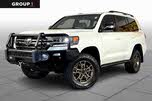
2020 Toyota Land Cruiser Reviews SummaryGo anywhere in the world, and you’re likely to run into a Toyota Land Cruiser. In the United States for 2020 there’s just one Toyota Land Cruiser model, a full-size body-on-frame four-door SUV with either two or three rows of seating. The plush yet capable Land Cruiser 200-series debuted as a 2008 model, and continues today with minor cosmetic, mechanical and technology upgrades. | |
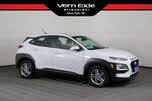
2020 Hyundai Kona Reviews SummaryThe Hyundai Kona subcompact SUV is one of the smallest cars you can buy with all-wheel drive. It competes in a class of four-door hatchbacks with the lifted suspensions and higher driving positions that crossover buyers want—and with the same generous list of convenience and safety features that come on larger crossovers. We last tested the Kona when it came out for 2018, but a new trim level and more standard driver assists are the major changes for 2020. For what Hyundai charges, the Kona is cramped and the interior disappoints, yet exterior style and on-road performance are spectacular. | |
No video found | |
Popular Features & Specs | |
Engine5.7L 381 hp V8 | Engine2.0L 147 hp I4 |
Drive TrainAWD | Drive TrainFWD |
Seating Capacity8 | Seating Capacity5 |
Horsepower381 hp @ 5600 rpm | Horsepower147 hp @ 6200 rpm |
MPG City13 | MPG City27 |
MPG Highway17 | MPG Highway33 |
Engine | |
Engine Name5.7L 381 hp V8 | Engine Name2.0L 147 hp I4 |
Torque401 lb-ft @ 3600 rpm | Torque132 lb-ft @ 4500 rpm |
Horsepower381 hp @ 5600 rpm | Horsepower147 hp @ 6200 rpm |
DrivetrainAWD | DrivetrainFWD |
Fuel Economy | |
MPG City13 | MPG City27 |
MPG Highway17 | MPG Highway33 |
Interior | |
Seating Capacity8 | Seating Capacity5 |
Key Features | |
Navigation SystemStandard | Navigation System |
Sunroof/MoonroofStandard | Sunroof/Moonroof |
Safety | |
Front Crash Overall | Front Crash Overall5 |
Side Crash Overall | Side Crash Overall5 |
Dimensions & Capacity | |
Cargo Space16.1 cu ft | Cargo Space19.2 cu ft |
Curb Weight5815 lbs | Curb Weight2890 lbs |
Height74.0 in | Height61.0 in |
Length194.9 in | Length164.0 in |
Width78.0 in | Width70.9 in |
Wheelbase112.2 in | Wheelbase102.4 in |
Maximum Payload1320 lbs | Maximum Payload1089 lbs |
Number of doors4 | Number of doors4 |
Maximum Towing Capacity8100 lbs | Maximum Towing Capacity |
Standard Towing Capacity8100 lbs | Standard Towing Capacity |
Overview | ||
MSRP | $85,415 | $20,300 |
Listings | ||
Ratings & Reviews | ||
User reviews | ||
Expert reviews | 6.0 out of 10Read full review | 6.8 out of 10Read full review |
Pros & cons | Pros
Cons
| Pros
Cons
|
Summary | Go anywhere in the world, and you’re likely to run into a Toyota Land Cruiser. In the United States for 2020 there’s just one Toyota Land Cruiser model, a full-size body-on-frame four-door SUV with either two or three rows of seating. The plush yet capable Land Cruiser 200-series debuted as a 2008 model, and continues today with minor cosmetic, mechanical and technology upgrades. | The Hyundai Kona subcompact SUV is one of the smallest cars you can buy with all-wheel drive. It competes in a class of four-door hatchbacks with the lifted suspensions and higher driving positions that crossover buyers want—and with the same generous list of convenience and safety features that come on larger crossovers. We last tested the Kona when it came out for 2018, but a new trim level and more standard driver assists are the major changes for 2020. For what Hyundai charges, the Kona is cramped and the interior disappoints, yet exterior style and on-road performance are spectacular. |
Video | No video found | |
Popular Features & Specs | ||
Engine | 5.7L 381 hp V8 | 2.0L 147 hp I4 |
Drive Train | AWD | FWD |
Seating Capacity | 8 | 5 |
Horsepower | 381 hp @ 5600 rpm | 147 hp @ 6200 rpm |
MPG City | 13 | 27 |
MPG Highway | 17 | 33 |
Engine | ||
Engine Name | 5.7L 381 hp V8 | 2.0L 147 hp I4 |
Torque | 401 lb-ft @ 3600 rpm | 132 lb-ft @ 4500 rpm |
Horsepower | 381 hp @ 5600 rpm | 147 hp @ 6200 rpm |
Drivetrain | AWD | FWD |
Fuel Economy | ||
MPG City | 13 | 27 |
MPG Highway | 17 | 33 |
Interior | ||
Seating Capacity | 8 | 5 |
Key Features | ||
Navigation System | Standard | |
Sunroof/Moonroof | Standard | |
Safety | ||
Front Crash Overall | 5 | |
Side Crash Overall | 5 | |
Dimensions & Capacity | ||
Cargo Space | 16.1 cu ft | 19.2 cu ft |
Curb Weight | 5815 lbs | 2890 lbs |
Height | 74.0 in | 61.0 in |
Length | 194.9 in | 164.0 in |
Width | 78.0 in | 70.9 in |
Wheelbase | 112.2 in | 102.4 in |
Maximum Payload | 1320 lbs | 1089 lbs |
Number of doors | 4 | 4 |
Maximum Towing Capacity | 8100 lbs | |
Standard Towing Capacity | 8100 lbs | |
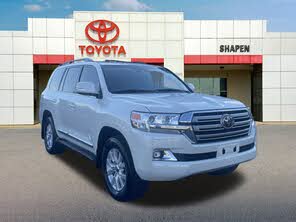
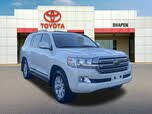
The 2020 Toyota Land Cruiser presented a design that was understated yet functional. Its exterior was not flashy, but rather featured subtle styling choices that became apparent with use. The dished hood improved forward sight lines, aiding in navigation over obstacles, while the bulging fenders accommodated wheel travel and indicated the vehicle's width. The Heritage Edition added a touch of retro flair with blackened trim and bronze wheels, enhancing its rugged appeal. Inside, the Land Cruiser approached luxury with its black perforated leather seating and functional dashboard, though it leaned towards a more utilitarian aesthetic.
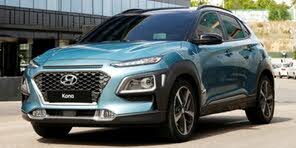
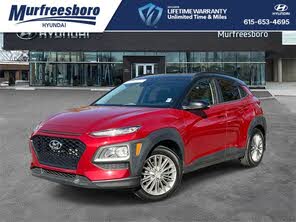
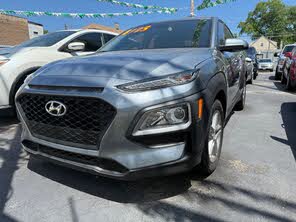
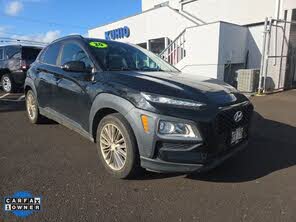
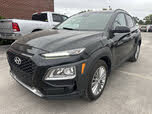
In contrast, the 2020 Hyundai Kona boasted a sleek and sporty exterior that stood out in the economy car segment. Its design cleverly utilized its compact dimensions to create a visually stimulating appearance, with tiered lighting and matte plastic trim enhancing its perceived size. The Kona's exterior was complemented by two-tone wheels and a ground-hugging stance, giving it a premium vibe. However, the interior did not match the exterior's excitement, with hard plastics and lackluster finishes. Despite this, the Kona's layout was functional, and its high-resolution screens and responsive switchgear were commendable.


The 2020 Toyota Land Cruiser was powered by a robust 5.7-liter V8 engine, delivering 381 horsepower and 401 pound-feet of torque. This naturally-aspirated engine, paired with an eight-speed automatic transmission and full-time 4WD, provided the SUV with impressive off-road capabilities. The Land Cruiser's suspension system, featuring a Kinetic Dynamic Suspension System and Multi-Terrain Select control, ensured a smooth ride over various terrains. Despite its size, the Land Cruiser offered a serene driving experience, with controlled body roll and excellent visibility.
The 2020 Hyundai Kona, on the other hand, offered a 1.6-liter turbocharged inline-four engine with 175 horsepower and 195 pound-feet of torque. This engine, available on the Limited and Ultimate trims, provided strong acceleration and was paired with a 7-speed dual-clutch transmission. The Kona's handling was impressive, with fast steering and a stable suspension that minimized body roll. While the ride was stiffer and noisier compared to some competitors, the Kona excelled in agility and road feel, making it a delight to drive on twisty roads.
The 2020 Toyota Land Cruiser's interior was designed for both comfort and utility. The standard model featured a three-row configuration, accommodating up to eight passengers, while the Heritage Edition offered a two-row setup. The Land Cruiser's interior was equipped with four-zone climate control, numerous cup holders, and a cooling box in the center console. Its split tailgate design facilitated easy loading and unloading, and the SUV's towing capacity of 8,100 pounds made it a versatile choice for families and adventurers alike.
In contrast, the 2020 Hyundai Kona struggled with interior space, offering only 19 cubic feet of cargo space, expandable to 46 cubic feet with the rear seats folded. While seating for four was adequate, the Kona's cargo capacity was limited compared to competitors. Despite its compact size, the Kona's controls were user-friendly, and its infotainment system was straightforward. However, its utility was compromised by its cramped interior, making it more akin to a small hatchback than a true crossover.
The 2020 Toyota Land Cruiser featured a range of technology updates, including a Qi-compatible inductive charging station and a 9-inch touchscreen interface. The sound system included 14 JBL speakers and various audio options, though it lacked Apple CarPlay and Android Auto. The Enhanced Multi-Terrain Monitor camera provided useful views for navigating tight spaces, enhancing the Land Cruiser's practicality.
The 2020 Hyundai Kona offered a comprehensive list of standard features, with the base model including a 7-inch touchscreen with Apple CarPlay and Android Auto. Higher trims added features like wireless charging, an eight-speaker Infinity stereo, and Blue Link connectivity. The Ultimate trim boasted an 8-inch touchscreen with navigation and adaptive cruise control, showcasing Hyundai's commitment to providing advanced technology at an affordable price.
The 2020 Toyota Land Cruiser was equipped with Toyota Safety Sense P, offering features like a pre-collision system, lane-departure warning, and adaptive cruise control. It also included the Star Safety System and 10 airbags, ensuring a high level of safety for occupants. However, it had not been crash-tested by NHTSA or IIHS.
The 2020 Hyundai Kona received high safety ratings, earning five stars from NHTSA and a Top Safety Pick from IIHS. It came standard with forward emergency braking, lane-keep assist, and a driver attention monitor. The Ultimate trim added pedestrian detection, though it scored lower in this area compared to vehicle detection.
CarGurus highlights

According to CarGurus experts, the overall rating for the 2020 Toyota Land Cruiser is 6.0 out of 10, while the 2020 Hyundai Kona scores 6.8 out of 10. Based on these ratings, the 2020 Hyundai Kona is the recommended choice, offering a better balance of performance, technology, and safety features at a more accessible price point.
Choose the 2020 Hyundai Kona if:
- You seek a compact SUV with a sporty design and agile handling.
- You value advanced technology features at an affordable price.
- You prioritize high safety ratings and standard driver assistance features.






Choose the 2020 Toyota Land Cruiser if:
- You need a vehicle with exceptional off-road capabilities and towing capacity.
- You prioritize a spacious and versatile interior for family and adventure use.
- You appreciate a blend of luxury and ruggedness in a full-size SUV.




CarGurus highlights
According to CarGurus experts, the overall rating for the 2020 Toyota Land Cruiser is 6.0 out of 10, while the 2020 Hyundai Kona scores 6.8 out of 10. Based on these ratings, the 2020 Hyundai Kona is the recommended choice, offering a better balance of performance, technology, and safety features at a more accessible price point.
Choose the 2020 Hyundai Kona if:
Shop Now- You seek a compact SUV with a sporty design and agile handling.
- You value advanced technology features at an affordable price.
- You prioritize high safety ratings and standard driver assistance features.






Choose the 2020 Toyota Land Cruiser if:
Shop Now- You need a vehicle with exceptional off-road capabilities and towing capacity.
- You prioritize a spacious and versatile interior for family and adventure use.
- You appreciate a blend of luxury and ruggedness in a full-size SUV.






By: CarGurus + AI
At CarGurus, our team of experienced automotive writers remain at the heart of our content operation, conducting hands-on car tests and writing insightful guides that are backed by years of industry experience. To complement this, we are harnessing AI to make our content offering more diverse and more helpful to shoppers than ever. To achieve this, our AI systems are based exclusively on CarGurus content, ratings and data, so that what we produce is both unique to CarGurus, and uniquely helpful to car shoppers.