2020 Ford Escape vs 2020 Toyota Highlander

Overview | |
MSRP$34,600 | MSRP$24,885 |
Listings264 | Listings319 |
Ratings & Reviews | |
User Reviews | User Reviews |
Expert reviews7.7 out of 10 | Expert reviews8.0 out of 10 |
Pros
Cons
| Pros
Cons
|
2020 Toyota Highlander Reviews SummaryMidsize three-row SUVs are all spacious and powerful, but only the Toyota Highlander reaches the premium threshold for passenger comfort. Redesigned for 2020, the Highlander's revised styling and technology are secondary to its silent operation, soft ride, and cosseting interior. The upper trims feel and drive just like a Lexus, without the upcharge. There is nothing exciting about a Highlander, and yet, there is no other SUV in the $35,000 to $50,000 range that feels so effortless and tranquil. | |
2020 Ford Escape Reviews SummaryIn case you didn’t hear, Ford came out with an electric crossover, calling it the Mustang Mach-E. Ford could have called it something else, but the marketing department decided to leverage the famous Mustang name to capture headlines and, hopefully, shoppers. What should not be overlooked is the fact Ford chose to make its first-ever standalone electric vehicle a crossover. This choice is a testament to how far the sport utility vehicle has come. Paired with Ford's decision to phase out sedans and hatchbacks, it's clear the company is putting all of its eggs into its trucks, SUVs, and crossovers. Suffice it to say, there is just a bit of pressure on the redesigned 2020 Ford Escape. While the Escape has been around since 2000, it came into its own in 2013 when the “One Ford” philosophy was adopted, meaning that vehicles would be sold in multiple markets around the globe. As a result, the U.S. got Europe’s Ford Kuga, rebranded as the Escape—a high-tech, handsome, and surprisingly athletic small SUV. So, with all this mind, the new Escape needs to not only be an improvement over the previous generation to compete against the rest of the compact crossover segment, it also needs to win over would-be sedan and hatchback customers. Can the 2020 Escape rise to the occasion? | |
Popular Features & Specs | |
Engine3.5L 295 hp V6 | Engine1.5L 181 hp I3 |
Drive TrainFWD | Drive TrainFWD |
Seating Capacity8 | Seating Capacity5 |
Horsepower295 hp @ 6600 rpm | Horsepower |
MPG City20 | MPG City27 |
MPG Highway28 | MPG Highway33 |
Engine | |
Engine Name3.5L 295 hp V6 | Engine Name1.5L 181 hp I3 |
Torque263 lb-ft @ 4700 rpm | Torque |
Horsepower295 hp @ 6600 rpm | Horsepower |
DrivetrainFWD | DrivetrainFWD |
Fuel Economy | |
MPG City20 | MPG City27 |
MPG Highway28 | MPG Highway33 |
Interior | |
Seating Capacity8 | Seating Capacity5 |
Safety | |
Front Crash Overall4 | Front Crash Overall5 |
Side Crash Overall5 | Side Crash Overall5 |
Dimensions & Capacity | |
Cargo Space16.0 cu ft | Cargo Space37.5 cu ft |
Curb Weight4145 lbs | Curb Weight3299 lbs |
Height68.1 in | Height66.1 in |
Length194.9 in | Length180.5 in |
Width76.0 in | Width85.6 in |
Wheelbase112.2 in | Wheelbase106.7 in |
Maximum Payload1685 lbs | Maximum Payload |
Number of doors4 | Number of doors4 |
Maximum Towing Capacity5000 lbs | Maximum Towing Capacity |
Overview | ||
MSRP | $34,600 | $24,885 |
Listings | ||
Ratings & Reviews | ||
User reviews | ||
Expert reviews | 7.7 out of 10Read full review | 8.0 out of 10Read full review |
Pros & cons | Pros
Cons
| Pros
Cons
|
Summary | Midsize three-row SUVs are all spacious and powerful, but only the Toyota Highlander reaches the premium threshold for passenger comfort. Redesigned for 2020, the Highlander's revised styling and technology are secondary to its silent operation, soft ride, and cosseting interior. The upper trims feel and drive just like a Lexus, without the upcharge. There is nothing exciting about a Highlander, and yet, there is no other SUV in the $35,000 to $50,000 range that feels so effortless and tranquil. | In case you didn’t hear, Ford came out with an electric crossover, calling it the Mustang Mach-E. Ford could have called it something else, but the marketing department decided to leverage the famous Mustang name to capture headlines and, hopefully, shoppers. What should not be overlooked is the fact Ford chose to make its first-ever standalone electric vehicle a crossover. This choice is a testament to how far the sport utility vehicle has come. Paired with Ford's decision to phase out sedans and hatchbacks, it's clear the company is putting all of its eggs into its trucks, SUVs, and crossovers. Suffice it to say, there is just a bit of pressure on the redesigned 2020 Ford Escape. While the Escape has been around since 2000, it came into its own in 2013 when the “One Ford” philosophy was adopted, meaning that vehicles would be sold in multiple markets around the globe. As a result, the U.S. got Europe’s Ford Kuga, rebranded as the Escape—a high-tech, handsome, and surprisingly athletic small SUV. So, with all this mind, the new Escape needs to not only be an improvement over the previous generation to compete against the rest of the compact crossover segment, it also needs to win over would-be sedan and hatchback customers. Can the 2020 Escape rise to the occasion? |
Video | ||
Popular Features & Specs | ||
Engine | 3.5L 295 hp V6 | 1.5L 181 hp I3 |
Drive Train | FWD | FWD |
Seating Capacity | 8 | 5 |
Horsepower | 295 hp @ 6600 rpm | |
MPG City | 20 | 27 |
MPG Highway | 28 | 33 |
Engine | ||
Engine Name | 3.5L 295 hp V6 | 1.5L 181 hp I3 |
Torque | 263 lb-ft @ 4700 rpm | |
Horsepower | 295 hp @ 6600 rpm | |
Drivetrain | FWD | FWD |
Fuel Economy | ||
MPG City | 20 | 27 |
MPG Highway | 28 | 33 |
Interior | ||
Seating Capacity | 8 | 5 |
Safety | ||
Front Crash Overall | 4 | 5 |
Side Crash Overall | 5 | 5 |
Dimensions & Capacity | ||
Cargo Space | 16.0 cu ft | 37.5 cu ft |
Curb Weight | 4145 lbs | 3299 lbs |
Height | 68.1 in | 66.1 in |
Length | 194.9 in | 180.5 in |
Width | 76.0 in | 85.6 in |
Wheelbase | 112.2 in | 106.7 in |
Maximum Payload | 1685 lbs | |
Number of doors | 4 | 4 |
Maximum Towing Capacity | 5000 lbs | |
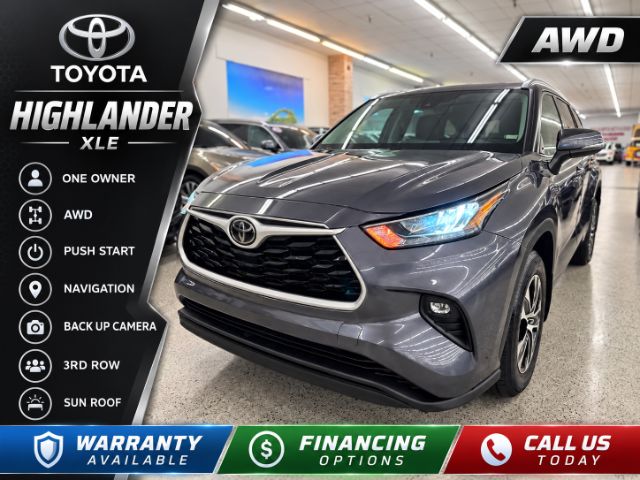
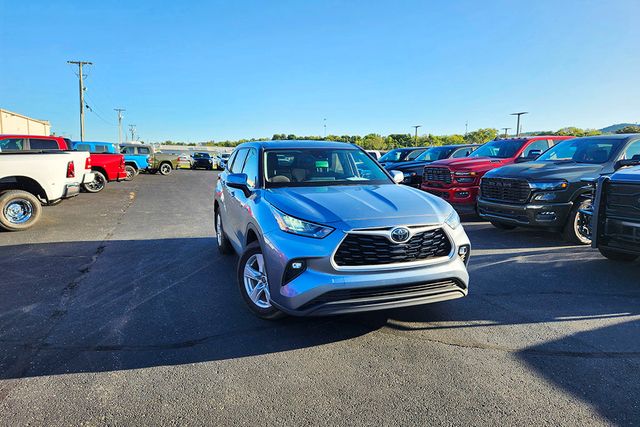
The 2020 Toyota Highlander presented a mixed bag in the looks department. From the side, it was somewhat nondescript and could pass for many other crossovers on the market. However, compared to its previous model year, the Highlander had a few distinctive tweaks. The tailgate glass was more sharply slanted, and the body panels showcased pronounced creases tracing the front and rear fenders. Toyota's trapezoidal design theme was evident in several elements, including the tailgate's license plate cutout, rear bumper, headlights, grille, and front bumper.
Higher trims stood out with projector-beam LED headlights and fog lights, plus larger 20-inch wheels. Meanwhile, new paint options, such as the striking Blueprint, added a touch of flair to the otherwise bland exterior. Inside, the Highlander’s cabin received substantial praise for its quality fit and finish. Silver-painted accents adorned various surfaces, and the multi-layered dash highlighted a premium feel that aligned closely with luxury benchmarks like the Lexus RX. The Limited trim's three-tone interior added to the sophisticated look and feel.
On the other hand, the 2020 Ford Escape emerged as an attractive compact crossover with a distinctly modern appeal. Its large grille shared similarities with the outgoing Fiesta and Focus hatchbacks, while its headlights drew inspiration from the Ford GT supercar. Despite its curvier design impacting cargo space, the new Escape maintained its standing as one of the best-looking small SUVs, trailing only the Mazda CX-5 and Jeep Cherokee.
Inside, the Escape offered a modern yet practical cabin layout. Basic controls were well-placed, making it user-friendly. The higher trims, such as the Titanium, included a fully digital instrument panel and a floating infotainment screen that contributed to its sleek design. While the base S trim featured basic amenities, moving up to SE, SE Sport, SEL, and Titanium added an array of advanced features and aesthetic enhancements.


The 2020 Toyota Highlander came equipped with a formidable 3.5-liter V6 engine, available in both front-wheel drive (FWD) and all-wheel drive (AWD) configurations. This powerful engine, also used in the Lexus RX, delivered brisk and smooth acceleration with its 295 horsepower and 263 pound-feet of torque. The eight-speed automatic transmission efficiently utilized the engine's power, though it required a firm push to initiate a kickdown.
Despite its robust engine, the Highlander's performance was hampered by its loose steering and soft suspension, which created a floating sensation at higher speeds. These characteristics were common among Highlander buyers, but they fell short of expectations given the new, stiffer chassis shared with the Toyota RAV4. Nevertheless, the Highlander excelled in providing a serene and isolating driving experience, especially suitable for long road trips.
Fuel economy was commendable for a vehicle of its size, with the FWD model achieving an EPA rating of 21 mpg city, 29 mpg highway, and 24 mpg combined. The AWD model fared slightly lower at 20/27/23. Notably, the Highlander hybrid variant, which could achieve up to 36 mpg combined, presented a stellar option for fuel efficiency.
Conversely, the 2020 Ford Escape offered a broader range of powertrain options. It started with a 1.5-liter 3-cylinder engine, standard on S, SE, and SEL trims, that generated 180 horsepower and 177 pound-feet of torque. The lineup also included a more powerful 2.0-liter turbocharged 4-cylinder engine, available on the SEL and standard on the Titanium, delivering 250 horsepower and 275 pound-feet of torque.
Hybrid options were also available, featuring a 2.5-liter 4-cylinder combined with electric power resulting in 198 horsepower. The hybrids, including a plug-in variant, could be paired with either FWD or AWD, although the plug-in hybrid only came with AWD. The conventional engines used an 8-speed automatic transmission, while the hybrids utilized a continuously variable transmission (CVT).
Our titanium Escape, with the turbocharged engine, provided strong performance, especially on highways. It paired well with the direct and responsive steering, giving the Escape a surprisingly athletic feel. Fuel economy varied across models, with the non-Sport hybrid achieving an impressive 44 mpg city, 37 highway, and 41 combined. The 1.5-liter turbo engine offered a combined rating of 27/33/30 with FWD and 26/31/26 with AWD.
The interior layout of the 2020 Toyota Highlander catered to families with diverse needs. It could seat eight or seven passengers, depending on the configuration. The second-row seats were versatile, providing ample legroom and reclining options. Access to the third row was relatively easy for those under six feet tall, thanks to a seat design that allowed for easy folding and sliding.
Cargo space was generous, boasting 16 cubic feet behind the third row, 48 cubic feet behind the second, and 84 cubic feet when both were folded. This capacious interior was complemented by practical features such as multiple cupholders and bottle holders, along with innovative storage solutions like shelves integrated into the dash.
In contrast, the 2020 Ford Escape’s interior focused on passenger comfort, although it sacrificed some cargo space for a sleeker design. Behind the second row, the Escape offered 37.5 cubic feet of cargo space, which dropped to 34.4 cubic feet in hybrid models. With the backseat folded, the total cargo capacity was 65.4 cubic feet or 60.8 cubic feet in higher trims.
Despite lesser cargo space compared to rivals like the Honda CR-V and Subaru Forester, the Escape excelled in real-world storage solutions, with ample spots for gear, deep water-bottle holders, and various trays and compartments. Passenger space was ample, with decent legroom for second-row occupants and commanding seating positions for the driver and front passenger, enhancing visibility and confidence.
The technology suite in the 2020 Toyota Highlander left room for improvement. The infotainment system, feeling a bit outdated, featured an optional 12.3-inch touchscreen on Limited trims and standard on the Platinum, but it lacked the seamless usability found in competitors' systems. The screen was divided into segments for climate and fuel economy information, reducing its effective size for navigation or media controls.
However, the Highlander redeemed itself with other high-tech features. A 10-inch head-up display and a 7-inch instrument cluster display provided crisp, useful information. Standard features included Apple CarPlay, Android Auto, and Amazon Alexa integration. The semi-automated driving system was proficient, with adaptive cruise control, road sign detection, and automated high beams.
The Escape's tech offerings varied across trims. The base model featured a small 4.2-inch screen, but the SE trim and above included an 8-inch Sync infotainment system, praised for its user-friendly interface and modern capabilities like Android Auto and Apple CarPlay. The Titanium trim added a head-up display, albeit with a flip-up screen rather than a windshield projection, which might not be ideal for taller drivers.
Safety features in the 2020 Toyota Highlander were plentiful, with Toyota Safety Sense 2.0 as standard. This suite included automatic emergency braking, pedestrian and cyclist detection, lane-keeping assist, adaptive cruise control, and automatic high beams. Optional features were blind-spot monitoring, parking sensors, and rear emergency braking. The Highlander also scored a 2020 Top Safety Pick from IIHS for its crash test performance and effective emergency braking.
Similarly, the 2020 Ford Escape came with an impressive array of safety features. Standard equipment included front- and side-impact airbags, a reversing camera, traction control, and TPMS. Ford Co-Pilot360, a comprehensive safety suite, was also standard and encompassed forward-collision warning, lane-keeping assist, adaptive cruise control, and automatic high beams. Additionally, it offered features like blind-spot monitoring, rear cross-traffic alert, and a driver drowsiness monitor. The Escape earned a Good rating from IIHS across all testing phases.
CarGurus highlights

According to CarGurus experts, the overall rating for the 2020 Toyota Highlander was 7.7 out of 10, while the 2020 Ford Escape scored 8 out of 10. Based on these ratings, the 2020 Ford Escape is recommended. It excelled in engine variety, technology integration, and safety features, making it the preferable choice for buyers seeking a modern and versatile compact SUV. Despite the Highlander's strengths in comfort and interior quality, the Escape's overall package provided greater value and satisfaction.
Choose the 2020 Ford Escape if:
- You seek a compact SUV with a wide range of engine options, including efficient hybrids.
- You desire a modern, user-friendly infotainment system with robust tech features.
- You appreciate excellent passenger space with practical, real-world storage solutions.


Choose the 2020 Toyota Highlander if:
- You prioritize a high-quality, well-finished interior with versatile seating configurations.
- You value a serene, comfortable driving experience perfect for long road trips.
- You need ample cargo space and innovative storage solutions for family needs.






CarGurus highlights
According to CarGurus experts, the overall rating for the 2020 Toyota Highlander was 7.7 out of 10, while the 2020 Ford Escape scored 8 out of 10. Based on these ratings, the 2020 Ford Escape is recommended. It excelled in engine variety, technology integration, and safety features, making it the preferable choice for buyers seeking a modern and versatile compact SUV. Despite the Highlander's strengths in comfort and interior quality, the Escape's overall package provided greater value and satisfaction.
Choose the 2020 Ford Escape if:
Shop Now- You seek a compact SUV with a wide range of engine options, including efficient hybrids.
- You desire a modern, user-friendly infotainment system with robust tech features.
- You appreciate excellent passenger space with practical, real-world storage solutions.
Choose the 2020 Toyota Highlander if:
Shop Now- You prioritize a high-quality, well-finished interior with versatile seating configurations.
- You value a serene, comfortable driving experience perfect for long road trips.
- You need ample cargo space and innovative storage solutions for family needs.

By: CarGurus + AI
At CarGurus, our team of experienced automotive writers remain at the heart of our content operation, conducting hands-on car tests and writing insightful guides that are backed by years of industry experience. To complement this, we are harnessing AI to make our content offering more diverse and more helpful to shoppers than ever. To achieve this, our AI systems are based exclusively on CarGurus content, ratings and data, so that what we produce is both unique to CarGurus, and uniquely helpful to car shoppers.

