2020 Nissan Versa vs 2021 Hyundai Elantra

Overview | |
MSRP$14,830 | MSRP$19,650 |
Listings303 | Listings652 |
Ratings & Reviews | |
User Reviews | User Reviews |
Expert reviews7.2 out of 10 | Expert reviews8.8 out of 10 |
Pros
Cons
| Pros
Cons
|
2020 Nissan Versa Reviews SummaryWhen you're on a tight budget and need to replace a car, you often face a tough choice: Do you buy a new small car or something that’s pre-owned but has more space? For many years, if you were in the market for a new car, few came as cheaply as the Nissan Versa. Not only was it marketed as the least-expensive car in the United States, but it also had a plucky, underdog appeal to it. However, the charm of the Versa started to wear off as its shortcomings became more apparent. If you look at the “cheap” end of the market, you'll find some pretty unlovable cars, like the Mitsubishi Mirage and Chevrolet Spark. But there are also some bright spots. The Kia Rio and Hyundai Accent are both competent cars in their own ways, and the Honda Fit has always been a serious player. With the Fit, you never felt like you were seriously compromising to meet your budget. It seems as though Nissan has caught on to the realization that racing to the bottom works for only so long. Buyers have certainly caught on to the notion that you can have a small car that’s actually kind of good (See: Fit). In response, Nissan has rolled out the all-new 2020 Versa. It’s no longer the cheapest car in America, and in fact, it costs a couple of thousand dollars more than last year's version. But does that mean it’s more car, too? Read on to find out. | |
2021 Hyundai Elantra Reviews SummaryCompact cars are no longer compact. Cheap cars are no longer cheap. And it is no longer necessary to buy a luxury vehicle for performance, technology, and sophistication. The redesigned 2021 Hyundai Elantra proves it. | |
Popular Features & Specs | |
Engine1.6L 122 hp I4 | Engine2.0L 147 hp I4 |
Drive TrainFWD | Drive TrainFWD |
Seating Capacity5 | Seating Capacity5 |
Horsepower122 hp @ 6300 rpm | Horsepower147 hp @ 6200 rpm |
MPG City27 | MPG City31 |
MPG Highway35 | MPG Highway41 |
Engine | |
Engine Name1.6L 122 hp I4 | Engine Name2.0L 147 hp I4 |
Torque114 lb-ft @ 4000 rpm | Torque132 lb-ft @ 4500 rpm |
Horsepower122 hp @ 6300 rpm | Horsepower147 hp @ 6200 rpm |
DrivetrainFWD | DrivetrainFWD |
Fuel Economy | |
MPG City27 | MPG City31 |
MPG Highway35 | MPG Highway41 |
Interior | |
Seating Capacity5 | Seating Capacity5 |
Safety | |
Front Crash Overall5 | Front Crash Overall |
Side Crash Overall5 | Side Crash Overall |
Dimensions & Capacity | |
Cargo Space14.7 cu ft | Cargo Space14.2 cu ft |
Curb Weight2650 lbs | Curb Weight2725 lbs |
Height57.3 in | Height55.7 in |
Length177.0 in | Length184.1 in |
Width68.5 in | Width71.9 in |
Wheelbase103.1 in | Wheelbase107.1 in |
Maximum Payload955 lbs | Maximum Payload1133 lbs |
Number of doors4 | Number of doors4 |
Overview | ||
MSRP | $14,830 | $19,650 |
Listings | ||
Ratings & Reviews | ||
User reviews | ||
Expert reviews | 7.2 out of 10Read full review | 8.8 out of 10Read full review |
Pros & cons | Pros
Cons
| Pros
Cons
|
Summary | When you're on a tight budget and need to replace a car, you often face a tough choice: Do you buy a new small car or something that’s pre-owned but has more space? For many years, if you were in the market for a new car, few came as cheaply as the Nissan Versa. Not only was it marketed as the least-expensive car in the United States, but it also had a plucky, underdog appeal to it. However, the charm of the Versa started to wear off as its shortcomings became more apparent. If you look at the “cheap” end of the market, you'll find some pretty unlovable cars, like the Mitsubishi Mirage and Chevrolet Spark. But there are also some bright spots. The Kia Rio and Hyundai Accent are both competent cars in their own ways, and the Honda Fit has always been a serious player. With the Fit, you never felt like you were seriously compromising to meet your budget. It seems as though Nissan has caught on to the realization that racing to the bottom works for only so long. Buyers have certainly caught on to the notion that you can have a small car that’s actually kind of good (See: Fit). In response, Nissan has rolled out the all-new 2020 Versa. It’s no longer the cheapest car in America, and in fact, it costs a couple of thousand dollars more than last year's version. But does that mean it’s more car, too? Read on to find out. | Compact cars are no longer compact. Cheap cars are no longer cheap. And it is no longer necessary to buy a luxury vehicle for performance, technology, and sophistication. The redesigned 2021 Hyundai Elantra proves it. |
Video | ||
Popular Features & Specs | ||
Engine | 1.6L 122 hp I4 | 2.0L 147 hp I4 |
Drive Train | FWD | FWD |
Seating Capacity | 5 | 5 |
Horsepower | 122 hp @ 6300 rpm | 147 hp @ 6200 rpm |
MPG City | 27 | 31 |
MPG Highway | 35 | 41 |
Engine | ||
Engine Name | 1.6L 122 hp I4 | 2.0L 147 hp I4 |
Torque | 114 lb-ft @ 4000 rpm | 132 lb-ft @ 4500 rpm |
Horsepower | 122 hp @ 6300 rpm | 147 hp @ 6200 rpm |
Drivetrain | FWD | FWD |
Fuel Economy | ||
MPG City | 27 | 31 |
MPG Highway | 35 | 41 |
Interior | ||
Seating Capacity | 5 | 5 |
Safety | ||
Front Crash Overall | 5 | |
Side Crash Overall | 5 | |
Dimensions & Capacity | ||
Cargo Space | 14.7 cu ft | 14.2 cu ft |
Curb Weight | 2650 lbs | 2725 lbs |
Height | 57.3 in | 55.7 in |
Length | 177.0 in | 184.1 in |
Width | 68.5 in | 71.9 in |
Wheelbase | 103.1 in | 107.1 in |
Maximum Payload | 955 lbs | 1133 lbs |
Number of doors | 4 | 4 |
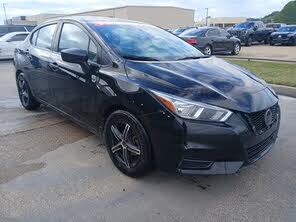
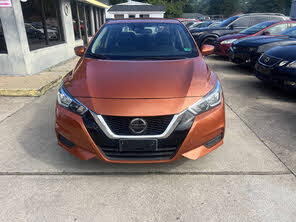
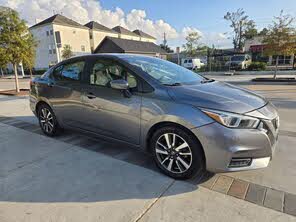
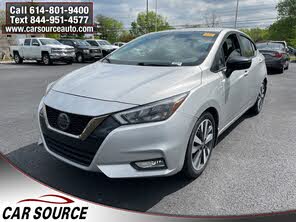
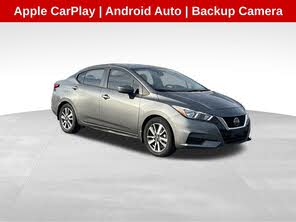
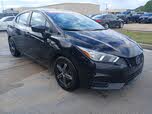
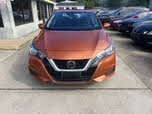
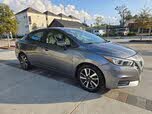
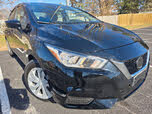
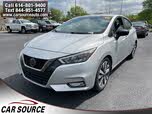
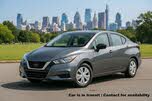
The 2020 Nissan Versa marked a notable departure from the comically oversized features of its previous iterations. Moving away from the outdated "big car" aesthetics common in the early 2000s and mid-2010s, this version adopted a more handsome and sophisticated look. Taking inspiration from its bigger siblings, the Maxima and Altima, the 2020 Versa brought a modern appeal to the subcompact market. Fortunately, it did so without directly borrowing the outsized headlights or grille from the larger models. The revamped exterior helped Nissan rehabilitate its image in the subcompact segment.
Inside, the Versa's cabin bore a striking resemblance to that of the Nissan Kicks, both riding on Nissan’s V platform. This platform, while not entirely versatile with the Kicks, provided ample room for a subcompact sedan. The straightforward but engaging interior design included a charming two-tone theme that featured dark charcoal juxtaposed with a grayish cream color on the seats and dashboard. The seats came with a unique pattern, adding a touch of stylistic flair that stood out among economy cars.
The Versa offered three trims: S, SV, and SR. The base S trim came equipped with 15-inch steel wheels with plastic hubcaps, black plastic door handles, cloth seating for five, and a suite of interior features such as a 6-way manual driver's seat, Bluetooth connectivity, a USB port, and a 7-inch touchscreen. The mid-range SV trim, which was our test model, upgraded to 16-inch alloy wheels, added body-color door handles, and featured enhanced cloth fabric with unique designs, alongside an improved infotainment system with satellite radio and smartphone connectivity. The range-topping SR trim introduced 17-inch alloy wheels, fog lights, a unique dark-chrome grille design, and additional comforts such as automatic climate control and an intelligent key with passive entry.
Despite these improvements, the Versa's cabin had some drawbacks, like the use of harsh plastics and the lack of power-adjustable seats. Nevertheless, the overall design marks significant growth compared to its predecessor, making it a more competitive player in the subcompact market.
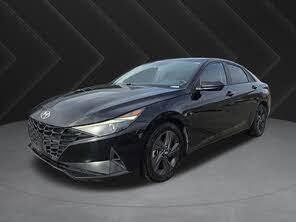
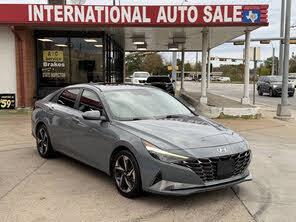
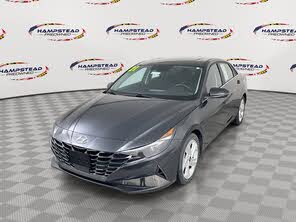
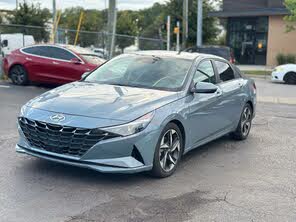
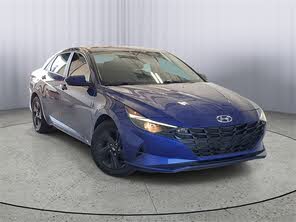
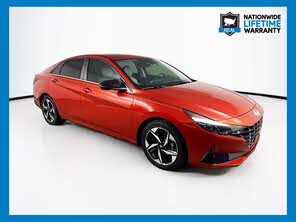
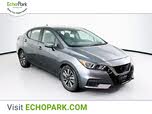
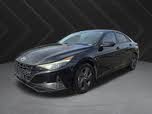
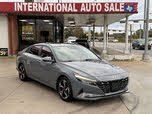
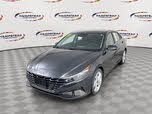
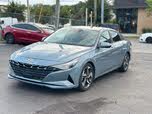
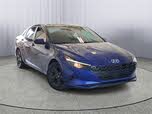
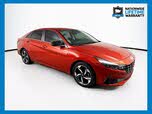
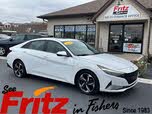
The 2021 Hyundai Elantra was unmistakable in its bold design, characterized by Hyundai’s Sensuous Sportiness language and Parametric surfacing. This dynamic ensemble of sharp creases and dramatic angles gave the Elantra a distinctive and appealing appearance. The Z-shaped dent in the car’s doors, a deliberate choice by Hyundai’s senior designer Davis Lee, broke conventional design rules and added to the vehicle’s unique character. This daring design choice enhanced the car's standing.
The Elantra's aesthetics improved with price, available in SE, SEL, N Line, and Limited trims, with hybrid options for some. Inside, the Elantra sported a driver-focused dashboard and center console, marked by an angled passenger cornering grip that visually separated driver and passenger areas. Higher trims, especially the Limited or Hybrid Limited in Gray, stood out with light gray seats and trim, creating a modern and upscale environment. Even the Limited Hybrid’s fabric door panel inserts had a distinct Scandinavian feel.
In contrast, the interior of an Elantra SEL with the Premium Package felt drab with the black interior and glossy black plastic. This second-tier setup failed to impress as much as the higher trims did. Nevertheless, the Elantra set a high bar in terms of design and materials, offering a sophisticated look and feel.


The 2020 Nissan Versa retained its 1.6-liter 4-cylinder engine but with slight revisions to improve performance. This engine, previously underwhelming with 109 horsepower and 107 pound-feet of torque, now delivered 122 horsepower and 114 pound-feet of torque. These improvements were palpable in the car's overall performance. The engine powered the front wheels through either a 5-speed manual or continuously variable automatic transmission (CVT). Only the base S trim offered the manual as standard.
The Versa's acceleration had improved, making it more capable of handling highway speeds and city driving. The CVT in the SV trim managed power efficiently in various driving conditions and included a Sport mode for a livelier performance. However, under heavy acceleration, the engine could get noisy.
Handling-wise, the Versa adhered to the adage that it’s more fun to drive a slow car fast. The steering was responsive, and while the body leaned during high-speed turns, the car quickly settled into a stable position, allowing for precise maneuvers.
Fuel economy for the manual transmission stood at 27 mpg city, 35 highway, and 30 combined, which lagged slightly behind class leaders. The CVT improved these figures to 32/40/35. Over a week of mixed driving, our observed fuel economy was 34.7 miles per gallon, which was commendable.
We tested multiple powertrains of the 2021 Hyundai Elantra across hundreds of miles, with ratings varying based on the trim. The standard SEL trim featured a 2.0-liter 4-cylinder engine producing 147 horsepower and 132 pound-feet of torque, paired with a CVT that offered step-gear programming for better responsiveness. This setup performed adequately for urban driving but struggled during highway merging and passing. The engine noise, though present under heavy acceleration, was minimal during regular driving.
Fuel economy estimates for the Elantra with 17-inch wheels suggested 35 mpg combined, but our observed average was 31.4 mpg in Normal driving mode, partly due to different driving conditions. The standard Elantra's suspension used a beam-axle rear, tuned well enough to eliminate bouncing issues from the previous model.
The Limited Hybrid added a 1.6-liter Atkinson-cycle four-cylinder engine combined with an electric motor, delivering 139 horsepower and facilitated by a six-speed dual-clutch automatic transmission (DCT). While the EPA rated the Limited Hybrid at 50 mpg combined, our testing averaged 42.2 mpg due to uphill driving conditions. This hybrid model was notably pleasant to drive, thanks to its immediate electric torque and smooth DCT shifts, though the brake response under heavy application could feel a little numb.
The Elantra N Line sported a turbocharged 1.6-liter four-cylinder engine generating 201 horsepower and 195 pound-feet of torque. Equipped with a six-speed manual or seven-speed DCT, the N Line was enjoyable to drive, especially on mountain roads, though the fuel economy was significantly reduced during spirited driving.
Finally, the high-performance Elantra N stunned with its 276-horsepower turbocharged 2.0-liter engine and eight-speed wet DCT. This model featured multiple performance enhancements, including an electronic limited-slip differential and large performance brakes, making it a driving enthusiast's delight. During our test, the car averaged 19.4 mpg under mixed driving conditions but excelled in terms of driving dynamics and responsiveness.
The 2020 Nissan Versa retained the generous trunk space of its predecessor, providing 15 cubic feet of cargo room, one of the largest in its class. This spacious trunk, combined with a wide opening, made it practical for carrying various loads. However, the Versa sacrificed backseat legroom, reducing it by 6 inches compared to the previous model. This reduction was significant, making the rear seats less comfortable for adult passengers, especially on longer drives. The front seats, on the other hand, offered ample legroom even for tall drivers, making it a suitable option for personal commutes.
The 2021 Hyundai Elantra was classified as a midsize car by the EPA, offering a spacious interior. The height-adjustable driver’s seat and tilt/telescopic steering wheel in all trims made it easy to find a comfortable driving position, and heated front seats were a standard feature. However, the height-adjustable front passenger seat from previous models was no longer available, and hard plastic was still used on the upper door panels, a potential discomfort for drivers resting their elbows.
The Elantra boasted best-in-class rear-seat legroom, providing ample space for adult passengers. However, the rear seatback shape and angle could be uncomfortable for longer journeys. Additionally, rear passengers lacked air conditioning vents and USB charging ports. The trunk offered 14.2 cubic feet of storage, slightly less than the Versa but still respectable for a compact sedan. The 60/40-split folding rear seat added to its utility, and higher trims featured a hands-free trunk release.
The 2020 Versa significantly upped its game in cabin technology. Even the base model sported a 7-inch touchscreen, Bluetooth connectivity, Siri Eyes Free, and a hands-free text messaging assistant. The inclusion of three USB ports, one in the front and two in the center console, ensured that passengers could keep their devices charged.
Our recommended SV trim included the NissanConnect system, featuring Apple CarPlay and Android Auto for enhanced smartphone integration. Additionally, the upgraded instrument panel in the SV trim consisted of a digital screen displaying a digital tachometer and other vital stats, much like Audi’s Virtual Cockpit. This system provided a seamless tech experience, offering various menus and displays to the driver’s convenience.
The 2021 Elantra was outfitted with a range of technological features varying by trim. The SE, SEL, and N Line trims included a traditional instrumentation layout with an 8-inch touchscreen infotainment system featuring wireless Apple CarPlay and Android Auto, satellite radio, and Blue Link connected services. The N Line variant also offered wireless smartphone charging.
The Limited trim took technology to the next level with a 10.25-inch touchscreen infotainment system and a corresponding digital instrumentation screen under a single piece of glass. In addition to navigation and full-screen Apple CarPlay and Android Auto integration, it boasted a dynamic natural voice recognition system and a relaxing Sounds of Nature function. However, this setup sacrificed wireless smartphone connectivity for a broader functionality.
A Bose premium sound system was available for those seeking superior audio quality, and Hyundai’s Digital Key allowed Android users to lock, unlock, and start the car using their smartphones. This system also enabled temporary access sharing, adding a convenient and modern touch.
The 2020 Nissan Versa was equipped with a suite of standard driver-assistance features, including automatic emergency braking with pedestrian detection, lane-departure warning, and automatic high beams. These technologies, part of a broader trend among automakers, enhanced safety across all trims but also potentially increased repair costs due to the sensors involved.
Standard safety features included a reversing camera, a comprehensive array of airbags, and Nissan's Easy Fill Tire Alert, which honked the horn once the tires reached proper inflation.
Hyundai integrated advanced safety features, known as SmartSense, into the 2021 Elantra. These included forward collision warning with pedestrian detection, automatic emergency braking, lane-keeping and lane-centering assistance, automatic high beams, and a driver attention warning system.
Additional safety features comprised a blind-spot warning, rear cross-traffic warning, Rear Occupant Alert, and Safe Exit Warning. Upgraded options included cyclist detection, junction turning assistance, adaptive cruise control with stop-and-go capability, rear automatic braking, and Highway Drive Assist, which provided a smooth and refined driving assistance experience.
CarGurus highlights

According to CarGurus experts, the overall rating for the 2020 Nissan Versa is 7.2 out of 10, while the 2021 Hyundai Elantra scores 8.8 out of 10. The higher rating and superior technology, safety features, and performance capabilities make the Hyundai Elantra the better choice. With its cutting-edge design, expansive cabin, and extensive list of features, the 2021 Hyundai Elantra outshines the 2020 Nissan Versa, offering more value and satisfaction for today's drivers. Therefore, based on these ratings and insights, we recommend the 2021 Hyundai Elantra as the preferred vehicle.
Choose the 2020 Nissan Versa if:
- You prioritize a spacious trunk for your daily commuting or road trips.
- You are looking for a budget-friendly vehicle with a blend of technology and practicality for personal use.
- You prefer a straightforward design with sufficient tech integration and essential safety features.




Choose the 2021 Hyundai Elantra if:
- You want a modern, stylish design with dynamic and appealing visual elements.
- You seek the latest technological advancements with high-quality infotainment and driver-assistance systems.
- You prioritize a spacious and comfortable cabin, especially for rear passengers and extended drives.



CarGurus highlights
According to CarGurus experts, the overall rating for the 2020 Nissan Versa is 7.2 out of 10, while the 2021 Hyundai Elantra scores 8.8 out of 10. The higher rating and superior technology, safety features, and performance capabilities make the Hyundai Elantra the better choice. With its cutting-edge design, expansive cabin, and extensive list of features, the 2021 Hyundai Elantra outshines the 2020 Nissan Versa, offering more value and satisfaction for today's drivers. Therefore, based on these ratings and insights, we recommend the 2021 Hyundai Elantra as the preferred vehicle.
Choose the 2020 Nissan Versa if:
Shop Now- You prioritize a spacious trunk for your daily commuting or road trips.
- You are looking for a budget-friendly vehicle with a blend of technology and practicality for personal use.
- You prefer a straightforward design with sufficient tech integration and essential safety features.

Choose the 2021 Hyundai Elantra if:
Shop Now- You want a modern, stylish design with dynamic and appealing visual elements.
- You seek the latest technological advancements with high-quality infotainment and driver-assistance systems.
- You prioritize a spacious and comfortable cabin, especially for rear passengers and extended drives.



By: CarGurus + AI
At CarGurus, our team of experienced automotive writers remain at the heart of our content operation, conducting hands-on car tests and writing insightful guides that are backed by years of industry experience. To complement this, we are harnessing AI to make our content offering more diverse and more helpful to shoppers than ever. To achieve this, our AI systems are based exclusively on CarGurus content, ratings and data, so that what we produce is both unique to CarGurus, and uniquely helpful to car shoppers.