2020 Nissan Altima vs 2021 Hyundai Elantra

Overview | |
MSRP$24,300 | MSRP$19,650 |
Listings1347 | Listings652 |
Ratings & Reviews | |
User Reviews | User Reviews |
Expert reviews7.3 out of 10 | Expert reviews8.8 out of 10 |
Pros
Cons
| Pros
Cons
|
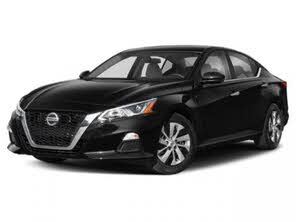
2020 Nissan Altima Reviews SummarySedans are not dead, though some models in the segment are not long for this world. In fact, post-pandemic financial pressure on consumers could result in a resurgence of the traditional 4-door car as consumers seek lower-cost, higher-value transportation. Clearly, Nissan believes in sedans. And should economic headwinds once again favor cars over more expensive and less efficient SUVs, the company is perfectly positioned to capitalize on such a theoretical trend. During the past two years, the company has redesigned or refreshed its entire sedan lineup, which includes the Versa, Sentra, Altima, and Maxima. New last year, the 2020 Nissan Altima receives an important change. The company's Nissan Safety Shield 360 advanced driving assistance systems (ADAS) package is more widely available than before. Now optional for base S trim and standard with SR trim and higher, this collection of ADAS makes the 2020 Altima even more worthy of your consideration. But is that enough? | |
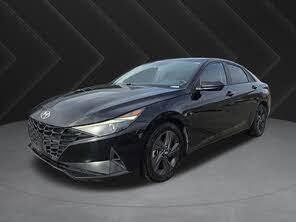
2021 Hyundai Elantra Reviews SummaryCompact cars are no longer compact. Cheap cars are no longer cheap. And it is no longer necessary to buy a luxury vehicle for performance, technology, and sophistication. The redesigned 2021 Hyundai Elantra proves it. | |
No video found | |
Popular Features & Specs | |
Engine2.5L 188 hp I4 | Engine2.0L 147 hp I4 |
Drive TrainFWD | Drive TrainFWD |
Seating Capacity5 | Seating Capacity5 |
Horsepower188 hp @ 6000 rpm | Horsepower147 hp @ 6200 rpm |
MPG City28 | MPG City31 |
MPG Highway39 | MPG Highway41 |
Engine | |
Engine Name2.5L 188 hp I4 | Engine Name2.0L 147 hp I4 |
Torque180 lb-ft @ 3600 rpm | Torque132 lb-ft @ 4500 rpm |
Horsepower188 hp @ 6000 rpm | Horsepower147 hp @ 6200 rpm |
DrivetrainFWD | DrivetrainFWD |
Fuel Economy | |
MPG City28 | MPG City31 |
MPG Highway39 | MPG Highway41 |
Interior | |
Seating Capacity5 | Seating Capacity5 |
Safety | |
Front Crash Overall4 | Front Crash Overall |
Side Crash Overall5 | Side Crash Overall |
Dimensions & Capacity | |
Cargo Space15.4 cu ft | Cargo Space14.2 cu ft |
Curb Weight3208 lbs | Curb Weight2725 lbs |
Height56.7 in | Height55.7 in |
Length192.9 in | Length184.1 in |
Width72.9 in | Width71.9 in |
Wheelbase111.2 in | Wheelbase107.1 in |
Maximum Payload1120 lbs | Maximum Payload1133 lbs |
Number of doors4 | Number of doors4 |
Overview | ||
MSRP | $24,300 | $19,650 |
Listings | ||
Ratings & Reviews | ||
User reviews | ||
Expert reviews | 7.3 out of 10Read full review | 8.8 out of 10Read full review |
Pros & cons | Pros
Cons
| Pros
Cons
|
Summary | Sedans are not dead, though some models in the segment are not long for this world. In fact, post-pandemic financial pressure on consumers could result in a resurgence of the traditional 4-door car as consumers seek lower-cost, higher-value transportation. Clearly, Nissan believes in sedans. And should economic headwinds once again favor cars over more expensive and less efficient SUVs, the company is perfectly positioned to capitalize on such a theoretical trend. During the past two years, the company has redesigned or refreshed its entire sedan lineup, which includes the Versa, Sentra, Altima, and Maxima. New last year, the 2020 Nissan Altima receives an important change. The company's Nissan Safety Shield 360 advanced driving assistance systems (ADAS) package is more widely available than before. Now optional for base S trim and standard with SR trim and higher, this collection of ADAS makes the 2020 Altima even more worthy of your consideration. But is that enough? | Compact cars are no longer compact. Cheap cars are no longer cheap. And it is no longer necessary to buy a luxury vehicle for performance, technology, and sophistication. The redesigned 2021 Hyundai Elantra proves it. |
Video | No video found | |
Popular Features & Specs | ||
Engine | 2.5L 188 hp I4 | 2.0L 147 hp I4 |
Drive Train | FWD | FWD |
Seating Capacity | 5 | 5 |
Horsepower | 188 hp @ 6000 rpm | 147 hp @ 6200 rpm |
MPG City | 28 | 31 |
MPG Highway | 39 | 41 |
Engine | ||
Engine Name | 2.5L 188 hp I4 | 2.0L 147 hp I4 |
Torque | 180 lb-ft @ 3600 rpm | 132 lb-ft @ 4500 rpm |
Horsepower | 188 hp @ 6000 rpm | 147 hp @ 6200 rpm |
Drivetrain | FWD | FWD |
Fuel Economy | ||
MPG City | 28 | 31 |
MPG Highway | 39 | 41 |
Interior | ||
Seating Capacity | 5 | 5 |
Safety | ||
Front Crash Overall | 4 | |
Side Crash Overall | 5 | |
Dimensions & Capacity | ||
Cargo Space | 15.4 cu ft | 14.2 cu ft |
Curb Weight | 3208 lbs | 2725 lbs |
Height | 56.7 in | 55.7 in |
Length | 192.9 in | 184.1 in |
Width | 72.9 in | 71.9 in |
Wheelbase | 111.2 in | 107.1 in |
Maximum Payload | 1120 lbs | 1133 lbs |
Number of doors | 4 | 4 |
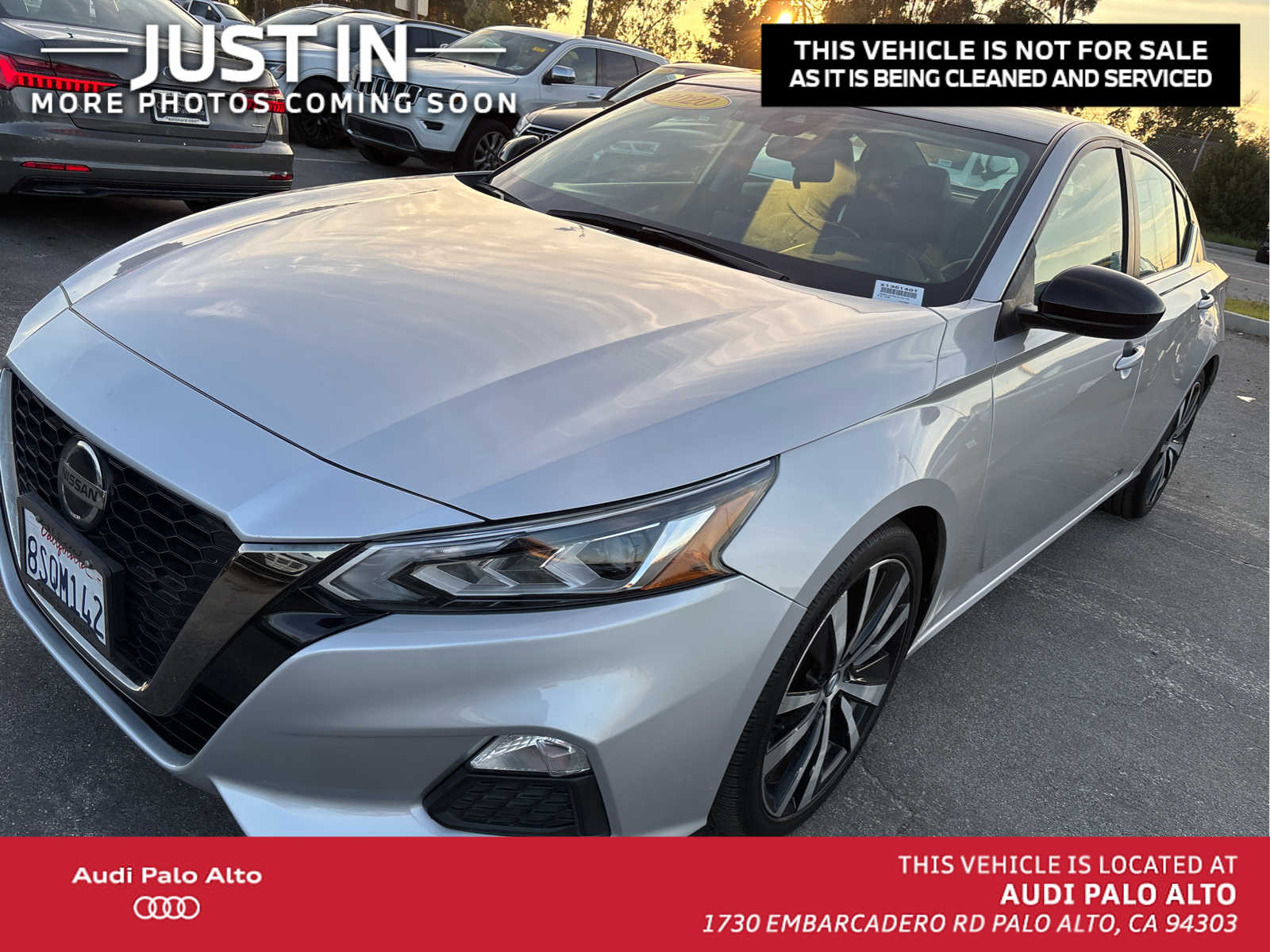
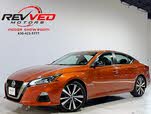
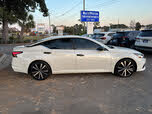
The 2020 Nissan Altima presented itself with a variety of trim levels, including base S, sporty SR, SV, SL, and the high-end Platinum variant. My test vehicle, an Altima Platinum, featured a turbocharged engine and optional accessories like extra-cost paint, a rear spoiler, splash guards, and illuminated doorsill kick plates, reaching a total cost of $37,825, including $925 for destination charges. The 19-inch machined-finish aluminum wheels further accentuated its appeal. Despite its attractive redesign from the previous year, certain design choices raised eyebrows. The door handles seemed poorly aligned, and the body-color diffuser panel did not quite match the rear exhaust styling. Inside, the Altima exuded a clean, contemporary vibe with an ergonomically simple design, outfitted with high-positioned touchscreen infotainment, user-friendly climate controls, and a traditional gear shifter. The materials, though limited in color choices to black or gray, offered a respectable quality with matte chrome touches and simulated wood trim enhancing its overall feel.
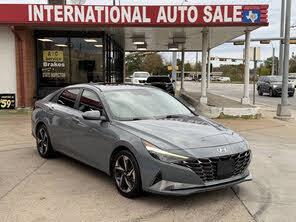
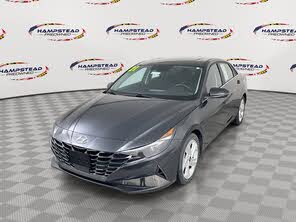
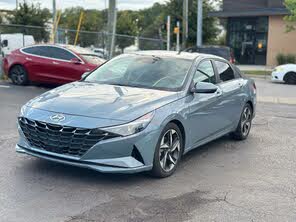
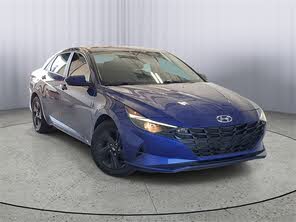
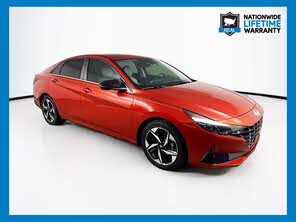
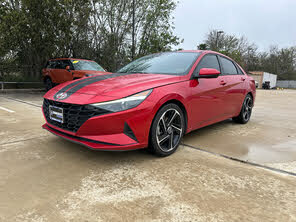
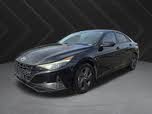
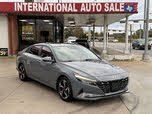
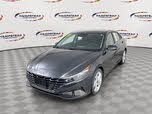
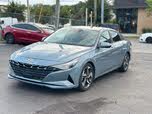
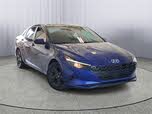
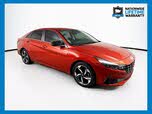
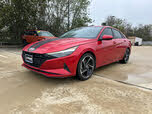
In contrast, the 2021 Hyundai Elantra stood out sharply due to its Sensuous Sportiness design language and Parametric surfacing. The design, characterized by sharp creases and dramatic angles, bestowed a unique, appealing look, most notably including a controversial Z-shaped dent in the doors. Designed to challenge conventional aesthetics, this feature was intended to add character. Available in SE, SEL, N Line, and Limited trims, with an optional hybrid powertrain, the Elantra came at prices ranging from $19,650 to $25,450, excluding destination charges. The upcoming high-performance Elantra N was anticipated to carry a price tag under $34,000. Inside, the Elantra featured a driver-focused dashboard and center console, highlighted by an angled passenger grip. Higher trims offered a more refined and tech-savvy cabin which was notably impressive in the Limited or Hybrid Limited with light gray seats and Scandinavian-inspired fabric door panel inserts, contributing to a modern upscale ambiance.


The 2020 Nissan Altima primarily ran on a 2.5-liter 4-cylinder engine producing up to 188 horsepower, paired with a CVT and available with optional AWD, making it a strong choice for colder climates. However, my test car showcased the exclusive 2.0-liter VC-Turbo engine, boasting up to 248 horsepower and 273 lb-ft of torque on premium fuel, albeit with FWD only. This powertrain aimed to deliver V6 power with 4-cylinder efficiency, achieving an EPA rating of 29 mpg combined and an observed 26.2 mpg in testing. The VC-Turbo demonstrated notable performance, offering sharp and responsive handling enhanced by features like Active Ride Control and Intelligent Trace Control. Its driving dynamics impressed across various settings from urban streets to mountainous curves.
The 2021 Hyundai Elantra showcased a wider performance spectrum through multiple powertrain options. The Elantra SEL featured a 2.0-liter 4-cylinder engine generating 147 horsepower with a CVT, designed to mimic a geared transmission for a more conventional driving feel. Rated at 35 mpg combined, it achieved 31.4 mpg in testing. This engine was suitable for urban driving but less so for highway feats. Elantra Hybrids brought a different dynamic with a 1.6-liter Atkinson-cycle engine and electric motor generating 139 horsepower combined, relying on a six-speed DCT, promising 50 mpg combined. We experienced 42.2 mpg in testing due to mountainous terrain impacting efficiency. The N Line introduced a turbocharged 1.6-liter engine with 201 horsepower paired with a manual or seven-speed DCT, showcasing sporty agility, while the Elantra N topped the performance charts with a turbocharged 2.0-liter engine producing 276 horsepower, boasting high-torque delivery, advanced driving dynamics, and an immersive driving experience, albeit at a lower fuel efficiency of 19.4 mpg in mixed driving.
The 2020 Nissan Altima prided itself on front and back seats crafted to emulate weightlessness in space, aimed at optimizing comfort. This goal was largely accomplished, albeit hampered by the absence of a front passenger seat height adjuster and ventilated front seats, which seemed expected at this price point. For cold climates, the Altima provided heated front seats, a heated steering wheel, and a remote engine starter. While heated rear seats were not offered, rear air conditioning vents were included. Storage within the cabin was generous, though wireless smartphone charging was not an option. The trunk provided a functional 15.4 cubic feet of space, enhanced by practical features like grocery bag hooks and an interior grab handle.
The 2021 Hyundai Elantra, newly classified by the EPA as a midsize car, delivered commendable cabin roominess. Each test vehicle included height-adjustable driver’s seats and tilt/telescopic steering wheels, with front seats offering optional heating and ventilation in higher trims. Despite losing the height-adjustable front passenger seat from previous models, the Elantra maintained substantial rear-seat legroom, rivaling its larger sibling, the Sonata. While ample leg clearance and supportive seat cushions were notable, the backrest lack of upper support and the absence of rear air vents and USB ports were drawbacks. Storage was practical with dual-stage adjustable cupholders and a 14.2 cubic feet trunk, accompanied by a 60/40 split-folding rear seat feature. The revised Elantra also omitted an interior trunk grab handle, necessitating contact with the exterior lid for closure.
In terms of infotainment, the 2020 Nissan Altima featured an 8-inch display, small by modern standards yet highly functional thanks to clear referencing, volume and tuning knobs, and easy-access buttons. Standard features included Bluetooth, text messaging assistant, Siri Eyes Free, Apple CarPlay, and Android Auto. Available upgrades comprised satellite radio, navigation with door-to-door directions, a 9-speaker Bose audio system, and the comprehensive NissanConnect Services. This service offered various plans, including emergency assistance and smartphone alerts, enhancing connectivity and safety for up to three years.
The 2021 Hyundai Elantra came equipped with an 8-inch touchscreen in SE, SEL, and N Line trims, featuring volume and tuning knobs, wireless Apple CarPlay, and Android Auto. Satellite radio and Blue Link connected services were standard from the SEL trim, with the N Line adding wireless smartphone charging. Higher trims like the Limited showcased a 10.25-inch touchscreen paired with a digital instrument screen under one glass pane, complete with navigation and dynamic voice recognition. This system provided a significant technology upgrade with full-screen smartphone integration, ambient cabin lighting, and a new Bose premium sound system. Furthermore, Hyundai’s Digital Key turned your smartphone into a car key, a novel convenience for users.
For 2020, the Nissan Altima's safety suite, Nissan Safety Shield 360, included features like forward collision warning, automatic emergency braking, blind-spot warning, rear cross-traffic alert, lane departure warning, and automatic high-beam assist. Higher trims enjoyed a driver monitoring system, road-sign recognition, and a surround-view camera. ProPilot Assist, a Level 2 semi-autonomous driving aid, boasted adaptive cruise control and lane-centering capability but fell short in trust and ease of use during testing. The Altima flaunted excellent crash safety ratings with a 5-star overall rating from NHTSA and a Top Safety Pick from IIHS for models with automatic high-beam headlights, excluding the base trim.
The 2021 Hyundai Elantra, built on a new platform, aimed at superior collision energy management and was furnished with SmartSense, Hyundai’s advanced driver assistance suite. Standard features covered forward collision warning, automatic emergency braking, lane-keeping assist, and blind-spot monitoring, with enhancements like cyclist detection, adaptive cruise control, and rear automatic braking available. Most notably, Highway Drive Assist, Hyundai’s Level 2 ADAS, demonstrated superior refinement and functionality in the compact car class.
CarGurus highlights

According to CarGurus experts, the overall rating for the 2020 Nissan Altima is 7.3 out of 10, while the 2021 Hyundai Elantra scores 8.8 out of 10. Based on these evaluations, the 2021 Hyundai Elantra emerges as the superior choice, offering advanced technology, superior safety features, and a more modern, appealing design. For buyers who prioritize more contemporary aesthetics, tech-savvy interiors, and extensive safety aids, the Hyundai Elantra stands out as the better option in this comparison.
Choose the 2020 Nissan Altima if:
- You desire a midsize sedan with a unique turbocharged engine offering robust power and efficiency hybridization.
- You need the flexibility of all-wheel drive for superior handling in cold or varied weather conditions.
- You value generous cabin storage and practical trunk features like grocery bag hooks and internal grab handles.



Choose the 2021 Hyundai Elantra if:
- You seek a compact sedan with advanced technology, especially higher trims with a striking dual-screen infotainment system and premium sound.
- You prefer a modern design with a touch of uniqueness, distinguishing your vehicle from typical styles.
- You prioritize a rich assortment of standard and available safety features, along with innovative driver aids like Highway Drive Assist.


CarGurus highlights
According to CarGurus experts, the overall rating for the 2020 Nissan Altima is 7.3 out of 10, while the 2021 Hyundai Elantra scores 8.8 out of 10. Based on these evaluations, the 2021 Hyundai Elantra emerges as the superior choice, offering advanced technology, superior safety features, and a more modern, appealing design. For buyers who prioritize more contemporary aesthetics, tech-savvy interiors, and extensive safety aids, the Hyundai Elantra stands out as the better option in this comparison.
Choose the 2020 Nissan Altima if:
Shop Now- You desire a midsize sedan with a unique turbocharged engine offering robust power and efficiency hybridization.
- You need the flexibility of all-wheel drive for superior handling in cold or varied weather conditions.
- You value generous cabin storage and practical trunk features like grocery bag hooks and internal grab handles.




Choose the 2021 Hyundai Elantra if:
Shop Now- You seek a compact sedan with advanced technology, especially higher trims with a striking dual-screen infotainment system and premium sound.
- You prefer a modern design with a touch of uniqueness, distinguishing your vehicle from typical styles.
- You prioritize a rich assortment of standard and available safety features, along with innovative driver aids like Highway Drive Assist.



By: CarGurus + AI
At CarGurus, our team of experienced automotive writers remain at the heart of our content operation, conducting hands-on car tests and writing insightful guides that are backed by years of industry experience. To complement this, we are harnessing AI to make our content offering more diverse and more helpful to shoppers than ever. To achieve this, our AI systems are based exclusively on CarGurus content, ratings and data, so that what we produce is both unique to CarGurus, and uniquely helpful to car shoppers.