2012 Toyota Highlander Hybrid Reviews, Pricing & Specs
Write a review$38,715 to $44,370
Original MSRP
--
expert review
avg user rating
(0 reviews)
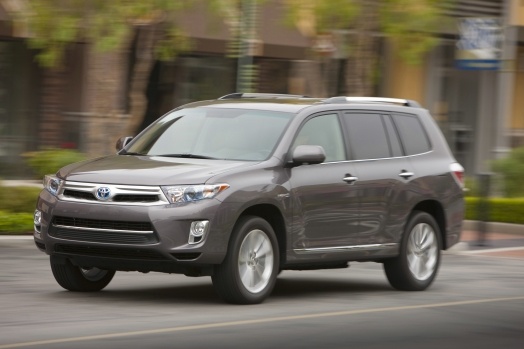
Toyota has announced zero changes for the 2012 Highlander and Highlander Hybrid - although that doesn't mean the company didn't sneak under the hood and make a few improvements anyway. Toyota is known for quickly revising known problems within the generation, and some of last year's improvements are of the sort that frequently cause problems - namely, the engine.
Toyota switched out the 3.3-liter powerplant in favor of a 3.5-liter gas companion to the Hybrid's 3 electric motors and generators for 2011, and in so doing boosted fuel economy and horsepower a couple notches - to 28 mpg city/28 highway and 280 hp. Impressive as those numbers may be, the Highlander Hybrid only gets a 3,500-pound towing capacity and the drivetrain can cause a lot of problems for drivers who are not especially hybrid savvy. Although the continuously variable transmission (CVT) does a lot of the thinking for you, there are still plenty of manual controls to foul up the good intentions of uninitiated owners.
As of this writing, user error seems to be the only genuine problem with the Hybrid's engine switch - and that is nothing new. It is absolutely possible to get better than 30 mpg with the Hybrid, as some drivers note, so long as you know how to drive conservatively. In addition, those who know how to use the system have found ample power and acceleration in most situations, but the all-wheel drive functionality is not suited for especially slippery or off-road conditions.
Other changes for 2011 brought several style updates and more standard features, including a power driver's seat, audio system upgrade, rear climate control and a 50/50 split-folding third-row seat for the Base, and perforated leather seating alongside tri-zone automatic climate control for the only other Hybrid trim, the Limited. The Highlander and Highlander Hybrid are similarly equipped, but the Hybrid offers a few extras over the direct gas-purist twin - the Base, for instance, includes a rear-view camera and comes equipped more like the mid-level gas-powered SE rather than its own bottom-line brother.
Also like its slightly thirstier twin, the Hybrid features nearly 100 cubic feet of cargo capacity with the seats folded down, and the center row moves back to front or folds down into a pair of captain's chairs - and more - for access and utility on your terms. As such, the Hybrid also shares the Highlander's issues with a cramped third row and white-washed handling. Some drivers also seem to notice this Highlander generation's larger girth a bit more in the Hybrid form, noting a distinctly less-than car-like feel in the ride and driving dynamics.

User reviews for 2012 Toyota Highlander Hybrid
Write a review2012 Toyota Highlander Hybrid Pricing
Trims & specs
Air Conditioning
Single front air conditioning zones · Rear air conditioning: with independent controls · Second and third row rear heat vents
Airbags
Dual front airbags · Driver knee airbags · Passenger airbag deactivation: occupant sensing deactivation · Front side airbags · Third row side curtain airbags
Audio System
Antenna Type: element · Auxiliary audio input: jack · Wireless headphones · 6 disc in-dash CD · MP3 player: CD MP3 Playback · Premium Brand: JBL · JBL premium brand speakers · AM/FM radio · Rear audio: separate rear audio · XM with NavTraffic satellite radio · 1 subwoofer · Total Number of Speakers: 9
Brakes
ABS: 4-wheel · Braking assist: hill start assist · Front brake diameter: 12.9 · Front brakes: ventilated disc · Rear brake diameter: 12.2 · Rear brakes: disc
Comfort Features
Shift knob trim: chrome · Steering wheel trim: leather
Convenience Features
Cargo area power outlet: 12V · Center console: front console with storage · Cupholders: rear · Easy entry: manual rear seat · Multi-function remote: keyless entry · One-touch windows: 1 · Power outlet(s): two 12V · Power steering: electric · Reading lights: rear · Steering wheel: tilt and telescopic · Steering wheel mounted controls: multi-function screen controls · Storage: seatback · Vanity mirrors: dual illuminating
Driver Seat
Adjustable lumbar support: power · Power adjustments: 8
Drivetrain
4WD Type: on demand · Axle ratio: 3.54
Engine
Electric Motor Battery Type: nickel-metal hydride · Electric Motor HP: 167 · Electric Motor Power Output (Kilowatts): 123 · Electric Motor Torque: 247 · Hybrid Gas Engine HP: 231 · Hybrid Gas Engine HP@RPM: 5800 · Hybrid Gas Engine Torque: 215 · Hybrid gas Engine Torque@RPM: 4800
Exterior Features
Door handle color: body-color · Front bumper color: body-color · Grille color: chrome accents · Mirror color: body-color · Paint: special factory paint · Rear bumper color: black · Rear spoiler: roofline spoiler · Rear spoiler color: body-color · Rear trunk/liftgate: liftgate
Headrests
Front headrests: adjustable · Number of front headrests: 2 · Number of rear headrests: 3 · Number of third row headrests: 2
In Car Entertainment
Video monitor location: rear · Video monitor size: 9 · Video system: DVD player
Instrumentation
Warnings and reminders: low oil pressure
Lights
Exterior entry lights: security approach lamps · Headlights: Auto on/off · Tail and brake lights: LED
Mirrors
Auto-dimming mirrors: rearview · Exterior mirrors: manual folding
Passenger Seat
Manual Adjustments: 4
Rear Seats
Type: 40-20-40 split bench
Roof
Moonroof: tilt · Roof rails: black
Safety
Active head restraints: driver · Camera system: rearview · Child seat anchors: LATCH system · Crumple zones: front · Impact sensor: battery disconnect · Rearview monitor: in dash
Seatbelts
Emergency locking retractors: front · Front seatbelts: 3-point · Seatbelt force limiters: front · Seatbelt pretensioners: front · Seatbelt warning sensor: driver and passenger · Second row seatbelts: 3-point
Seats
Front seat type: bucket · Rear headrests: adjustable · Rear seat folding: one-touch fold flat · Rear seat manual adjustments: reclining · Third row headrests: adjustable · Third row seat folding: fold flat into floor · Upholstery: leather
Spare Tire
Mount Location: inside · Size: full-size
Spare Wheel
Rim Type: steel
Steering
Steering ratio: 17.1 · Turns lock-to-lock: 3.1
Suspension
Front Arm Type: lower control arms · Front Shock Type: gas shock absorbers · Front Spring Type: coil springs · Front Suspension Classification: independent · Front Suspension Type: MacPherson struts · Rear Shock Type: gas shock absorbers · Rear Spring Type: coil springs · Rear Suspension Classification: independent · Rear Suspension Type: multi-link · Stabilizer bar(s): front
Telematics
Navigation system: DVD navigation system w/voice activation · Phone: voice activated · Phone wireless data link: Bluetooth
Third Row Seat
Type: 50-50 split bench · Upholstery: vinyl
Tires
Type: all season
Tires and Rims
Wheel type: aluminum alloy
Wheels
Wheel spokes: 7
Windows
Front wipers: variable intermittent · Liftgate window: fixed · Rear wiper: intermittent
Air Conditioning
Automatic climate control front air conditioning · Dual front air conditioning zones · Rear air conditioning: with independent controls · Single rear air conditioning zones · Second and third row rear heat vents
Airbags
Dual front airbags · Driver knee airbags · Passenger airbag deactivation: occupant sensing deactivation · Front side airbags · Rear side curtain airbags
Audio System
Antenna Type: element · IPod auxiliary audio input · Wireless headphones · 6 disc in-dash CD · MP3 player: CD MP3 Playback · Premium Brand: JBL · JBL premium brand speakers · AM/FM radio · Rear audio: separate rear audio · XM-ready satellite radio · 1 subwoofer · Total Number of Speakers: 8
Brakes
ABS: 4-wheel · Braking assist: hill start assist · Front brake diameter: 12.9 · Front brakes: ventilated disc · Rear brake diameter: 12.2 · Rear brakes: disc
Comfort Features
Shift knob trim: chrome · Steering wheel trim: leather
Convenience Features
Cargo area power outlet: 12V · Center console: front console with storage · Cupholders: front · Dimming rearview mirror: auto-dimming · Easy entry: manual rear seat · Multi-function remote: trunk release · One-touch windows: 1 · Power outlet(s): two 12V · Power steering: electric · Reading lights: front · Steering wheel: tilt and telescopic · Steering wheel mounted controls: air conditioning · Storage: seatback · Universal garage door opener: Homelink · Vanity mirrors: dual illuminating
Driver Seat
Adjustable lumbar support: power · Power adjustments: 10
Drivetrain
4WD Type: on demand · Axle ratio: 3.54
Engine
Electric Motor Battery Type: nickel-metal hydride · Electric Motor HP: 167 · Electric Motor Power Output (Kilowatts): 123 · Electric Motor Torque: 247 · Hybrid Gas Engine HP: 231 · Hybrid Gas Engine HP@RPM: 5800 · Hybrid Gas Engine Torque: 215 · Hybrid gas Engine Torque@RPM: 4800
Exterior Features
Door handle color: chrome · Front bumper color: body-color · Grille color: chrome accents · Mirror color: body-color · Paint: special factory paint · Rear bumper color: black · Rear spoiler: roofline spoiler · Rear spoiler color: body-color · Rear trunk/liftgate: liftgate
Headrests
Front headrests: adjustable · Number of front headrests: 2 · Number of rear headrests: 3 · Number of third row headrests: 2
In Car Entertainment
Video monitor location: rear · Video monitor size: 9 · Video system: DVD player
Instrumentation
Warnings and reminders: maintenance reminder
Lights
Exterior entry lights: security approach lamps · Headlights: Auto on/off · Tail and brake lights: LED
Mirrors
Exterior mirrors: power
Passenger Seat
Power adjustments: 4
Rear Seats
Type: 40-20-40 split bench
Roof
Moonroof: sliding sunshade · Roof rack color: chrome · Roof rails: silver
Safety
Active head restraints: driver · Camera system: rearview · Child seat anchors: LATCH system · Crumple zones: front · Impact sensor: fuel cut-off · Rearview monitor: in dash
Seatbelts
Emergency locking retractors: front and rear · Front seatbelts: 3-point · Seatbelt force limiters: front · Seatbelt pretensioners: front · Seatbelt warning sensor: driver and passenger · Second row seatbelts: 3-point
Seats
Driver seat power adjustments: height · Front seat type: bucket · Rear headrests: adjustable · Rear seat folding: one-touch fold flat · Rear seat manual adjustments: reclining · Third row headrests: adjustable · Third row seat folding: split · Upholstery: leather-trimmed
Spare Tire
Mount Location: inside · Size: full-size
Spare Wheel
Rim Type: steel
Steering
Steering ratio: 17.1 · Turns lock-to-lock: 3.1
Suspension
Front Arm Type: lower control arms · Front Shock Type: gas shock absorbers · Front Spring Type: coil springs · Front Suspension Classification: independent · Front Suspension Type: MacPherson struts · Rear Shock Type: gas shock absorbers · Rear Spring Type: coil springs · Rear Suspension Classification: independent · Rear Suspension Type: multi-link · Stabilizer bar(s): rear
Telematics
Navigation system: touch screen display · Phone: hands free · Phone wireless data link: Bluetooth
Third Row Seat
Type: 50-50 split bench
Tires
Type: all season
Tires and Rims
Wheel type: aluminum alloy
Wheels
Wheel spokes: 10
Windows
Front wipers: variable intermittent · Liftgate window: fixed · Rear wiper: intermittent

