2007 Toyota Yaris Reviews, Pricing & Specs
Write a review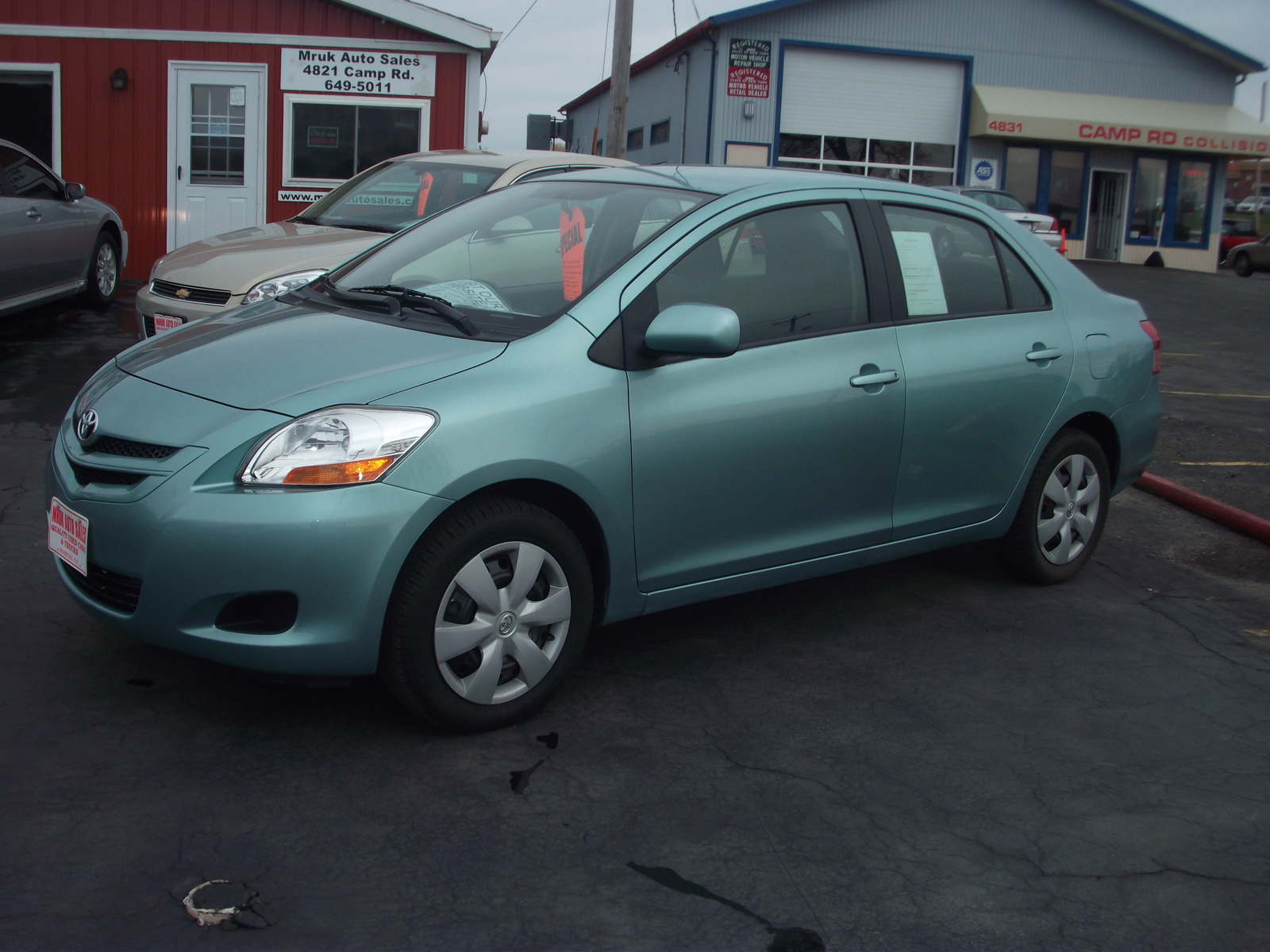
A new nameplate on a new car, the 2007 Toyota Yaris is an entry-level subcompact that replaces the reliable but reliably awful Toyota Echo.

Compared to the cartoonish Echo, the 2007 Toyota Yaris is a stylish, swanky, and sophisticated machine. Yeah, that doesn’t say much for the old Echo, does it?
At the same time, the Yaris wades into a subcompact car segment full of compelling choices. From the practical Honda Fit and roomy Nissan Versa to the stylish Mazda Mazda2 and entry-level econoboxes from Hyundai and Kia that come with killer warranties, people in need of cheap wheels have plenty of choices.
The new 2007 Yaris, offered in wide-eyed 3-door hatchback (called Liftback in Toyota-speak) and more conservative 4-door sedan body styles, is inoffensively styled. The sedan even comes in an S trim level with the requisite alloy wheels, body kit, and rear spoiler. So racy!
Toyota installs two different dashboards in the Yaris. Liftbacks get stacked controls beneath the center air vents, while sedans offer a V-shaped waterfall collection of stereo and climate controls. Both feature a pod mounted atop the center of the dashboard that contains a speedometer and a fuel gauge.
With center-mounted instrumentation, the Yaris echoes the old Echo. In fact, in either version of the Yaris, the dashboard looks like you could swap the steering wheel and pedals from the left side to the right in order to accommodate Japan and UK markets. It takes some getting used to, but eventually, the arrangement becomes second-nature.

With 106 horsepower and 103 pounds-feet of torque, the new Yaris isn’t going to win any drag races. At least the 1.5-liter 4-cylinder engine is sewing-machine smooth, and the standard 5-speed manual gearbox is a model of refinement. A 4-speed automatic is an option, and it dents what little performance is available.
As is expected in an entry-level vehicle, the engineering is basic. The suspension includes MacPherson struts up front and a torsion beam solid axle in back. Brakes are discs in front and drums in back. Power-assisted steering is standard, a seeming luxury.
In spite of rather simple mechanicals, the Yaris is decent to drive. The engine benefits from the car’s low weight, and there is a sense of refinement in the absence of complexity. In fact, the Yaris feels tossable to some degree, and with the stick-shift, it’s easy to keep the engine within its optimum rev range.
Fuel economy is better with the manual gearbox, too, at 32 mpg in combined driving. Get the 4-speed automatic, and that figure drops to 31 mpg.

Small cars are small inside, but with the Yaris, the 4-door sedan is a whopping 20 inches longer than the diminutive 3-door hatch. So, if you plan to carry people, get the sedan. If you plan to carry cargo, get the hatchback.
Narrow and lacking in terms of front-seat track travel, a Yaris is no good for taller and wider people. But if you’re of average size, you’ll fit, no problem. Storage space is remarkably good for such a small car, especially with the hatchback, which has dual glove compartments and larger bins and trays for stashing stuff.
Trunk space in the Yaris sedan is quite good, measuring 12.9 cubic feet. That’s more than some compact cars provide. The Yaris Liftback supplies 9.3 cubic feet behind the rear seat and 25.7 cubes with the rear seat folded down.

If you’re seeking technological sophistication in a car, the 2007 Toyota Yaris isn’t the right solution. After all, standard equipment includes an AM/FM radio and four speakers, and not much else beyond a 12-volt power outlet.
However, if you select a Yaris S, you will get a CD player and an MP3 player, along with a couple of extra speakers. So there’s that.

Buy a 2007 Toyota Yaris, and you get a set of dual front airbags. Side-impact airbags are an option, as are antilock brakes. And you can’t really do anything about the car’s feathery 2,290-pound base curb weight, which puts you at a disadvantage in a crash with anything heavier. And almost every other vehicle on the road is heavier than a Yaris.
You are going to want those optional side airbags. That’s because the Insurance Institute for Highway Safety (IIHS) rates the Yaris sedan’s side-impact crash protection as Poor without them. With that option, the car earns a Good rating, matching the rating for moderate-overlap frontal-impact protection. And if you crash your Yaris, don’t roll it over because roof crush strength is merely Acceptable according to the IIHS.
Crash testing performed by the National Highway Traffic Safety Administration (NHTSA) appears to support the importance of side airbags. Without them, the Yaris sedan earns a 3-star rating in the side-impact assessment. Frontal-impact protection rates 4 stars.

Is a Toyota Yaris a cost-effective solution to your need for a cheap, reliable, efficient set of wheels? Yes. Buy one, take care of it, and it will last forever (or at least it will seem that way).
At the same time, this isn’t the only game in town. The new Honda Fit is exceptionally practical, the new Nissan Versa blends a French design sensibility with a huge interior, and the Mazda Mazda2 is one of the more fun choices in the segment. And don’t forget about the Hyundai Accent and Kia Rio, which are less expensive and come with much better warranty coverage.

User reviews for 2007 Toyota Yaris
Write a review2007 Toyota Yaris Pricing
Trims & specs
Air Conditioning
Single front air conditioning zones
Airbags
Dual front airbags · Front side airbags · Front and rear side curtain airbags
Audio System
Antenna Type: mast · Single disc in-Dash CD · AM/FM radio · Total Number of Speakers: 4
Brakes
ABS: 4-wheel · Front brake diameter: 10.0 · Front brakes: ventilated disc · Rear brake diameter: 7.9 · Rear brakes: drum
Convenience Features
Center console: front console with storage · Cupholders: rear · Multi-function remote: trunk release · Power outlet(s): 12V front · Power steering: electric · Reading lights: front · Steering wheel: tilt-adjustable · Storage: door pockets · Vanity mirrors: dual
Driver Seat
Manual adjustments: 4
Drivetrain
Axle ratio: 4.24
Exterior Features
Door handle color: body-color · Front bumper color: body-color · Grille color: black · Mirror color: body-color · Rear bumper color: body-color · Rear trunk/liftgate: liftgate
Headrests
Front headrests: adjustable · Number of front headrests: 2 · Number of rear headrests: 3
Instrumentation
Warnings and reminders: low fuel level
Lights
Headlights: Halogen
Mirrors
Exterior mirrors: manual
Passenger Seat
Manual Adjustments: 4
Rear Seats
Type: 60-40 split bench
Safety
Child seat anchors: LATCH system · Crumple zones: rear
Seatbelts
Emergency locking retractors: front and rear · Front seatbelts: 3-point · Seatbelt force limiters: front · Seatbelt pretensioners: front · Seatbelt warning sensor: driver and passenger · Second row seatbelts: 3-point
Seats
Front seat type: bucket · Rear headrests: adjustable · Rear seat folding: one-piece · Upholstery: cloth
Spare Tire
Mount Location: inside · Size: temporary
Spare Wheel
Rim Type: steel
Steering
Steering ratio: 19.7 · Turns lock-to-lock: 3.0
Suspension
Front Arm Type: lower control arms · Front Shock Type: gas shock absorbers · Front Spring Type: coil springs · Front Suspension Classification: independent · Front Suspension Type: MacPherson struts · Rear Shock Type: gas shock absorbers · Rear Spring Type: coil springs · Rear Suspension Classification: semi-independent · Rear Suspension Type: torsion bar · Stabilizer bar(s): front
Tires
Type: all season
Tires and Rims
Wheels: alloy
Wheels
Wheel covers: full
Windows
Front wipers: intermittent · Liftgate window: fixed · Rear wiper: with washer
Air Conditioning
Single front air conditioning zones
Airbags
Dual front airbags · Front side airbags · Front and rear side curtain airbags
Audio System
Antenna Type: element · Single disc in-Dash CD · AM/FM radio · Total Number of Speakers: 4
Brakes
ABS: 4-wheel · Front brake diameter: 10.0 · Front brakes: ventilated disc · Rear brake diameter: 7.9 · Rear brakes: drum
Convenience Features
Center console: front console with storage · Cupholders: rear · Multi-function remote: keyless entry · One-touch windows: 1 · Power outlet(s): 12V front · Power steering: electric · Reading lights: front · Steering wheel: tilt-adjustable · Storage: door pockets · Vanity mirrors: dual
Driver Seat
Manual adjustments: 6
Drivetrain
Axle ratio: 3.72
Exterior Features
Door handle color: body-color · Front bumper color: body-color · Grille color: black · Mirror color: body-color · Rear bumper color: body-color
Headrests
Front headrests: adjustable · Number of front headrests: 2 · Number of rear headrests: 3
Instrumentation
Warnings and reminders: low fuel level
Lights
Headlights: Halogen
Mirrors
Exterior mirrors: manual
Passenger Seat
Manual Adjustments: 4
Rear Seats
Type: 60-40 split bench
Safety
Child seat anchors: LATCH system · Crumple zones: rear
Seatbelts
Emergency locking retractors: front and rear · Front seatbelts: 3-point · Seatbelt force limiters: front · Seatbelt pretensioners: front · Seatbelt warning sensor: driver and passenger · Second row seatbelts: 3-point
Seats
Driver seat manual adjustments: height · Front seat type: bucket · Rear headrests: adjustable · Upholstery: cloth
Security
Anti-theft alarm system: with engine immobilizer
Spare Tire
Mount Location: inside · Size: temporary
Spare Wheel
Rim Type: steel
Steering
Steering ratio: 19.7 · Turns lock-to-lock: 3.0
Suspension
Front Arm Type: lower control arms · Front Shock Type: gas shock absorbers · Front Spring Type: coil springs · Front Suspension Classification: independent · Front Suspension Type: MacPherson struts · Rear Shock Type: gas shock absorbers · Rear Spring Type: coil springs · Rear Suspension Classification: semi-independent · Rear Suspension Type: torsion bar · Stabilizer bar(s): front
Tires
Type: all season
Tires and Rims
Wheels: steel
Wheels
Wheel covers: full
Windows
Front wipers: intermittent
Air Conditioning
Single front air conditioning zones
Airbags
Dual front airbags · Front side airbags · Front and rear side curtain airbags
Audio System
Antenna Type: element · Single disc in-Dash CD · MP3 player: CD MP3 Playback · AM/FM radio · Total Number of Speakers: 4
Brakes
ABS: 4-wheel · Front brake diameter: 10.0 · Front brakes: ventilated disc · Rear brake diameter: 7.9 · Rear brakes: drum
Comfort Features
Armrests: rear center folding with storage
Convenience Features
Center console: front console with storage · Cupholders: front · Multi-function remote: trunk release · One-touch windows: 1 · Power outlet(s): 12V front · Power steering: electric · Reading lights: front · Steering wheel: tilt-adjustable · Storage: front seatback · Vanity mirrors: dual
Driver Seat
Manual adjustments: 6
Drivetrain
Axle ratio: 3.72
Exterior Features
Door handle color: body-color · Front bumper color: body-color · Grille color: black · Mirror color: body-color · Rear bumper color: body-color
Headrests
Front headrests: adjustable · Number of front headrests: 2 · Number of rear headrests: 3
Instrumentation
Warnings and reminders: low oil pressure
Lights
Headlights: Halogen
Mirrors
Exterior mirrors: manual folding
Passenger Seat
Manual Adjustments: 4
Rear Seats
Type: 60-40 split bench
Safety
Child seat anchors: LATCH system · Crumple zones: front
Seatbelts
Emergency locking retractors: front · Front seatbelts: 3-point · Seatbelt force limiters: front · Seatbelt pretensioners: front · Seatbelt warning sensor: driver and passenger · Second row seatbelts: 3-point
Seats
Driver seat manual adjustments: height · Front seat type: bucket · Rear headrests: adjustable · Rear seat folding: split · Upholstery: cloth
Security
Anti-theft alarm system: with engine immobilizer
Spare Tire
Mount Location: inside · Size: temporary
Spare Wheel
Rim Type: steel
Steering
Steering ratio: 19.7 · Turns lock-to-lock: 3.0
Suspension
Front Arm Type: lower control arms · Front Shock Type: gas shock absorbers · Front Spring Type: coil springs · Front Suspension Classification: independent · Front Suspension Type: MacPherson struts · Rear Shock Type: gas shock absorbers · Rear Spring Type: coil springs · Rear Suspension Classification: semi-independent · Rear Suspension Type: torsion bar · Stabilizer bar(s): front
Tires
Type: all season
Tires and Rims
Wheels: steel
Wheels
Wheel covers: full
Windows
Front wipers: intermittent

