Kia K900 vs Kia Stinger

Overview | |
MSRP$59,900 | MSRP$31,900 |
Listings36 | Listings870 |
Ratings & Reviews | |
User Reviews | User Reviews |
Expert reviews8.3 out of 10 | Expert reviews8.7 out of 10 |
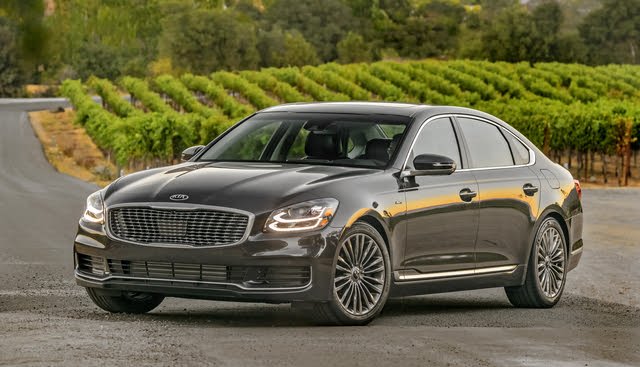
Reviews SummaryBy and large, the car-buying public carries around preconceived notions about automakers. Name a car or type of car and you’ll likely start to form assumptions about the vehicle itself and even its owners. Kia has had a reputation for being bargain-oriented, but lately, it's a brand on the rise. Last year Kia released the Stinger, a head-turning, athletic performance sedan. Kia already had a strong portfolio of (yes, affordable) vehicles, but the Stinger was a statement vehicle, a demonstration of the brand's capabilities. Considering Kia's progress, the continued lack of awareness with regard to its quality is disappointing. If you need any more convincing, look no further than its luxury flagship, the K900 sedan. Introduced in 2012, the K900 is now in its second generation. It is a fantastic car and a handsome reward for any sedan shopper looking to drive a high-comfort, high-quality ride. But buyers in this space have some interesting choices. For one, the K900 rides on the same platform as its corporate cousin, the Genesis G90. It's also offered alongside the Cadenza, which is also a spacious luxury car—but has front-wheel drive. There appears to be some overlap here, which makes the K900 and its positioning so intriguing. So, Kia’s out there making a name for itself, and the K900 showcases what the brand is fully capable of delivering. But the mere presence of the Genesis G90 underscores a question: Where does the K900 fit in the world of full-size luxury sedans? | |
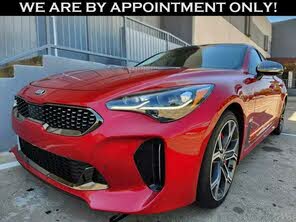
Reviews SummaryIt's at the very core of human nature to sort things. Eons ago, it helped us establish patterns associated with our early ancestors’ predators and prey. Today, this allows our brains to be “metaphor machines,” allowing any new information to fit neatly into pre-conceived boxes. This, of course, makes changing minds against an agreed-upon notion an uphill battle. Most folks sort carmakers into groups that fit into pre-ordained assumptions. In this “continuum of assumption,” Jeep is the brand that builds SUVs, Mercedes-Benz makes luxury cars, and the best trucks are made by the big American automakers. But as anyone who follows the automotive world knows, such assumptions aren’t always fair—or accurate. Jaguar and Bentley—two brands associated with luxury coupes and sedans—now build SUVs. Toyota and Nissan are capable of making fully competent pickups. And, finally, there's Kia. Kia may have a harder uphill battle against stereotype than any other automaker. Anyone I talk to about considering a new Kia always has the same response: “Oh, don’t they make cheap cars?” Sure, that’s how Kia got its start in North America, but for the last 10 years, the Korean automaker has been on a steady ascent in terms of design and quality. This trend has culminated with the all-new Kia Stinger—a four-door sports car that has put the automotive world on notice. Frankly, we didn’t know we needed a car like the 2018 Kia Stinger, but it shows that Kia is capable of much more than economical daily drivers. But stereotypes aside, we have to ask: Is the Stinger GT enough to make us take Kia seriously as a performance brand? | |
Popular Features & Specs | |
Engine3.3L 365 hp V6 | Engine2.0L 255 hp I4 |
Drive TrainAWD | Drive TrainRWD |
Seating Capacity5 | Seating Capacity5 |
Horsepower365 hp @ 6000 rpm | Horsepower255 hp @ 6200 rpm |
MPG City18 | MPG City22 |
MPG Highway25 | MPG Highway29 |
Engine | |
Engine Name3.3L 365 hp V6 | Engine Name2.0L 255 hp I4 |
Torque376 lb-ft @ 1300 rpm | Torque260 lb-ft @ 1400 rpm |
Horsepower365 hp @ 6000 rpm | Horsepower255 hp @ 6200 rpm |
DrivetrainAWD | DrivetrainRWD |
Fuel Economy | |
MPG City18 | MPG City22 |
MPG Highway25 | MPG Highway29 |
Interior | |
Leather SeatsStandard | Leather SeatsStandard |
Seating Capacity5 | Seating Capacity5 |
Key Features | |
Navigation SystemStandard | Navigation System |
Sunroof/MoonroofStandard | Sunroof/Moonroof |
Dimensions & Capacity | |
Cargo Space15.3 cu ft | Cargo Space23.3 cu ft |
Curb Weight4662 lbs | Curb Weight3611 lbs |
Height58.7 in | Height55.1 in |
Length201.6 in | Length190.2 in |
Width75.4 in | Width73.6 in |
Wheelbase122.2 in | Wheelbase114.4 in |
Maximum Payload1070 lbs | Maximum Payload |
Number of doors4 | Number of doors4 |
Overview | ||
MSRP | $59,900 | $31,900 |
Listings | ||
Ratings & Reviews | ||
User reviews | ||
Expert reviews | 8.3 out of 10Read full review | 8.7 out of 10Read full review |
Pros & cons | ||
Summary | By and large, the car-buying public carries around preconceived notions about automakers. Name a car or type of car and you’ll likely start to form assumptions about the vehicle itself and even its owners. Kia has had a reputation for being bargain-oriented, but lately, it's a brand on the rise. Last year Kia released the Stinger, a head-turning, athletic performance sedan. Kia already had a strong portfolio of (yes, affordable) vehicles, but the Stinger was a statement vehicle, a demonstration of the brand's capabilities. Considering Kia's progress, the continued lack of awareness with regard to its quality is disappointing. If you need any more convincing, look no further than its luxury flagship, the K900 sedan. Introduced in 2012, the K900 is now in its second generation. It is a fantastic car and a handsome reward for any sedan shopper looking to drive a high-comfort, high-quality ride. But buyers in this space have some interesting choices. For one, the K900 rides on the same platform as its corporate cousin, the Genesis G90. It's also offered alongside the Cadenza, which is also a spacious luxury car—but has front-wheel drive. There appears to be some overlap here, which makes the K900 and its positioning so intriguing. So, Kia’s out there making a name for itself, and the K900 showcases what the brand is fully capable of delivering. But the mere presence of the Genesis G90 underscores a question: Where does the K900 fit in the world of full-size luxury sedans? | It's at the very core of human nature to sort things. Eons ago, it helped us establish patterns associated with our early ancestors’ predators and prey. Today, this allows our brains to be “metaphor machines,” allowing any new information to fit neatly into pre-conceived boxes. This, of course, makes changing minds against an agreed-upon notion an uphill battle. Most folks sort carmakers into groups that fit into pre-ordained assumptions. In this “continuum of assumption,” Jeep is the brand that builds SUVs, Mercedes-Benz makes luxury cars, and the best trucks are made by the big American automakers. But as anyone who follows the automotive world knows, such assumptions aren’t always fair—or accurate. Jaguar and Bentley—two brands associated with luxury coupes and sedans—now build SUVs. Toyota and Nissan are capable of making fully competent pickups. And, finally, there's Kia. Kia may have a harder uphill battle against stereotype than any other automaker. Anyone I talk to about considering a new Kia always has the same response: “Oh, don’t they make cheap cars?” Sure, that’s how Kia got its start in North America, but for the last 10 years, the Korean automaker has been on a steady ascent in terms of design and quality. This trend has culminated with the all-new Kia Stinger—a four-door sports car that has put the automotive world on notice. Frankly, we didn’t know we needed a car like the 2018 Kia Stinger, but it shows that Kia is capable of much more than economical daily drivers. But stereotypes aside, we have to ask: Is the Stinger GT enough to make us take Kia seriously as a performance brand? |
Video | ||
Popular Features & Specs | ||
Engine | 3.3L 365 hp V6 | 2.0L 255 hp I4 |
Drive Train | AWD | RWD |
Seating Capacity | 5 | 5 |
Horsepower | 365 hp @ 6000 rpm | 255 hp @ 6200 rpm |
MPG City | 18 | 22 |
MPG Highway | 25 | 29 |
Engine | ||
Engine Name | 3.3L 365 hp V6 | 2.0L 255 hp I4 |
Torque | 376 lb-ft @ 1300 rpm | 260 lb-ft @ 1400 rpm |
Horsepower | 365 hp @ 6000 rpm | 255 hp @ 6200 rpm |
Drivetrain | AWD | RWD |
Fuel Economy | ||
MPG City | 18 | 22 |
MPG Highway | 25 | 29 |
Interior | ||
Leather Seats | Standard | Standard |
Seating Capacity | 5 | 5 |
Key Features | ||
Navigation System | Standard | |
Sunroof/Moonroof | Standard | |
Dimensions & Capacity | ||
Cargo Space | 15.3 cu ft | 23.3 cu ft |
Curb Weight | 4662 lbs | 3611 lbs |
Height | 58.7 in | 55.1 in |
Length | 201.6 in | 190.2 in |
Width | 75.4 in | 73.6 in |
Wheelbase | 122.2 in | 114.4 in |
Maximum Payload | 1070 lbs | |
Number of doors | 4 | 4 |















By: CarGurus + AI
At CarGurus, our team of experienced automotive writers remain at the heart of our content operation, conducting hands-on car tests and writing insightful guides that are backed by years of industry experience. To complement this, we are harnessing AI to make our content offering more diverse and more helpful to shoppers than ever. To achieve this, our AI systems are based exclusively on CarGurus content, ratings and data, so that what we produce is both unique to CarGurus, and uniquely helpful to car shoppers.